Chomlek
(чомлек)
Some varieties of this traditional stew can be found in other Balkan countries, and it is mainly associated with the traditional cuisine of neighboring Bulgaria, particularly that of Blagoevgrad Province. Chomlek is a traditional North Macedonian stew that is typically prepared with veal or baby beef, a generous amount of tiny, walnut-sized onion bulbs (called kokar or arpadzik in Macedonian), and garlic. Depending on the recipe, either red or white wine is added to the mixture, while other common ingredients contained in the dish include dried red peppers, carrots, tomato purée, parsley, or mushrooms. Chomlek is usually seasoned with salt, black pepper, red pepper, and bay leaves. It is customarily prepared in a traditional earthenware dish or pot, with the lid placed on top and firmly secured and sealed with dough. Even though this delicacy is a rather straightforward dish, it is also time-consuming and takes hours to cook.North Macedonian chomlek is mostly associated with the southwest and Pelagonija regions of the country, especially with Bitola, Prilep, Ohrid, and Krushevo, with each town having their own version of the dish: bitolski chomlek, prilepski chomlek, ohridski chomlek, and krushevski chomlek.These chomlek variations use more or less the same ingredients with slight differences. In North Macedonia, chomlek is a typical winter dish, usually eaten for lunch, and there’s a long-standing tradition of preparing this dish for New Year’s celebrations in the towns of Bitola and Prilep.The stew is typically enjoyed with a glass of red wine on the side, and it is recommended to dip some bread in it while eating it. The origins of this specialty most likely stem from Turkish cuisine, which is suggested by the dish’s name, which derives from the Turkish word çömlek, meaning earthenware pot.
Blinde vink
(Blind Finch)
Some of the fat in which the meat has been cooked is often poured over the potatoes before serving. Blinde vink is also popular in the neighboring Belgium. Blinde vink is a traditional meat dish originating from the Netherlands. The dish consists of ground meat that's seasoned and wrapped with a flattened veal cutlet. Blinde vink can be assembled at home or bought at the butcher shop. It is roasted until the meat is fully done, and it's then usually served with vegetables or potatoes on the side.
Cima alla Genovese
The whole concoction is flavored with spices such as bay leaves, parsley, and black pepper. The dish is a typical representation of the cucina povera, and in the past it was prepared as a frugal way to use leftovers. Today, it is a rare, but very sought after dish that is traditionally served sliced and accompanied by steamed vegetables or salads on the side.A traditional Genovese dish known as cima alla Genovese is actually a meat loaf consisting of a veal breast stuffed with a huge number of ingredients. Here are just some of them: onions, pork fat, ground veal, pistachios, various offal, peas, hard-boiled eggs, carrots, garlic, and crustless white bread.
Vitoulet
(Vitoulet de Charleroi, Gehaktballetjes, Boulettes de viande hachée)
Apart from the different ingredients, the boulet meatballs are usually larger than the vitoulets, and they're typically served hot, with sauce on the side. Vitoulet meatballs, on the other hand, can be enjoyed both warm and chilled, with or without sauce, and they’re commonly accompanied by potatoes and a fresh salad on the side. Vitoulet is a Belgian meatball that is typically made with a combination of ground pork, ground veal, bread, milk, eggs, shallots, and parsley. The meat mixture is usually seasoned with salt, pepper, and nutmeg, and it is then shaped into balls which are fried on melted butter until nicely colored and crispy on all sides.Another version calls for making slightly elongated meatballs with a combination of ground veal or veal and pork, egg yolks, milk-soaked bread, parsley, salt, and pepper. For that version, the meatballs need to be rolled in breadcrumbs before being fried in browned butter. Vitoulet meatballs are typically associated with the Belgian city of Charleroi, and they’re often confused with another Belgian meatball called boulet à la liégeoise, which hails from the city of Liège and usually consists of ground pork and beef, egg yolks, onions, cream, white bread, and parsley.
Meatloaf
(Faschierter Braten, Meatbread, Vleesbrod, Rulo Stefani, Asado Aleman, Pulpeta, Sekaná, Farsbrød, Lihamureke, Hackbraten, Faschierter Braten, Falscher Hase, Rolo, Stefánia Szelet, Polpettone, Kafta, Kofta, Klops, Rolat, Albondigón, Empotido, хучмал, Pieczeń Rzymska, Bobotie, Köttfärslimpa, Dalyan Köfte, Giò, Pain de viande, Falscher Hase)
The history of the meatloaf as we know it today is believed to have its origins in ancient Rome, where a gastronome named Apicius first mentioned the idea of minced meat patties. It is believed that the now traditional loaf-shaped form grew out of the necessity to hasten the process and save time. READ MOREThe ubiquitous meatloaf is a dish celebrated for its simplicity and versatility. It is made with a substantial amount of minced meat, most commonly pork and beef that is bound by eggs or dairy products. Typically, it is placed in a special mold or formed by hand in the popular shape of a log.After it has been baked, it is usually sliced and served with mashed potatoes or vegetables, all doused in the accompanying juicy sauce. Meatloaf is not a dish that is commonly found in high-end restaurants, nor does it belong to haute cuisine. It is rustic and ordinary, yet incredibly comforting and nutritious.
-Một trong những món ăn quốc dân nổi tiếng của Hà Lan là "Stroopwafels." Đây là một loại bánh quy truyền thống gồm hai chiếc bánh quy mỏng được nối với nhau bằng một lớp siro đường nâu caramen. Thường được làm từ bột mỳ, đường, bơ và một số gia vị như vani, stroopwafels thường có hình dạng hình tròn và có đường kính khoảng 8 cm.
-Cách thưởng thức stroopwafels là đặt chúng lên cốc nóng để làm nóng bánh và làm mềm lớp siro ở giữa. Người ta thường thấy stroopwafels được phục vụ như một món ăn nhẹ kèm với cà phê hoặc trà.
-Một trong những món ăn quốc dân nổi tiếng của Bỉ là "Moules Frites" hay còn được gọi là "Mussels and Fries." Đây là một bữa ăn truyền thống và rất phổ biến trên khắp Bỉ. "Moules" có nghĩa là sò điệp, và "Frites" là khoai tây chiên.
Moules Frites thường bao gồm sò điệp hấp với các loại gia vị như tỏi, hành tây, và thường được nướng chín trong nồi lớn. Bên cạnh đó, khoai tây được cắt thành sợi mảnh và chiên giòn để ăn kèm với sò điệp. Bữa ăn thường được phục vụ với nhiều loại sốt như mayonnaise hoặc aioli.
Moules Frites không chỉ là một món ăn ngon và phổ biến mà còn là biểu tượng của ẩm thực Bỉ. Bạn có thể tìm thấy nó trong nhiều nhà hàng và quán ăn trên khắp đất nước, và nó thường được ăn trong một không khí thoải mái và thân thiện.
-Mỳ Argentina có thể đề cập đến nhiều loại mỳ được sản xuất hoặc sử dụng tại Argentina, một quốc gia ở Nam Mỹ.
Sau đây là 5 món Mỳ Argentina:
1. Mỳ Ý (Pasta).
2. Empanadas
3. Mỳ ý nấu với sốt chimichurri
4. Ñoquis
5. Mỳ Ý ngũ cốc
- Nhớ rằng Argentina có một ẩm thực đa dạng với sự ảnh hưởng từ nhiều quốc gia khác nhau, vì vậy có nhiều biến thể và pha trộn trong việc sử dụng mỳ trong ẩm thực địa phương.
@erk818 4. Lâu đài Grimaldi
5. Bảo tàng Nghệ thuật hiện đại
6. Vườn động thực vật Exotic
7. Rạp xiếc Monaco
Wow! Monaco looks like a paradise with luxurious casinos and beautiful beaches.
-Monaco là một quốc gia nhỏ nằm ở vùng biển Địa Trung Hải và nổi tiếng với sự xa hoa, sự giàu có, và cảnh đẹp biển.
Dưới đây là một tóm tắt về những điểm du lịch nổi bật tại Monaco:
1. Casino Monte-Carlo
2. Quảng trường Công xã (Place du Casino)
3. Lâu đài Prince's Palace
4. Bảo tàng Océanographique
5. Jardin Exotique de Monaco
6. Bảo tàng Nghệ thuật Hiện đại
-Monaco, với kích thước nhỏ nhưng với đẳng cấp cao và vị trí tuyệt vời, là điểm đến thu hút du khách từ khắp nơi trên thế giới.
Shashlik
(Shashlyk, шашлы́к, խորոված, şişlik, Tikə Kabab, მწვადი, সাসলিক, Szaszłyk, Šašlykas)
In Georgia, shashlik is known as mtsvadi.Shashlik is the name for a traditional Central and West Asian barbecue consisting of marinated, skewered, and grilled chunks of meat such as lamb, beef, or pork, depending on regional and religious preferences. Lamb, beef, or pork is usually combined with chunks of vegetables such as bell peppers, onions, mushrooms, or tomatoes.The meat is typically marinated overnight in vinegar, herbs, spices, and dry wine. In Russia, barbecue is traditionally reserved for men, who are in charge of the whole grilling process, while the women are usually busy slicing vegetables and setting the tables.Shashlik is traditionally prepared for events with a large number of people gathered around the fire, cooperating and socializing in the process, making the dish a communal affair. Because the origins of the dish lie between Turkey and Russia, many believe that the name is derived from the Turkish word shish, meaning skewer.
Picanha
(Sirloin Cap, Rump Cap)
The name picanha is derived from the word picana, referring to the ranchers' pole used for herding cattle in Portugal and Spain. The technique was brought over to Brazil where the word picanha was used to refer to the part of the cow that was poked by ranchers with the pole.Picanha is a fresh cut of beef that's especially popular and highly prized in Brazil. In the US, it's called sirloin cap, and in the UK, it's known as the rump cap. Picanha is situated on the back side of the animal, above the butt, where it sits on a fat cap .It's mostly used for churrasco – the meat is first grilled, then sliced off of a skewer. This cut holds very little fat in the meat, so it must be cooked perfectly in order not to make it tough. In Brazil, every churrasco has picanha, and all of the best churrascarias feature picanha on their menus.
Pernil
(Pernil Asado, Pernil al Horno, Hornado, Roast Pork Shoulder)
Because pork shoulder is more available and costs less than ham, it has become a key ingredient in pernil. Many people prefer it since it is believed to be much more flavorful than ham. The dish is a staple at numerous Puerto Rican festivities such as birthdays or weddings, where many people feast on the crunchy skin and tender meat that falls off the bone.Pernil is one of Puerto Rico's most famous dishes, a succulent roasted pork shoulder that is traditionally seasoned in a marinade called adobo mojado, consisting of paprika, salt, vinegar, garlic, and oregano. The name of the dish is derived from the Spanish word pierna, meaning leg, but it is also a Catalan word for ham, referring to the traditional recipe that calls for fresh ham.
Carne asada tacos
Over time, people started to make other versions in different regions, and nowadays we are witnessing a true taco-mania, and it all began with the simple carne asada tacos.Carne asada tacos are the first tacos in history. It is believed that the first tacos appeared in the 1500s, made with thin slices of meat cooked over hot coals. The meat was placed in a corn tortilla and topped with guacamole, onions, chili peppers, and lime – also known as the carne asada taco.
Châteaubriand
(Châteaubriand Steak)
When served in France, Châteaubriand will always be accompanied by a sauce – most often either a traditional red wine sauce or Béarnaise sauce. The steak is usually served with a side of roasted new potatoes or tiny chateau potatoes.Contrary to popular belief, the word Châteaubriand does not refer only to a cut of beef, but to a method used to grill or roast a thick cut of beef tenderloin. The steak was originally prepared by a chef named Montmireil in 1822 for a French author, diplomat, and statesman Francois René Vicomte de Chateaubriand.
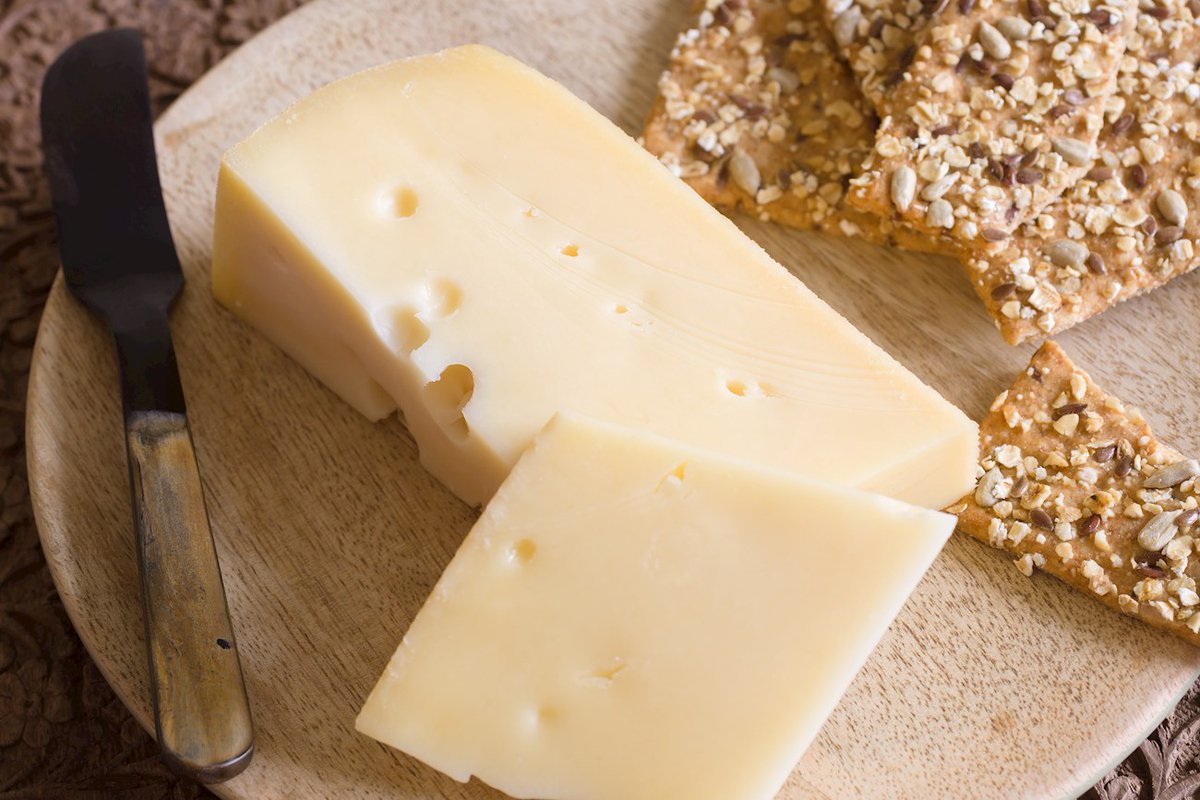
@chinaandislam Jarlsberg is known for its mild and nutty flavor. The cheese has a slightly sweet and buttery taste with nutty undertones. This mildness makes it appealing to a wide range of palates.
Jarlsberg
The cheese melts exceptionally well, and as a result it is used in fondues, quiches, and sandwiches. It is recommended to pair Jarlsberg with a glass of Merlot.Jarlsberg is a Norwegian cheese made with cow's milk. It has a semi-soft texture, while the flavors are mild, buttery, and slightly nutty. The cheese was invented by Anders Larsen Bakke in the village of Vale, not far away from Oslo. Jarlsberg has characteristical irregular holes dispersed throughout its body, which is why it's often marketed as a Swiss cheese.