
Sabitlenmiş Tweet
Lee Jae-yeol (👨💻 [email protected])
30K posts


Lee Jae-yeol (👨💻 [email protected])
@kodingwarrior
내가 진짜 30대라니 / [email protected]
건대 어딘가 Katılım Şubat 2017
2.3K Takip Edilen3.2K Takipçiler
Lee Jae-yeol (👨💻 [email protected]) retweetledi
Lee Jae-yeol (👨💻 [email protected]) retweetledi
Lee Jae-yeol (👨💻 [email protected]) retweetledi

@ink_punctuation 제가 그,,, 토마토 맛은 별로 안 좋아하는디,,,
한국어

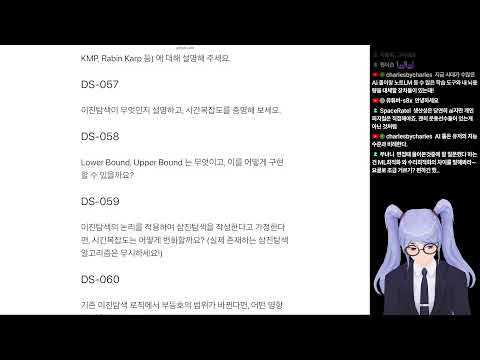
취업 특강 후르츠 리스트! 자료구조 편
유튜브 - youtube.com/live/cvmM5QFzu…
치지직 - chzzk.naver.com/live/38cead001…
YouTube
한국어
Lee Jae-yeol (👨💻 [email protected]) retweetledi


@grok
내 모든 트윗들을 읽고 분석해서 아래 내용들을 채워줘
1. 이름:
2. 성별:
3. 나이:
4. 업적:
5. 취미
6. 직업:
7. 미래:
8. 좋아하는 것 10가지:
9. 싫어하는 것 10가지:
10. 성격적 결함:
한국어
다 같이 쓰는 하네스를 눈으로 읽어보고 만들지 않으면 안되겠던데, 노룩으로 하는 사람들은 다들 어떻게 하는 건지....
한국어

@kodingwarrior 참고로 예정 통보가 아니라 신청 예정 통보인 것은 추심회사는 압류와 관해 아무런 권한이 없기 때문입니다. 법적으로 큰 의미가 있는 서류가 아닙니다
한국어
살다살다 내가 가압류 통보를 받아보다니 (돈이 없지는 않음)
근데 어떤 출처로 저런게 왔는지는 알 것 같음(....)

한국어
Lee Jae-yeol (👨💻 [email protected]) retweetledi

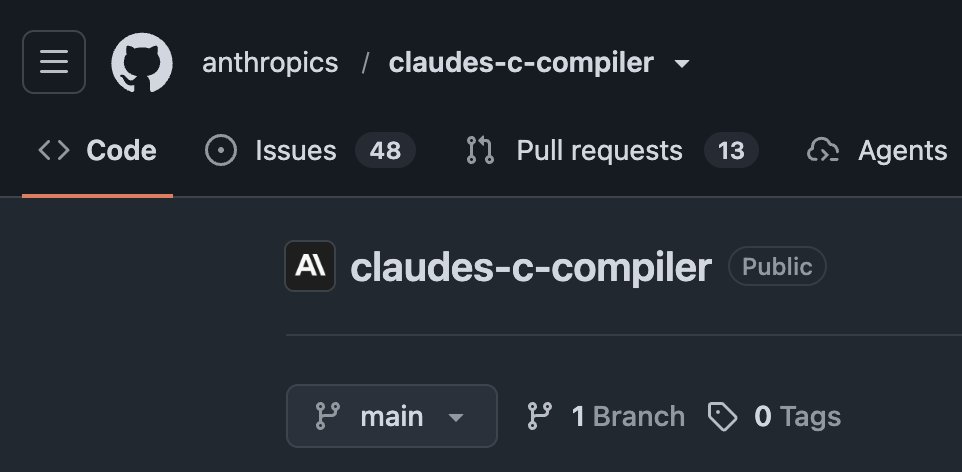
remember the time claude wrote a C compiler from scratch in rust?
the last commit is ~6 months ago
English
@park_mikan 네..... 어떤 경위로 이렇게 되었는지 너무 알 것 같습니다.. 얘기하자면 좀 긴데..
한국어

@wapj2000 실험 좀 해볼까하고 스킬 만들고 그걸 플러그인으로 배포하는 연습 좀 했었는데, 여기에 삘받아서 전직원 AI Native 엔지니어 대모험하고 있고 이게 사업 아이디어까지 확장되네요..
한국어

어쩌다보니, 요오즘 유행하는 AX 개선이라는 것을 하게 되었음... Claude Agent SDK도 만지게 될 줄은 몰랐는데...
한국어
Lee Jae-yeol (👨💻 [email protected]) retweetledi

안녕하세요!
PyCon KR 2026에서 PyLadies Seoul과 함께하는 초급 Django 튜토리얼을 진행합니다.
웹 개발이 처음이어도 괜찮아요. Django로 첫 웹 애플리케이션을 만들고 배포하는 과정을 함께해요! 🚀
2026.pycon.kr/presentations/…
한국어
@techwriteranna 주변에 외주 개발팀 찾는 회사 있으면 소개 부탁드립니다,,
한국어

별 생각은 없었는데, 회사에서 전담하는 사이드 프로젝트가 한 3-4개 정도로 늘어남
한국어
Lee Jae-yeol (👨💻 [email protected]) retweetledi

Creating good ideas requires depth of understanding. If we fully automate our code review process, it'll be much harder for us to create the ideas that once took us there.
Because "it's not just one loop. When you review what's happening…you come away changed…and that understanding is what you take to the next loop, and the next, and the next."
"When you have rich conceptual structures in your head that you can fluently recombine really fast without going out to ask some agent or some human how it works, that gives you the ability to fluidly take creative leaps."
"And that's the human part of the work, coming up with the next idea and the next idea."
@geoffreylitt
English
Lee Jae-yeol (👨💻 [email protected]) retweetledi

There’s a popular theory that AI will finally make formal verification mainstream because mathematical proof of correctness will be needed when machines write most or all of the code. But will this happen? Hillel Wayne is one of the best people to answer. Timestamps:
00:00 Intro
04:32 The Crossover Project
11:37 What software engineering does better
15:30 What traditional engineering does better
18:17 Formal methods
29:32 TLA+: what it is and demo
36:58 TLA+ at Amazon
38:10 Ways distributed systems break
41:03 Formal methods and systems thinking
46:20 The value of learning math
50:23 What TLA+ is good for and isn’t
52:50 Alloy: a declarative language for software modeling
58:53 Other formal methods tools
1:01:24 Property-based testing
1:05:31 AI and the need for formal verification
1:12:29 Logic for programmers
1:14:35 Hillel’s 2025 prediction on AI’s impact
1:21:30 Book recommendation
Brought to you by:
• @AntithesisHQ – verify your system’s correctness without human review or traditional integration tests – and avoid bugs or outages. antithesis.com/pragmatic
• @turbopuffer – a vector and full-text search engine built on object storage. It’s fast, cheap, and extremely scalable. turbopuffer.com/pragmatic
• @WorkOS – everything you need to make your app enterprise ready. workos.com
Two things I found especially interesting, talking with Hillel:
1. Amazon used TLA+ to find a bug almost impossible to locate without formal methods.
In the paper How AWS uses formal methods, the AWS team shared that they’d found a complicated bug for which the shortest error trace to exhibit was 35 steps (!!). The bug passed unnoticed through extensive design review, code reviews, and testing. AWS concluded they wouldn’t have uncovered it if they’d stuck to conventional testing approaches.
2. Why not use formal verification for everything, then?
It’s because specs in the real world are a nightmare to write. Even a simple problem like “find the file in a directory that has the most lines” gets complicated when modeled with formal methods. We would have to answer questions like: ‘do we look at ASCII or UTF-8 new line characters, what about unreadable files, and Symlinks?’ Without formal methods, we can write a simple verification that is right in 99%+ of cases. Formal methods require a lot of extra effort for the less than 1% of exotic use cases!
English