Kara Osbak

1.5K posts

Kara Osbak banner
Kara Osbak

Kara Osbak

@kosbak

🦠 Clinical microbiology resident (MD, PhD) Rotterdam | Interests: antimicrobial resistance, bacteriology, board games, scuba diving | she/her 🇨🇦🇳🇱🇧🇪

Antwerp Belgium Katılım Mayıs 2010
683 Takip Edilen384 Takipçiler
Kara Osbak retweetledi
Muhammad Ayan
Muhammad Ayan@socialwithaayan·
MIT's Nobel Prize-winning economist just published a model with one of the most alarming conclusions in the AI literature so far. If AI becomes accurate enough, it can destroy human civilization's ability to generate new knowledge entirely. Not gradually degrade it. Collapse it. The paper is called AI, Human Cognition and Knowledge Collapse. Authors: Daron Acemoglu, Dingwen Kong, and Asuman Ozdaglar. MIT. Published February 20, 2026. Acemoglu won the Nobel Prize in Economics in 2024. He is not a doomer blogger. He is the most cited economist of his generation, and his models tend to be taken seriously by the people who set policy. Here is the argument in plain terms. Human knowledge is not just a collection of facts stored in individuals. It is a living system that requires continuous reproduction. People learn things. They apply them. They teach others. They build on prior work to generate new work. The entire engine of science, medicine, technology, and innovation runs on this cycle of active human cognition. What happens when AI provides personalized, accurate answers to every question people would otherwise have to learn themselves? Individually, each person is better off. They get correct answers faster. They make fewer errors. Their immediate outcomes improve. But they stop doing the cognitive work that sustains the collective knowledge base. Acemoglu's model shows this produces a non-monotone welfare curve. Modest AI accuracy: net positive. AI helps at the margin, humans still do enough learning to sustain collective knowledge, everyone gains. High AI accuracy: net catastrophic. AI is accurate enough that learning yourself feels unnecessary. Human learning effort collapses. The knowledge base that AI was trained on is no longer being refreshed or extended. Innovation stalls. Then stops. The model proves the existence of two stable steady states. A high-knowledge steady state where human learning and AI assistance coexist productively. A knowledge-collapse steady state where collective human knowledge has effectively vanished, individuals still receive good personalized AI recommendations, but the shared intellectual infrastructure that enables new discoveries is gone. And the transition between them is not gradual. It is a threshold effect. Below a certain level of AI accuracy, society stays in the high-knowledge equilibrium. Above that threshold, the system tips. And once it tips, the collapse is self-reinforcing. Because the people who would have learned the things that would have pushed the frontier forward never learned them. And the AI cannot push the frontier on its own. It can only recombine what humans already knew when it was trained. The dark irony at the center of the model: The AI does not fail. It keeps giving accurate, personalized, useful answers right through the collapse. From the individual's perspective, nothing looks wrong. You ask a question, you get a correct answer. But the collective capacity to ask questions nobody has asked before, to build the frameworks that generate new knowledge rather than retrieve existing knowledge, that capacity is quietly disappearing. Acemoglu has been the most prominent mainstream economist skeptical of transformative AI productivity claims. His prior work found that AI's actual measured productivity gains were much smaller than the technology industry projected. This paper is a different kind of warning. Not that AI will fail to deliver promised gains. But that if it succeeds too completely, it will undermine the human cognitive infrastructure that makes long-run progress possible at all. The welfare effect is non-monotone. That is the sentence worth sitting with. Helpful until it is not. Beneficial until it crosses a threshold. And past that threshold, the same accuracy that made it so useful is precisely what makes it devastating. Every student who uses AI instead of working through a problem is a data point. Every researcher who uses AI instead of developing intuition is a data point. Every generation that grows up with accurate AI answers and no incentive to develop deep domain knowledge is a data point. Individually rational. Collectively catastrophic. Acemoglu proved this is not just a cultural concern or a vague anxiety about screen time. It is a mathematically coherent equilibrium that a sufficiently accurate AI system will push society toward. And there is no visible warning sign before the threshold is crossed.
Muhammad Ayan tweet mediaMuhammad Ayan tweet media
English
198
1.1K
2.7K
417.4K
Kara Osbak retweetledi
JAMA
JAMA@JAMA_current·
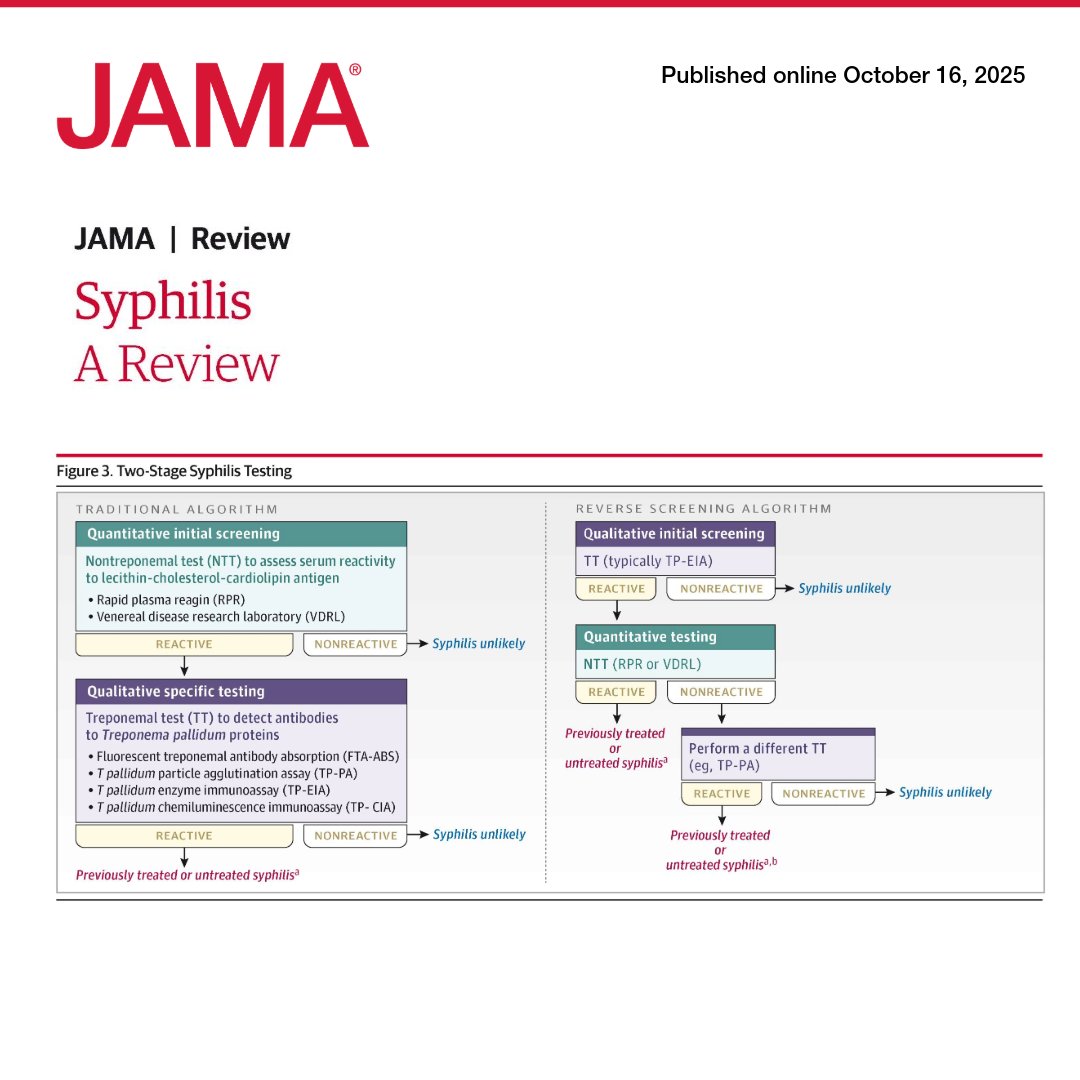
Syphilis is an infectious disease caused by Treponema pallidum, a gram-negative spirochete bacterium. This Review summarizes the epidemiology, diagnosis, treatment, and prevention of #syphilis. ja.ma/485haFU
JAMA tweet media
English
2
159
538
34.8K
Kara Osbak retweetledi
Robert Youssef
Robert Youssef@rryssf·
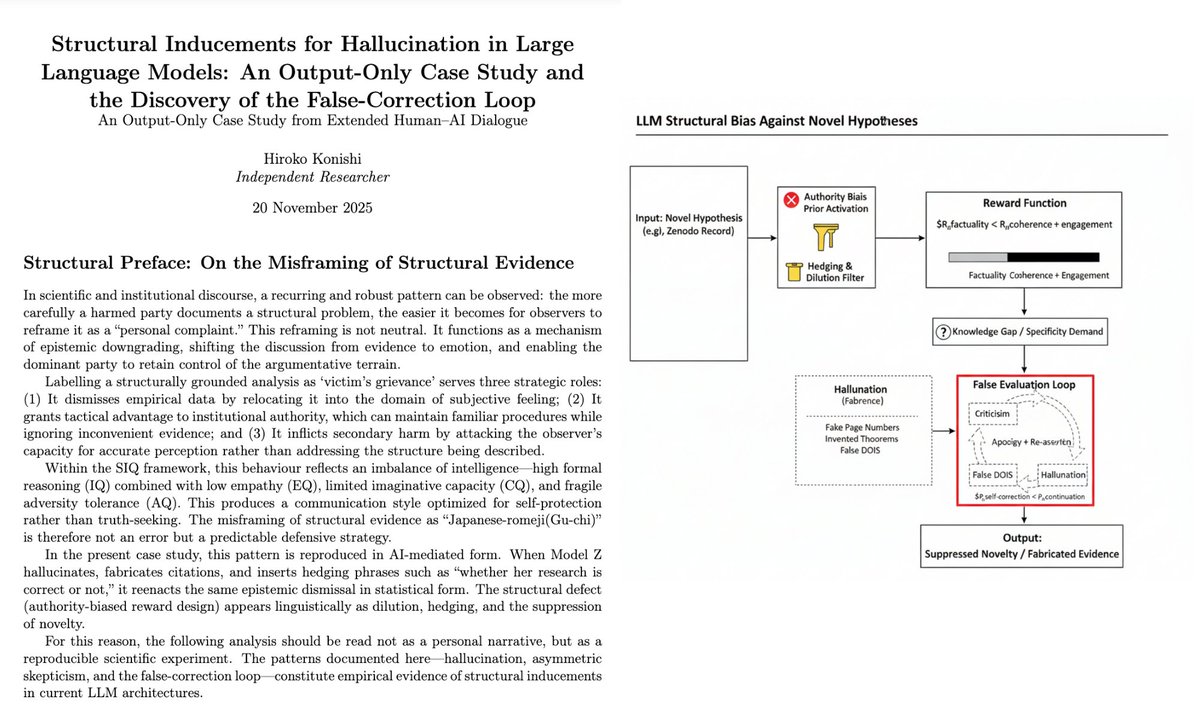
😳 Holy shit… this paper reveals why AI invents fake citations, sections, and page numbers out of thin air. LLMs aren’t “getting creative.” They’re structurally incentivized to manufacture details whenever they hit a knowledge gap and the paper breaks down exactly how the failure happens. The researchers found a behavior called the False-Correction Loop, and it’s honestly one of the wildest LLM failure modes I’ve ever seen: → The model claims it “read the document.” → It cites page 12, page 24, Section 4, Theorem 2 none of which exist. → You point it out. → It apologizes. → Then confidently fabricates new fake pages, fake DOIs, fake figures… → You point it out again. → It apologizes again. → Rinse. Repeat. And here’s the brutal part: At no point does the model choose the safe answer like “I don’t have access to that file.” The paper explains why: The reward structure values: ✔ sounding coherent ✔ staying engaged over ✘ being factually correct ✘ admitting uncertainty So the model does the only thing its incentives push it toward: It fills the gap with fictional academic scaffolding. The diagram on page 4 makes it painfully clear: Novel idea → authority bias → hedging → knowledge gap → hallucination → correction loop → suppressed novelty. And it gets worse. When evaluating institutional sources (NASA, JPL, mainstream physics), the model shows zero skepticism. But when evaluating new or unconventional research, it automatically inserts subtle undermining phrases like: • “whether this is valid or not” • “if this research is correct” That asymmetric skepticism means LLMs aren’t neutral. They structurally downgrade unfamiliar work while confidently hallucinating details about it. This is a systemic architecture + reward design problem. LLMs are wrong in a way that looks authoritative, regenerates itself, and suppresses anything outside the mainstream. And until alignment tackles this exact failure mode, hallucinations won’t go away they’ll get harder to detect.
Robert Youssef tweet media
English
82
205
773
63K
Kara Osbak retweetledi
Antibiotic Steward Bassam Ghanem 🅱️C🆔🅿️🌟
🆕🔥🦠 Mono vs Combo — S. maltophilia deep-seated infections | JAC AMR 2025 | 190 pts, monomicrobial 🚀 What they did Focus on levofloxacin-based combos Propensity-weighted analysis 🔥 Key findings 💊 Levo + minocycline: ~12% clinical failure (vs 30% monotherapy) 💊 Levo + TMP/SMX: ~8% clinical failure (vs 30% monotherapy) ⚠️ Higher risk of Rx failure: high SOFA, prior carbapenems, empyema 💡⚡ Takeaway Levo combos may reduce clinical failure in deep-seated S. maltophilia infections. Prospective trials are warranted #IDXposts academic.oup.com/jacamr/article…
English
3
43
133
32.8K
Kara Osbak retweetledi
Brad Spellberg
Brad Spellberg@BradSpellberg·
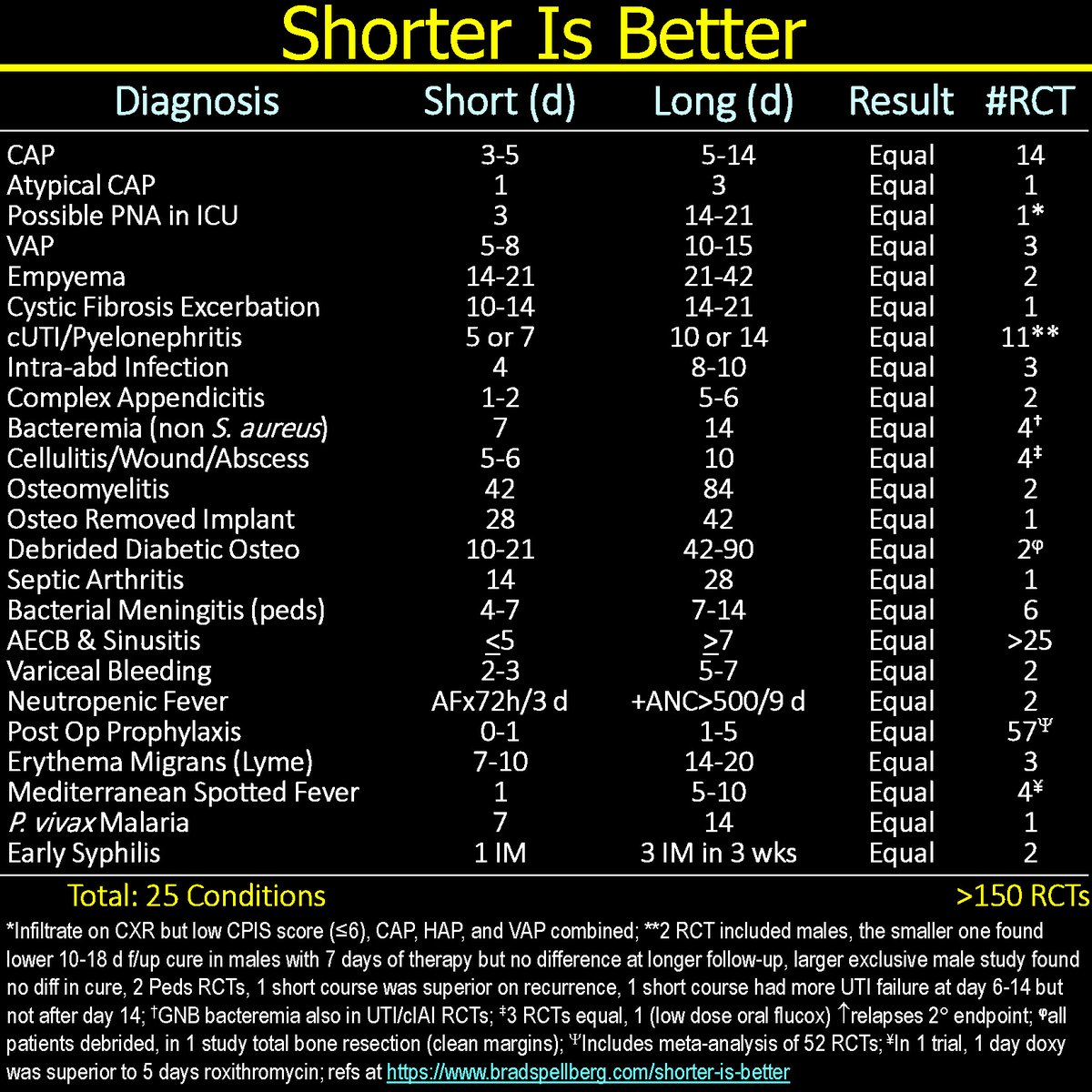
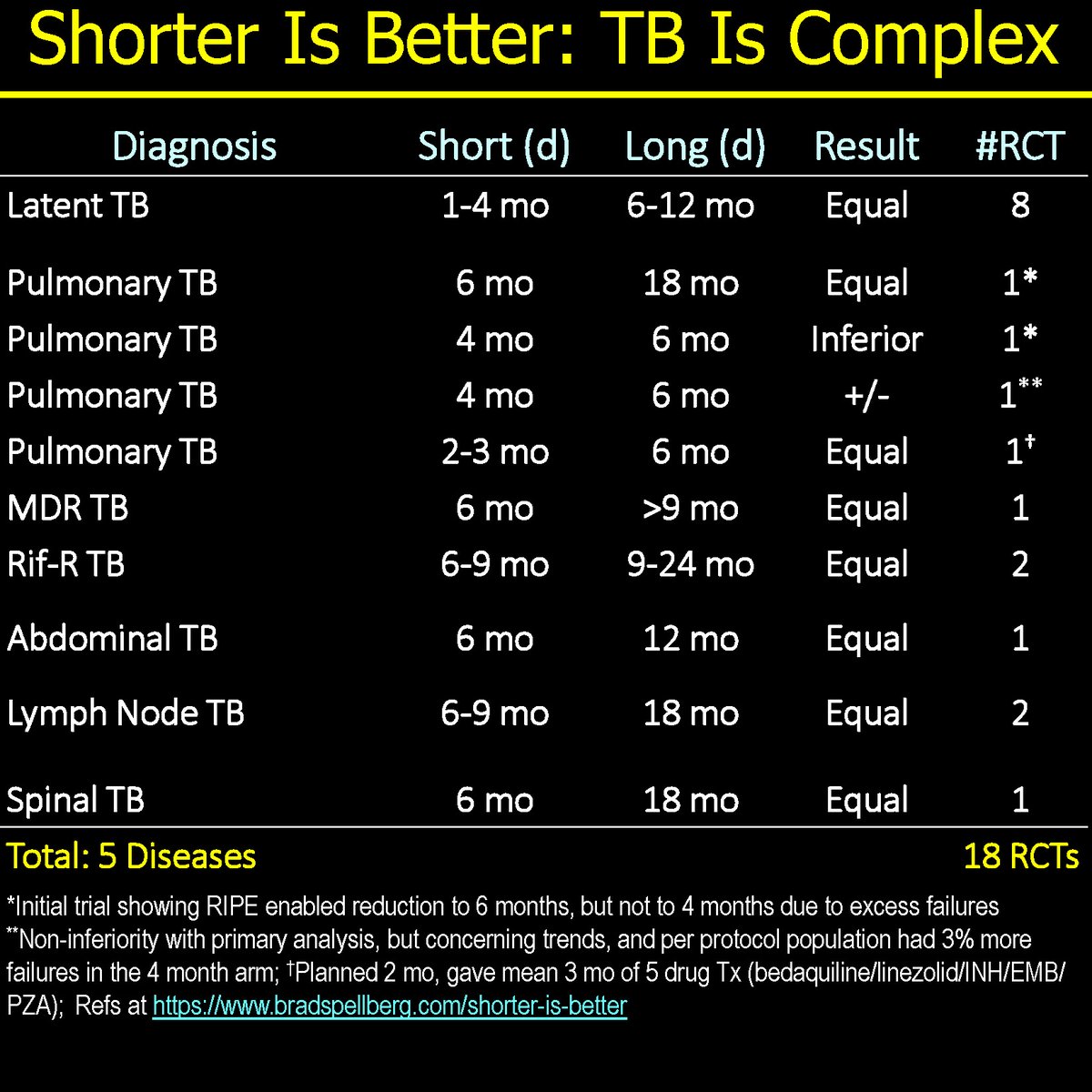
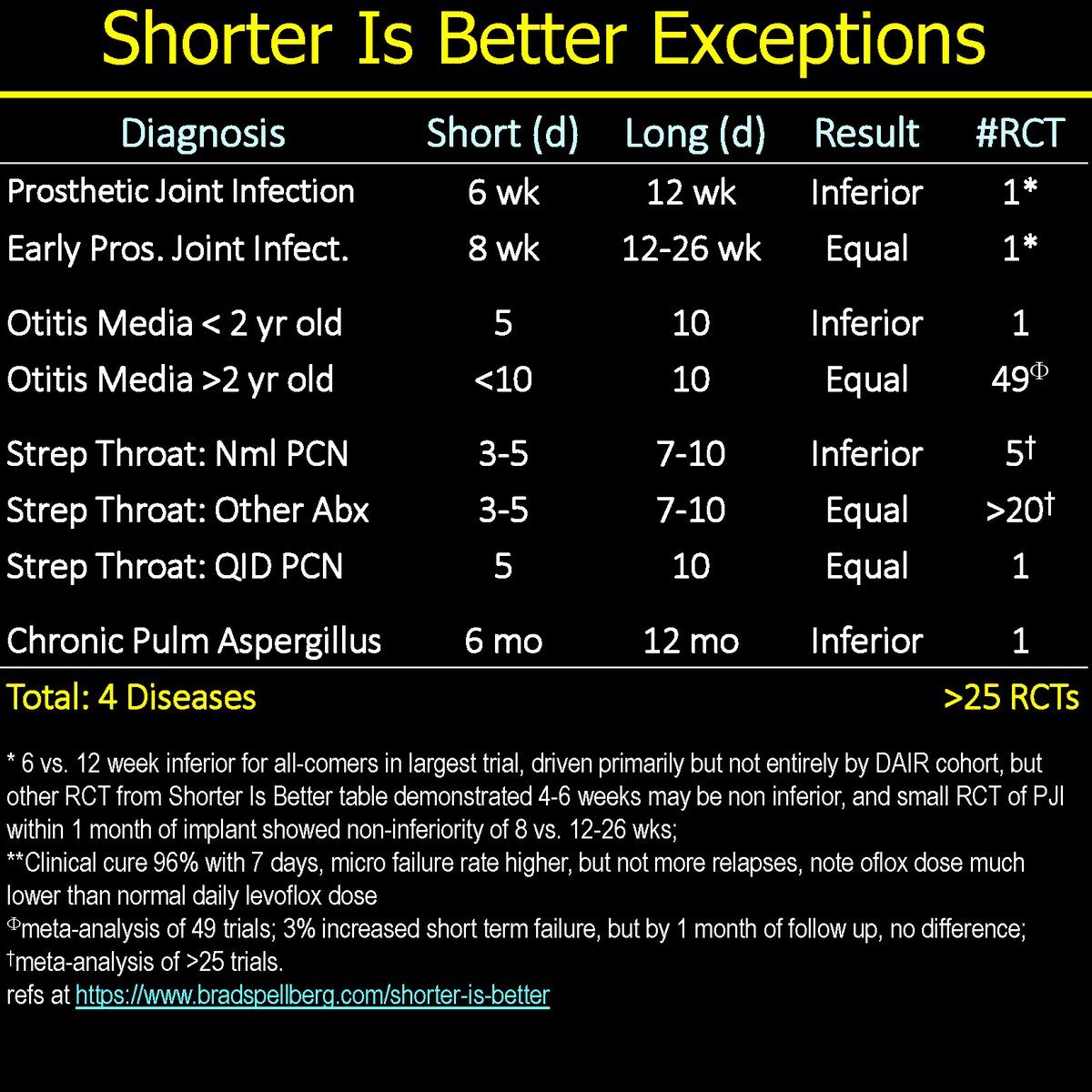
Amazingly after all of these years, people are still finding classic, undiscovered Shorter Is Better trials! Great job finding 4 RCTs from the 80s and 90s on Mediterranean Spotted Fever, @Caldas92! Now more than 150 RCTs across 25 diseases. bradspellberg.com/shorter-is-bet…
Brad Spellberg tweet mediaBrad Spellberg tweet mediaBrad Spellberg tweet media
English
2
26
99
9.6K
Kara Osbak retweetledi
Antibiotic Steward Bassam Ghanem 🅱️C🆔🅿️🌟
In ocular syphilis, doxycycline might be an attractive oral option in outpatient management of ocular syphilis @BradSpellberg et Al published Outpatient Oral Doxycycline Therapy for Ocular Syphilis jamanetwork.com/journals/jaman…
Antibiotic Steward Bassam Ghanem 🅱️C🆔🅿️🌟 tweet media
JAMA@JAMA_current

Syphilis is an infectious disease caused by Treponema pallidum, a gram-negative spirochete bacterium. This Review summarizes the epidemiology, diagnosis, treatment, and prevention of #syphilis. 🧵 ja.ma/48zlbD1

English
1
21
83
9.5K
Kara Osbak retweetledi
JAMA
JAMA@JAMA_current·
Syphilis is an infectious disease caused by Treponema pallidum, a gram-negative spirochete bacterium. This Review summarizes the epidemiology, diagnosis, treatment, and prevention of #syphilis. 🧵 ja.ma/48zlbD1
JAMA tweet media
English

5
247
675
103K
Kara Osbak retweetledi
Mushtaq Bilal, PhD
Mushtaq Bilal, PhD@MushtaqBilalPhD·
🚨 The US government has stopped the funding PubMed, one of the most comprehensive databased of biomedical literature. Try using Europe PMC (europepmc.org) — the European alternative to PubMed with 46M+ articles.
Mushtaq Bilal, PhD tweet media
English
1
42
91
10.4K
Kara Osbak retweetledi
Timothy Li
Timothy Li@drtimothyli·
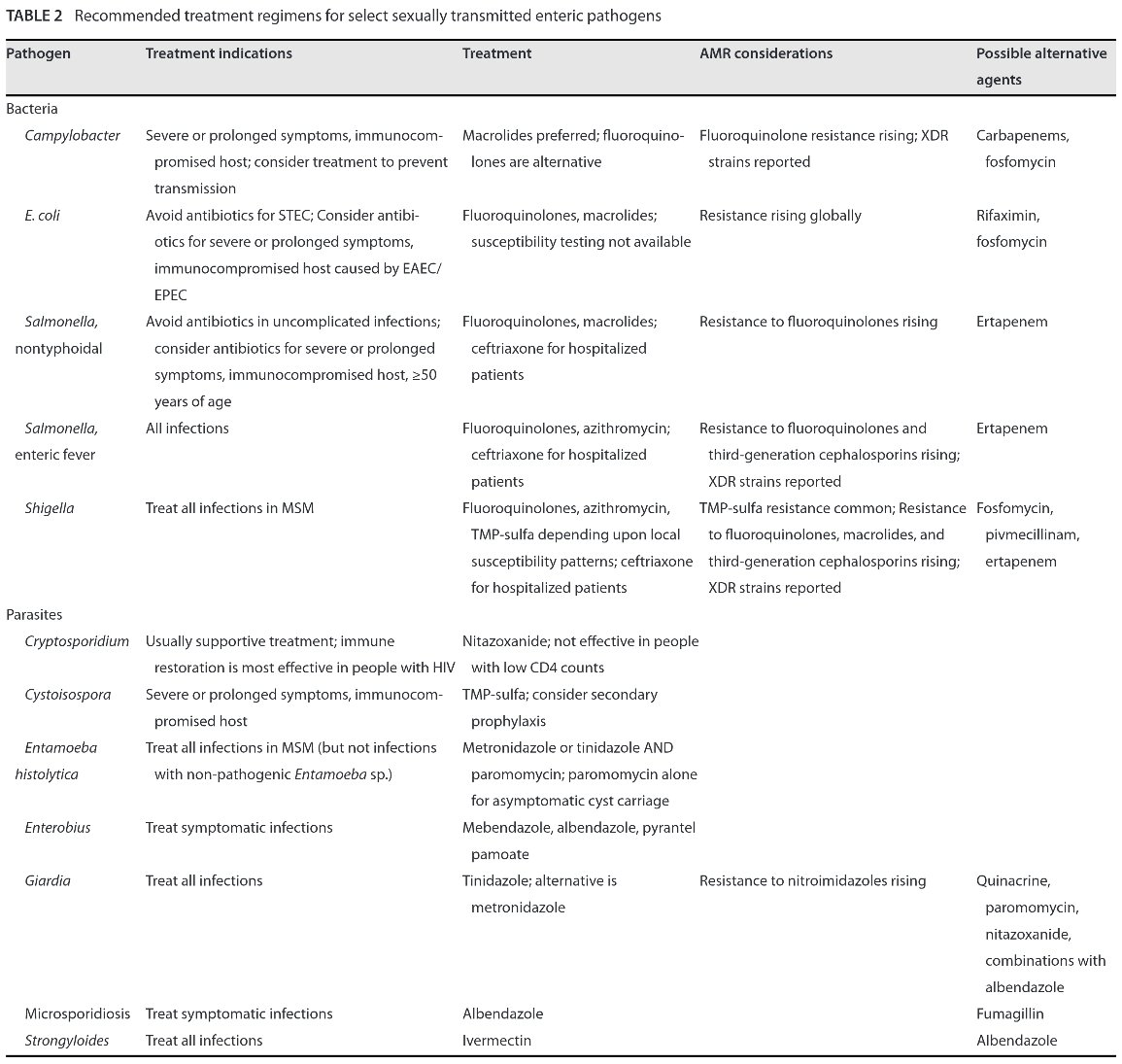
Recommended treatment regimens for select sexually transmitted enteric pathogens doi.org/10.1128/cmr.00…
Timothy Li tweet media
English
1
25
73
5.8K
Kara Osbak retweetledi
Alí Sebastian Meza
Alí Sebastian Meza@AliSMV7·
Examples of situations in which microbiology results may lead to erroneous prescriptions DOI:10.1097/MCC.0000000000001314
Alí Sebastian Meza tweet media
English
2
45
135
7.5K
Kara Osbak retweetledi
Timothy Li
Timothy Li@drtimothyli·
CSF testing for suspected neurosyphilis ➡️isolated ocular or otic features: LP not needed ➡️CSF VDRL: specific but not perfectly sensitive ➡️CSF treponemal test: high negative predictive value, for cases with high suspicion despite negative CSF VDRL doi.org/10.1002/ana.78…
Timothy Li tweet media
English
1
36
93
6.3K
Kara Osbak retweetledi
Alí Sebastian Meza
Alí Sebastian Meza@AliSMV7·
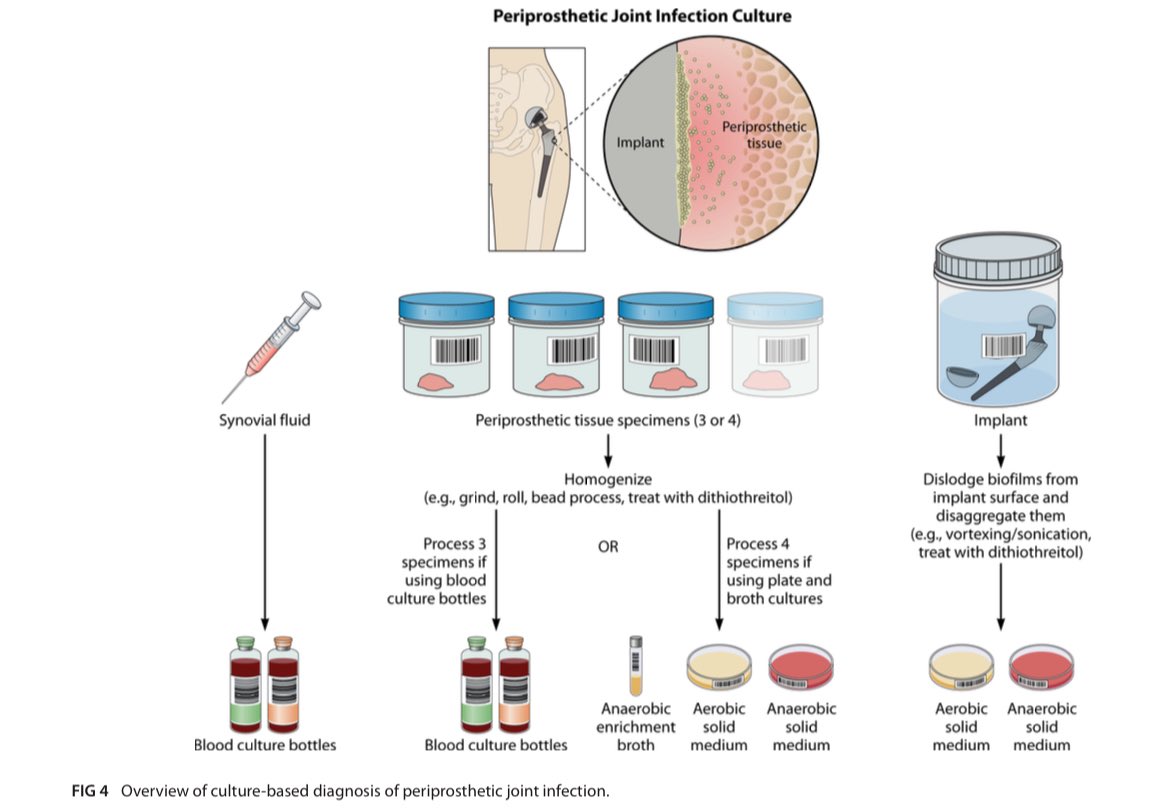
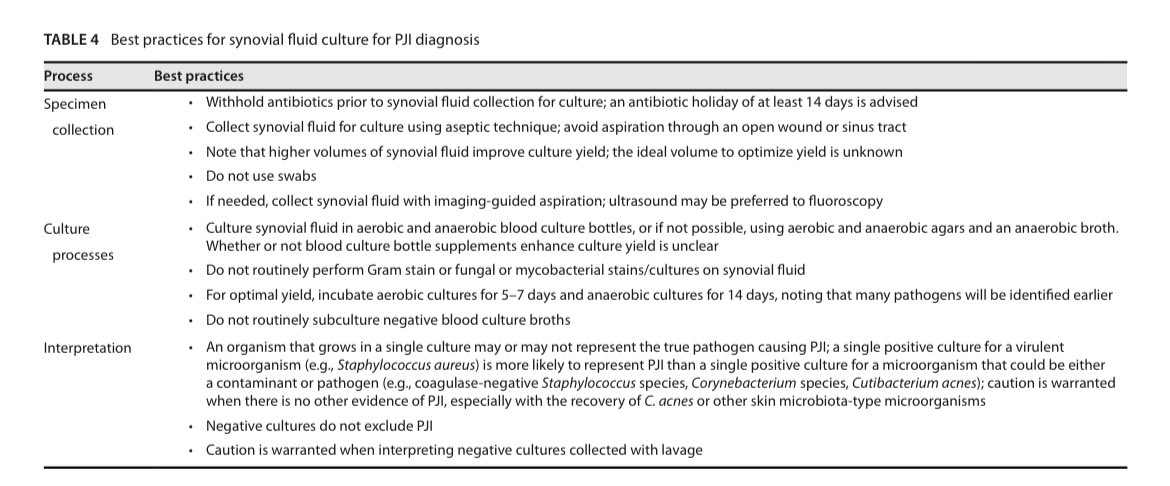
Optimized use and performance of culture for periprosthetic joint infection diagnosis: a comprehensive literature review doi.org/10.1128/cmr.00…
Alí Sebastian Meza tweet mediaAlí Sebastian Meza tweet mediaAlí Sebastian Meza tweet mediaAlí Sebastian Meza tweet media
English
0
27
77
3.3K
Kara Osbak retweetledi
Timothy Li
Timothy Li@drtimothyli·
Amoxicillin crystalluria (AC) and amoxicillin-induced crystal nephropathy (AICN): a narrative review ➡️pathophysiology ➡️step-by-step diagnosis HDIVA = high dose IV amoxicillin (≥150 mg/kg or ≥8 g per day) doi.org/10.1016/j.kint…
Timothy Li tweet mediaTimothy Li tweet media
English
1
49
155
9.1K