Bence Kövér
153 posts

@kover_bence
ML/Bio, mostly single-cell genomics PhD student @KingsCollegeLon & Wellcome Trust Previously @UCL (2019-23) @Caltech (2021-22)


New Genomics x AI blog post! @jmschreiber91 presents cherimoya an efficient seq2fun model for local regulatory function prediction! Great contribution. Love the thoroughness of hyperparam exploration and efficiency gains. Worth a read and studying repo! genomicsxai.github.io/blogs/2026-011/


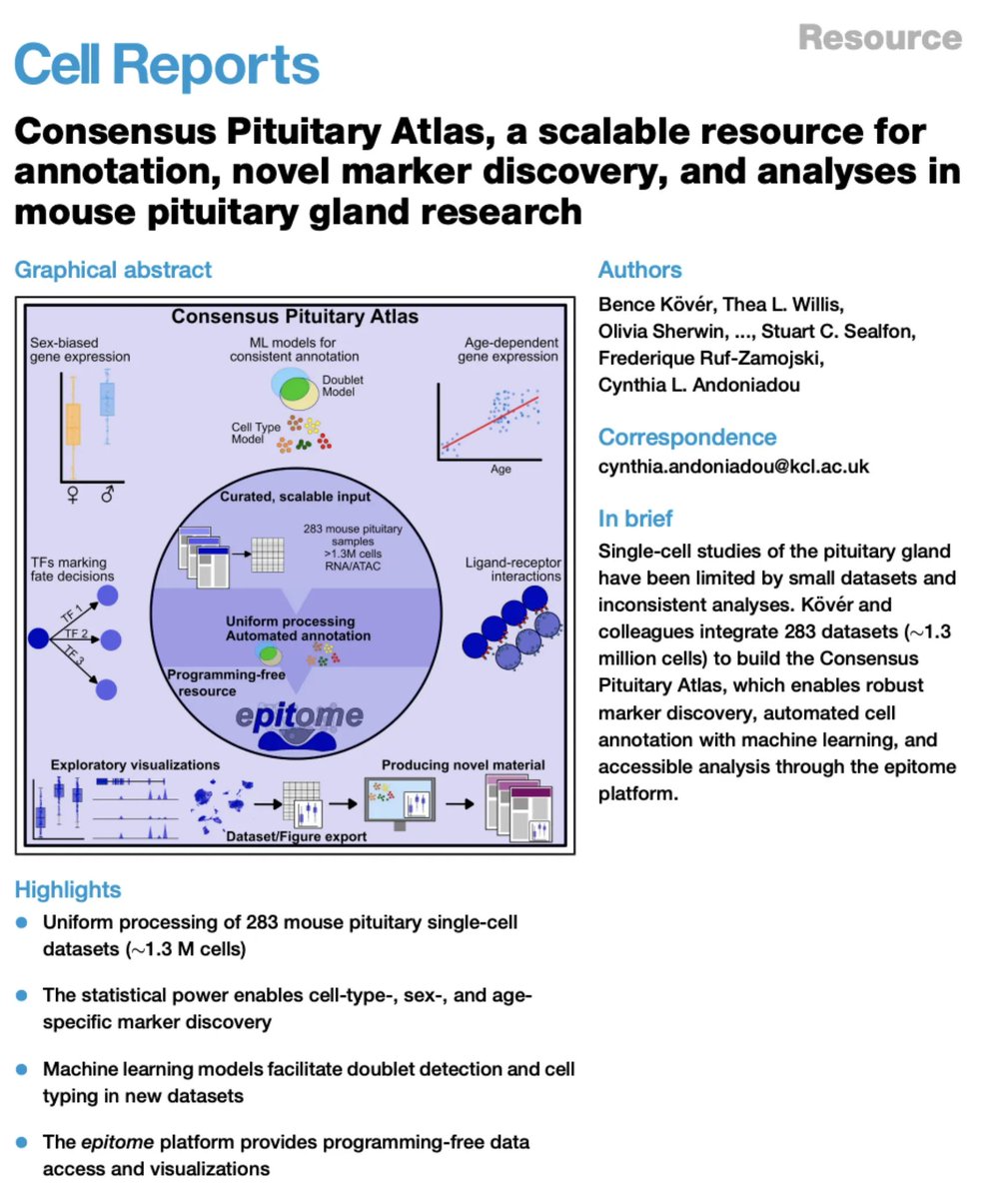
The Andoniadou Lab is uncovering the transcription factors that define and control pituitary cell types, providing insights into hormone deficiencies and hormone-secreting tumors. With Plasmidsaurus 3' RNA-Seq, they have scaled from a handful of genes to transcriptome-wide analysis across many more engineered cell lines, with reproducible results delivered in under a week. Now, they're planning to perform more bulk RNA-seq than previously done in all of pituitary gland research. Learn about their impactful research →

Some of the accepted bioML papers are truly egregiously terrible. That's been the case at all the major ML conferences over the last many years. There was even a paper that won some kind of award last year at one of the conferences that was just chok full of fatal flaws.

Virtual cell enthusiasts: check out my talk today (in an hour) to understand why I think it is critical to have longitudinal (temporal) data & incorporate cis regulation into causal mechanistic models of perturbation response. Case study: fibroblast to iPSC reprogramming.


With all due respect, I'd like to offer a few points of clarification. First, I have no issue with "shortcut models." In fact, many of my own papers use relatively simple models to solve important real-world problems. If a simpler model ultimately proves capable of capturing complex cellular biology and helping cure disease, I'd be delighted. Science should reward what works, not what is most sophisticated. Second, terms like virtual cells, foundation models, and world models are high-level concepts that describe a class of models rather than a specific algorithm. Similar terminology has emerged naturally in computer vision and NLP as the field evolved. I think it's reasonable to adopt analogous concepts in biology as we explore whether they can unlock similar advances. Whether these ideas ultimately live up to their promise is, of course, an empirical question. Rigorous validation will decide. This is exactly what my original post is about. Healthy skepticism is essential, but so is giving ambitious new directions the opportunity to prove (or disprove) themselves. I don't think we should dismiss a promising research direction simply because the terminology sounds aspirational 🙏🙏


To avoid stating the obvious: the goal of virtual cells isn’t to achieve great perturbation prediction. Perturbation prediction is a means, not the end. The real objective is to build a foundation model that powers downstream drug discovery, from target identification and mechanism-of-action inference to toxicity prediction, biomarker discovery, and therapeutic design. Let’s not optimize for the proxy instead of the mission.