
Sabitlenmiş Tweet
kuark
12.5K posts


kuark
@kuark
Viajas por tu cuenta o te viajan:Regla 0 https://t.co/wxsT2v9Boq
Comunidad Valenciana, España Katılım Eylül 2008
275 Takip Edilen277 Takipçiler


"China es un país enorme y muy poderoso. Taiwán es una isla muy pequeña. Piénsalo: está a 94 km de distancia. Nosotros estamos a 15.000 km. Es un problema difícil (...). [Taiwán] nos robó nuestra industria de chips".
Español
@JuanMa_Moreno Poco poco (comienza con la suscripción masiva de seguros médicos en Andalucía, Madrid,etc)las derechas consiguen que sanidad pública se vaya al carajo.Luego,como en Argentina,vienen las lamentaciones...
elperiodico.com/es/internacion…
Español


Ni un balón por perdido, ni un voto sin disputar.




Español
@JuanMa_Moreno @ppandaluz La mona, aunque vaya vestida de seda o con los colores de Andalucía, mona es, mona seguirá siendo.Cuidado con os estafadores q quieren privatizar la sanidad pública
Español
Andalucía unida es imparable.
Unamos todos los votos de la ilusión en el @ppandaluz para tener un gobierno fuerte frente a la desigualdad.
¡A votar!
GRACIAS, SEVILLA.
#ConLaFuerzaDeAndalucía
Español
@JuanMa_Moreno El populismo carca de siempre recurriendo a las banderas, la patria, las pulseritas, etc. Mucho rollo buenista, pero la realidad es q los seguros médicos privados crecen exponencialmente al tiempo que se degrada la sanidad pública. Lo importante son los hechos,no las palabras.
Español
El día siguiente a las elecciones en Andalucía vuelven las cesiones y los privilegios al independentismo de Cataluña. Lo están contando ya.
¿Sabéis quién pierde con ello otra vez?
Andalucía y los andaluces.
Necesitamos un gobierno fuerte para defender la igualdad.
Español
@JuanMa_Moreno Eres el típico marrullero vendedor de burras ciegas, cojas y desdentadas
a los incautos fachapobres.
Español
kuark retweetledi

@Informacin71542 @kuark @Argemino La pasta colosal de los impuestos en EEUU para engordar a los beneficios de los fabricantes de armamento contrasta con la gigantesca deuda de decenas de millones de estadounidenses atrapados en deudas por gastos básicos como la salud.Declive del imperio USA
Español
@CNN Medical expenses are one of the main causes of personal bankruptcy. X-ray of healthcare in the USA: Americans owe 220 billion dollars in medical bills.
elperiodico.com/es/internacion…
English

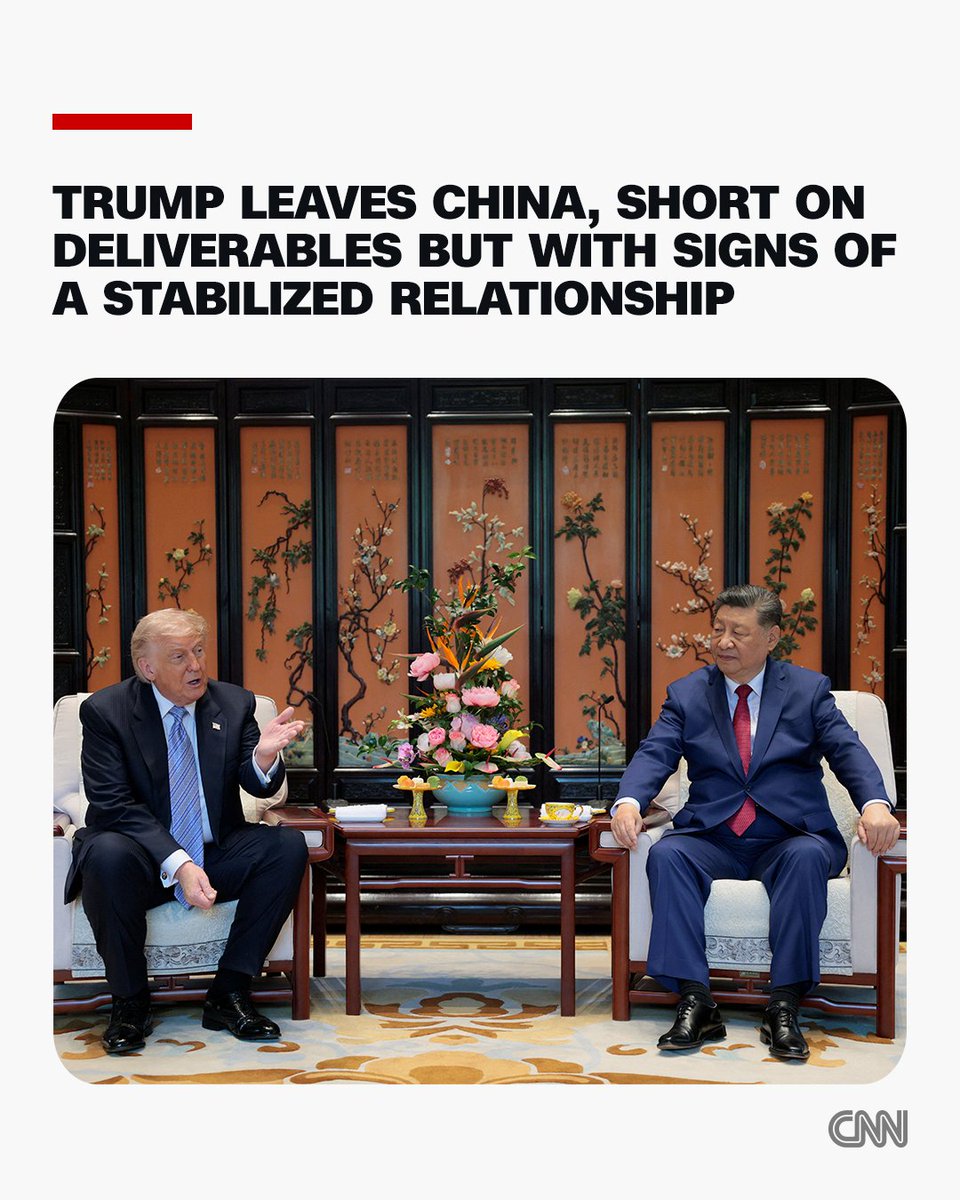
President Donald Trump departed Beijing without any immediate sign that the US and China have resolved thorny challenges dogging their fractious relationship, but with a freshly stabilized relationship with Chinese leader Xi Jinping – for now. cnn.it/4906Df7
English
@JuanMa_Moreno No queremos privatización de la sanidad pública
elperiodico.com/es/internacion…
Español
El domingo nos jugamos romper el primer camino que ha abierto Andalucía en solitario: la vía de la convivencia.
La manera de hacer las cosas en nuestra tierra se admira y se respeta.
¡Apelo al voto útil!
Español
kuark retweetledi

@Argemino "Colaboración USA"? 😂¿Por qué no se la ofrecen primero a los estadounidenses?(los gastos médicos son una de las principales causas de quiebra personal)Radiografía de la sanidad en EEUU:los americanos deben 220.000 millones de dólares de facturas médicas share.google/xBMwbB1NJMUeqg…
Español
El director de la CIA ha estado en Cuba para "ofrecer una oportunidad genuina de colaboración".
Porque, "como lo demuestra el caso de Venezuela, el presidente Trump debe ser tomado en serio".
Kellie Meyer@KellieMeyerNews
🚨A CIA official confirming to me that Dir. Ratcliffe traveled to Cuba today. I'm told Ratcliffe traveled to Havana to "initiate substantive discussions on the essential steps the Cuban regime must do to build a productive relationship with the United States." Per the official tells me, "He emphasized that the U.S. is extending a genuine opportunity for collaboration, and—as evidenced by Venezuela—President Trump must be taken seriously."
Español
Mientras Donald Trump está en Pekín, Irán ha comenzado a permitir el paso de buques chinos por el estrecho de Ormuz a cambio de una tasa administrativa.
China compra el 90% del crudo iraní.
Hamidreza Azizi@HamidRezaAz
Trump-Xi meeting and #Iran’s new maneuver in Hormuz 🔹As Trump meets Xi in Beijing – with reopening the Strait of Hormuz being a major topic on his agenda – Iran’s Fars News Agency reports that Tehran has begun allowing Chinese ships through the strait under Iranian-managed protocols, following lobbying by China’s foreign minister and ambassador. The timing is quite important. 🔹One of Washington’s key demands of Beijing is that China pressure Tehran to reopen Hormuz. Iran seems to have just made that demand structurally irrelevant. The message from Tehran is that the strait isn’t closed to partners, and it never was. In fact, Iran has been operating a selective access regime since the start of the conflict. 🔹But here, the protocol matters as much as the passage. Ships transit under Iranian management and on Iranian terms. Tehran is not “reopening” Hormuz completely; instead, it is demonstrating sovereign governance over it. This is something Iranian leaders have been emphasizing. 🔹For Beijing, the move is a diplomatic gift. Xi can tell Trump the strait is accessible to Chinese vessels – which is now verifiably true – without having applied a single day of pressure on Iran. Washington wanted Chinese leverage over Tehran, but Tehran has effectively removed the pretext for invoking it. 🔹In this sense, Iran keeps the strait instrumentalized, i.e., open enough to service partners, but closed enough to impose costs on adversaries, while retaining the ability to tighten or ease access as the diplomatic environment shifts. 🔹The development once again shows that a war designed in part to strip Iran of its instruments of regional leverage may instead have consolidated Hormuz as a permanently managed chokepoint, through which Tehran now exercises something closer to port authority than naval harassment.
Español
Talks between US President Donald Trump and Chinese leader Xi Jinping have been largely positive, though the future of Taiwan threatens to strain the relationship.
Follow live updates: cnn.it/42zDl3h

English
After Rubio was named Sec of State, Chinese gov't changed the Chinese character for Ru/Lu in Rubio's name. It may have been a clever diplomatic tool that lets China to allow him in the country, since sanctions on Rubio are under the previous spelling.
wapo.st/4fl3FFO
English
A name change in Chinese characters may have allowed Secretary of State Marco Rubio -- a fierce China critic who was banned in 2020 from entering the country -- to visit China as part of President Donald Trump’s entourage.
wapo.st/4fl3FFO
English
@Argemino 3:Incumplimiento del ordenamiento internacional: La violación de normas y acuerdos internacionales por parte de EEUU,ya sea en materia de derechos humanos, tratados de paz o regulaciones internacionales, contribuye a la percepción de un fuerte declive en su liderazgo global
Español
@Argemino 2)Apropiación de recursos ajenos, como el petróleo: EE.UU. ha sido acusado de intervenir en países ricos en recursos naturales, especialmente petróleo, con fines estratégicos y económicos, lo que alimenta la imagen de un imperialismo moderno que se apropia de recursos ajenos.
Español
“El mundo es demasiado pequeño como para que EEUU y China estén enfrentados y el Océano Pacífico es lo suficientemente grande como para que prosperen ambos”.
Vídeo optimista de la embajada china en EEUU, durante el viaje de Trump a Pekín:
Español
@Argemino 3:Brutalidad extrema en la persecución de inmigrantes:En el la política migratoria estadounidense q sido señalada por su dureza y violaciones a los derechos humanos, con prácticas que incluyen detenciones masivas,separación de familias y condiciones inhumanas para los migrantes.
Español
@washingtonpost Rubio and part of Trump's circle, adherents to Catholicism and evangelical sects, represent, in my opinion, the height of hypocrisy by facilitating/justifying the sale of weapons destined for a genocidal Israeli. I am not surprised by the gradual decline of the USA.
English

President Trump said he does not consider the economic impacts the war in Iran is having on Americans.
“Not even a little bit‚” Trump said when asked to what extent “Americans’ financial situations” are motivating him to end the war. wapo.st/3R2ObfL
English