Kusava

357 posts

Kusava banner
Kusava

Kusava

@kusavasolutions

Smart finance solutions built for bold, modern pioneers.

Wellesley Hills, MA, USA Katılım Nisan 2025
144 Takip Edilen28 Takipçiler
Kusava
Kusava@kusavasolutions·
Many businesses outgrow their financial systems gradually, not suddenly. As workflows become more complex — layered approvals, varied vendor terms, multi-entity accounting — teams often rely on manual adjustments to keep operations moving. Over time, those adjustments create operational overhead and reduce process efficiency. Finance systems work best when they reflect how the business actually operates. Learn more at Kusava.com.
Kusava tweet mediaKusava tweet mediaKusava tweet mediaKusava tweet media
English
0
0
2
3
Kusava
Kusava@kusavasolutions·
40+ hours per month on manual AP admin. That is one full work week every month. On data entry. → kusava.com
Kusava tweet media
English
0
0
2
5
Kusava
Kusava@kusavasolutions·
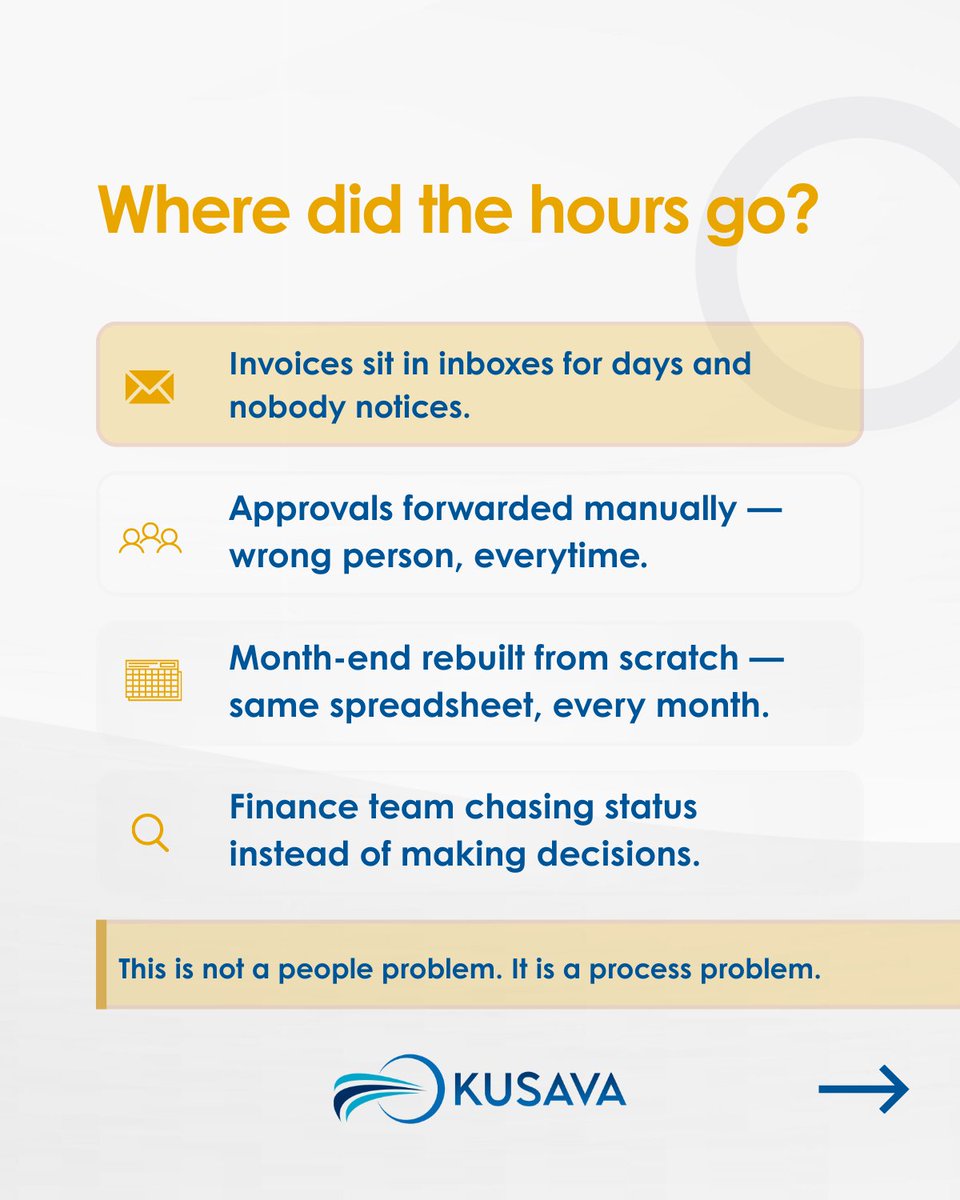
Most businesses know invoices are being processed and vendors are being paid. What often goes unnoticed is the amount of time AP takes in the background. Invoices sit in inboxes, approvals get forwarded manually, month-end reporting is rebuilt from scratch, and finance teams spend valuable hours chasing status instead of focusing on decisions. Over time, that manual work adds up — not just as delay, but as lost visibility, slower workflows, and operational drag. The real cost of AP is rarely just the invoice itself. It’s the hidden effort required to move every transaction from receipt to approval to payment. That’s why the conversation around AP should not only be about paying vendors on time. It should also be about reducing manual touchpoints, improving workflow design, and giving finance teams better control over how work moves. Visit us at kusava.com.
Kusava tweet mediaKusava tweet mediaKusava tweet mediaKusava tweet media
English
0
0
1
2
Kusava
Kusava@kusavasolutions·
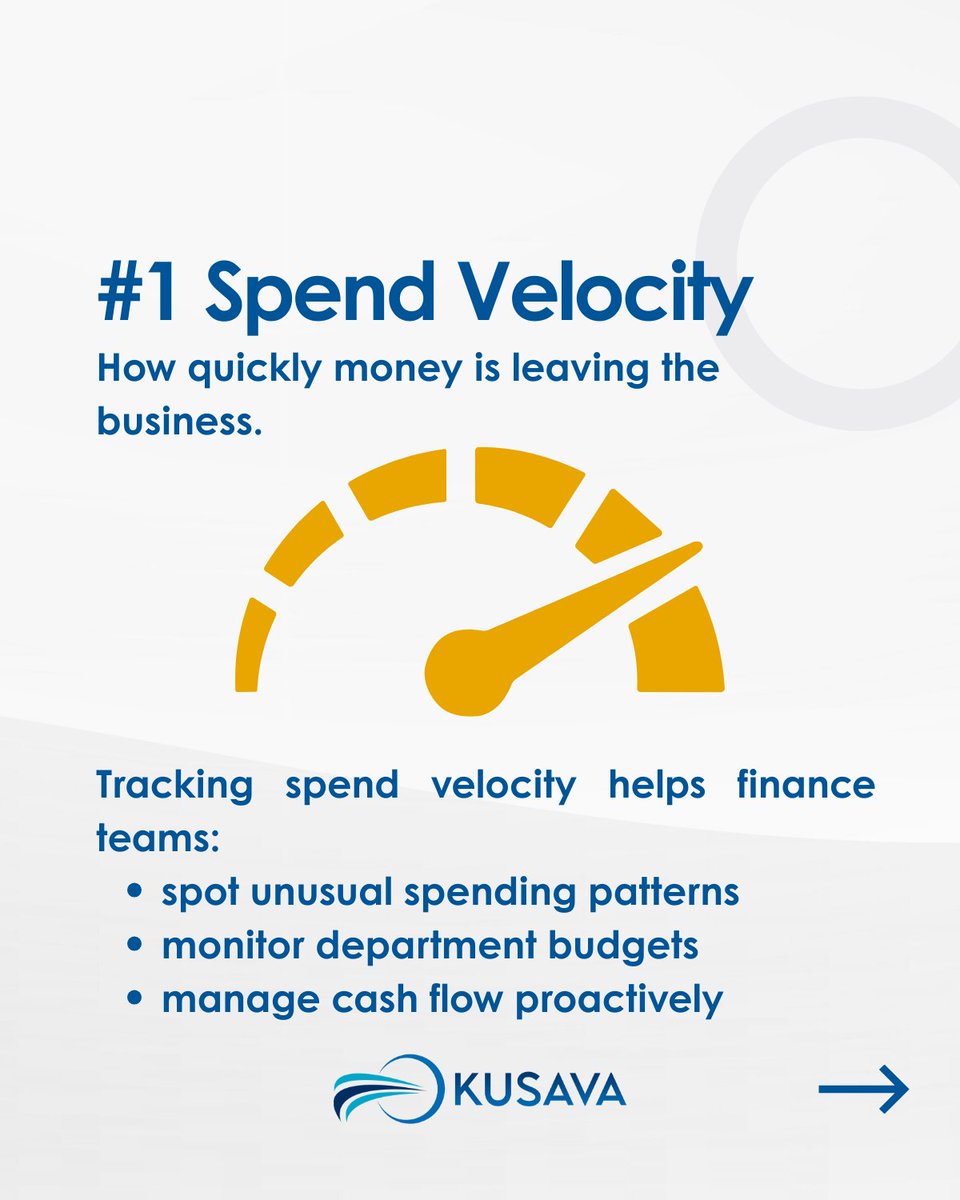
Finance teams often focus on financial outputs — reports, reconciliations, and month-end numbers. But many operational issues show up much earlier in the workflow. Signals like spend velocity, approval latency, and exception rate reveal how financial processes are actually functioning day to day. They help finance teams understand how quickly money is moving through the business, where approvals may be slowing transactions, and where workflows are breaking down and requiring manual intervention. Tracking these operational signals alongside financial metrics gives teams better visibility into how spend flows through the organization — and where improvements can make the biggest impact. Visit us at kusava.com.
Kusava tweet mediaKusava tweet mediaKusava tweet mediaKusava tweet media
English
0
0
1
4
Kusava
Kusava@kusavasolutions·
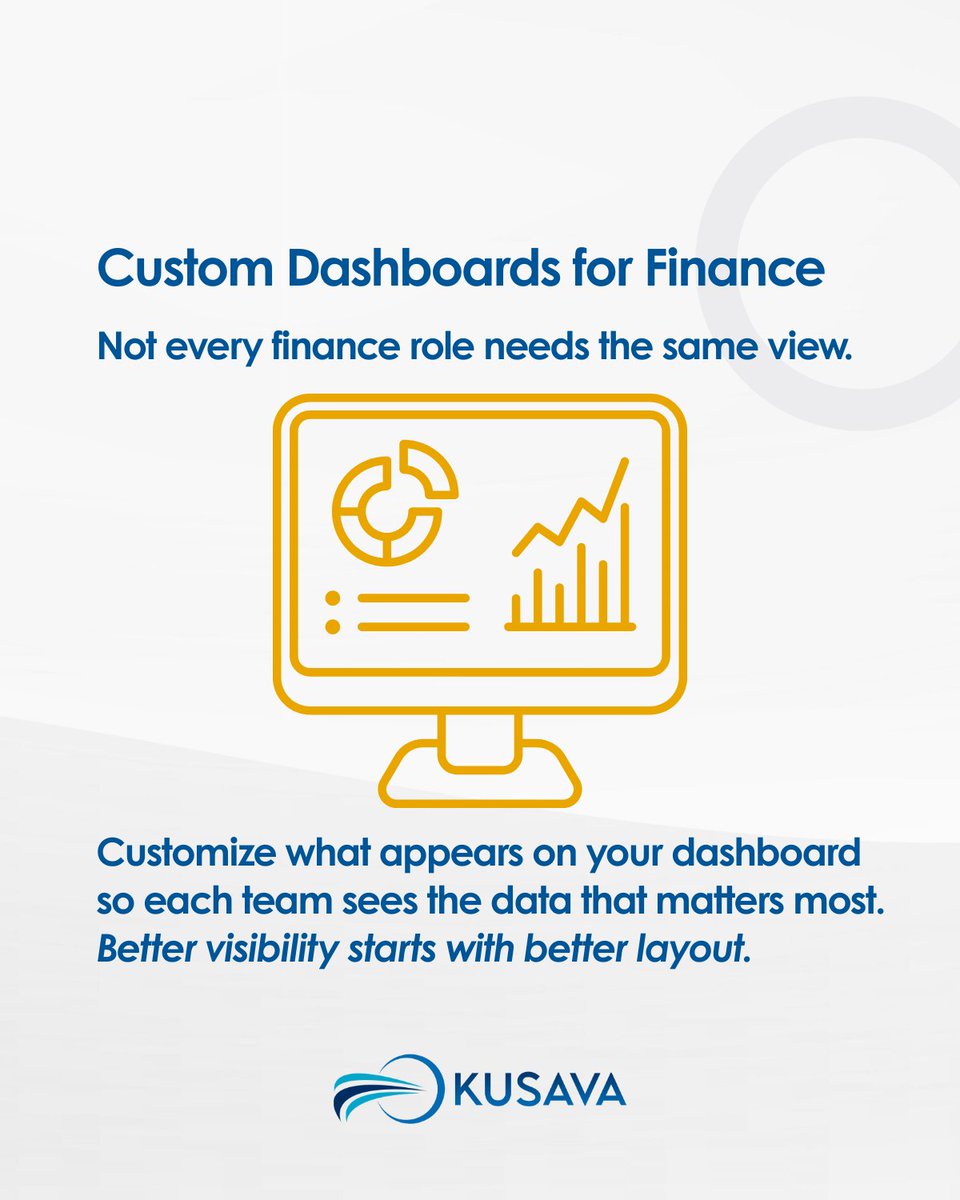
Finance teams don’t all look for the same signals. A CFO may track cash position and high-level performance, while finance operations teams focus on approvals, expenses, and transaction flows. When every user sees the same dashboard, important information can easily get buried. Research in information design shows that decision-making improves when data is contextual and role-specific. That’s why customizable dashboards matter — they allow teams to surface the metrics, workflows, and financial signals most relevant to their role. Better visibility isn’t about showing more data. It’s about showing the right data. Learn more at kusava.com.
Kusava tweet media
English
0
0
2
7
Kusava
Kusava@kusavasolutions·
@tryramp Ramp+Notion=Winning Duo of the Year
English
0
0
0
29
Kusava
Kusava@kusavasolutions·
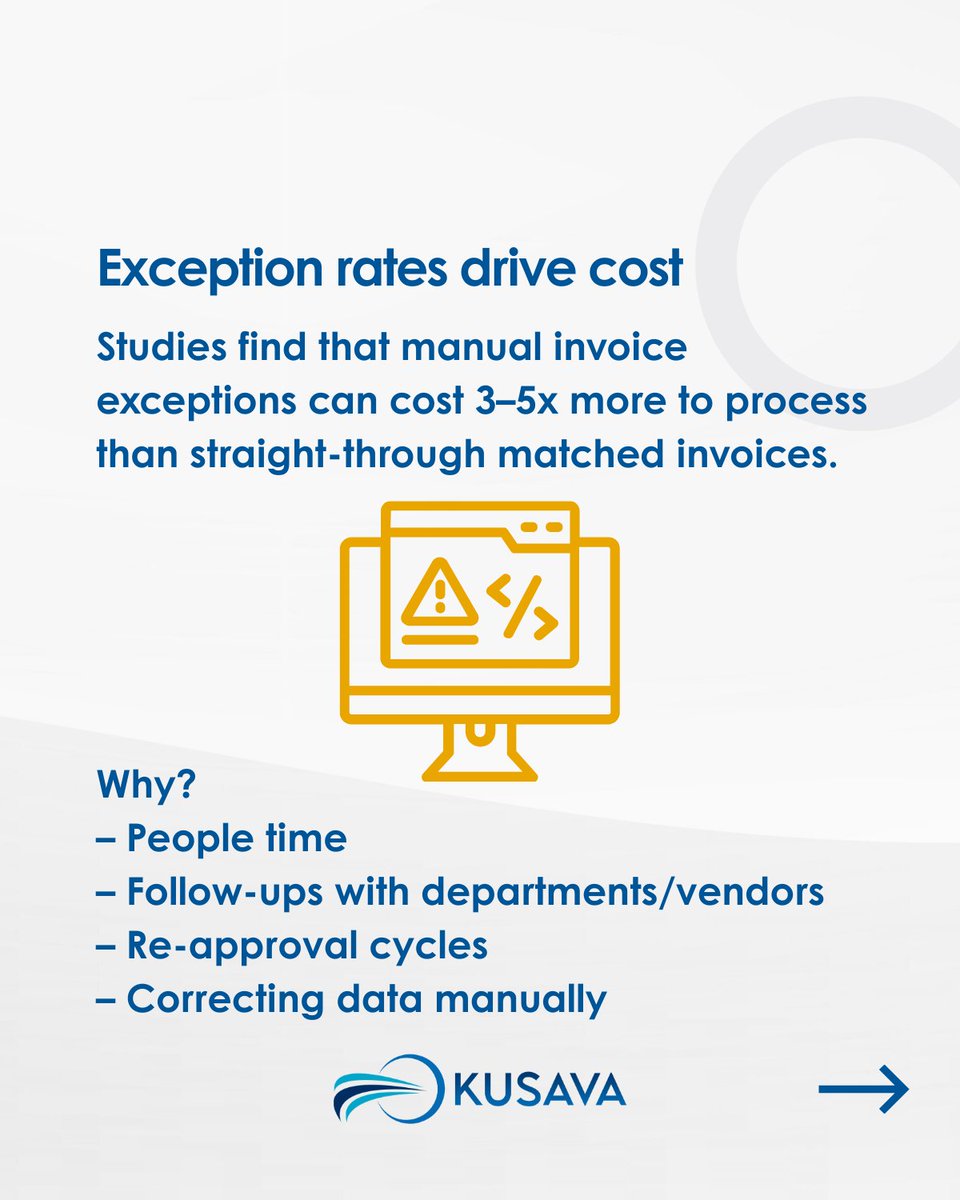
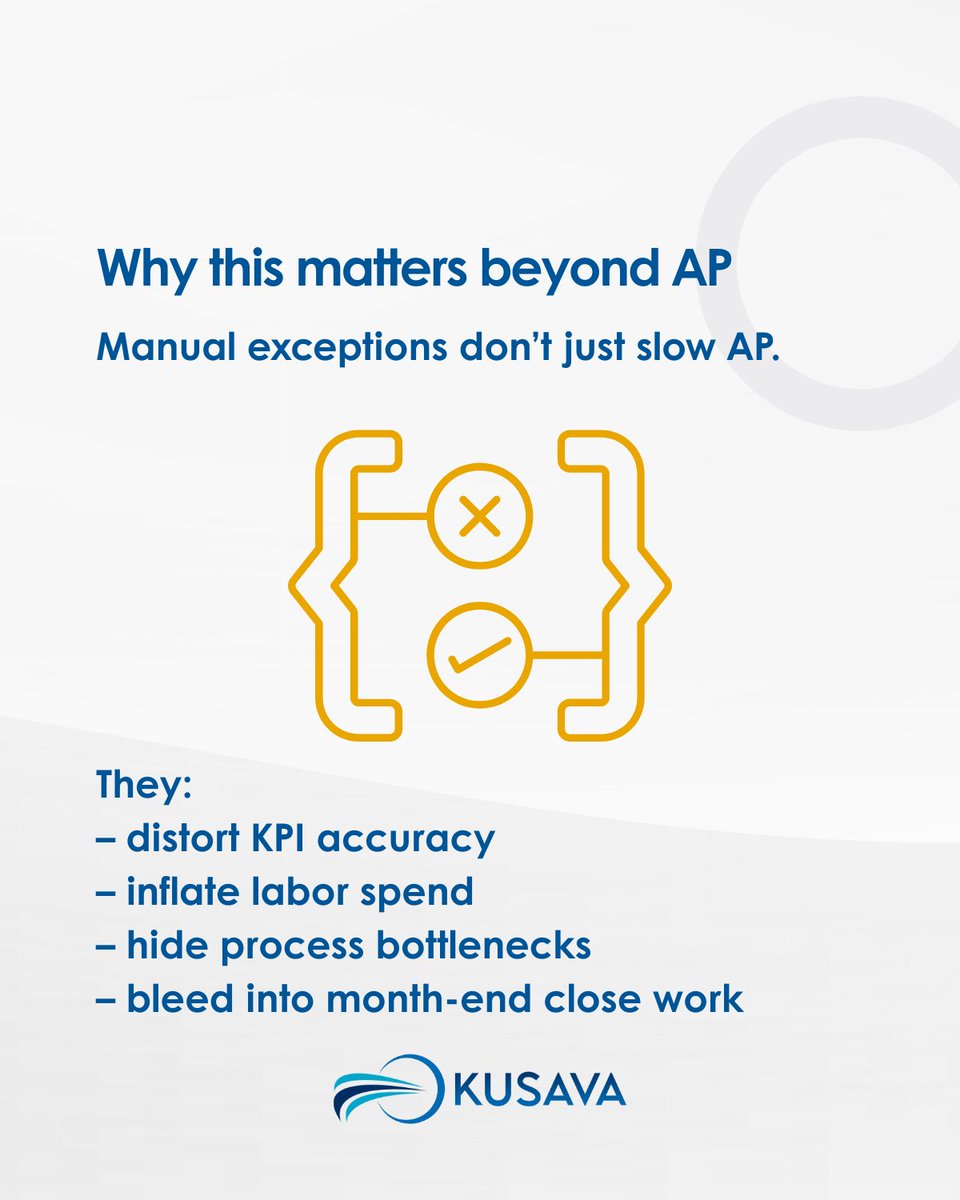
In AP, exceptions aren’t isolated mistakes — they’re workflow failures. Any invoice that can’t move through the standard process without manual intervention increases processing time, cost per invoice, and rework during close. At scale, exception rate becomes a stronger indicator of AP health than invoice volume. This is why high-performing finance teams track exceptions as a core process KPI. Fewer exceptions mean cleaner data flow, faster cycles, and more reliable reporting.
Kusava tweet mediaKusava tweet mediaKusava tweet mediaKusava tweet media
English
0
0
2
4
Kusava
Kusava@kusavasolutions·
Kusava tweet mediaKusava tweet mediaKusava tweet mediaKusava tweet media
ZXX
0
0
1
1
Kusava
Kusava@kusavasolutions·
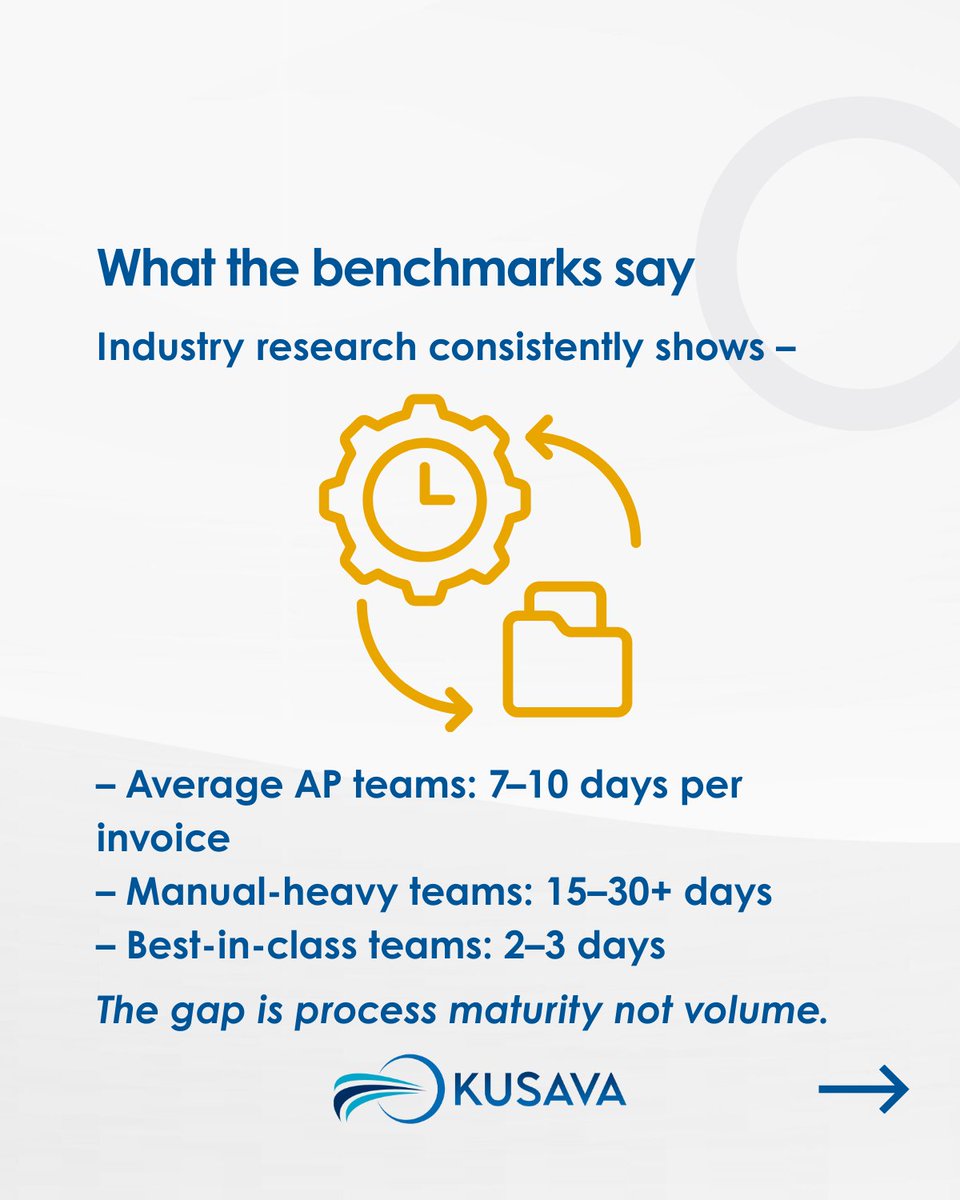
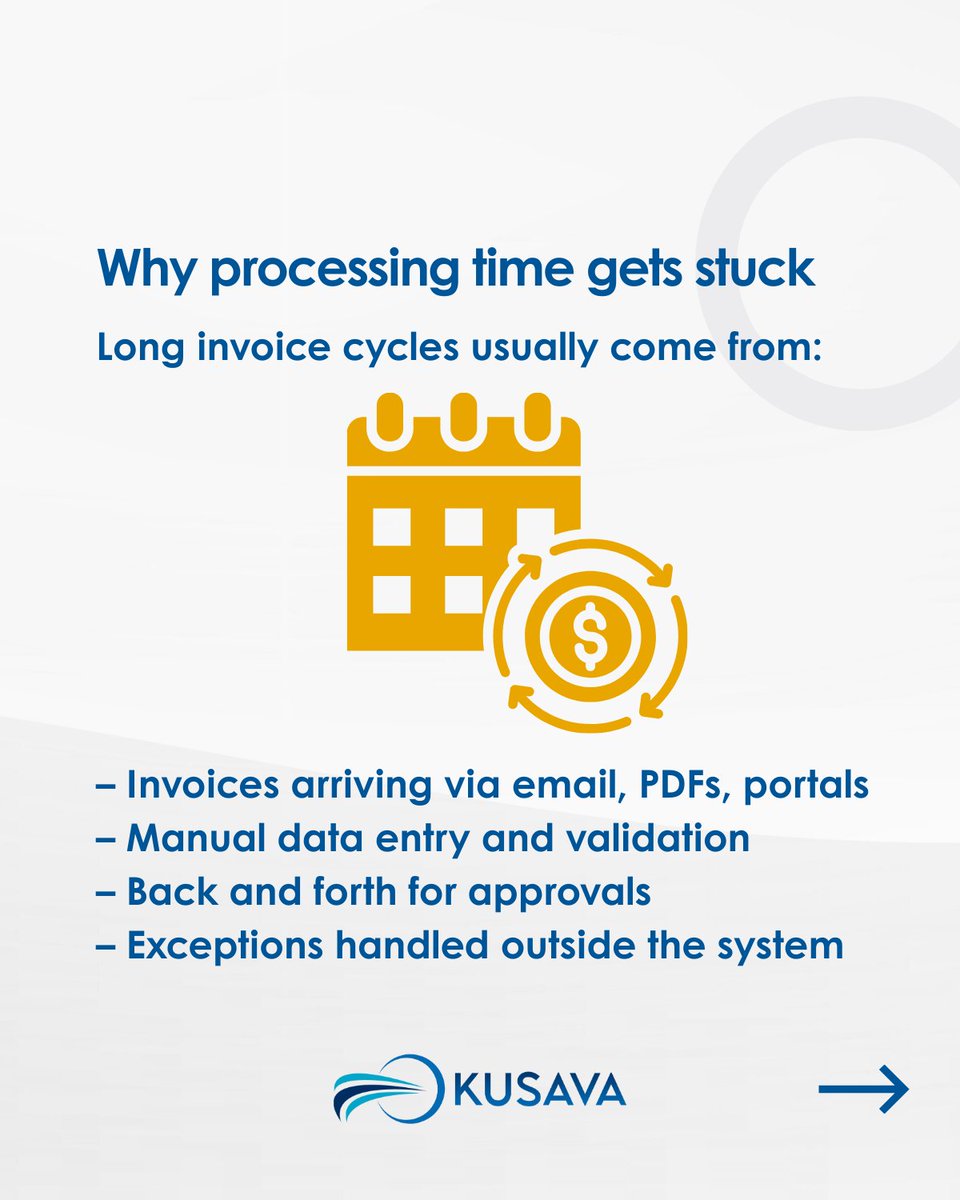
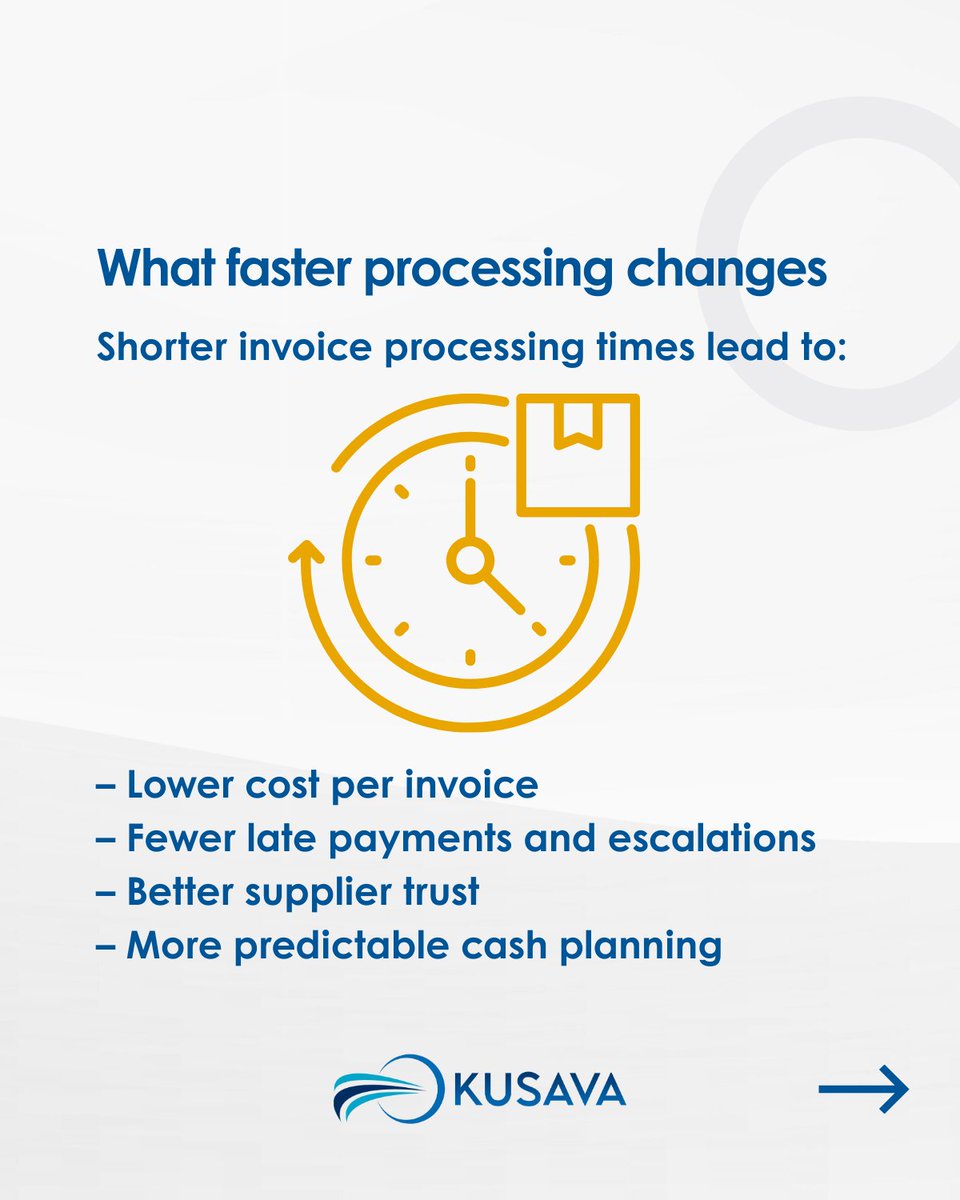
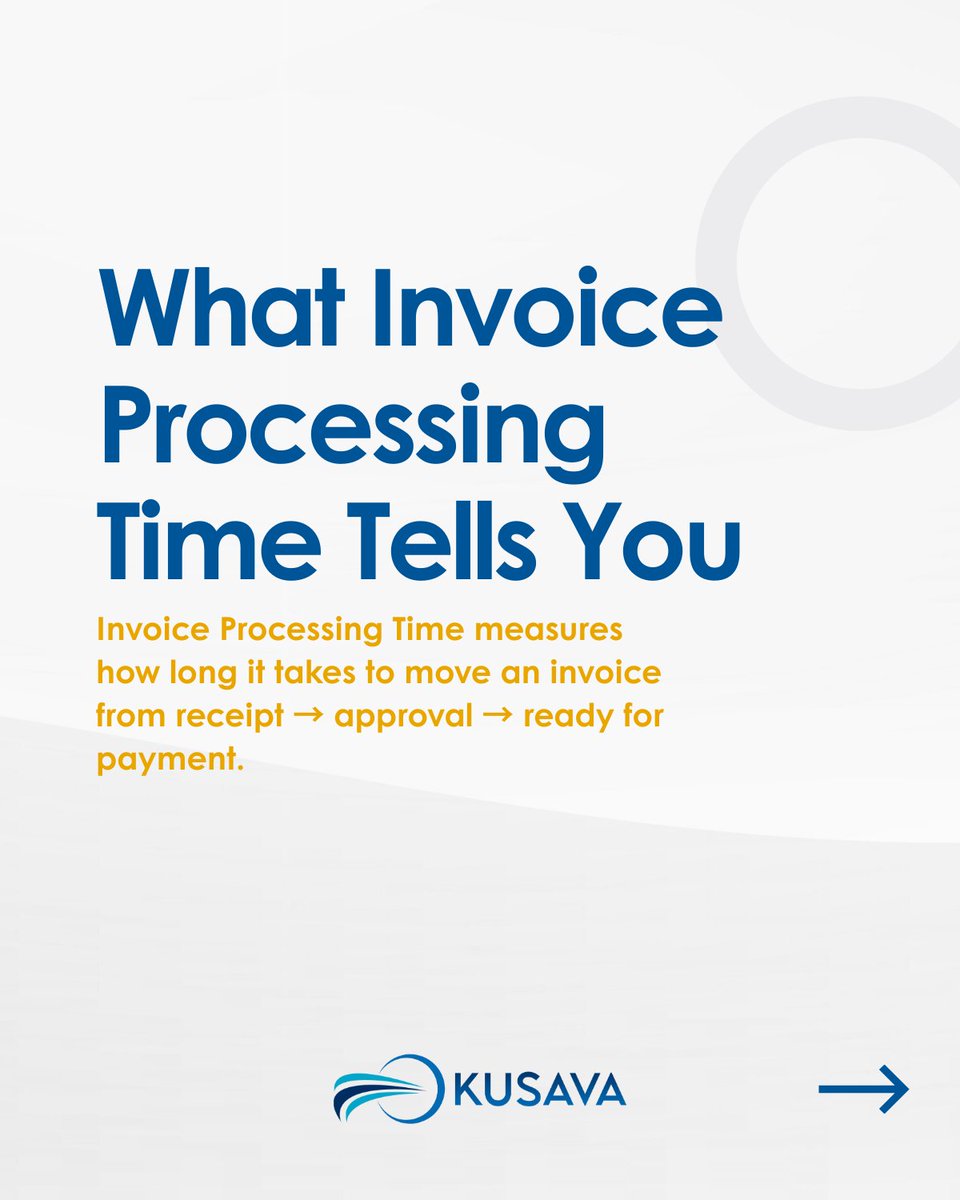
Invoice delays rarely come from one big issue. They’re usually the result of small breakdowns across receipt, approval, and follow-ups. Processing time is one of those metrics that quietly reflects how finance actually operates — not how it’s supposed to on paper.
Kusava tweet media
English
1
0
2
8
Kusava
Kusava@kusavasolutions·
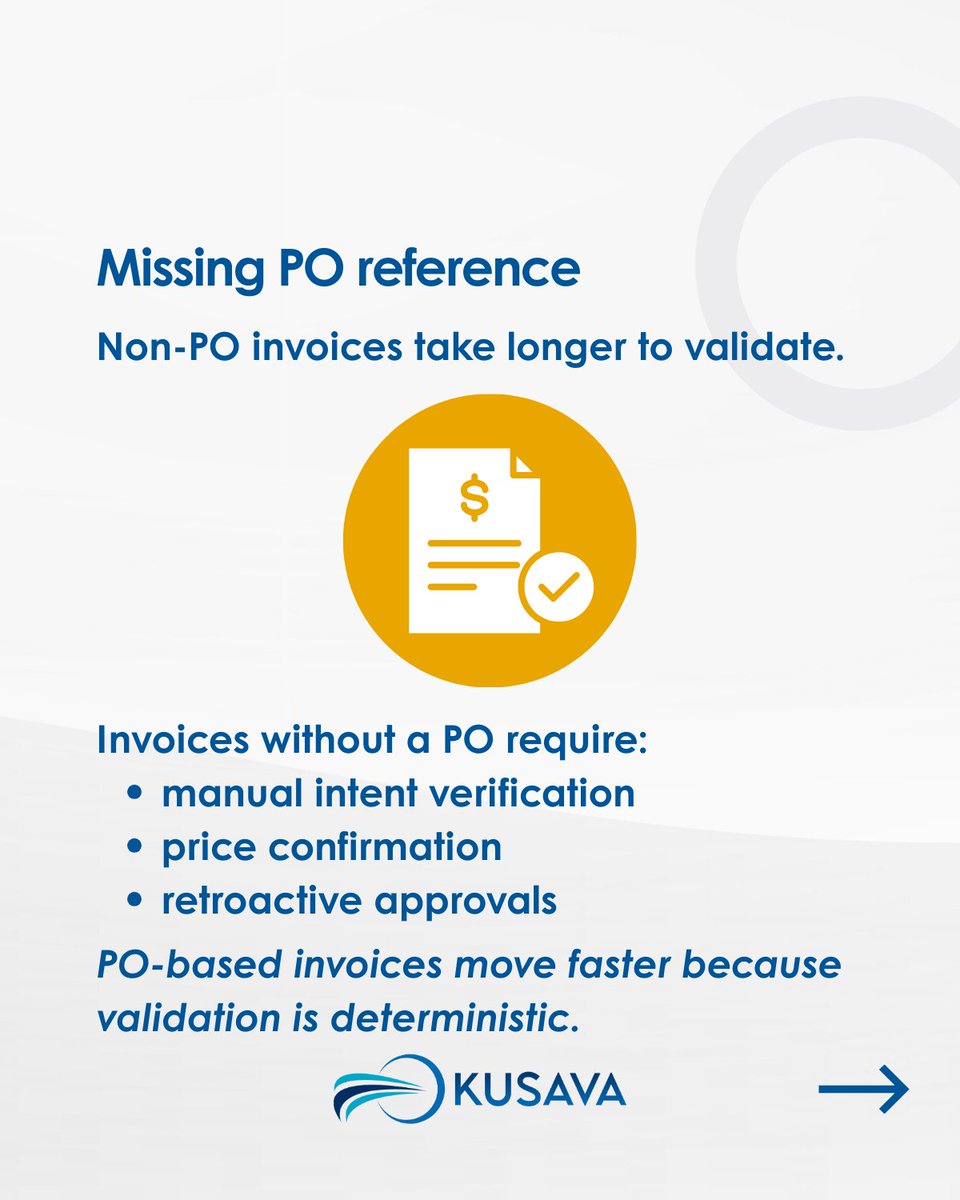
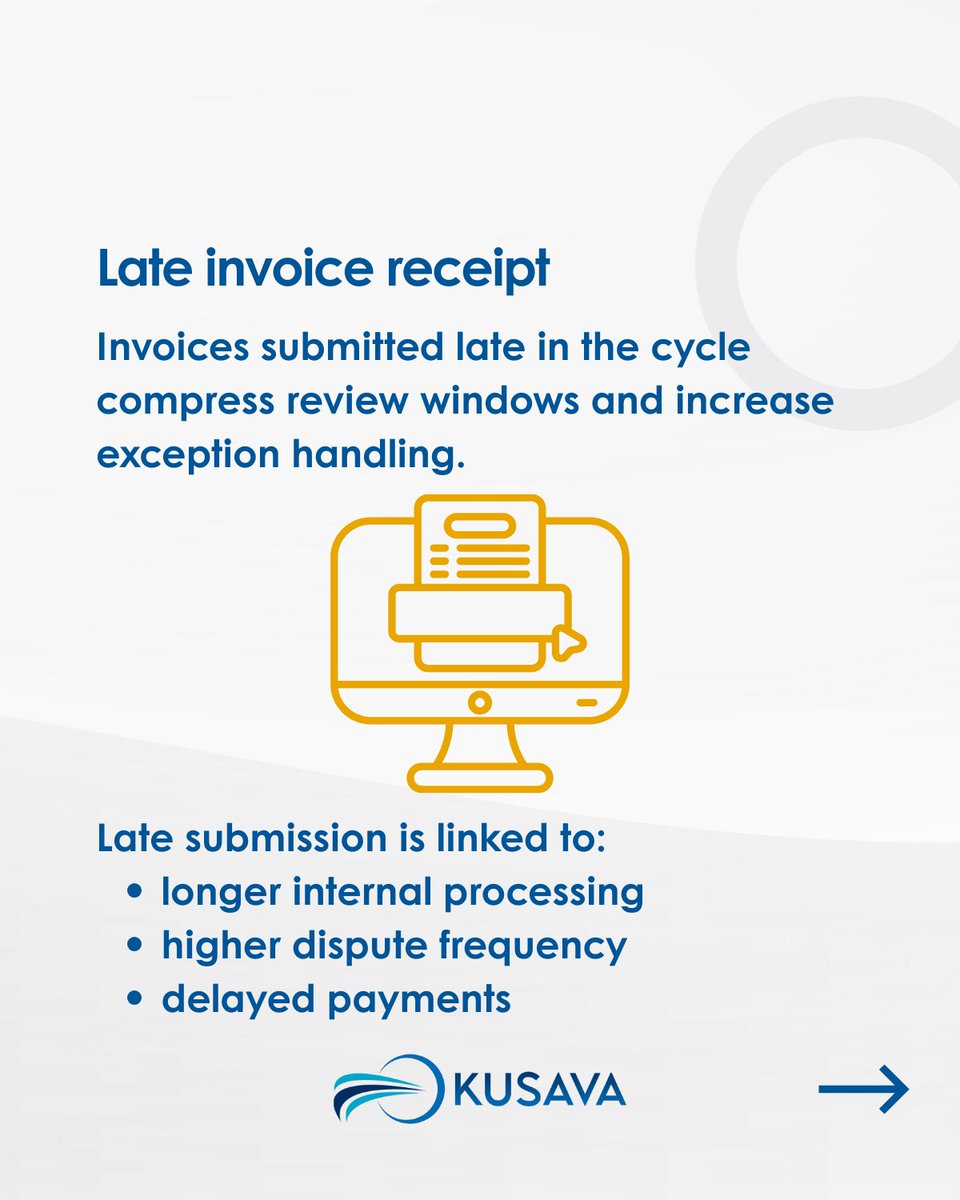
Invoice delays aren’t random. Review time increases when certain transaction attributes are present — regardless of company size or industry. Things like missing PO references, approval complexity, late invoice receipt, and post-submission changes introduce additional validation steps that extend the cycle before an invoice is even ready to pay. This looks at those attributes — and how they show up in real AP data.
Kusava tweet mediaKusava tweet mediaKusava tweet mediaKusava tweet media
English
1
0
2
11
Kusava
Kusava@kusavasolutions·
Kusava tweet media
ZXX
0
0
0
0
Kusava
Kusava@kusavasolutions·
Kusava tweet media
ZXX
1
0
0
0
Kusava
Kusava@kusavasolutions·
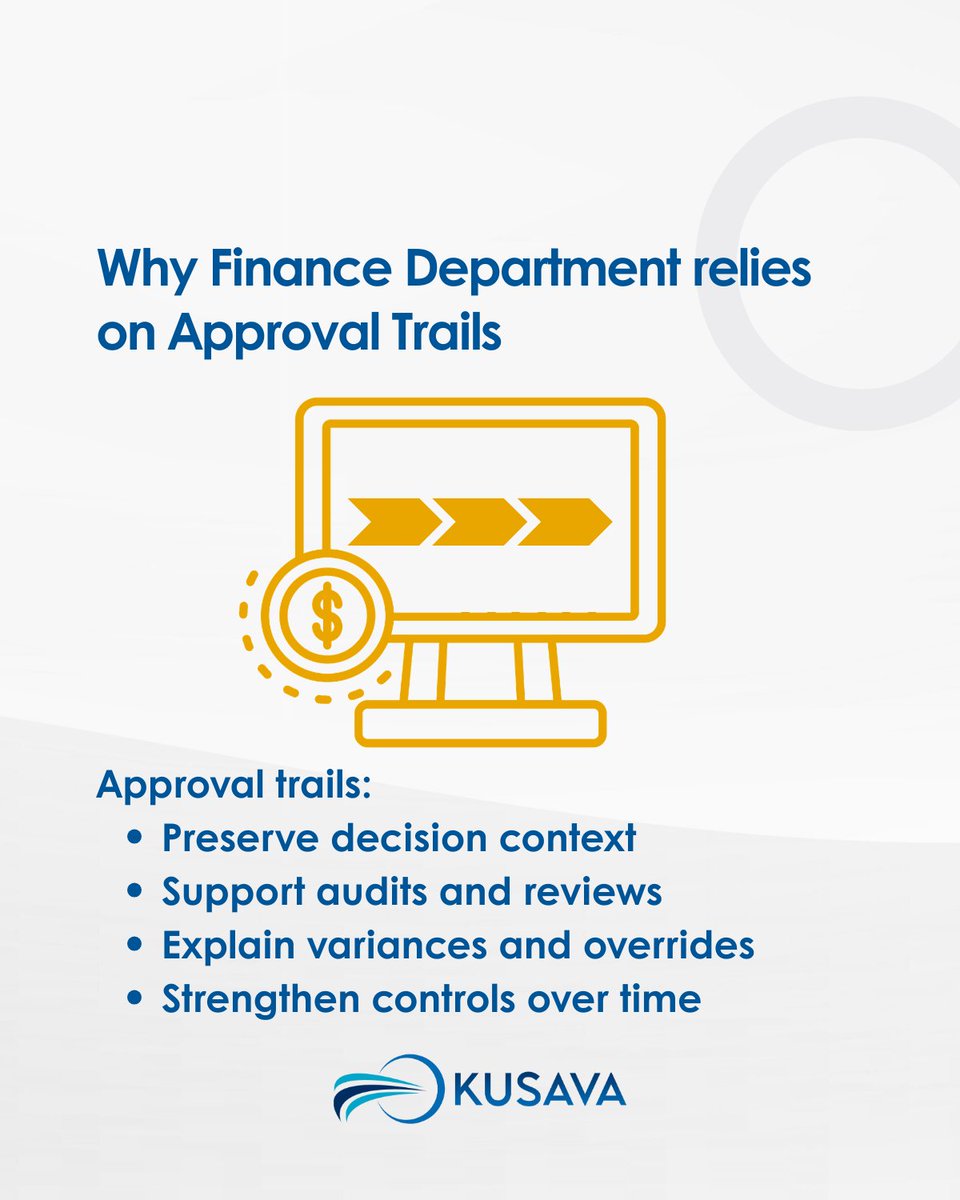
An approval trail is more than a compliance artifact. It’s what allows finance teams to understand how and why a transaction moved forward. When approvals are captured at the system level — with context, timestamps, and decision history — finance can trace issues, explain variances, and stand up to audits without relying on memory or email threads. This is what keeps accounts payable defensible as volume and complexity grow.
Kusava tweet media
English
1
0
0
6
Kusava
Kusava@kusavasolutions·
Kusava tweet media
ZXX
0
0
1
2
Kusava
Kusava@kusavasolutions·
Kusava tweet media
ZXX
1
0
1
2
Kusava
Kusava@kusavasolutions·
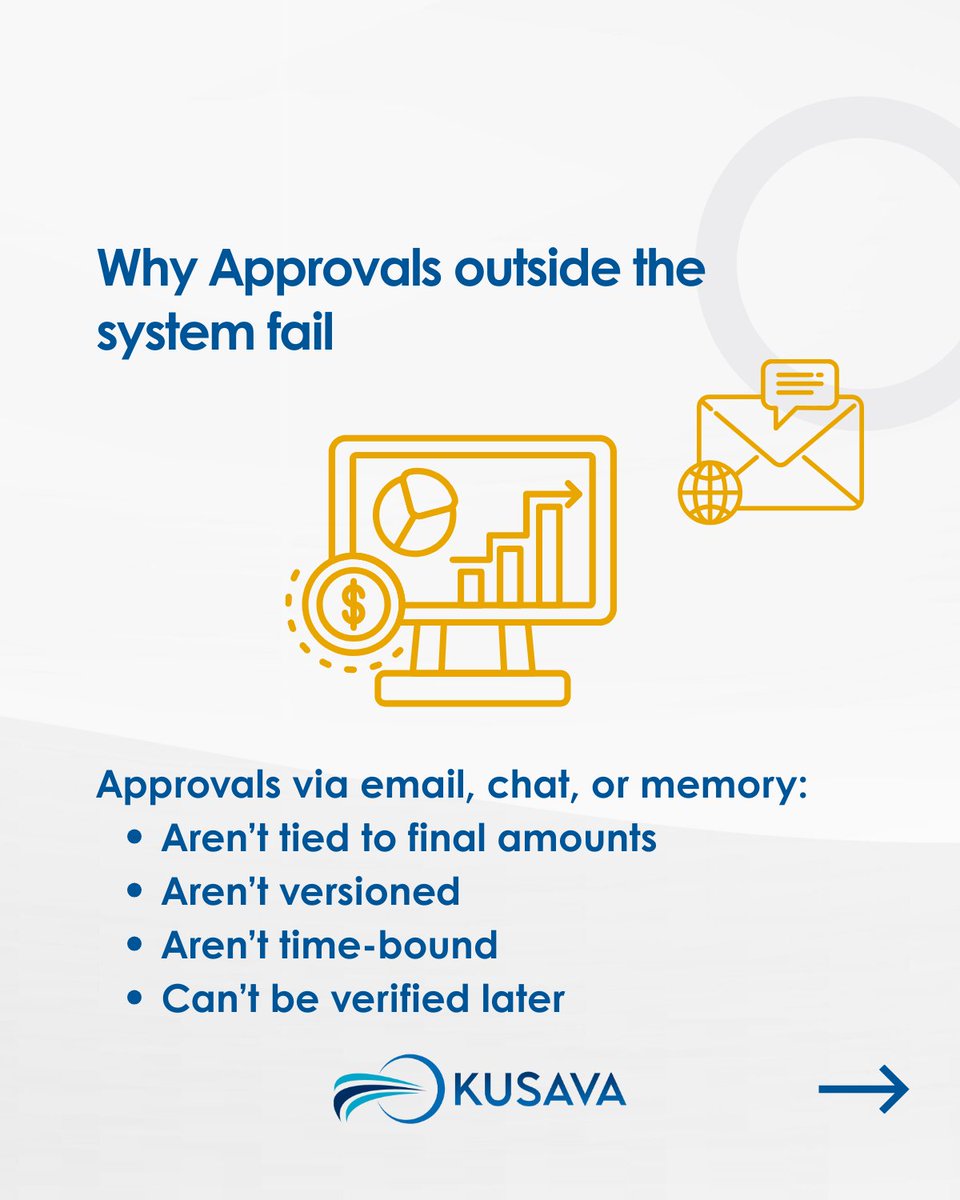
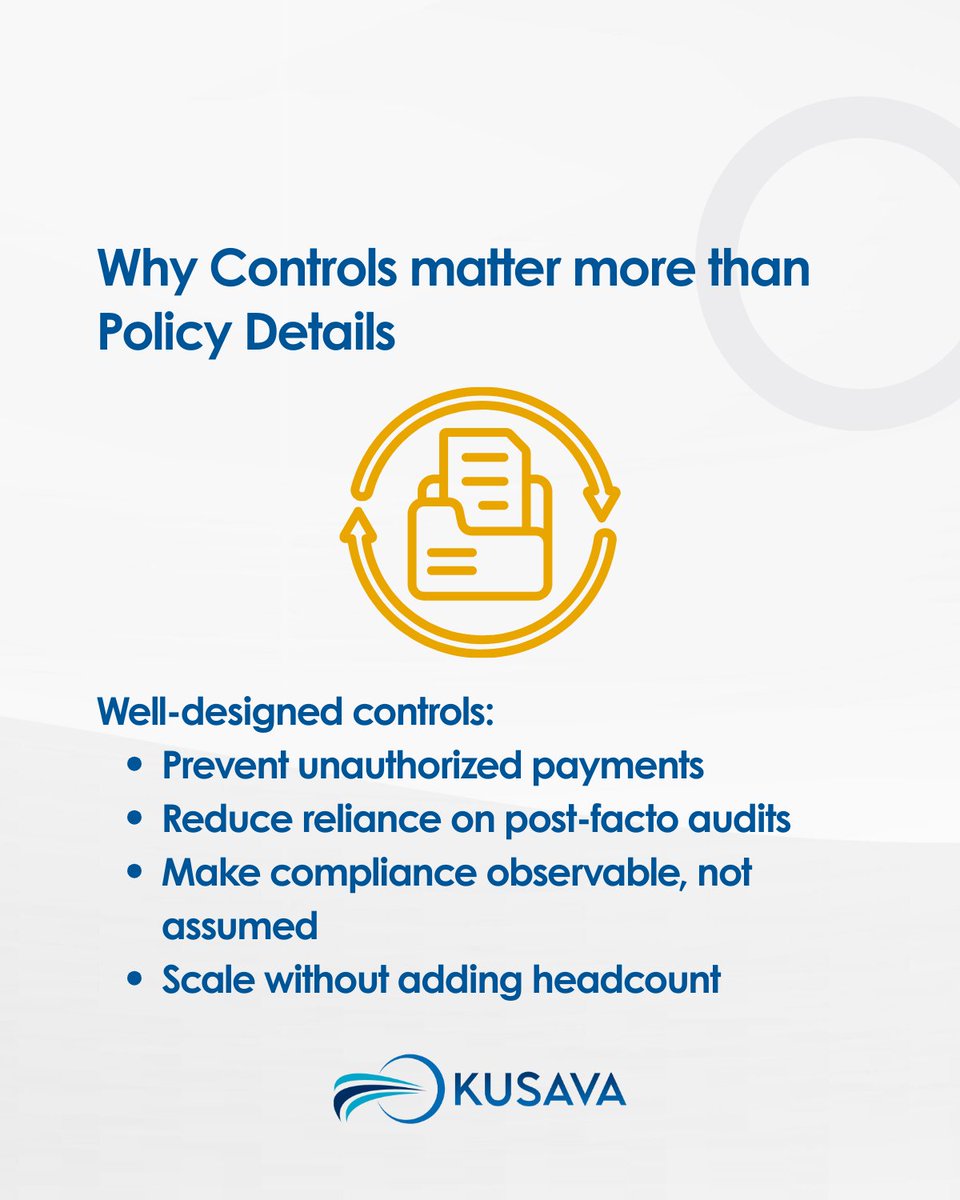
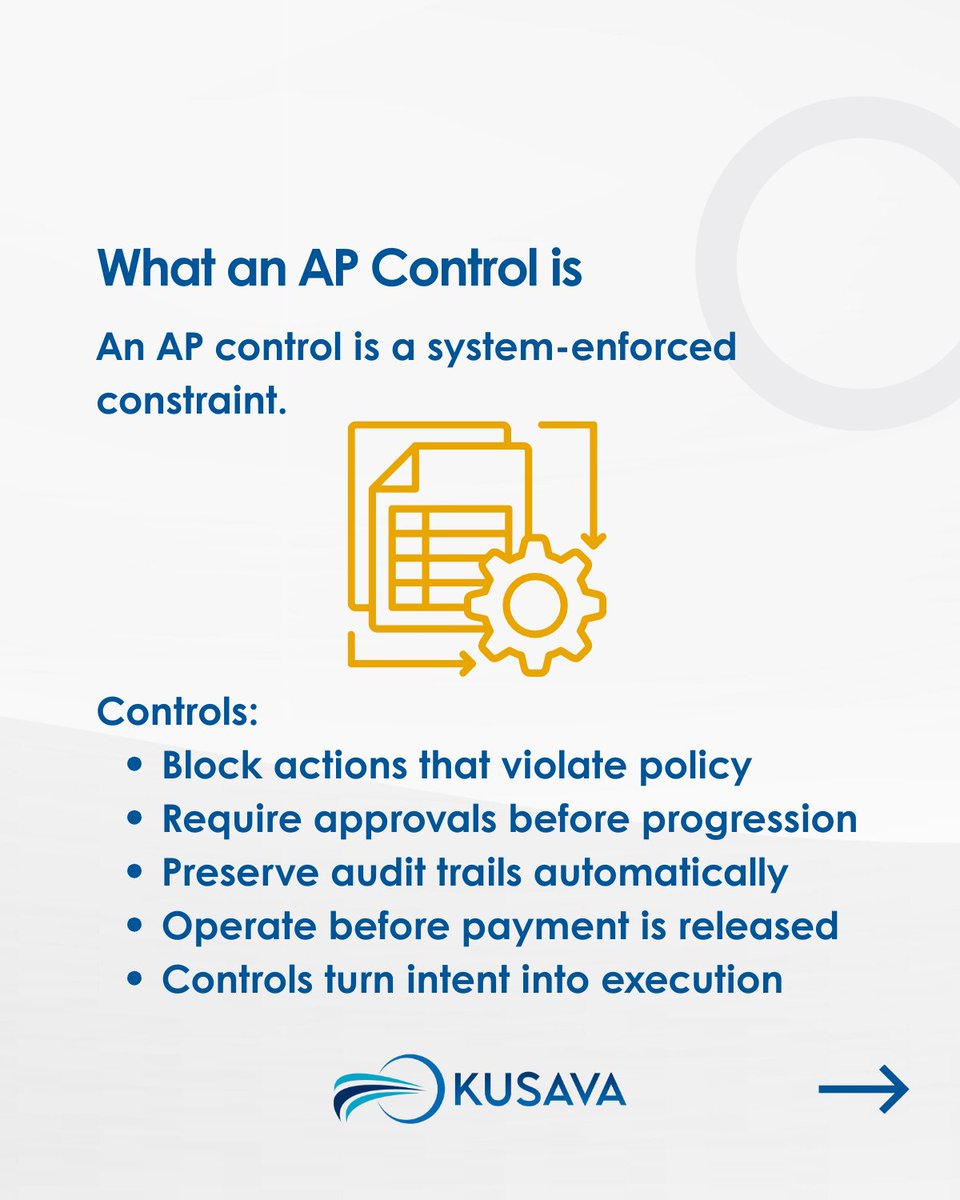
Most finance teams already have policies in place. Approval limits. Documentation rules. Payment terms. But risk comes from what happens between policy and payment. When enforcement lives outside the system, gaps appear quietly. Not because people ignore rules, but because systems allow it.
Kusava tweet media
English
1
0
2
4