LA MUSEUM: the world’s first online museum aiming to preserve the artistry, creativity, and craftsmanship of clothes for posterity and the “Art of Fashion.”
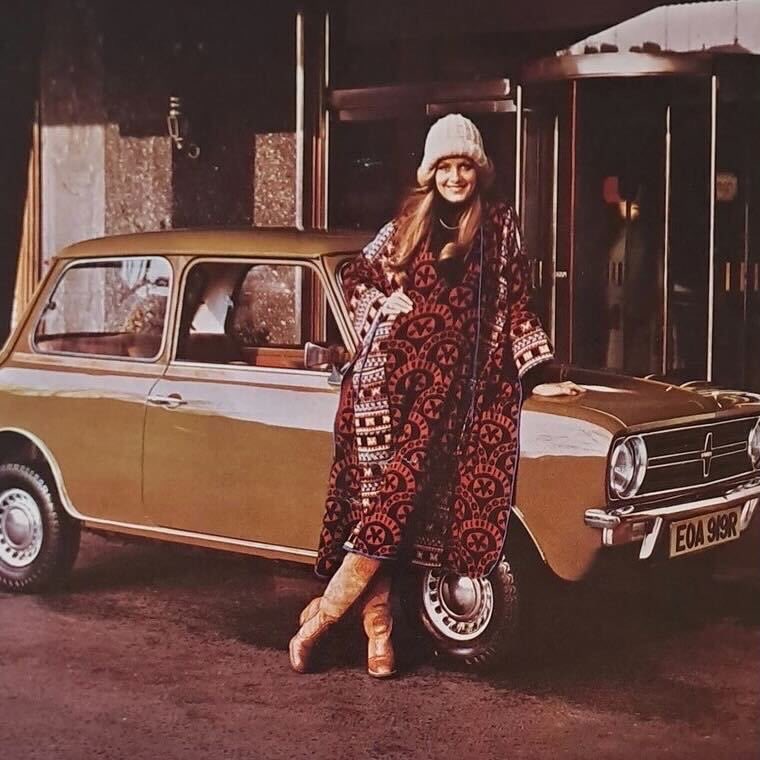
This wool knit poncho from his Fall/Winter 1976 'Byzantine' collection, along with coats, tunics, scarves, skirts, and knickerbockers, was also released. This exotic pattern, openly influenced by Turkish decorative arts, was created through a collaboration with knitwear designer Kaffe Fassett and achieved global success. Based on Gibb's design drawings, Fassett dyed and hand-knitted samples, which were then interpreted and industrially produced by technicians on knitting machines at Gould’s in Leicester, a hub of Britain's traditional knitwear industry. Gibb took pride in his designs being manufactured in Britain.
This knit poncho was worn by Twiggy, Gibb's friend and muse, in a 1977 advertisement for the British compact car Mini. She referred to Bill Gibb as 'my knight in shining armor' and loved his designs, including his gentle personality.
Bill Gibb Knit Poncho from “Byzantine” Collection
designers: Bill Gibb, Kaffe Fassett
label: Bill Gibb London
manufacturer: Gould’s
year: Autumn/Winter 1976-77
Bill Gibb, a fashion designer from the Scottish Highlands, is celebrated for incorporating traditional handicrafts like hand knitting into mainstream fashion. His designs epitomize the romantic eclecticism in British fashion design during the 1970s.
Raised on a farm, Gibb was heavily influenced by his grandmother, a landscape painter, and frequently drew pictures. He even crafted clothes from bed covers and curtains. A school teacher, recognizing his talent early on, persuaded him to attend art school in London. He graduated as valedictorian from Central Saint Martins and later attended the Royal College of Art. However, he dropped out before completing his degree to start his own business. His peers during his fashion student days included Ossie Clark and Zandra Rhodes.
In 1970, while working as a freelance designer for London fashion house Baccarat and luxury department store Harrods, Gibb was named VOGUE's 'Designer of the Year.' Two years later, he launched his eponymous brand and presented his first collection. His designs were always unexpected, combining fabrics and colors innovatively, pairing contrasting patterns, florals with plaids and stripes, and utilizing different textures, all based on nature, garnering widespread popularity with fantastical designs.
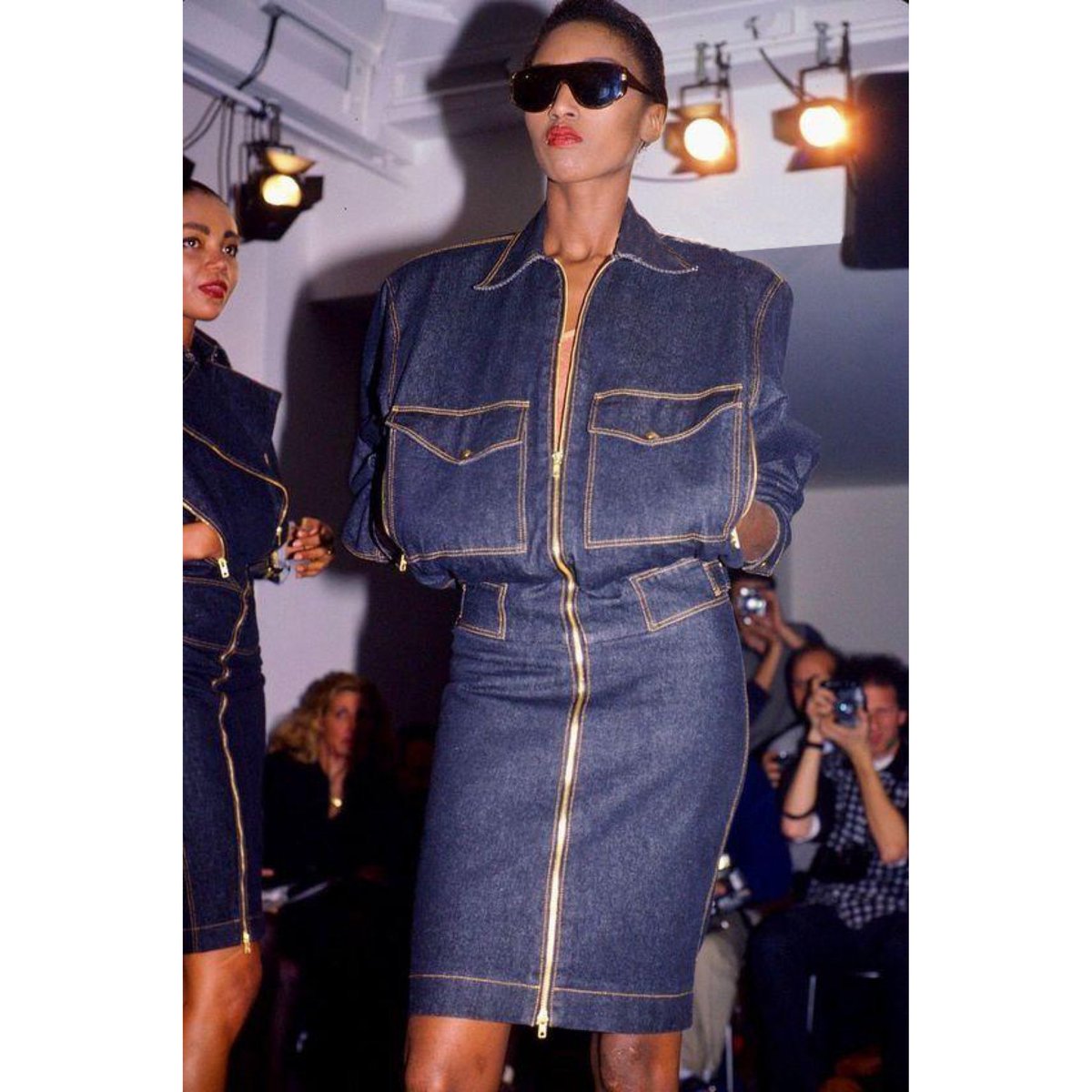
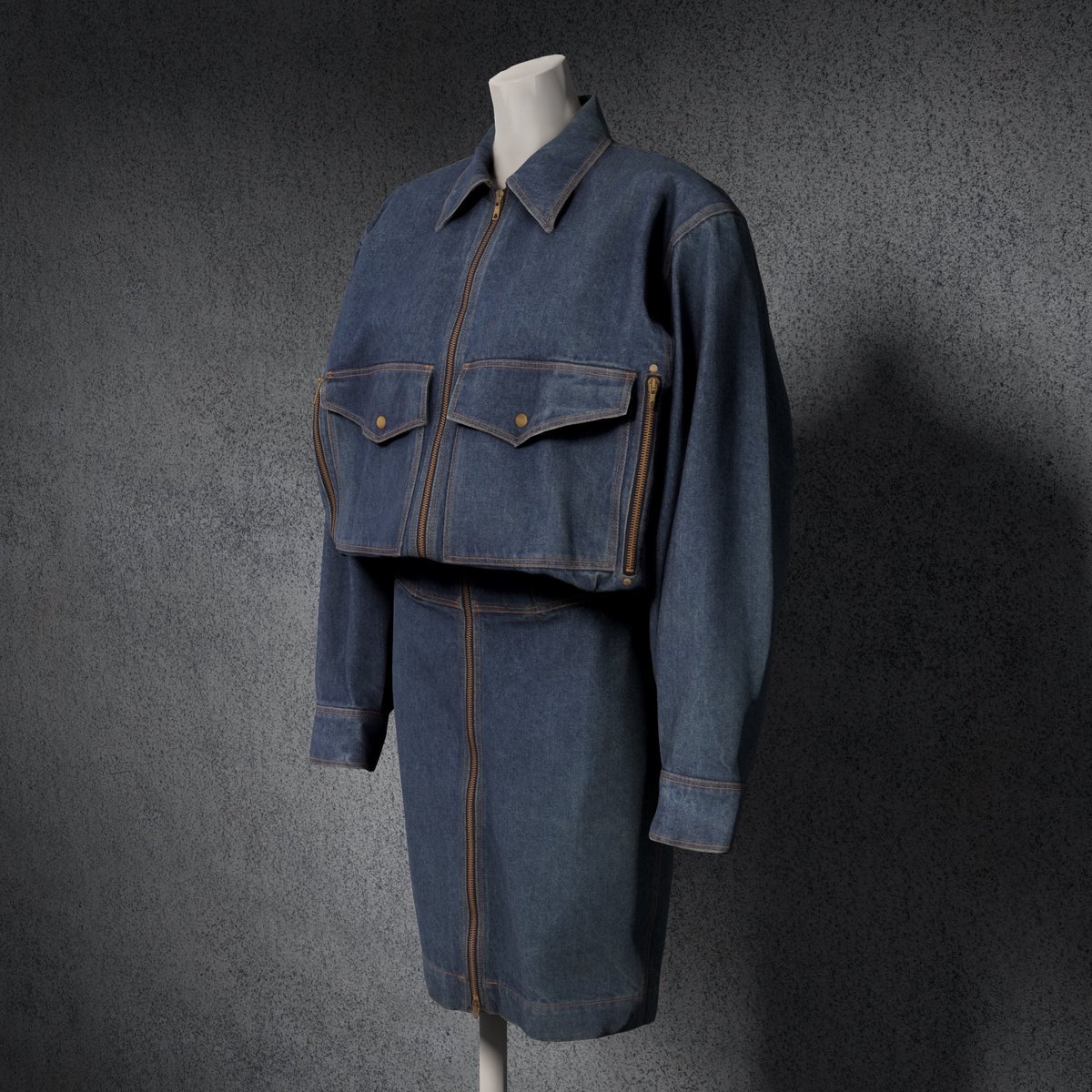
This denim zipper dress was presented in the Spring/Summer 1986 collection, singer/model Grace Jones known as Alaïa's muse walked the runway dressed in this dress. The upper body features a loose, square silhouette with shoulder pads, a boldly defined waist, and a tight-fitting skirt. The three-dimensionality of the shoulders, waist, and hips is emphasized by the use of stretch denim material. It also features a brass double full zip on the front, functioning both as a chest opening and a slit. Flap pockets with snap buttons adorn both chests, complemented by zippers attached to the sides of the pockets, while hidden internal pockets are present on both sides. These pockets bring functionality to the dress by eliminating the need for pockets on the skirt and hips, enhancing the beautiful body silhouette. The innovative curvaceous design of this dress is achieved through 3D cutting and sewing techniques, notable for the absence of corsets or wires.
Alaïa made fashionable and adventurous women look beautiful and sensual, and even gave them confidence and secure. Those women who wore his clothes unanimously say that, “it made me realize that ‘I’m beautiful’.”
ALAÏA “Denim Zipper Dress”
designer: Azzedine Alaïa
label: ALAÏA PARIS
year: Spring/Summer 1986
Azzedine Alaïa, a designer who loved women and was loved by women. With constructive designs that highlights the body’s lines boldly, he redefined the glamorous female look of the 1980s and was called "The King of Cling."
As he once said, “I don't care about fashion, what I like is clothes.” Throughout his 50-year career, he never greeted at the finale of a fashion show, never ran an ad, and never followed trends. He believed that repeating a hectic schedule for Paris Fashion Week was a negative effect to his creative activities. Eventually, he stopped following the official calendar and instead became more independent, unveiling his collections as soon as they were ready. His legendary status is attributed to his passion for women's clothing. He was in the same black china suit at any time, suppressing his own existence, observing the tastes and movements of women in order to know women's bodies, empathizing with them, and giving his all attention to them.
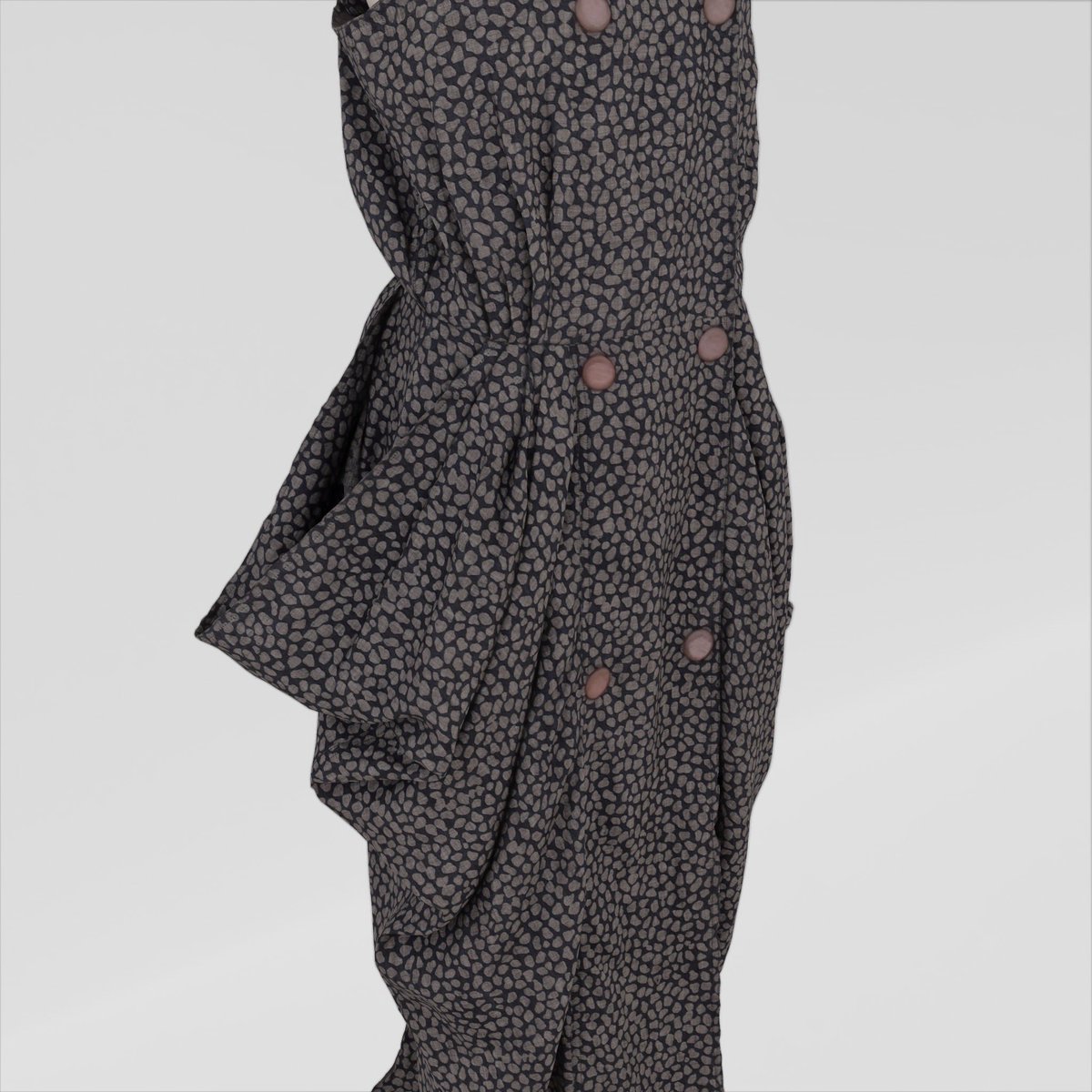
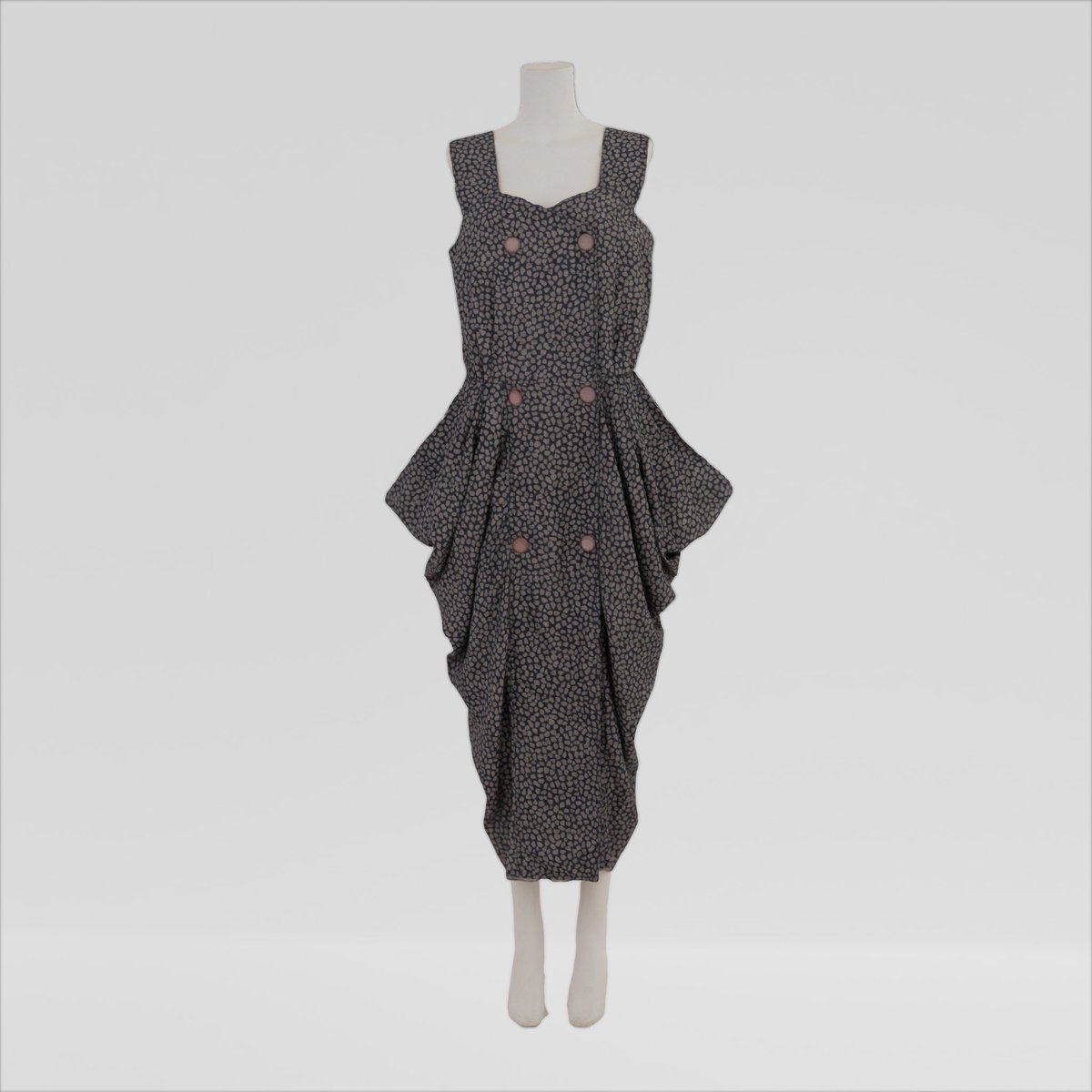
This dress is made of cotton linen, has a sleeveless design with an abstract pattern woven in white on a navy fabric. The volume created by the drapes at both waists is not only impressive, as the model in the runway show put her hands in and occasionally lifted the fabric to make it appear parallel, but also the drapes spread outward when the waist is belted up, creating a more structured design that gives the dress a more three-dimensional appearance. Snap buttons, a feature frequently found in her garments, also add a stylistic beauty that reflects her experience in designing rainwear and sportswear.
In accordance with the words, "Dressing a woman means knowing how to look at her internally as well as externally," she has been using fashion design to embrace the evolving lifestyles of women and create beauty in shape.
ANNE MARIE BERETTA “Sleeveless Dress”
designer: Anne-Marie Beretta
label: ANNE MARIE BERETTA PARIS
year: Spring/Summer 1984
Anne-Marie Beretta, a designer who led Parisian fashion in the 1980s and proposed everyday wear for intellectual women. Her focus on unconventional silhouettes, different from traditional femininity, provided broad-shouldered silhouettes and confidence to women entering society in the early 1980s when the movement for gender equality became a reality. This allowed them to confront the male-dominated world.
Beretta's aesthetics, in line with the phrase "easy to wear, minimal in detail, but striking in regards to proportion and cut," make use of sewing techniques learned in the haute couture house. She combines expert tailoring with high-quality materials and is described as the "architect or sculptor of clothes" due to a modern approach that rejects meaningless embellishments.
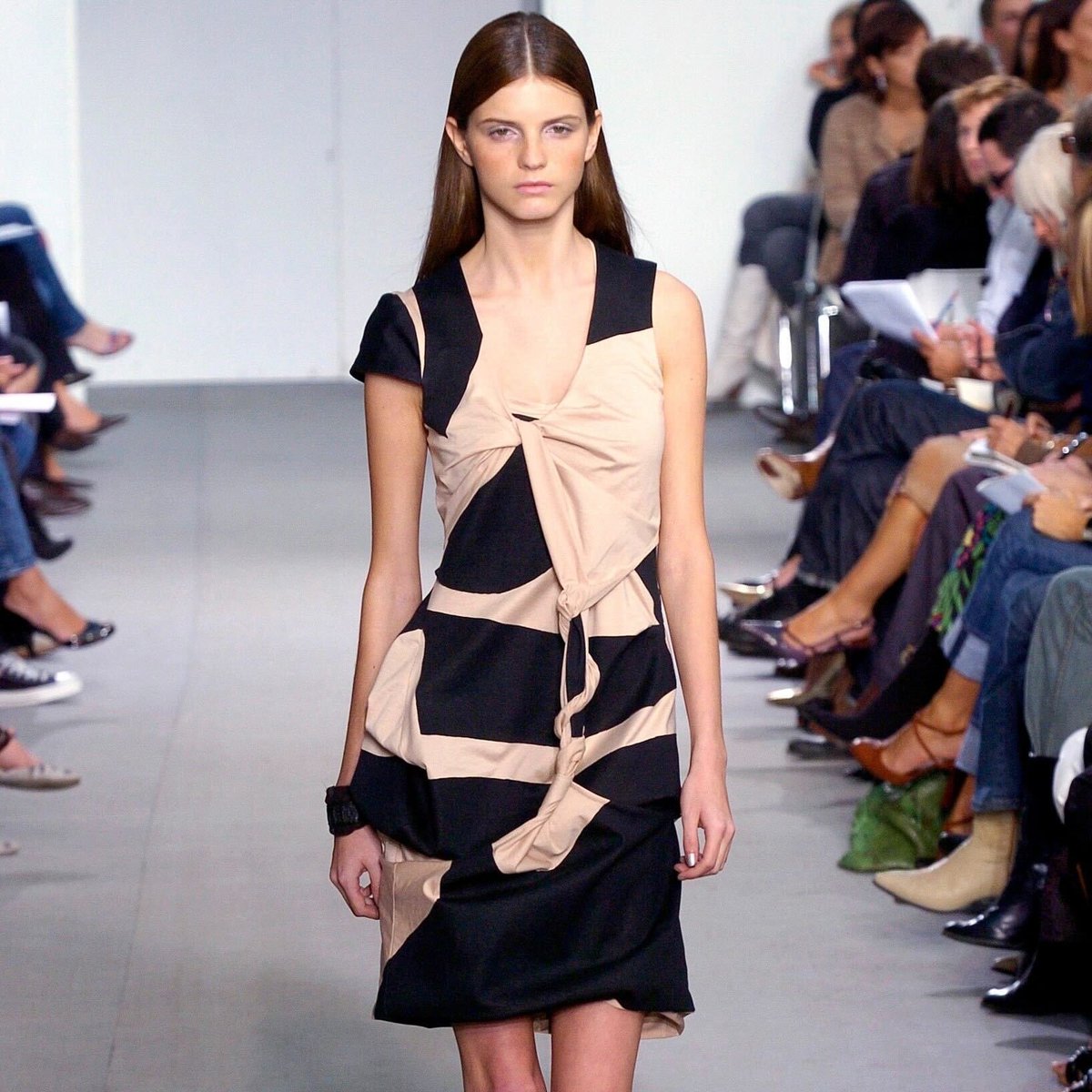
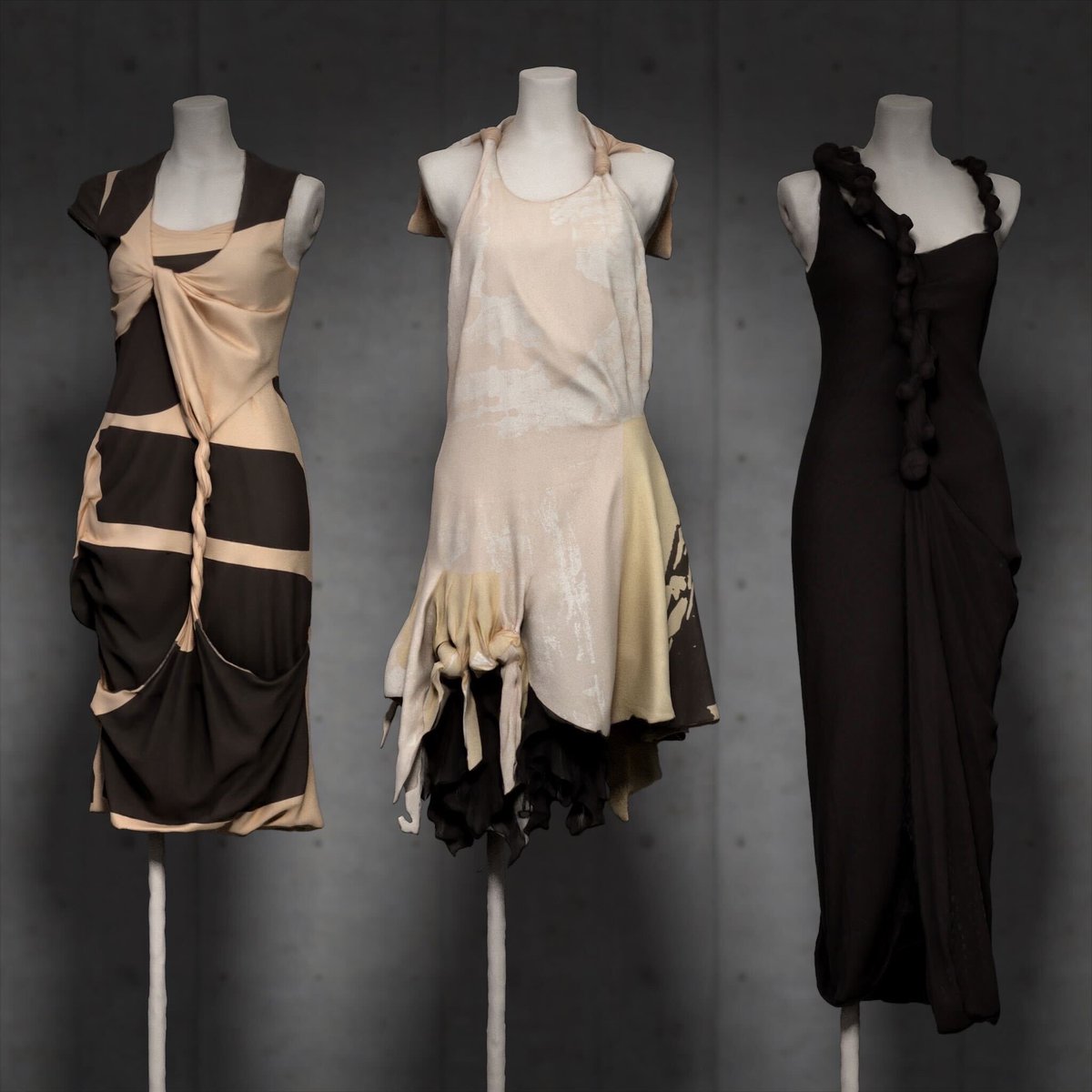
HELMUT LANG's Spring/Summer 2005 collection is characterized by designs that incorporate sailor elements. The runway featured dresses that made use of fabric twists and knots, T-shirts printed with rope knots, striped suits, and fisherman's sweaters woven from cotton yarn, decorated with anchor-inspired key rings, rope-shaped belts, and pearl harnesses. The footwear for these looks featured heels and was paired with heeled espadrilles or leather sabot sandals.
This cotton jersey dress is designed to beautifully express the female body as it is, utilizing the twists, wrinkles, and sagging of the fabric to wrap the body, and effectively using cutting and layering. It is not a sexy design to provokes sexual gaze, but it is the design that combines practical minimalism with elegance, elevating to revolutionize the conventional notion of body-conscious.
HELMUT LANG “Spring Summer 2005 sÉance de travail”
designer: Helmut Lang
label: HELMUT LANG
year: Spring/Summer 2005
Designer Helmut Lang led the way in minimalist fashion. In contrast to the luxury fashion of the 1980s, which tolerated excess, his style involved using techno materials and eliminating ornamentation, bringing everyday, utilitarian garments into the world of fashion.
One of the reasons Lang became a fashion designer is his obsession with American casual wear. As he described it, "The most unhappy period of my life" was when he couldn't find his own style during his character-building teenage years. He was forced to wear suits and hats and was forbidden from wearing jeans. At the age of 18, he left home and began crafting his own clothing, making up for lost time. In 1986, he made his debut in Paris with a ready-to-wear collection and later moved to New York in 1997. There, he redefined fashion, infusing fresh styles into everyday and military wear, including T-shirts and jeans. His intelligent designs, which had never been seen in casual wear before, were the result of his pursuit of excellence, instinctively sensing the appeal of basic items.
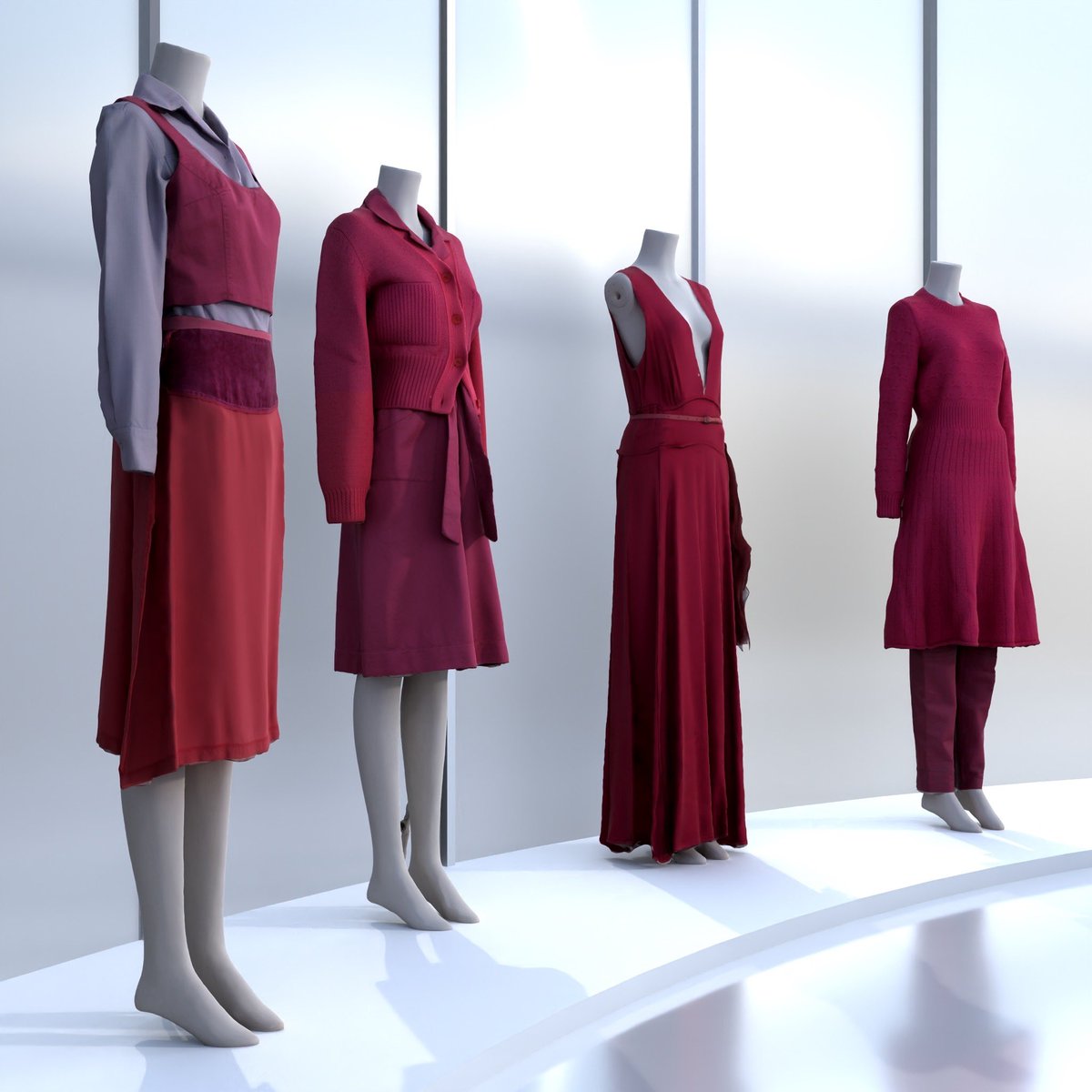
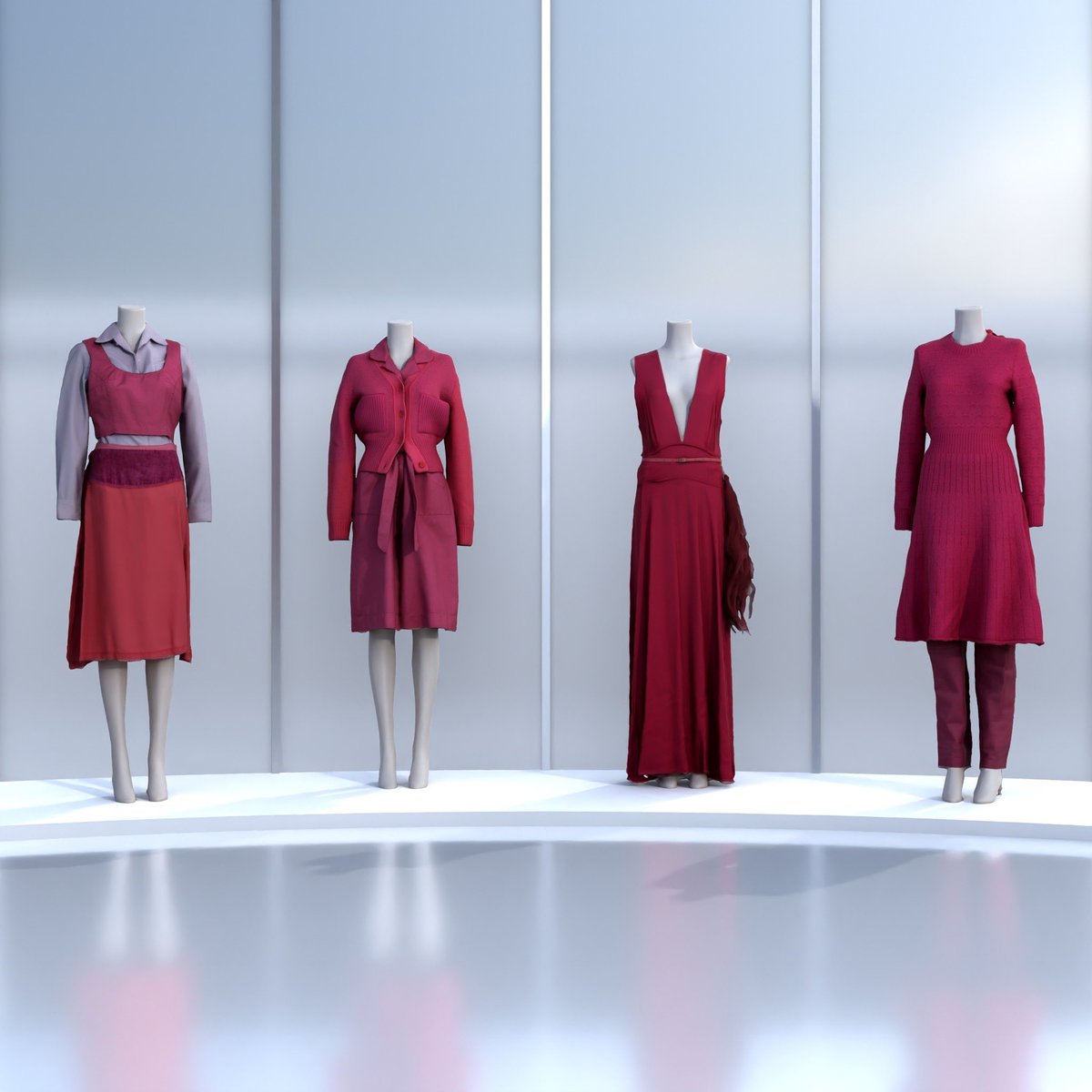
Introducing antique and vintage clothes style design with the label "REPRODUCTION OF SERIES" OF OLD GARMENT'' and inside-out design using lining, as well as knitwear with a nostalgic feeling produced by MISS DEANNA.
Fuchsia was the main color, but colors such as garnet, lavender, midnight and black were also used effectively. Although fuchsia color was not unheard of at the maison, it was still a relatively rarity, and never played a dominant role in any collection thus far.
By this show, Margiela proved that he could do more than create intricate clothes without using safe colors.
In the show inside the circus tent, Italian composer Gioachino Antonio Rossini's ouverture's "La gazza ladra" was played on a loop.
Another adorable story is that this song was also used as telephone hold music at the "MISS DEANNA" factory in Italy that produces Maison Martin Margiela's knitwear.
At the show's finale, the models emerged smiling, face masks removed and hair let loose, holding fuchsia balloons inflated with helium.
#LA_MUSEUM
Maison Martin Margiela "Fall-Winter 1995-1996 Collection"
designer: Martin Margiela
label: Maison Martin Margiela
knit production: MISS DEANNA
year: Fall/Winter 1995-1996
Fashion designer Martin Margiela suddenly announced his retirement one day, without appearing in public or accepting face-to-face interviews or photos.
His innovative ideas influenced countless fashion designers, and we can still see his designs on the runway today.
Maison Martin Margiela's Fall/Winter 1995-1996 collection took place inside a circus tent, a unconventional setting, in the Bois de Boulogne in the 16th arrondissement of Paris. Spectators traverse the muddy grounds of the park, their shoes covered in mud, as they enter the circus tent, receive plastic cups filled with red wine, and take seats on wooden benches arranged in a circle.
The most distinctive aspect of this show was Margiela's use of saturated fuchsias, a color palette reminiscent of 1980s circus costumes.
Sixty-eight models walked through the audience wearing crushed velvet dress, rabbit fur collar and armband, and pink painted denim jacket, their faces covered with face masks. Many of the looks featured red or black hair belt to mark the waist, and it was also impressive that accessories were kept to a minimum.
#LA_MUSEUM
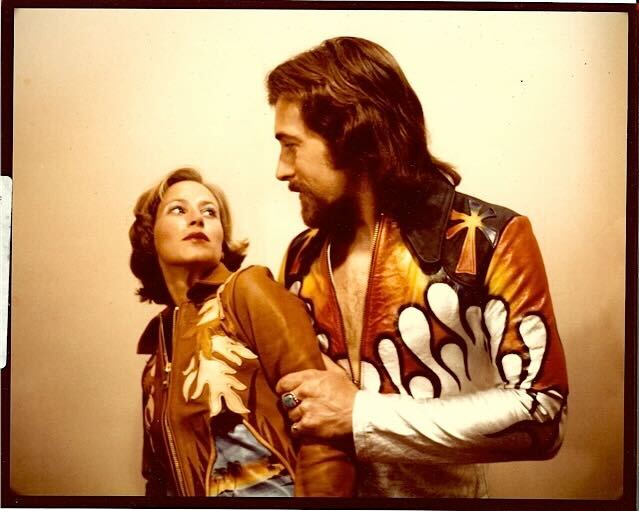
In the late 1960s, leather brand East West Musical Instruments Co. appeared out of the blue at the height of the hippie era, which started in San Francisco and attracted renowned musicians in the blink of an eye.
Founder Norman Stubbs was born on the naturally abundant island of Maui and spent every morning putting on an Hawaiian shirt to go out for harvest in his orchard with no shoes on. His favorite Hawaiian shirt had a Japanese print with a soaring eagle, samurai, and foggy mountains. Once he left the island to go to Georgia Tech, he was shocked to see how confined his life was. Stubbs said that Hawaii had become a multicultural society that tried to keep racial harmony by suppressing differences, talents, intelligence, and creativity.
He went to San Francisco for even more freedom and founded an instrument company in 1967 to create new instruments as he fell in love with Indian music. However, the company was a failure. With little left, Stubbs purchased a leather sewing machine, taught himself tailoring and patternmaking, and started a leather fashion brand in 1968 using his defunct instrument company's business license. The name is unique in that it doesn't seem like it would belong to a leather brand.
Stubbs designed most of East West's jackets; they were heavy-duty jackets made of rich, thick cowhide. The company's employees also made original hand paintings using airbrushes and dramatic appliqué designs. East West's daring artwork became so popular that famous musicians started placing custom orders. Not only did the company open a store on the West Coast, but also in New York City.
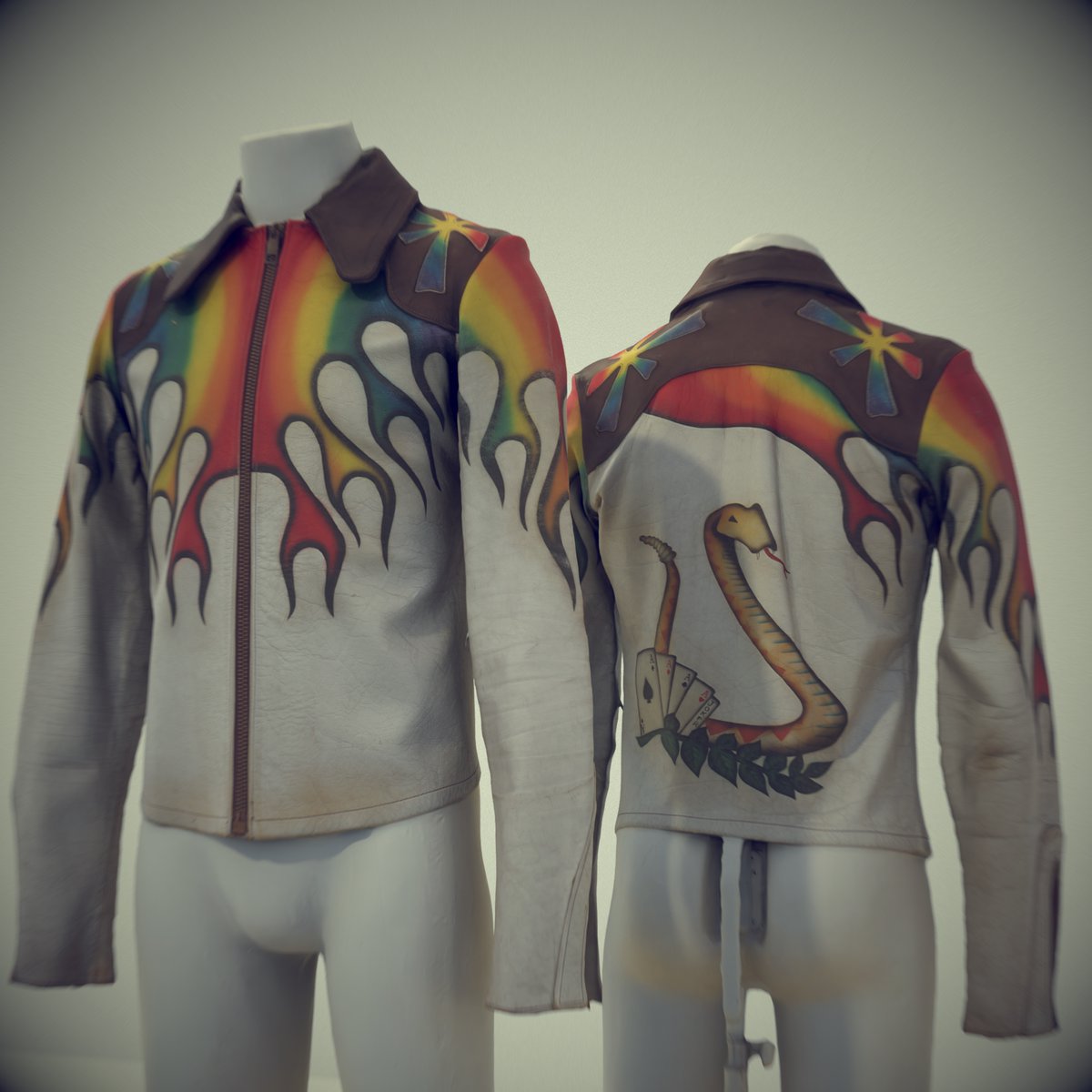
The piece we're introducing today, "Tony's Lucky Rattle Snake Chopper," made in 1973, is a jacket with an almost mythical reputation. It's also known as the jacket Tony Sugden, Stubbs' right-hand man and sales manager, owned. This psychedelic custom-order jacket was made in the style of the "Maltese Chopper" designed by Norman; it has a metallic silver cowhide body, rainbow-colored flames bursting from the shoulders, rainbow-colored Maltese cross appliques sewn on the front and back shoulders, and a rattlesnake, four aces, and a leaf airbrushed on the back. East West's early to mid-period jackets were characterized by being unlined to highlight the beauty of the tailoring. The front and zipped cuffs have Serval zippers, known to have been provided to the US army at the time.
East West comprised an eclectic group of people in an era of freedom, with craftspeople from different parts of the country. Among them were drug addicts, teenage runaways, and Haight & Ashbury street dwellers.
Thanks to Stubbs being a generous founder, the employees' talents were approved, and many free ideas were accepted. As a result, countless talented craftspeople, who had pride in creating the smallest details and high-quality jackets, were born.
Competitors soon copied the industry-leading East West designs, making many knockoffs from cheap materials. The company's fruitful success made it a target for criminals who often stole designs and clothes from the workshop. A portion of the employees received tactical training and were armed. Some would go as far as to walk around the workplace with a gun. Though East West transitioned to making conservative designs after the recession in 1976, the company couldn't fight off the current of the times and inevitably shut its doors in 1979.
"To pull off an outrageous design, the result needs to impress beyond superficial criticism." As the words of Stubbs make clear, the brand is still talked about today as a legendary brand with a cult following.
#LA_MUSEUM
Undoubtedly, physical exhibitions are the best environment for viewing clothes in real life.
However, not only is it impossible to go to every single exhibition worldwide, but exhibition setups must be taken down or disposed of afterward, thus making them not the optimal option from an environmental perspective.
Our virtual museum doesn't have such problems. Using highly accurate 3D photography technology, we aim to create a space where people across the globe can look at numerous pieces of clothing with artistic merit.
#LA_MUSEUM
One part of the Swinging London movement in the 1960s, fashion designer Ossie Clark was a leading high fashion figure with his own aesthetic, earning him the title "King of King's Road."
With ballet dancer Vaslav Nijinsky as his eternal idol, Clark took inspiration from dance and designed clothes that moved fluidly and accentuated the body beautifully. His designs have influenced world-class designers and captured the hearts of many celebrities to this day.
One can't talk about Clark without mentioning textile designer Celia Birtwell. He met Birtwell through a classmate at Manchester College of Art; the two clicked and became partners professionally and personally. Mr and Mrs Clark and Percy, painted by artist David Hockey right after they got married, is also a well-known piece. Afterward, Clark attended the Royal College of Art and had a successful degree show in 1965.
The following day, most of the major newspapers reported on his works, and in August of the same year, he had his first feature in British Vogue. Thanks to the show, Clark met fashion designer and founder of the high-end boutique Quorum, Alice Pollock, through Hockey and other sponsors. This is how he started working with Quorum as a designer.
Clark's 1966 collection, filled with white and cream-colored chiffon fabrics and a romantic, pure attitude, captivated young people and the clothes sold out immediately. Pollock wanted his clothes to have a more organic feel, so she asked Birtwell to create unique textiles for the following collection.
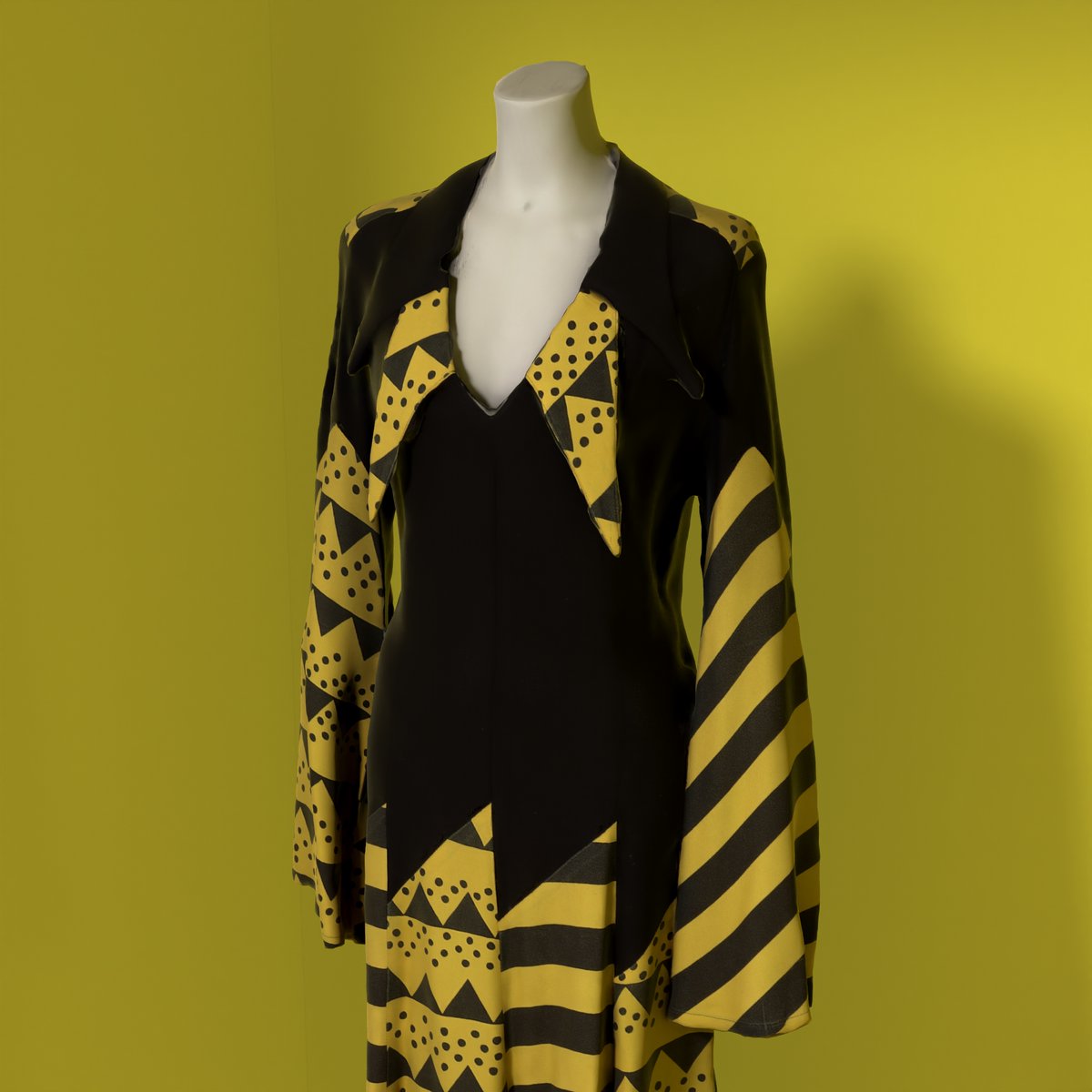
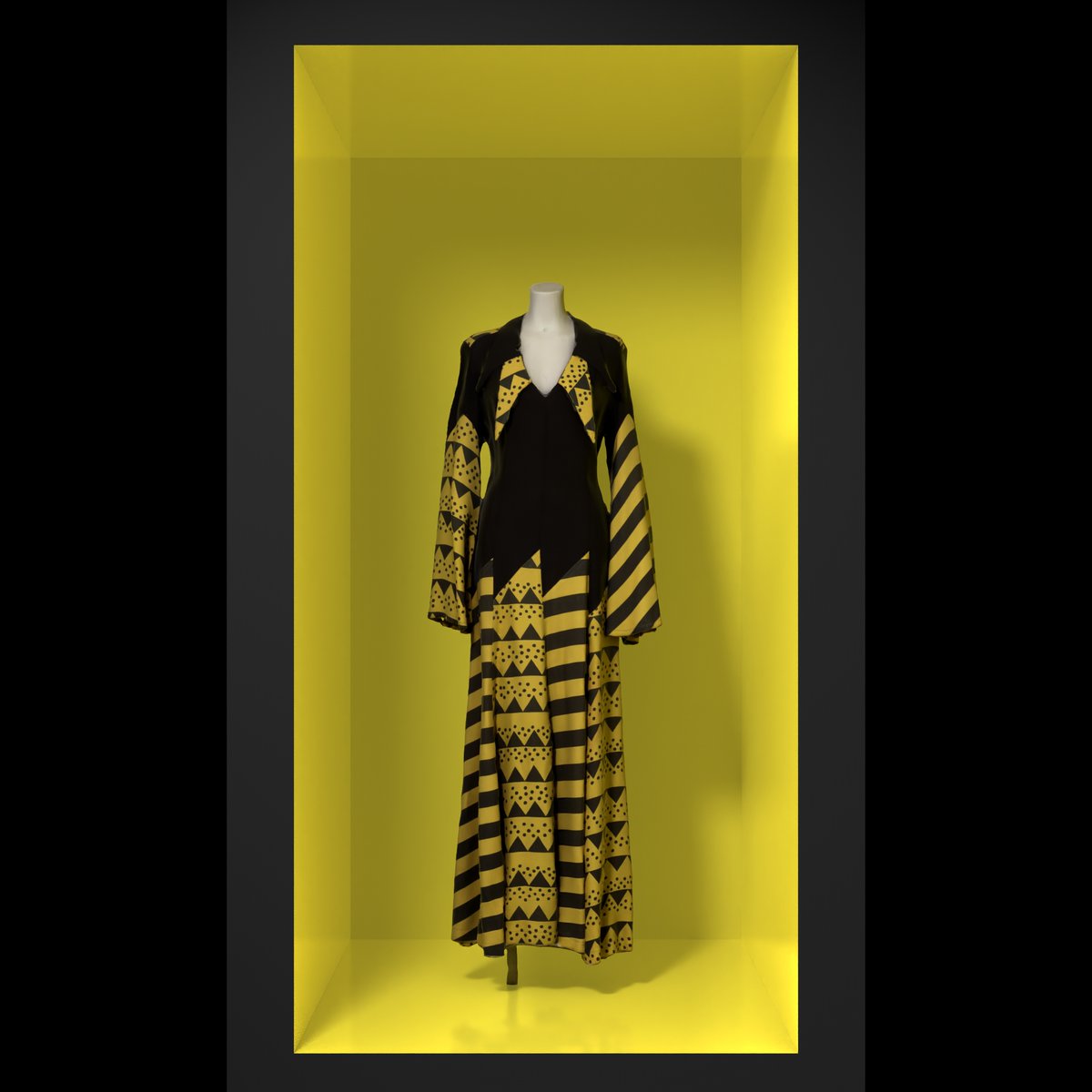
With Clark designing the clothes and Birtwell designing the textiles, one of fashion's most famous collaborations was born. Today, we're introducing a full-length evening dress with trumpet sleeves from 1969, which was made from the pair's collaboration. The dress has a black-and-yellow geometric pattern on moss crepe fabric, v-shaped neckline with four pointed collar panels and trumpet sleeves that flair out. The dress is defined by its bold style, resulting from Birtwell's magical textile and Clark's elegant silhouette, which combines unexpected geometric patterns reminiscent of cubism and pointillism.
In 1971, Clark boldly stated: "What’s wrong with the way women dress is that they don’t know anything about their bodies." He claimed he designed clothes for women who want to look like whores because “whores know everything about their bodies, and that’s why they look so good.” Clark said that studying architecture at the age of 13 was a valuable experience; it's clear that he effectively applied the fundamentals of proportion and volume to his designs, understood women's bodies, and pursued beauty.
#LA_MUSEUM
OSSIE CLARK “evening dress with trumpet sleeves”
designer: Ossie Clark
textile designer: Celia Birtwell
label: OSSIE CLARK / Quorum
year: 1969
#LA_MUSEUM
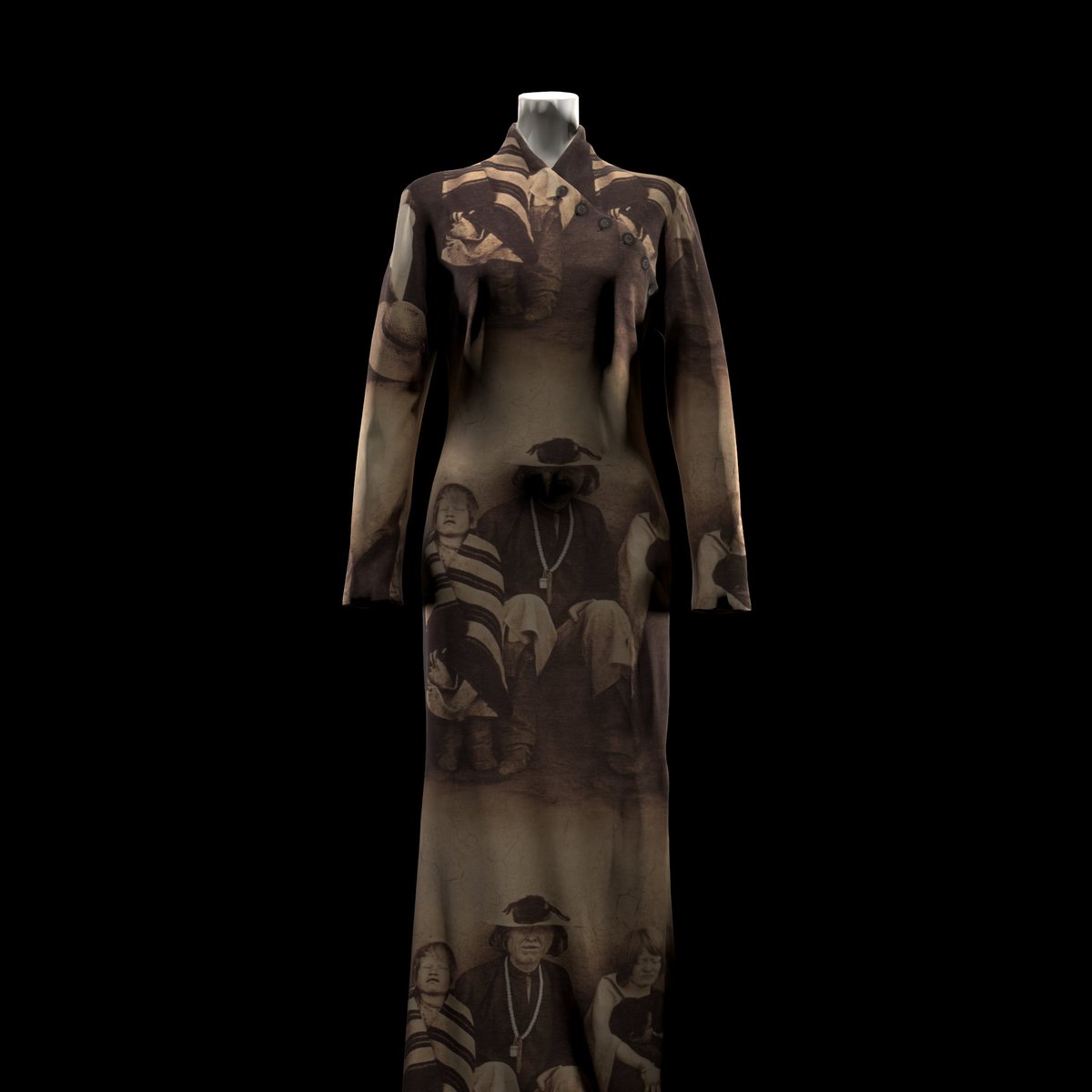
This collection, "Dante," was inspired by Dante Alighieri, the 14th-century poet from Florence. The designer shed light on religion as a source of war and incorporated religious symbols and brutal images of conflicts into the collection. The models, wearing jackets with prints of Don McCullin's archival photography in war-torn Vietnam and masks with a figure of the crucified Christ made by Joel-Peter Witkin, walked on a cross-shaped runway amid Gregorian chants and hip-hop music playing.
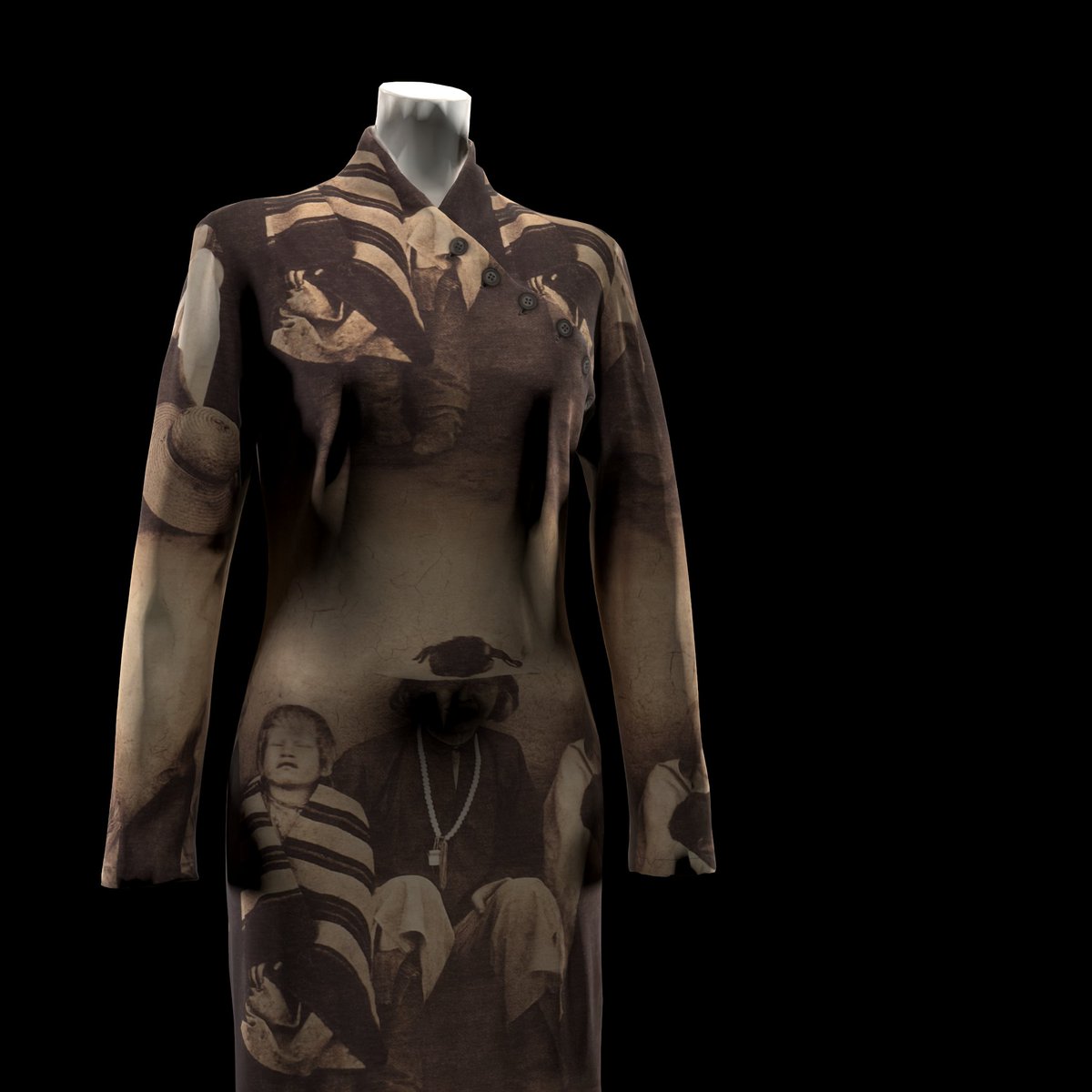
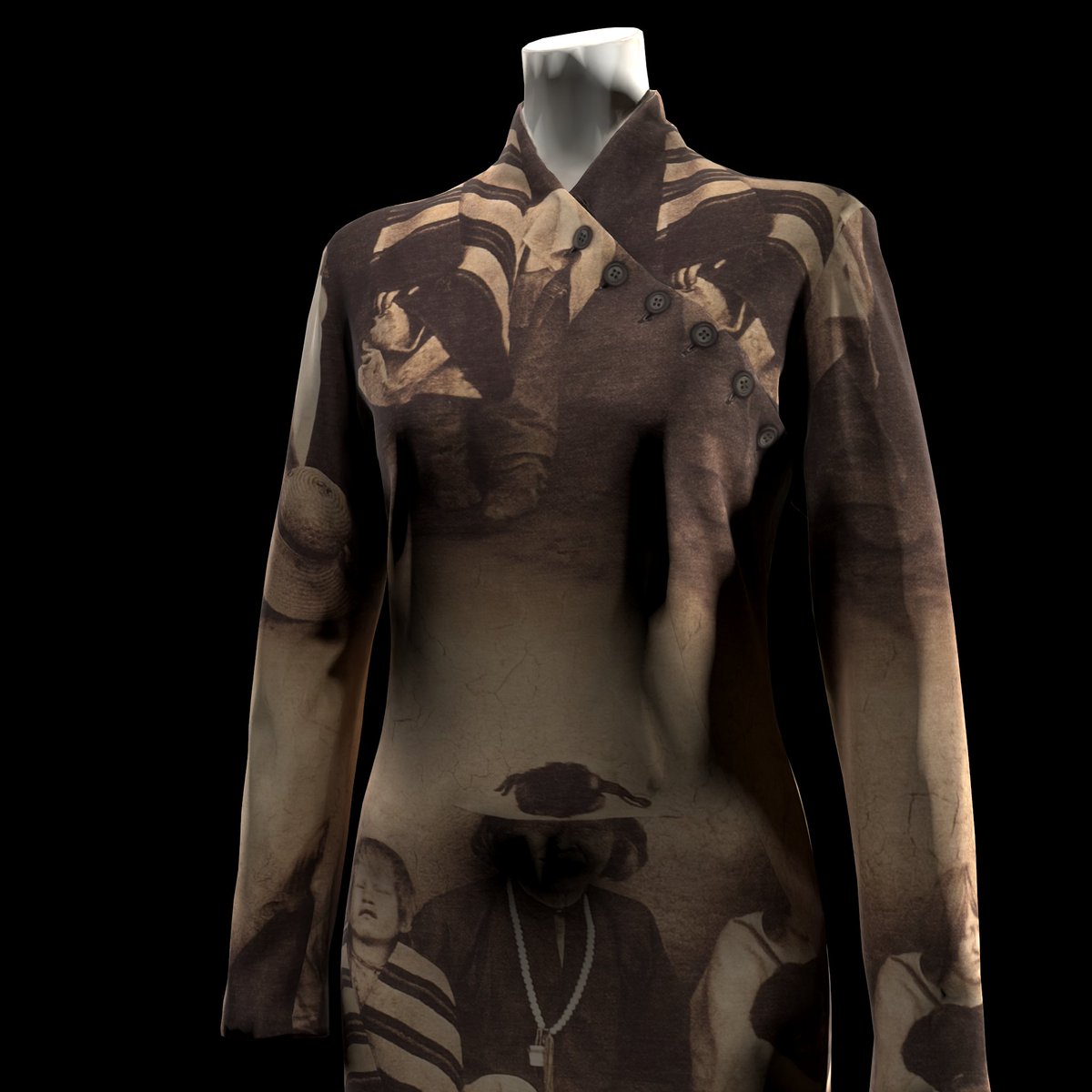
The piece we're introducing to you today is the "Blind Colony" dress, a cotton jersey dress with a monochromatic print of blind people in the 19th century. It's a fitted cheongsam-style piece with an asymmetric buttoned neckline and high slits on both sides. It's as though the dress' dramatic contrast between its shocking photo and beautiful silhouette encapsulates McQueen's genius ability to see the beauty that lies in death and sadness.
This show mesmerized people worldwide and was a paramount milestone in the British designer's career. During the latter half of the same year, he would become the creative director of GIVENCHY, the French haute couture house.
#LA_MUSEUM
Fashion designer Alexander McQueen was known as the "enfant terrible" of the fashion industry.
His designs were filled with beauty and rage, and as such, he was constantly garnering attention.
The designer's Fall/Winter 1996 collection, which he dedicated to fashion editor Isabella Blow, was presented at Christ Church in Spitalfields in East London, which architect Nicholas Hawksmoor built. McQueen chose this Baroque-styled building as the show venue partly because he was a descendent of the Huguenots, who migrated to the area in the 1680s. #LA_MUSEUM
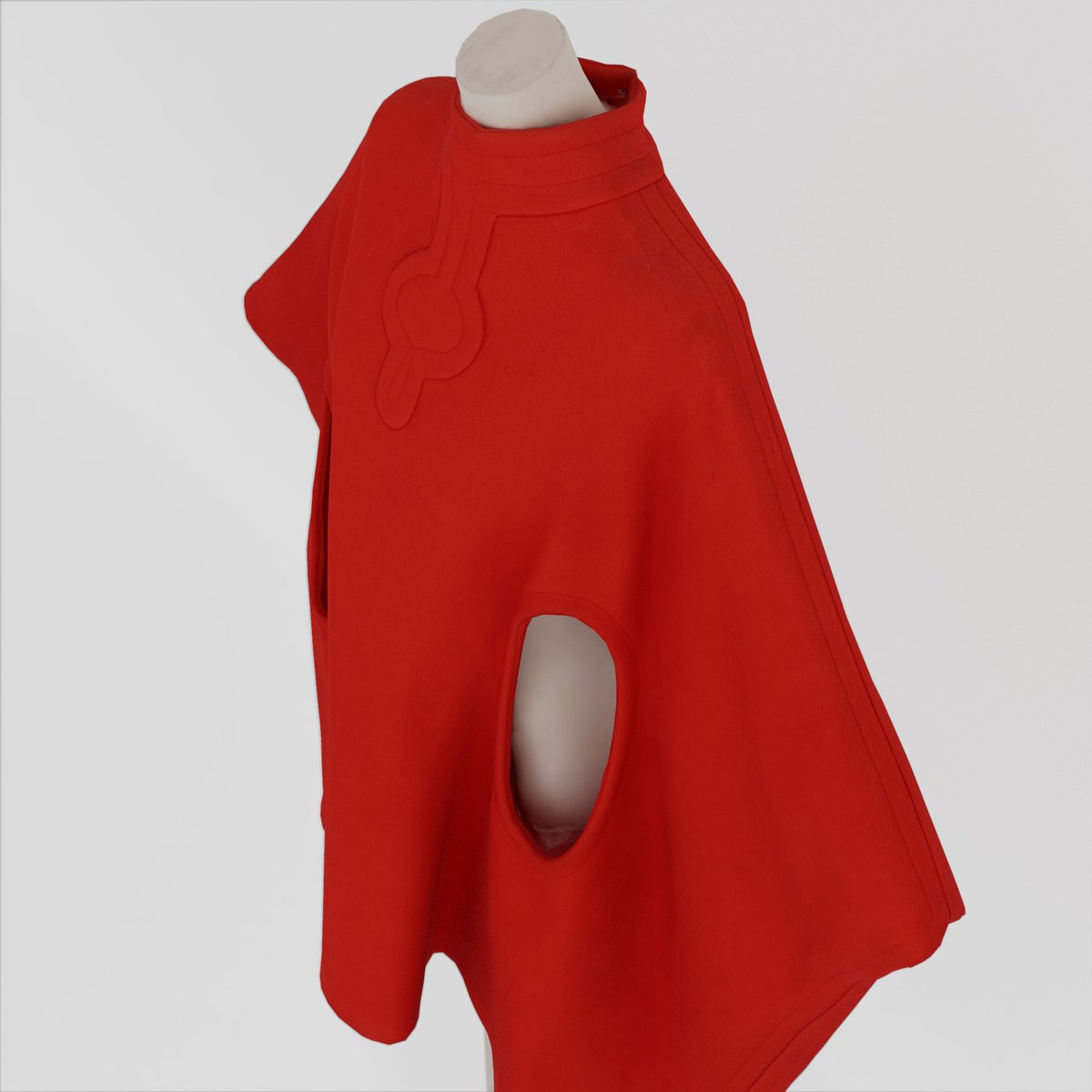
The groundbreaking "Cosmocorps Look" from 1966, a vision of what men and women would wear on the moon 50 years into the future, is one of the designer's most iconic pieces, characterized by bold, geometric details using enamel, vinyl, zips, metallics, and more.
This vivid red wool dress also belongs to futurism, in the spirit of the Cosmocorps Look. The round cuts are evenly placed on the front, back, and sides of the square fabric, encompassing air and light. The design is both architectural and novel, which lets the individual accentuate their waist with a belt. On the chest of this high-neckline dress is what appears to be a large pendant made of the same fabric, and the back has a zipper closure. Cardin's three-dimensional garments such as this one turn into moving sculptures when others wear them.
Through fashion, Cardin embodied the freedom and liberation movements of the 1960s, when humankind first went to the moon and shared the delight and fun of dressing up.
With his neverending fascination with the future and space, in 2000, at the age of 78, he stated that he dreamed of having a house on the moon.
#LA_MUSEUM
LA MUSEUM is a virtual museum founded by LAILA Co., Ltd. to connect clothing and design to the future.
As a company that runs a vintage store, we at LAILA have come across countless brilliant designer clothes. Rather than just letting these clothes lie in someone's closet somewhere, we've been nurturing interest in clothing and design by carving out a space where people can view such pieces.
This brings us to 2023; we launched this project to pass on to the next generation the feelings the designers had poured into their clothes.
laila-company.com#LA_MUSEUM