Luis A. Monterrubio

428 posts

Luis A. Monterrubio banner
Luis A. Monterrubio

Luis A. Monterrubio

@lamonterrubio

Las Rozas y Cervera de Pisuerga

Spain Katılım Ağustos 2012
238 Takip Edilen36 Takipçiler
Luis A. Monterrubio retweetledi
Noah Jakob Rettberg 🇩🇪🇪🇺
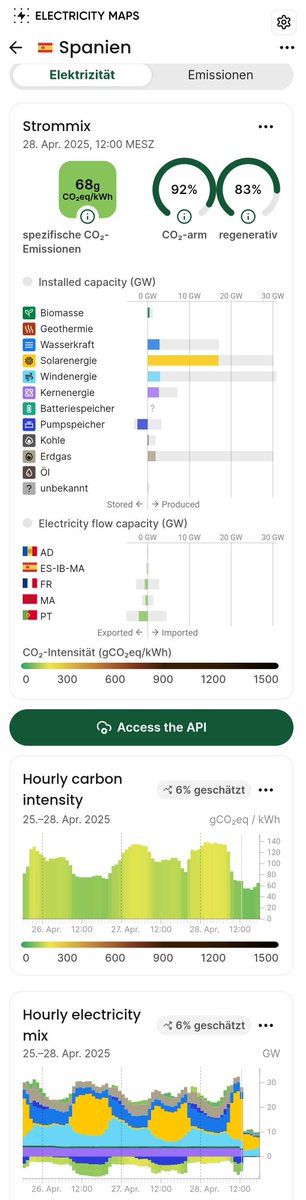
"What the Hell is Going On in Spain?" At around half past eleven today, Spain and Portugal experienced an almost nationwide blackout. Small parts of southern France were also briefly affected but reportedly regained power quite quickly. The Portuguese grid operator currently attributes the likely cause to weather-related oscillations in power lines, which caused the grid to collapse. At the time of the load shedding, Spain’s electricity supply was in a very fragile state: 70% of the electricity was generated by producers without grid-synchronous inertia. Grid-synchronous inertia refers to turbines in nuclear, coal, gas, or hydroelectric power plants that drive the generators of these plants. The rotational speed of these turbines is synchronized with the frequency of the power grid. Thus, the grid frequency is directly linked to the rotational energy of the turbines. If the frequency drops, it means that the load on the grid exceeds the output of the power plants connected to it. In such a case, the rotational energy of the turbines is converted into electricity to stabilize the grid. The valves on the turbines respond by opening further to support the grid. The opposite situation can also occur: if there is excess generation, that energy is absorbed as rotational energy, and the turbine valves close accordingly to adjust to the new load. Although the rotational energy compared to the grid’s power consumption is not large, it is sufficient to stabilize excessive load fluctuations or absorb surplus generation until the valves have time to react. This principle of grid-synchronous rotating masses has been the foundation of our power grids for over 100 years, ensuring that at every moment exactly as much electricity is produced as is consumed. Over the past two decades, Europe has been rapidly building power generation facilities that do not use grid-synchronous turbines, but instead produce direct current, which is converted to alternating current via inverters: Wind and solar energy. These inverters can generate high-quality alternating current, but they cannot replace the function of grid-synchronous inertia. The more wind and solar power is integrated into the grid, the fewer conventional power plants with grid-synchronous turbines remain. The fewer grid-synchronous turbines there are, the less inertia there is to buffer instantaneous fluctuations in load. If there is insufficient buffering, even small fluctuations can quickly cause the grid frequency to deviate dangerously from the ideal value of 50 Hz. Consumers and producers alike respond to this by disconnecting from the grid for self-protection, which can trigger a cascading collapse. What exactly tipped the balance in Spain remains unclear. However, we do know that the Spanish grid was in a highly volatile state at the time of the collapse. Please note: This text is an AI translation of my orginal German language Tweet.
Noah Jakob Rettberg 🇩🇪🇪🇺 tweet media
Noah Jakob Rettberg 🇩🇪🇪🇺@NoahRettberg

"Was zur Hölle ist los in Spanien?" Etwa um halb zwölf kam es heute in Spanien und Portugal zu einem nahezu landesweiten Blackout. Kleine Teile Südfrankreichs waren wohl auch kurzfristig betroffen, hatten aber ziemlich schnell wieder Strom. Der portugiesische Netzbetreiber gibt bisher als vermutlichen Grund wetterbedingte Oszillationen in Stromleitungen an, welche das Stromnetz zum Zusammenbruch brachten. Die spanische Stromversorgung war zum Zeitpunkt des Lastabwurfs in einem sehr fragilen Zustand: 70 % des Stroms kam aus Erzeugern, die keine netzsynchronen Schwungmassen besitzen. Netzsynchronen Schwungmassen beziehen sich auf Turbinen in Kern-, Kohle-, Gas- oder Wasserkraftwerken, welche die Generatoren dieser Kraftwerke antreiben. Dabei ist die Drehzahl dieser Turbinen synchronisiert mit der Frequenz des Stromnetzes. Die Netzfrequenz ist damit gekoppelt an die Rotationsenergie der Turbinen. Geht die Frequenz herunter, bedeutet dies, dass die Last am Netz die Leistung der angeschlossenen Kraftwerke übersteigt. In diesem Fall wird Rotationsenergie der Turbinen in Strom umgewandelt, welcher das Netz stützt. Die Ventile an den Turbinen der Kraftwerke reagieren darauf, indem sie sich weiter öffnen, um das Netz zu stabilisieren. Den gegenteiligen Fall gibt es auch: Hierbei geht überschüssige Leistung am Netz in Rotationsenergie über, woraufhin die Ventile an den Turbinen schließen, um sich an die neue Last anzupassen. Die Rotationsenergie der Turbinen ist im Vergleich zum Stromverbrauch am Netz zwar nicht groß, reicht aber aus, um übermäßige Last zu stützen oder überschüssige Leistung abzufangen, bis die Ventile Zeit haben zu reagieren. Dieses Prinzip der netzsynchronen rotierenden Schwungmassen ist seit über 100 Jahren Grundlage unserer Stromnetze und sorgt dafür, dass in jeder Sekunde so viel Strom produziert wird, wie verbraucht wird. Seit nun zwei Jahrzehnten bauen wir in Europa massive Mengen an Stromerzeugern zu, die eben keine netzsynchronen Turbinen haben, sondern stattdessen Gleichstrom produzieren, der mittels Wechselrichtern in Wechselstrom umgewandelt wird: Wind- und Solarkraft. Diese Wechselrichter können zwar sehr überzeugenden Wechselstrom erzeugen, aber nicht die Funktion der netzsynchronen Schwungmassen ersetzen. Je mehr Wind- und Solarenergie am Netz ist, desto weniger netzsynchrone Turbinen konventioneller Kraftwerke sind vorhanden. Je weniger netzsynchrone Turbinen existieren, desto weniger Schwungmasse steht als Puffer bereit, um instantane Lastschwankungen abzufangen. Sind die Puffer nicht ausreichend vorhanden, kann es schnell dazu kommen, dass selbst kleine Schwankungen die Netzfrequenz zu sehr vom Idealwert von 50 Hz abweichen lassen. Darauf reagieren Verbraucher und Produzenten gleichermaßen, indem sie zum Selbstschutz vom Netz gehen, was einen kaskadierenden Zusammenbruch hervorrufen kann. Was tatsächlich in Spanien das "Boot zum Kentern" brachte, steht noch nicht fest. Wir wissen aber, dass das Netz in Spanien zum Zeitpunkt des Zusammenbruchs in einem sehr volatilen Zustand war.


English
112
1.4K
3.6K
820.6K
Luis A. Monterrubio
Luis A. Monterrubio@lamonterrubio·
@GustavoBolsa Sin entrar a valorar la propuesta, por ejemplo, existen los derechos antidumping, que pueden aplicarse por empresa (y origen).
Español
0
0
0
41
Chess Feed
Chess Feed@chess_feed·
Insane Queen Sacrifice 🎯 Can you explain?
Chess Feed tweet media
English
306
115
2.8K
310.9K
Luis A. Monterrubio retweetledi
Elon Musk
Elon Musk@elonmusk·
Beats a Porsche 911 while towing a 911
English
18.3K
50.6K
462.4K
73.9M
Luis A. Monterrubio
Luis A. Monterrubio@lamonterrubio·
@arturogaseoso Claro que las conocía! Sobre todo a Gloria, que nos tenía que aguantar de niños en la biblioteca… Avísame cuando vayas y, si coincide, nos saludamos y ponemos cara. Un saludo.
Español
1
0
0
0
Jaime Ugarte
Jaime Ugarte@UgarteJaime·
Definición de árbitro "carnicero"😡 No han pasado más accidentes porque Dios existe. Lástima un hook de Wilfredo a su mandíbula!!
Boxing History@BoxingHistory

#OnThisDay in 1978, Wilfredo Gómez 🇵🇷 defended the WBC junior featherweight title with a 3rd round KO of Royal Kobayashi in Kitakyushu, Japan #boxing #history #boxeo

Español
5
2
16
0
Luis A. Monterrubio
Luis A. Monterrubio@lamonterrubio·
@elfarmaceuticoa Para deporte, Powerbeats (con cable que los une, para dejarlos colgados en el cuello) o Powerbeats Pro sin cable. Mejor que AirPods y sirven igual para el día a día.
Español
0
0
0
0
Elfarmacéuticoactivo
Elfarmacéuticoactivo@elfarmaceuticoa·
Sin llegar al precio de los AirPods de Apple, alguien me recomienda unos cascos con buena relación calidad/precio para utilizar haciendo deporte??
Español
85
3
28
0
Luis A. Monterrubio retweetledi
Somos Palencia
Somos Palencia@SomosPalencia·
Entre la mirada de las altas cumbres de la Montaña Palentina, la tranquilidad de las aguas de los embalses y los pueblos cargados de rincones sorprendentes, discurre la Ruta de los Pantanos ❤ Este verano, elige Cervera de Pisuerga y descubre lugares fantásticos #TodoVaACambiar🍃
Español
0
55
123
0
Luis A. Monterrubio retweetledi
Massimo
Massimo@Rainmaker1973·
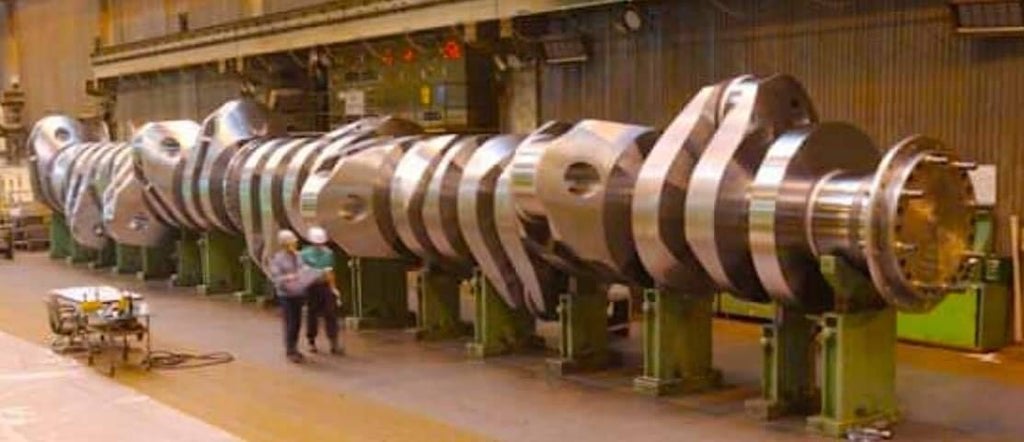
This is the crankshaft for a Wärtsilä-Sulzer RTA96-C engine, the largest reciprocating engine in the world, used in large container ships. It's a 1810-liter engine that generates 108,920 horsepower at 102 RPM. This crankshaft weighs 300 tons buff.ly/2uWK9M0
Massimo tweet media
English
30
329
1.5K
0
Luis A. Monterrubio retweetledi
Kevin McCarthy
Kevin McCarthy@SpeakerMcCarthy·
Here's what it looks like when Democrats are being honest: “I’m concerned that if we don’t impeach this president, he will get re-elected.”
English
3K
7.1K
20.1K
0
Luis A. Monterrubio retweetledi
ABC.es
ABC.es@abc_es·
▶ Este ha sido el discurso íntegro de la Princesa de Asturias #PremiosPrincesadeAsturias
Español
73
391
1.5K
0
Luis A. Monterrubio retweetledi
Inma Sequí
Inma Sequí@isequiser96·
Qué locura tan maravillosa.
Español
187
883
2.6K
0
Luis A. Monterrubio retweetledi
ian bremmer
ian bremmer@ianbremmer·
.@Aeromexico wins Troll of the Month award. Hands down.
English
1.5K
23.4K
55.4K
0