Sabitlenmiş Tweet
Landon Shaw II
1.6K posts

Landon Shaw II
@landonshaw
Co-found @ Sweat Pants Agency – The agency behind INC #1 fastest-growing consumer product (2020) & INC #1 fastest-growing healthcare company (2022).
Katılım Ağustos 2019
217 Takip Edilen1K Takipçiler

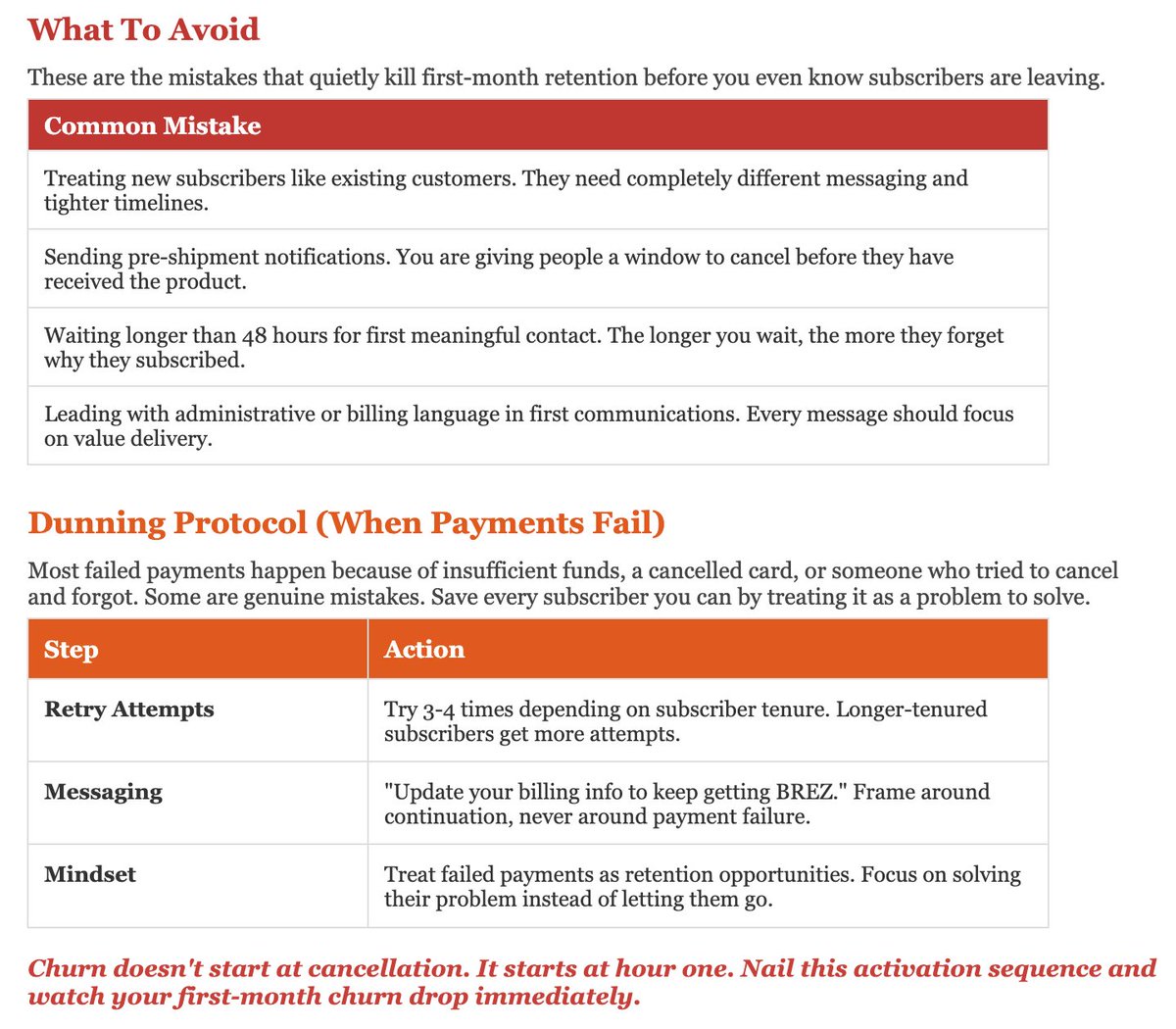
@iamshackelford Well said. 48 hours feels tight to fit all that in. But worth a test and overall solid framework
English

@connor_m Oooooh, I think you're gonna love my vid about this
youtu.be/oFZp553oL2c?si…

YouTube
English

Nobodies ready for the conversation that A/B Testing apps cause a massive negative impact for paid traffic spend.
An extremely large benefit of having multiple brands at scale is the ability to analyse the impact of otherwise 'harmless' site or funnel changes.
Below is our NCPA, anytime we have a AB test on rCPMs go up at least 20% OR NCPA goes up 10-30%, or in the below example, as much as 80% increase in NCPA.
(One of the below tests was a 'winner' with 30% increase in PPS)
Take a guess when AB tests are live or stopped, each small climb in NCPA is when a AB test starts, the sharp reduction is when a AB test is stopped, or in today's case, when AB testing apps are completely uninstalled.
"Oh that's simply because it's a failed AB Test"
Wrong.
AB Testing is inherently flawed from the beginning for DTC brands, as your PPS or RPS is the main tracked net gain.
However this isn't the goal for DTC brands, as your paid traffic makes up over 50% of your traffic.
The main itemised metrics for growth for DTC brands are NCPA, CPMs, Account Center costs, etc etc.
Next time you run a large AB Test, track these over PPS and RPS. What you'll see is when you accompany the 'increase' in RPS on site, you'll 9/10 times see an unnormally high increase in above metrics.
Or, simply run a double fresh URL AB test directly through Meta, the AB test that you thought was 50%+ in RPS, will end up failing in Meta. The reverse happens too, that AB test you thought would be a massive winner but failed? Could win via Meta directly.
This isn't a direct attack on AB Testing or CRO agencies, and isn't something to ridicule me for below, our sites get over 7m human sessions a month, I have vigorously tested this, I clearly WANT AB testing to work, they are my stores, we're bootstrapped, wins from an AB test literally go into my pocket.
CRO agencies would see a massive growth actually agreeing with this, and working with brands to test website changes the way they should be tested, directly through ad accounts, and acknowledging that most agencies do not know how to calculate RPS or PPS, which should include CACs.
Other things you can do to confirm this isn't BS -
- After a winning AB Test, set the test live on site, and AB test it again against the 'old' site.
- Run a test where the A and B are both the exact same site.
- Try running a three-way test, A (original), B (test), C (original), I can guarantee you, A and C do not end up the same after significance.
This is not app related, we've used all of them.
In fact, the next app to enable AB Testing via ad accounts, i'll use it, great app idea, i'll fund it for whoever wants to create this.

English

@BradPauquette You must not be in sales, or struggle with people pleasing tendencies 😅 Its not a rule or suggestion for others by any means. I don't care if someone hangs up on me--but I never want to come off as "eager to get off the call" with someone who I want to work with.
English

@landonshaw No way, man. My rule: Say goodbye, click the button. It's better for everyone that way.
English

I’ve accidentally developed a new video meeting etiquette rule...
I try to be the last person or one of the last people to leave the call.
Has anyone else who does a lot of video calls experienced this?
Twice now I thought we wrapped up the call, said our goodbyes...
And so i click "Leave"… and at the same time I hear:
“oh, one more th...” – but too late, i already closed it.
Incredibly awkward moment.
So now i just wait.
Everyone drops off while I stare at my screen... smiling... pretending to look for my cursor, trying not to make a weird face.
Maybe im crazy, thats fair. 😅
I've been doing this long enough that i realized its officially a rule of mine.
Can anyone else relate?
English

📈4x growth in 90 days!? We helped Mountain Gazette 4X their subscriber base from 4,000 to 16,000 customers in just 90 days.
No silver bullets, no secret hacks.
It's all about smart strategies, creative that actually works, and trust in your team.
Ready to scale your business? Apply for a free marketing audit today at 👉 sweatpantsagency.com
English

Confusion is often self-inflicted.
If you’re tracking ten KPIs, it’s usually because no one has chosen the one that actually matters.
So progress gets defined differently in every meeting.
Revenue this week.
CAC next week.
MER the following.
Or worse… every metric, all at once.
I see it all the time.
When growth is measured by everything…
Targets are always shifting, no one trusts anything, and growth stalls.
Clarity and focus scale.
And operators who choose the number that defines progress, will win.
Everyone else is just watching a bunch of numbers like a slot machine—pulling random levers—hoping they line up.
English

Most people are afraid of being wrong.
I used to be too.
Most people won't blatantly admit it. But thats how they behave.
“If I launch and it doesn’t work, I failed.”
That’s backwards.
Adjust the belief and self talk that produces the desired behavior and outcome.
"If I don't launch something, ill never learn anything... and ultimately fail."
Failure isn’t launching and missing.
Failure is never launching, and learning nothing.
Imperfect action > a perfect plan never executed.
English

Stress is a data point.
Last year was tough for me… I usually don’t like to admit weakness.
Life. Family. Business.
All hard. All at once.
I learned a lot. I grew a lot.
But what surprised me wasn’t the pressure — it was how long I stayed stuck inside it.
I assumed growth had to be slow, painful, and endured while you struggle your way through figuring out the problem.
I was wrong.
Everything changed once I broke it down into a formula with variables... and I learned how easy it was to identify where the breakdown was creating the pain.
Below are some formulas for my fellow math geeks.
Pressure isn’t random.
Pressure is diagnostic.
Here’s what’s actually happening when life’s pressure feels like pain:
1. Responsibility and demand increase
2. Standards, beliefs, and systems stay the same
3. The system can’t support the new load → pain
That mismatch is what we experience as stress, fear, or freeze mode.
Pressure isn’t the problem.
It's the lag in identifying the standards, values, beliefs and systems that failed you.
As responsibility rises, these variables must rise with it.
The longer they don’t, the longer the pressure lasts… and the more painful it becomes.
There are only a few inputs here:
• Beliefs — who I think I am and what I believe is possible
• Values — what’s actually driving my decisions
• Standards — what I tolerate vs. what I demand
• Systems — how execution actually happens
So when pressure shows up, don’t ask:
“How do I make this stop?”
Ask instead:
“Why am I responding this way? What is this pressure revealing?”
A belief you’ve outgrown.
A value that no longer fits the season.
A standard that hasn’t risen yet.
A system that can’t carry the weight.
Pressure is just feedback pointing to the weakest variable.
Growth doesn’t have to be mysterious.
When pressure shows up, it’s pointing directly at a belief, value, standard, or system that needs to be strengthened, refined, or removed.
• Identify the gap
• Strengthen or replace it
• Put in the reps
The hard part:
It requires honesty — the willingness to admit where you’re falling short, or challenge a belief,
And discipline — the willingness to hold yourself to new standards.
For example:
“I need to be a better leader.”
Define what that actually means.
Then train the gap.
If the issue is selflessness, don’t think about it — practice it.
Serve someone. Help when it’s inconvenient. Choose responsibility over comfort.
Those are the reps.
That’s where growth lives — on the other side of hard.
What variables are subconsciously controlling your decisions, behaviors, and response to stress?
English

Here’s the uncomfortable truth:
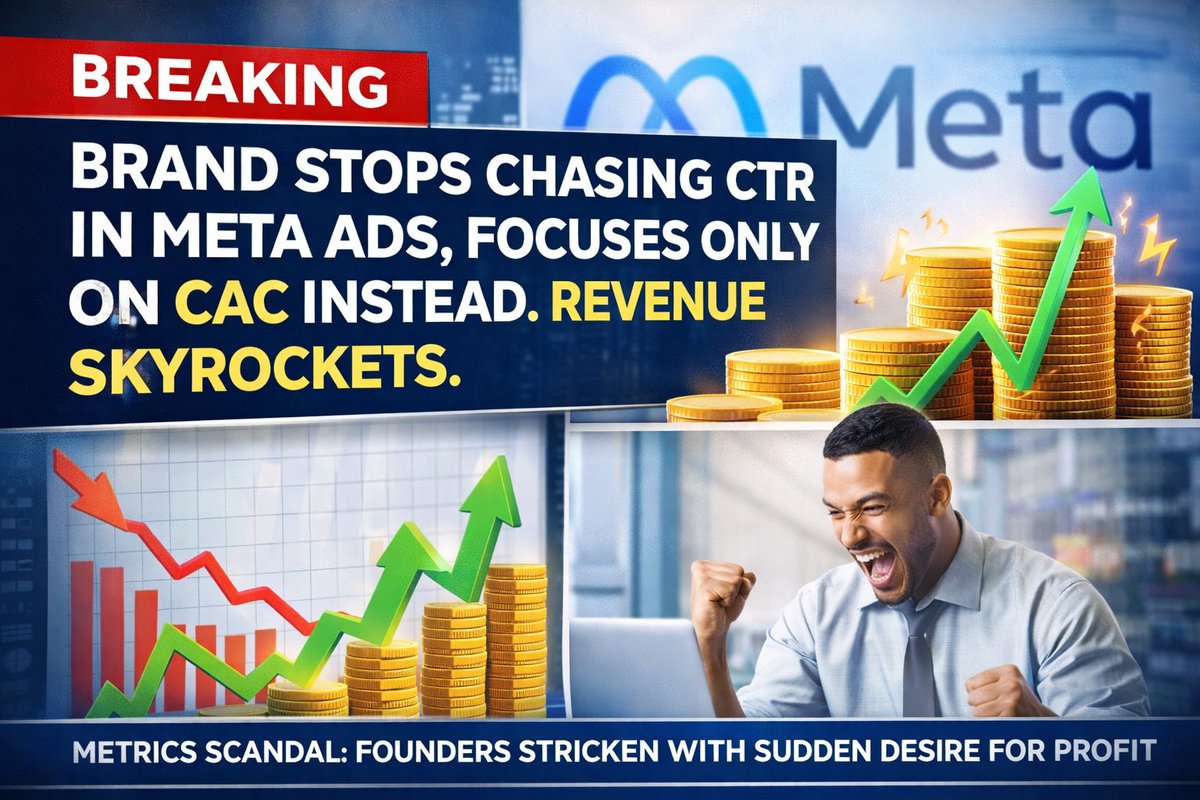
If you’re optimizing for CTR, you’re probably optimizing for worse performance.
Not always, but often enough that you should pay attention.
We ran correlation analysis across 9 brands (apparel, supplements, CPG, subscriptions).
CTR ↔ CAC showed a ~0.75 positive correlation.
When CTR goes up, CAC usually goes up with it.
CTR measures engagement. It does not measure buying intent.
When CTR becomes the goal, creative shifts toward clicks — not conversion.
That’s Goodhart’s Law in action.
Another pattern we noticed:
Our highest-converting ads weren’t the ones people watched the longest.
They were the ones people left within ~8 seconds — because they did their job fast.
CTR still matters — directionally. But it should never be the goal.
CAC is the goal.
And the moment brands stop optimizing for CTR and start optimizing for CAC — profit shows up.

English

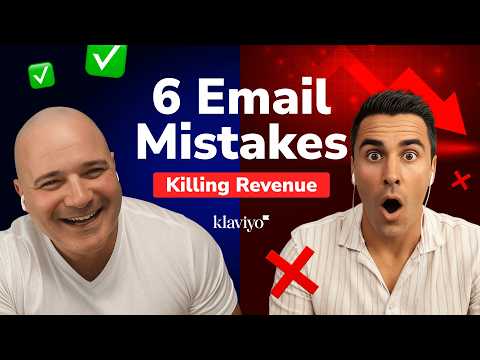
If you’re panicking because email revenue has been tanking this year and you have no idea why… you’re not alone.
We audit dozens of email accounts every month, and the same mistakes show up over and over again.
You’re probably not going to like this — but the fixes are often not magical buttons or technical switches, hiding behind some DNS records or buried in your Klaviyo settings...
The truth is, these mistakes are often more simple to overlook than you think.
In this video, Eric and I cover the 6 most common email mistakes killing revenue, and how to fix them.
Watch here 👉 youtu.be/PIHdP2Lp4IM

YouTube
English
Landon Shaw II retweetledi

Repeat after me:
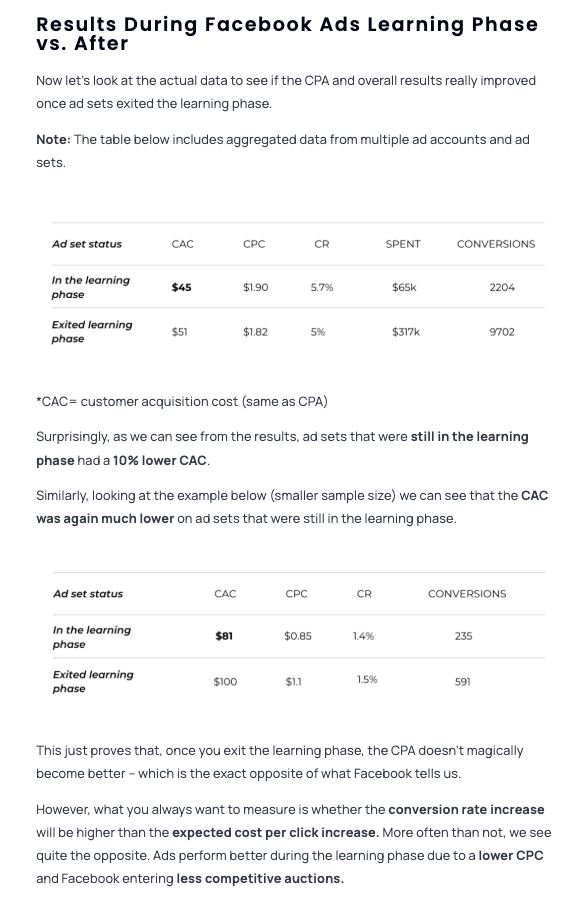
Exiting the learning phase doesn't give me better results.
===
The truth is the only thing Facebook purports to do when exited the learning phase is to have more stable delivery. That's it.
It doesn't account for audience saturation, creative fatigue, Facebook code changes, competition, seasonality, and more.
Shoutout to Lebesgue who published this.

English

@iamshackelford I think my Lifetime gym saw your fridge and said "lets copy whatever Nicks got going on for drinks" these are all bangers
English

DTC Copywriting Tip
Most brands know urgency works to increase revenue...
But what if you don’t have a sale ending… or limited inventory?
And you don’t want to fake it with false scarcity?
Classic urgency looks like:
🔥 “Limited stock.”
⏳ “Sale ends tonight.”
But the best brands also use "pre-urgency" when they don’t have a built-in deadline.
1️⃣ Previous Sell Outs → “{Product} has sold out 4x already. Order before it’s gone again.”
2️⃣ Re-Stock History → “This sold out in 48 hours last time. Join Early Access for first dibs.”
3️⃣ Shipment Cycles → “Order by midnight to be included in this week’s shipment.”
The truth: most customers don’t act until they feel the risk of missing out.
Or as my mentor says: “People don’t get off the couch unless there’s a fire.”
👉 Add urgency to every email, ad, and landing page you can to increase conversion rates and revenue.
English

Sure - we’ve grown dozens of brands into top INC 500 companies.
And sure, we’ve helped brand owners quit their day jobs and become wildly successful off their e-com businesses.
But honestly? Some of my proudest accomplishments aren't just the brands we’ve built—it’s the people I get to build them with.
It's the amazing team members who:
💥 Now manage 7–8 figure marketing channels like pros
💥 Make tough calls without me in the room
💥 And go above and beyond to serve our clients better than I ever could alone.
That’s the real flex. 👊
English

The #1 mistake brands make during a product launch (and how to fix it)
Most teams spend months building the product…
…but forget to build the anticipation.
No teaser emails.
No head’s up to their lists.
Just blast a cold email on launch day—and... "crickets"...
👉 Product launches don’t fail on launch day—they fail in the weeks before it.
Here’s the fix:
🔷 The Launch Readiness Sequence
A proven 3-step email strategy we’ve used to sell out launches in hours—not weeks.
Step 1: Build Curiosity & Hype
Use teaser emails to warm up your list with mystery, energy, and expectation.
→ Blurry images, riddles, or reply-to-unlock VIP access work wonders.
Bonus: Invite them to reply, click, or sign up for early access.
→ This boosts deliverability and builds a prioritized buyer list.
Step 2: Reveal & Launch
Drop the product like an event—with energy, visuals, story, and a reason to care.
→ Launch emails should feel exciting, not transactional.
Step 3: Squeeze With Urgency & FOMO
Follow up with a short, high-converting sequence of “last chance” emails.
→ Think: 24 hours left, a few hours left, final call—and maybe even a “surprise extension.”
✅ We helped one brand recently launch a new Sku using this strategy and they sold out in 7 hours—a new record in their companies history.
No discounting. No viral ads. Just smart sequencing and a primed list.
💡 Bonus: This isn’t just for BFCM.
It works for new SKUs, collabs, flavors, collections—any DTC launch.
If you’ve got a launch coming soon and want to turn “announce and hope” into actual results…
Drop a “💥” in the comments and I’ll send over the full playbook.
#dtc #emailmarketing #productlaunch #retentionstrategy #ecommercegrowth
English