Larry Diehl

2.5K posts

Larry Diehl banner
Larry Diehl

Larry Diehl

@larrytheliquid

Founder @ColimitAI. Formal Verification & Neuro-Symbolic AI. Formerly postdoc @uiowa and PhD @Portland_State.

Brooklyn, NY Katılım Şubat 2007
680 Takip Edilen794 Takipçiler
Sabitlenmiş Tweet
Larry Diehl
Larry Diehl@larrytheliquid·
It's been over a decade since I've given a public tech talk, so I was super happy when @eatonphil said there was an opening at NYC Systems. This talk is on a language called Dafny, which IMO does the best job of making formal verification accessible to programmers without previous experience in the area. I hope this can act both as a quick intro to Dafny, as well as reference material to understand what's going on when you move beyond the basics.
Larry Diehl tweet media
English
2
3
12
2.3K
Larry Diehl retweetledi
Colimit
Colimit@ColimitAI·
Formal Spec-Driven Development
English
0
2
5
1.1K
geoff
geoff@GeoffreyHuntley·
folks; heading to SF again shortly. i’m opening up @heavybit devguild. join me and a sharp lineup of infra founders and engineers in SF at luma.com/write-only-cod… use the coupon code “ralphloop” for 20% off.
geoff tweet media
GIF
geoff tweet media
English
5
1
33
3K
Larry Diehl
Larry Diehl@larrytheliquid·
@glcst Insane work, you're getting rid of all the objections against using sqlite, congrats glauber!
English
1
0
6
769
Glauber Costa
Glauber Costa@glcst·
This is a monumental release: Concurrent Writes are finally here. When we started Turso more than a year ago, we asked a large number of people what is the thing that SQLite lacked but they wanted to see the most. The result was overwhelming: Concurrent Writes. It is not an easy feature to build: the whole database needs to be able to support MVCC (Multi-Version Concurrency Control). But it possible and doable because we have a full rewrite from a blank slate, and a great and reliable foundation of deterministic testing with both @AntithesisHQ and our own simulator. MVCC is now no longer experimental and will enter a short beta period (which we do for all features) before we call it GA. But that's not the only AMAZING thing in this release: SQLite is known to be a very permissive database. Types are suggestions. Turso now not only support STRICT tables, but comes with a type system including the ability to create your own types with the CREATE TYPE statement. Turso is SQLite reimagined for the age of AI. And it is hard to think of something more important and more overwhelmingly victorious than types. For the full changelog and goodies, see the post below!
Pekka Enberg@penberg

Turso 0.5.0 is now out! ⚡ Concurrent writes is now beta 🔍 Full-text search with Tantivy 🔒 STRICT mode stable + user-defined types Big thanks to the 50+ people who contributed over 3,000 commits into this release! turso.tech/blog/turso-0.5…

English
18
28
363
176.9K
Larry Diehl
Larry Diehl@larrytheliquid·
One thing that I noticed about the original implementation of Devin was that it broke up its plan into a sequence of line numbered steps, and some steps had gotos (much like asm). This was over a year ago, and at least for smaller models this was very effective. I copied the strategy in one of my products as a latency and cost savings measure to be able to use small models in certain parts
English
0
0
2
449
Satnam Singh
Satnam Singh@satnam6502·
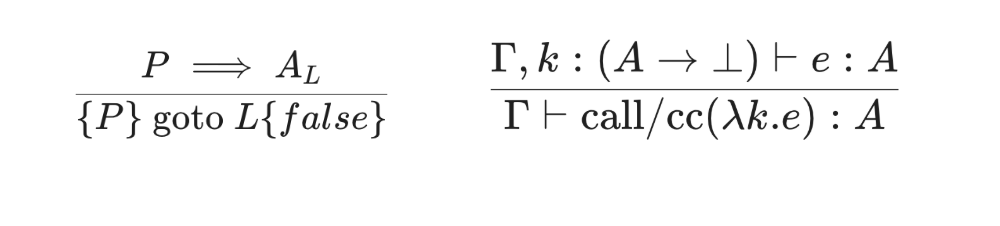
goto makes a comeback. The goto rule might be simple but Hoare pointed out its application is complicated for human brains, but LLM-code generators don't care.
Satnam Singh tweet media
English
17
8
168
11.9K
Larry Diehl retweetledi
Prof. Anima Anandkumar
Prof. Anima Anandkumar@AnimaAnandkumar·
We’re excited to release TorchLean which is the first fully verified neural network framework in Lean. The Lean community has largely focused on pure mathematics. TorchLean expands this frontier toward verified neural network software and scientific computing. With the recent release of CSlib, we see this as another step toward a fully verified ML stack. We support features: 1. Executable IEEE-754 floating-point semantics (and extensible alternative FP models) verified tensor abstractions with precise shape/indexing semantics 2. Formally verified autograd system for differentiation of NN programs Proof-checked certification / verification algorithms like CROWN (robustness, bounds, etc.) 3. PyTorch-inspired modeling API with eager-style development + export/lowering to a shared IR for execution and verification Project page: leandojo.org/torchlean.html Paper: [2602.22631] TorchLean: Formalizing Neural Networks in Lean Work done @Robertljg, Jennifer Cruden, Xiangru Zhong, @huan_zhang12 and @AnimaAnandkumar. #MachineLearning #ScientificComputing #Lean
Prof. Anima Anandkumar tweet media
English
27
247
1.6K
137.8K
Larry Diehl
Larry Diehl@larrytheliquid·
@headinthebox Fun fact, the overloaded functions in julia work similarly to those of castagna
English
0
0
1
76
Erik Meijer
Erik Meijer@headinthebox·
@larrytheliquid Overloaded functions are invariably a pain in the neck, however you try to implement them!
English
1
0
1
85
Erik Meijer
Erik Meijer@headinthebox·
Given everything that is happening in the world, it is reassuring that Claude Code is currently reading irif.fr/~gc/papers/set… as it is planning to implement a type checker for me.
English
8
3
60
8.2K
Larry Diehl
Larry Diehl@larrytheliquid·
@headinthebox i mean the true castagna-style overloaded functions, not vanilla structural subtyping interacting with set theoretic types
English
0
0
1
12
Larry Diehl
Larry Diehl@larrytheliquid·
@headinthebox be careful if you plan to support overloaded functions via intersections, as that also implicitly exposes it
English
2
0
1
63
Larry Diehl
Larry Diehl@larrytheliquid·
@headinthebox word of warning, the reflective subtyping in conditionals at runtime takes quite a bit of work to make efficient, if efficiency is a concern of yours
English
1
0
2
65
Larry Diehl
Larry Diehl@larrytheliquid·
@headinthebox ah makes sense! our use case was a stored procedure language for a distributed database, which could have JSON-RPC endpoints exposed, so well typed meta-programming with JSON was indeed a sweet spot
English
1
0
1
68
Larry Diehl retweetledi
geoff
geoff@GeoffreyHuntley·
"I've been carrying this little category theory library around for ten years, porting it from language to language, and every time, the experience tells me something about the state of the art. This time what it told me is that we're living in the future, and it's weirder and more interesting than I expected." stephendiehl.com/posts/lean-opu…
English
10
23
199
14K
Larry Diehl
Larry Diehl@larrytheliquid·
@tritlo @avi_press @openclaw Reminds me of the back in the day primary supported interface for twitter being text messages, hence the character limit
English
1
0
2
43
Avi Press
Avi Press@avi_press·
Just had the most productive flight of my life just not because even when the internet was bad, I could still text @openclaw on WhatsApp.
English
1
0
1
222
Larry Diehl retweetledi
Oskar Wickström
Oskar Wickström@owickstrom·
Wake now, my merry friends! Forget the nightly noises! Ring a ding dillo del! I recently joined Antithesis, where I'm building a new browser testing framework called Bombadil. We're doing this openly, no stealth mode shenanigans this time: github.com/antithesishq/b…
English
20
28
253
38K
Larry Diehl
Larry Diehl@larrytheliquid·
@aymannadeem ive seen similar experience reports, like at the most recent aigengineer/code there was a talk about how cursor RL'd their composer model to make best use of the cursor harness (e.g. semantic search, which isnt as popular elsewhere). same story with windsurf's swe model
English
0
0
2
46
ayman nadeem
ayman nadeem@aymannadeem·
We found that we could reliably get agents to call LSP. Adoption wasn’t the hard part, but consistency was. Even under identical conditions, agents struggled to use an external LSP tool in a stable, effective way when that tool wasn’t part of their RL training. Same setup, wildly different outcomes. The core takeaway from our evals was this: external code intelligence helps, but only up to the limits of what the model has been trained to expect and rely on. Which brings us back to the Claude Code announcement. One thing we wrote in the post now feels especially relevant: > “If an agent like Claude Code were to introduce LSP-style signals directly into its RL training process, the picture changes. In that world, code intelligence is no longer an external suggestion, but a first-class primitive the model plans around. Under those conditions, tools like Nuanced could offer meaningful, reliable improvements in speed, cost, and error reduction.” :) So yes, funny timing, but also a nice validation of where the ecosystem is heading!
English
1
0
3
509
ayman nadeem
ayman nadeem@aymannadeem·
Does LSP actually make coding agents better? Last week, we published a deep dive on this exact question. Then, almost on cue, @AnthropicAI announced native LSP support for Claude Code. The timing made us smile. :) If you’re interested in the actual data, eval design, and what this taught us about where real leverage in agentic coding lives, our full write-up is here in the comments👇
ayman nadeem tweet media
English
8
2
54
7.8K
Larry Diehl
Larry Diehl@larrytheliquid·
It's been over a decade since I've given a public tech talk, so I was super happy when @eatonphil said there was an opening at NYC Systems. This talk is on a language called Dafny, which IMO does the best job of making formal verification accessible to programmers without previous experience in the area. I hope this can act both as a quick intro to Dafny, as well as reference material to understand what's going on when you move beyond the basics.
Larry Diehl tweet media
English
2
3
12
2.3K