

leo
659 posts
@redbridegroom New update: al-Tusi held the same view in his Talkhis al-Muhassal,
Tusi was the big muhaqiq at the time of not just hikma, but all sciences,
Thus al-Samarqandi might have just been following al-Tusi's conclusion on the torah and taking his word for it
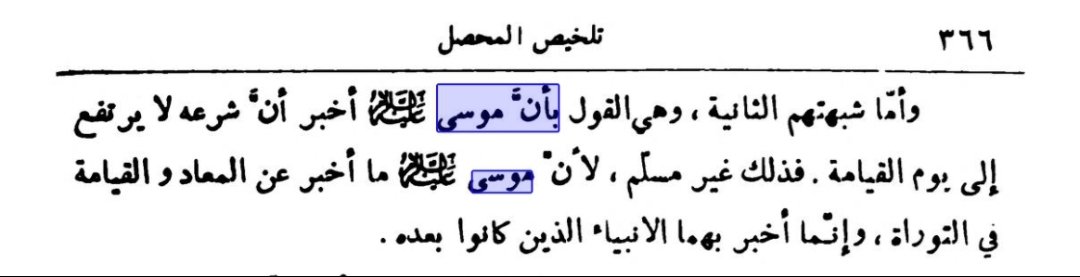
English


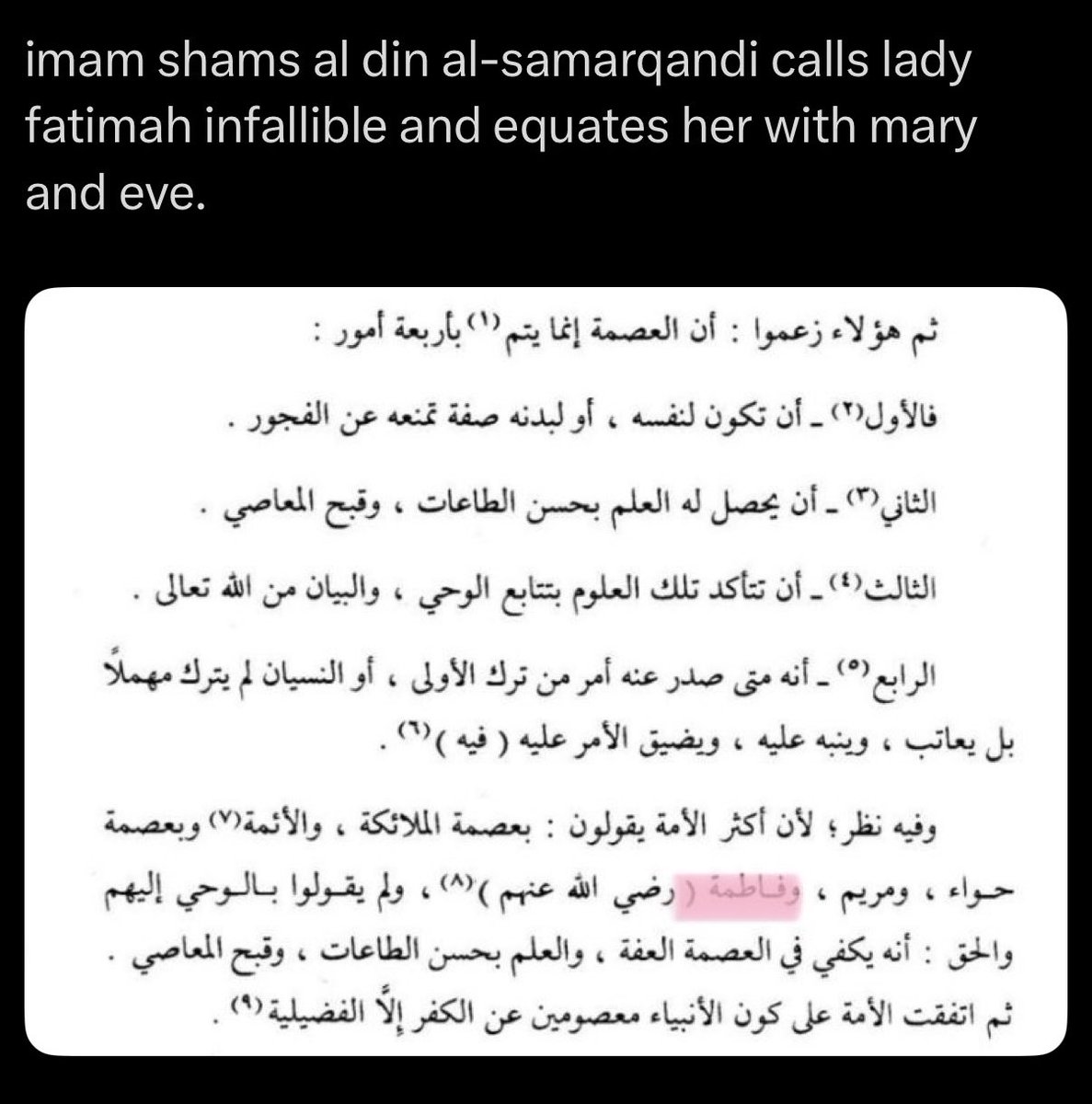
Certain innovators continue to insist that it is an acceptable position within Ahl al-Sunnah to claim the superiority of saints over prophets and to deem the Ahl al-Bayt infallible.
In order to cling to their falsehood, they resort to citing fringe opinions from scholars who themselves fell into various theological heresies.
Among those they cite is Shams al-Dīn al-Samarqandī, who mentioned that Mūsā (ʿalayhi al-salām) did not inform his people about the Resurrection and the Hereafter and that these matters were not mentioned in the Torah, implying either that he concealed these truths or that they were never revealed to him.
However, belief in the Resurrection and the Hereafter is among the most fundamental elements of the prophetic message.
The claim that a messenger such as Mūsā (ʿalayhi al-salām) did not convey these realities contradicts the very nature of prophethood and the mission of the messengers, and what al-Samarqandī says here is disbelief.
Such fringe statements cannot be used to legitimize deviant doctrines or to claim that positions outside the consensus of Ahl al-Sunnah are acceptable within it.
English
@hashimiyy_ @Baginssis @FidinMadar @AbuAbdallah7777 This article says that the narration: Woe onto Ammar, he will be killed by the transgressive group" is mutawatir:
web.archive.org/web/2025120600…
English
There’s unintentional contamination with Shu’bah and could be an occurrence between his immediate reporters.
All of these reports have the same weakness for which Imam al-Bukhari has decided to remove the addition “...the transgression sect” from his chain, which is that ‘Ikrima didn't hear the addition from Abu Sa’id al-Khidri and Abu Sa’id al-Khidri self admittedly didn't hear it from the Prophet ﷺ, it is an inclusion by reports, most likely Khalid.
قَالَ الْبَيْهَقِيُّ: “وَرَوَاهُ الْبُخَارِيُّ فِي الصَّحِيحِ، عَنْ مُسَدَّدٍ، عَنْ عَبْدِ الْعَزِيزِ، إِلَّا أَنَّهُ لَمْ يَذْكُرْ قَوْلَهُ «تَقْتُلُهُ الْفِئَةُ الْبَاغِيَةُ»… أَخْرَجَهُ الْبُخَارِيُّ عَنْ إِبْرَاهِيمَ بْنِ مُوسَى عَنْ عَبْدِ الْوَهَّابِ، دُونَ هَذِهِ اللَّفْظَةِ، وَكَأَنَّهُ إِنَّمَا تَرَكَهَا لِمُخَالَفَةِ أَبِي نَضْرَةَ عَنْ أَبِي سَعِيدٍ عِكْرِمَةَ فِي ذَلِكَ”
al-Bayhaqī said:
“And al-Bukhārī narrated it in al-Ṣaḥīḥ from Musaddad, from ʿAbd al-ʿAzīz, except that he did not mention his statement: ‘The rebellious faction will kill him.’ … Al-Bukhārī also transmitted it from Ibrāhīm ibn Mūsā, from ʿAbd al-Wahhāb, without this wording, and it is as if he omitted it due to the مخالفة (disagreement/contradiction) of Abū Naḍrah from Abū Saʿīd, with ʿIkrimah regarding that.”
وَفِي “الْجَمْعِ بَيْنَ الصَّحِيحَيْنِ” لِلْحُمَيْدِيِّ، قَالَ: “فِي هَذَا الْحَدِيثِ زِيَادَةٌ مَشْهُورَةٌ لَمْ يَذْكُرْهَا الْبُخَارِيُّ أَصْلًا فِي طَرِيقَيْ هَذَا الْحَدِيثِ، وَلَعَلَّهَا لَمْ تَقَعْ إِلَيْهِ فِيهِمَا، أَوْ وَقَعَتْ فَحَذَفَهَا لِغَرَضٍ قَصَدَهُ فِي ذَلِكَ… وَقَالَ أَبُو مَسْعُودٍ الدِّمَشْقِيُّ مِنْ كِتَابِهِ: لَمْ يَذْكُرِ الْبُخَارِيُّ هَذِهِ الزِّيَادَةَ”
And in “al-Jamʿ bayna al-Ṣaḥīḥayn” by al-Ḥumaydī, he said:
“In this ḥadīth there is a well-known additional wording which al-Bukhārī did not mention at all in either of his two routes for this ḥadīth. Perhaps it did not reach him in them, or it did reach him but he omitted it for a purpose he intended بذلك… And Abū Masʿūd al-Dimashqī said in his book: al-Bukhārī did not mention this addition.”
وَقَالَ الْمِزِّيُّ فِي “تُحْفَةِ الْأَشْرَافِ”: “(خ) حَدِيث: قَالَ لِـي ابْنُ عَبَّاسٍ وَلِابْنِهِ عَلِيٍّ: انْطَلِقَا إِلَى أَبِي سَعِيدٍ فَاسْمَعَا مِنْهُ حَدِيثَهُ… الْحَدِيث، حَتَّى أَتَى عَلَى ذِكْرِ بِنَاءِ الْمَسْجِدِ… الْحَدِيث… إِلَى أَنْ قَالَ: «وَيْحَ عَمَّارٍ يَدْعُوهُمْ إِلَى الْجَنَّةِ وَيَدْعُونَهُ إِلَى النَّارِ». قَالَ: يَقُولُ عَمَّارٌ: “أَعُوذُ بِاللهِ مِنَ الْفِتَنِ”.
(خ) فِي “الصَّلَاةِ” عَنْ مُسَدَّدٍ، عَنْ عَبْدِ الْعَزِيزِ بْنِ الْمُخْتَارِ.
وَفِي “الْجِهَادِ” عَنْ إِبْرَاهِيمَ بْنِ مُوسَى، عَنْ عَبْدِ الْوَهَّابِ الثَّقَفِيِّ،
كِلَاهُمَا: عَنْ خَالِدٍ الْحَذَّاءِ، عَنْهُ بِهِ، وَلَيْسَ فِيهِ: «تَقْتُلُ عَمَّارًا الْفِئَةُ الْبَاغِيَةُ»
Al-Mizzī said in “Tuḥfat al-Ashrāf”:
“(Kh) Ḥadīth: Ibn ʿAbbās said to me and to his son ʿAlī: ‘Go to Abū Saʿīd and listen from him to his ḥadīth…’ — the ḥadīth — until he reached the mention of the building of the mosque… the ḥadīth… until he said: ‘Woe to ʿAmmār! He calls them to Paradise, while they call him to the Fire.’ He said: ʿAmmār used to say: ‘I seek refuge in Allah from tribulations.’
(Kh) In “al-Ṣalāh” from Musaddad, from ʿAbd al-ʿAzīz ibn al-Mukhtār; and in “al-Jihād” from Ibrāhīm ibn Mūsā, from ʿAbd al-Wahhāb al-Thaqafī—
both of them—from Khālid al-Ḥadhdhāʾ, from him, with it; and it does not contain: ‘ʿAmmār will be killed by the rebellious faction.’”
Many scholars has said that al-Bukhari deliberately omitted it, and that was due to a subtle point, namely, that al-Khudri acknowledged that he did not hear this addition from the Prophet ﷺ. This indicates that, in this narration, it is interpolated.
[1/2]
English
The history of the Umayyads is a noble history that Muslims should study and take pride in.
They have often been the target of slander from both political rivals and theological opponents.
Yet such slander ultimately benefits those who were wronged, for it becomes a source of good deeds for the victims on the Day of Judgment.

Hoops@Hoopss
What opinion will get you in this position?
English
@AbdullahIbnal @safwanSpiker7 Ibn hajar changed his view on ibn arabi and started doing tawaquf on him, as relayed by his direct student:
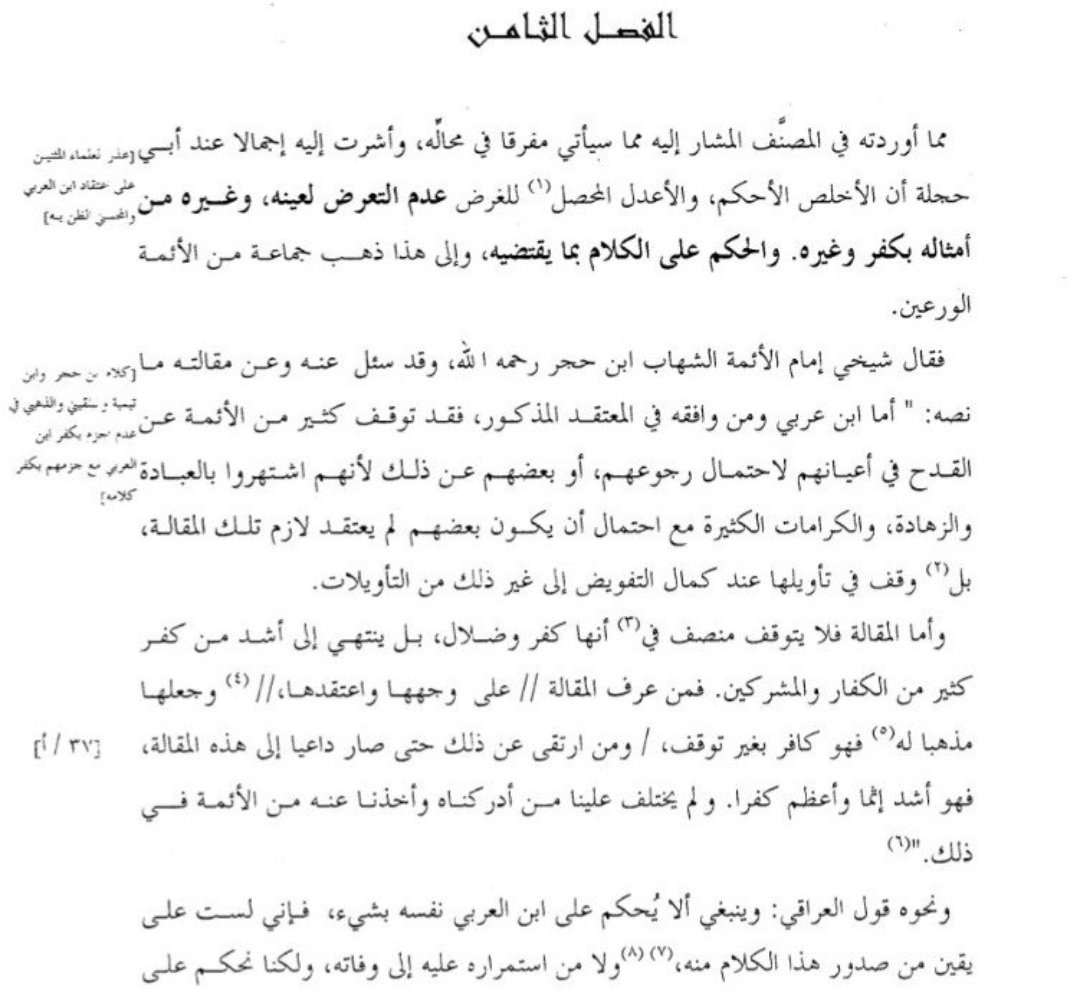
English

Shaykh al-Akbar ق held this view except tathir in Prophet ﷺ’s case is impossibility of him committing sins while in Ahl al-Bayt’s case, they can do wrong but its not sin in God’s eyes and they are saved from hell. Hudūd might apply but it’s better for our imān to overlook that.
زهير الأندلسي@AndaluciMaliki1
An explicit tradition stating Ahl al-Bayt are infallible and their purification was a purification from sins similar to the Prophet ﷺ's which later scholars’ methodology can't consistently reject.
English
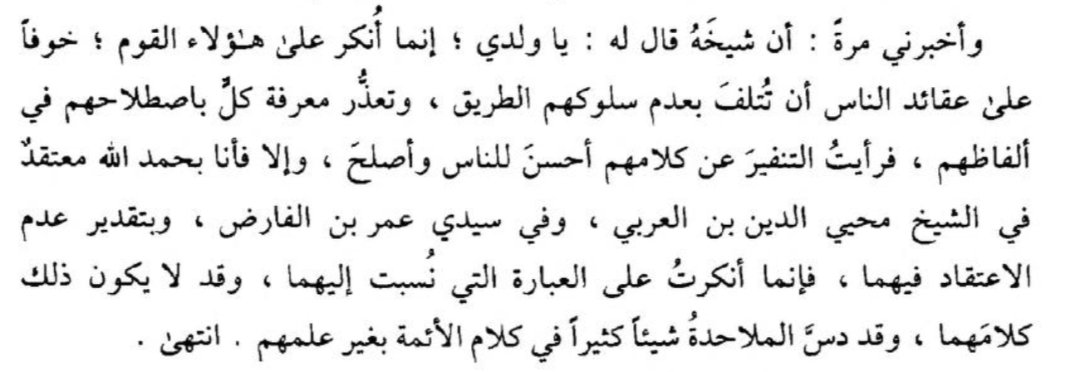
@AbdullahIbnal @safwanSpiker7 Biqai changed his view on ibn arabi, as relayed by his direct student shaykh nur al din al mahali in al-shaarani's al tabaqat al kubra:
Română
@safwanSpiker7 I think biqā’is refutation of Ibn Arabi is a great book
Give it a read
English
Indonesia
Indonesia

@leostyleorio @ZouhairsMurid Alusi's actual statement isnt even problematic to begin with, hail misquoted it
x.com/boshsiz/status…
بیسر@boshsiz
@redbridegroom @T00_0pinionated That isn't what alusi said
English

x.com/redbridegroom/…
"If X was a prophet, then Y non-prophet would still be better"
This evidently is kufr since it negates the superiority of every prophet over non-prophets, something found in every basic mutun of 'aqeedah.
Bringing names as if it would change the matter...
English

@redbridegroom So you think a non-prophet can be superior to a prophet?
English

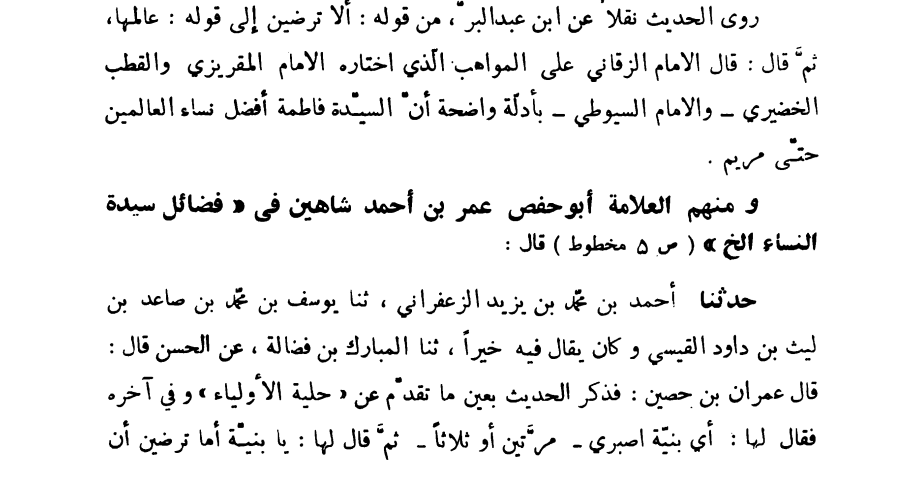
al-Zurqani in al-Mawāhib, said:
What was chosen by al-Maqrizi, al-Qutb al-Khudayri, and Jalal al-Din al-Suyut, based on clear evidences, is that Lady Fatimah al-Zahra is the best of the women of all worlds, even above Maryam.
Among them is also the scholar Abu Hafs Umar ibn Ahmad Shahin in Faḍāʾil Sayyidat al-Nisāʾ, etc. (p. 5, manuscript), who said:
“Aḥmad ibn Muḥammad ibn Yazīd al-Zaʿfarānī narrated to us; he said: Yūsuf ibn Muḥammad ibn Ṣāʿid ibn Layth ibn Dāwūd al-Qaysī narrated to us and he was spoken of well; he said: al-Mubārak ibn Faḍālah narrated to us, from al-Ḥasan, who said: ʿImrān ibn Ḥuṣayn said…”
Then he mentioned the hadith exactly as previously cited from Ḥilyat al-Awliyāʾ. At its end, he said that he (the Prophet) said to her:
“O my daughter, be patient once or twice or thrice.”
Then he said to her:
“O my daughter, are you not pleased to be the leader of the women of your world? By the One who sent me with the truth, I have indeed married you to a master in this world and a master in the Hereafter; none hates him except every hypocrite.”

ابنِ خان@IbneKhan01
Sayyid Aḥmad Zaynī Daḥlān, Muftī of the Shāfiʿī school in Makkah (1231–1304 AH / 1816–1886 CE) writes: “She is al-Zahrāʾ and al-Batūl, superior to all the women of this world, even Maryam, may Allāh be pleased with her, as was chosen by al-Maqrīzī, al-Zarkashī, and al-Ḥāfiẓ al-Suyūṭī in his two works, Sharḥ al-Nuqāyah and Sharḥ Jamʿ al-Jawāmiʿ, on the basis of clear evidences. Among these evidences is that this community is superior to all others, and the sound position is that Maryam is not a prophetess, indeed, consensus has been reported that no woman has ever been granted prophethood. The Prophet, peace and blessings of Allāh be upon him, said: ‘Maryam is superior among the women of her world, and Fāṭimah is superior among the women of her world,’ as narrated by al-Tirmidhī. He, peace and blessings of Allāh be upon him, said: ‘O my daughter, are you not content that you are the lady of the women of the worlds?’ She replied: ‘O my father, then where is Maryam?’ He said: ‘That one is the lady of the women of her world,’ as narrated by Ibn ʿAbd al-Barr. al-Ṭabarānī has transmitted, with a chain meeting the conditions of the two Shaykhs, that ʿĀʾishah, may Allāh be pleased with her, said: ‘I have never seen anyone superior to Fāṭimah, apart from her father.’” — al-Sīrah al-Nabawiyyah wa al-Āthār al-Muḥammadiyyah, vol. 1, pg. 319.
English

@QassamiQadiri12 @redbridegroom But the implication here is that she is literally of the prophet ﷺ right? Not merely an Awliya.
Català
someone once said to me that the e-asharis on this app are equally takfiri, if not more, than the salafis. he was right.
Simsim al-Manṭiqī@Simsimiyyah
Kāfir murtad zindīq mulḥid.
English
@ZouhairsMurid Well i am interested in your thoughts dear brother atleast, so whenever you post something interesting i will always try to read them inshallah
English
@leostyleorio I am hardly interested in your reinterpretations.
English
@ZouhairsMurid he means the aspect of Lady Fatima AS which she is a manifestation of(Being the Light of rasulullah(saw)) however when it comes to bodily form, Mariam AS is superior to Lady Fatima AS given that Mariam AS is a prophetess
English
@ZouhairsMurid one way of of potentially understanding al-Alusi's Ra statement here in a non problematic way is him saying Lady Fatima AS is a "part" of the Prophet(saw), in that she is a manifestation of him, thus when he says shed be superior to Mariam AS even as a prophetess,
English
@hashimiyy_ Noted, im not sure this would constitute infallibity strictly however acc to all scholars
English
@leostyleorio That’s not a solution. There’s no evidence to suggest this belief because we didn’t lie and fabricate reports to give them virtues.
Also, we don’t posit infallibility beyond prophets.
English
This is the type of problem that arises from blindly adopting the methodological approach of later scholars regarding the acceptance of aḥādīth.
During my recent academic study of Zaydism, I discovered that a significant number of the traditions they rely upon to support their claims actually exist within our own corpus as well.
However, the methodology of the earlier scholars would readily identify several issues with such reports. For example, in this particular narration, al-Aʿmash is present in the chain. He is known to have tendencies toward tashayyuʿ, and he narrates here using ʿan, despite being known for practicing tadlīs.
If one refuses to weaken this report, then its apparent implication would be that the Ahl al-Kisāʾ are immune from at least the major sins.
Such a conclusion would ultimately undermine multiple positions that Sunnis have long agreed upon, including the established preference of Abū Bakr and ʿUmar.
زهير الأندلسي@AndaluciMaliki1
An explicit tradition stating Ahl al-Bayt are infallible and their purification was a purification from sins similar to the Prophet ﷺ's which later scholars’ methodology can't consistently reject.
English
@AbdullahReads_ What would be the case for it out of curiosity dear brother?
I thought other views are revisionist generally speaking
English

A case can be made that 'Ā'isha was not six or nine, but "Imam of Peace"'s reasoning is shambolic.
Islam Invasion 🚨@IslamInvasion
He claims that Aisha was 21! @Imamofpeace with @TRobinsonNewEra: This is the first time I say this on camera... Is this a version we should accept?
English