Leo 🫧

1.2K posts

Leo 🫧 banner
Leo 🫧

Leo 🫧

@leozaroff

tFUS Society: https://t.co/z6SdGJPcHA prev @uchicago philosophy & US fencing | z fellow
SF Katılım Şubat 2017
1.6K Takip Edilen3.8K Takipçiler
Leo 🫧
Leo 🫧@leozaroff·
If you’re interested in tFUS, I encourage you to check out the tFUS deep dive I’ll be posting on my blog (link in bio) later this week, and to reach out to me in my X/Twitter or Substack DMs with any questions.
English
0
0
2
153
Leo 🫧
Leo 🫧@leozaroff·
The promise of tFUS is the ability to activate or deactivate any brain region safely, without surgery or implants. Lucid dreaming is just one of the many interesting brain states that tFUS may be able to induce. tFUS could become a key treatment for severe illnesses like addiction, depression, and anxiety. I hope that Prophetic publishes a lot more safety data before they ship this product, because otherwise they risk not only the safety of their customers, but also the reputation of tFUS as a whole.
English
1
0
2
156
Leo 🫧
Leo 🫧@leozaroff·
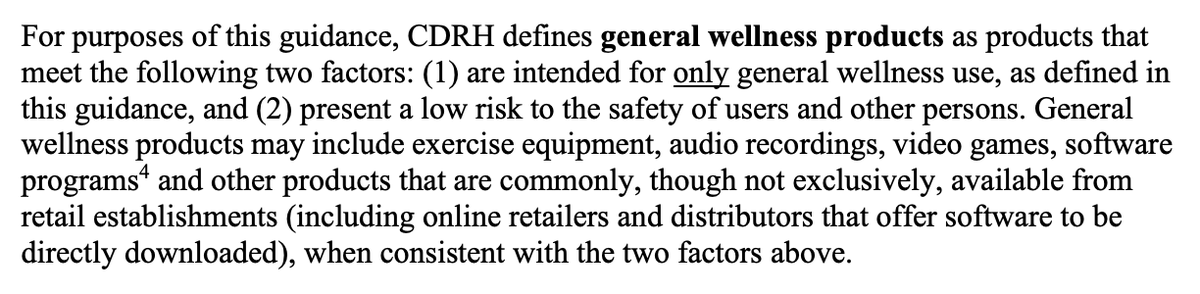
Is it legal? My guess is that Prophetic wants this device to be classified a “general wellness” product, rather than a medical device. The relevant FDA guidance defines general wellness products as “products that meet the following two factors: (1) are intended for only general wellness use, as defined in this guidance, and (2) present a low risk to the safety of users and other persons.” Prophetic does not refer to any diseases or conditions in their marketing, so the first condition is fulfilled. The second condition is less clear to me. They would probably claim that, if they are below the FDA general safety guidelines for ultrasound devices, that the device is sufficiently low risk to be considered a general wellness product. In my opinion, we would need to see a lot more safety testing of this specific device before we know whether it is actually low-risk.
English
1
0
0
120
Leo 🫧
Leo 🫧@leozaroff·
Is it safe? In perfect conditions, when ultrasound parameters are within the ITRUSST guidelines, tFUS is probably safe. But even if the intention is to stay within those guidelines, there are many things that could go wrong. If they accidentally set the intensity levels too high, or if they leave the device on for too long, they could heat up the brain and cause serious damage. Also, the intensity levels at the targeted brain region depend a lot on the individual that is receiving the stimulation; if one person has a thicker skull than another, the intensity level at the target can be very different. We have no idea how much they’ve tested this on humans, or what their methodology was. Without that information, there is no way of knowing whether this device is safe.
English
1
0
0
125
Leo 🫧
Leo 🫧@leozaroff·
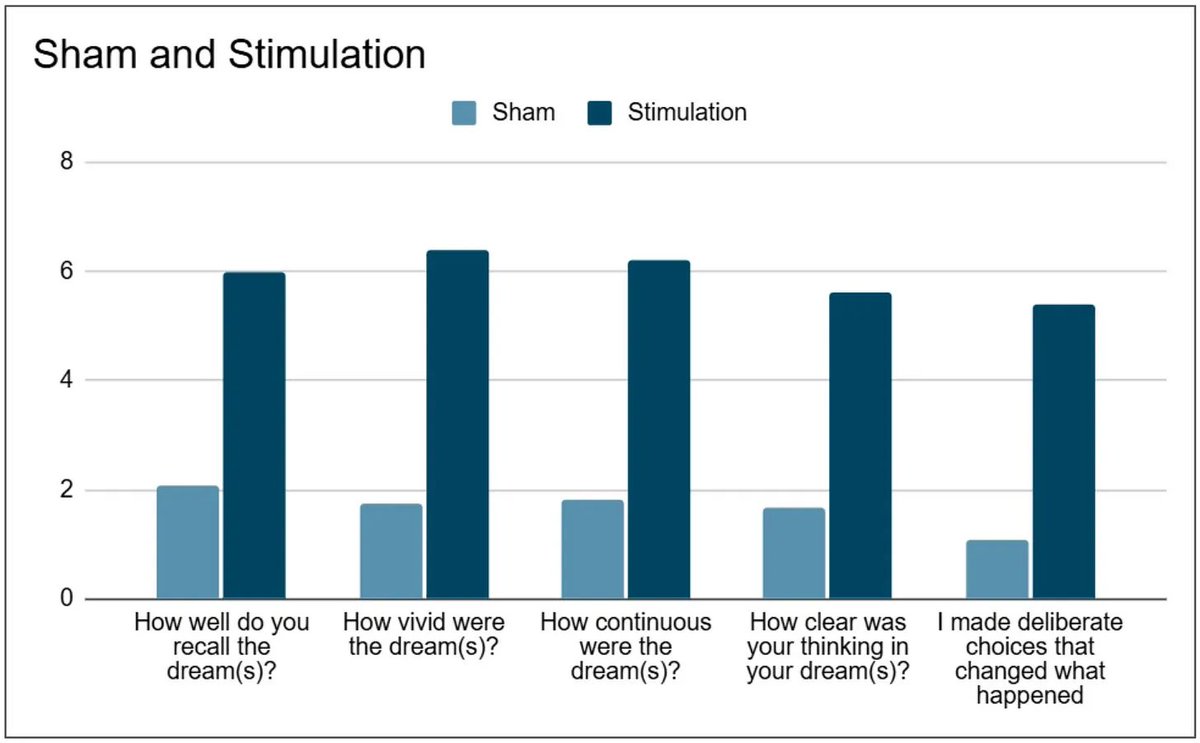
Does the device actually work? A chart comparing the dream reports of the stimulation and control groups.📷 The only effectiveness information that Prophetic has shared is this bar chart of the self-reports of testers. We don’t know anything about their methodology or how many people they’ve tested it on. Without any peer-reviewed, published research, we basically have no idea whether it actually works.
Leo 🫧 tweet media
English
1
0
2
113
Leo 🫧
Leo 🫧@leozaroff·
Is the device priced fairly? The $449/$1299 price points are both extremely low compared to the cost of a research-grade ultrasound system, but research devices serve a different purpose than this device. Price comparisons are difficult because there literally aren’t any other consumer devices of this kind to compare it to.
English
1
0
2
139
Leo 🫧
Leo 🫧@leozaroff·
How are the two versions of the device different? The “Dual” device is probably a simpler ultrasound array, which is focused through a lens, and produces a beam that can’t be steered as much. The “Phase” device is probably a phased array transducer, which allows for realtime steering of the ultrasound beam, and the ability to change the shape of the focal point that is being stimulated.
English
1
0
0
105
Leo 🫧
Leo 🫧@leozaroff·
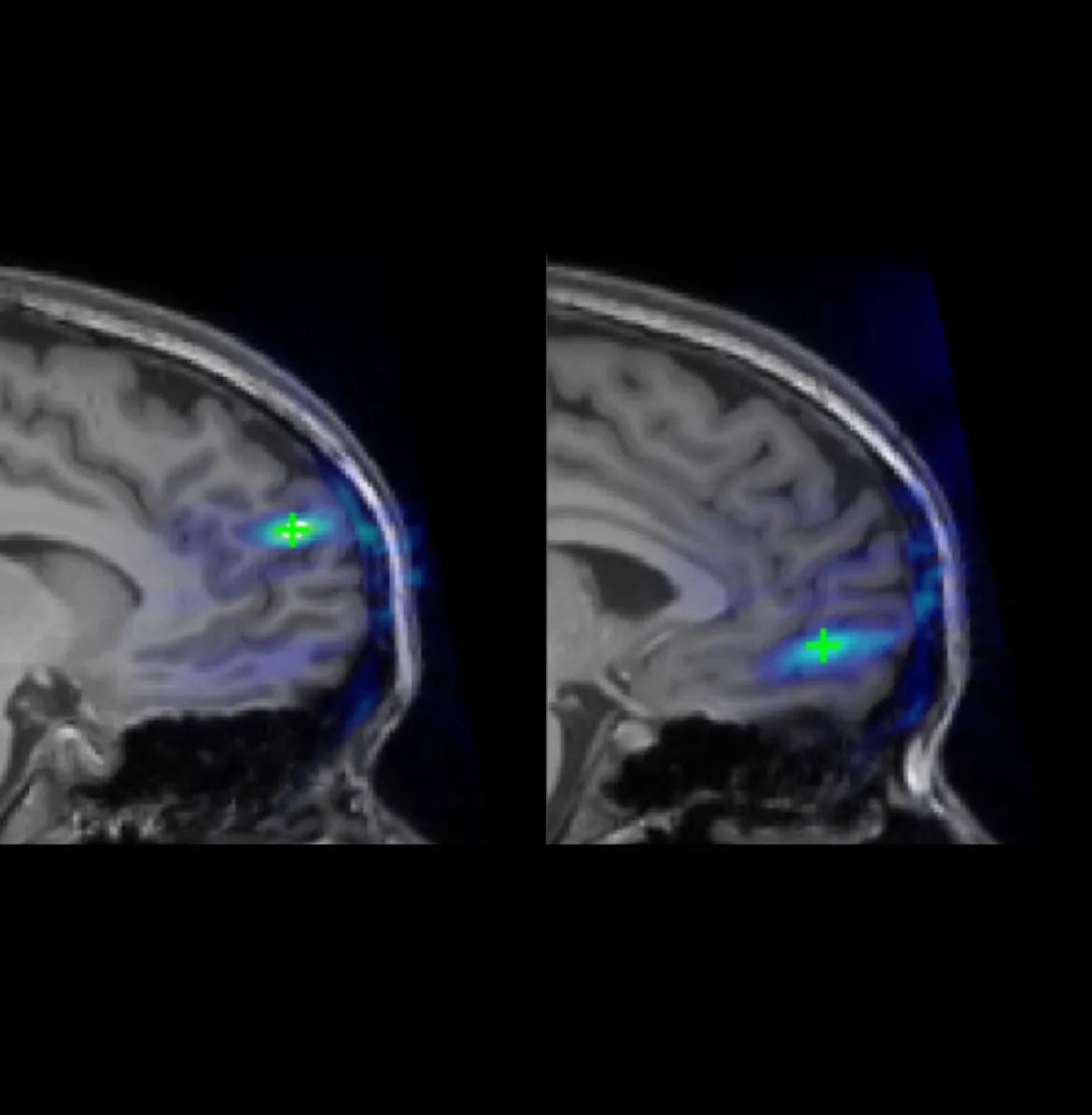
How does the device stimulate the brain? The device uses a technology called tFUS to stimulate the brain. This means aiming a beam of ultrasound (sound that is too high-pitched for humans to hear) at a particular point in the brain. In theory, this is safe because the intensity levels of the ultrasound are similar to the intensity levels of ultrasound imaging, which is one of the safest imaging methods used in medicine. tFUS is a new technology that is in the early stages of adoption—as far as I know, this is the first consumer tFUS device on the market. The same technology is currently being used in a number of clinical trials as a potential treatment for various mental illnesses, but it has not yet been FDA approved for any medical uses. I’ll also publish a deep dive on tFUS on my blog sometime in the next week.
Leo 🫧 tweet media
English
1
0
1
108
Leo 🫧
Leo 🫧@leozaroff·
How will the device induce lucid dreaming? Lucid dreaming is thought to be correlated with higher-than-normal activity in the prefrontal cortex during REM sleep. Prophetic believes that by stimulating more activity in that region during REM, they can cause lucidity to increase.
English
1
0
0
107
Leo 🫧
Leo 🫧@leozaroff·
What does the device look like? The device has two components: a headband that you wear while sleeping, and a small box of electronics that connects to the headband through a wire.
Leo 🫧 tweet media
English
1
0
1
117
Leo 🫧
Leo 🫧@leozaroff·
What is lucid dreaming? Lucid dreaming is the ability to be aware that you are dreaming during a dream, and to control what is happening in the dream. There are also reliable ways to induce lucid dreaming without brain stimulation—I have a blog post that explains how you can do this yourself.
English
1
0
1
117
Leo 🫧
Leo 🫧@leozaroff·
Prophetic just launched a new brain stimulation device. But if you want to avoid damaging your brain, I strongly encourage you to read this thread this before you buy it:
Prophetic@PropheticAI

Today we are launching two revolutionary products: Dual and Phase. These devices will enhance how humans dream. Prophetic Dual retails for $449 and starts shipping at the end of this year. Prophetic Phase retails for $1299 and starting shipping middle of next year.
English
2
0
6
1.2K
Leo 🫧
Leo 🫧@leozaroff·
What is Prophetic? Prophetic was founded in 2023 in New York, and has been developing a tFUS device for lucid dreaming since their inception. You can follow their technical progress by looking back at the X/Twitter feeds of the company account and of their cofounders, @EricWollberg and @weslouisberry . They have raised over $3.4 million according to Pitchbook.
English
1
0
3
174
Leo 🫧
Leo 🫧@leozaroff·
Summarizing the announcement: Prophetic is launching two versions of a device that aims to induce lucid dreaming. The device looks like a headband that you wear while sleeping, plus a box of electronics that connects to the headband with a long wire. The device uses a technology called transcranial focused ultrasound. They claim to have tested this on humans, with the group that received stimulation reporting higher levels of lucidity while dreaming compared to a control group. You can preorder the “Dual” version of the device for $449, and the “Phase” version for $1299. The first will start shipping at the end of 2026, and the second starts shipping mid-2027.
English
1
0
2
124
Leo 🫧
Leo 🫧@leozaroff·
My quick take: I support the mission of the company, and I think the device is very cool, but I am concerned by the lack of safety data. I would not use the device myself until its safety has been studied much more rigorously and transparently.
English
1
0
4
133
Leo 🫧
Leo 🫧@leozaroff·
My credentials: I founded tFUS Society, a group of people that are working on transcranial focused ultrasound (tFUS), which is the same technology that powers the Prophetic device. I’ve also met some members of the Prophetic team, and they seem friendly and well-intentioned.
English
1
0
2
150
Leo 🫧
Leo 🫧@leozaroff·
@OwenBrakes @matlabdogboy they would probably claim that it's a "wellness device," but there's no precedent for whether ultrasound neuromodulation is considered a low safety risk by the FDA
Leo 🫧 tweet media
English
1
0
2
283
Owen Brake
Owen Brake@OwenBrakes·
@matlabdogboy I am not fluent in this space, did a bit of tFUS work. I believe it's a grey market, many doctors have told me about people in the bay area frying their brains with tDCS machines.
English
2
0
4
308
David Spiegel
David Spiegel@davidspiegs·
@leozaroff “Number of Bitcoin traded” is an interesting (and questionable?) growth metric lol Seems they turned out alright though..
English
1
0
1
46
Leo 🫧
Leo 🫧@leozaroff·
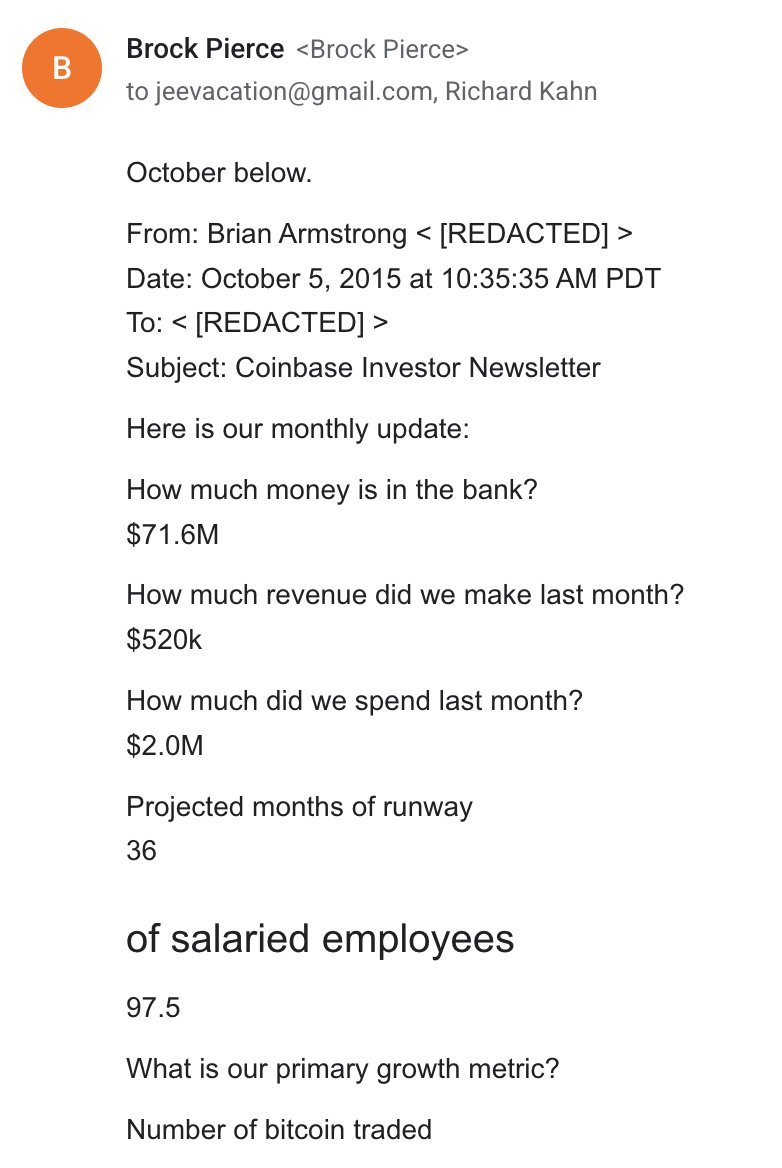
the craziest thing about the epstein files that nobody noticed is that you can read all the pitch decks and investor updates of the companies he invested in like coinbase
Leo 🫧 tweet media
English
1
0
5
177
Leo 🫧
Leo 🫧@leozaroff·
autoresearch reminds me of how right before reasoning models started coming out, lots of developers were using non-RLed chain of thought themselves as a simple prompting technique and finding that it was achieving noticeably better results than standard prompting. wouldn’t be surprised if autoresearch means we are in that precursor moment but for agentic loops (for constrained optimization problems), and soon the labs will come out with a more sophisticated implementation with RL/scaling.
Andrej Karpathy@karpathy

Three days ago I left autoresearch tuning nanochat for ~2 days on depth=12 model. It found ~20 changes that improved the validation loss. I tested these changes yesterday and all of them were additive and transferred to larger (depth=24) models. Stacking up all of these changes, today I measured that the leaderboard's "Time to GPT-2" drops from 2.02 hours to 1.80 hours (~11% improvement), this will be the new leaderboard entry. So yes, these are real improvements and they make an actual difference. I am mildly surprised that my very first naive attempt already worked this well on top of what I thought was already a fairly manually well-tuned project. This is a first for me because I am very used to doing the iterative optimization of neural network training manually. You come up with ideas, you implement them, you check if they work (better validation loss), you come up with new ideas based on that, you read some papers for inspiration, etc etc. This is the bread and butter of what I do daily for 2 decades. Seeing the agent do this entire workflow end-to-end and all by itself as it worked through approx. 700 changes autonomously is wild. It really looked at the sequence of results of experiments and used that to plan the next ones. It's not novel, ground-breaking "research" (yet), but all the adjustments are "real", I didn't find them manually previously, and they stack up and actually improved nanochat. Among the bigger things e.g.: - It noticed an oversight that my parameterless QKnorm didn't have a scaler multiplier attached, so my attention was too diffuse. The agent found multipliers to sharpen it, pointing to future work. - It found that the Value Embeddings really like regularization and I wasn't applying any (oops). - It found that my banded attention was too conservative (i forgot to tune it). - It found that AdamW betas were all messed up. - It tuned the weight decay schedule. - It tuned the network initialization. This is on top of all the tuning I've already done over a good amount of time. The exact commit is here, from this "round 1" of autoresearch. I am going to kick off "round 2", and in parallel I am looking at how multiple agents can collaborate to unlock parallelism. github.com/karpathy/nanoc… All LLM frontier labs will do this. It's the final boss battle. It's a lot more complex at scale of course - you don't just have a single train. py file to tune. But doing it is "just engineering" and it's going to work. You spin up a swarm of agents, you have them collaborate to tune smaller models, you promote the most promising ideas to increasingly larger scales, and humans (optionally) contribute on the edges. And more generally, *any* metric you care about that is reasonably efficient to evaluate (or that has more efficient proxy metrics such as training a smaller network) can be autoresearched by an agent swarm. It's worth thinking about whether your problem falls into this bucket too.

English
2
0
4
439