T. ☀️

20.8K posts

T. ☀️ banner
T. ☀️

T. ☀️

@levantophile

History, politics, culture & religion, with an eye on the Levant 🏺🍇🫒 // Pro-human, liberty-minded civilizationist 🗽🏛️ // From Mount Lebanon 🇱🇧🧉

Mare Nostrum Katılım Aralık 2017
4.1K Takip Edilen6.2K Takipçiler
Sabitlenmiş Tweet
T. ☀️
T. ☀️@levantophile·
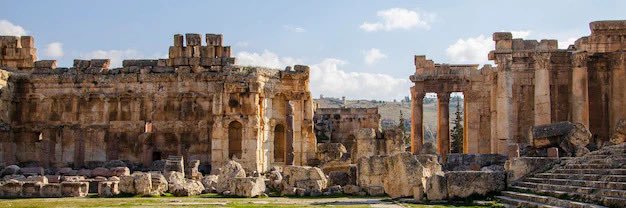
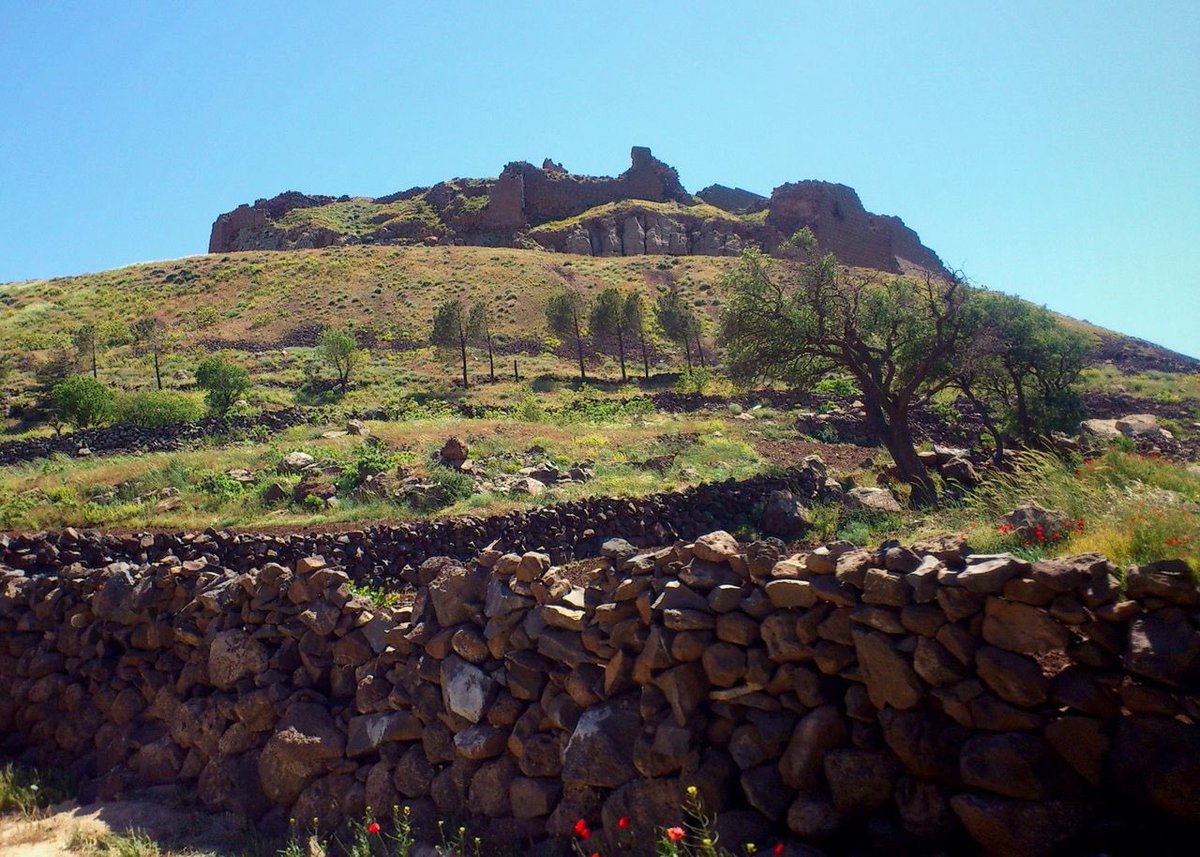
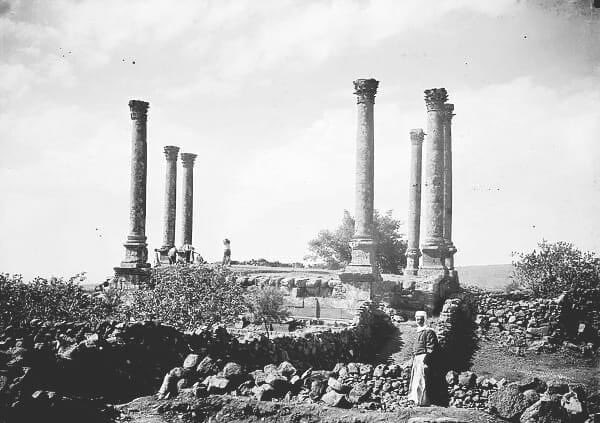
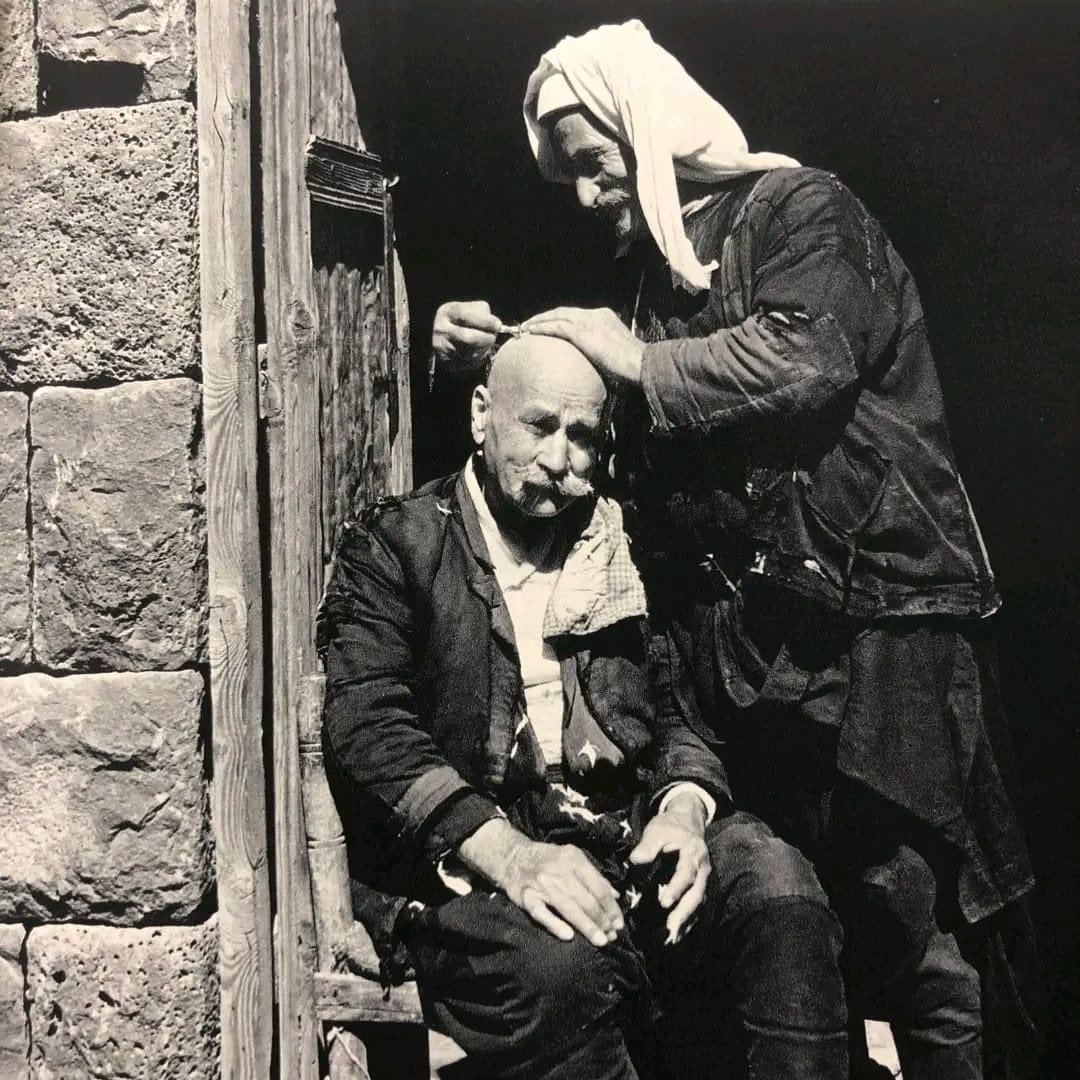
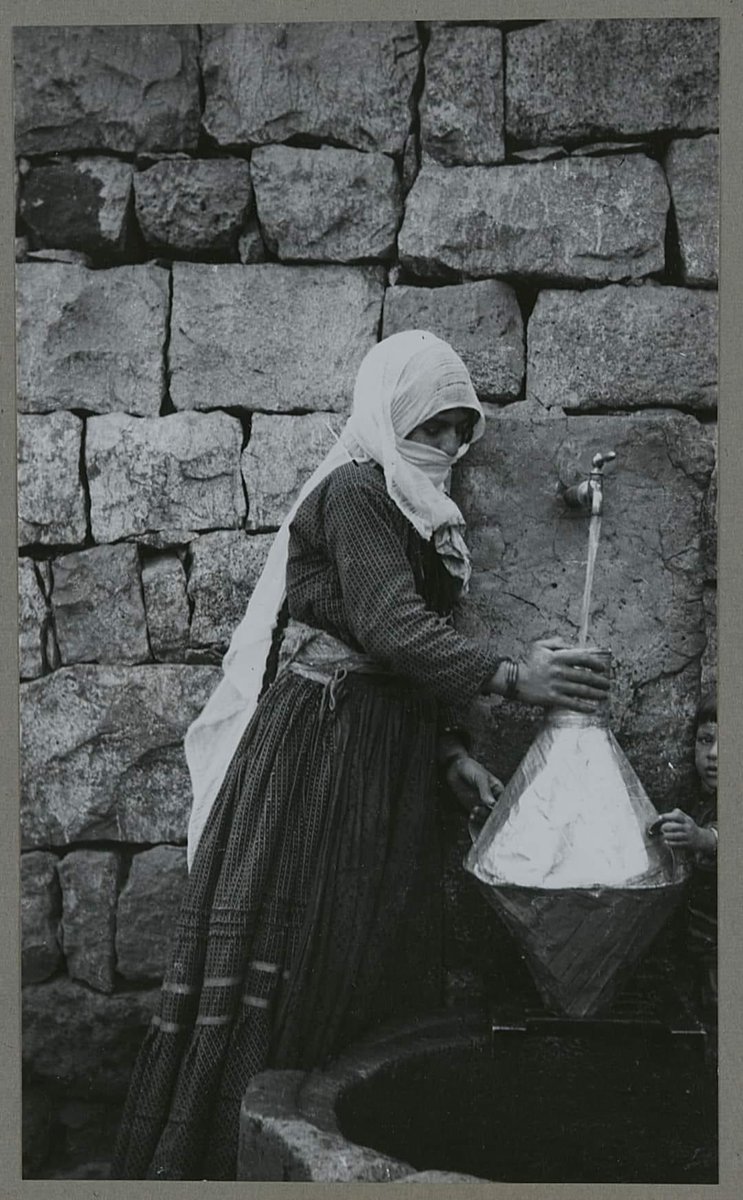
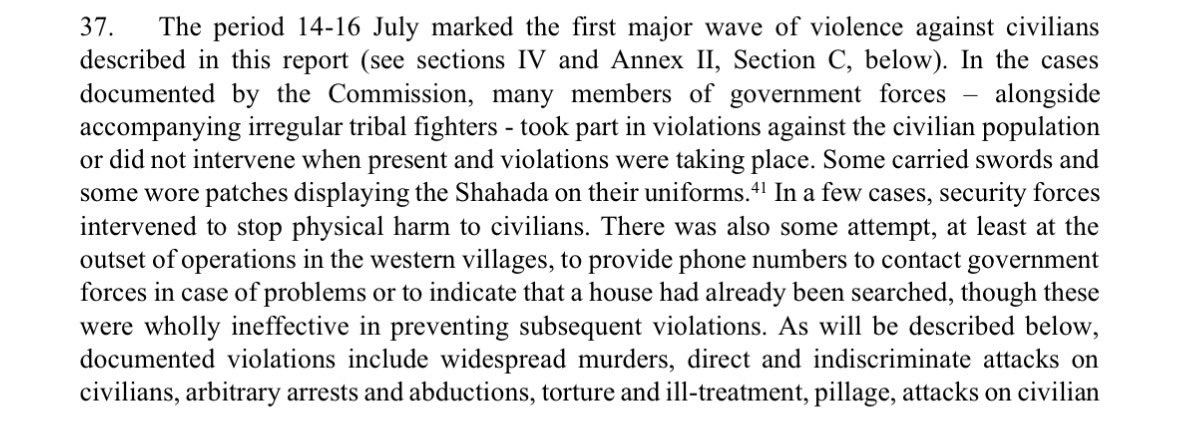
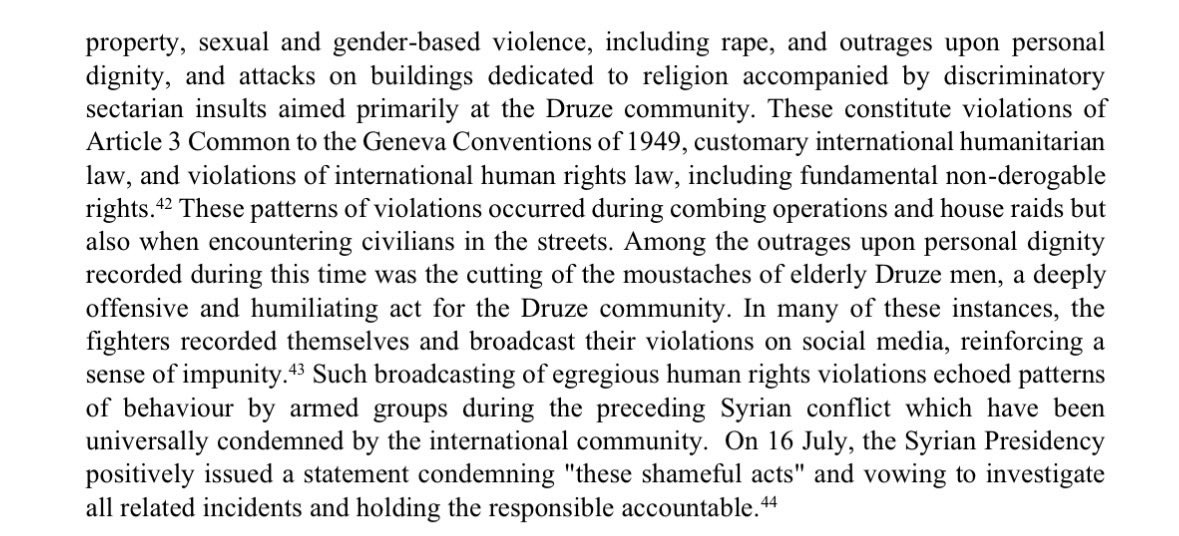
A curated thread, in chronological order, of some of my reactions, commentary, analyses, and other posts about Suwayda since the deadly assault began in mid-July. It also includes broader reflections on the Druze, celebrating their history, culture, and heritage. This thread will serve as a kind of live journal, which I will continue to update over time. Echoing Psalm 137: “If I forget thee, O Suwayda, let my right hand forget her cunning. If I do not remember thee, let my tongue cleave to the roof of my mouth; if I prefer not Suwayda above my chief joy.” (🧵)
T. ☀️ tweet mediaT. ☀️ tweet mediaT. ☀️ tweet mediaT. ☀️ tweet media
English
6
14
87
74.9K
T. ☀️
T. ☀️@levantophile·
@JacobALinker Sure, but cultures do not follow strict administrative boundaries 😅
English
1
0
7
277
T. ☀️
T. ☀️@levantophile·
I do not really care for the identity debate, but Phoenician-Canaanite culture clearly extended beyond the coastal towns into the Lebanese interior. Beyond temples and other archaeological ruins that attest to this cultural heritage - or place names like the village of Baalchmay in Mount Lebanon and the town of Baalbek in the Bekaa Valley, which mean “Lord of the Sky” and “Lord of the Bekaa” in the ancient Canaanite languages - the most striking anthropological anecdote I have personally come across was from a Druze acquaintance from Hasbaya. He told me that, when he was growing up, he recalled seeing older women in his hometown respectfully addressing their husbands as “Baale” (بعلي), meaning “my lord” or “my master.” I never asked others from Hasbaya about this, but I found it fascinating that such a linguistic influence may have been preserved across the centuries in their spoken dialect.
English
8
3
62
4.8K
T. ☀️ retweetledi
Gregg Carlstrom
Gregg Carlstrom@glcarlstrom·
"Let's redo the Syrian occupation of Lebanon, but this time with explicitly sectarian overtones" is an unbelievably stupid idea, even by the standards of American Middle East policy Also: that it's being discussed is a reminder of how Lebanon (and particularly President Aoun) has wasted time over the past 18 months reuters.com/business/aeros…
English
8
83
245
23.4K
T. ☀️ retweetledi
Melissa Chen
Melissa Chen@MsMelChen·
Spot on with the Singapore-Dubai parallel - but the stakes are even more explosive than most realize. If the PRC launches its long-planned invasion of Taiwan, it will need to make sure the United States stays out of it. That means it must first neutralize America’s nearest major forward-deployed force which is the US 7th Fleet based in Yokosuka, Japan. We’re talking 60-70 warships, 150-180 aircraft, and over 27,000 personnel. To keep that fleet out of the fight, Beijing would have no choice but to strike Japanese soil and bases preemptively - dragging sovereign Japan directly into the war. Japanese PM Takaichi enraged the Chinese for merely saying that this constitutes a "survival-threatening situation" for Japan and implying that Japan might be drawn into the conflict. The 7th fleet relies on logistics and sustainment from Task Force 73 / Logistics Group Western Pacific which is headquartered in the Republic of Singapore. Singapore’s role as the critical maintenance, resupply, and repair hub for US naval forces in the region makes it Target #2. Just like Iran hit UAE facilities for hosting American support, the PLA would have to take out Singapore’s ports, airfields, and logistics nodes to choke off the flow of fuel, ammo, and spares. In other words, there's a huge potential for a regional cataclysm: direct attacks on Japan and Singapore, the Malacca Strait turned into a war zone, global shipping paralyzed, and the entire US-led alliance structure under fire. The idea that China is pursuing “peaceful development” is hard to believe when you consider its military buildup - hypersonic missiles, carrier-killers, anti-access/area-denial systems - that seem to prepare them to deal with exactly this problem of a regional fight for control and navigation of the seas. Not many people are aware that there are 3,000 active Singapore Armed Forces (SAF) troops on rotational deployments throughout each year in Taiwan. While this is for military training (it's been ongoing since 1975), this could further complicate things for Singapore in a Taiwan conflict scenario. These troops might be trapped or become bargaining chips during a blockade or invasion. Anyway, tl;dr: Singapore likely won't be able to stay out of it as the chokepoint it sits in will probably come into play
Derek J. Grossman@DerekJGrossman

I’m now in Singapore, and I just can’t stop thinking about the uncomfortable parallels between here and Dubai. Both are very modern and considered business and tourism friendly. But both are in dangerous neighborhoods, along strategic choke points, whether the Strait of Hormuz or Strait of Malacca. Whoever controls these channels is of utmost importance during crisis or war. Meanwhile, Iran retaliated against UAE for its US military support, and I can’t guarantee China while invading Taiwan wouldn’t do the same against Singapore for its logistical and maintenance support of US military assets.

English
162
318
1.7K
456.5K
T. ☀️ retweetledi
ArchaeoHistories
ArchaeoHistories@histories_arch·
The oldest written hummus recipe in the world is 776 years old... It was written in Aleppo, Syria in 1250 CE by a historian named Ibn al-'Adeem. Not a chef. A historian. Who also happened to document one of the most extraordinary cookbooks of the medieval period. The base of the recipe is identical to what you make today. Chickpeas, tahini, lemon, garlic, salt. That part has not changed in 776 years. What has changed is the garnish. After the hummus is spread flat on a wide plate, the 1250 CE manuscript says to drizzle it with sweet olive oil, scatter chopped parsley and pistachios across the top, dust it with Ceylon cinnamon, and finish with crushed rose buds. The manuscript also notes that the dish will look quite nice if you arrange whole chickpeas on top. A medieval Syrian historian giving you plating advice. #archaeohistories
ArchaeoHistories tweet media
English
104
1.2K
6K
769.5K
T. ☀️ retweetledi
Gregg Carlstrom
Gregg Carlstrom@glcarlstrom·
There are some ossified bits of Iran analysis that seem totally impervious to reassessment, and they're coming out again after Larijani's reported assassination From 'the system is bigger than one man, it was designed to handle losses' (surely it didn't anticipate the scale of losses we've seen since June) To 'this will empower more hardline figures' (they were already calling the shots, and analysis of what the hardliners *want* to do often fails to consider what they *can* do with Iran's greatly diminished capacity) I don't know what will happen to the Islamic republic after the war, none of us do, but there's too much analysis that applies a rigid pre-2023 view of the regime and fails to account for the truly unprecedented events that have happened since
English
40
144
616
113.1K
T. ☀️
T. ☀️@levantophile·
I think it is worth reading both articles together because, as things stand, both present valid, if partial, arguments, and I do not find myself fully persuaded by either. If one takes a more traditional view of warfare, Iran - though badly bruised - would likely emerge defiantly victorious, in the sense that the regime survives and the US and Israel are forced to cease hostilities, by imposing an economic cost that the US and the states integrated into the global economy cannot sustain indefinitely. At the same time, this war involves something new and unprecedented: the ability to use cutting-edge intelligence penetration and long-range offensive capabilities to methodically decapitate entire layers of an enemy state’s leadership, while also dismantling its power-projection capabilities from a distance. Given how unprecedented this is, I do not think any of us can really know how much degradation an entity or organization can withstand before it reaches a breaking point and collapses - or capitulates just beforehand. We may be witnessing a revolution in the way warfare is conducted, though only time will tell.
Mustapha Hamoui@Beirutspring

Two articles on who is winning in the Iran war: 1- by @MuhanadSeloom, in Aljazeera, making the argument that the American strategy is actually working and achieving its objectives aljazeera.com/opinions/2026/…

English
2
4
20
2.5K
T. ☀️
T. ☀️@levantophile·
As I wrote a couple of weeks ago, the technological gap between the two sides, and especially the level of advancement on the US-Israel side, may be significant enough to have produced a genuine paradigm shift. The Iranians have since shown themselves to be remarkably resilient and defiant even under great pressure, but they remain subject to the same constraints that apply to any organization or biological organism. We will see how this plays out in due time. 🤷‍♂️
T. ☀️@levantophile

Many are pushing back against the notion that the technological gap, namely the ability to pinpoint and eliminate every member of your opponent’s command structure, is wide enough to have produced a true paradigm shift. Let’s revisit this in a few weeks. If the Iranian regime still persists in a recognizable form, I will admit that I was wrong and that I had overestimated US-Israeli capabilities and their technological edge.

English
0
0
4
583
T. ☀️ retweetledi
Financial Times
Breaking news: Israel has killed Ali Larijani, the head of Iran’s Supreme National Security Council, in an overnight strike, according to defence minister Israel Katz. Follow our live blog for the latest updates: ft.trib.al/aZzBczX
Financial Times tweet media
English
274
648
2K
346K
T. ☀️ retweetledi
Emile Hokayem (@emile-hokayem.bsky.social)
As Hezbollah faces the Israeli juggernaut, it is threatening its critics and detractors on the home front, where it can deploy coercion to intimidate and punish them. While weak against Israel, it can still seize downtown Beirut, assassinate politicians, media figures and other intellectuals, block critical roads and more.
L'Orient-Le Jour@LOrientLeJour

🇱🇧 « Nous sommes capables de bouleverser le pays et de renverser le gouvernement, notre patience a des limites », a déclaré le vice-président du Conseil politique du Hezbollah, Mahmoud Comati, selon des propos rapportés par la MTV. « Le gouvernement de Vichy arrêtait et exécutait les résistants, puis il a été renversé et ses traîtres exécutés. Si Dieu le veut, nous n'en arriverons pas là », a-t-il ajouté.

English
1
21
40
17.1K
T. ☀️ retweetledi
lavitalenta
lavitalenta@lavitalenta·
Leisure in Byblos, Lebanon (1960)
lavitalenta tweet media
Deutsch
7
193
1.7K
77K
Nadine Barakat
Nadine Barakat@nadinebarakatlb·
@levantophile His father is a Hezbollah - Iran - Assad right hand man. He is not what he pretends to be.
English
13
2
55
4.4K
T. ☀️
T. ☀️@levantophile·
A powerful message from Lebanese political activist Saleh Machnouk, who comes from a politically active Sunni family from Beirut, on the current war. (His father, Nohad Machnouk, was a close ally of the Hariri family and served as Minister of Interior about a decade ago.) He has become known in recent years for his fiery videos, typically in Arabic, in which he scathingly criticizes Hezbollah. Here, however, he expresses in English what is on the minds of a large majority of Lebanese, in a message to the outside world: this is not our war, and we are fed up with being pawns in the wars of others.
English
51
144
557
50.7K
T. ☀️
T. ☀️@levantophile·
@anonymoussbeast Sure, but Saleh has sought to distance himself from his father and chart his own independent path, which is his right. (That said, he obviously benefits from the name recognition.)
English
2
0
11
2.3K
T. ☀️ retweetledi
Balaji
Balaji@balajis·
If Iran wins, it's the end of five eras. 1991-2026: the unipolar era 1974-2026: the petrodollar era 1945-2026: the postwar era 1776-2026: the union era 1492-2026: the Western era Specifically, the end of the petrodollar (1974) would also be the end of the unipolar moment (1991) and the postwar order (1945). It would mark the moment when Eurasian powers were once again dominant over Western powers (1492). Finally, a rapid crash in the dollar's purchasing power coupled with military defeat could well break apart the American union (1776). Few seem to viscerally understand just how dependent America is on money printing. But the end of the petrodollar is the end of Keynesianism as we know it. And if there's a sudden cost-of-living spike on top of pre-existing levels of political polarization, which are already near Civil War levels...we could see the scenarios that Dalio, the Fourth Turning, and Turchin have described.
Balaji tweet media
English
574
1.8K
7.4K
850.5K
T. ☀️
T. ☀️@levantophile·
Jabal Keserwan at the time would have included the Metn (my home region), and there were definitely Druze in the latter at the time of the Mamluk campaigns. The Abillamaa clan (at the time, they were still Druze) were among the leaders of the resistance to the Mamluks during those campaigns.
English
0
0
1
79
Magon
Magon@punicist·
Lebanese Shias have one of the most tragic histories in the Middle East. In 1305, the Sunni Mamluks sent a massive army into Keserwan in Mount Lebanon, expelling or massacring the Shia and Alawite population there and leaving the mountain largely depopulated. Maronites gradually filled the vacuum. The Khazen family then quietly bought out the remaining Shia landholders, and the few who stayed eventually converted to Maronite Christianity (interesting factoid: that is why you find Maronites today having family names like "Husseiny") In 1780, the Ottoman governor of Bosnian origin, Ahmad Pasha al-Jazzar ("The Butcher"), marched north from Acre into Jabal Amil, the mostly Shia mountainous region of South Lebanon. He killed the leading Shia chief Nasif al-Nassar, looted and burned religious sites, and had the Shia scholars' libraries carted off to bonfires in Acre. The expulsion of the religious class drove many Shia Lebanese ulama into exile as far as Iran, Afghanistan, and India. Al-Jazzar also dismantled the local cotton economy there which ended up compounding the devastation. Before that campaign, South Lebanon used to export dyed cotton cloth to Europe. During the 18th century, Shia communities were further pushed out of Jezzine and the hills above Sidon by the expanding power of Druze lords. When modern Lebanon was created, the Shia were its underclass, which is the cumulative result of centuries of dispossession. South Lebanon then bore the brunt of Palestinian organizations and their destabilizing presence in the South (the SLA fighting force was around 50% Shia if not more). Accumulated grievances due to the constant depredations of the Israeli occupiers in the South made the entire community turn militantly anti-Israel (although some refused Israel's presence from the beginning, those who didn't lay down their arms in Khalde beach, as Fisk puts it, and who were the seeds of Hezbollah). Many became tied to the Islamic Revolution and Velayat-e faqih. The IRGC went to Lebanon and organized the emergence of Hezbollah, an embodiment of the Islamic Revolution and an instrument for carrying it beyond Iran's borders. And now they are facing yet another wave of displacement. The price of having bound their fate to Iran. What a tragedy.
Drop Site@DropSiteNews

⚡️JUST IN: Israel is preparing a major ground invasion of southern Lebanon, aiming to seize all territory south of the Litani River and dismantle Hezbollah infrastructure, U.S. and Israeli officials told Axios. Troops and reserves are being reinforced on the border ahead of the operation, which could become Israel’s largest invasion of Lebanon since 2006.

English
79
158
1.1K
157.2K
T. ☀️ retweetledi
Institute for the Study of War
NEW | Special Report: The war in Iran is currently in a phase in which the military trajectory is relatively positive: the United States is steadily destroying Iran’s ability to use its most essential tool in the war — drone and missile attacks — which in turn underpin the entire Iranian strategy. Iran has still done some damage to US forces, and it is still firing drones and missiles, though the overall attack rate is slowly decreasing. These attacks still pale in comparison to the major attacks Iran sought to conduct in an existential war and have caused neither operationally significant damage nor widespread casualties. The US-Israeli combined force will need time to achieve its military objectives and prevent Iran from inflicting further political and economic pain upon the United States and its allies in the region, but the campaign remains incomplete, and it is too soon to forecast its outcome. Declaring it an operational failure is unquestionably premature.
Institute for the Study of War tweet mediaInstitute for the Study of War tweet media
English
470
2.5K
14.1K
4.1M