limbo

1.1K posts

limbo banner
limbo

limbo

@limbo_bi

Katılım Haziran 2019
215 Takip Edilen24 Takipçiler
limbo retweetledi
Dr Milan Milanović
Dr Milan Milanović@milan_milanovic·
𝗧𝗵𝗲 𝗶𝗺𝗽𝗼𝗿𝘁𝗮𝗻𝗰𝗲 𝗼𝗳 𝗴𝗲𝘁𝘁𝗶𝗻𝗴 𝘀𝘁𝗮𝗿𝘁𝗲𝗱 When we learn the most, we try, do it, explore, and sometimes fail, but ultimately, we succeed. Doing this makes us curious to explore even more and deeper. We should not have boundaries with learning. Everyone should have the opportunity to learn new things every day. I wish you a great week ahead 👋. Image: Liz Fosslien. #management #learning #success #techworldwithmilan #careers
Dr Milan Milanović tweet media
English
1
7
48
7.6K
limbo retweetledi
Censored Men
Censored Men@CensoredMen·
A.I is now being used to track the productivity of employees… Welcome to the future.
English
876
3.2K
17.7K
9.6M
limbo retweetledi
Wasteland Capital
Wasteland Capital@ecommerceshares·
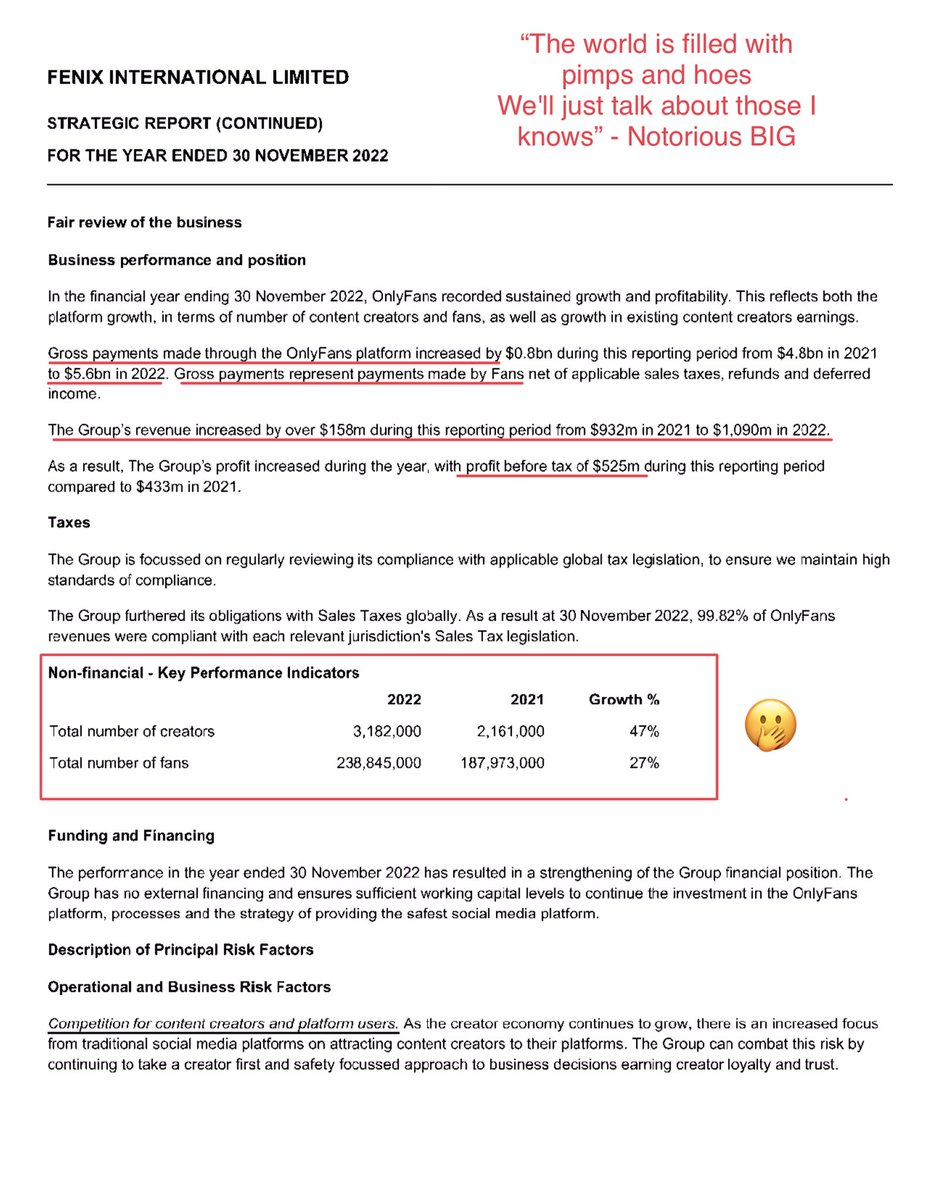
OnlyFans generated $5.6bn in gross payments, $1.1bn in revenue and a $525m profit in 2022. The number of “creators” increased +47% to 3.2 million, and the number of “fans” +27% to 239 million (!). The owner paid himself a $338m dividend. 🫤
Wasteland Capital tweet media
English
214
575
3.9K
2.5M
limbo retweetledi
Brian Feroldi
Brian Feroldi@BrianFeroldi·
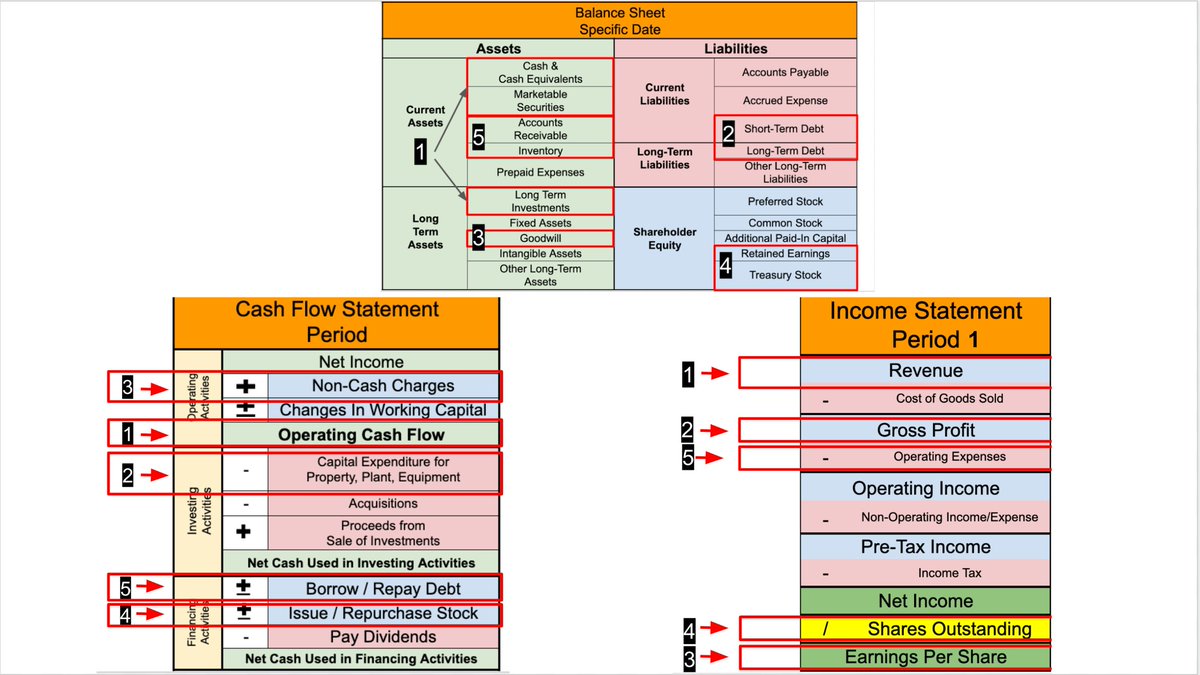
How to analyze a: ▪️Balance Sheet ▪️Income Statement ▪️Cash Flow Statement In less than 5 minutes:
Brian Feroldi tweet media
English
155
3K
12.9K
2.7M
limbo retweetledi
Andrew Lokenauth
Andrew Lokenauth@FluentInFinance·
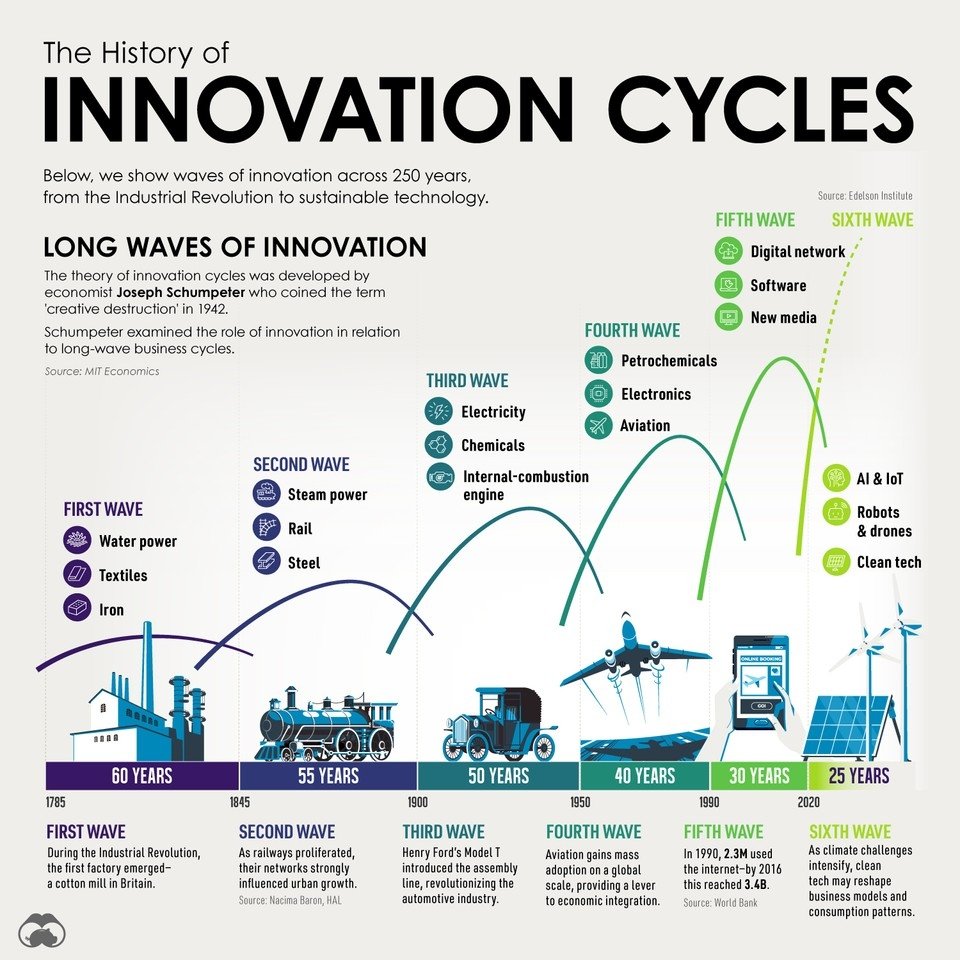
We're in the 6th innovation cycle (2020-2025) — AI, IoT, Robotics, Drones and Clean Tech:
Andrew Lokenauth tweet media
English
29
436
1.3K
243.4K
limbo retweetledi
David Senra
David Senra@FoundersPodcast·
“My whole life has been spent trying to teach people that intense concentration for hour after hour can bring out in people resources they didn’t know they had.” — Edwin Land
David Senra tweet media
English
18
192
1.3K
179.6K
limbo retweetledi
Mckay Wrigley
Mckay Wrigley@mckaywrigley·
Now my AI just tells me what the bugs are in my code as I work.
English
84
185
2.2K
924.7K
limbo retweetledi
MoneyTradeEdge | Better Thinking Better Trading
90% of traders talk about systems, indicators, setups, etc. The truth is that your emotions will always dictate the pace. You may have the best system in the world, but you will still be a loser if you can't execute.
English
24
104
721
37.5K
limbo retweetledi
Brian Feroldi
Brian Feroldi@BrianFeroldi·
Analysis paralysis is real. Define when you know enough to make an investment decision
Brian Feroldi tweet media
English
133
427
2.4K
1.3M
limbo retweetledi
Michael McGuiness
Michael McGuiness@mikemcg0·
Q: Is it better to target a small market or a large one? In the clip below, Peter Thiel (billionaire venture capitalist and co-founder of PayPal and Palantir) describes his framework for evaluating markets: “It’s always a big mistake going after a giant market on day 1. That’s typically evidence that you haven’t defined the categories correctly, and there’s going to be too much competition.” He continues: “Almost all of the successful companies in Silicon Valley had some model of starting with small markets and expanding.” Amazon started with books eBay started with Pez dispensers and Beanie Babies PayPal started with power-sellers on eBay Facebook started with Harvard “What’s very counterintuitive about many of these companies is that they often start with markets so small that most people don’t think they’re valuable at all.” The opposite of this is companies that start out targeting really big markets, and he uses clean tech companies in 2005-2008 trying to capture a small percentage of a trillion dollar market as an example. “Once you’re a minnow in a vast ocean, that’s not a good place to be. It means you have tons of competitors, and you don’t even know who all of the competitors are.” As Thiel puts it: “You want to be a one-of-a-kind company where it’s the only one in a small ecosystem… large existing markets typically mean you have tons of competition and it’s very hard to differentiate.” You can then expand concentrically from there.
English
81
593
4.5K
1.5M
limbo retweetledi
S.L. Kanthan
S.L. Kanthan@Kanthan2030·
How do Americans fall for sleazy politicians? Vivek Ramaswamy got a law degree from Yale, joined a hedge fund, and trolled discarded patents. His first big money was from an Alzheimer’s drug that failed spectacularly AFTER he cashed out from an IPO. He doesn’t know foreign policy or history; can’t even pronounce “Xi Jinping” properly; and repeats dumb stuff like how he would stop the “CCP” from buying land in the USA or stealing IP. Oh, that Alzheimer’s drug he profited from? It had been abandoned earlier by GlaxoSmithKleine after four failed clinical trials. He talks fast like Andrew Tate and has a good memory for slogans. That’s all. The US will face its biggest geopolitical and economic challenges over the next few years. Slick but shallow salesmen are not what the country needs.
S.L. Kanthan tweet media
English
1.5K
1.9K
9.6K
1.7M
limbo retweetledi
Value Theory
Value Theory@ValueInvestorAc·
Li Lu Escaped from China to the US With Very Little Money (in fact a lot of debt) His net worth is now over $1 billion Achieved with a value investing approach Below clip is a masterclass from Li Lu on how to be a value investor: pic.x.com/iuwvcs6rpd I also recently read Li Lu's book "Moving the Mountain: My Life in China" Here's a quick summary of the 10 key lessons I learnt: 1. Always Be Curious: 🕵️‍♂️ Li Lu's hunger for knowledge played a critical role in his success as an investor. He says, "never stop learning and to always be curious about the world around you." 2. Perseverance is Key: He faced many obstacles in his life, including poverty, political persecution, and discrimination. He attributes his success to his perseverance and determination to overcome these obstacles. 3. Believe in Yourself: Self-belief in achieving one's goals is critical. He encourages you to have faith in your abilities and to never give up on your dreams. 4. Embrace Failure: Li Lu views failure as an essential part of the learning process. Embrace failure as an opportunity to learn and grow. 5. Develop a Long-term Perspective: When it comes to investing and life in general. He emphasizes the importance of patience and discipline in achieving long-term success. 6. Stay True To Your Values: Li Lu's experiences growing up during the Cultural Revolution taught him the importance of standing up for one's values and beliefs, even in the face of adversity. 7. Take Calculated Risks: Known for his investment strategy of taking calculated risks. He advises to do the same and to be willing to take risks in pursuit of your goals. 8. Embrace Diversity: Li Lu's experiences living and working in both China and the United States taught him the value of diversity and the importance of understanding different cultures and perspectives. 9. Seek Out Mentors: He attributes much of his success to the guidance and mentorship of others. For Li Lu, this included Buffett and Munger. 10. Give Back to Society: Li Lu is a strong advocate for philanthropy and social responsibility. He encourages everyone to use their success and/or ability to give back to society and to make a positive impact in the world.
English
18
329
1.1K
214.6K
limbo retweetledi
Mckay Wrigley
Mckay Wrigley@mckaywrigley·
We’re at the point with AI + coding where you can just give the AI a URL to some docs and it will learn the library. Insane.
English
178
685
4.9K
1.4M
limbo retweetledi
Dhaval (Investment Books)
Dhaval (Investment Books)@InvestmentBook1·
The Most Iconic Lecture by Peter Lynch on Investing Still Relevant After 25 Years Best 47 Minutes Investment!
English
26
1.5K
4.3K
548.4K
limbo retweetledi
Brandon Beylo
Brandon Beylo@marketplunger1·
Bruce Greenwald invited Li Lu to speak to his class on value investing. The result is a 90 minute masterclass on how to be a value investor. If you haven't watched the video, do it now. If you have, it's worth re-watching. Here is a list of my favorite quotes from Li Lu 👇 PERSONALITY OF A VALUE INVESTOR • "Understand who you are as an investor, because you will be tested. You will have to ask yourself if you truly are a value investor." • "Value investing goes against our evolution of following the crowds to survive." • "You will spend most of your time as an investigative journalist. To have insatiable curiosity." • "You almost have to be curious about everything. Because you never know where you'll get that one major insight." INVESTOR CRITERIA • Is it cheap? • Is it a good business? • Why is this opportunity available to me? "Once you answer those questions, you really have to go for it." INVESTMENT CASE STUDY 1: TIMBERLAND • "The first thing I check in a company is it's valuation." • "If you're an investor you don't care where it traded before." • "What matters isn't the price-to-book ratio itself, but what's in the book value." • "You want to compare the capital invested in the business to how much pre-tax cash flow the business generates using that capital." • "So Timberland generated $100M on $200M in capital invested. So why does the opportunity exist?" - Nike, Reebok, all the shoe brands fell off a cliff during the Asian Financial Crisis. - Founder owns 40% of the stock - Company was profitable and didn't need financial markets (no sell-side) - Tons of shareholder lawsuits • "What would be your conclusion if you were a normal mutual fund hearing this information? That management is milking the company for their own gain." What does Li Lu do next? • "I download every file of the shareholder court cases. That's the investigative journalist part." • "The result was that the founder withdrew guidance and shareholders didn't like it. That was it." How do you determine if management are decent people? • "You've got to be an investigative journalist and find the trail of evidence. Go to their community. Introduce yourself to their friends/family/neighbors." Total Time Commitment: "A couple of weeks of diligent/obsessive work" • "Investing is intensive work for short bursts of time." HOW MUCH TO BUY? • "If you go join a fund, they'll tell you not to risk anything more than 25-50bps." • "Think about how much effort you put in to this work. You have no downside and its trading at 5x profits." • "So, I put a shitload of money into Timberland. Over the next 10 years it went up 7x. It was never more than 15x earnings." • "If you're not a good analyst, you'll NEVER be a good investor." • "When it goes up, you don't have to do a damn thing. You just sit on it and ride with it." INVESTMENT CASE STUDY 2: KOREAN COMPANY • "Don't think about per-share numbers. Think of yourself as an owner." • "$236M in book value, $60M market cap, $25M net earnings." How do you know it's cheap? • "You must confirm that the earnings are there, and that the book value is real, liquid, and tangible." • "They're trading at the cash value in the bank with no debt. They have hotels and department stores that they own outright. They're making $30M+ in pre-tax earnings. And insiders own 50%." The result: Went up 5-6x VALUE INVESTING IS NOT NATURAL • "There's a lot of money in value investing. But it's still unnatural to most people." • "One thing you have to do, is you have to do the work. You have to do the reps. You can make a ton of money if you really do this stuff." • "I benefited by listening AND THEN DOING my own work. Making my own investments and mistakes." WHAT MAKES A GREAT ANALYST • "You must provide accurate and complete information. If you can't succeed on that, you can't succeed in this business." • "If you're not confident about your prediction and what you know, you can't put any money when the stock's in free fall." WHAT PROVIDES THE BIGGEST RETURNS • "Your biggest returns will come from no more than ten tremendous insights. That's it." • "The only way to build those insights is intense curiosity, intense study." INVESTING MISTAKES • "The biggest mistakes come when you buy before you've done all the work." • "My biggest mistakes aren't buying and losing money. It's not buying and missing out on 50-60x returns." HOW MANY COMPANIES SHOULD YOU BUY • "I don't have any set rules on how many stocks or companies I buy. Opportunities are sporadic and it depends on the environment." • "I usually have 3-4 big ideas. If the market is exciting, I have more opportunities. Or if the market is boring, I have fewer." HOW LI LU ALLOCATES TIME • "Most of the time I spend reading and studying about everything. Learning new companies and industries." • "If I find an idea that captivates me. I stop everything and obsess over that idea." • "Besides that, I spend a lot of time with my kid and my wife." TL;DR: • Be an investigative journalist. • Work obsessively in short bursts and spend the rest. of your time learning. • When you've done the work and have conviction, buy a shitload to make it worth it. • Before you invest $1, make sure you can answer the three big questions: Is it cheap, is the management team good, and why does the opportunity exist. • Never stop learning. • Become a curiosity machine.
English
131
3.5K
14.8K
2.7M
limbo retweetledi
Aishwarya Nevrekar
Aishwarya Nevrekar@nevrekaraishwa2·
Stanford University has just opened full access to CS224U. One of their immensely popular graduate-level Natural Language Understanding course taught by Professor Christopher Potts. Checkout link below 👇
Aishwarya Nevrekar tweet media
English
10
502
2.4K
328.3K
limbo retweetledi
Guillaume Moubeche
Guillaume Moubeche@GuillaumeMbh·
A $1000 investment gave me a 10,000x return and I became a multi-millionaire at the age of 29. A playbook for every college kid to become a millionaire in their 20s🧵
Guillaume Moubeche tweet media
English
123
248
2.6K
1M
limbo retweetledi
Horse
Horse@TheFlowHorse·
Good morning. Starting off the day by longing some $YGG - If you look at the other coins DWF is market making, they all have the same pattern, and are beginning to pump again. Call it manipulation, but it looks semi-predictable that they want to continue to offload at better prices.
Horse tweet media
English
15
5
55
29.6K