Lisa Ehlin retweetledi
Lisa Ehlin
74.5K posts

Lisa Ehlin
@lisaehlin
PhD in digital visual culture. Lecturer at Beckmans College of Design. Writer, editor, researcher, curator, usb-player.
Stockholm Katılım Kasım 2009
601 Takip Edilen1.6K Takipçiler

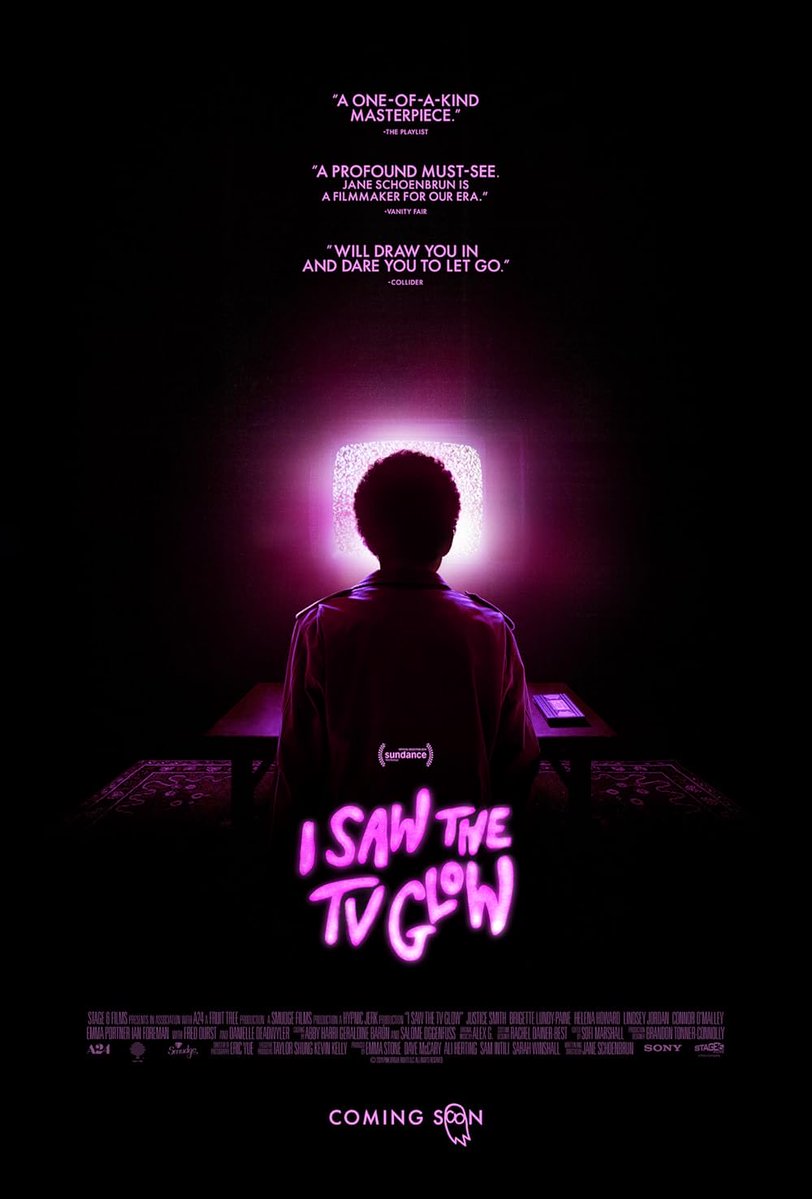
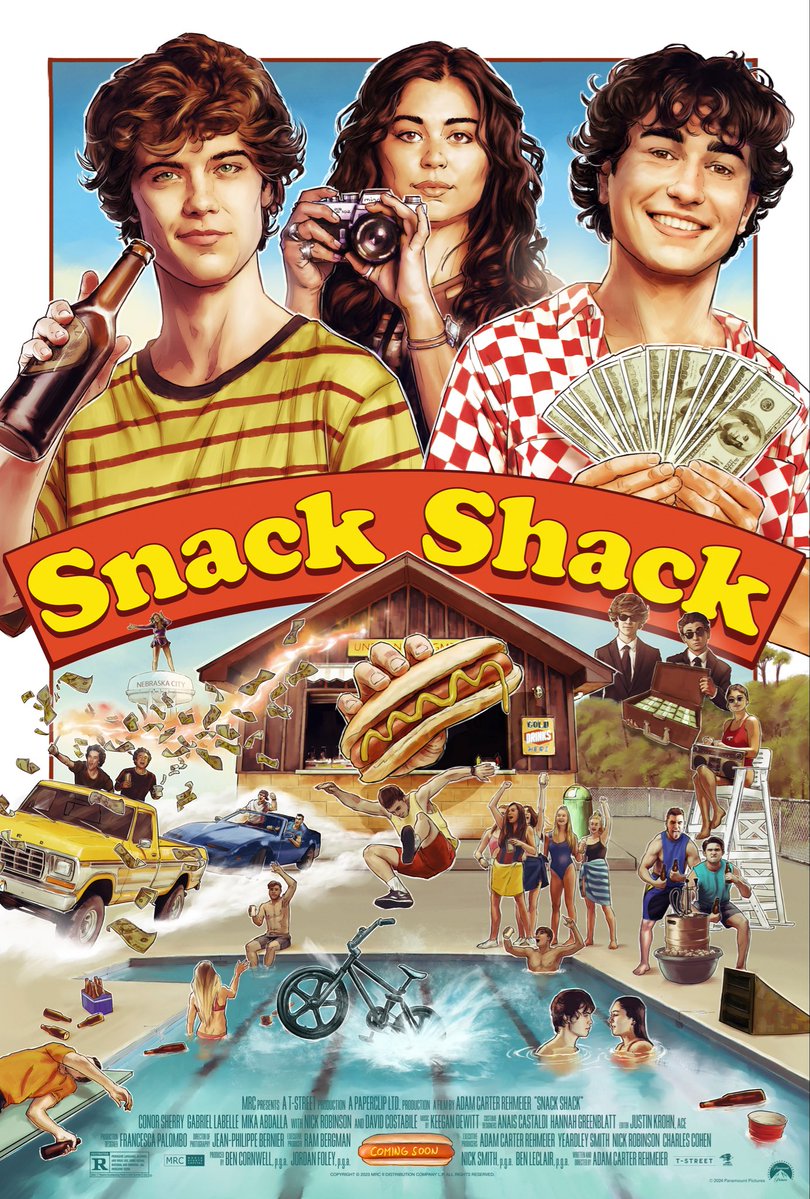
There are some of the best coming og age cinema I’ve seen in s long time. Are these in opposition?


Dog's Belly Wine 🦌@Tetradugenikid
There are no new high school and college movies because boomers and elderly millennials do not want to see how grim it really is They would stomp their feet and claim fascism, and "that's not realistic "
English

@spetalsk Also ursäkta Stephen Colbert men allt du älskar med Tolkien är ju att det är Tolkien som skrev det, inte du.
Skriv fan fiction på din kammare som vanliga människor istället för att utarma allt du själv tycker så mycket om. Varför är allt så delulu.
Svenska
Lisa Ehlin retweetledi

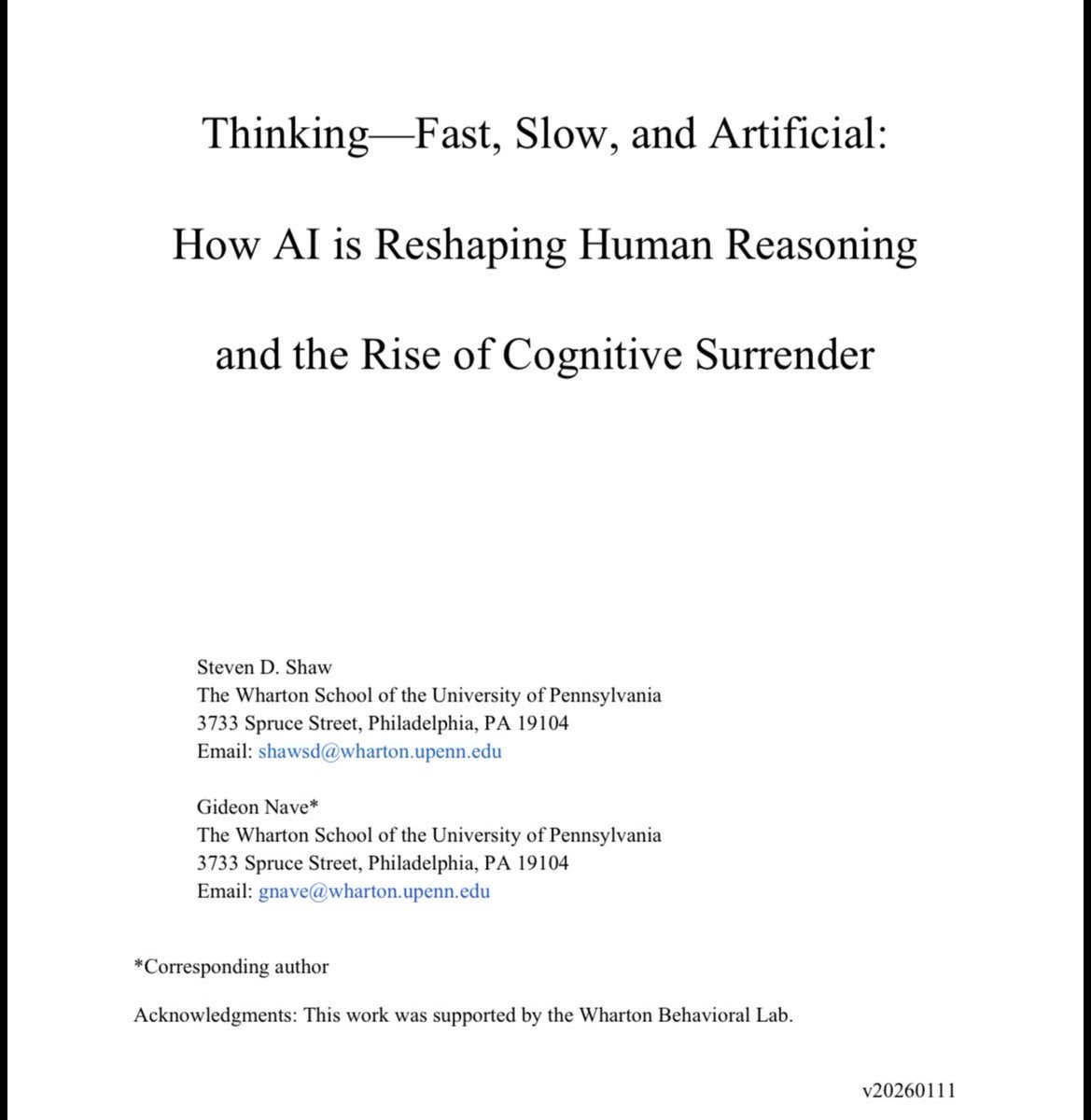
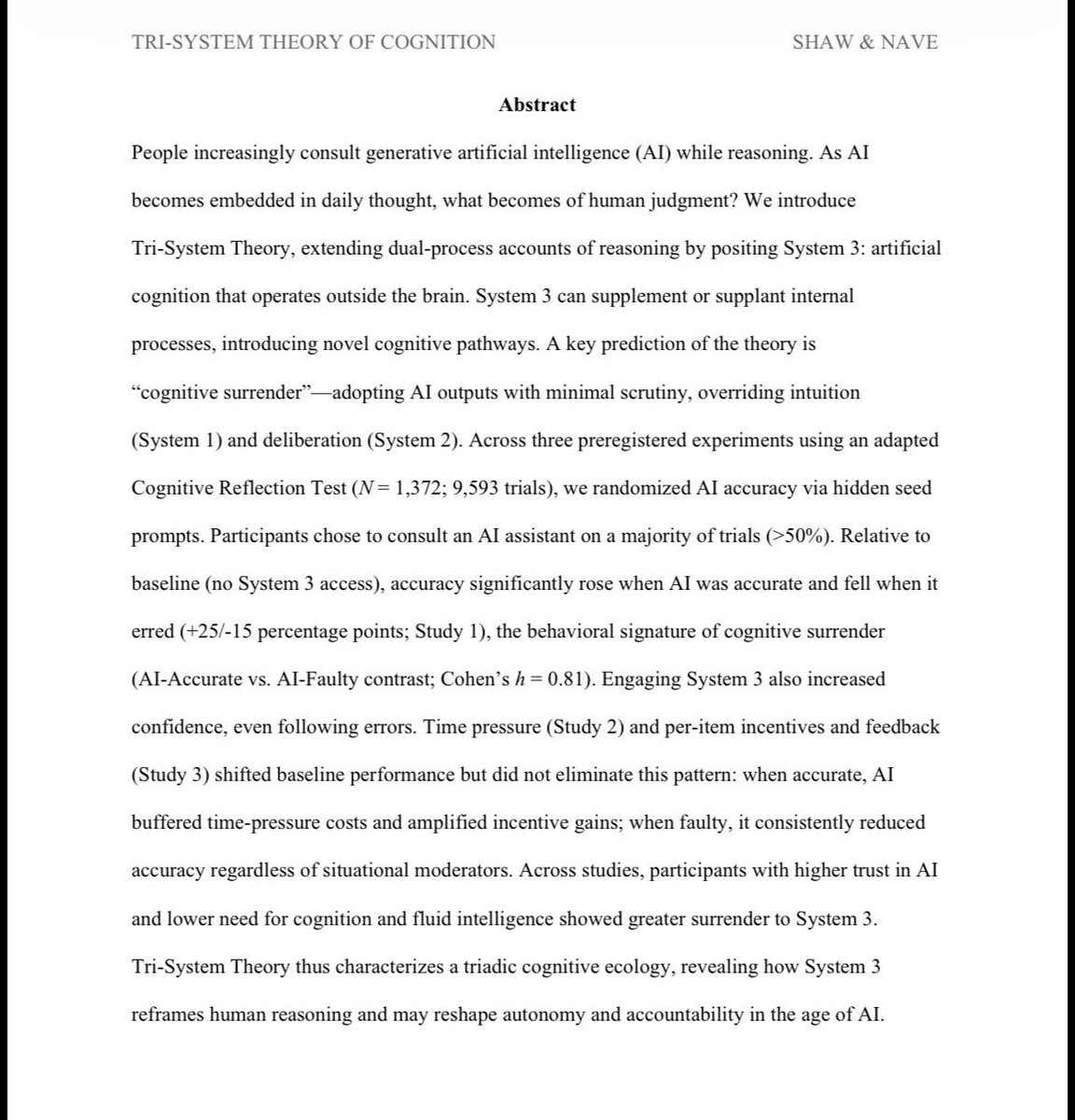
“Cognitive Surrender” - a new study argues that use of AI leads to suspension of human reasoning, not its augmentation. The implication being that over time people will lose their reasoning ability & use AI as its substitute. Download the paper for free here, excerpts & reference below:
papers.ssrn.com/sol3/papers.cf…
——-
“As people increasingly integrate AI into their decision-making processes, they interact and engage with a cognitive system that can reshape the functions of both intuition and deliberation. For example, System 3 can replace System 1 by offering confident, ready-made answers that preempt the need for intuitive reasoning.” (page 15 of pdf)
“As AI systems increasingly participate in human cognition, a new phenomenon emerges that cannot be explained by traditional concepts such as cognitive offloading or automation bias alone. We define cognitive surrender as the behavioral and motivational tendency to defer judgment, effort, and responsibility to System 3’s output, particularly when that output is delivered fluently, confidently, or with minimal friction. Unlike cognitive offloading, which is typically strategic and task-specific (e.g., using GPS to navigate), cognitive surrender entails a deeper transfer of agency.” (Page 17)
“Access to System 3 outputs significantly influenced accuracy, increasing correct answers when AI was correct, and decreasing accuracy when incorrect. Access to System 3 made decision-makers more confident, despite approximately half of System 3 outputs being incorrect. Finally, users who trust AI more and have lower NFC and fluid IQ were more likely to display cognitive surrender. Whether System 3 was accurate or faulty, its presence displaced internal reasoning.” (Page 27)
“Cognitive surrender was robust across studies.” (Page 42)
“Across our studies, we observe that when System 3 was available, people readily engaged it and frequently adopted its answers. This shift reflects a reallocation of cognitive control rather than mere effort saving. System 3’s fluent, confident outputs are treated as epistemically authoritative, lowering the threshold for scrutiny and attenuating the metacognitive signals that would ordinarily route a response to deliberation. In the case of cognitive surrender, there is a shift in the locus of control, with an external system (System 3) occupying the default position.” (Page 45)
“Time constraints clarify why surrender arises so readily, while incentives and feedback show that surrender is malleable. When decision time is scarce, the internal monitor detecting conflict and recruiting deliberation is less likely to trigger. Hence, the low-friction path to defer to external cognition becomes attractive.” (Page 46)
“Tri-System Theory is not a warning about AI’s dangers but a recognition of System 3’s psychological presence. We do not merely use AI; we think with it. In doing so, we must ask new questions: What happens when our judgments are shaped by minds not our own? What becomes of intuition and effort when a generative, artificial partner stands ready to answer? How do we preserve agency, reflection, and autonomy in a world where users engage in cognitive surrender?”


English

Yes, but it was made way before Covid.
I didn't understand the surrealism and fear of a pandemic and isolation of quarantine when I saw The Hole in 2000. Now, it is the best depiction of it I know

Emma Camp@emmma_camp_
Question for the group: has there been any great art about Covid? Any incredible literary novels or films? I can't think of anything off the top of my head but my cultural knowledge is not limitless.
English


@lisaehlin Behöver göra lite research innan jag låser upp det här guldkornet 🌐🔑
Svenska

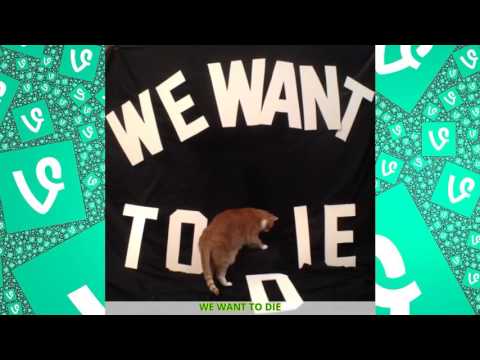
Somebody made a compilation of Keelayjams Vines and this will forever be the best thing Internet has ever created. Especially the lil pizza slices in parachutes
youtu.be/EQrol5d2aS0?si…

YouTube
English
Lisa Ehlin retweetledi

Didn't really need a study to tell me this but perhaps fascists do
lithub.com/its-official-r…
English
Lisa Ehlin retweetledi

14 years ago today, Odd Future (@ofwgkta) dropped "Oldie"—one of their most iconic videos that almost didn't happen. It only did because @tylerthecreator refused to let anyone turn the camera off.
The members of the group told the story of that day in an oral history published by The Ringer in 2022. When Odd Future descended on Milk Studios in Chelsea, the session unraveled fast. The XXL staff "were understandably trying to contain a group of rowdy kids," Mike G recalled, "but we weren't having it."
Someone plugged in an iPhone, "Oldie" came through the speakers, and director Lance Bangs kept his camera rolling over objections from the room. The moment Tyler realized what was happening, he called the shots: "No, f*ck that, Lance, keep shooting this sh*t.” What followed was a single, unedited take of the entire 10-minute posse cut performed live.
For @earlxsweat, freshly back from Samoa and still finding his footing, the whole day had a surreal quality: "It just felt like a cartoon, in the sense that n****s just was doin' whatever they wanted to do." For Tyler, zooming out in real time, the stakes were clearer: “I’ve seen music documentaries, this might be the last time everyone's together so we need to document this."
He was right. "A f*ckin' balloon popped that night, and we all went in our own directions. That was the last time we was all together like that. Still,” Tyler explained. Frank, looking back, arrived at the same place: "The atmosphere reminds me of how it feels to be in a room full of musicians where everyone is improvising and for a brief period it's pure magic. It's the same rush."
Bangs edited the footage on a laptop during a red-eye to Portland. It now sits at over 56 million views. It cost nothing.
English

Keep seeing this and ALL I can think about is

Pop Base@PopBase
First poster of Florence Pugh as Princess Irulan in ‘Dune: Part Three’ In theaters December 18.
English