Leo Huang
68 posts



Leo Huang retweetledi

微软,总算出了个好东西。
开发了一款工具,
可以将几乎任何格式pdfs,word,docs,excel,PowerPoint,Audio,YouTube 网址
转换为Markdown文件,
众所周知Markdown 是AI 大语言模型最青睐的格式。
没有自定义解析器。没有损坏的布局。没有混乱的文本。
只是干净、结构化的标记,
只需一次安装
github.com/microsoft/mark…
中文
Leo Huang retweetledi

DeepMind 创始人 Demis Hassabis 给出了未来 50 年的人类文明剧本。
AGI 的真正使命是砸开科学的“根节点”。
破解蛋白质折叠的 AlphaFold 只是个开场测试。
接下来的硬骨头是常压室温超导和可控核聚变。
一旦突破,人类将获得几乎免费的清洁能源。
极度硬核的连锁反应会立刻发生。
工厂能直接从海水中大规模提炼火箭燃料。
星际旅行最大的成本账单被瞬间清零。
太空的大门彻底敞开。
去小行星挖矿会变成一门常规生意。
水星上的矿物将被直接用来建造包裹太阳的戴森球。
治愈绝症和大幅延长寿命只是这条科技树上的副产品。
人类文明的边界完全取决于能源获取的效率。
AGI 正在接管这项极其庞大的解锁任务。
中文
Leo Huang retweetledi

Leo Huang retweetledi
New #preprint: @BeneHartl @LPiolopez
arxiv.org/abs/2604.01932
"BraiNCA: brain-inspired neural cellular automata and applications to morphogenesis and motor control"
Abstract:
Most of the Neural Cellular Automata (NCAs) defined in the literature have a common theme: they are based on regular grids with a Moore neighborhood (one-hop neighbour). They do not take into account long-range connections and more complex topologies as we can find in the brain. In this paper, we introduce BraiNCA, a brain-inspired NCA with an attention layer, long-range connections and complex topology. BraiNCAs shows better results in terms of robustness and speed of learning on the two tasks compared to Vanilla NCAs establishing that incorporating attention-based message selection together with explicit long-range edges can yield more sample-efficient and damage-tolerant self-organization than purely local, grid-based update rules. These results support the hypothesis that, for tasks requiring distributed coordination over extended spatial and temporal scales, the choice of interaction topology and the ability to dynamically route information will impact the robustness and speed of learning of an NCA. More broadly, BraiNCA provides brain-inspired NCA formulation that preserves the decentralized local update principle while better reflecting non-local connectivity patterns, making it a promising substrate for studying collective computation under biologically-realistic network structure and evolving cognitive substrates.
English
Leo Huang retweetledi

这两本书把Claude Code和Codex的Harness工程吃透了,对于Claude Code和Codex源码解析和对比都入木三分,文科生也能读的津津有味:
《Harness Engineering——Claude Code 设计指南》:不是源码注释汇编,也不是产品功能介绍。它关注的是 Claude Code 如何把不稳定模 型收束进可持续运行的工程秩序,让控制面、主循环、工具权限、上下文治理、恢复路 径、多代理验证与团队制度长成一套完整骨架
《Claude Code 和 Codex 的 Harness 设计哲学——殊途同归,还是各表一枝》:比较两套 AI coding harness,最容易犯的错误,是拿一张功能对照表当作思想史。左边写“有技能”,右边也写“有技能”;左边写“有沙箱”,右边也写“有沙箱”;左边写“能开子代理”,右边也写“能开子代理”。这样写的好处是省事,坏处是几乎什么也没说。因为工具中的名词相同,不代表系统的骨架相同。就像两个城市都修了桥,不能说明它们是按同一条河设计的。
Github仓库:github.com/wquguru/harnes…
在线阅读:harness-books.agentway.dev/index.html


中文
Leo Huang retweetledi

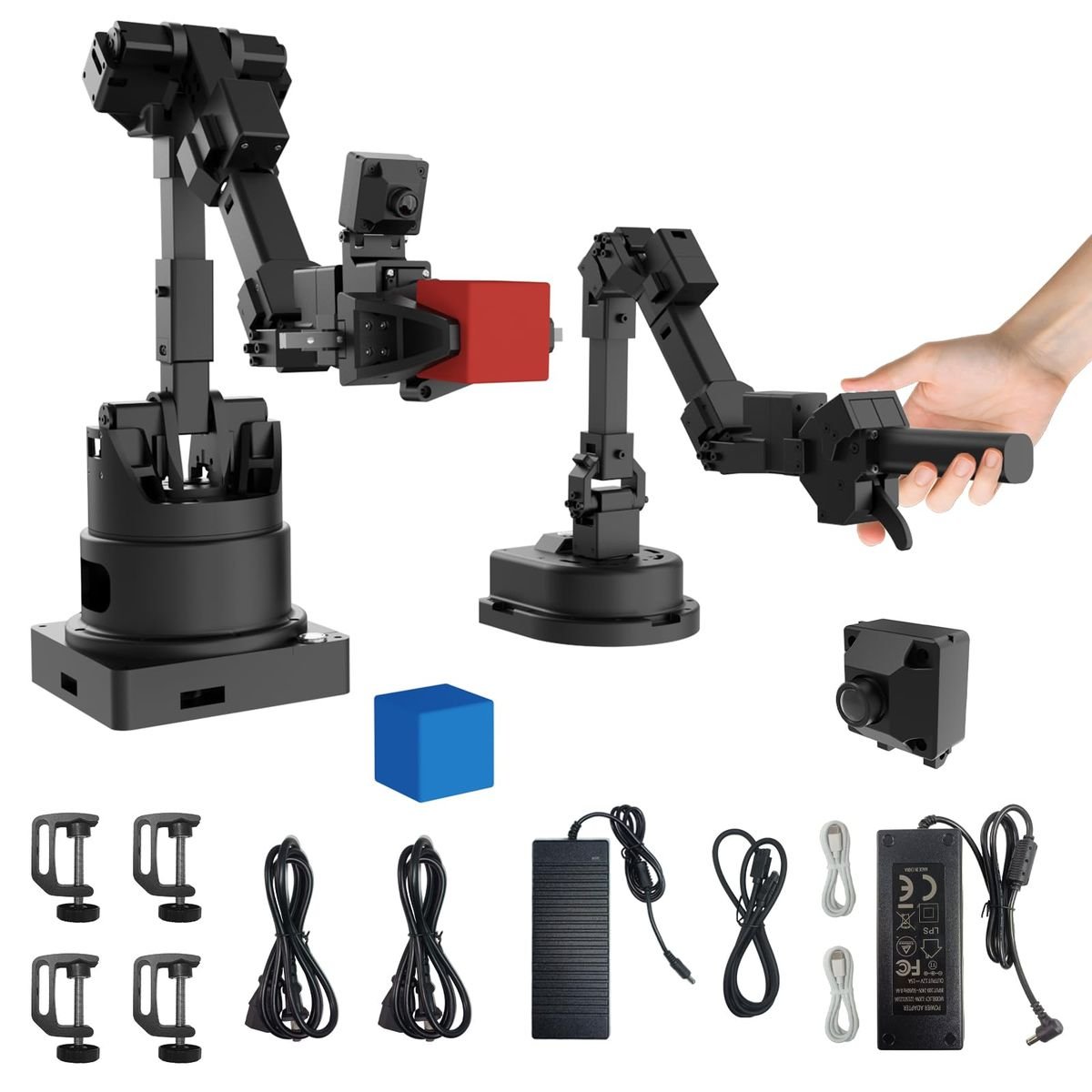
don't rush into shiny robotics buzzwords.
you’ll break your understanding before you build it.
avoid this too early:
• vla
• world models
• diffusion policy
• real2sim
• data flywheel
• nerf / gaussian splatting
these sit on top of foundations.
skip the foundations and you’re just memorizing patterns.
go through this first:
• motion planning → how robots decide where to move
• inverse kinematics → how joints actually reach a pose
• pid / mpc → how motion stays stable and controlled
• slam → how robots know where they are
• control theory → how systems behave under feedback
• sensor fusion → how noisy signals become usable state
advanced methods assume you already understand the system underneath.
otherwise you’re copying papers without intuition.
depth before hype.
foundations before frontiers.
English
Leo Huang retweetledi

用 AI 辅助编程,代码写得快不是问题,问题是每次都像"打游击战",项目一复杂就陷入混乱,改来改去最后连自己都看不懂。
偶然看到 AI Code Guide 这份开源指南,系统性地整理了 AI 辅助编程的完整方法论,从工具选择到实战流程都讲得很透彻。
核心理念是"规划先行":不是直接让 AI 写代码,而是先用 ChatGPT 生成产品需求文档(PRD)和任务清单,再让 AI 按步骤实现,确保项目始终保持清晰的结构。
GitHub:github.com/automata/aicod…
指南涵盖了从零开始的完整工作流:如何选择合适的 LLM 模型、怎样编写有效的提示词、如何设置项目规则避免幻觉、怎样处理错误和 Bug,还详细对比了 Cursor、Windsurf、Claude Code 等主流工具的使用场景。
特别实用的是"vibe coding"实战部分,手把手教你用 ChatGPT 生成 PRD,再用 Cursor Agent 自动实现,10 分钟就能搭建一个 CLI 工具原型。
如果你想把 AI 编程从"随机碰运气"升级为"系统化工程实践",这份指南值得收藏。

中文
Leo Huang retweetledi

Leo Huang retweetledi

Leo Huang retweetledi

🚨🚨 Beijing, June 9, 1989. 🚨🚨
Peaceful student protest for FREEDOM
The CCP didn’t negotiate.
They sent tanks & opened fire.
They murdered their own students in Tiananmen Square.
Never forget CPC gave the order.
Never forget CCP stayed silent.
#Tiananmen #CCP #NeverForget
English


Leo Huang retweetledi
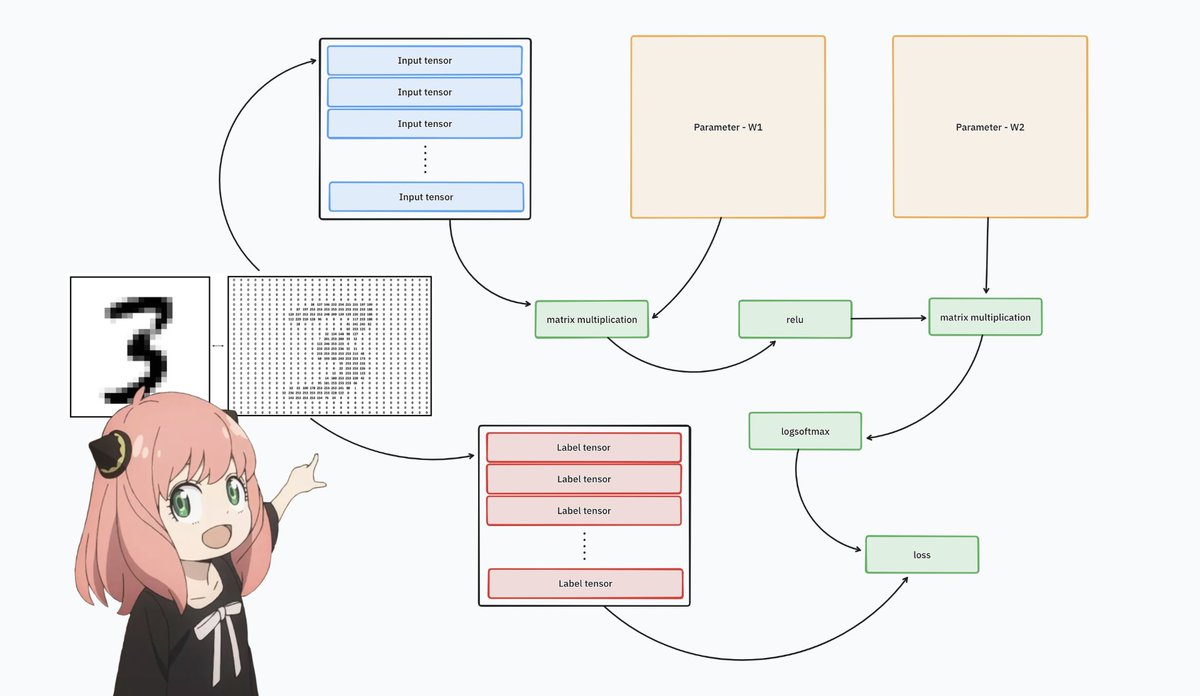
想从零理解神经网络的工作原理,光看 PyTorch 或 TensorFlow 的文档很难搞懂底层逻辑,那些封装好的 API 让人知其然不知其所以。
最近在 GitHub 上发现 tensor.h 这个教学项目,用纯 C 语言从零实现一个微型张量库,没有任何依赖,把神经网络训练的核心机制讲得明明白白。
作者用"猫狗分类"这个经典例子切入,解释了神经网络本质上就是一种特殊函数,通过矩阵乘法、ReLU、LogSoftmax 等数学运算,配合可训练的参数(权重)来完成任务。
GitHub:github.com/apoorvnandan/t…
整个教程涵盖张量的创建和操作、损失函数定义、自动求导(Autograd)机制、各类运算的前向和反向传播实现,最后用 MNIST 手写数字识别展示完整训练流程。
每个概念都配有详细代码和数学推导,从 N 维数组的 shape 和 strides 原理,到链式法则如何计算梯度,再到训练循环中的参数更新,循序渐进讲透每个环节。
如果你想把神经网络从"黑盒工具"理解到"可控机制",这份教程值得仔细读一遍。
中文