vansh

1.6K posts

vansh banner
vansh

vansh

@lkoatc

Lucknow, India Katılım Ekim 2020
1.4K Takip Edilen202 Takipçiler
vansh retweetledi
Anupam Kher
Anupam Kher@AnupamPKher·
Deeply saddened to hear that #MaroofRaza is no more.💔💔💔 A dear friend. A brave soul. And one of the pioneering voices in India’s national security discourse. Maroof fought a long and dignified battle with cancer. Even in illness, he carried himself with courage and grace. The last time I spoke to him. He was his warm, affectionate self — curious, sharp, and generous with his thoughts. That was Maroof. In the world of national security journalism, he was a trailblazer. I always listened carefully whenever he spoke on television — because he spoke with knowledge, conviction, and responsibility. His insights were never loud, but always powerful.🥹 His voice will be missed. His intellect will be missed. But most of all, his warmth will be missed. Rest in peace, Maroof Bhai! You fought bravely till the end. My heartfelt condolences to his family and loved ones. Om Shanti.💔🙏
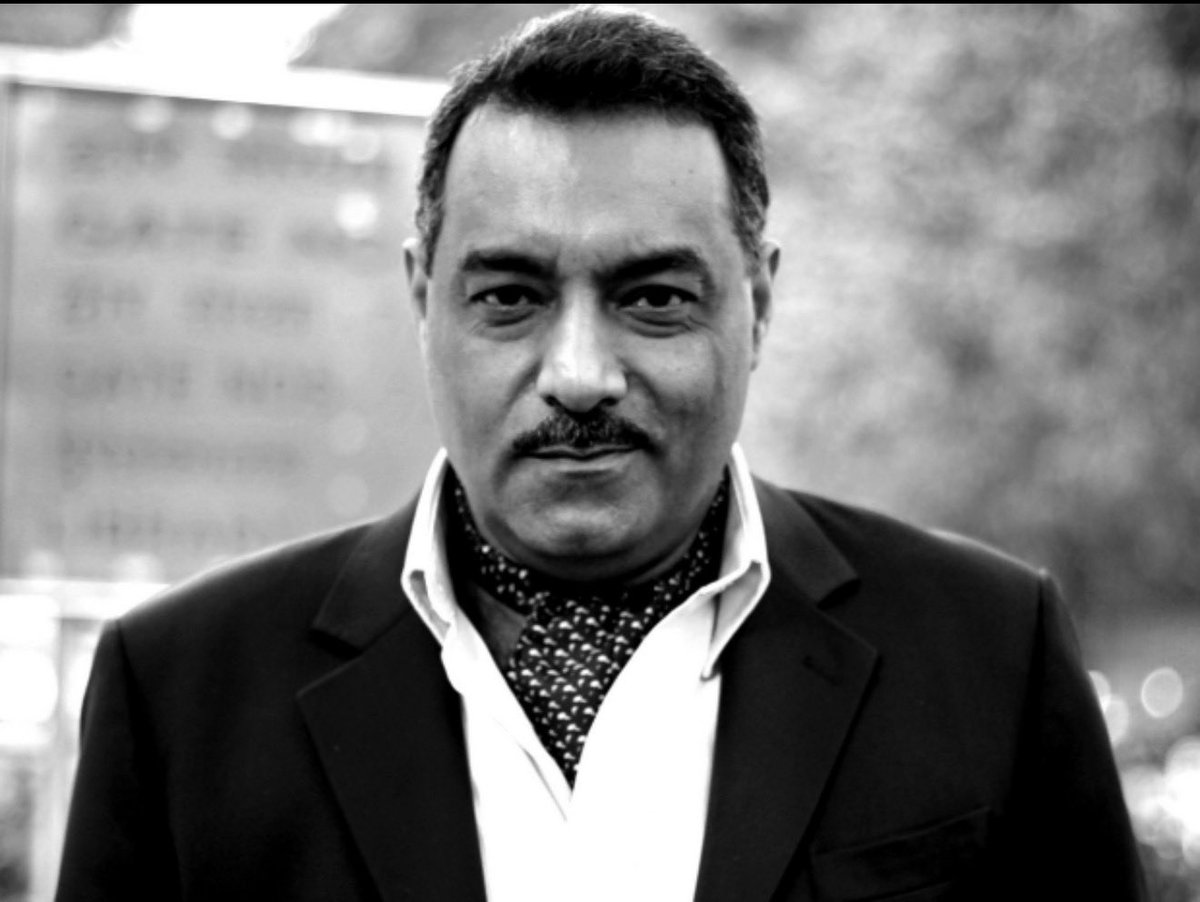
Anupam Kher tweet media
English
87
133
1.7K
49.8K
vansh retweetledi
The Poll Lady
The Poll Lady@ThePollLady·
Let me take you back to an interesting event from 2018. The then FM of Austria extended a casual wedding invitation to Vladimir Putin during her diplomatic visit to Moscow. She never imagined he would take it seriously as it was just a courtesy invitation, not an expectation. But on August 18, 2018, a Russian state aircraft landed in Austria. Vladimir Putin didn’t just attend the wedding. he arrived with a Cossack choir and a traditional samovar as a gift. Cameras went crazy. Music filled the air. And in a moment that would echo far beyond the dance floor, the Foreign Minister of a neutral EU nation took the hand of the Kremlin’s leader. They waltzed. Brussels watched. When the music ended, Karin Kneissl performed a deep, traditional Austrian curtsey. That single bow ended her career. Within hours, the image was weaponized. Political opponents framed it as proof of Austria’s “submission” to Moscow. Brussels politicians, globalist elites, and her domestic critics closed ranks. She was no longer a minister she was labeled a traitor, a spy, a pariah. Death threats followed. Despite speaking seven languages and holding a doctorate in international law, she found herself erased almost instantly. Her bank accounts were frozen. Her name was blacklisted in her own country. They didn’t just push her out of office. They pushed her out of entire Europe. Kneissl first fled to France, but exile followed her there too. Her accounts were blocked again. She said pressure was placed on her landlord to evict her. With no footing left in Europe, she moved to a small village in Lebanon, living like a peasant in quiet exile far from the halls of power she once navigated with ease. And then came the final irony. The woman driven out of Europe for dancing with Putin eventually found her only refuge in Russia. She describes the financial strangulation across Europe as the decisive force behind her departure first to Lebanon, and finally eastward to Russia. Today, she lives in Saint Petersburg, heads a geopolitical think tank, and resides in a country cottage. Her story is not just about a dance. It is about a continent at war with itself. About how symbolism now outweighs substance. And about how, in modern Europe, a single gesture, a bow, a waltz, one unguarded moment against the higher power can cost you everything. They said she danced with the wolf. And Europe elite made sure she paid the price. That’s why you see the likes of Kaja Kallas, Ursula von der Leyen, and others obey without hesitation. No one is allowed to step out of line because they know exactly what happens when you do.
English
378
5.6K
20.5K
1.4M
vansh retweetledi
Kevin W.
Kevin W.@Brink_Thinker·
Chinese teen skips college entrance exam to save classmate from heart attack! 18yo Jiang Zhaopeng performed CPR for 20+ mins, reviving his friend after 30 mins w/o pulse. "Exams can be retaken, life can't." Got a makeup test—no regrets! True hero!
English
64
1.4K
18.3K
1.4M
vansh retweetledi
Aakash Gupta
Aakash Gupta@aakashgupta·
Everyone’s sleeping on ISRO’s actual business model. A US company just paid India to launch the heaviest satellite ever lifted from Indian soil: 6,100 kg into low Earth orbit. AST SpaceMobile, building the first direct-to-smartphone satellite network, chose ISRO over SpaceX. The math tells you why. ISRO’s LVM3 costs about $54 million per launch. SpaceX Falcon 9 runs $62 million for a new rocket. That’s a 15% discount for comparable capability. And this was ISRO’s 9th consecutive LVM3 success. 100% reliability on the vehicle. But the real story is budget efficiency that borders on absurd. ISRO operates on $1.5 billion annually. NASA’s budget sits at $27 billion. That’s 18x more funding. Yet India landed near the lunar south pole first, reached Mars orbit on their first attempt for $74 million (NASA’s Curiosity cost over a billion), and now they’re winning commercial contracts from American companies. Chandrayaan-3 soft-landed on the Moon. Then ISRO launched a solar probe to the L1 Lagrange point. Then they just completed a spacecraft docking demonstration in December 2024 , proving rendezvous capability for their upcoming crewed Gaganyaan mission. Three major milestones in 18 months. On a shoestring. ISRO has launched 177 foreign satellites from 19 countries over the past five years. The agency isn’t just doing science. They’ve built a profitable launch services business that competes with SpaceX while operating on 6% of NASA’s budget. This is what happens when cost discipline becomes engineering culture.
Narendra Modi@narendramodi

Powered by India’s youth, our space programme is getting more advanced and impactful. With LVM3 demonstrating reliable heavy-lift performance, we are strengthening the foundations for future missions such as Gaganyaan, expanding commercial launch services and deepening global partnerships. This increased capability and boost to self-reliance are wonderful for the coming generations. @isro

English
177
898
5.2K
344.2K
vansh retweetledi
Raj Kunkolienkar
Raj Kunkolienkar@kunksed·
I was in fifth grade when I learned to read my parents' silence. They were talking in the kitchen, late at night, in that particular hush that parents use when they think children are asleep. I caught fragments. Bombay. Tests. Something about a doctor. The next morning, everything was normal. Chai, school, the shop. But I had heard the frequency shift. It was 2004. My father was 39. We had just moved out of the room behind our kirana store—a chawl on the outskirts of Panaji—into a proper apartment. Our first EMI. Things were looking up in the way they do for Indian middle-class families who have spent years looking at the same ceiling: slowly, carefully, one calculated risk at a time. Then the diagnosis. Stage 3 follicular lymphoma. I didn't know what lymphoma meant. There was no internet to tell me, no Google to spiral into. Cancer was a word from movies—something that happened to people in cities, in dramatic hospital scenes with violins. Not to shopkeepers in Goa. Not to fathers who opened shutters at 7 AM and counted change at night. They kept me in the dark. The logic was simple: don't disturb the boy's studies. So I went to school. I came home. I did homework. And in the margins of this ordinary life, my father was taking buses to Mumbai for chemotherapy. I still don't fully understand how he did it. A biopsy, then a bus. Chemo, then the overnight journey back. Tata Memorial to Kadamba bus stand. The same man who winced when he cut his finger slicing onions was now traveling eight hours each way with poison in his veins, because what else was there to do? Goa didn't have the facilities. We didn't have the money for flights or hotels. So he sat on buses, probably in pain I can't imagine, probably next to someone complaining about the AC being too cold. My mother ran the shop. Not "helped out"—ran it. Wholesale orders, inventory, customers, credit books, all while her husband was in the jaws of something that might kill him. New scans kept showing the cancer spreading. The word "spreading" did a lot of work in those days. And I? I was a child. Which means I was selfish in the way only children can be—not out of cruelty, but out of not knowing. My father was alive and not going bald like he did so I assumed things were now fine. I was still in the dark. I remember crying for days because I wanted a geared cycle. All my friends had them. The fancy ones with the grip shifters. I needed it for school, I argued. I needed it because everyone else had one. I remember my parents' faces when I wouldn't let it go—that particular exhaustion of people who cannot explain why they're saying no, because the explanation would break something. Every rupee mattered. I didn't know that yet. I didn't know that they were borrowing money from friends, from family, sometimes from customers at the shop—the same aunties who haggled over soap prices were quietly lending us cash to keep my father alive. That's the thing about the Indian middle class: the safety net is made of relationships. Of people who've known you long enough to trust you'll pay them back, eventually. No paperwork. Just faith, and shame, and gratitude all mixed together. My father then spent 40 days in Mumbai for radiation. He stayed with my aging grandparents in a small flat while I finished my exams and my mother kept the shop open. I don't know what those 40 days were like for him. He never talked about it. Men of that generation don't. They just endure, and then they come home, and life continues as if nothing happened. The magnitude of what was happening to my family didn't hit me until years later. No health insurance, of course—it was unheard of for people like us. The treatment, the travel, the lost income from the shop, the interest on loans that weren't from banks. It drained us completely. Not metaphorically. Actually. The kind of drained where you stop going to movies. Where eating out becomes a memory. Where "vacation" is a word other families use. Miraculously—and I use that word carefully—things stabilized. By 2007, the cancer was in remission. Whether it was the radiation, the medication, or the wheatgrass cow dung milk ayurvedic concoctions my mother sourced from god-knows-where, I don't know. Probably all of it. Probably none of it. Cancer does what cancer does, and we tell ourselves stories about why. But remission doesn't mean freedom. It means waiting. It means every annual checkup is a held breath. It means the knife never really leaves—it just hangs higher for a while. It took us until 2015 to recover financially. Eleven years. A whole decade of my adolescence spent in the aftermath of something that happened in three months. That's the part nobody tells you about illness: the medical crisis has a timeline, but the financial crater doesn't. It just sits there, and you fill it in slowly, one repaid loan at a time, one favor returned, one customer you finally pay back. In 2012, I got admits to colleges abroad. Good ones. The kind of opportunity that I'd dream about for my children. My mother sat me down and gently suggested I reconsider. She didn't say "we can't afford it." She said: "What if it comes back?" The knife, always dangling. She was right to think it. I knew she was right. So I gave the BITSAT, got into BITS Pilani with a generous scholarship from the Goa government, and made it through. It was the practical choice. The safe choice. The choice you make when you've learned that life can pivot on a diagnosis. It did come back. In 2022, the lymphoma transformed—DLBCL this time, more aggressive—and everything we'd feared for eighteen years arrived all at once. My father went through treatment again. CAR-T therapy, a clinical trial. Brief remission. Then not. He passed in 2023. But the thing I think about now, the thing that connects that fifth-grade boy crying about a cycle to the man I became: when it came back, I was ready. Not emotionally—you're never ready for that. But financially. I could go all out. Best doctors. Best facilities. No borrowed money from customers. No buses to Mumbai. When the bill came, I could pay it. The CAR-T didn't work. Cancer won anyway. But I sleep at night. I sleep because I know I did everything that could be done. There's no version of me lying awake wondering: what if I'd had more? What if I could have afforded that other treatment? That guilt would have eaten me alive. It would have been worse than grief. I think about this when people ask me why I care so much about money. Why I write about financial security. Why I'm building what I'm building. It's not ambition. It's not greed. It's not even wisdom. It's trauma response. The boy who cried about a geared cycle grew up to understand something about money that no finance book teaches: it's not about the stuff. It's about what happens when the phone rings and someone says the word "biopsy." It's about having options when you have no good choices. It's about not borrowing from the aunty who buys soap from your shop. My father ran a kirana store. He woke up early. He counted change at night. He took buses to chemo because that's what was available to him. He never complained. He came home and opened the shop the next day. I don't know what he would think about me writing this. He wasn't the type to share. But I think he'd understand why I'm sharing it: because somewhere, there's a family in a small town, getting a diagnosis, doing the math, realizing the numbers don't work. I want them to know they're not alone. And I want the version of me that comes after them—the child who doesn't fully understand yet—to grow up in a world where this story is a little less common. That's all. Now go, get some insurance and take your parents out for dinner while they're still around.
Raj Kunkolienkar tweet media
Loop@LoopHealthHQ

💚1M members milestone giveaway! Quote tweet with your story of the medical incident in your family that changed your perspective on life, health, and finances. We're doing this to raise awareness around preventive healthcare. 3 air purifiers for stories picked at random.

English
453
789
6.7K
605.3K
vansh retweetledi
diplo
diplo@diplo·
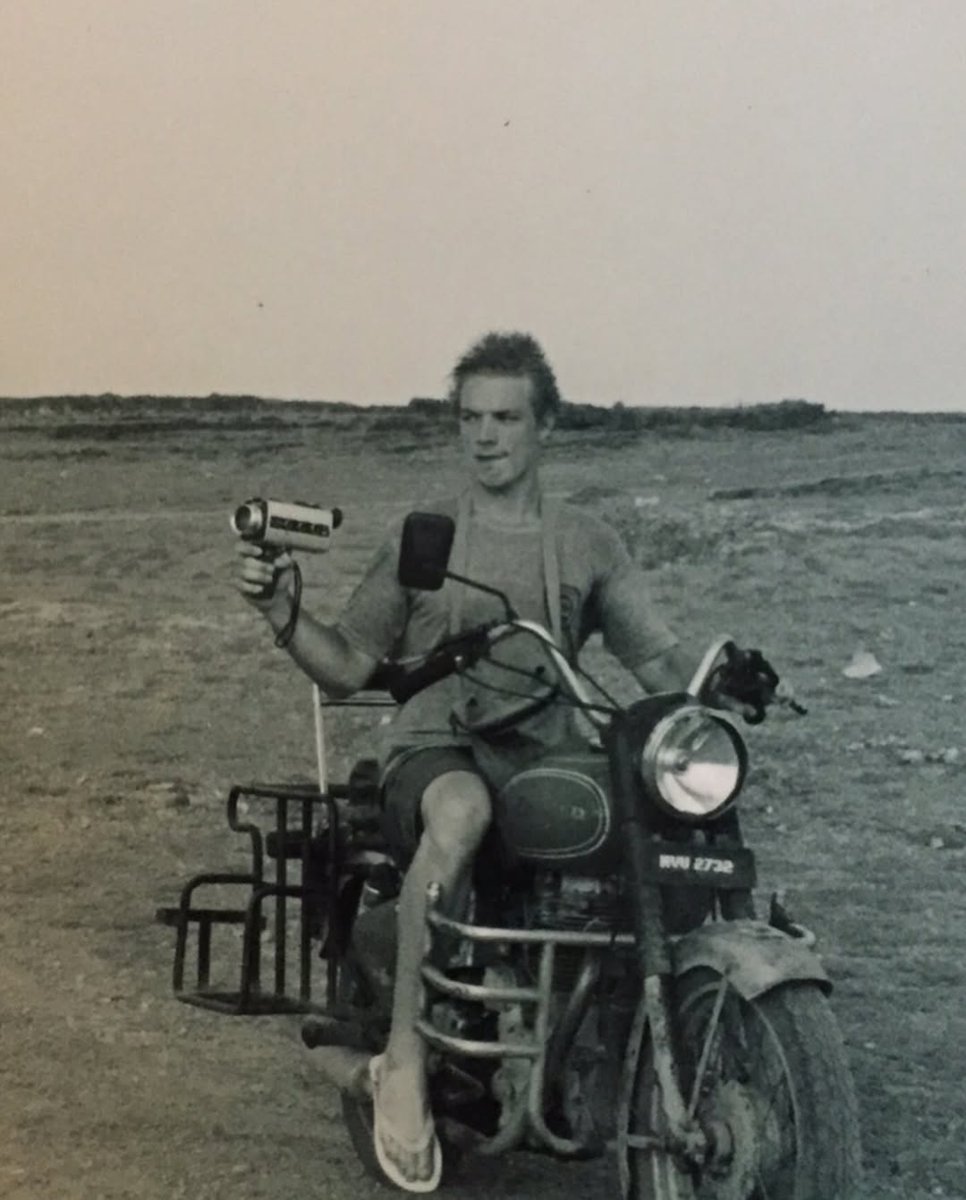
I was 20 when I first came to India with nothing but a restless mind and an old Enfield I bought from a friend in Delhi who taught me to ride in one dusty afternoon. He took my money, flew back to Florida, and left me with one rule: don’t hit a cow, and only ride between 2–6 a.m. if you want to survive the heat and smog. Somehow, that became a philosophy for everything that followed. I crossed the country like a kid inside a dream — Calcutta to Delhi to Rishikesh — sleeping on the bike when I had to, chasing chai stalls to stay awake, tossing the bike on trains when I could afford it. I swam in the Ganges, did yoga with elders who moved like water, bought vinyl in back-alley shops, fell in love the way only your twenties let you, and wrote long confusing emails to my mom from glowing village internet cafés. In Gujarat I stopped long enough to help with earthquake relief, eat thalis in strangers’ homes, and learn “Kem Cho” and “Majama.” India didn’t just teach me independence — it cracked me open creatively. It showed me how improvisation is its own kind of discipline, how getting lost is a form of education. I never imagined I’d be invited back years later to collaborate with artists I once watched on café computers — working with actors like SRK, making videos like “Lean On” that crossed billions of views, nearly dying during spiritual side quests in Leh and Varanasi, falling for Bollywood sweethearts, and still believing every strange turn meant something. Twenty-five years later I returned to these roads, riding nine hours a day across the Himalayas on a much newer Enfield. And then — perfectly — I ended up performing at a massive Enfield festival in Goa and celebrating afterward in a motorcycle garage, as if time folded back on itself. Two decades have changed India and me both. But every time I come back, I feel the same truth: growth happens when you surrender to the unknown, when the road teaches you more than any classroom could. India was my beginning. And somehow, it still is.
diplo tweet media
diplo tweet media
English
222
1.4K
13.2K
518K
vansh retweetledi
MERICA MEMED
MERICA MEMED@Mericamemed·
This was unexpectedly wholesome
English
37
2.6K
55.7K
594.7K
vansh retweetledi
The_Peshwa
The_Peshwa@TPeshwa·
As Jim Corbett said…
English
12
230
2.2K
66.5K
vansh retweetledi
Wasim Jaffer
Wasim Jaffer@WasimJaffer14·
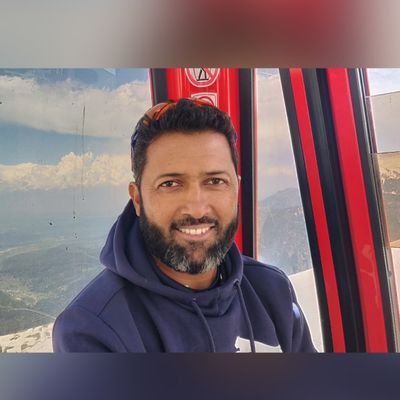
On a pitch where no other batter reached 40 in three inns, this man has given his team a fighting chance with 55*. It’s not the size of man in the fight, but the size of fight in the man. Well played @TembaBavuma 👏 #INDvSA
Wasim Jaffer tweet media
English
378
2.6K
39.3K
579K
vansh retweetledi
Sharad Vivek Sagar
Sharad Vivek Sagar@SharadSagar·
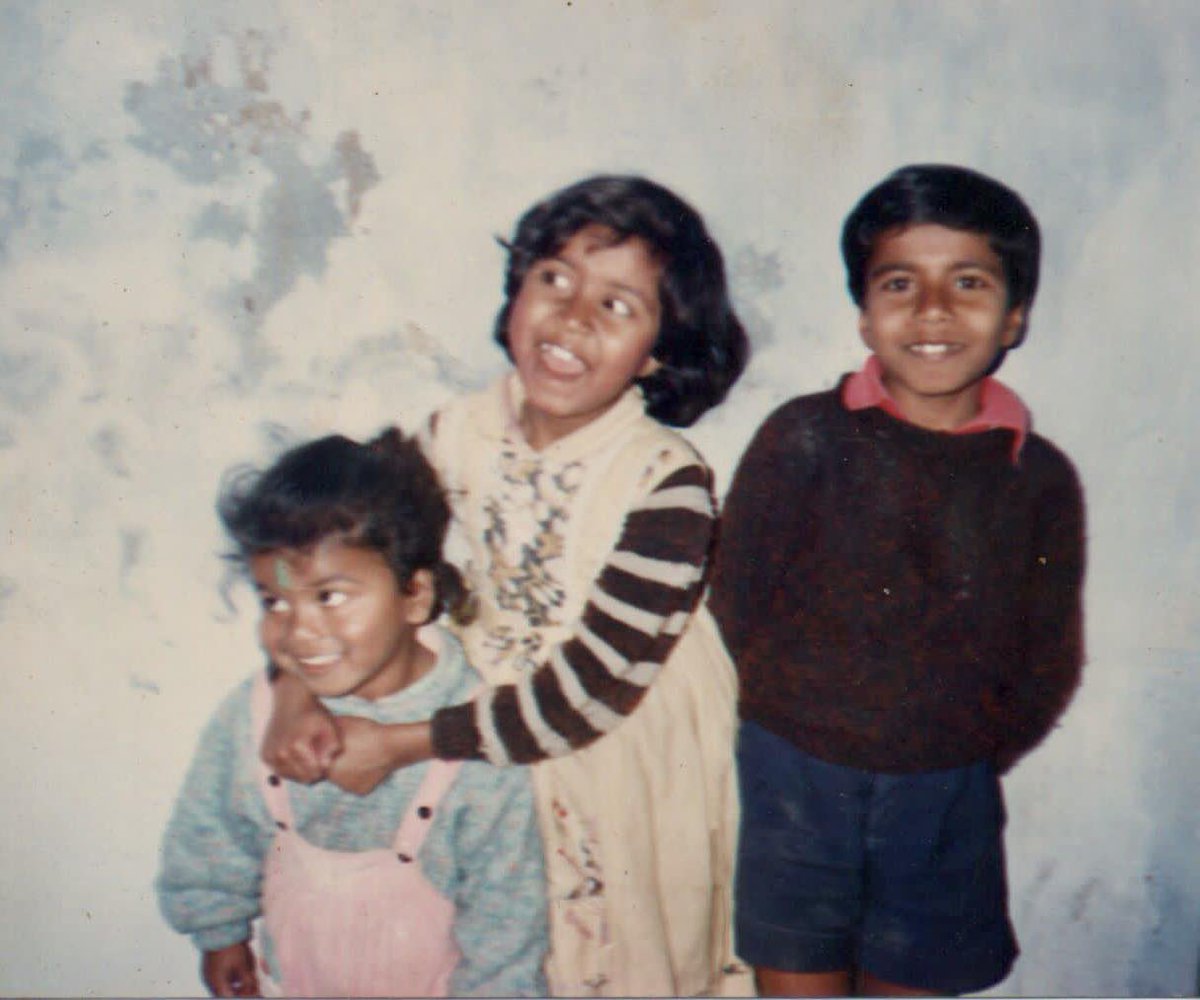
On this day in 2017, my elder brother passed away. That evening, I had to do two of the hardest things I’ve ever done in life. After 17 days of serving him in the hospital, I had to come home to break the news of his passing to my father and my sister and then choose a shirt for my brother’s last journey. “Yaaibh” as I lovingly called him, in less than 29 years on this planet, made everything from @NASA to @MIT look possible. He earned the respect of professors and presidents alike and possessed the rarest of minds, one that could launch anything into orbit, mentally or physically. Basant Vivek Sagar’s unparalleled life inspired millions of kids, including me.
Sharad Vivek Sagar tweet media
English
0
25
140
14.2K
vansh retweetledi
The Better India
The Better India@thebetterindia·
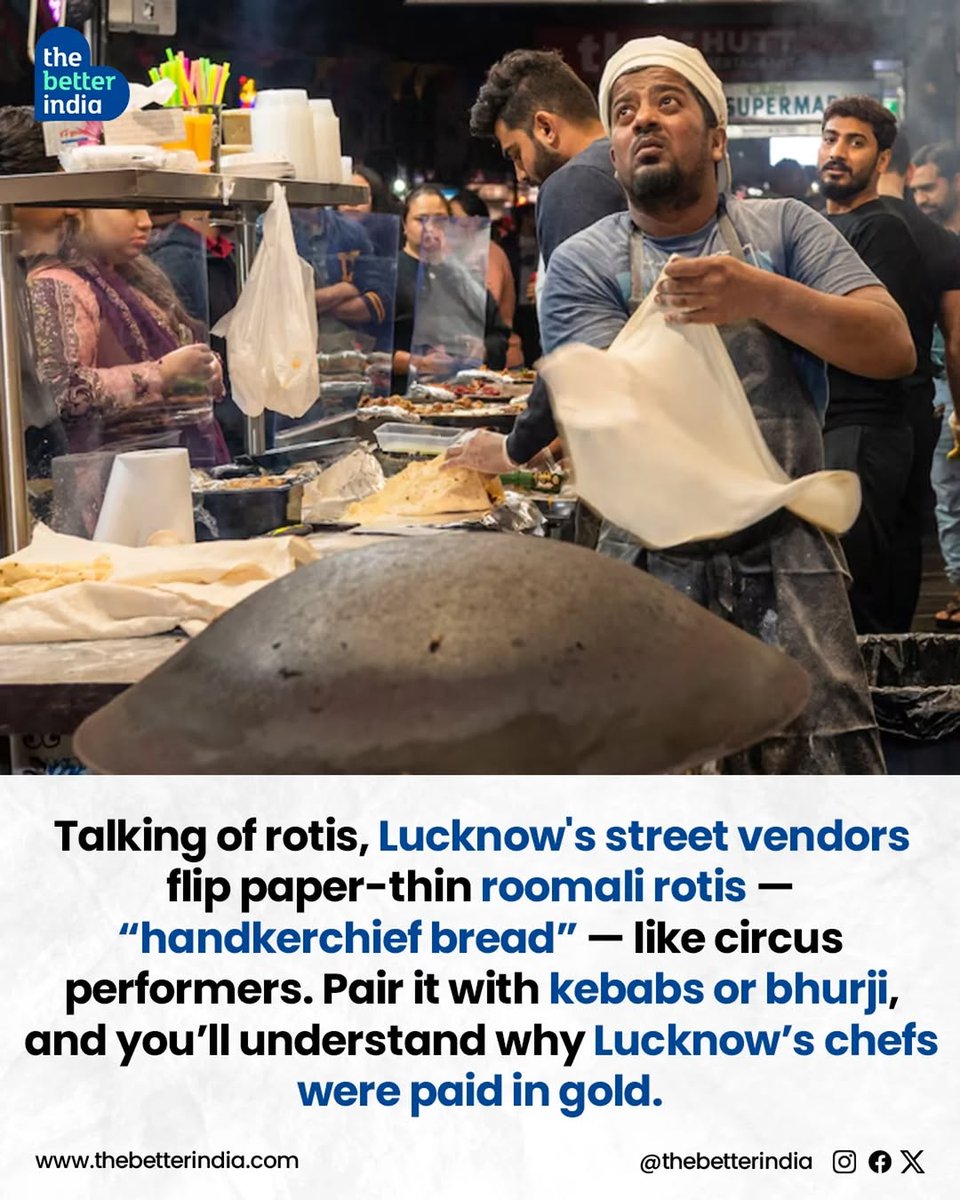
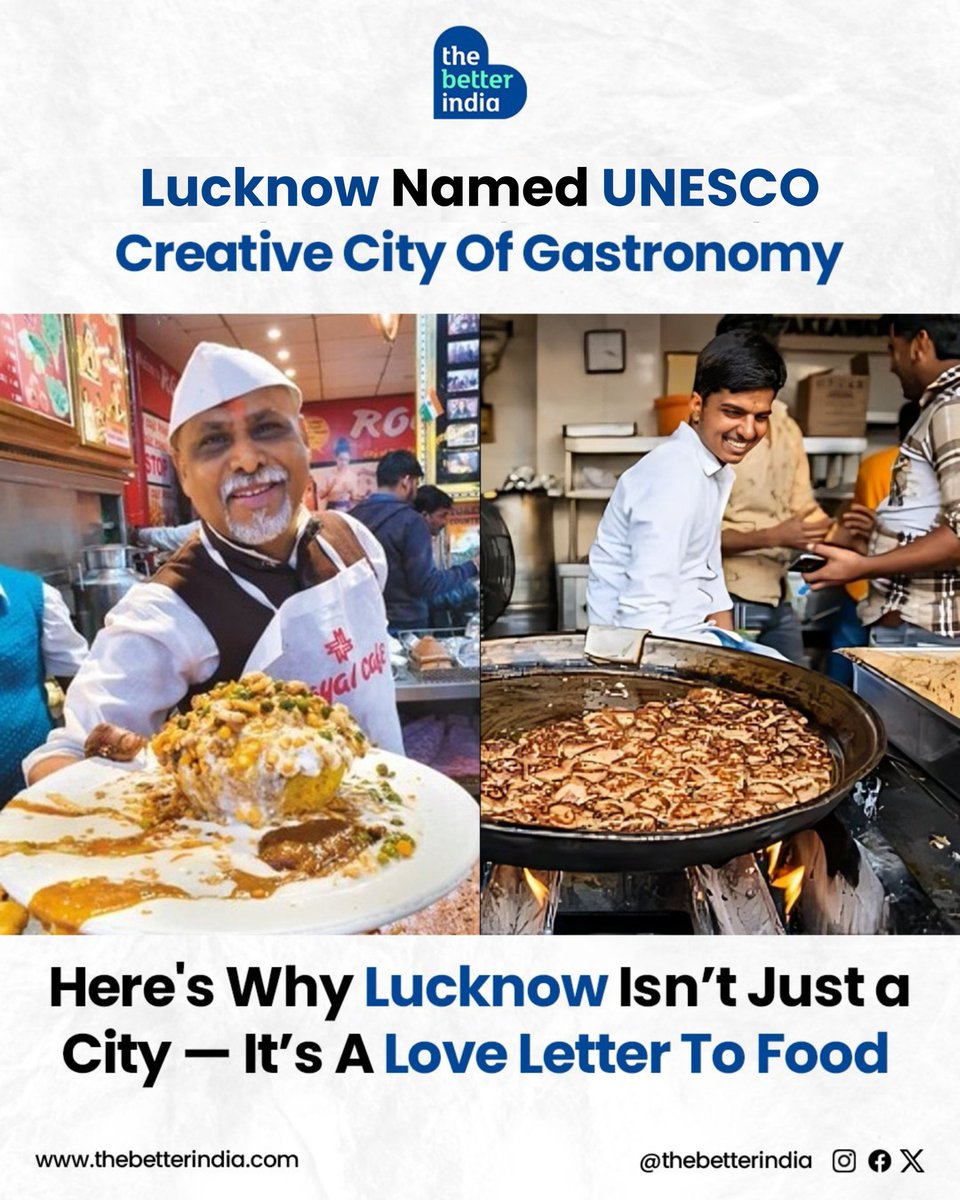
What if a single bite of kebab could transport you to a royal court? That’s the everyday magic of Lucknow, where food isn’t just cooked, it’s crafted with centuries of care, culture, and creativity. Now named as a UNESCO Creative City of Gastronomy, this honour goes far beyond biryanis and kebabs. From nihari that simmers round the clock… To edible chaat baskets, paper-thin rotis, and desserts that melt on your tongue, Lucknow is flavour, finesse, and folklore in every bite. Curious what makes the city so special? Scroll down to find out. >> #Lucknow #AwadhiCuisine #IndianGastronomy #UNESCOCreativeCity #IndianFood #TraditionalFood [UNESCO Creative City of Gastronomy, Lucknow, Awadhi cuisine, Dum Pukht cooking, Culinary heritage, Indian Food]
The Better India tweet media
English
2
8
59
3.5K
vansh retweetledi
Ajay Zaveri
Ajay Zaveri@EntropyNotebook·
Every time you open Google Maps, your phone is talking to at least four satellites orbiting 20,000 km above Earth. Each one beams down ultra-precise timestamps basically saying, “It was 12:00:00.000001 when I sent this.” Your phone measures how long each signal takes to arrive, then triangulates your exact position. Simple, right? Here’s the twist by Einstein. As those satellites are moving fast (about 14,000 km/h), time slows down for them, a prediction of special relativity. But because they’re also far from Earth’s gravity, time speeds up … a prediction of general relativity. Put the two effects together, and their onboard clocks tick about 38 microseconds faster per day than clocks on Earth. That sounds tiny but if engineers didn’t correct for it, your GPS location would drift by roughly 10 km every single day. So every step you take, every Uber you call, every “turn left” you follow… all depends on Einstein’s equations quietly running behind the scenes. Mind bending @imacuriosguy @curiouswavefn
English
179
2.1K
20.6K
1.2M
vansh retweetledi
vansh retweetledi
sushant sareen
sushant sareen@sushantsareen·
Without reforms nothing will happen. Without breaking the stifling hold of the bureaucracy that specialises in killing everything initiative unless some babu can exercise a vice like grip over everything, nothing will happen. Without creating an environment in which innovation, invention, industry is rewarded and trading is not, nothing will happen; without creating conditions in universities that attract the best and brightest who are given salaries according to their accomplishments and not salaries linked to what some IAS officer gets, nothing will happen; without delinking salaries of tech qualified people from that what the cab sec gets, nothing will happen; without ending the inspector raj, the tyranny of petty bureaucracy and obstructiveness of superior bureaucracy and rapaciousness of politicians and babus, nothing will happen; without creating decent living conditions - traffic, roads, basic civic amenities, law and order, rule of law, transparent governance and not petty potentates who lord over people because they passed a shitty exam and who cower before bully politicians, nothing will happen; without genuine reforms and not tinkering (this requires a change in mindset of povertarianism and socialism - GST on a car measured by length and on a mobike by engine capacity) nothing will happen; if we can’t run cities like Bangalore and Gurgaon, we can’t manage traffic, we allow anarchy on roads, how will you attract people back? Unless you can create an INDIAN DREAM to replace the AMERICAN DREAM, how will you get people back? We have been hearing so much but on ground nothing has changed except on the margins. And now let the troll brigade outrage over this tweet rather than pressuring the political and babu class to do the necessary reforms to MAKE INDIA GREAT AGAIN. And in the spirit of these time THANK YOU FOR YOUR ATTENTION TO THIS MATTER
Amitabh Kant@amitabhk87

Donald Trump’s 100,000 H-1B fee will choke U.S. innovation, and turbocharge India’s. By slamming the door on global talent, America pushes the next wave of labs, patents, innovation and startups to Bangalore and Hyderabad, Pune and Gurgaon . India’s finest Doctors, engineers, scientists, innovators have an opportunity to contribute to India’s growth & progress towards #ViksitBharat. America’s loss will be India’s gain.

English
423
1.3K
4.6K
337.6K
vansh retweetledi
Marky mark
Marky mark@M9Marky·
AI assisted content The downfall of textbooks ?the downfall of journals #esra2025
Marky mark tweet media
English
0
2
7
366
vansh retweetledi
Hari Menon
Hari Menon@harimenon_bb·
My FIL arrived from Kerala yesterday to spend Onam with us. The first thing he handed me was a list of some tests he needed done. Without thinking twice, I opened the @1mgOfficial app & booked it in under a minute. Now I’ve used the service often enough to know how it goes, but this time went a bit differently. Someone from the team noticed his name & realised they were running tests for the Metro Man of India. So instead of uploading the reports online, they decided to deliver them in person. Along with came a thoughtful note from their regional head... & tucked inside was another one handwritten by their team. Brought a smile to his face & reminded me why some brands stay on your list long after the transaction ends... 😇 @agarwal_gaurav @tandon_prashant #Tata1mg
Hari Menon tweet mediaHari Menon tweet mediaHari Menon tweet media
English
190
498
3.5K
176.5K