MV
1.4K posts

MV retweetledi
MV retweetledi

Nifty started falling from 3rd Feb 2026 near 26,300 — trapping late bulls(Check Nifty Daily Chart Below)
War headlines came end of February,but price had already started correcting earlier
Market always discounts bad news BEFORE it becomes headlines
Similarly, remember this:Bottom will likely form 1 month BEFORE good news on war & macro front
Not when fear ends But when pessimism and disbelief are at peak and retailers will fear to press BUY button
According to Technical Analysis and psychology price moves first,News follows later and when good news comes price has already gone up 40-50%
#psychology #technicalanalysis #iranuswar

English
MV retweetledi

Sensex PE at Lowest Level Since May 2020 The Sensex Price-to-Earnings (PE) ratio has fallen to its lowest point since May 2020.Right now, the Sensex PE stands at around 20.2. This is the cheapest valuation in nearly 6 years. In May 2020, it was even lower at about 19.56 during the tough COVID times.
English
MV retweetledi

MV retweetledi
MV retweetledi

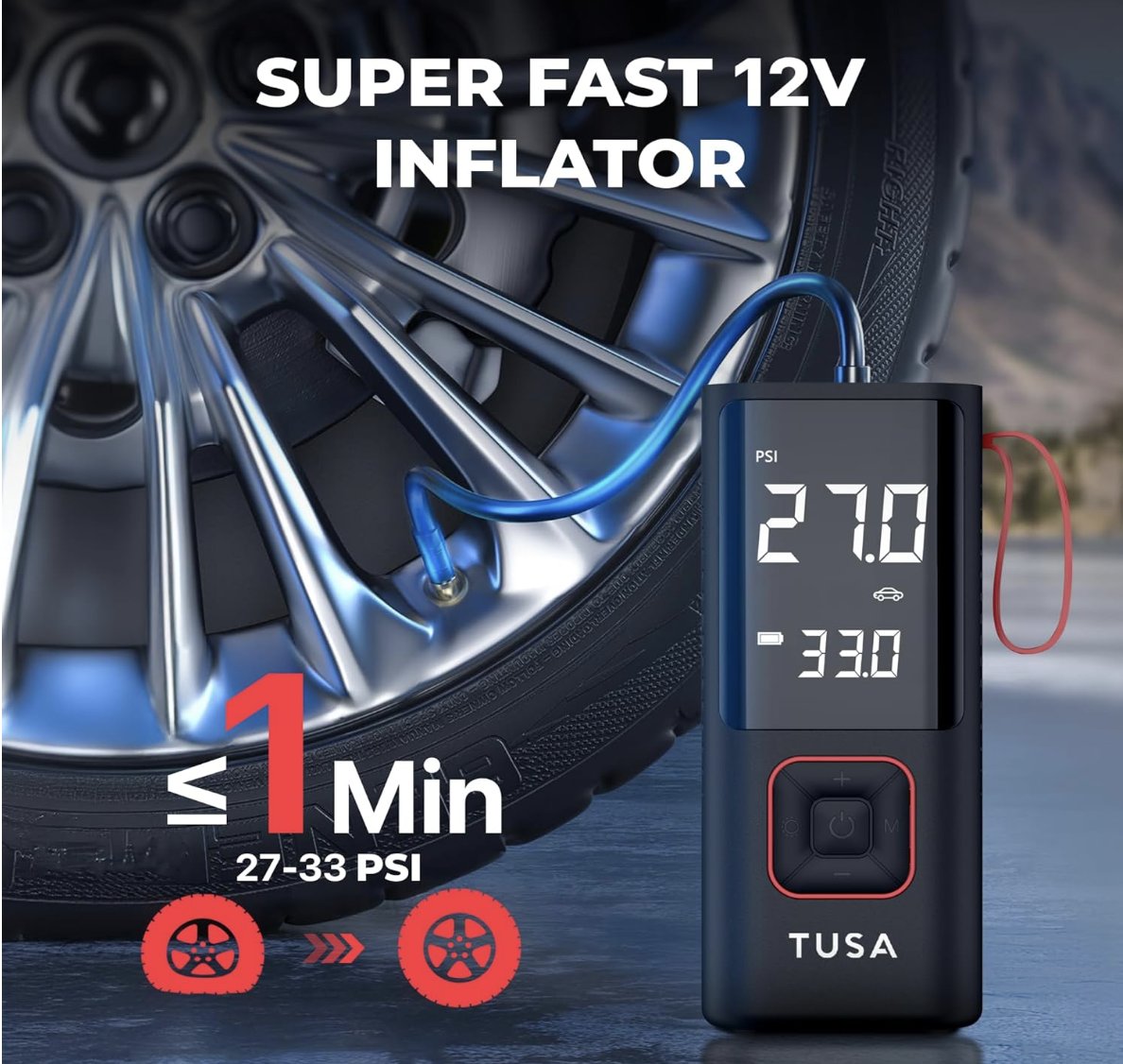
A tyre inflator is a small tool, but extremely useful for every car owner.
Very useful during emergencies, sudden low tyre pressure, or before long drives.
Before buying, here's what to look for.
- PSI at least 120 for car tyres
- Auto cut-off to stop at set pressure
- Digital display for better accuracy
- Cable length should reach all tyres
- Good battery capacity
There are 3 types and that's where confusion starts:
1. 12V plug inflator
- Runs from car socket
- Reliable and no charging needed
- Slightly slower, comes with a wire
2. Battery-powered inflator
- Cordless and easy to use anywhere
- Very convenient for quick use
- Needs to be charged regularly
3. Dual inflator (12V + battery)
- Works both in car & cordless mode
- Gives flexibility and backup
- Slightly more expensive
Pick the one that fits your driving style. Personally, I prefer the 12V plug inflator.
Sharing the link of my choice below 👇

English
MV retweetledi

Everyone is chasing the next multibagger…
But ignoring the backbone of India’s growth.
India runs on loans.
Car? Loan.
House? Loan.
Business? Loan.
That’s why the lending industry is growing ~30% YoY
And globally, it can become a $7 TRILLION market by 2032.
Now here’s something interesting I found 👇
While screening, one company stood out - Capri Global Capital
• Housing loans growing ~40%
• Focus on retail + secured (collateral-backed) loans
• ~100% secured portfolio = lower risk
• 1300+ branches across India
• Strong push on Tech + AI for better lending decisions
And their target?
👉 ₹55,000 Cr AUM by 2028
Simple logic:
If India grows → Lending grows faster → NBFCs quietly compound.
This is where smart money looks before the crowd arrives.
Do your own research.

English
MV retweetledi

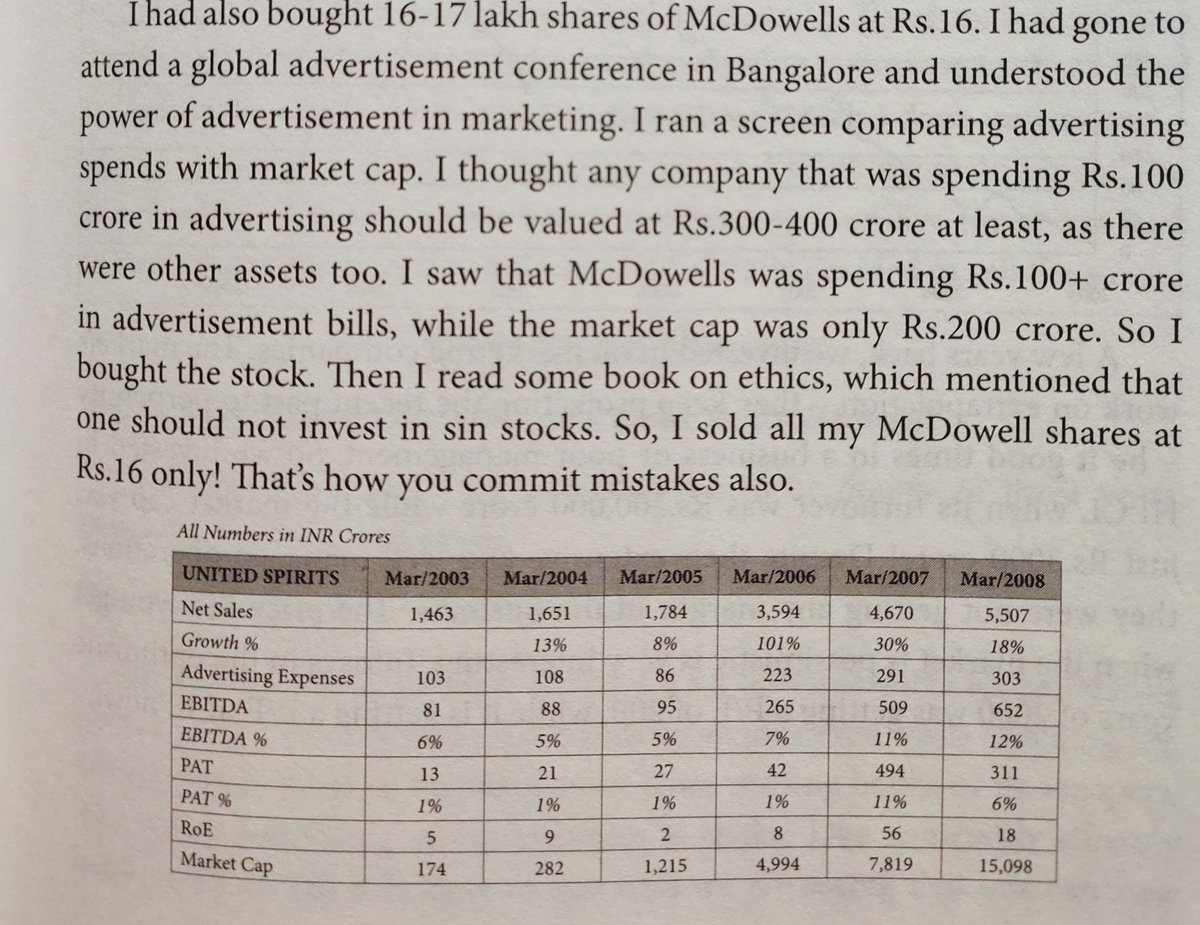
Ramdeo Agarwal’s Rs. 1,300 Crore mistake in United Spirits.
> Ramdeo invested Rs. 2 crore 72 lakhs in United Spirits (McDowells) in 2002-03. He bought 17 lakh shares for Rs. 16 each.
> The company was valued at Rs. 200 crores. He got 1.36% of the entire company at that price.
> United Spirits was spending Rs. 100 crores yearly only on advertising. Hence, it was valued cheaply.
> But in 2003 he read about Warren Buffett’s principles on ethics against investing in ‘sin industries’ like Alcohol and Cigarettes business.
> He sold the entire stake at same price he had bought.
> Today United Spirits is trading at Rs. 96,000 crore market cap. His 1.36% stake in United Spirits would’ve been worth Rs. 1,300 crores.
I don’t think Mr. Ramdeo would regret this decision ever, but this example shows how to balance ethical principles with long term thinking. 👏🏻


English
MV retweetledi
MV retweetledi
MV retweetledi

Nikhil Kamath is becoming more and more active in secondary markets too. 👏👏
Hazel Infra, a promoter entity of #Swan Defence and Heavy Industries (SDHI), sold a 5.01% stake (roughly 26.39 lakh shares) through an Offer for Sale (OFS) completed on March 19, 2026, for a total value of approximately ₹501 crore.
The stake was sold at a floor price of ₹1,900 per share to comply with minimum public shareholding norms.

Key details:
•Purchasers: @nikhilkamathcio and #Quant MF reportedly bought nearly half of the shares offered in the sale.
•Resulting Holding: Following the sale, Hazel Infra's holding reduced to 89.90%.
•Context: The sale followed a 2,811% rally in the stock price over the previous year.
English
MV retweetledi
MV retweetledi

MV retweetledi

GOLD IS FALLING.
HERE’S THE MECHANISM MOST PEOPLE MISS.
Gold just hit $3,000+ in early 2025 then pulled back sharply. Everyone blamed geopolitics. Almost nobody talked about the dollar.
Gold is priced in US dollars. When the dollar strengthens, every other currency needs more of itself to buy the same ounce.
That’s not a headline event. It’s a slow, silent demand killer that plays out across 50+ emerging market economies simultaneously.
Here’s how it actually works in practice.
When the rupee moves from ₹80 to ₹85 per dollar, a $2,000 ounce of gold jumps from ₹1,60,000 to ₹1,70,000 a 6.25% price increase for Indian buyers with zero movement in the international price. India is the world’s second-largest gold consumer, importing roughly 700–800 tonnes per year. When local prices spike, demand contracts fast.
The same math applies in Turkey, Egypt, Indonesia, and across Southeast Asia. The dollar moved. The price didn’t. The demand did.
Now layer in bond yields.
Gold yields nothing.
No coupon, no dividend, no cash flow. When US 10-year Treasuries were sitting at 1.5% in 2021, that trade-off was tolerable. When they crossed 4.5–5% in 2023–2024, holding gold became a direct opportunity cost you were giving up guaranteed, risk-free income to sit in a metal that pays zero. Institutional money doesn’t do that quietly. It rotates.
And when it rotates into Treasuries, it first needs dollars which pushes the DXY higher which raises gold prices in every local currency which kills retail demand across emerging markets which weakens the price further.
This is the feedback loop almost no one draws out in full:
Higher yields → dollar strengthens → gold gets expensive locally → demand falls → price drops → repeat.
It’s why gold collapsed from $1,900 to $1,600 between 2022 and late 2022 even as the Russia-Ukraine war was actively running. Geopolitical fear was real. But real yields were rising faster.
This is also why gold went from $250 in 2001 to $1,900 in 2011 a decade of low real yields, a weakening dollar, and expanding global liquidity. And why it surged again post-2020 when the Fed took rates to zero and printed $4+ trillion.
Gold isn’t a fear trade. It’s a liquidity trade.
Geopolitical tension can create a short-term spike, but it cannot sustain a bull run if yields are climbing and the dollar is strong. Those two forces will win every time over a 6–12 month horizon.
The only framework you need:
Strong dollar + High real yields = Double headwind.
Weak dollar + Low real yields = Double tailwind.
So stop watching the war map.
Start watching three numbers:
the DXY,
the 10-year Treasury yield,
and the TIPS-implied real yield.
Those three tell you where gold is going before the headline does.

English
MV retweetledi

“Soon It’ll Be Time to Panic. About Sulphur, Not Gas.” by Sanjay Dangi - Authum Investment & Infrastructure
…ay-dangi-authum-investment.medium.com/soon-itll-be-t…

English
MV retweetledi
MV retweetledi