Lora Baje
45.8K posts

Lora Baje
@loraabaje
a Muggle-born | UP School of Economics 2016 | Grad student at UP School of Stat | Tweets are mine alone and don't reflect the views of any of my affiliations
Katılım Haziran 2010
419 Takip Edilen1.2K Takipçiler
Lora Baje retweetledi

People are marching through the capital Manila over rising fuel prices as the country suffers from a critically low energy supply.
The crisis has been declared a national emergency.
@HelenAnnSmith0 reports from the ground
English
Lora Baje retweetledi

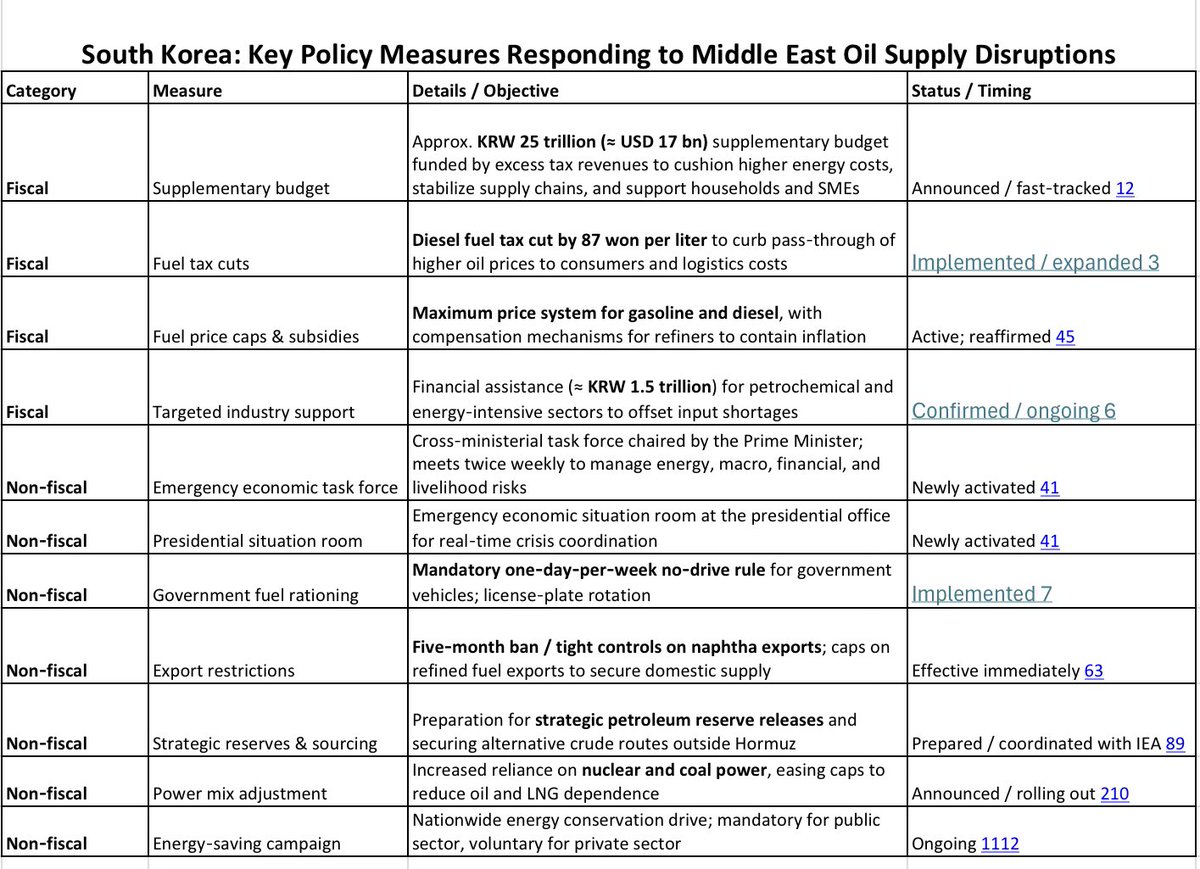
A South Korean plastic film factory has cut production to 20–30% of capacity due to raw material shortages caused by the Iran war and disruptions in global energy markets reut.rs/4bLYXgV
English
Lora Baje retweetledi

Breaking: The Pentagon is weighing sending an additional 10,000 ground troops to the Middle East on.wsj.com/4uVjNDu
English
Lora Baje retweetledi

Travelers hoping for a drop in long-haul airfares are in for a brutal reality check. Ticket prices on major routes connecting Asia and Europe have surged up to 560% this month, and are likely to stay elevated as war-related disruptions ripple through the Persian Gulf, according to Alton Aviation Consultancy: bloomberg.com/news/articles/…

English

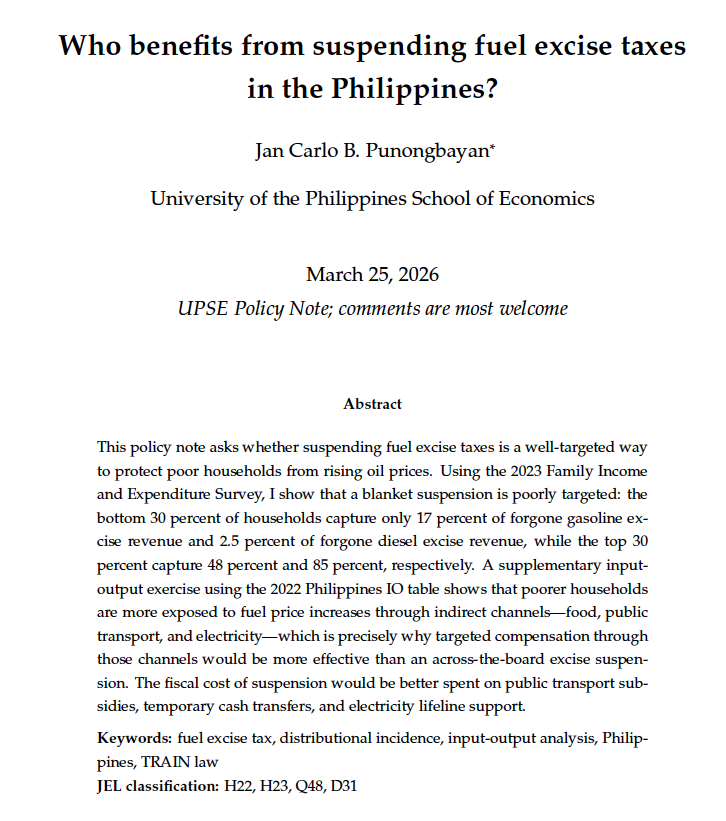
@jcpunongbayan Hi JC! Do you have estimates on impact on inflation (headline/core and bottom 30%) after reducing excise tax?
English
Lora Baje retweetledi

@jcpunongbayan Hi JC! Would like to ask if there will be an attempt to extend analysis on imports (value and/or volume)?
Although there is an FX pass through naman on your paper but there could be implications din kasi on trade deficit/CA deficit hehe
English
Lora Baje retweetledi

BREAKING: President Ferdinand Marcos Jr. declares state of national energy emergency and authorizes a unified package for livelihoods, industry, food and transport as the pump prices in the Philippines continue to spike. | via @_katrinadomingo

English

Lora Baje retweetledi


We are at Day 20 of the War and let's count the costs for Asia given that oil and more worryingly gas supply is shocked. In Asia, Pakistan, India, Singapore Taiwan, Thailand, and South Korea are most exposed to Middle East LNG. Even not exposed countries like Japan that imports mostly from Australia, will face a price shock.
Asia's heavy reliance on Middle Eastern oil and gas makes it particularly vulnerable to the ongoing supply disruptions that have driven up prices for energy. Beyond finding shocked supply, every Asian nation, except for Australia, Malaysia, and Indonesia, is a net importer of energy, leading to immediate pressure on current accounts due to increased costs. A prolonged Middle East conflict impacts Asia through higher energy costs, disrupted food supply due to shortages of fertilizer inputs, impacted trade routes, reduced remittances, and tighter financial conditions.
Thailand, Singapore, South Korea, and Taiwan are most exposed to energy cost increases, while Malaysia and Australia have their gas surpluses to offset net oil deficit. The conflict also threatens global fertilizer trade, with implications for food prices, impacting nations like the Philippines the most, as it is a net importer of both food and energy. Even food surplus countries like Thailand and India will be impacted via their production due to higher fertilizer costs. The Philippines and India are most exposed to remittance income from the Middle East. Disruptions to air transport, exacerbated by soaring jet fuel prices, could negatively impact tourism-dependent economies in Southeast Asia such as Thailand, Vietnam and Malaysia.
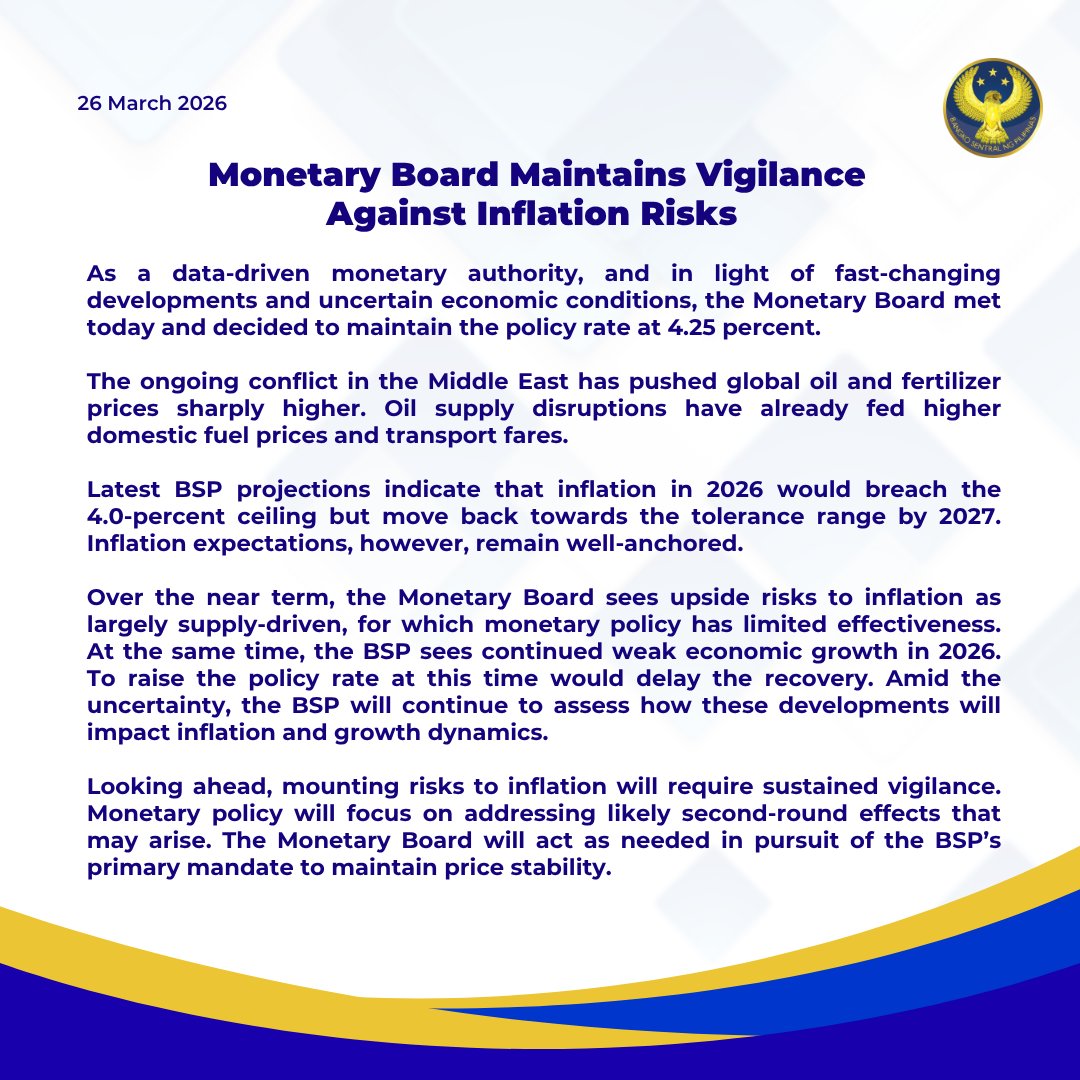
Worse terms of trade, food costs, and disrupted global trade raise the specter of stagflation. But the space to support growth has narrowed for central banks in the region as inflationary pressures rise on weakening FX and higher import costs. Transportation and food weights are large in EM Asia CPI baskets, with Thailand has more than 70% of the weight for food and transportation while others like Vietnam, the Philippines, India, Taiwan and China have more than 50%. The good news is that inflation is low so there is space to absorb shocks. Protectionist policies, such as export restrictions on fuel, are emerging, which could lead to increased imported inflation for vulnerable nations. Fuel subsidies will be costlier as the duration of the conflict rises, with price hikes likely.
Current account deficit countries are vulnerable to the above trade and income shocks, especially as investors become more risk averse. We identify the Philippines as the most susceptible to sustained shocks, with Thailand and Korea also facing significant GDP impacts due to their heavy reliance on imported energy, despite their current account surpluses. In EM Asia, Malaysia stands out as most immune even if it is still negatively affected.
English
Lora Baje retweetledi

Good morning Asia,
Brent rising but also watch products as we consume products not crude. For Asia, Qatari gas is very key & for some like Pakistan, that is 100% of supply. For others, still a big challenge, such as India.
Even if you are not shocked by supply, say Japan that gets gas from Australia mostly, price will be a shock.
So net importer of energy will be hit. Yes, that includes coal because people will substitute and push up demand of coal when gas supply is down.
Asia is in the eye of the storm. Buckle up.
English
Lora Baje retweetledi

VIDEO EXPLAINER: The most important map of the Third Gulf War — the oilfields, the Strait of Hormuz, and the bypass pipelines.
Plus a look at how, two weeks into the war, Iran is still exporting lots of its oil, and most of it, via the strait.
@opinion
English
Lora Baje retweetledi

Since launching the US and Israeli war against Iran, Donald Trump’s stated objectives have kept shifting. And Iran’s leaders remain standing. John Reed explains the five predictions analysts have made about how the conflict will unfold. ft.trib.al/EKVLRK0
English