Lucas A₿i.🧉🍷🥩

23.9K posts

Lucas A₿i.🧉🍷🥩 banner
Lucas A₿i.🧉🍷🥩

Lucas A₿i.🧉🍷🥩

@lucasabi

Wine Entrepreneur. Serial crash test dummy. Trail runner. Genetically migrant, yet 100% Mendocino. Carthago delenda est.

Reppublica di Cospaia Katılım Aralık 2009
2.5K Takip Edilen1.3K Takipçiler
Lucas A₿i.🧉🍷🥩
Memoria.
Orlando Avendaño@OrlvndoA

#AHORA | Acaba de fallecer la señora Carmen Navas, la madre de Víctor Quero. Navas estuvo los últimos meses de su vida buscando a su hijo, Víctor, quien había sido asesinado en julio del año pasado. Navas apenas se pudo despedir hace unos días, cuando el régimen le reconoció el crimen. Alcanzó a enterrarlo y estar en su misa.

English
0
0
0
23
Lucas A₿i.🧉🍷🥩 retweetledi
Freedomain - with Stefan Molyneux, MA
If you don't understand that you are just tax livestock to your government, you don't understand the world and your place in it.
English
78
641
3.4K
31.1K
Lucas A₿i.🧉🍷🥩 retweetledi
Pequeño Alex.
Pequeño Alex.@YugaAlejandro·
Se cumple 50 años de esta fotografía. Jocelyne Khoueiry, con tan solo 20 años de edad, junto a otras seis mujeres, todas pertenecientes a la Falange Libanesa Cristiana, defendieron un edificio en la Plaza de los Mártires, Beirut, frente al asalto de 300 islamistas. Feminismo.
Pequeño Alex. tweet media
Español
238
6K
21.6K
226.2K
Lucas A₿i.🧉🍷🥩
🥰🥰🥰
BSAT Properties@BSAT_Properties

I was on a train in Tokyo. We stopped between stations. Announcement in Japanese, then in English: "We apologize for the delay. We will resume shortly." The delay was maybe 3 minutes. Not a big deal. When the train started moving again, another announcement: "We sincerely apologize for the delay. We were stopped for 3 minutes and 20 seconds. This is unacceptable. Thank you for your patience." Three minutes and twenty seconds. They measured it exactly. And called it unacceptable. When I got off at my stop, there were station staff on the platform bowing and handing out delay certificates. I took one out of curiosity. It was an official document stating that the train had been delayed by 3 minutes and 20 seconds, signed and stamped. The staff member said in English "for your employer. So they know the delay was not your fault." I said I'm a tourist, I don't need it. He looked confused. "But the delay affected you. You deserve an apology." Three minutes. They were treating a three-minute delay like a major incident. Later I mentioned this to a Japanese friend. They said "oh yes, delay certificates are normal. Trains are supposed to be exactly on time. If they are late, they must apologize." I said three minutes isn't late, it's nothing. My friend said "in Japan, three minutes is late. On time means on time. Not approximately on time." They said the train company probably investigated why there was a 3-minute delay. "They will find the cause and fix it so it doesn't happen again." I kept the certificate. It's framed in my apartment now. A reminder that somewhere in the world, people care about three minutes. © 6IX.

ART
1
0
0
41
Lucas A₿i.🧉🍷🥩 retweetledi
Peter Clack
Peter Clack@PeterDClack·
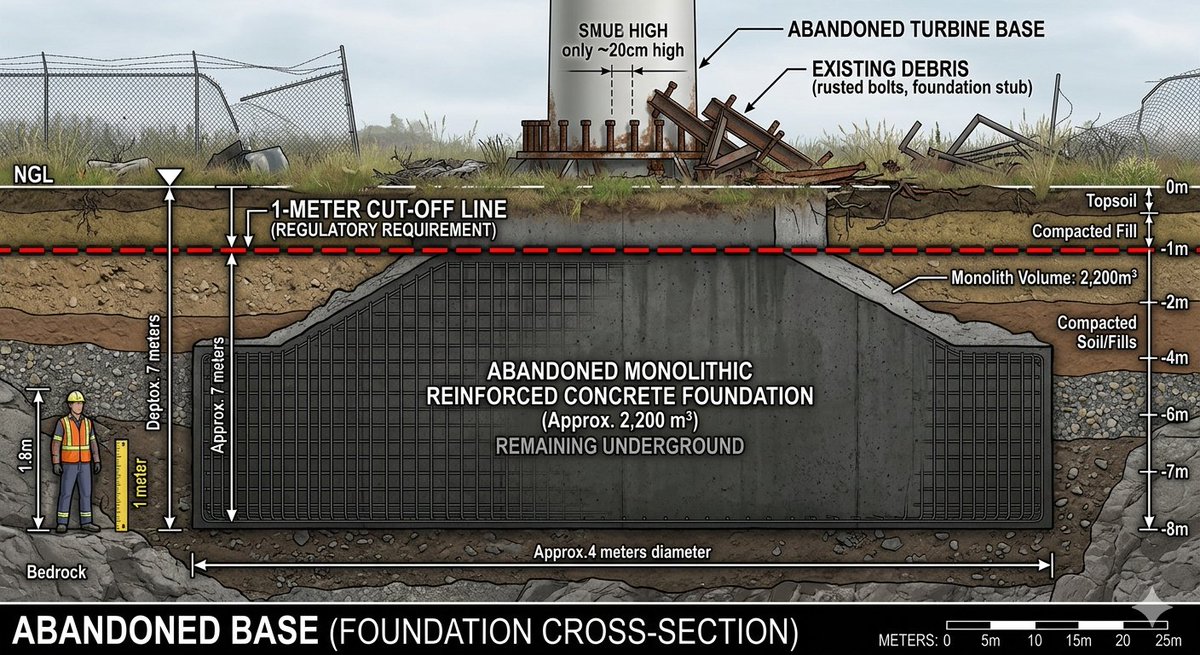
Tens of thousands of slabs of reinforced concrete weighing up to 1,000 tonnes are being abandoned in the ground as turbines hit the end of their working lives. The reinforced concrete base of a typical 2-3 MW wind turbine can weigh anywhere from 400 to 800 tonnes. But the concrete foundations of even bigger turbines (5 MW+) can exceed 1,000 tonnes. As lifespans end these massive concrete monoliths are abandoned where they lie. This is an issue of significant contention. In many jurisdictions, including Australia and the US, decommissioning regulations only require the operator to ensure the concrete foundation stays at a depth of 1 meter (approx. 3.3 feet) below the surface. The remaining 3-plus metres of these steel-reinforced concrete fossils are typically left in the ground indefinitely. Over the decades, they can interfere with deep-soil hydrology or remain as a permanent industrial remnant in rural landscapes. Contracts usually say operators are responsible for decommissioning. But the financial reality is complex. Bank guarantees or bonds set aside for removal (around €50,000 or $100,000 per turbine) are frequently far too low. Real-world estimates for total removal and site restoration can exceed $200,000 to $400,000 per unit. If the cost of total removal ($200k–$400k) exceeds the bond set aside by the operator ($50k–$100k), there is a strong financial incentive for companies to declare bankruptcy . Or they sell the asset to a shell company as the turbine nears its end-of-life, leaving a landowner with the bill. While the steel towers are more easily recyclable, their triple fibreglass blades are notoriously difficult to process and often end up in turbines blade graveyards. The theoretical benefits from renewable technology are meaningless compared with the staggering environmental costs.
Peter Clack tweet media
English
386
3.3K
6.3K
193.2K
Lucas A₿i.🧉🍷🥩 retweetledi
Peter Clack
Peter Clack@PeterDClack·
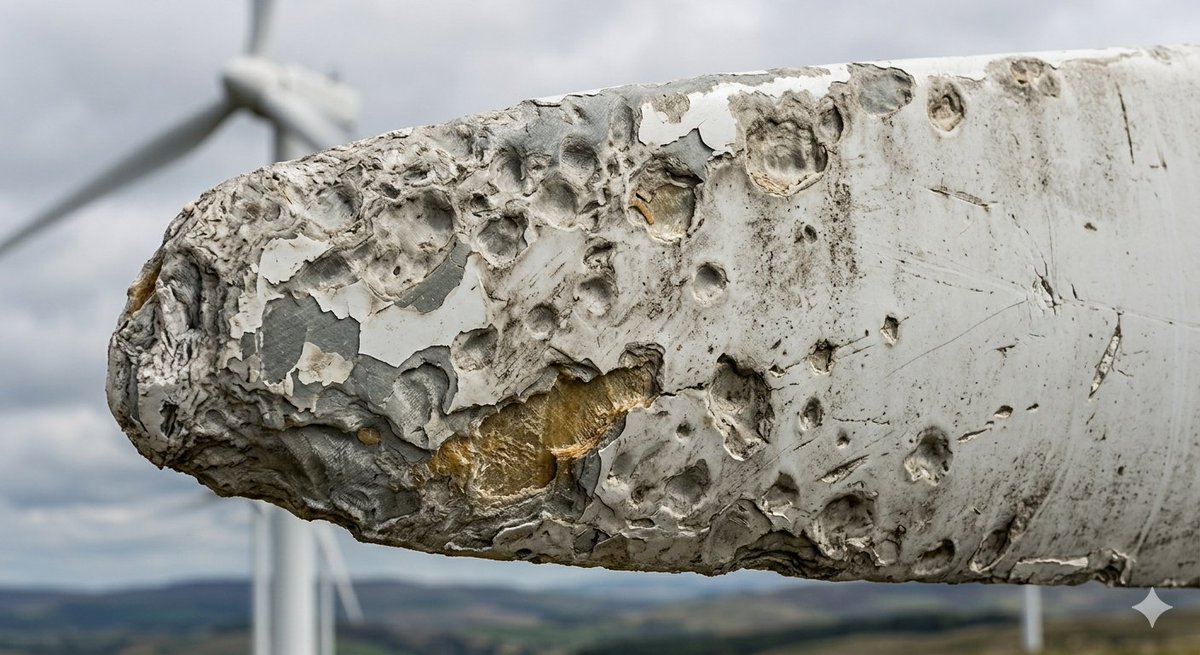
Many of the onshore wind farms along the coasts of the UK and Denmark are falling apart after only 10 years. A study reveals that energy contributions from wind farms begin to fall sharply after only 10 to 15 years, leaving the skeletons of steel and plastic blowing in the wind. The economic analysis reveals the lifespan of an onshore turbine is not 20 to 25 years, as stated by the wind industry itself, supported by the UK Government. This peer reviewed British study reveals that the energy production of onshore wind farms falls substantially as they get older, due to wear and tear. Energy and environmental economist, Professor Gordon Hughes (University of Edinburgh), carried out the statistical analysis of wind farm performance data in the UK and Denmark. He concluded that load factors, like electricity generated as a percentage of capacity, declined a lot faster than expected, suggesting a baseline 10 to 15 year lifespan. This is when the technical life of most turbines crunch to halt, and become unprofitable to continue. Rising maintenance costs makes them uneconomical. The study found the average UK wind farm's ability to meet electricity demand had fallen by a third after around 10 years, leading to a conclusion that many are fully uneconomic to run after only 12 years. While the wind industry generally forecasts a 25-year lifespan, the data reveals a different reality about the viability of keeping them spinning so long. Many companies now 'repower' (replace old turbines with new ones) long before the 25-year target to maximise subsidies and output. This often ends the lifespan of the original hardware much sooner. The wind farm study is published by the 'Renewable Energy Foundation on the Performance of Wind Farms in the United Kingdom and Denmark, 2012'.
Peter Clack tweet media
English
561
4.7K
9.1K
628K
Lucas A₿i.🧉🍷🥩 retweetledi
Jordan Taylor
Jordan Taylor@Jordan_W_Taylor·
When I was a child our teacher taught us about risk, money and economics in the most interesting way possible: She made us run a pretend farm, as a competition. It was genius, because I still remember it three decades later, which I wouldn't have otherwise. It went like this: Every student had a ‘farm’ on a little piece of paper, with four fields. Every year you had to decide what crops to plant in what fields, and buy them with any available money. Some crops were like wheat; cheap, boring and low-yielding, but dependable. Others were like peas; expensive, super high-yielding if things went right, but unreliable. Get the wrong mix of sunshine and moisture for peas and you'd make a huge loss instead of making bank. We all competed for the most money over a series of ‘years’ and on each year the teacher would roll dice to determine if the weather was hot or cold, rainy or sunny. There were four combinations of weather for your four fields and up to four crops. There was all to play for, and you'd be built-up or broken by the roll of the dice. Some kids played it safe with lots of wheat and no risk. Others bet the farm on peas, peas, peas! Others hedged between sunny crops and rainy crops. With each round, a few of us exited the game and went bankrupt. The eventual winner had taken a lot of risk, but had hedged just a little bit and rode out the bad years. He got lucky, but that's what the game was all about. The teacher could have taught us by lecturing us. She could have gassed on about risk management and economics and market economics and blah, blah, blah… and been ignored by a bunch of teenagers. Instead she made it fun, she made it a competition! And after that short period, a classroom of kids walked out with heads full of strategy, debating how they'd run the farm, who got the most money and how they'd play differently if they did it again. In a little classroom in a Northern English secondary school, a bunch of adolescents had been introduced to capitalism and loved every minute of it! I forgot almost everything else from those years, but that lesson sticks with me. Good teachers really matter. And a little competition goes a long way.
Jordan Taylor tweet media
English
123
907
4.4K
79.2K
Lucas A₿i.🧉🍷🥩 retweetledi
𝗖𝘂𝗯𝗮 𝗰𝗼𝗻 𝗛 𝗱𝗲 𝗢𝗿𝘁𝗼𝗴𝗿𝗮𝗳𝗶́𝗮
Teorema de la Imposibilidad de Arrow En las aulas silenciosas de la Universidad de Stanford a principios de los años 50, un joven economista llamado Kenneth Arrow, recién doctorado y con la sombra de la Segunda Guerra Mundial aún fresca, se enfrentaba a una pregunta que parecía inocente pero que resultó demoledora: ¿es posible agregar las preferencias de individuos libres en una «voluntad colectiva» racional, coherente y justa? Lo que descubrió no fue una mera dificultad técnica, sino una imposibilidad matemática tan rotunda como la Segunda Ley de la Termodinámica. En su libro Social Choice and Individual Values (1951), Arrow demostró que no existe ningún sistema de votación o agregación de preferencias que cumpla simultáneamente estas condiciones mínimas de decencia democrática: - dominio ilimitado (cualquier conjunto de preferencias individuales es posible), - no dictadura (ningún individuo impone su voluntad), - eficiencia de Pareto (si todos prefieren A a B, la sociedad debe preferir A a B), - independencia de alternativas irrelevantes (la preferencia entre A y B no debe depender de la presencia de C). El resultado es devastador. Cualquier método genera ciclos (A vence a B, B vence a C, C vence a A), manipulabilidad descarada o arbitrariedad pura. La «voluntad del pueblo» no es solo difícil de descubrir. Es matemáticamente imposible de construir sin violar alguna de estas condiciones básicas. «La democracia perfecta es un espejismo algebraico». Este teorema no es un capricho de economista liberal. Ha sido confirmado, extendido y reforzado por generaciones de matemáticos y científicos sociales. Amartya Sen, el propio Arrow y otros lo refinaron. Es una de las pocas verdades irrefutables de la teoría de la elección social. Y, como toda gran verdad incómoda, la izquierda la ha ignorado con el fervor de un sacerdote que niega la evolución. Porque si algo revela el teorema de Arrow con claridad meridiana es la imposibilidad ontológica de la «democracia socialista», de la planificación «participativa», de las asambleas «horizontales» y de toda esa retórica de «la voluntad popular encarnada en el plan racional». Los bolcheviques prometieron soviets obreros, consejos democráticos donde el pueblo decidiría. Terminaron con Stalin y el Buro Político decidiendo por decreto quién vivía, quién moría y cuántos quintales de trigo debía producir cada koljós. ¿Por qué? Porque cuando agregas millones de preferencias reales(el campesino que quiere sembrar lo que le dé más beneficio, el obrero que prefiere trabajar menos, el intelectual que quiere libertad de expresión) surge el ciclo, la contradicción, el caos. Alguien tiene que romperlo. Siempre. Y ese alguien nunca es «el pueblo». Es la élite del partido, el burócrata con pistola o el activista con bocina y agenda. La izquierda moderna repite el mismo teatro trágico con menos honestidad y más postureo. Hablan de «asambleas horizontales», «democracia deliberativa», «políticas identitarias participativas». En la práctica, lo que logran son minorías ultraorganizadas (feministas radicales, activistas trans, ecologistas de élite) que capturan el proceso porque son los únicos que asisten a las reuniones eternas. El resto, la gente normal, trabaja. El resultado son ciclos interminables de purgas, cancelaciones y «consensos» que nadie pidió. La «voluntad del pueblo» se convierte en la voluntad del que más grita, del que mejor maneja la culpa y del que controla el micrófono. Exactamente lo que Arrow predijo: o dictadura oculta o incoherencia total. Venezuela, Nicaragua, Cuba, el «socialismo del siglo XXI». Todos prometieron «poder popular». Todos terminaron con un pequeño grupo de burócratas y militares decidiendo qué se produce, qué se calla y quién come. La planificación central no es más que el intento vano de imponer transitividad artificial sobre un sistema cuya naturaleza es intransitiva. Cuando falla, y siempre falla, ya lo sabemos, la respuesta socialista no es reconocer la imposibilidad matemática, sino aumentar la coerción: más propaganda, más censura, más presos políticos, más «reeducación». La represión no es un error; es el correctivo termodinámico que exige el sistema para simular orden donde solo hay contradicción. La izquierda cultural actual, con su obsesión por la «justicia social» y la «equidad», choca una y otra vez contra el mismo muro. Quieren resultados predeterminados (cuotas, diversidad obligatoria, redistribución forzosa) pero las preferencias individuales no se dejan alinear. Entonces inventan un dictador suave: el Estado regulador, las redes sociales censoras, las universidades ideologizadas, el «consenso científico» fabricado. Siempre alguien impone el orden. Siempre Arrow tiene razón. «La voluntad del pueblo» es, pues, una ficción consoladora para justificar el poder de unos pocos sobre todos los demás. El teorema de Arrow no es antidemocrático; es antiutópico. Nos recuerda con frialdad matemática lo que la experiencia del siglo XX ya gritó con ríos de sangre, que quien promete resolver la imposibilidad lógica con más Estado, más planificación y más «participación», solo está anunciando quién será el próximo dictador. Y siempre, invariablemente, termina siendo el mismo tipo de sujeto: el que más odia que la gente decida por sí misma.
𝗖𝘂𝗯𝗮 𝗰𝗼𝗻 𝗛 𝗱𝗲 𝗢𝗿𝘁𝗼𝗴𝗿𝗮𝗳𝗶́𝗮 tweet media
Español
90
788
1.8K
94.4K
Lucas A₿i.🧉🍷🥩 retweetledi
José Luis #360
José Luis #360@jlsantana·
No son 38, son 40 mil dólares. Y esto es no es “bajo” cuando considerás que en universidades nacionales tenés unos 90.000 graduados por año, esos son arriba de 3.500 millones de dólares anuales. Fenómeno si pagáramos ingenieros, geólogos, etc., pero esos son menos del 10% de los egresados. Medicina, les estamos pagando la carrera a media América Latina. Hay que arancelarlos. Abogacía (3 cuervos por cada médico), que se la paguen ellos. Filosofía, Psicología, Ciencias Políticas, Comunicación, que se la paguen ellos. ¿Querés mejorarles la vida a “los pobres”? Hacé Escuelas Nacionales de Educación Técnica. Que aprendan a soldar, tornear, hacer un tendido eléctrico o plomería en la secundaria va a tener muchísimo más impacto que “comunicación social” que n oye va a ir ninguno. ¿Querés mejorárselas más? Fortalecé la primaria, no los hagas pasar si no rindieron bien los contenidos, medí la performance educativa de profesores y establecimientos, no le entregues analfabetos a la secundaria.
Ramón Indart@rindart

Si esto es así es un "costo" bajísimo! 57 millones de pesos (supuestamente). Son 38 mil dólares por un estudiante que se transforma en profesional. Ni para psicopatear sirven.

Español
35
147
685
35.4K
Lucas A₿i.🧉🍷🥩 retweetledi
Boring_Business
Boring_Business@BoringBiz_·
Americans married by age 30 1975 > Women 91.0% > Men 81.0% 1985 > Women 77.5% > Men 67.7% 1995 > Women 64.0% > Men 54.4% 2005 > Women 50.5% > Men 41.1% 2015 > Women 37.0% > Men 27.8% 2025 > Women 25.6% > Men 16.5% The stats are depressing and has no end in sight
English
581
1.3K
9.7K
1.3M
Lucas A₿i.🧉🍷🥩 retweetledi
.stuff
.stuff@vintagestuff4·
This was printed as a sensible way to lose 5lbs (2,27kg) in 3 days Vogue 1977
.stuff tweet media
English
322
560
15.2K
2.6M
Lucas A₿i.🧉🍷🥩 retweetledi
Luke Gromen
Luke Gromen@LukeGromen·
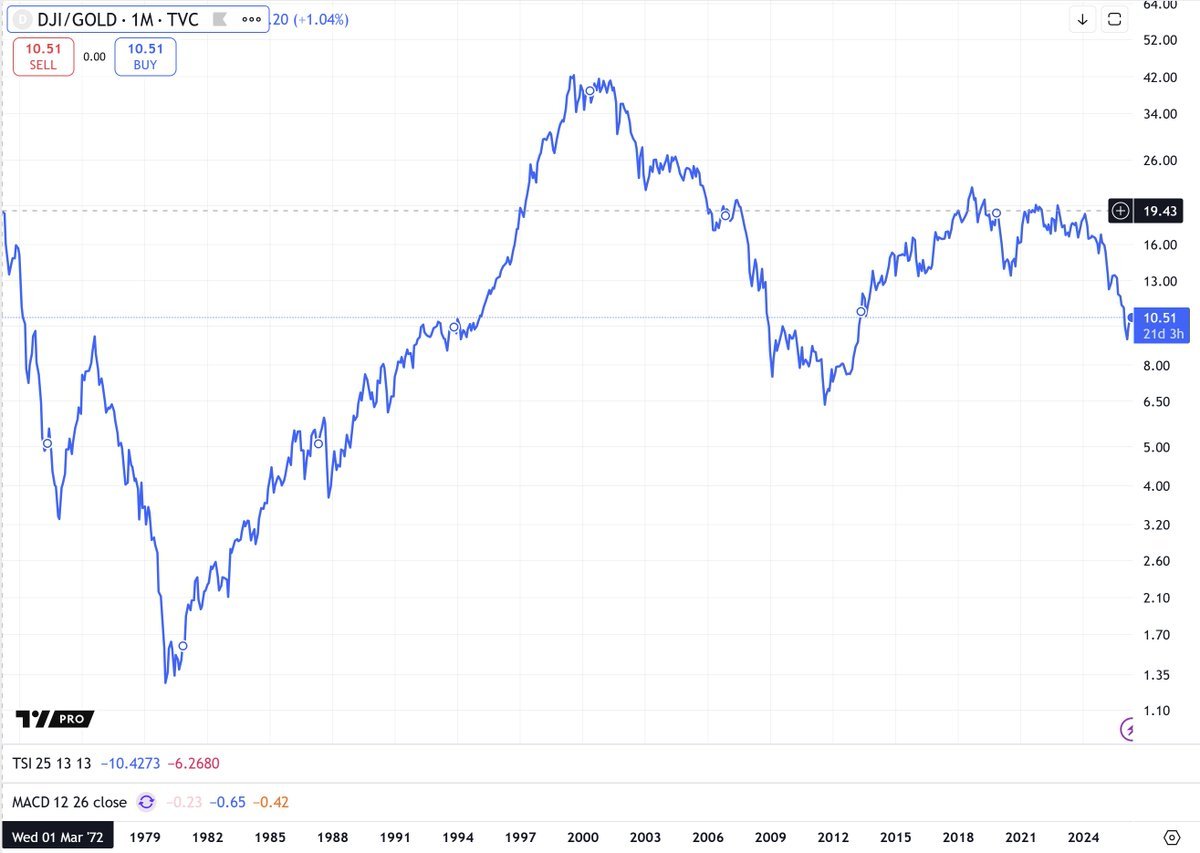
Agree, on both the impact of going broke in the reserve currency & "denominator blindness": Since the March 1972 date of that article, DJIA (which benefits from survivorship bias) is down 45% in terms of the prior world reserve currency (gold, which has no survivorship bias).
Luke Gromen tweet media
Ryan Detrick, CMT@RyanDetrick

According to @awealthofcs, government debt is up from $430 billion when this magazine cover came out to nearly $40 trillion today. That is almost a 10x.

English
23
30
297
53.1K
German de Rosas
German de Rosas@germanderosas·
@mendocinoybasta La coparticipación es el cáncer del sistema. Debería ser al revés, las provincias cobran impuestos y participan a la Nación, pero bueno a los políticos argentinos les gusta tenerte agarrado de los huevos siempre.
Español
2
0
4
62
Lucas A₿i.🧉🍷🥩 retweetledi
Fermat's Library
Fermat's Library@fermatslibrary·
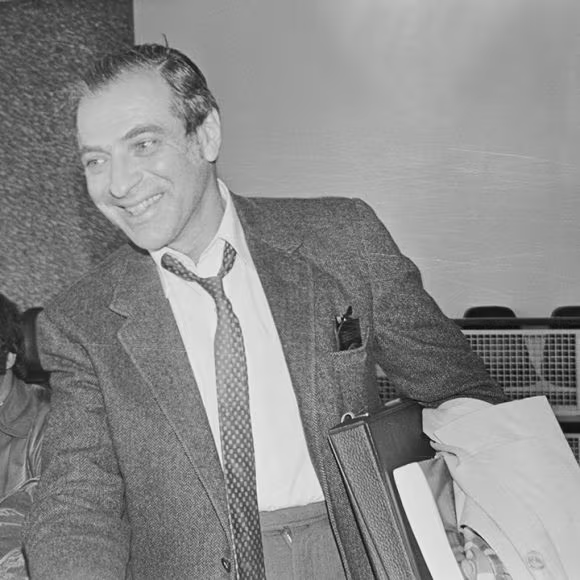
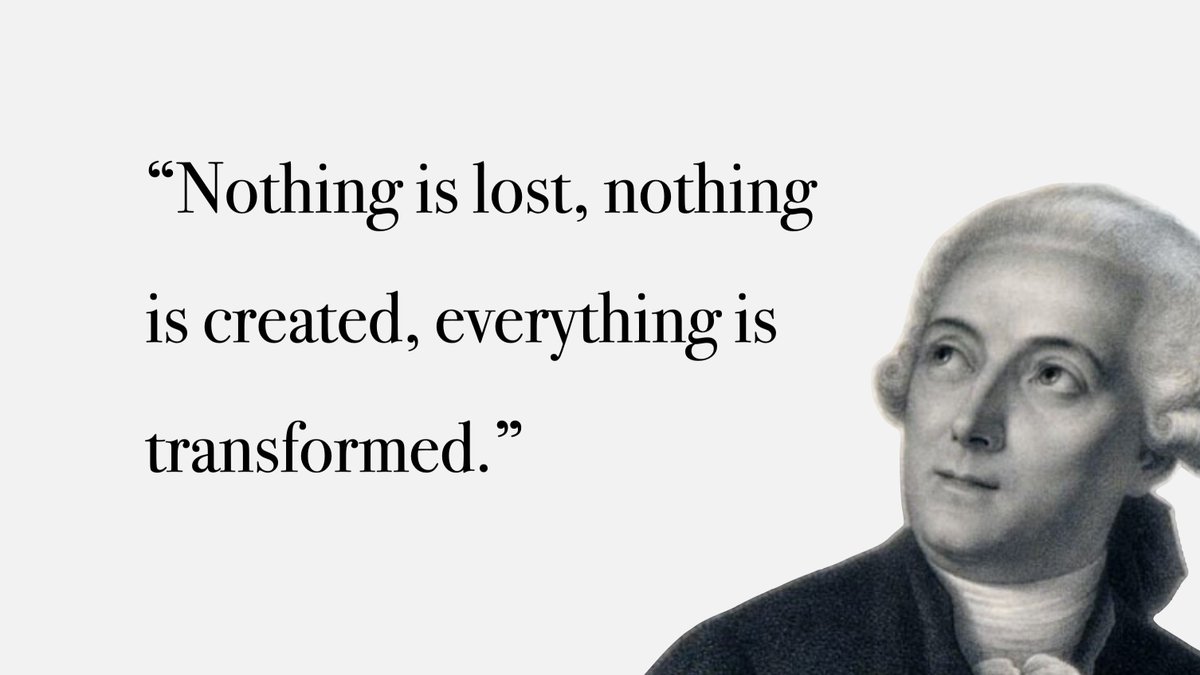
On this day in 1794 the French Republic guillotined Antoine Lavoisier. He had named oxygen, formulated the law of conservation of mass and founded modern chemistry. Appeals were rejected with the line "the Republic has no need of scientists." The next day Lagrange said: "It took only a moment to cause this head to fall, and a hundred years will not suffice to produce its like."
Fermat's Library tweet media
English
163
1.6K
8.1K
518.8K
Lucas A₿i.🧉🍷🥩 retweetledi