

Lucas Oliveira
57 posts

Lucas Oliveira
@lucasolvb
digital strategist - buildings apps by the world 🌎
Katılım Kasım 2021
48 Takip Edilen20 Takipçiler

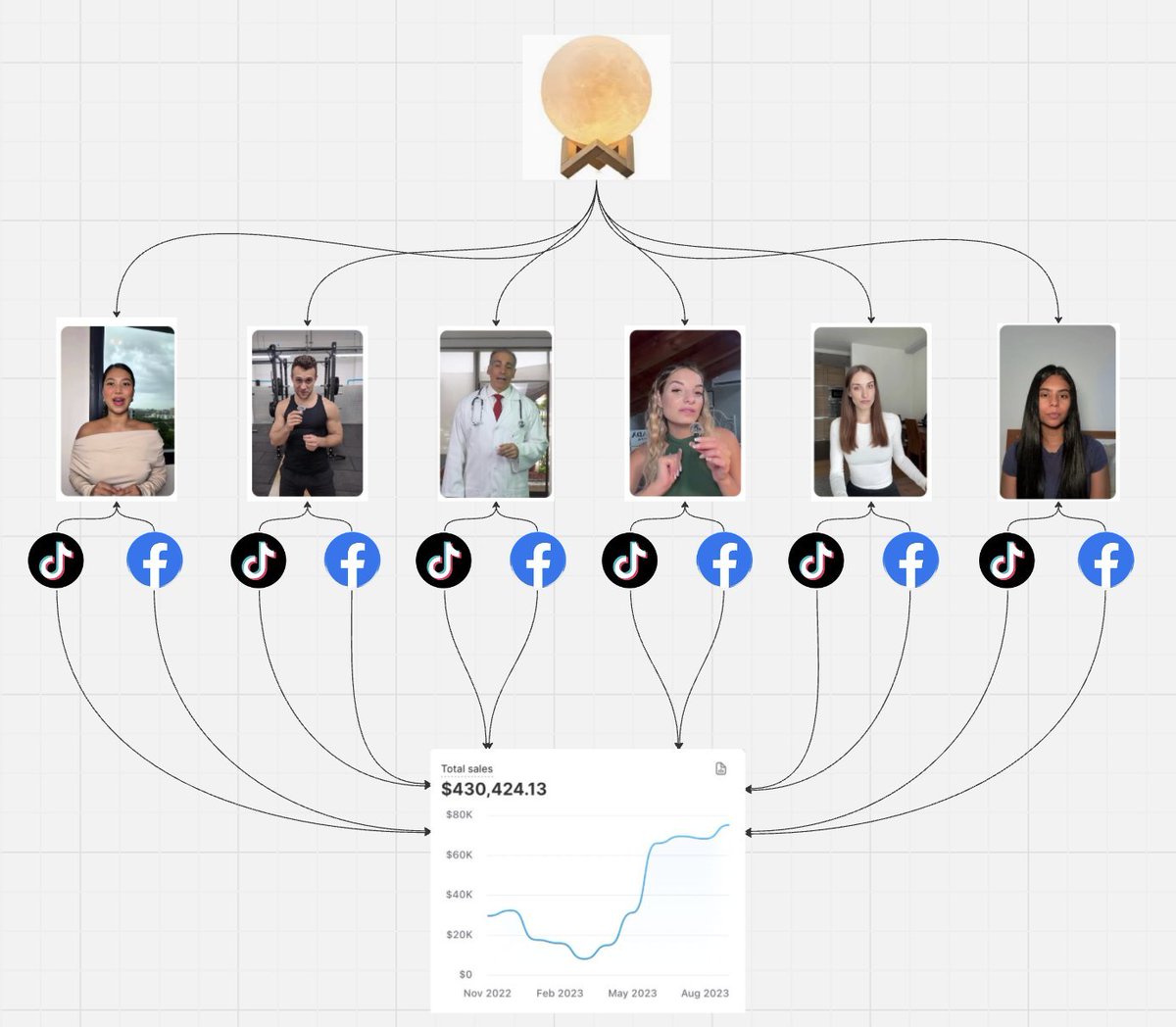
$430K/month in 30 days!
No team,no agency - just 6 AI creators and one repeatable system
- Find a hot product
- Launch a quick Shopify store
- Use CAA (Content Angle Amplification)
- Auto-generate 200+ UGC videos/day
Comment “UGC” & I’ll DM the strategy
(Must be following)
English

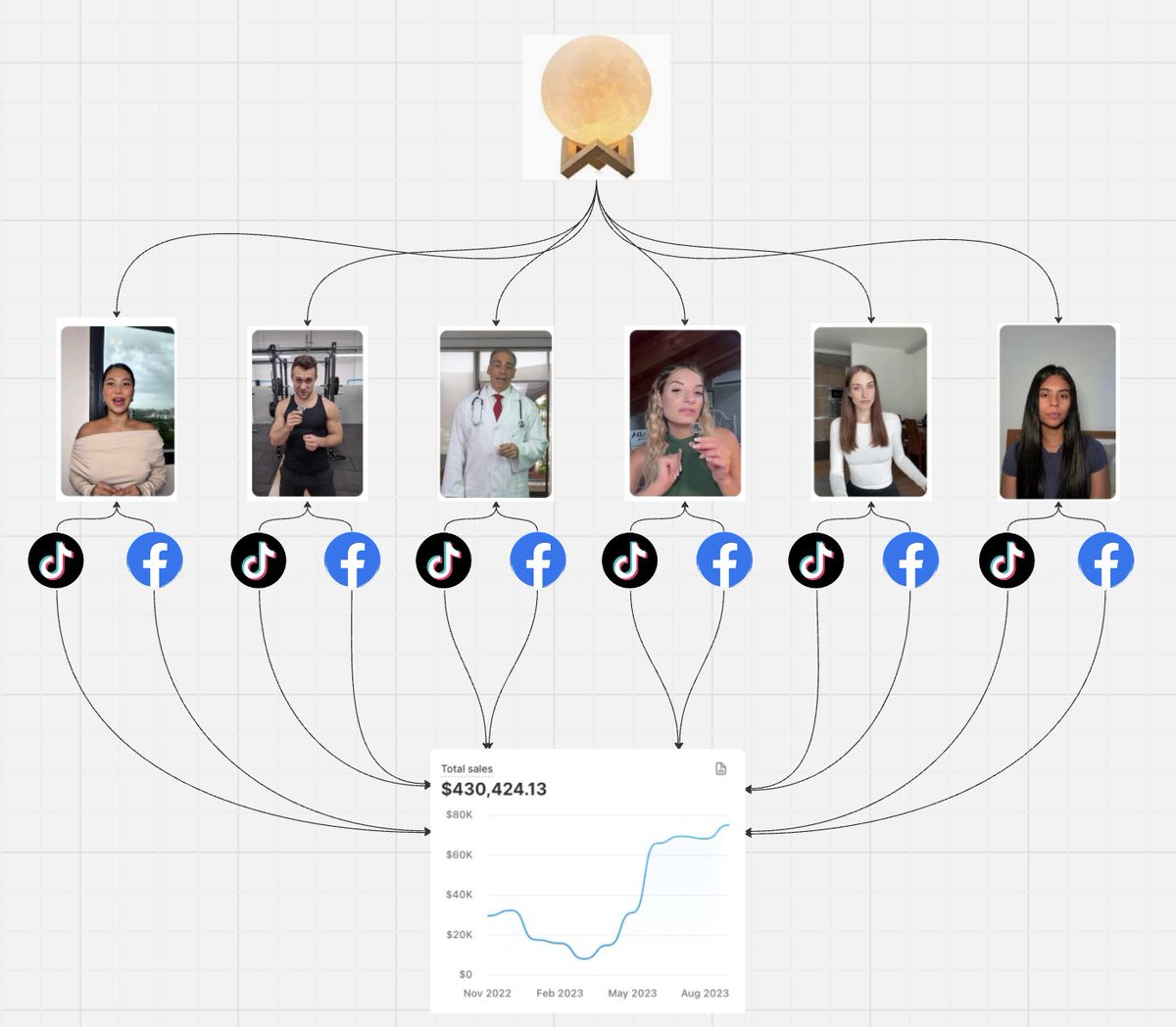
$430K/month in 30 days
No team,no agency - just 6 AI creators and one repeatable system
- Find a hot product
- Launch a quick Shopify store
- Use CAA (Content Angle Amplification)
- Auto-generate 200+ UGC videos/day
Comment “UGC” & I’ll DM the strategy
(Must be following)
English

I built AI UGC tool that gets 10M+ views while I sleep.
→ in 7 days
It runs 99% on autopilot + smart distribution.
Here’s how:
- Create 100 AI UGC videos
- Split content across 111 burner TikTok accounts
Comment “11” and I’ll show you how
(must be following)
English


One of the most underrated parts of building a business:
Management and process.
Without it, things break as you grow.
You lose money, time, and control.
In one of my companies that was already running for a while,
I stopped following the process and ignored the small details.
And I paid for it — with real losses.
Never underestimate the basics.
English

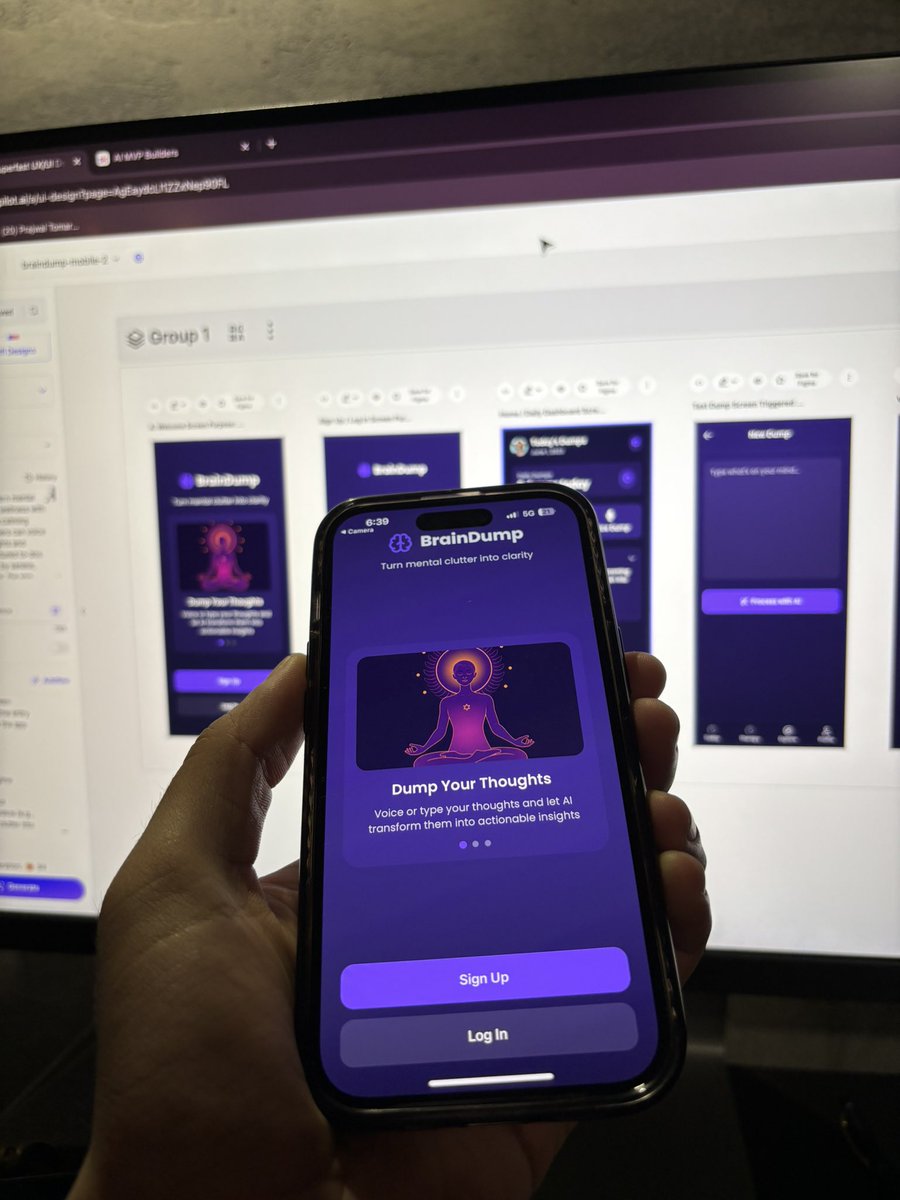
I designed this entire mobile app in under 10 minutes using AI.
Want the exact workflow + prompts?
→ Comment “Build” + follow
I’ll DM you the full guide.
English
very good!
when you have a good video: a lot of views, downloads...
you are talking with the right audience that you need. So, there is a strategy that I always make to make this video bring more people like this, just changing some details on the video.
The hook that you said. Switch first 3 seconds on the video - edition, clickbaits variation, colors, subtitles - keep the same comunication goal, but it attracts the attention of different types of people.
Other types of variations: the place that you shoot, the person, the video format, background songs.
If you got to do this, you have a viral content and can produce a machine of good videos like the first one.
English

organic marketing is a social science
most people scrolling on tiktok are bored, procrastinating, searching for a dopamine hit, etc.
get analytical with where your target audience is at when you reach them to convert them
English
When I started working on the internet, I thought I could control everything...
my routine, my health, my time with family and friends.
But I quickly learned that when you’re building something real, balance doesn’t exist at the beginning.
All your focus goes into making it work.
Money. Sales. Progress.
Everything else feels like it fades.
It’s not forever.
But it’s necessary.
Only after that phase, when things start to grow,
you can rebuild the rest.
English
Great man! About personalized results, that is true, the conversion is higher than generalized offers.
I have tried a lot of times in different business and always improve the conversion and AOV.
And its more clear to analyze each type of customer, differents behaviors, how to improve to each other.
English

The Hidden Architecture of Quiz Funnels — Here's how to create scalable quiz funnels in any market or niche (even if you've never done it before)
Morning, afternoon, or good evening, depending on what part of the world you’re reading this post from...
...It’s been quite a while since I dropped a long-form banger here and for a good reason — creating the best marketers in the game, running the biggest and best mastermind building an industry-changing platform and secretly building 3 other game-changing projects takes a lot of time and energy...
...But thankfully I have an incredible team to free me up a bit so I’m back at it.
So let’s put aside the humble brags and focus on what matters most right now, and that’s helping you master the art of marketing.
Today, I’m going to take you behind the scenes of something that’s been right in front of you all along and yet you’ve never seen it.
This is something I taught in Fast Forward about 10-12 months ago, and in NHB+ a few months ago, and I’ve also used this exact process to create one of the biggest health back ends for ClickBank weight loss offers that’s booking a ridiculous amount of calls and selling high-ticket (don’t ask me what the link is because the last thing the person wants is for you to funnel hack him and copy what I teach here).
...It’s also been used in dating to get CPAs at $2-3, biz-op, manifestation niche, home services, and pretty much anything you can imagine.
It works in every single niche, not because it’s a marketing “strategy” or “tactic”, but because it works on deep human psychology, and since humans are the only ones interacting with what we do online, it’s safe to say that it can work in just about any niche.
So let’s talk about quiz funnels. How they work, what makes them work, what everyone else is doing wrong and what you can do to dominate the quiz funnel game.
Let’s talk about the hidden architecture of quiz funnels.
Now, fair warning...this is a 3-hour in-depth step-by-step call I did condense into a single post, so A LOT of minor details have been left out and only the major retained to save you some reading time.
If you’re in NHB+ or FF, watch the call to get those details.
Let's continue...
When it comes to quiz funnels, what everyone does is just throw up an ad, and that ad goes to a quiz and that quiz just asks a bunch of questions.
The questions often have ZERO thought, ZERO purpose, and ZERO function.
They merely identify the customer based on some data point such as income or whatever so they can do something with that data later on the back end, namely phone sales.
The problem of the traditional quiz model is twofold:
1. They only use identifier questions and that causes the loss of intent as they go through the quiz funnel and the deeper they go, the less interested they are in buying it. The only way to offset that loss of intent is with ever-higher prices. You can see this by low quiz completion rates. People just bounce out.
2. Hence why most quiz funnels lead to some type of book a call that sells a thing for a bazillion dollars.
3. It catches a lot of customers with curiosity up front, yet it does not do anything to convert that curiosity to intent and without intent it’s harder to make a sale.
The reason for the above is that captures of quiz funnels tends to lead them into an “information-seeking state” but it does not move them to a problem state and then a solution state.
In order for someone to buy, they have to be in a SOLUTION state, not a PROBLEM state.
The thing is, the way you get to a SOLUTION state is VIA a problem state.
So a typical quiz funnel will use the model of:
INFORMATION SEEKING STATE -> PITCH
So you’re basically catching a lot of fish, only to keep a few at the end, kinda of pointless tbh.
When it comes to any type of offer, every single word, action, move, or element on the page has to have a purpose and a FUNCTION and its job is to affect the conversion via change work.
Then the question becomes, what affects change and how?
As a quiz funnel is nothing but a series of questions, that means that the nature of those questions has to cause the change, hence the use of functional questions.
So what SHOULD be done is that there should be the creation of intent via functional questions as they’re going through the quiz process.
This concept of a “functional questions” is the difference that makes the difference here.
Because you see, what most quiz funnels do is they “IDENTIFY THE CUSTOMER”, but what’s different about this model is it actually “CREATES THE CUSTOMER”.
Now, it’s getting interesting and you’re about to see some real magic in the game.
Let dig into this a little deeper, because it’s REALLY REALLY important.
If you look around, everyone wants to do this online thing, like legit EVERYONE, which means that as time goes on, the competition as a whole is increasing in every single niche.
We have proxy data here to prove this point, and that’s the fact that the cost of ads is ever-increasing.
The only reason the cost of ads is increasing is if there is more demand on ads, and the only way we can have more demand for ads is if more people are bidding for those ads.
Hence, more and more people want to play this game we play.
And with that in mind, as everyone out there wants to do this online thing...
...That means everyone out there is fishing for customers who are ready to buy, yet very few are getting them to buy.
Meaning, let's say...you have 1,000,000 people in a market.
At any given moment, only about 1-3% of that audience is “ready to buy”, so out of say a million potential customers you’ll have 10,000-30,000 people in total who are “sellable”, and 970,000-990,000 sitting on the fence watching everything, neither here nor there, who are “not sellable”.
So you have EVERYONE competing for the same 10,000 - 30,000 “sellable” people.
The sellable people are the ones who are in a solution-seeking state, the rest are either in a problem state or pre-problem state.
Whoever knows how to sell to pre-problem or problem-state customers and flip them over INTO solution-state customers owns the market because they can use those economics to acquire even more solution-state customers.
Those that can do this can literally 10-100x their audiences and market size, and dare I say...”scale”.
Real scale.
That’s why it’s so important to know how to CREATE the customer, not just IDENTIFY them like everyone else is doing.
So if you’re not doing any of this type of stuff, then you’re largely leaving things to chance and you’re just another person in the game competing with everyone else doing the same thing.
And if you do the same thing as everyone else. Well, then, you get the same results as everyone else.
And what’s the point of being an average marketer? I don’t like that. I like to be better. I like to win.
So here’s how you win.
As I’ve said many times before, advertising, marketing and sales, at its core is nothing more than change work.
All we’re doing is changing opinions, feelings, thoughts, and such in the sales process in favor of the things we sell.
That’s the game we’re playing. From copywriters to Madison Avenue branding and PR firms, we are all playing the same game, and that game is one of change work.
Those of us who can enact the greatest change, also sell the most. It’s simple as that.
Since marketing is change work, the first question to ask is, how does change work begin? What generates it?
All change begins with a question.
I’ll say that louder for the people in the back of the group.
ALL CHANGE BEGINS WITH A QUESTION.
When you’re writing good copy, you’re basically generating questions in the prospect, and the answers are in your copy and your product, hence why they buy. That’s all you’re doing in the mind.
I like to use something called “assumptive questions” which I’ll write about later in the week.
But for now, back to the topic at hand...quiz funnels.
The best way to go from identifying the customer to creating the customer in a quiz funnel is via specific questions that I like to call functional questions.
Aside from members of Fast Forward and NHB+, I’ve never seen anyone in this game use functional questions anywhere in the sales process. So you’ll be amongst the very few who do.
Since most quiz funnels merely identify a customer, the way we create customers is by going through this transformational arc:
1. We capture them in an information seeking state (ads, quiz landers)
2. We put them in a problem state using functional questions, as you’ll see in the rest of this post.
3. Once they’re through that, we move them to a solution state where they are presented with a solution
4. And then we pitch our product or service
So the ads that lead to the quiz should always have some type of pay off of discovery (information seeking).
For high emotional state markets, the word “HOW” works well, so an ad or headline that leads with:
DISCOVER HOW TO ______________
For low emotional state, the word “WHY” works well, so an ad or headline that leads with:
DISCOVER WHY TO ______________
Read my posts on high and low emotional states to learn how to modulate this here.
Now, this information that you are offering on the lander always should lead to an outcome (because people buy for outcomes, not features or benefits) and once they know the outcome, they will get what they want.
So we take them through the quiz funnel and as they go through the quiz funnel, they are asked to answer questions.
If we go from standard questions to functional questions, we can affect the emotional state to a great degree.
For example, if I have a question that states:
- How old are you?
- 18-23
- 24-29
- 30-35
- 36-40
This question doesn’t do anything, it’s just a standard information question.
Now, to make it a functional question, we make it look like this:
- This year, I’m...
- This year, I’m between 18-23 years old and I have a great future ahead of me
- This year, I’m between 24-29, and I’m feeling optimistic
- This year, I’m between 30-35, and I”m feeling better than ever
- This year, I’m between 36-40, and I can’t see what the future holds in store for me
Read the two and notice the amount of energy that’s generated between these two. One is A LOT more personal whereas one is just whatever, and also notice the “I am” in the question and the answer, this is what makes the question FUNCTION.
So, the beginning of the quiz should always be inviting and positive, the middle of the quiz neutral and the end of the quiz goes into negative.
The reason for the end always being negative in nature is because as you’ll see below that is a must for problem states and without problem states, you can’t get to solution states.
So think of it as 1/3 positive, 1/3 neutral and 1/3 negative.
Feel free to play with the ratios, but don’t down play the 3rd negative section, that will make or break the quiz.
We move them from one mind state to another mind state using functional questions.
Functional questions serve a function, and that function is that it makes them realize that they have a problem or implies that something is wrong.
Example:
“I gaining weight because”
- I’m gaining weight because I can’t control my cravings
- I’m gaining weight because I can’t stick to a diet
- I’m gaining weight because I don’t have time to work out
- I’m gaining weight because I don’t have the energy to focus on losing weight
- I’m gaining weight because I don’t know what to do or change my situation
- I’m gaining weight because everything I tried doesn’t work
See it? This assumes that they are gaining weight, and all choice force the agreement of that mind frame.
This takes the mind and takes it from feeling good, to feeling neutral to feeling not so great.
So what happens is they came in feeling bad (information seeking) via ads, the quiz made them feel good via positive questions.
Then the quiz goes in the mind, thru questions into feeling bad.
We feel bad when we question ourselves on an identity level.
Problem state in ad -> solution state on page -> positive, back to even more problematic.
Identify them. Identify the situation. Identify the problem.
They have to agree to these things in order to move forward and get the outcome of the quiz.
Now, before they get to the quiz, the ad should entice them to discover their limitations that are preventing them from getting the outcome.
Because to go from where they are to where they want to be, there is a limitation in the middle, once they discover this limitation, that will allow them to move fwd.
Ads are them probing into their limitations.
Discover HOW or Discover WHY, or any type of variation of the headline.
Diagnostic marketing is the future.
Start the quiz with positive questions or identifiers. These are external questions.
If you put identifiers 1st, the quiz take rate will be LOWER than if you put positive questions.
Positive questions tend to be “TOWARDS”, and the language of towards is:
- I want to
- I’d like to
- I wish to
- I choose to
- I hope to
- I dream to
These are disassociated so they don’t feel much, cuz it’s not about them, it’s about the thing they do.
For positive questions, you can use “YOU” instead of “I”, it also work very well.
Then we go to the middle of the quiz, which is the neutral question territory:
It’s about what they do, where they’re at etc…What’s going on in their lives.
Neutral language is:
- I tend to
- Sometimes I
- Once in a while I
- Etc...
Here you can also use “YOU” instead of “I”.
You can start using You in the 1st half of the neutral questions, and “I” on the second set.
The reason being is that You tends to disassociate, where as I associates more.
Once you use those set of questions, then it’s time to move to negative questions.
Negative questions tend to use AWAY language.
“You” questions on the front and neutral and “I am” questions on the back end.
“I am” questions and answers cause “negative ownership”.
In order to help them get out of the problem they have, we have to make them aware and accept the problem.
If someone is a smoker, we have to get them to accept the fact that smoking is bad.
The way this looks like is:
- “I have”
- “I have had this problem for 5 years, 10 years, 15 years, 20 years”
- “I am”
- “I am a little bit ashamed of my weight”
- “I am quite ashamed of my weight”
- “No matter what I do I can’t lose weight”
Take “I” and combine it with AWAY language and you have negative admittance which cause them to accept ownership of the problem.
These should be identities, so they are associated. Here we’re being asked to admit things we never want to admit
So the questions get them to ADMIT they have a problem on an identity level and at the same time admit that they can not get rid of it.
Once they go through this process. The curiosity has no become intent and there is a lot of emotion, and out of this they come to the sales page.
On the sales page, you can sell a product, pitch book a call, whatever you want.
Now that they’re on the sales page, the goal is to thank them for taking the quiz, build rapport and then insert some form of comfort language so that way they feel that you care about them.
This is very important as they just came out of a set of very negative idenity building questions.
Which you should as they are your customers.
Comfort language is all about NOT BEING ALONE.
Example is “You’re not the only one who took this”, etc..
Then the sales page always opens with “here’s the bad news” or “here’s something you have to know” something that bounces off of that negative state in the last set of questions in the quiz to CONTINUE that feeling.
Where they go “oh what now!”, and then you go into it.
The reason we do this is to create a massive contrast to the good news that follows which will change everything for them.
Because, remember...CONTRAST is the basis of AWARENESS, and the ore contrast, the more they will be aware of our solution and product and it’s value to them.
You create a set of generalizations that bundle people up that they can identify with that are reflected as true from those questions.
The bundles have “negative labels”.
E.g. in the parenting niche - Your parenting style is “Authoritarian”
Parents with this style tend to ________ and because of this, your child will comply in the short term, but the real effects are going to be seen in a year or two as it does deep psychological damage to the child blah blah blah”
[you insert the bad news as to why they could not get the results based on the last part of the quiz]
Human beings tend to REMEMBER THE LAST THING THAT WAS SAID.
You explain the bad news, and this sets up and explains the reason why they have had the problem.
Then you reveal the MECHANISM OF THE PROBLEM ITSELF.
After that, the flip over is easy.
Which sets up the next section which is:
Here’s the good news:
Here’s how you fix it all -> from here you can sell, book a call, do whatever.
If you want to increase compliance, give them a reason why you’re asking.
That’s the gist of it, now some nuances...
You want to ask questions that elicit sensory experiences that bring about things that are deep down in their minds that they really do not want to think about let alone talk about.
Such as:
I struggle with ________
I have a hard time with __________
I find it impossible to __________
I can’t seem to over come ________
If women, add “FEEL”
I feel overwhelmed when ___________
Future pace the questions with NEGATIVE POSSIBILITY:
The #1 thing I’m afraid of is ______________
The reason we’re asking is we need to know how to best help you overcome that.
Here’s how it was done in the dating space to great effect:
- I’m afraid that I’ll be alone forever
- I’m afraid that I’ll meet the wrong guy and it won’t work out
- I’m afraid that I’ll keep having to use dating apps well into my 40s
- I’m afraid that I’ll be the only one in my social circle who’s still single
[That’s what I’m the most afraid of, let’s continue]
Here’s an example in the coaching space:
Because there are so many coaches coming into the market, I’m very concerned that:
The reason we’re asking is we need to know how to best help you overcome that.
1. I won’t be able to get clients
2. My clients will leave me for other coaches
3. I will become irrelevant if I can’t generate new clients
On the negative “probe” give them an out in allowing them to say “Something else” if clicked they type it on or you can allow them to skip it.
Just the act of reading is sometimes enough to bring the problem to light.
This isolates attention by isolating them in their own attention.
What’s really interesting about all this is that if you get someone to admit they have a problem, by default you are also getting them to admit that they need help, and you are the person who can help them.
Here’s some examples of what we’ve done in Fast Forward using quizzes:
Survival quiz
- how much longer could you survive when disaster strikes?
- How safe is your location
- A secret test to test if you can trust your neighbors
- Is your plan going to work?
- The perfect plan for you and your family
Parenting
- Parenting market. You can add in how many days left of their childhood they have left. So you show where they are, and how much they have left.
- There was a study I forgot the name but it said by the time you turn 18, you’ve spent 90% of the time you’ll ever spend with your parents
Dating
- What’s your dating style?
- Are you secretly repelling high value men?
- The highest caliber women that would consider dating you
- Are you dateable?
Weight Loss
- How fast can you lose weight
- Discover what hormones are preventing you from losing weight
Biz-Op
- How much are your skills worth?
- How long would it take you to make a million dollars?
- How fast can you launch you own business and make $10k?
Quit Smoking
- How addicted you are to smoking and how long it’ll take you to quit
DFY Ecom
- How much can your ecom store idea make
- How fast can you store scale
Golfing
- How good can you get?
- How much can you add to your drive
Muscle Building
- How much muscle can your body carry without TREN?
- Discover your natural genetic potential
So on and so forth, and I’ll leave you with a golden nugget of this post.
If you want to amp up the quiz to generate even more intent, after your set of negative questions, a pressure-release question is this:
“What would you like instead?”
- Choice 1
- Choice 2
- Choice 3
- Choice 4
This frames that they have choice, once they feel they have choice. They are a lot more apt to act.
The choice they choose would go to the page that has that solution, so this question directs them to a uniquely personal sales page.
So there you have it, a long post that’s long over due.
As always, if you have any questions, comments, answers or whatever — just hit the comment box below and let me know.
Oh and if you would, smash the like and love button for the algorithm so everyone can see it.
To your success,
Alen Sultanic
English
3 HARD LESSONS I learned in my entrepreneur journey
(I lost a lot of money learning these the hard way)
1. Never build big businesses without a contract
Handshake deals break faster than you think.
2. Don’t start something just for the money.
3. Be careful with who’s around you
Wrong people drain you. Right ones multiply you.
These 3 alone could’ve saved me thousands.
Hope they save you something too!
English
If you’re not ready to hear brutal feedback on your MVP,
you’re not ready to build a great product.
It’s better to be a little sad with real feedback
than happy with fake validation.
Only one of those helps you improve.
English

The more I study apps and improve my own idea,
more new app ideas I have every day.
At first, it felt like momentum.
Now I see it’s a trap.
If you don’t stay focused on one,
you’ll want to build five things at once…
and finish none of them.
English
@lucasolvb @lucasolvb, man, what you said about that supportive environment... it's everything! Being around people chasing similar dreams just hits different than any course ever could.
English
When I started in digital marketing,
the most important thing wasn’t a course or a mentor.
It was the environment.
I lived with 2 friends chasing the same goal.
Most of my circle was building something online too.
That changed everything.
Because working in digital isn’t “normal.”
But being surrounded by people with the same vision makes it feel possible.
English
Had a call with a friend today — we were talking about backend and app structure.
It’s crazy how I can sell anything…
but I still don’t understand a single line of code.
Two completely different POVs.
Both necessary.
To build something big,
you need people who think differently than you.
You need big people with you.
English
@hunterjisaacson what do you think is the best option for who dont know how to code?
English

Don’t fully outsource development for your app
I did this and lost $75k at 19
Don’t say I didn’t warn you
English

finishing the mvp :)
portuguese and english
checking your outfit in real time.
personalized results.
fast.
English