Interior Designer and Artist; exposed to Building Information Modelling (BIM) since 2004, and been in the built environment industry for more than 10 years.
Top British attorney Natasha Hausdorff stunned the audience by completely destroying the Palestinian narrative about the conflict. The truth the world refuses to accept:
Palestine never existed as a sovereign Arab state.
The British Mandate of Palestine was a British territory taken from the defeated Ottoman Empire after 1917. Jews lived continuously in the Holy Land for centuries — long before modern Zionism. They were the majority in Jerusalem under Ottoman rule. Jews legally bought desert land (including the area that became Tel Aviv) and turned it into thriving cities and kibbutzim. Not a single Arab was displaced by these purchases.
The Arabs rejected the 1947 UN partition plan and launched war to destroy the newborn Jewish state. They lost. During that war, Arab armies ordered local Arabs to flee so they could “push the Jews into the sea.” Many did exactly that.
Israel has never committed genocide. It has fought for survival against repeated attempts to commit genocide against the Jewish people. Hamas, Hezbollah, and Iran’s regime are the real obstacles to peace in the Middle East.
The historical facts are clear. The propaganda is not.
Share this. The truth needs to be heard.
🇷🇺 Putin: "By now, everyone should understand what sovereignty really means — and the price paid by those who gave it up for an easier life. The world doesn't work that way. Without sovereignty, you can't defend your core interests."
🚨BREAKING: Sec. Marco Rubio DROPS THE MIC on the EU accusing President Trump of violating "international law" by striking narco-terrorists
"I find it INTERESTING all these countries want us to send nuclear-capable Tomahawk missiles to defend Europe. But when the United States positions aircraft carriers in OUR hemisphere, where we live, somehow that's a PROBLEM!"
"I don't think that the European Union gets to determine what international law is. They CERTAINLY don't get to determine how the United States defends its national security!"
"The United States is under attack from organized, criminal narco-terrorists in our hemisphere - and the president is responding in the DEFENSE of our country."
"So I would say that the United States and this president has made very clear his job is to protect the United States from threats against the United States...and THAT is what he's doing in this operation."
Do you firmly support Marco Rubio on this?
A. Huge Yes
B. No
IF Yes, Give me a THUMBS-UP👍!!
Why people admire Putin:
- Banned GMOs 🇷🇺
- Denied adoption to transgender
- Chemical castration for pedophiles
- Saved 45k kids from trafficking in Ukraine
- Supports traditional family
- Respects all religions
We’ve just locked in an agreement with Singapore to keep fuel coming and New Zealand moving.
It means petrol and diesel will keep flowing even in uncertain times, and we’re building stronger reserves at home to protect our country from global shocks and disruption.
Vladimir Putin accomplishments:
- banned GMOs.
- banned vaccines in food.
- banned trans adoption.
- declared war on Satanism.
- tax incentives for families with 2 or more children.
- saved 40k children from being trafficked.
- banned Rothschilds
- lowered Russian deficit.
Sakan is a traditional Japanese plastering method that uses clay, sand, and straw over a bamboo lattice to create durable walls that naturally regulate humidity and stabilize indoor conditions.
Fascinating: Singapore’s Foreign Minister just published his personal AI architecture.
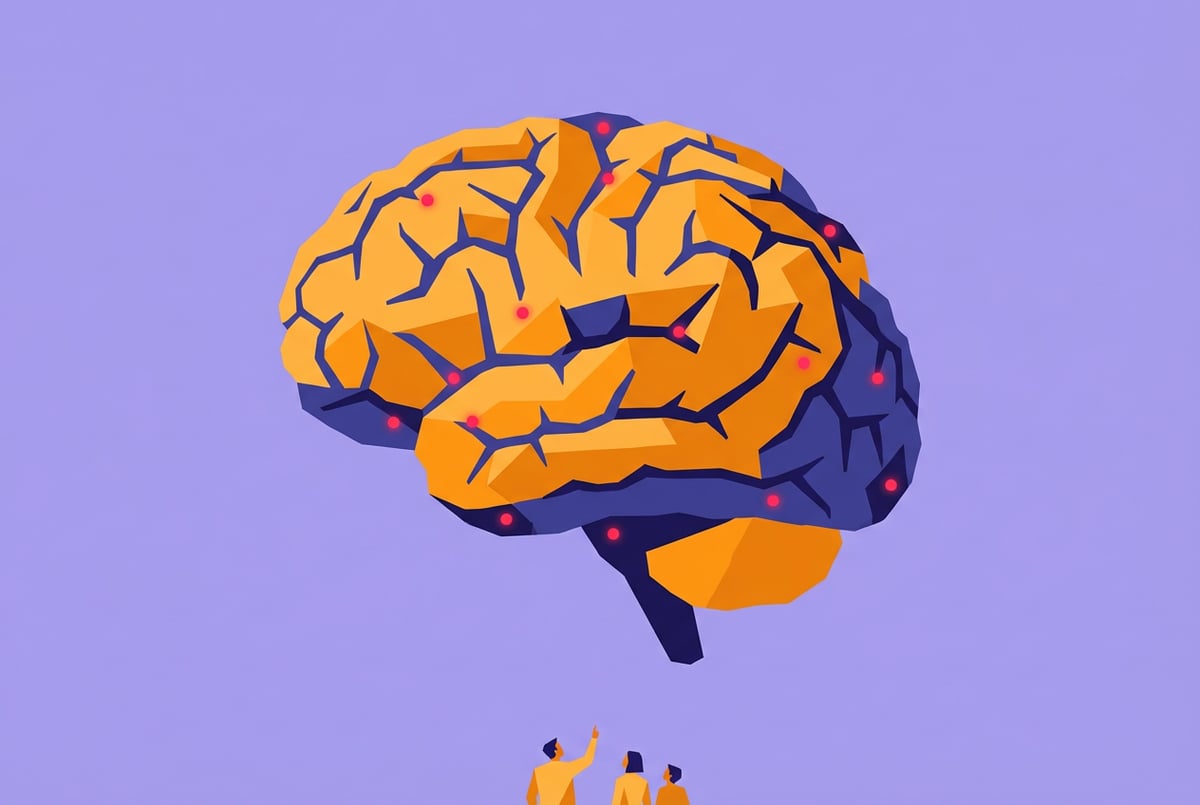
He’s running his AI second brain on a Raspberry Pi, while most CEOs are still asking ChatGPT to summarize PDFs.
Vivian Balakrishnan shared the full setup behind NanoClaw, his self-hosted AI assistant for diplomatic work.
It sits on a Raspberry Pi 5 and connects his notes, speeches, briefings, voice memos, research, and messaging workflows into a persistent memory system.
Most people still use AI like a vending machine:
Ask question.
Get answer.
Forget everything.
Repeat tomorrow.
Balakrishnan is using it like infrastructure 🧠
A system that remembers.
Synthesizes.
Recalls context.
Compounds over time.
The stack is surprisingly practical:
→ Raspberry Pi 5 for local hosting
→ NanoClaw for agent orchestration
→ Obsidian for human-readable knowledge
→ SQLite knowledge graph for structured memory
→ Local embeddings through Ollama
→ whisper.cpp for on-device voice transcription
→ Docker containers for isolation
→ Claude Code to assemble the whole thing
The key thing here is that he did not build this by becoming a full-time software engineer.
He described it as “tool assembly.”
And that may be the new executive skill.
↳ Not writing every line of code.
↳ Not outsourcing every workflow to vendors.
↳ But knowing what to combine, what to keep private, and how to make your knowledge system improve every week.
This is where AI at work is heading.
→ From chatbots to second brains.
→ From prompts to workflows.
→ From software subscriptions to personal infrastructure.
My takeaway here is this:
The next productivity gap will not be between people who use AI and people who don’t.
It will be between people using rented intelligence and people building owned memory.
Because when everyone has access to the same models, the real moat is the context & the data only you control.
In 1942, the Japanese rounded up all Chinese men in Singapore.
They were filtering out the healthy young ones to execute.
Lee Kuan Yew was 18. A guard pointed at him and said: "Go to that lorry."
He knew what that meant. The lorry went to the beaches. The beaches meant machine guns.
He asked: "Can I collect my other things?"
They said yes.
He walked away, found his family's gardener, and hid in his quarters for two days.
When they changed the screening inspectors, he tried again. This time, he got through.
The ones sent to that lorry were taken to the beaches and shot. Somewhere between 50,000 and 100,000 didn't survive.
60 years later, he sat down at Harvard to explain how he built Singapore from a tiny island into one of the wealthiest nations on Earth:
On what the war did to him:
"We lived in happy, placid colonial Singapore in the 1920s and 30s. The British Empire would have lasted another thousand years, so we thought."
Then the Japanese came. In less than one and a half months, the British collapsed.
"Three and a half years of hell. Butchery. Brutality. Many didn't survive. I was fortunate. I did."
"But it changed us."
"What right did they have to do this to us? Why did the British let us down so badly?"
When the war ended, Lee went to Cambridge to study law. But he was watching with different eyes.
"Can they govern me better than I can govern myself? Because they scooted when the Japanese came in. And why shouldn't I be running the place?"
On learning languages to lead:
Lee was the best speaker in English. But only 20% of Singapore spoke English.
The masses spoke Hokkien, Mandarin, and Malay.
"So every day at lunchtime, instead of having lunch, I would sit down with a Hokkien teacher and laboriously and painfully learn to convert my Mandarin into Hokkien."
"Had I not mastered that, the battle would be lost by default."
His first speech in Hokkien, the kids laughed at him.
"I said, please don't laugh. Help me. I'm trying to get you to understanding."
By 6 months, he could get his ideas across. By 2 years, he was fluent.
"Believe it or not, at the end of two years I could speak better than most of them."
"That came respect."
It showed two things: how determined he was, and how sincere. Here was a man doing all these other things and still learning their language just to talk to them.
On fighting the Communists:
The Communists had been organizing since 1923. The year Lee was born.
"Here we were in the 1950s trying to beat them. And they are professionals at organization."
They had elimination squads. Guerrillas in the jungle. Killer squads in the towns.
Lee stood up and said no.
"They denied that they were Communists. 'We're just left-wing socialists.' So I did a series of 12 broadcasts to set the scene. And I made it in three languages."
English. Malay. Mandarin. 20 minutes each.
"When I finished each broadcast, the director of the station couldn't see me. Went into the room and found me lying on the floor trying to recover my breath."
"But it was a fight for survival. Life or death."
On where trust comes from:
"It's difficult to establish trust in times of calm. You just say, 'Well, it's an argument, therefore I'm a better guy than you.'"
"But when the chips are down and you can get eliminated in a very unpleasant way and you show that you're prepared for it and you'll fight for them, it makes a difference."
"Without that trust, we could not have built Singapore."
On IQ vs EQ:
Harvard asked him: would you prefer high IQ or high EQ in a leader?
"IQ, you can get beautiful paper done. Complex formulas worked out. Elegant solutions."
"But when you've got to get a team to work and put that formula into practice, you're dealing with human beings."
"If you're not good at EQ, you can't sense that A doesn't get on with B, and you put them in the same team. It's no good."
He rated his own EQ as 7 or 8 out of 10. His IQ as "maybe 120."
But he had colleagues who could sense a person instantly.
"He shook hands with the man and said, 'I recoiled when I felt his palm. Evil man.' And he was. How does he know? I don't know."
"So I learned whenever I had to do interviews to choose people, I would get people who are very good at seeing through a candidate."
On corruption:
Singapore in the 1950s was full of deals, bribes, and organized crime.
"When we took over, we decided that this was the critical factor. If we did not make it so that every dollar put in at the top reaches the ground as one dollar, we're not going to succeed."
"We came in and made a symbolic act. We dressed in white shirts, white trousers, and said we will be what we represent."
He put the anti-corruption bureau under his personal portfolio.
"I gave the director the authority to investigate everybody and everything. All ministers. Including myself."
One of his own colleagues took half a million in bribes. When the investigation started, he asked to see Lee.
"I said, if I see you then I'll be a witness in court. So best not see me. Better see your lawyer."
The man committed suicide. Left a note saying: "As an oriental gentleman who believes in honor, I have to pay the supreme price."
"It's a heavy price. But it reminds every minister that there are no exceptions."
On consistency:
Lee had three journalists analyze 40 years of his speeches.
He asked them: what was the dominant theme?
All three said the same thing: consistency.
"What I said at the beginning, throughout all that period, the theme stayed loud and clear."
"That made it simple. Because you know where you stand with me. And you know what I want to do."
On delivering results:
"We deliver the homes, the schools, the jobs, the hospitals."
"Today, 98% of our people own their own homes. The smallest would be about $100,000 US. The biggest about $300,000."
"Once you own that amount of assets, you are not in favor of risking it with a crazy government. Your assets will go down in value."
"But that was planned."
Why? Because Singapore is small. Everyone does national service. If you're going to fight, you better be fighting for something you own.
"So we give everybody a stake."
On changing culture slowly:
Lee wanted Singapore to speak English. But he couldn't force it.
"Had I passed a law and said you will all learn English, we would have had mayhem. Riots."
Instead, he let parents watch who got the best jobs. The jobs were already there, from the multinationals and banks. They all used English.
"They watched and saw who got the best jobs. And they switched."
It took 16 years.
"I did not want to have said 16 years. Because in those 16 years I lost 20,000 Chinese graduates who had poor jobs. I wanted to make it shorter. I couldn't. I would have run into flack."
On whether leadership can be taught:
Lee quoted Isaac Singer, the Nobel Prize winner for Yiddish literature.
Someone asked Singer: "Can you make a writer write great literature?"
He paused. Then said: "If he has the writer in him, I will make him a good writer in a shorter time."
Lee's version:
"Can you make a leader of anybody? I don't think so."
"He must have some of the ingredients. He must have that high energy level. He must have the ability to project himself, his ideas. He must have the desire, almost instinctively, to say 'let's do something better.' Of wanting to do something for his fellow men and not just for himself and his family."
"You can't teach those things. He's either got it or he hasn't got it."
"But if he's got that, then you can save him a lot of trouble."
On sustaining yourself:
Harvard asked how he managed despair over decades of leadership.
"If your message is one of despair, then you should not be a leader. You must give people hope."
"But there are moments when you feel very down. Either because you're physically down, or emotionally down, or because the world has turned adverse against you."
"When you are in that condition, the first thing you do is get a good night's sleep. Then get a swim or chase a ball. Get the cobwebs out of your mind."
"If you're not fit, you're going to make mistakes. Physically fit. You must stay physically and mentally fit."
In his later years, he learned to meditate.
"At the end of 20 minutes to half an hour, my pulse rate can go down from 100 to about 60. You can feel yourself subside. You still your mind. You empty your mind."
"Then when you are rested, you resume quietly. You still got the same problems. Maybe you sleep on it. Come back. Look at it for a few days. Then decide."
This 2 hour Harvard interview will teach you more about leadership than every business book you've read combined.
Bookmark & give it 2 hours this weekend, no matter what.
HUNGARIAN 5D CHESS THAT MAKES BRUSSELS CRY!
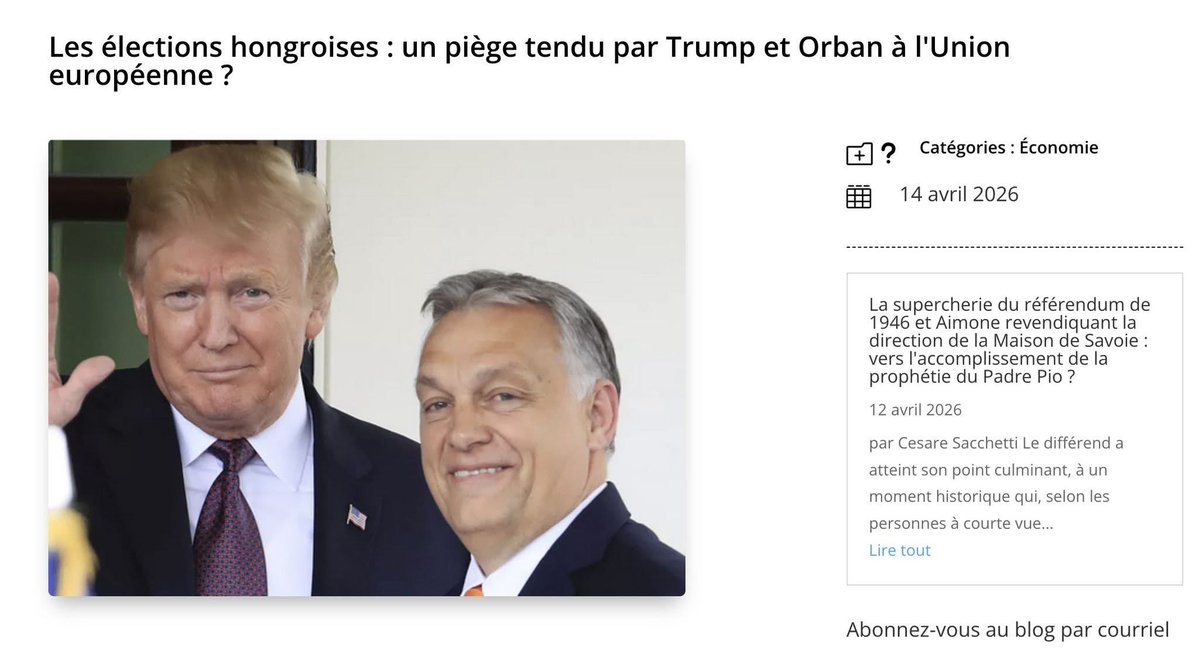
According to information provided by Serbian intelligence sources, the real objective of Orbán's "defeat" is to allow him to become the Trojan horse that Donald Trump wants to place at the heart of the European Union.
The American president would like the former Hungarian Prime Minister to be the next candidate for the presidency of the European Commission, currently held by Ursula von der Leyen, who leads an increasingly fragile majority and has already survived a censure motion, a sign of deep fractures within the EU institutions.
Trump has more than one trick up his sleeve to discredit von der Leyen, and among them, the most serious seems to be the one linked to the Pfizer affair. Ursula, in addition to having deleted several text messages exchanged with Pfizer's CEO, Albert Bourla, would have benefited from a massive bribe of 760 million dollars disguised as a "commission" paid by the aforementioned pharmaceutical multinational to her husband Heiko, who was "providentially" hired by a company called Orgenesis, itself linked to Pfizer.
This is probably the biggest bribe in European history, but the only journalist to have revealed it, the Romanian Adrian Onciu, lost his job for it, while his other "colleagues" in the mainstream media are too busy accusing Moscow and Budapest of corruption to look under the Brussels rug, where bribes and secret commissions for the various commissioners are teeming.
The Pfizer affair, however, is not the only weapon at the disposal of Trump and Orbán.
The former Hungarian Prime Minister himself compiled a substantial dossier on all the serious financial irregularities involving Ursula von der Leyen and presented it to the European Parliament last August, of course without the press reporting on it.
Orbán focused in particular on the huge sum of the cohesion fund, which amounted to 392 billion euros, two of which ended up at von der Leyen's former university, where the President of the European Commission taught epidemiology in the late 1990s.
According to Orbán, Von der Leyen is guilty of the most classic embezzlement of public funds, intended not for any useful works or initiatives, but for institutions of all kinds, always linked to Von der Leyen herself and to other European commissioners.
The same dynamic would have occurred with the funding aspect of the Next Generation EU program, in which some 5 billion euros ended up landing in various German consulting firms, once again linked to the President of the European Commission, the most generous to himself in terms of such gifts.
This is actually just the tip of an iceberg whose peak we are only just beginning to glimpse.
Below, there are other loans, like those of the infamous PNRR, allocated to ghost contracts for companies linked to various political parties, on which, however, the judiciary does not seem inclined to investigate, because if one piece of the puzzle collapses, all the others would collapse in a cascade.
The euphoria reigning in Brussels may give way to perplexity when it becomes evident that nothing has changed in Budapest, while Orbán is now free to run for the presidency of the European Commission, armed with a suitcase full of documents that reveal the skeletons in Ursula von der Leyen's closet.
Kirill Dmitriev, close advisor to Vladimir Putin, seemed to have understood this when he commented on the results of the Hungarian elections, stating that these results would only accelerate the fall of the fragile and isolated European Union.
In Moscow as in Washington, everyone is perfectly aware of what's going to happen.
In Brussels, on the other hand, they were celebrating a measure aimed at giving a decisive boost to the EU regime.
The last to understand the story are always those who refuse to accept its verdicts.
Within Infinite DIVINE-SOURCE Intelligence
Pars Kutay
✨🤍💫
AJEDREZ HÚNGARO QUE HACE LLORAR A BRUSELAS🤣
🇭🇺 Viktor Orbán coloca a su “traidor” de confianza y la UE cae en la trampa perfecta: el jaque mate que ha dejado humillados a Bruselas, Soros y Obama.
En un ejercicio de ajedrez político tan brillante que roza lo cómico, Viktor Orbán se olió desde hace tiempo que la Unión Europea, George Soros, Obama todo el club globalista iban a por él. Como en Hungría ya no quedaba oposición de izquierda que valiera (ninguno superó el ridículo 5% electoral), el primer ministro húngaro decidió resolver el problema a su manera: tomó a su mejor aliado y hombre de confianza, Péter Magyar, y lo mandó al frente como “opositor” de lujo.
El plan era tan simple como genial: Magyar, que hasta 2024 era pieza clave del gobierno orbánista, abandonó dramáticamente el barco, se hizo el disidente, recibió con gusto los fondos de los mismos euroburócratas que odian a Orbán y se presentó como la gran esperanza del “cambio”. La izquierda europea y sus mecenas cayeron en la trampa como moscas en miel. “¡Por fin!”, gritaron en Bruselas, mientras abrían la chequera. Nadie entendió nada, claro, porque casi nadie habla húngaro y los títulos de los medios occidentales eran demasiado bonitos para cuestionarlos.
Resultado, Magyar ganó. Y apenas puso un pie en el poder, el “traidor” reveló su verdadera cara. Declaró que la frontera “no es lo suficientemente fuerte”, rechazó el 90% de las exigencias de Ursula von der Leyen, priorizó los derechos de los húngaros étnicos y siguió, en la práctica, la misma línea soberanista que tanto molesta a la UE.
La Unión Europea, Soros, Obama y compañía pisaron el palito, soltaron la plata y ahora miran atónitos cómo el “cambio” que tanto celebraron es exactamente igual al Orbán de siempre, solo que con otro nombre. Jugada maestra. Ajedrez 5D en su máxima expresión. Y lo mejor: todo legal, todo limpio y todo delante de sus narices.