

Nikos Lysigakis
11.1K posts

Nikos Lysigakis
@lysigakis
PhD Strategic communication, & International Affairs. Public Policy expert. All in one blender | 👨🏻🎓@UniKent
Athens Katılım Mayıs 2009
1.4K Takip Edilen1.7K Takipçiler

@GrahamSpiers @Kessaris_ Η μεγαλύτερη βραδιά μέχρι το πεταχτάρι του Πρίντεζη στην Πόλη. Βέβαια, δεν ξέρω αν πλέον φαίνεται πιο καλτ το μαλλί του Effenberg ή ότι ο Sheringham φορούσε το 10.
Ελληνικά

90 seconds left in the Nou Camp. I was there that night in the press box and have never seen such carnage among newspapermen under a deadline, or such collective dismay as struck the German press corps. As a Sunday newspaper guy, it was all a delight.
English
Nikos Lysigakis retweetledi

I was on a train in Tokyo. We stopped between stations. Announcement in Japanese, then in English: "We apologize for the delay. We will resume shortly."
The delay was maybe 3 minutes. Not a big deal.
When the train started moving again, another announcement: "We sincerely apologize for the delay. We were stopped for 3 minutes and 20 seconds. This is unacceptable. Thank you for your patience."
Three minutes and twenty seconds. They measured it exactly. And called it unacceptable.
When I got off at my stop, there were station staff on the platform bowing and handing out delay certificates.
I took one out of curiosity. It was an official document stating that the train had been delayed by 3 minutes and 20 seconds, signed and stamped.
The staff member said in English "for your employer. So they know the delay was not your fault."
I said I'm a tourist, I don't need it. He looked confused. "But the delay affected you. You deserve an apology."
Three minutes. They were treating a three-minute delay like a major incident.
Later I mentioned this to a Japanese friend. They said "oh yes, delay certificates are normal. Trains are supposed to be exactly on time. If they are late, they must apologize."
I said three minutes isn't late, it's nothing. My friend said "in Japan, three minutes is late. On time means on time. Not approximately on time."
They said the train company probably investigated why there was a 3-minute delay. "They will find the cause and fix it so it doesn't happen again."
I kept the certificate. It's framed in my apartment now. A reminder that somewhere in the world, people care about three minutes.
© 6IX.

English
Nikos Lysigakis retweetledi


Nikos Lysigakis retweetledi

I’ve always believed the No.1 application of AI should be to improve human health.
That work started with AlphaFold, and now at @IsomorphicLabs with the mission to reimagine drug discovery and one day solve all disease!
We are turbocharging that goal with $2.1B in new funding.
English
Nikos Lysigakis retweetledi

🇵🇭 Police in the Philippines rode a city bus through a dedicated lane, watched as cars and motorcycles illegally tailed it to skip traffic, then stepped off at the end and ticketed every single one.
They didn't even stand a chance ☠️😂
English

Το ότι ένα typo έλυσε το πρόβλημα, υπενθυμίζει μια διαχρονική αλήθεια των διεθνών σχέσεων: το Διεθνές Δίκαιο, υπάρχει ώστε να οριοθετεί συμπεριφορές, κι’ όχι να τιμωρεί παραβάτες, γι’ αυτό κ συχνά «παρακάμπτεται». Συνεπώς καμία εθνική στρατηγική δε μπορεί να βασίζεται πάνω του
Ελληνικά
Παιδί Κουβανών προσφύγων, ο Rubio παραμένει υπέρμαχος της αλλαγής καθεστώτος στην Αβάνα. Καθ’ οδον για Πεκίνο, εμφανίστηκε να φορά τη γνωστή γκρι φόρμα Nike, που φορούσε ο «κομμουνιστής N.Maduro όταν τον συνέλαβαν, σ’ ιδιότυπο μήνυμα πριν την είσοδο του στην Κίνα.
Ελληνικά
Ο Υπ.Εξωτερικών M.Rubio συνοδεύει τον D.Trump στο Πεκίνο, ΠΑΡΑ το γεγονός πως εις βάρος του υπάρχουν κινεζικές κυρώσεις. Του επιβλήθηκαν δύο φορές το 2020, ως αντίποινα για τη νομοθετική του δράση σχετικά με την αυτονομία του Hong Kong κ τα ανθρώπινα δικαιώματα των Ουιγούρων.

Ελληνικά
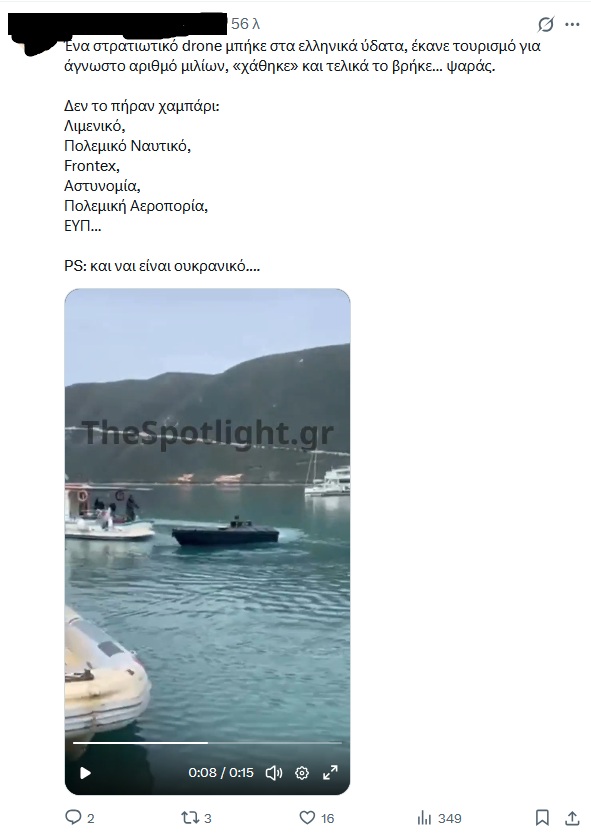
Πριν λίγες ημέρες σχολίαζα πως αν οι Ουκρανοί έχουν ανησυχίες εναντίον ποιου θα χρησιμοποιήσουμε τα θαλάσσια drones τους, θα μπορούσε να έχει ανησυχίες κ η Ελλάδα στο Ευρωπαϊκό Συμβούλιο. Τελικά τη λύση την έδωσε η ίδια η ζωή στη Λευκάδα
Nikos Lysigakis@lysigakis
Αν η Ουκρανία έχει τέτοιες ενστάσεις, μπορεί να έχει και η Ελλάδα αντίστοιχες ανησυχίες στο Ευρωπαϊκό Συμβούλιο. Έτσι συμβαίνει στις διεθνείς σχέσεις.
Ελληνικά
Πώς να λέγεται με νομικούς όρους αυτό που απεικονίζει το βίντεο;
kathimerini.gr/society/564221…
Ελληνικά
Nikos Lysigakis retweetledi

Ranked: What Europeans Are Most Proud Of 🌍
This graphic by The European Correspondent is one of the many incredible data-driven charts and stories from creators featured on our website. ✅
visualcapitalist.com/cp/what-makes-…

English
Charted: The Global Trade in European Antiques visualcapitalist.com/cp/global-trad… μέσω @visualcap
Nikos Lysigakis retweetledi

Ο @EFischberger εξηγεί πώς αποκάλυψε ότι το @clashreport κατευθύνεται από τουρκικά κέντρα επιρροής κ περιγράφει πώς έφτασε στην Άγκυρα ακολουθώντας τεχνικά, ψηφιακά και πολιτικά ίχνη. Η αποκάλυψή του ενισχύει αυτό για το οποίο όλοι μιλούν στην Ουάσιγκτον: ότι βρίσκεται σε εξέλιξη μια ευρεία, καλά οργανωμένη και σε μεγάλο βαθμό αθέατη επιχείρηση τουρκικής επιρροής στις ΗΠΑ. kathimerini.gr/politics/forei…
Ελληνικά
Nikos Lysigakis retweetledi

Everyone knows about the 300 Spartans at Thermopylae.
Almost nothing they know is the full story.
Start with the number. There weren't 300 Greeks at that pass. There were around 7,000. Spartans, Thespians, Thebans, Phocians, Locrians, Arcadians, Corinthians. Citizen-soldiers from across Greece who marched north knowing they'd be facing the largest army the ancient world had ever assembled.
The 300 is just the headline. The ones who stayed to the end.
Now the men themselves. King Leonidas wasn't some chiseled 30-year-old. He was roughly 60 years old when he led that march. And the 300 he picked weren't his strongest warriors. They were specifically men who already had living sons. Spartan law demanded it. Leonidas wasn't choosing an army. He was choosing men whose bloodlines could survive their deaths. Every one of them knew what that meant before they ever saw a Persian.
They marched anyway.
And they didn't march alone in the way movies suggest. Each Spartan citizen-soldier was accompanied by helots, the enslaved underclass that propped up the entire Spartan economy, outnumbering their masters roughly seven to one. Hundreds of helots fought and died at Thermopylae too. They get no statues. No films. No name on the monument.
The pass itself was barely 15 meters wide in 480 BC (it's silted up now and looks nothing like it did then). That bottleneck is the only reason a few thousand men could hold off a Persian force modern historians estimate at 70,000 to 300,000. Herodotus said 1.7 million. He was lying, or possibly counting cooks, slaves, and camp followers, but even the conservative number is staggering.
For two days, they held. Wave after wave broken against bronze and discipline. Xerxes reportedly leapt from his throne three times in fury watching his men die. He sent in the Immortals, his elite personal guard, supposedly invincible. They weren't. Not in that pass.
Then the Greeks were betrayed.
A local man named Ephialtes, whose name still means "nightmare" in modern Greek, sold the Persians a goat path through the mountains that flanked the pass. The Phocians assigned to guard it scattered when the Immortals appeared in the dawn fog. Leonidas knew by morning he was surrounded.
He dismissed most of the allied Greek forces. Saved their lives. But here's what almost nobody talks about: roughly 700 Thespians, led by a man named Demophilus, refused to leave. They were citizen-farmers from a small town that knew Persia was coming for them next no matter what. They chose to die beside the Spartans rather than run. About 400 Thebans stayed too, though their motives were murkier and many surrendered when the end came.
So the "last stand of the 300" was actually closer to 1,500 men. The Thespians died to the last. Their town was burned to the ground by the Persians weeks later anyway. They're a footnote in a story that should bear their name.
The final fight happened on a small hill called Kolonos. Spears shattered. Swords broken. Herodotus says they fought with hands and teeth at the end. Leonidas fell early, and the Spartans fought four times over his body to keep the Persians from taking it.
They lost.
Xerxes had Leonidas decapitated and his body crucified, a violation of Persian custom so extreme it tells you exactly how badly that old man had humiliated the king of kings. Forty years later, Sparta sent a delegation to recover his bones and bring him home.
Two Spartans survived the battle. One, Aristodemus, had been sent away with an eye infection. He returned to Sparta and was treated as a coward, shunned, refused fire, refused conversation, until he threw himself into the front line at Plataea a year later and died seeking redemption. The other survivor, Pantites, was sent on a diplomatic errand and missed the fight. He hanged himself from the shame.
That's the world they lived in.
The epitaph carved at the site doesn't brag. It doesn't even mention victory, because there wasn't one. Roughly translated, it just asks the traveler to tell Sparta that her sons died here, obedient to her laws.
A small group of farmers, an old king, an enslaved underclass written out of history, and a town that vanished from the map. Together, for three days in August of 480 BC, they did the math on freedom and decided the price was worth it.
We remember 300 of them.
There were always more.

English
Nikos Lysigakis retweetledi

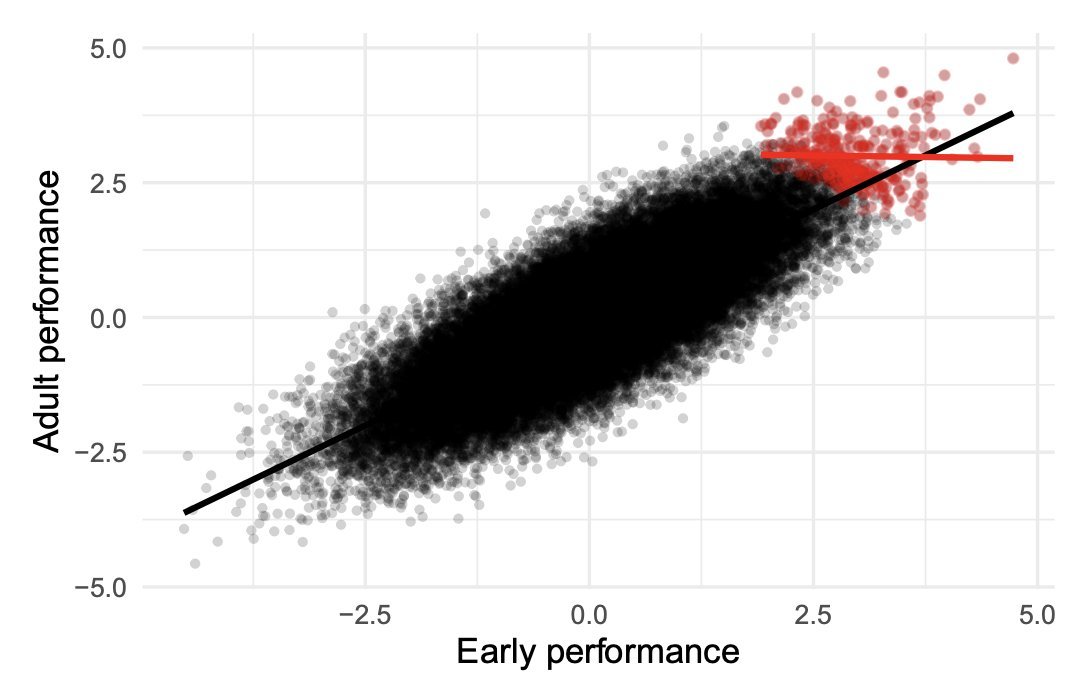
Among elite chess players, those with the lowest IQ are the best.
Among NBA players, the shortest ones are the best.
Among Hollywood actors, the least attractive are the most talented.
Among elite academics, those with poorer early academic performance are the best.
Among people with high LDL & high plaque burden, LDL is barely correlated with plaque burden.
Learn collider bias. Nice catch by @AlexTISYoung
Alex Strudwick Young@AlexTISYoung
Isn't this a collider bias phenomenon? If becoming an elite chess kid is due to some combination of IQ and chess skill not explained by IQ, then we'd expect a negative correlation between IQ and chess skill in the elite subsample.
English
Nikos Lysigakis retweetledi

Η Μαριούπολη των 450.000 κατοίκων σχεδόν σβήστηκε από τον χάρτη από την Ρωσία, η οποία εκτιμάται ότι δολοφόνησε περίπου 88.000 Ουκρανούς, η συντριπτική πλειοψηφία των οποίων ήταν άμαχοι.
Η Ρωσία μετέτρεψε μια μεγάλη ευρωπαϊκή πόλη σε μαζικό τάφο.
Ακούσατε κάτι για «γενοκτονία»;

Ελληνικά
Nikos Lysigakis retweetledi

Επειδή με αφορμή το USV στη Λευκάδα διαβάζουμε χαζομάρες (και πονηράδες ...) για "ξέφραγο αμπέλι" και "failed state", διανθισμένες συχνά με αντιουκρανικές νότες, να ξεκαθαρίσουμε τα εξής:
- Ο εντοπισμός USV στη θάλασσα είναι δύσκολη υπόθεση, λόγω του μικρού ίχνους τους (οπτικού και ηλεκτρομαγνητικού). Αυτός είναι και ο λόγος που τα ουκρανικά USV έχουν επανειλημμένα "τρυπώσει" σε ρωσικά λιμάνια, καταστρέφοντας πολεμικά πλοία.
- Η Ελλάδα κατέχει την 11η θέση στον κόσμο σε μήκος ακτογραμμών, με πάνω από 13.000 χιλιόμετρα. Ένα USV σε τέτοιο περιβάλλον είναι "ψύλλος στα άχυρα".
- Ειδικά το Ιόνιο είναι θαλάσσιος χώρος που επιτηρείται λιγότερα εντατικά από το Αιγαίο, για προφανείς λόγους: στο Αιγαίο υπάρχει η απειλή εξ Ανατολών. Αυτή η πρακτική όμως πρέπει να επανεξεταστεί, λόγω των κινήσεων της Τουρκίας (απόκτηση ελικοπτεροφόρου Anadolu, χρήση αλβανικής βάσης υποβρυχίων).
- Στη Μεσόγειο έχουν αναφερθεί επιθέσεις σε ρωσικά πλοία με χρήση USV, και η Ρωσία έχει κατηγορήσει την Ουκρανία για αυτές. Τέτοιες επιθέσεις δεν προέρχονται απαραίτητα από την ξηρά: ένα USV μπορεί να εξαπολυθεί και από εμπορικό πλοίο σε διεθνή ύδατα.
- Η εκδοχή "Ουκρανία" για την προέλευση του USV της Λευκάδας δεν είναι η μόνη πιθανή: άλλωστε η χώρα κατασκευής ενός USV δεν είναι πάντα και ο τελικός χρήστης του. Όμως η Ελλάδα πρέπει να ζητήσει επίσημα εξηγήσεις από τη χώρα κατασκευής του συγκεκριμένου USV, για το πώς βρέθηκε αυτό σε ελληνικά ύδατα.
- Το περιστατικό της Λευκάδας δεν είναι σημαντικό καθ' εαυτό, αλλά ο κίνδυνος χρήσης εχθρικών USV κατά της Ελλάδας είναι υπαρκτός: προκύπτει από τις προόδους της Τουρκίας στον τομέα αυτό. Τα αποτελέσματα των επιθέσεων ουκρανικών USV σε ρωσικά πλοία σε ναυστάθμους της Μ. Θάλασσας δείχνουν σε ποια βάση πρέπει να επανεξεταστούν τα μέτρα προστασίας στους Ναυστάθμους Σαλαμίνας και Κρήτης.
Κατά τα άλλα, οι φωνές για "ξέφραγο αμπέλι" και "failed state" είναι άλλη μια καλή ευκαιρία να εντοπίσουμε τους πονηρούς, τους αφελείς και τα bots ανάμεσά μας.
Ελληνικά