
Chileshe

485 posts

Chileshe banner
Chileshe

Chileshe

@m__chileshe

Systems Engineer;Researcher;Computer Scientist; Hit follow & let's connect 🍻

Katılım Ocak 2012
1.2K Takip Edilen358 Takipçiler
Chileshe
Chileshe@m__chileshe·
@ssishuwa Let them keep their ARV. As a researcher you must be happy that now we can focus on making our own drugs.
English
0
0
0
74
Sishuwa Sishuwa
Sishuwa Sishuwa@ssishuwa·
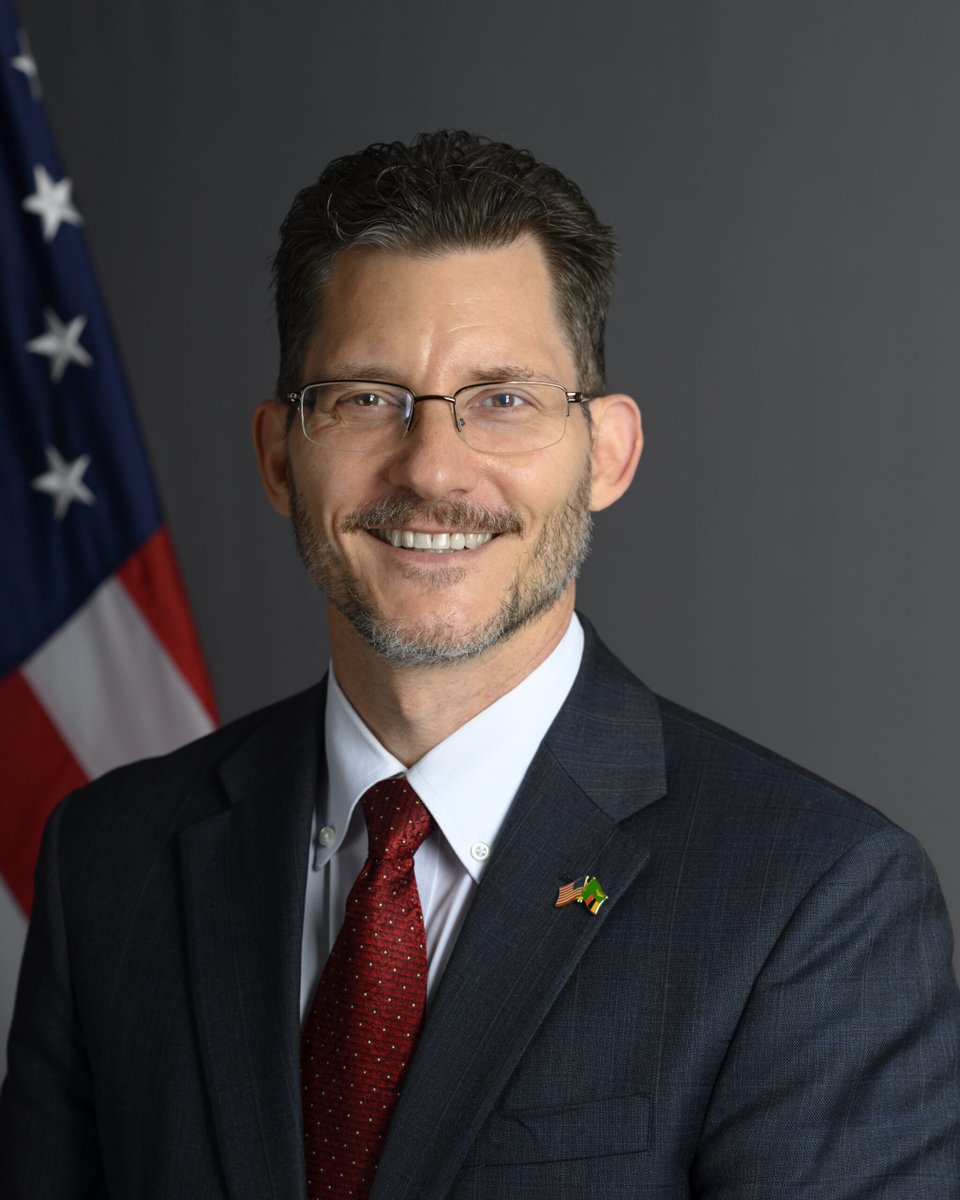
'I ask those of you whose country it is: Is this the Zambia you want?' Too often, people in the diplomatic community move from one duty station to another with little concern for the problems of the countries that briefly host them. Not Michael Gonzales, the United States Ambassador to Zambia who is leaving the country to take up a deserved promotion in Washington. I have never met Gonzales in person, but developed a liking for him, based on his work in Zambia and what I unearthed about him in the course of my academic research in other countries such as Zimbabwe and Malawi where he previously worked. He has a consistent track record of holding governments accountable for their actions in violation of their own laws and for harming the interests of their people and countries for personal benefit. Over time, I discovered the key to understanding Gonzales: His character. It radiates sharp focus, care and respect for the dignity of other people, and capacity to speak one's mind. Gonzales is a forthright, upstanding, and authentic human being with basic decency, integrity, and rectitude. The outgoing US Ambassador, who took up his appointment in August 2022, is leaving the same way he led: with care, courage, compassion, candidness, and affection for Zambia. For him, Zambia was not simply a duty station; it was a place he genuinely loves and cares for, one that has been let down by successive government leaders including the current ones. On 30 April, he delivered his parting words. They were as pointed as his nose. Below are excepts form his farewell speech, followed by the complete text of his remarks. On the insanity of appointing corruption accused suspects to lead anti-corruption bodies “But appointing a Director General of the Anti-Corruption Commission who was actively under investigation by the ACC, and her admonishment to her intentionally under-resourced agency not to investigate senior government officials, only cripple hopes that clean business can be done.” On the lawlessness of the government and its consequences “When Parliament ignores the Constitutional Court’s ruling that the process used to ram through a constitutional amendment was itself unconstitutional, investors rightly ask “If they can do that to the constitution, what does that mean for the sanctity of my contract?” They rightly wonder if the next constitutional amendment which the Attorney General has already announced is really just a guise for resetting term limits.” On the selective application of the law: “The rhetoric of “no sacred cows” is rubbish when there aren’t any cows except those who are deemed to be disloyal. When only opponents are arrested, but not those in office engaged in the very same practices, the hollow rhetoric of “rule of law” only further keeps investors away, preventing the creation of growth, jobs, and tax revenues to pay for public service commitments.” On the need to fight corruption including illicit financial flows: “The Zambian government’s own reports reveal that every year Zambia loses over $4 billion in dirty money flows to East Asia. That is Zambian money that does not benefit the Zambian people or contribute to the budget. If taxed, that would bring an additional $1 billion for the government to fund healthcare, education, social services, and development.” On how corruption has become a norm with no consequences for the perpetrators “Every year, hundreds of millions of dollars of government funds are lost to the Zambian people through corruption. Certainly, it’s not just U.S. taxpayers’ support that is stolen. Every year, the country loses out on hundreds of millions of dollars in new investment and growth because they are hijacked by unmitigated petty corruption, blocked because law-abiding investors refuse to pay kickbacks to Zambian bureaucrats or leaders who are never held accountable. "Even the Chinese government convicted AVIC’s Chairman to death for corruption. AVIC’s Chingola-Chililabombwe Road was washed out last month, its negligence disrupting Zambia’s trade with the region. AVIC’s fraud in a $320 million police housing tender in 2014 is well documented. Despite that, this government ignored the competitive bid by renown Zambian investors only to award AVIC the $650 million Lusaka-Ndola Dual Carriageway project, subsidizing this notoriously fraudulent and corrupt company with $300 million from the public pension scheme. How does this happen? Can law-abiding investors do clean business here? Will donors be asked to backfill the loss when the pension money too is wiped out?” On confirming reports that President Hichilema's officials unsuccessfully asked the US State Department in 2024 to recall Gonzales over his strong criticism of corruption in government: “Attacking the messenger who dares to name these dynamics out loud is not limited in targeting the U.S. ambassador and asking Washington for his removal. Today, 10% of my diplomats have family members who still haven’t received basic residency permits from the Zambian government. Several have received court summonses as a result. Like Zambians themselves experience, ZRA staff shake down my departing diplomats for fees that don’t apply to them too. When elevated, their supervisors double down on the demand.” On the duty of active citizenship: “So, as I prepare to leave this country that I love, I ask those of you whose country it is: Is this the Zambia you want? Are you on course to achieve it? If not, what action will you take to contribute to making that become a reality?” Below is the complete text of Gonzales' speech. Remarks by Amb. Michael Gonzales Farewell Reception – April 30, 2026 Good evening. For decades, the U.S. relationship with Zambia was one centered around aid. The United States has provided billions of dollars of assistance to Zambia, helping the country reach HIV epidemic control, contributing to a 20-year increase in life expectancy, slashing malaria deaths, and truly impacting the lives of every Zambian alive today. When we paused funding to review our assistance programs last year, so much of Zambia’s health system began to crumble almost overnight. Despite over $7 billion in U.S. health assistance since 2000 and the hard work of many Zambians alongside us, that crumbling system revealed that while we thought we were building capacity, successive Zambian governments had not built systems. Too often, Zambian officials and leaders abdicated their responsibilities, letting the United States pay for healthcare while officials diverted government funds to their own pockets. Last year I shed tears before the world when I announced a $50 million cut in US health assistance. After years of pleading, I could no longer standby while the Zambian government refused to stop or take action to hold people accountable for the systematic and nationwide theft of U.S. provided medicines while the Zambian citizens for whom those were intended went without. One year later, not a single notable person has been arrested since last February. Not a single notable prosecution has even begun. After last year’s pause, we resumed almost all of our health assistance: over $400 million including over $75 million in medication. We continue to pay the salaries for over 23,000 healthcare workers, as we have for decades. Such is the legacy of America’s support to the Zambian people. Now, I know there have been alarmist allegations recently. But let me be clear, any suggestion that the United States would withhold critical life-saving healthcare support from those Zambians whose lives and health depend on it unless we get critical minerals is disgusting and patently false! In reality, since October, my government has offered over $2 billion in additional health and economic assistance to Zambia. But we can no longer accept empty promises. The future must look different. The Zambian government must also increase Zambian funding, staffing, and genuine ownership of its systems. This is not to impose our will; it is the only way we know for Zambia to truly own a sustainable healthcare system and to enable robust growth. It’s the only way we know to ensure that system serves the people while finally breaking the cycle of foreign aid dependency. Since January, however, like with so many of our other overtures to the Zambian government, we have had effectively zero substantive engagement from Zambian officials to move these efforts forward. Our calls go ignored, questions unanswered, meetings cancelled, leaving us without even opportunities to speak, much less engage in substantive deliberations. Instead of continuing to languish without engagement, the actual funding under our Health MOU should have started this month. Instead, we have reached April 30 still cobbling together funds for mismatched projects without an implementation plan to guide us forward under Zambian leadership, much less a finalized MOU that guides our strategic approach. We know that the Zambian budget cannot even afford to pay for public services today, not to mention the increased healthcare funding or the myriad other huge budget commitments that seem to get pledged daily. So, something has to change if Zambia will ever meet its full potential or be able to sustainably provide services to its own people. At the same time, the Zambian government’s own reports reveal that every year Zambia loses over $4 billion in dirty money flows to East Asia. That is Zambian money that does not benefit the Zambian people or contribute to the budget. If taxed, that would bring an additional $1 billion for the government to fund healthcare, education, social services, and development. Every year, hundreds of millions of dollars of government funds are lost to the Zambian people through corruption. Certainly, it’s not just U.S. taxpayers’ support that is stolen. Every year, the country loses out on hundreds of millions of dollars in new investment and growth because they are hijacked by unmitigated petty corruption, blocked because law-abiding investors refuse to pay kickbacks to Zambian bureaucrats or leaders who are never held accountable. The narrative of the U.S.-Zambia relationship is adorned with flowery words of “partnership,” “collaboration,” “strategic,” or “mutual.” Regrettably, the reality of our unrequited relationship for decades has been starkly different. For years, the United States funded programs and sent technical advisors to help achieve Zambia’s development objectives. As we have for these past four months, we have often struggled to get successive governments to even bother answering the phone. It takes months to get a meeting that yields nothing. Officials draft policies they have no intention of implementing, invoking them in only speeches to sound like they are taking action. MOUs decay on the shelf among the others before the signing ceremony even ends, never to be implemented because the ministry won’t even meet to discuss implementation. Why? Because generations of Zambian officials and leaders gain from the dysfunction. The non-responsiveness on our availed funding and efforts to truly build a Zambian-owned health system that serves the Zambian people is sadly the norm. The theater of commissioning a report to get a scandal out of the news cycle but taking no substantive action on accountability is all too common. Of course, the systematic theft of public resources is not unique to American-provided medicines. Attacking the messenger who dares to name these dynamics out loud is not limited in targeting the U.S. ambassador and asking Washington for his removal. Today, 10% of my diplomats have family members who still haven’t received basic residency permits from the Zambian government. Several have received court summonses as a result. Like Zambians themselves experience, ZRA staff shake down my departing diplomats for fees that don’t apply to them too. When elevated, their supervisors double down on the demand. Zambia’s institutionalized and refined corruption does not only dissuade transparent and law-abiding investors from the United States. The inaction, corruption, and intimidation of opponents also harms American citizens, it undermines American organizations, NGOs, companies, and philanthropies. Zambians and so many other global friends of Zambia are also hampered by these very same dynamics, often bearing far more of the brunt of their effects. America’s support to Zambia is long-standing. Our goodwill runs through the veins, the hearts, and the dreams of millions of Zambians. Our hands remain open, outstretched in a genuine, transparent offer of true, tangible, and meaningful collaboration for mutual benefit. But there must be change. Going forward, the benefits of our relationship must be mutual. Empty promises must be replaced with tangible action. Commitments must be honored, laws must be implemented and enforced consistently and equally. The decades of paying for healthcare while national resources are pocketed must give way to ownership and systematic improvements that enable growth, development, and accountability. Since President Hichilema and I committed to reset the U.S.-Zambia relationship last July, America has re-doubled our efforts to support robust Zambian agency. We have availed billions of dollars to support tangible investments and reforms to catalyze Zambia’s success. We have offered expert support to inform reforms that would systematically benefit both the Zambian people and their many friends from around the world, without bias or favor. Sadly, so many of our overtures and goodwill have been met with … to use the most persistent and notorious of the Zambian government’s responses … “Noted. With thanks.” But, appointing a Director General of the Anti-Corruption Commission who was actively under investigation by the ACC, and her admonishment to her intentionally under-resourced agency not to investigate senior government officials, only cripple hopes that clean business can be done. Last May, multiple senior government officials shared with me and have confirmed that the government has a 500-page expert report detailing the irreversible harm and risk of generations of birth defects, cancers, heart and liver disease caused by carcinogenic heavy metals unleashed into the Kafue River ecosystem by last year’s Sino Metals’ tailings dam disaster. But, my heart broke when on July 29th last year, one of the country’s seniormost leaders vehemently denied that the government even had the report, much less would act on it until the polluter themselves provided it. I pleaded with her to take action to protect the Zambian people and I again offered U.S. assistance, which the Foreign Ministry had already formally declined. While so many American prospective investors leave, put off by bureaucratic drudgery, inaction, and corruption, the Zambian government recently approved Sino Metals to expand its operations. Did this happen in the face of Zambia’s myriad impediments, or because of them? Today, Sino Metals is scarring game management areas abutting the Kafue National Park. When that tailings dam breaks, I will not be alone shedding tears. Punctuating this, apart from the truly exceptional cases, too many American companies cannot get licenses, approvals, or action on basic administrative matters without being shaken down to give the Sino-brown envelopes of cash. The Zambian people suffer the consequences of these dual offenses: exploitation and foregone opportunity. When Parliament ignores the Constitutional Court’s ruling that the process used to ram through a constitutional amendment was itself unconstitutional, investors rightly ask “If they can do that to the constitution, what does that mean for the sanctity of my contract?” They rightly wonder if the next constitutional amendment which the Attorney General has already announced is really just a guise for resetting term limits. Even the Chinese government convicted AVIC’s Chairman to death for corruption. AVIC’s Chingola-Chililabombwe Road was washed out last month, its negligence disrupting Zambia’s trade with the region. AVIC’s fraud in a $320 million police housing tender in 2014 is well documented. Despite that, this government ignored the competitive bid by renown Zambian investors only to award AVIC the $650 million Lusaka-Ndola Dual Carriageway project, subsidizing this notoriously fraudulent and corrupt company with $300 million from the public pension scheme. How does this happen? Can law-abiding investors do clean business here? Will donors be asked to backfill the loss when the pension money too is wiped out? The rhetoric of “no sacred cows” is rubbish when there aren’t any cows except those who are deemed to be disloyal. When only opponents are arrested, but not those in office engaged in the very same practices, the hollow rhetoric of “rule of law” only further keeps investors away, preventing the creation of growth, jobs, and tax revenues to pay for public service commitments. Zambia does not need money. It needs leaders who govern for the people with integrity. It needs the political will to put Zambia first. But, of course, you don’t need me to say this. Dambisa Moyo, herself a daughter of the soil, made these same arguments 17 years ago. What America is trying to do here is both bolster Zambia’s sovereignty and catalyze Zambia’s growth. We are offering a transparent and open hand to join the Zambian people for mutual progress. We know that while you pursue a Zambia First agenda and we pursue America First, we are still able together to achieve something notably better for both of our countries, and we can do so without it coming at anyone’s expense, anyone’s exclusion, fully transparently, and legally. Now, of course the United States will absolutely continue to honor our long-standing commitment to the Zambian people to provide critical life-saving healthcare support. We will not leave Zambians without access to ARVs. We are redoubling our support to ensure that babies are not born HIV-positive. But, · Against the unmitigated systematic theft of U.S. assistance, · Against the refusal by the Zambian government to engage and to own or enable a sustainable healthcare system that serves the people, · In an environment where only the most exceptional of American investors can do clean business, and · Where Zambian government officials often can scarcely be bothered to take meetings with American officials or companies, not to mention capture the billion dollars of its own money secreted out of the country to east Asia, or hold accountable the company that unleashes generations of cancer and birth defects onto the people… without fundamental change, as the American Ambassador to the Republic of Zambia, how can I ask American taxpayers, Congress, or President Trump to continue the massive aid budgets that have been the hallmark of our relationship for decades? The United States remains intent to work with Zambia toward our mutual objectives, but how Washington responds to silence, inaction, aversion to accountability, and lack of ownership remains to be seen. That said, I am confident that it will depend on fundamental changes by the Zambian government to take action to do right by the Zambian people. It will depend on actions to foster and enable the Zambian people – and their partners who abide by the rule of law – to be able to tangibly contribute to a mutually beneficial future. Washington’s hand remains open and outreached for transparent, accountable collaboration enabling tangible action to benefit both of our countries. But we can no longer own the projects more than the Zambian government. We can’t justify continuing to prioritize funding where the Zambian government also does not deploy its own resources. No longer will we lead, while Zambian officials sit back unresponsively. Quite simply, America can best support Zambia’s sovereignty, agency, and success, if we finally abide by the maxim and refrain from wanting development more than the Zambian government does. That said, what happens between governments and embassies is important, but it is only a small fraction of the broader relationship between countries. The ties between Zambia and America are profound, strong, and everlasting. The connections between churches and civil society; the linkages between students, artists, and researchers; the bonds between communities; the union of our peoples – these are the essence of the U.S.-Zambia relationship, and these will never fade. Too often people hope for change. They note what others should do. But, hope is not a strategy, and we cannot control the actions of others, only our own. So, as I prepare to leave this country that I love, I ask those of you whose country it is: Is this the Zambia you want? Are you on course to achieve it? If not, what action will you take to contribute to making that become a reality? I first stepped foot in Zambia in 1995. My daughter took her first steps in Livingstone. As I prepare to depart, I take with me beautiful memories of Zambia and the Zambian people, but I depart with a heavy heart wondering if realization of the Zambian dream will be deferred for yet another 64 years while even more Zambians fall into poverty instead of being able to rise into the brilliant future that is possible. But my role here is not about this little guy with a big heart for Africa. It is about America and Zambia. America will continue reaching out to the people of Zambia, offering our support, seeking as much to learn as to share, doing so openly and transparently, and eager to help enable the realization of that Zambian dream and the creative future that benefits, and can only be discovered through, our sincere partnership. I thank you.
Sishuwa Sishuwa tweet media
English
50
67
248
30.9K
Chileshe
Chileshe@m__chileshe·
@LauraMiti All this is because we have refused to sign their manipulative MoUs.
English
1
0
5
954
Laura Miti
Laura Miti@LauraMiti·
The outgoing US Ambassador gave a damning farewell speech. Summary - Zambians are dirt poor, die coz govs ensure grand theft of money that can change lives. I'll cut to the chase - President H, your gov, your team at state H stink with corruption & there's no way you don't know.
English
45
88
463
18.9K
Chileshe
Chileshe@m__chileshe·
@Airtel_Zambia @petitamwanza U can't really blame Airtel Money for yo own mistake. Worse off, it has a verification step whre u confirm the name of the recipient. I hv been a victim myself but perhaps we should be proposing solutions to them. @Airtel_Zambia plz consider additional Verifications.
English
0
0
0
122
Airtel Zambia
Airtel Zambia@Airtel_Zambia·
@petitamwanza Kindly assist us with the affected number, date of transaction, amount involved and the receiver's number for better assistance. ^RB
English
5
0
11
3.5K
Petita Mwanza
Petita Mwanza@petitamwanza·
My mum accidentally sent k2000 to a wrong number. @Airtel_Zambia : kindly call the person and ask if they can send money back or alternatively, if youre within lusaka, go to Central police and get written instructions for airtel to reverse transaction 😭. Youre doomed either way
Zambia 🇿🇲 English
25
11
116
20.3K
Chileshe
Chileshe@m__chileshe·
@mide_io Whatever you say before she settles her bills will be used against you.
English
0
0
0
101
Ivory ✪
Ivory ✪@mide_io·
Men, how would you start a conversation in this situation?
Ivory ✪ tweet media
English
320
171
2.4K
58.9K
Chileshe
Chileshe@m__chileshe·
@diamondtvzambia Well articulated Thomas Luzendi🙌🏽. This procedure is lethal
English
0
0
0
8
Diamond Media
Diamond Media@diamondtvzambia·
The Diamond Breakfast | Human Rights Activist Thomas Luzendi on The New Parliament-Enacted Criminal Procedure Code
English
1
1
11
1.1K
Sishuwa Sishuwa
Sishuwa Sishuwa@ssishuwa·
How to rig elections the legal way: understanding the politics behind the 70 new constituencies By Sishuwa Sishuwa On 16 April 2026, the Electoral Commission of Zambia (ECZ) published a list of 70 new constituencies. These will be added to the existing 156, creating a total of 226 constituency-based seats in the National Assembly. As I predicted on 30 November last year in an article entitled “The devil in delimitation: why Hichilema is desperate to create new constituencies”, the majority of these new constituencies have been allocated to sparsely populated areas that support the ruling United Party for National Development (UPND) rather than densely populated, opposition-leaning urban centres like Lusaka and the Copperbelt. Of the 70 new constituencies, thirty-one (31) are in the Zambezi region – comprising parts of Central Province (8) and the three provinces sharing the Zambezi River: Southern (9), Western (7), and Northwestern (7). These areas have historically supported the UPND. Another twenty-six (26) are in the Luangwa-Chambeshi region – the four provinces sharing the Luangwa and Chambeshi rivers: Eastern (9), Luapula (5), Muchinga (6), and Northern (6). These areas have historically backed the main opposition party, the Patriotic Front (PF). The remaining thirteen (13) new constituencies are distributed as follows: six in Lusaka and seven on the Copperbelt. Notably, four of Lusaka's six new constituencies were carved from existing ones with strong historical support for the UPND, driven mainly by their ethnic demographics. These include Makeni (sliced from Kanyama), Kafue East (from Kafue), Chilanga West (from Chilanga), and Chongwe West (from Chongwe). The other two new constituencies, Lima and Roma, were cut from Matero and Mandevu constituencies, respectively. Taken together, there are four major political implications of the new constituencies. The first is that when added to existing constituencies, the Zambezi region now has the highest number of constituencies in the country by geographical spread or location totaling 97, distributed as follows: Southern (29), Western (26), Northwestern (19) and Central (23).  The Luangwa-Chambeshi region has 82 constituencies, distributed as follows: Eastern (29), Luapula (20), Muchinga (14), and Northern (19). Lusaka (18) and Copperbelt (29) have 47 constituencies between them. This means that even before the first vote is cast, the UPND strongholds already have an in-built majority of 97 arguably guaranteed seats (since they are in safe zones), thanks to this redrawing of electoral districts or gerrymandering. When one adds the 31 seats that the Constitution empowers the winning presidential candidate to appoint to parliament through nominations (11) and proportional representation (at least 20 of the 40 seats), this number, if President Hakainde Hichilema wins re-election, rises to 128 seats – more than half of the seats in the National Assembly. (Note: propositional representation seats are allocated to parties based on the vote that a party’s presidential candidate has received. Since Zambia’s constitution requires a winning presidential candidate to receive more than fifty percent of the total valid votes cast, 20 is only the minimum number; the final number will be determined by the percentage received by the president-elect, but it cannot be less than 50 percent). The second implication is that since the main opposition party is formally run by a leadership that was installed by President Hichilema, even most of the 82 seats in PF strongholds are likely to be won by the UPND in the forthcoming election. In fact, in controlling the PF through the state-supported Robert Chabinga, one of Hichilema’s objectives was to prevent the more than 50 PF members of parliament from defending their seats on the opposition party’s ticket. Their seats are mostly held in the Eastern Province and the Bemba-speaking provinces of Muchinga, Luapula, and Northern – constituencies where the UPND has fared poorly in previous general elections. A significant number of these MPS have already made it easier for Hichilema by defecting to the UPND, on whose ticket they are likely to seek adoption to return to parliament. Those who resist defection will be confronted with a new hurdle. Recently, the ECZ introduced a new administrative requirement that any aspiring parliamentary candidate sponsored by a political party must produce an adoption certificate signed “by the secretary-general or president as reflected at the office of Registrar of Societies”, an office controlled by the executive.  The Hichilema-controlled Chabinga, who is recognised by the Registrar of Societies as the PF’s leader, is unlikely to issue a certificate of adoption to a PF prospective parliamentary candidate who does not accept his leadership. As a result, most of the incumbent PF MPs will have to find alternative platforms on which to defend their seats. Already, Hichilema has instigated factions in at least four other opposition parties – with at least one faction supported by the State – for the purpose of making it harder for any of them to field candidates at both presidential and parliamentary level. The affected parties are the Movement for Multiparty Democracy, United National Independence Party, National Democratic Congress, and Forum for Democracy and Development. This scenario would increase the ruling party’s chances of winning the seats as the UPND will be competing against candidates standing either as independents or under relatively unfamiliar or unestablished parties – that is assuming Hichilema, using the Registrar of Societies and the ECZ, will allow any serious candidate or opposition party to run against him or his party. The third implication is that Zambia may effectively emerge from the August election as a defacto one-party state. This is because the UPND is likely to retain most of the parliamentary seats it won in 2021, win the newly created additional 31 seats in its safe zones, and, through the orchestrated exclusion of the main opposition party from the ballot, secure the majority of seats that were previously held by the PF. I was an opponent of the PF’s undemocratic actions when it was in power and a regular critic of then President Edgar Lungu. But one does not have to support the PF to see that the absence of a viable opposition party will be a terrible development for Zambia’s multiparty democracy. Over the last decade, the country has evolved into a two-party system. For instance, as things stand, out of the 156 parliamentary seats directly elected under first-past-the-post, the UPND (89) and PF (54) share 143. If one of these parties disappears or if Hichilema succeeds in his efforts to obliterate the PF, Zambia will become, except in designation, a one-party state. I do not think Hichilema will be bothered. If anything, he will be pleased with any election that will produce a UPND-controlled parliament because such an outcome would make it easier for him to make further changes to the Constitution such as abolishing the presidential vote or removing presidential term limits on his office. The fourth implication is that the geographical spread of the 70 new constituencies vis-à-vis population density reinforces existing structural inequalities in the allocation of the Constituency Development Fund (CDF) to the advantage of the Zambezi region. Currently, each constituency in Zambia, regardless of population size, receives K40 million annually to support community-level development. This dynamic is most unacceptable when one considers the population dynamics and the fact that most rural constituencies are sparely populated. According to the 2022 census report, Luapula Province has a population of 1.5 million people but only 20 constituencies. Western Province has 1.3 million people but 26 constituencies. This means the province with fewer people will receive at least K240 million more money than the one with more people every year. Similarly, Lusaka Province has 3 million people, but 18 constituencies. Southern Province has 2.3 million people and 29 constituencies. This means the province with fewer people will receive nearly half a billion Kwacha more money than the one with more people every year. Overall, the Zambezi region will receive at least K600 million Kwacha more than the Luangwa-Chambeshi region in CDF allocations alone every year. This is rigged development. I have seen a few people claiming that the distribution of the 70 new constituencies created by ECZ is fair and balanced, considering the size and geographical spread of the redrawn electoral districts. This is an ill-informed position that could be a result of an uncritical reading of the law governing delimitation or an induced desire to be seen as “objective” by hunting for things over which to praise the government, no matter how misplaced. According to Article 59 of the Constitution, size and geographical spread of constituencies are unimportant factors to consider when delimitating the boundaries constituencies. What must be taken into account are the following considerations: the history, diversity and cohesiveness of the constituency; population density, trends and projections; ensuring that the number of inhabitants in each constituency is reasonable, taking into account the means of communication and geographical features; ensuring that constituencies are wholly within districts; and seeking to achieve an approximate equality of constituency population, subject to the need to ensure adequate representation for urban and sparsely populated areas. Had delimitation been done transparently and impartially, most of the new constituencies should have gone to Lusaka (3 million people), Copperbelt (2.7m), and Eastern (2.4) provinces. These provinces would also have the highest number of constituencies overall since they each have more people than the remaining seven provinces. Unfortunately, partisan political considerations appear to have been behind the latest exercise. Altogether, the creation of the 70 new constituencies should not be seen in isolation but as part of a multi-pronged strategy by the executive to rig the election the legal way and install a constitutional dictatorship. This strategy consists of at least four key steps designed to undermine democratic accountability. The first is undermining the sources of horizontal accountability. This has found expression through installation of a legislative leadership that is subservient to the presidency, offering incentives to opposition and independent MPs that has reduced parliament to effectively operating as an extension of the executive, the dismissal of judges who were seen as a threat to the interests of the ruling core, and the staffing of the superior courts with loyalists who defer to executive political interests. The second step is dismantling social accountability. This has found expression through the co-optation into government bodies of most of the critical voices from civil society that challenged Lungu’s authoritarian tendencies, the arrest, harassment, and vilification of the remaining voices for criticising antithetical government actions, and the application of new and existing anti-democratic legislation to cultivate a climate of fear that has left many citizens unable to express themselves freely. The third step involves crippling the political opposition. The executive has repeatedly used the police to prevent opposition parties from holding public rallies and to arrest their leaders on a variety of political offences. State institutions and actors were also employed to facilitate the death of former president Lungu, who in the absence of a viable opposition, had emerged to become the opposition, by blocking him from seeking medical treatment on time. The fourth step involves assaulting vertical forms of accountability with the goal of reducing the visible fairness and competitiveness of elections. This has found expression through a variety of mechanisms. These include the appointment of loyalists of the executive to the Electoral Commission of Zambia, the exclusion of rival candidates from the ballot, the redrawing of electoral districts to enable gerrymandering, and tampering with the voter’s roll to inflate the number of registered voters in the ruling party’s strongholds. Other shenanigans are changing the mechanism by which votes are converted into seats in the legislature (For instance, proportional representation seats are to be tied to the votes received by a presidential candidate rather than having a separate ballot for each political party) and making eleventh-hour changes to the electoral law to both obstruct the opposition and secure advantage for the ruling party. For instance, before parliament currently is a widely opposed Bill that proposes horrifying amendments to the Electoral Process Act such as removing key security features from ballot papers, which would make rigging easier, and empowering the ECZ “to suspend a political party or candidate for breach of the code of conduct” even during the campaign period. In this incremental and systematic effort to undermine accountable democratic governance, Hichilema has greatly benefited from the growing disinterest in promoting democracy among great powers such as the USA and the European Union as well as regional powers including South Africa and organisations such as the African Union. As a result, Zambia’s democracy is being hollowed out through incremental institutional capture, in which the executive has weakened oversight bodies, tilted the playing field, and entrenched its advantage over time. These dynamics do not necessarily threaten immediate collapse, but they do erode the foundations of democratic stability over time. A more urgent and present danger is that the ongoing executive-driven dismantling of the formal guardrails and norms that have long kept executive power in check risks eroding public trust in the use of the ballot as the best mechanism of changing governments. Trust is the glue that holds democracy together. When it erodes, citizens become more likely to disengage, question electoral outcomes, and support leaders who promise to bypass or undermine democratic rules. This can fuel polarisation and increase the risk of instability.
Sishuwa Sishuwa tweet media
English
42
32
146
16.2K
Damilola🌺
Damilola🌺@thebigdammy·
what’s your addiction as a man?
Damilola🌺 tweet media
English
1.3K
290
4K
120.4K
Aimee 🤍
Aimee 🤍@aime_mwizaa·
If a woman wants you, she will definitely get you bro. 🤷🏽‍♂️✍🏽
Aimee 🤍 tweet media
English
768
53
1.1K
47.7K
Chileshe
Chileshe@m__chileshe·
@ssishuwa Russia also had term limits, leadership crisis and a very poor economy until God gave them Putin. When they noticed that he was continuously performing, they removed the term limits and we all know Putin is still doing wonders. So there is nothing wrong if it's in good faith👏🏽
English
2
0
1
435
Sishuwa Sishuwa
Sishuwa Sishuwa@ssishuwa·
What, or who, will stop Hichilema? Unless nature takes him, Zambia should prepare for a life president! By Sishuwa Sishuwa Earlier this week, a video clip of an interview featuring Cosmas Chileshe, a member of the ruling United Party for National Development (UPND), went viral after he proposed the removal of term limits so that President Hakainde Hichilema can rule for as long as possible. Appearing on a private national television station, Chileshe argued that the current Constitution, which limits a president to five-year terms in office, is undemocratic: “The country should remove the term limit of two-five-year terms but keep the five-year cycle of elections so that the people are the ones to decide if they want the President to continue or not. Unlike what Zimbabwe is proposing, which is to extend the 5-year term to 7 years, Zambia should simply remove the term limit. One of the reasons we don’t develop is because we change leadership too much and other countries are laughing at us for that. Why should a President who is working very well for the people be removed simply because he has served 2 terms?”, Chileshe asked. Many people have condemned Chileshe’s proposal as outrageous and unacceptable, warning that it could lead to a presidency in perpetuity. This condemnation is necessary but not sufficient. Zambians also need to understand why it is Chileshe who is making such comments. When I was growing up in the village in Western Zambia, I learnt that among dogs, there is one whose role is only to bark at the passer-by or intruder and another that bites. Cosmas is the barking dog; the hot air balloon. Contrary to what some of his critics have argued, Chileshe's call for the elimination of term limits was neither random nor a result of carelessness. It had a specific purpose. In other words, there is “methodical” thinking behind what appears to be an isolated position. Broadly speaking, there are three reasons that explain why Chileshe was carefully chosen as the most suitable individual to kickstart the “no term limits” discussion. The first is that Chileshe is just an ordinary party member, not an official. Sending him to a major national platform to promote the idea of no term limits creates room for the ruling party to distance itself from his views if this becomes necessary. The second reason is that Chileshe is an ex-member of the former ruling party, the Patriotic Front (PF), who now serves as part of the UPND presidential media team. This identity matters because it allows the ruling party, if needs be, to claim that the proposal came not from the UPND, but from a former PF member who is not yet familiar with the political culture of his new political home. In the short term, Chileshe’s campaign for no term limits allows him to perform loyalty by showing that he is so much in support of the president that he would rather Hichilema rules forever. In the long term, Chileshe’s campaign benefits Hichilema. By injecting, in the public mind, the thought that Hichilema must rule without term limits, Chileshe has laid the ground for the entry of more voices on a subject that is likely to dominate political life after the August election: succession politics. The fact that his proposal has received wider public traction is an achievement for him and for his patrons. Not long ago, Attorney General Mulilo Kabesha said Zambians want constitutional amendments after the election. mastmediazm.com/2026/03/zambia… Chileshe is one of the Zambians that Kabesha had in mind and has revealed one of the amendments that are coming. In proposing the idea now, Chileshe is allowing Hichilema to test the public’s reaction. Should there be any public backlash to the proposal, Hichilema can easily distance himself from Chileshe’s views and even discard him.  If, as expected, there is no major public outrage, it won’t be long before the next movement on the issue happens. There is a timetable to this madness, to these things! The third reason is Chileshe is a Bemba and his ethnic identity matters under Hichilema’s politics. A careful examination of how Hichilema has operated since 2021 shows that when it comes to doing wrong or unpopular things, the president usually fronts Bembas or Easterners from the as the “useful idiots”. Think of Miles Sampa (see the article on the link below, for an example), Robert Chabinga, Levy Ngoma, Andrew Lubusha, Elias Nkandu, and several others who hail from the Chambeshi-Luangwa region – that is the region covering the four provinces that share the Chambeshi and Luangwa rivers: Eastern and the Bemba-speaking provinces of Muchinga, Luapula and Northern. africanarguments.org/2023/12/zambia… In avoiding the use of the usual suspects from the Zambezi region – that is parts of Central and the three provinces that share the Zambezi River: Northwestern, Southern and Western – Hichilema is showing that he has learnt lessons from the 2006 experience that followed the death of the party’s founding president Anderson Mazoka. At the time, the Tonga-speaking Hichilema, who was in the private sector but had been a card-carrying member of the UPND, relied on the Zambezi supremacists such as Ackson Sejani, Rex Natala, and Syacheye Madyenkuku to promote his political interests that then rested on the idea that “only a Tonga must replace Mazoka”.  To read further on how succession politics played out in 2006, see the article on the link below. doi.org/10.1080/000839…\ Although Hichilema succeeded in securing the UPND presidency, the ethnic campaign that marred his election adversely damaged the UPND’s standing and explains why he was to spend over 15 years in opposition before managing to rebuild the party’s appeal beyond Tongas. Nearly two decades later, the president and his party have not forgotten the lesson of 2006 and are this time relying on useful idiots from the Chambeshi-Luangwa region to promote his political interests that rest on the idea that presidential terms should be removed, or that the election of the president should be done by parliament rather than the voters. The latter idea rests on the soon-to-be completed reconfiguration of the National Assembly, thanks to delimitation, that will permanently leave the Zambezi region with even more seats in parliament than the Chambeshi-Luangwa region. If there is another thing that Hichilema learnt from the 2006 experience, it is that it is not easy to disown members of his own ethnic group. When many people condemned the Zambezi supremacists who were pushing the narrative that “only a Tonga must succeed Mazoka”, Hichilema refused to condemn or distance himself from the supremacists because they were members of his ethnic group. This time around, he can easily disown Chileshe – only if there is public backlash to the proposal of “no term limits” – since he belongs to easily dispensable members of the Chambishi-Luangwa region and was until recently a supporter of the former ruling party whose members the president embraces or discards when convenient. Hichilema’s failure to disown the foul conduct of Zambezi supremacists has also been demonstrated in his attitude towards the broadly expanded offence of hate speech. When those on the receiving end of what is considered hate speech are individuals who hail from the Chambeshi-Luangwa region, with the perpetrators coming from the Zambezi region, Hichilema has not been bothered, and no one has been arrested and prosecuted. When those on the receiving end of what is considered hate speech are individuals who hail from the Zambezi region, with the perpetrators coming from the Chambeshi-Luangwa region, Hichilema has been quick to act, and many people have been prosecuted. This experience is also true for the offence of seditious practices, with Zambians from the Chambeshi-Luangwa region accounting for nearly all the arrests and prosecutions so far under his presidency. The point is this: succession politics is on, and Hichilema is preparing his successor, namely, himself. So serious about his bid for life presidency is Hichilema that even those within the ruling party whom he deems as potential stumbling blocks to the realisation of his long-term political interests have been frozen out of their positions in both Cabinet and in the UPND. Among the most high-profile examples here are former Minister of Local Government Gary Nkombo, who is also Mazabuka Central MP, and Elijah Muchima, the Ikeleng’i constituency lawmaker, who until recently was Minister of Health. Both are seen as capable of frustrating Hichilema’s bid for life presidency and will consequently not be readopted for parliamentary election. The official justification for sidelining them is that they voted against Bill 7, but the real reason is succession politics: Hichilema has long considered Nkombo a major threat to his bid for absolute power, which explains why he sacked him from cabinet long before the vote on the Bill. This is the unfolding wider context within which Chileshe’s views, and his role, should be understood. Chileshe is, figuratively speaking, John the Baptist who is out to prepare the ground for the political messiah! As I wrote in the article below on 7 April, Hichilema is out to secure the dominance of the state by the Zambezi region for a very long, long time: x.com/ssishuwa/statu… As I write this, I have just read that Hichilema has appointed and promoted, at one go, 40 judges to various superior courts! 40 judges! This is, from all points of view, an abuse of presidential power that is aimed at changing the complexion of the judiciary. Hichilema knows that he will get away with his move, just as he got away with it when he previously appointed 20 new judges at once. This time, he decided to double the number. A close examination of the list of the newly appointed and promoted judges is even more damming and shows the intensifying implementation of what appears to be his ethnic-regional vision for the capture of the State.  When Hichilema last appointed the 20 judges, 13 of them came from the Zambezi region. This time, 17 of the 26 newly appointed High Court judges are from the Zambezi region. Four out of seven Court of Appeal judges are from the Zambezi region. Two of the three new judges to the Constitutional Court are from the Zambezi. One of Hichilema's personal lawyers, an ex-captain in the Zambia Air Force named Butler Sitali, also from the Zambezi region, has been airlifted from the private sector directly to the Supreme Court, overlooking experienced and serving judges of the superior courts. This suggests that Hichilema may be preparing his personal lawyer to take over as either Chief Justice when the incumbent Mumba Malila retires in four years’ time or as Deputy Chief Justice, should the president decide to promote the current holder of the post, another of Hichilema’s former lawyers, be replace Malila. Hichilema has further promoted executive-friendly judges who have been messing up things, especially for the opposition, in the High Court to the Court of Appeal and the Constitutional Court. He has also promoted several rogue magistrates, who have been convicting members of the opposition on slight and politically motivated charges, to the High Court. Under Hichilema, politically sensitive cases in which he has an interest have always been allocated to only judges from the Zambezi region, regardless of the level of the court. In promoting magistrates and judges who are from the region and generally seen as pro-executive, the president has not only packed the courts at all levels but also sent a message to other magistrates and judges that it is a crime to be professional; what secures one’s promotion is doing the bidding of the regime, not integrity, competence, fairness, or quality judgements. And coming four weeks before the dissolution of parliament, both the timing and purpose of these judicial appointments and promotions are not accidental. The timing is strategic for Hichilema because apart from having a compromised parliament, he knows that MPs will not have enough time to thoroughly scrutinise his 40+ appointees before the House stands dissolved on 13 May. As a result, the nominees are all likely going to be easily ratified. Already, MPs are too worried about their own adoptions and survival in the coming elections to care much about these new judges and commissioners. In terms of purpose, Hichilema is preparing for the forthcoming general election in August when courts will play a central role in determining who gets to stand against him and the winner. Before ethe election, courts will have a final say during nominations. Last year, Hichilema changed the constitutional rules governing nominations to make it easier to exclude rival candidates through court-engineered disqualification of duly nominated candidates. Before the amendment, Zambia’s constitution stated that: “Where … a court disqualifies a candidate for corruption or malpractice, after the close of nominations and before the election date, the Electoral Commission shall cancel the election and require the filing of fresh nominations by eligible candidates and elections shall be held within thirty days of the filing of the fresh nominations.” Hichilema deleted this clause and replaced it with the following: “Where a candidate has been disqualified by a court, after close of nominations, the candidate shall not be eligible to contest the elections, and the election shall proceed to be held on the date prescribed for holding the election.” The consequence of this change is twofold. The first is that unlike in the past where validly nominated candidates could only be disqualified for reasons of either corruption or malpractice, judges now have been given the sole and unregulated discretion to determine the grounds for disqualifying any candidate from running for public office. Given the many pro-executive judges now on the bench, any strong opposition candidate can easily be disqualified for any reason the judge deems fit, making it possible for Hichilema to run unopposed or with weaker candidates. The second is that once disqualified, the affected political party will not be given an opportunity to present an alternative candidate for election, as the poll will go ahead.  To illustrate: if the opposition were to find and nominate a strong unity presidential candidate, the Hichilema-appointed judges on the ConCourt may disqualify such a candidate for whatever reason (s) they can dream of, and Hichilema will be re-elected unopposed or after defeating relatively weaker candidates. Courts will also play an important role after the election. For instance, of the 11 judges on the Constitutional Court, seven have been appointed by Hichilema since 2023 while one has been promoted by him. The president, who fired three of the ConCourt’s judges who had been appointed by his predecessor and previously ruled against him, has now totally reconstituted the very court that will hear any presidential election petition. Of the 11, six are from the Zambezi region, and five of them are Hichilema’s appointees. This is the reconstituted Constitutional Court that will hear any petition against him. Similarly, the High Court will hear all parliamentary election petitions. With 26 new High Court judges, alongside the crop that he had appointed earlier, Hichilema has reconstituted the High Court in his party’s image. Although these appointments are subject to parliamentary ratification, Hichilema knows that all his nominees will be approved because of the supine character of the current National Assembly. After all, most MPs in parliament have sold out to the executive, as they showed during the vote on the deplorable Bill 7. To strengthen his hold on the Electoral Commission of Zambia, Hichilema also announced appointments to the body. First, the president appointed former UPND aspiring candidate for Luanshya constituency, Zevyanji Sinkala, as a commissioner. Second, he promoted another commissioner from the Zambezi region to become the deputy chairperson. This means four of the five commissioners on the electoral management body are from the Zambezi region, including the chairperson and deputy chairperson. The only exception is a card-carrying member of the ruling party who has been redeployed to further secure the UPND’s interests on the electoral commission. If a sitting president can both rig an election and control the Constitutional Court, it is hard to see how he or she can ever be voted out of office. In recent days, Hichilema, perhaps intent on hoodwinking international actors, has been going round claiming that Zambia will hold free, fair, and credible elections. Based on his actions so far, the forthcoming elections are likely to be anything but free, fair, and credible. Instead of convincing voters on why he deserves another term, Hichilema has been very deliberate and methodical in the way he has dismantled alternative sources of power. Over the course of the last five years, the president has employed several legal mechanisms to enhance executive power and undermine the integrity of the forthcoming poll. In addition to the above appointment of judges using a nontransparent criterion, Hichilema has used: · the registrar of societies to prevent the registration of opposition parties deemed as likely threats to his re-election, with John Sangwa's party serving as the latest victim; · the police to block all public meetings called by the opposition outside by-elections even as he himself continues to hold rallies freely; · the courts and Robert Chabinga to prolong divisions in the main opposition party and stifle the other parties; · the much changed and compromised electoral commission to disadvantage his main rivals; and · the strategy of co-optation to appoint critical voices to public bodies and, in the process, weaken civil society. I have examined many of these points in this Mail & Guardian article, published in September last year: mg.co.za/thought-leader… Having sapped any semblance of remaining professionalism in formal institutions such as the judiciary, electoral commission, and the police, Hichilema feels emboldened. Herein lies the real danger. Once public trust in these and other institutions is totally eroded, opposition to his leadership may find expression in undemocratic means or informal outlets. Already, growing levels of frustration with the government’s failure to address the escalating cost-of-living crisis have left many areas, especially in towns and cities, teetering on the brink of social unrest. All that it may take to torch this simmering discontent – and make what happened in Tanzania look like a picnic – is a disputed election. Or even the electoral exclusion of an opposition leader that many people see as the only real alternative. Not even Hichilema may survive the potential consequences of what he is, in effect, brewing. Who, or what, will stop Hichilema? For there seems to be an increasing probability that if he is not stopped, and unless nature takes him, Zambians will do well to start preparing for a wamuyaya (life time) president. Should he manage to steal the next election and then move to successfully either remove term limits or abolish the presidential vote, Hichilema, who is only 63, may even attempt to bend nature to his will for at least 20 years.
Sishuwa Sishuwa tweet media
Sishuwa Sishuwa@ssishuwa

Watch out for ethnic-regional imbalances in Hichilema’s judicial appointments By Sishuwa Sishuwa On 8 August 2025 President Hakainde Hichilema signed into law the Superior Courts Act, which provides for the number of judges of the Supreme Court, the Constitutional Court, Court of Appeal, and the High Court. The new statute repeals and replaces the Superior Courts (Number of Judges) Act of 2016. It provides for thirteen judges of the Supreme Court, including the Chief Justice and the Deputy Chief Justice; thirteen judges of the Constitutional Court, including its President and Deputy President; not more than thirty-one judges of the Court of Appeal (this is up from 19 in 2016), including the Judge President and the Deputy; and not more than one hundred judges of the High Court (up from 60 judges in 2016). There are three broad points I wish to make on this important development. The first is that I commend President Hichilema for increasing the number of judges at the two busiest levels of our justice system: the High Court and Court of Appeal. A key reason why it takes a long time for cases to be disposed of is because judges are simply overwhelmed. On average, a High Court judge in Lusaka handles about 300 cases a year. This is simply unmanageable and prevents the timely delivery of justice. When one adds the low salaries that judges receive, it is hard to understand why any self-respecting individual would aspire to be a judge under the circumstances. According to the latest Judges (Salaries and Conditions of Service) Regulations published in May 2025, the current annual basic salary of a judge on the High Court bench is K370, 473.73. Their counterpart on the Court of Appeal receives a basic salary of K388, 997.38 per annum. This means a High Court judge gets about K30, 000 monthly before tax while one on the Court of Appeal receives about K32, 000. This is far less than what politicians in the two other branches of government – parliament and the executive – get. It is largely because of Zambia’s high rate of unemployment that many people are prepared to take up such low-paying jobs on the thinking that although ‘the salary is low, it is better than nothing’ especially when other conditions of service such as housing allowances are added. And precisely because such individuals join the judiciary for the paycheck, not any commitment to justice, many of them, eager to beef up their income, become susceptible to corruption from a highly corrupt executive that often wants to use judges for its partisan goals. Judges of the Constitutional Court and the Supreme Court handle very few cases a year, averaging 20 at most, so I am not concerned about them. Much of the workload that is before the superior courts is handled by the low-staffed High Court and Court of Appeal benches. That is why I am praising Hichilema for increasing the numbers of judges to the two courts by 40 and 12 respectively. In fact, even these additional numbers are not enough, given the volume of work that is before the High Court and Court of Appeal, but the increase marks a good starting point. Instead of fighting to increase the number of members of parliament, Hichilema is better advised to increase the number of judges because they provide a clear and more important service to the people. The second point is that there is an urgent need to enact a law that provides for a transparent system that would result in merit-based identification, interviews, and appointment of potential judges. The increase in the numbers alone is not enough. It needs to be supported by other measures. In addition to an unmanageable caseload and poor conditions of service, another factor that contributes to poor and late delivery of justice is the sheer incompetence of some of our judges. However, we will not solve the problem of corruption and incompetence in the judiciary if people who end up as judges are not appointed on merit. Even before Judicial Service Commission (JSC) and President Hichilema move to fill up the created vacancies in the judiciary, it is important to enact an Act of Parliament that would provide for a competitive, merit-based, and transparent system of appointing judges. This should involve advertising vacancies, publishing the names of both unsuccessful and shortlisted candidates, and conducting interviews before a properly reconstituted JSC which should include the Chief Justice. Presently, everything is done in secrecy and in a manner that overly concentrates power in the presidency. Judges are currently appointed by the President on the recommendation of the JSC, but members of this body are themselves appointed by the President subject to ratification by a generally pliant parliament through a simple majority. No one knows the criteria that the JSC uses to identify judges. People just wake up to news that so and so has been appointed to this or that court without any knowledge of how the affected individuals were identified. Right now, the appointment of judges operates like an admission to a secret society. What is needed is to create legislation that will provide for a very clear process of appointing judges in a transparent, competitive, and open manner. As earlier stated, let there be adverts calling for interested candidates to apply for positions in the judiciary so that anyone interested and meeting the outlined requisite qualifications is free to apply and become a judge. The JSC, whose members should not be appointed by the president, will then hold open and even televised interviews with the shortlisted candidates. Members of the public should be free to give evidence-driven testimony against any shortlisted person whom they think lacks the integrity to serve as a judge. This manner of proceeding would ensure that those who end up as judges in our superior courts do so not because they know someone in the corridors of power but are qualified, competent, and impartial individuals with demonstrable experience, intimate knowledge and understanding of the law and who possess proven levels of integrity. The incompetence that we see in our judiciary today is not accidental; it is the result of the lack of a transparent and open mechanism of appointing judges. A key reason why I voted for Hichilema in the 2021 election was that I had hoped that he would change this undesirable status quo where judges are appointed in a secretive way that does not foster transparency. After all, he had promised to create such a mechanism when he was in opposition. But after winning power, the President has reneged on his campaign promise, as he has done on so many others, and has used the same rotten system that his predecessors relied upon to appoint judges. The problem, in my view, is not just the lack of capacity in the individuals appointed to these roles; it is the inadequacies of a system that allows such individuals to end up as judges in the first place. Unless the current system is changed, the next crop of appointments to superior courts risks including several dishonourable magistrates, mainly those in Lusaka, who have been making a truckload of such questionable judgements in favour of the executive that one would be forgiven for thinking that they have been promised appointments to the High Court if they secure the interests of those in power. The third and final point is the need to ensure regional, gender, youth, and equitable representation of persons with disabilities in the appointment of judges. This would promote inclusion and national unity and prevent accusations and perceptions that the President is packing the courts with individuals who predominantly come from one region. The good thing is that there already exists a law in place for this measure. All that is required is for the President to comply with it. Article 259 of Zambia’s Constitution provides that “Where a person is empowered to make a nomination or an appointment to a public office, that person shall ensure — (a) that the person being nominated or appointed has the requisite qualification to discharge the functions of the office, as prescribed or specified in public office circulars or establishment registers; (b) that fifty percent of each gender is nominated or appointed from the total available positions, unless it is not practicable to do so; and (c) equitable representation of the youth and persons with disabilities, where these qualify for nomination or appointment.” The same Article also states that “A person empowered to make a nomination or appointment to a public office shall, where possible, ensure that the nomination or appointment reflects the regional diversity of the people of Zambia.” This means the Constitution itself requires the President to be sensitive to regional representation when making appointments to any public office. Unfortunately, Hichilema has so far not shown much respect for the law. For instance, in February 2023, the President appointed a total number of 20 judges to various positions in the superior courts. These included Margaret Munalula, Arnold Shilimi, Mudford Mwandenga, Maria Mapani, Kenneth Mulife, Mwiinde Siavwapa, Laston Mwanabo, Mwaka Ngoma Samundengu, Mbile Muwindwa Wina, Vincent S. Siloka, Greenwell Malumani, Mabolobolo Mwananjiti, and Situmbeko Chocho. The rest were Abha Nayah Patel, Yvonne Chembe, Enias Chulu, Obister Musukwa, Anne Malata – Ononuju, Geoffrey Chilufya Mulenga, and Malaro Nyirenda. Of these 20 appointments, the first thirteen came from only three provinces or one region: Southern, Western, and Northwestern. Such regional imbalances are unlawful and must be avoided in the next set of appointments. If there are 50 vacancies in the judiciary, Hichilema must make sure that those appointed reflect regional, gender, youth, and equitable representation of persons with disabilities in Zambia today. If there is to be any departure from this constitutional principle, there must be compelling grounds. As the Judicial Service Commission and Hichilema move to fill the numerous vacancies created in the superior courts, I make an earnest appeal to members of the public to remain vigilant and specifically watch out for ethnic-regional imbalances in the distribution of the soon-to-be announced appointments of judges. We owe it to ourselves to build a better, equal, united, just, and fair Zambia in which no citizen feels shut out or excluded from any public opportunities on account of their ethnic identity, region of origin, gender, disability, and where presidents respect the laws that we have set for ourselves. It is possible.


English
55
28
122
27.8K
👻🪐
👻🪐@9IneTailedDeviL·
@thebigdammy Them no get pride Nothing them get They’re only causing nuisances, wars, genocide, spread diseases, pollution, mortality , famine etc Of what use are men to earth and humanity?
English
329
2
96
37.4K
mimi
mimi@miml001·
I can get any man I want🥹….unless I don’t want to😌🤭
mimi tweet media
English
42
6
78
1.6K
Mami Amah 🎀
Mami Amah 🎀@ItsAmahAdoma·
men should be specific sometimes 💔😭😂
Mami Amah 🎀 tweet media
English
1K
220
2.1K
75.2K
Chileshe
Chileshe@m__chileshe·
@Indemosyd Inject her with my natural fertilizer
English
0
0
0
34
Cindy☘️
Cindy☘️@Indemosyd·
You met your ex in your room like this, what would you do? 👀
Cindy☘️ tweet media
English
901
99
1.9K
84.7K
mimi
mimi@miml001·
Guys without girlfriends, what do you do on Saturdays? 😪
mimi tweet media
English
582
58
1.4K
34.1K
Chileshe
Chileshe@m__chileshe·
@LauraMiti He sure did sound like a Kaponya. Politics of hate😅. Even Chabinga is better than ba Mundibile
English
0
0
1
241
Laura Miti
Laura Miti@LauraMiti·
You can't convince me that the ill-advised decisions to arrest opp leaders are made in Force HQ. As an aside - found Mr Mundubile speaking, aft his release, amusing. He seemed unexpected-gift-giddy. Tried hard to connect with his inner kaponya. Not too natural with him, mwe🤦🏾‍♀️.
English
4
2
21
3K
Jewel 🌗
Jewel 🌗@OfficialJoel4_·
What could that be?
Jewel 🌗 tweet media
English
2K
57
546
38.6K
Kittiya
Kittiya@Marion_mirem·
Can we follow each other?
Kittiya tweet media
English
609
81
1.4K
28.6K
Chileshe
Chileshe@m__chileshe·
@ssishuwa It's only you who's gone. Infact you have been gone for too long. Enjoy your stay there.
English
0
0
0
14
Sishuwa Sishuwa
Sishuwa Sishuwa@ssishuwa·
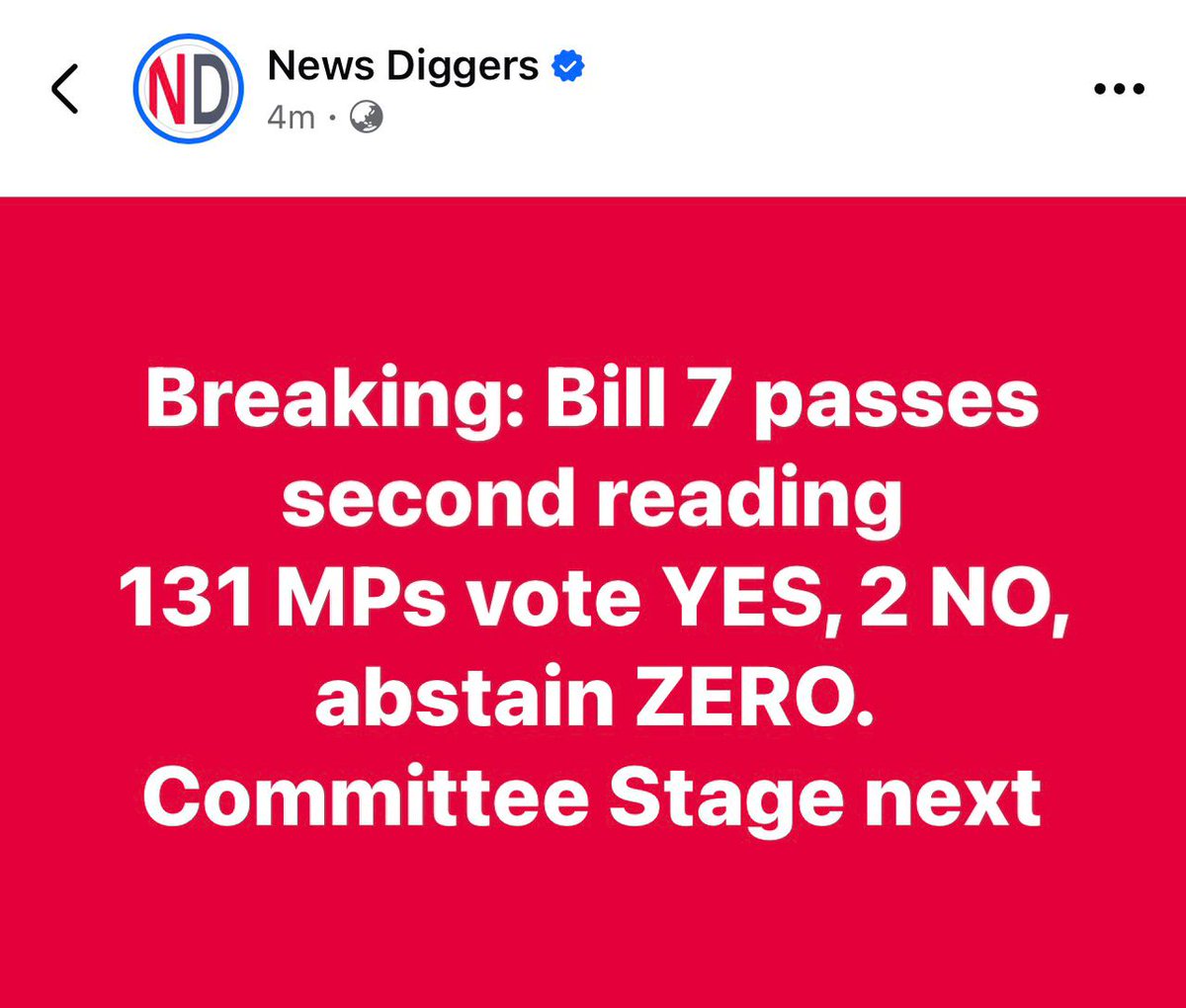
Well, it's now official. The Zambia that we knew is gone. We lost it today. To suicide. The coming era will be a long dark road. You may not understand now, but one day, you will. I'm sorry my efforts were not enough to stop it, but I tried. I have nothing left to give. Goodbye🇿🇲
Sishuwa Sishuwa tweet media
English
170
64
508
54.3K