Maliech

9.5K posts

Maliech

Maliech

@maliech

llama. Appears pettable. Spits when you come close. Pronouns: llama or llamas.

Katılım Kasım 2011
103 Takip Edilen107 Takipçiler
Maliech retweetledi
Jorge Manrubia
Jorge Manrubia@jorgemanru·
Action Text now officially supports different editors. The adapter for Lexxy will be available in the next version: github.com/basecamp/lexxy… Hopefully, other editors will embrace this. Rails is multi-editor now 🥳! Kudos to Sean Doyle for doing the bulk of the work here.
Jorge Manrubia tweet media
English
7
21
158
19.3K
Maliech retweetledi
Sam Saffron
Sam Saffron@samsaffron·
Rails just landed 11 CVEs, similarly our monthly release at @discourse landed 33 CVEs. This is not that software suddenly got sloppy, the AI based scanning using 5.4 xhigh and Opus max is finding dormant issues. Even if you hate AI and don't think loops are useful for anything, DO NOT sleep on this one, you will regret it. discuss.rubyonrails.org/c/security-ann…
English
0
16
137
13.3K
𝕍
𝕍@vilosoof·
@bslagter Elke niet rommel-omvormers. Welk merk / type heb je? Zal je dit direct kunnen vertellen
Nederlands
2
0
2
1.3K
Bert Slagter
Bert Slagter@bslagter·
Zonnepanelen in 2027 Met dynamische tarieven en zonnepanelen zul je in 2027 in de situatie komen dat tegelijk: - terugleveren geld kost - afnemen geld kost Dat komt omdat je wel energiebelasting betaalt over afname, maar niet terugontvangt over levering. Dat is nu nog symmetrisch, volgend jaar niet meer. Bijgevoegd een grafiek die dit uitlegt. Energienerds: weten jullie betere visualisaties? Stuur ze me! (Ik wil hier wat meer over schrijven de komende tijd)
Bert Slagter tweet mediaBert Slagter tweet media
Nederlands
42
34
248
48.3K
Maliech
Maliech@maliech·
@BM_Visser Dag Martien, al reageer ik weinig, ik lees je updates altijd met veel plezier!
Nederlands
0
0
1
92
Martien Visser
Martien Visser@BM_Visser·
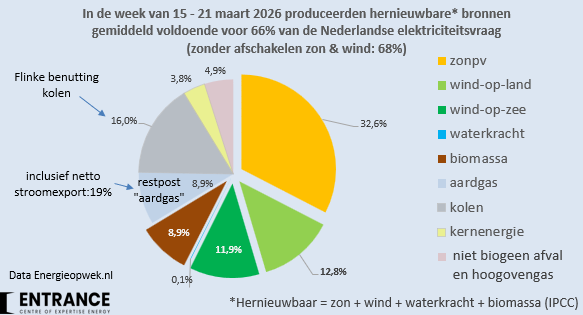
Afgelopen week produceerden hernieuwbare bronnen voldoende elektriciteit voor 2/3 van de NL stroomvraag. Amer 9 met 100% biomassa is weer in bedrijf gekomen. Voorts flinke inzet kolencentrales op uren met weinig wind & zon. Daardoor beperkte gasinzet. #grafiekvandedag
Martien Visser tweet media
Nederlands
10
16
55
6.8K
Maliech retweetledi
Maxime Chevalier
Maxime Chevalier@Love2Code·
Plush language Amiga tribute #amiga :)
Français
8
2
30
3.4K
Maliech retweetledi
Kevin Newton
Kevin Newton@kddnewton·
I've been pushing pretty hard on Prism performance lately (both parser and CRuby compiler), and I'm really happy with where we are now. I'll put some highlights in the thread, but the headline is that on master Prism is now ~40% faster and uses ~30% less memory than parse.y.
English
3
12
56
6.3K
Maliech retweetledi
Lucian Ghinda
Lucian Ghinda@lucianghinda·
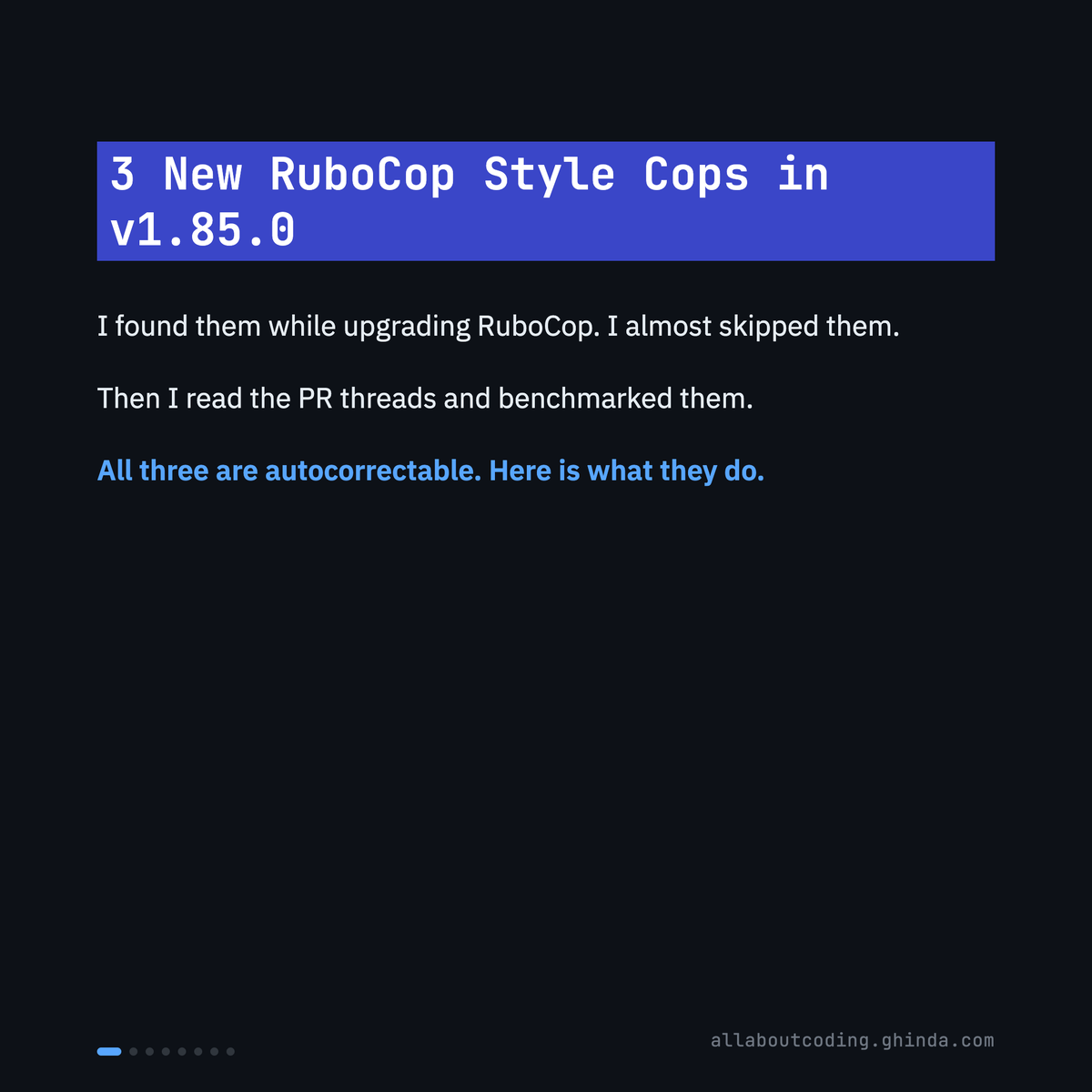
While upgrading RuboCop in a project, I noticed three new style cops in v1.85.0. I almost skipped them. At first I thought they were just syntax sugar but I think they are nice additions and they make Ruby code match better with the language idioms.
Lucian Ghinda tweet media
English
2
1
22
2.1K
Maliech retweetledi
Nate Berkopec
Nate Berkopec@nateberkopec·
After ~9 months of experimentation (synthetic and in prod), I can say definitively that MALLOC_CONF has no measurable effect on any Ruby workload that I've seen. Don't bother.
English
0
1
20
1.8K
Maliech retweetledi
Charles Oliver Nutter
Charles Oliver Nutter@headius·
This year marks the 20th anniversary of my work on JRuby! I'm looking forward to sharing that story and talking about the future with folks around the world. Being able to speak at @RubyConf and @RailsWorld would be a fitting way to celebrate 20 years. I hope I'm accepted. 🤞
English
3
6
48
2.3K
Maliech retweetledi
Michael Rispoli
Michael Rispoli@michael_rispoli·
Finally got to diving into Layered Design for Ruby on Rails Applications by @palkan_tula at @inazarova’s recommendation. Such a good deep dive into rails within the first three chapters and some cool techniques I didn’t realize were available to me. Definitely recommend if you’re looking to get a deeper understanding of building complex rails apps. And because I know you may be thinking it, no AI does not recommend these techniques out of the box so it’s well worth your time to learn them. 😎
Michael Rispoli tweet media
English
3
6
60
6K
Maliech retweetledi
James Hibbard
James Hibbard@jchibbard·
🚀 Shopify engineers detail improvements they made to Bundler and RubyGems, including parallel gem downloads, parallel git clones, and install optimizations to drastically reduce bundle install times. #Rails railsatscale.com/2026-03-09-fas…
English
0
12
75
7.1K
Maliech retweetledi
Lucian Ghinda
Lucian Ghinda@lucianghinda·
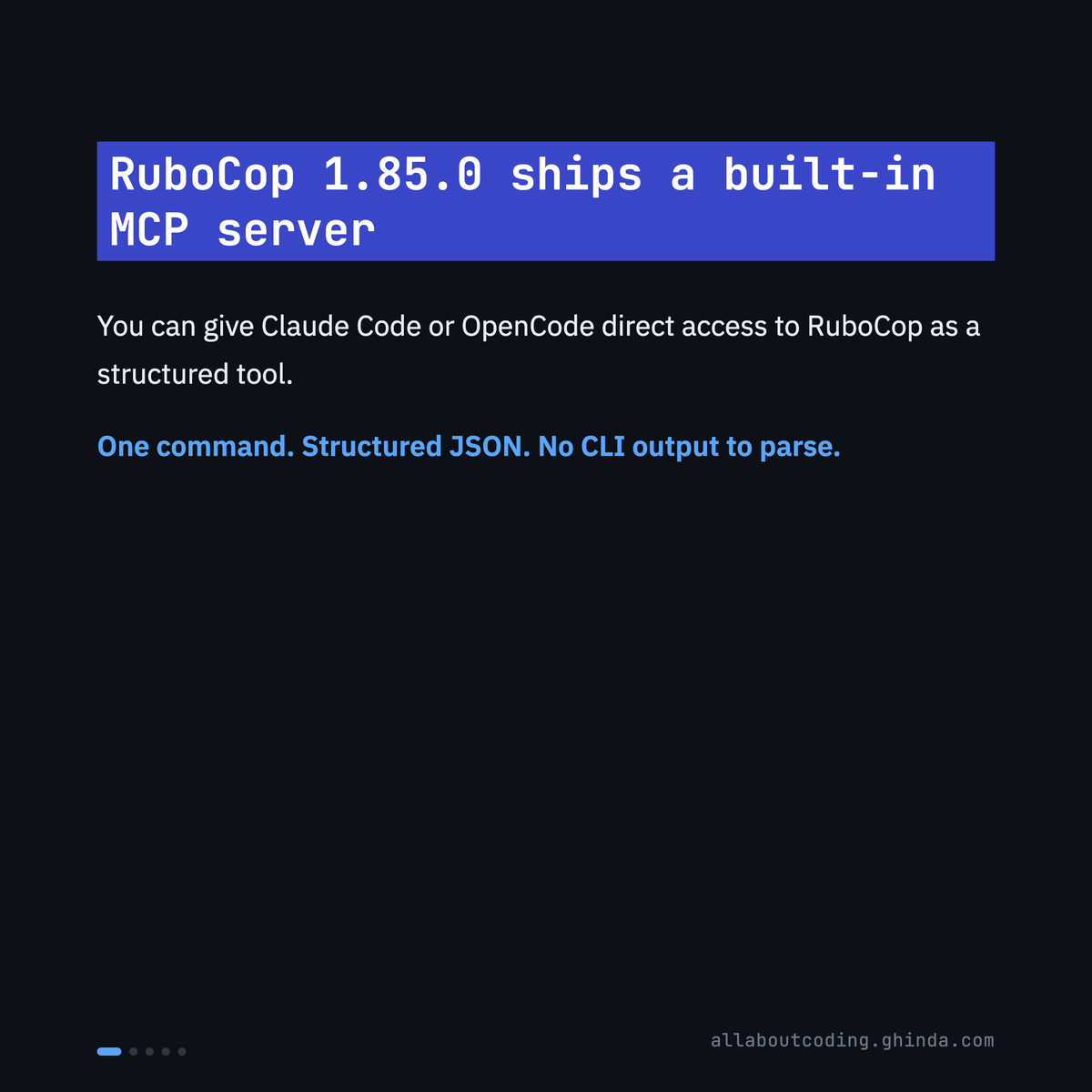
RuboCop 1.85.0 ships with a built-in MCP server. You can now give Claude Code or OpenCode direct access to RuboCop as a structured tool. Here is how to set it up.
Lucian Ghinda tweet media
English
5
6
70
4K
Maliech retweetledi
Josef Strzibny
Josef Strzibny@strzibnyj·
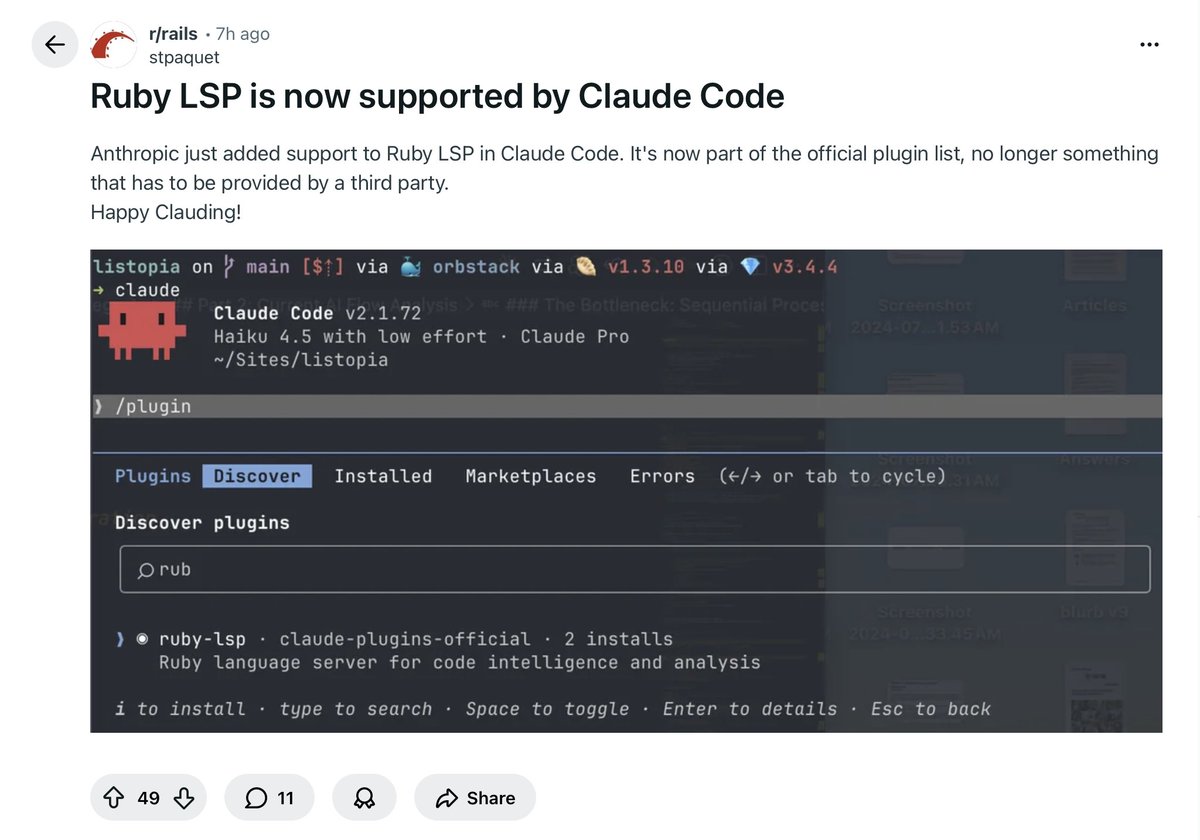
RubyLSP is now official plugin in Claude Code yayy
Josef Strzibny tweet media
English
3
14
183
6.7K
Maliech retweetledi
Mr PitBull
Mr PitBull@MrPitbull07·
She kept finding women in laboratory photographs from the 1800s. Then she read the published papers—and every single woman had vanished. Someone had erased them from history. Yale University, 1969. Margaret Rossiter was a graduate student studying the history of science. She was one of very few women in her program. Every Friday afternoon, students and faculty gathered for beers and informal conversation. One week, Margaret asked a simple question: "Were there ever any women scientists?" The faculty answered firmly: No. Someone mentioned Marie Curie. The group dismissed it—her husband Pierre really deserved the credit. Margaret didn't argue. But she also didn't believe them. So she started looking. She found a reference book called "American Men of Science"—essentially a Who's Who of scientific achievement. Despite the title, she was shocked to discover it contained entries about women. Botanists trained at Wellesley. Geologists from Vermont. There were names. There were credentials. There were careers. The professors had been wrong. But Margaret's discovery was just the beginning. Because as she dug deeper into archives across the country, she found something far more disturbing. Photograph after photograph showed women standing at laboratory benches, working with equipment, listed on research teams. But when she read the published papers, the award citations, the official histories—those same women had disappeared. Their names were missing. Their contributions erased. It wasn't random. It was systematic. Women who designed experiments watched male colleagues publish results without giving them credit. Women whose discoveries were assigned to supervisors. Women listed in acknowledgments instead of as authors. Women passed over for awards that went to male collaborators who contributed far less. Margaret realized she was witnessing a pattern that stretched across centuries. Women had always been present in science. The record had simply pushed them aside. She needed a name for what she was documenting. In the early 1990s, she found it in the work of Matilda Joslyn Gage—a 19th-century suffragist who had written about this exact phenomenon in 1870. In 1993, Margaret published a paper formally naming it: The Matilda Effect. The term captured something that had been hidden in plain sight for generations. Once you knew the term, you saw it everywhere. Her dissertation became a lifelong mission. For more than 30 years, Margaret researched and wrote her landmark three-volume series: Women Scientists in America. She examined letters, institutional policies, individual careers. She gathered undeniable evidence that women in science had been consistently under-credited and structurally excluded. Her work faced resistance. Many dismissed women's history as political rather than academic. Others insisted she was exaggerating. Margaret didn't argue emotionally. She presented data. Documented cases. Patterns repeated across decades and institutions. Eventually, the evidence became undeniable. Her research helped restore recognition to scientists who had been erased: Rosalind Franklin, whose X-ray work revealed DNA's structure—credit went to Watson and Crick. Lise Meitner, who explained nuclear fission—omitted from the Nobel Prize. Nettie Stevens, who discovered sex chromosomes—received little credit. Cecilia Payne-Gaposchkin, who discovered stars are made of hydrogen—initially dismissed. And countless others whose names had nearly vanished. Margaret changed the narrative. Science was no longer just the story of solitary male geniuses. It became a story of collaboration that included women who had been written out. The Matilda Effect became standard terminology. Scholars used it to examine how credit is assigned, how authors are listed, who receives awards, who gets left out.
Mr PitBull tweet media
English
119
3.6K
9.2K
154.5K
Maliech retweetledi
Lucian Ghinda
Lucian Ghinda@lucianghinda·
Ruby LSP is now an official Claude Code plugin. With it, Claude queries the language server directly - same as your editor does. Without it, Claude reads the file and tries to extract the structure manually.
English
7
32
270
19.1K
Maliech retweetledi
Derek Dreyer
Derek Dreyer@HerrDreyer·
RIP Tony Hoare. 😢 I only met him a couple times many years ago at MSR and was not accomplished enough at the time to have much useful to say, but he sure cast a long shadow over the field...
English
17
62
336
33.8K