
Sabitlenmiş Tweet
Mcares
6.8K posts


Mcares
@mamuscares
Electrical Electronic Engineer| Instrumentation and Control Engineer| Entrepreneur| Farmer| holding diverse view about life
Nigeria Katılım Temmuz 2010
633 Takip Edilen217 Takipçiler
Mcares retweetledi

They wore the uniform and committed the very crimes they promised to prevent.
This is difficult to say, but it needs to be said clearly and openly.
Some officers of the Nigeria Police Force have been caught running criminal groups in Rivers State. They abducted people during fake patrols, forced access to victims' bank accounts and cryptocurrency wallets, extorted millions, kidnapped, and committed armed robbery.
They did this in uniform, using police vehicles, and targeted the very people they were meant to protect. The Nigeria Police Force, led by IGP Olatunji Rilwan Disu, psc (+), NPM, will not ignore these actions.
Syndicate One, Zone 16, Yenagoa: Inspector Ayanniyi Jelili, Inspector Durojaye Francis, and Inspector Olayemi Titus have been arrested. Three accomplices are still at large and are being actively pursued. Police recovered three Toyota Sienna buses and ₦7,338,800 linked to these crimes.
Syndicate Two, Rivers State Command: Inspector John Okoi, Inspector Eyibo Asuquo, Inspector Udo Ndipmong, Inspector Bright Nwachukwu, and Inspector Anele Ikechukwu have been dismissed. Their case has been sent for prosecution.
The charges include conspiracy, armed robbery, kidnapping, extortion, and official corruption.
This is a real and necessary internal cleansing. It is painful, but no rank will protect a criminal in this Force.
If you have suffered because of bad officers, please report it. Your voice helps ensure accountability.
Nigeria Police Force@PoliceNG
NIGERIA POLICE FORCE INTENSIFIES INTERNAL CLEANSING, DISMISSES CORRUPT OFFICERS, PROSECUTES PERSONNEL INVOLVED IN KIDNAPPING, ROBBERY, EXTORTION The Nigeria Police Force has reaffirmed its commitment to discipline, accountability, and institutional reform with the dismissal, arrest, and prosecution of police personnel found involved in cases of conspiracy, armed robbery, kidnapping, extortion, stealing, and abuse of office in Rivers State and its environs. The Force notes that the actions of the affected officers represent a gross betrayal of the ethics, standards, and professional values of the Nigeria Police Force. The leadership of the Force under the Inspector-General of Police, IGP Olatunji Rilwan Disu, psc (+), NPM, remains resolute in its determination to identify, expose, and remove criminal elements from within the institution, irrespective of rank or position. Investigations into one of the cases uncovered a criminal syndicate involving serving police officers attached to Zone 16 Headquarters, Yenagoa, namely Inspector Ayanniyi Jelili, Inspector Durojaye Francis, and Inspector Olayemi Titus, who allegedly engaged in armed robbery, kidnapping, and extortion while operating illegal patrols within Port Harcourt. The officers reportedly abducted victims during unlawful stop-and-search operations, forcefully gained access to their banking and cryptocurrency applications, and extorted millions of naira from them. The investigation led to the arrest of the three officers, while three other accomplices identified as Inspector Awele Ogbogu, Inspector Prosper Aghotor, and Corporal Favour Onwuchekwa are currently at large. Exhibits recovered include three Toyota Sienna buses used for the illegal operations and the sum of ₦7,338,800.00 traced to the criminal activities. Findings further revealed that the suspects operated with firearms and had allegedly carried out similar operations against unsuspecting members of the public within Rivers State. In a separate investigation, the Force uncovered another criminal syndicate involving officers formerly attached to the Department of Operations, Rivers State Command, namely Inspector John Okoi, Inspector Eyibo Asuquo, Inspector Udo Ndipmong, Inspector Bright Nwachukwu, and Inspector Anele Ikechukwu, who engaged in organised acts of kidnapping, extortion, stealing, and official corruption. The dismissed officers were found to have routinely abducted citizens, extorted money through unlawful transfers from victims’ bank and cryptocurrency accounts, and dispossessed them of valuables while operating under the guise of official patrol duties. Consequently, the five implicated officers were subjected to orderly room proceedings and dismissed from the Nigeria Police Force, while the case file has been forwarded for prosecution on charges bordering on conspiracy, armed robbery, kidnapping, extortion, official corruption, and related offences. Members of the public are encouraged to continue reporting cases of police misconduct, abuse of office, extortion, and human rights violations through established complaint channels for prompt investigation and action. The Nigeria Police Force remains committed to a professional, transparent, accountable, and service-driven policing system firmly rooted in the rule of law and the protection of citizens’ rights. DCP ANTHONY OKON PLACID psc(+) mni Force Public Relations Officer Force Headquarters, Abuja 14th May, 2026
English
Politics is deeper than what we see
Russian Embassy in South Africa 🇷🇺@EmbassyofRussia
🇷🇺🇨🇳 At the invitation of President of China Xi Jinping, President of Russia Vladimir Putin will pay an official visit to China on May 19-20 The visit is timed to coincide with the 25th anniversary of the signing of the Treaty of Good-Neighbourliness, Friendship and Cooperation
English
Mcares retweetledi

Trump on Taiwan: When you look at the odds, China is very, very powerful, big country. That's a very small island. Think of it, it's 59 miles away. We're 9500 miles away. That's a little bit of a difficult problem. Taiwan was developed because we had presidents that didn't know what the hell they were doing. They stole our chip industry.
English
I think countries spoke person, especially Nigeria should learn or take clue from China not to over states what never happened or agreed on to please the public
Global Insight Journal@GlobalIJournal
🇺🇸🇨🇳 Trump left Beijing empty-handed: no agreement on Iran, no concessions on Taiwan, no H200 deal, no decision on rare earth trucks, no release of Jimmy Lai, and fewer Boeing aircraft orders than expected. Only warm words and a banquet in which Trump kept praising Xi. He came looking for leverage, and they gave him hospitality. Beautiful.
English
Mcares retweetledi

Ahead of the commencement of our party’s Primary Elections, I convened a stakeholders’ meeting with all aspirants, the party leadership in the State, party leaders, and other critical stakeholders, where we harmonized strategies and addressed the realities necessary for the successful conduct of the exercise.
In my remarks, I strongly admonished against the “do or die” approach to the primaries, emphasizing that the process must remain peaceful, transparent, and driven by the overall interest of the party. I reminded all aspirants that, inevitably, only one candidate will emerge for each available position, and as loyal party members, we must unite behind whoever emerges victorious.
I further reiterated that zoning remains a vital practice adopted to ensure fairness, inclusiveness, and true democratic representation. It is, therefore, in the best interest of all stakeholders that we respect and abide by the zoning arrangement in our various constituencies, as it gives every group a sense of belonging and strengthens unity within the party.
Consequently, I advised aspirants whose ambitions run contrary to the established zoning framework to respect the arrangement in the collective interest of peace, equity, and party cohesion.
- Hope Uzodimma
Imo, Nigeria 🇳🇬 English
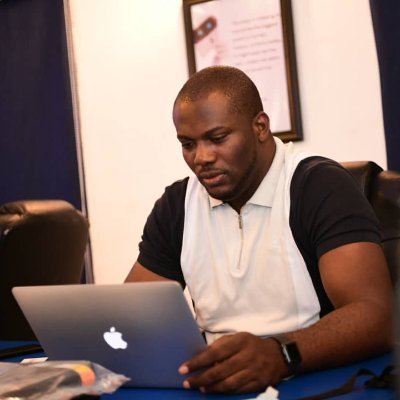

@Morris_Monye It's easier for most of you to hide behind keypad and judge others but if you were put in that platform, I don't see how u could have done better than the old man, you most give him some slack. You can just cut a short clip out if context and begin to judge him
English

What is Tinubu talking about here FGS!!!
The moderator was like WTF!
English
Mcares retweetledi
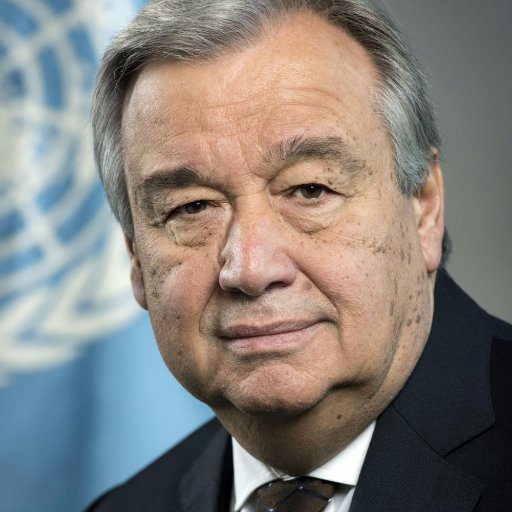
Africa holds 60% of the world's best solar potential & receives only 2% of global clean energy investment.
With the right finance, the continent could generate 10 times more electricity than it needs by 2040 – entirely from renewables.
Africa must be at the centre of climate justice.
English
Mcares retweetledi
For too long, Africa’s resources have been extracted, the value captured elsewhere, the environmental damage left behind.
No more exploitation. No more plundering.
The people of Africa must benefit - first & most - from the resources of Africa.
English
Mcares retweetledi

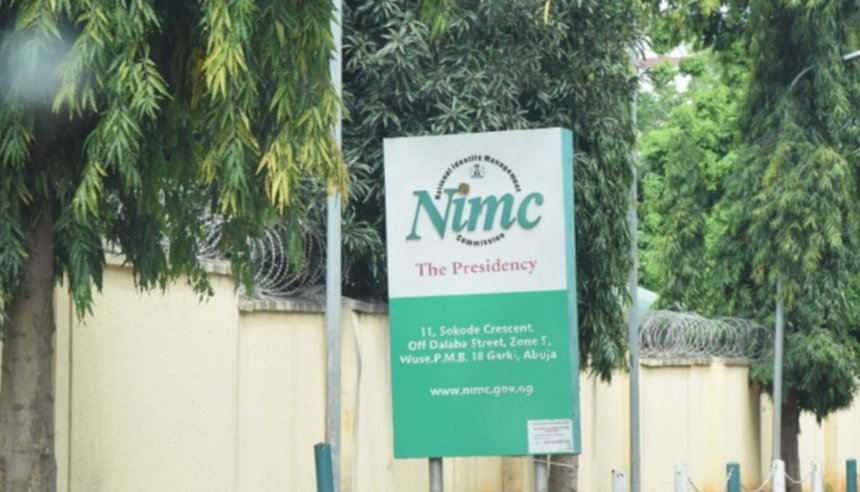
NIMC launches WhatsApp, live chat platforms for NIN support.
The National Identity Management Commission (NIMC) has introduced new digital customer support channels, including WhatsApp and live chat services, to improve access to National Identification Number (NIN)-related assistance for Nigerians and legal residents.
The commission announced the development in a statement signed by its Head of Corporate Communications Unit, Kayode Adegoke.
NIMC said the newly launched platforms are designed to provide faster, more convenient, and real-time support services to users seeking information and assistance on identity management issues.
Members of the public can now access support through the live chat feature available on the commission’s official website, NIMC Official Website, as well as the official NIMC WhatsApp support line on +234 701 566 6971.
Nigeria 🇳🇬 English
Mcares retweetledi
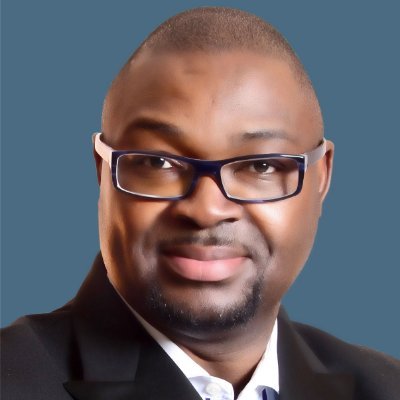
FAMADEWA’S APPOINTMENT AND NIGERIA’S HOMELAND SECURITY QUESTION —WHAT EXACTLY IS HOMELAND SECURITY?
A personal reflection on the appointment of Major General Adeyinka A. Famadewa (Rtd) as Special Adviser on Homeland Security
President Bola Ahmed Tinubu’s appointment of retired Major General Adeyinka A. Famadewa as Special Adviser on Homeland Security is, on its face, a welcome development. Nigeria needs every serious mind it can find in the fight to secure lives, communities, farms, highways, schools, markets and borders.
First, congratulations are in order. Major General Adeyinka A. Famadewa (Rtd) comes into office with a serious security pedigree, a background in intelligence coordination, and a reputation for understanding the machinery of the Nigerian security state. In a country under daily pressure from terrorism, banditry, kidnapping, communal violence, cyber threats, arms trafficking, and weak border management, no reasonable person should dismiss the importance of strengthening internal security coordination.
Nigeria needs capable hands. It needs steadier thinking. It needs less rivalry and more coherence. So the new appointee deserves a fair hearing, professional goodwill, and the nation’s best wishes.
But goodwill is not the same thing as silence. This appointment raises hard but necessary questions: What exactly is 'Homeland Security' inside Nigeria’s existing security architecture? Where does this office sit in relation to the Office of the National Security Adviser, the Ministry of Defence, the armed forces, the police, the DSS, NSCDC, immigration, customs, NEMA, and state-level security platforms?
Is this a genuinely new coordination node, or simply another advisory silo inside an already crowded and fragmented system? In security governance, titles matter less than remit, authority, and measurable outcomes. If the boundaries of the office are unclear, then the appointment may create more paperwork than protection.
WHERE DOES HOMELAND SECURITY SIT IN NIGERIA TODAY?
That is the first institutional question the presidency should answer plainly. Nigeria does not have a fully developed homeland security architecture in the way the term is often understood elsewhere. What Nigeria has instead is a dense patchwork of bodies with overlapping responsibilities: the Office of the National Security Adviser for strategic coordination; the military services for external defence and increasingly internal deployments; the Nigeria Police Force for core internal law enforcement; the DSS for domestic intelligence; the NIA and DIA for external and defence intelligence; NSCDC for critical national assets and civil defence; immigration and customs for border functions; NEMA and other emergency structures for disaster response; and a growing layer of governors, ad hoc task forces, vigilante arrangements, and informal community security actors.
That means the phrase 'Homeland Security' can become either useful or dangerous. Useful, if it forces Nigeria to think of security as the protection of people, communities, infrastructure, borders, cyberspace, supply chains, and public confidence across institutions. Dangerous, if it becomes a fashionable label without legal clarity, operational boundaries, budget discipline, or accountability. Nigeria does not need another elegant office in Abuja whose main output is meetings, memos, and inter-agency competition. It needs a function that removes duplication, closes response gaps, and helps convert scattered intelligence into fast protection for citizens.
If this new role is to make sense, it should be defined as a coordinating and performance-driving office focused on domestic threat prevention, inter-agency fusion, crisis anticipation, protection of critical infrastructure, border risk reduction, and subnational early warning. It should not become a parallel NSA, a shadow interior ministry, or an extra command post without command responsibility. In other words, the question is not whether the title sounds important. The question is whether the office solves a problem that existing institutions have failed to solve.
WHAT CAN FAMADEWA BRING THAT HE DID NOT ALREADY BRING BEFORE?
This is the second hard question, and it is a fair one. Public reports on the appointment note that Famadewa previously served as Principal General Staff Officer to the National Security Adviser between 2015 and 2021 and played a key role in establishing the Intelligence Fusion Centre at the Office of the National Security Adviser. That matters because the presidency is effectively appointing someone who already knows the system's wiring diagram. He cannot plead ignorance about where coordination breaks down. He has seen the silos from the inside.
That background is either his greatest strength or his greatest test. It is a strength because he understands the rivalries, bottlenecks, incentives, reporting chains, and politics that often prevent agencies from sharing information in real time. It is a test because Nigerians are entitled to ask: if these coordination ideas were already visible years ago, why did they not produce a fundamentally different security outcome? What will now be different: structure, authority, political backing, operating doctrine, technology, or accountability?
The most persuasive answer he can give is not rhetorical. It is practical. He should not try to sell himself as the discoverer of a brand-new theory. He should instead present himself as the official who will finally move from concept to execution. If he helped design fusion, then his mission now should be to make fusion real beyond Abuja: from national intelligence centres to theatre commands, from theatre commands to police formations, from federal agencies to state actors, and from classified reporting to field-level prevention. The country does not need another diagram of coordination. It needs coordination that can be felt in markets, highways, farms, schools, rail lines, border communities, and digital networks.
WHAT SHOULD HIS KPIS BE?
No official KPIs had been publicly outlined at the time of writing, but if this office is to be meaningful, the presidency should publish clear deliverables. At a minimum, the Special Adviser on Homeland Security should be judged against the following performance indicators:
1. Intelligence-to-action time: Has the gap between threat warning and operational response reduced?
2. Inter-agency response quality: Are the police, DSS, NSCDC, armed forces, immigration, customs, and emergency services working from shared threat pictures in priority theatres?
3. Protection of critical infrastructure: Are rail, power, telecom, oil and gas assets, ports, and digital systems better protected with measurable incident reduction?
4. Kidnap and banditry disruption metrics: Are there fewer successful attacks on highways, farms, schools, and peri-urban communities in identified hotspots?
5. Border risk management: Are arms smuggling, irregular crossings, and transnational criminal flows being disrupted more effectively?
6. Subnational early warning: Do governors and local security structures receive actionable alerts early enough to prevent escalation?
7. Civilian trust and safety outcomes: Do citizens feel safer, report threats more readily, and experience faster emergency response?
8. Duplication reduction: Has the office helped eliminate overlapping mandates, repeated meetings, and bureaucratic turf wars?
9. Accountability and review: Is there a quarterly public-facing scorecard, even if sensitive details remain classified?
These KPIs matter because security success cannot be measured only by how many meetings were held, how many briefings were presented, or how many stern statements were issued. Real security governance is measured in prevented attacks, saved lives, restored mobility, improved trust, and reduced fear.
WHY NIGERIA MUST THROW AWAY THE OLD PLAYBOOK
This is the larger point. Nigeria cannot continue to approach twenty-first century insecurity with a twentieth-century security imagination. The old playbook is too state-centric, too force-heavy, too centralised, too reactive, and too invested in institutional ego. It treats insecurity mainly as a matter of deploying more men, issuing tougher directives, or creating one more office whenever the old ones disappoint. But Nigeria’s threat environment is far more complex than that. Many of today’s threats live in the seams ; between federal and state authority, between intelligence and policing, between land borders and digital networks, between criminality and ideology, between climate stress and communal violence, between unemployment and recruitment into armed groups.
A transformative security mindset would start from the citizen, not just the state. It would ask different questions: How safe is the farmer going to the field? How safe is the truck on the highway? How quickly can a distress signal move from a village to a response hub? How many communities have functional local early warning systems? How resilient are schools, hospitals, telecom networks, dams, pipelines, and data systems? Can the justice system convert arrests into credible prosecutions? Can technology support accountability instead of merely expanding surveillance?
That new mindset would also accept an uncomfortable truth: kinetic response is necessary, but it is not sufficient. Nigeria needs a homeland security doctrine built on prevention, intelligence, policing reform, emergency management, border modernisation, cyber resilience, community legitimacy, strategic communications, deradicalisation where appropriate, and disciplined use of force. Security is not only about who carries a gun. It is also about who can connect data, anticipate risk, manage crises, earn public trust, and sustain lawful order.
IS IT TIME TO CONSIDER CIVILIAN EXPERTS AS NSA?
The debate over who should serve as National Security Adviser is legitimate. Nigeria borrowed much of its presidential national security coordination concept from the American model, but it has not fully adopted that model's flexibility. In the United States, the National Security Adviser need not be a retired general. The office has been held by academics, diplomats, lawyers, policy strategists and military officers. The U.S. National Security Council was created under the National Security Act of 1947, while the Assistant to the President for National Security Affairs emerged in the early 1950s.
The American model has produced figures such as Henry Kissinger, Zbigniew Brzezinski, Condoleezza Rice, John Bolton, Susan Rice, Jake Sullivan and, currently in an acting capacity, Marco Rubio.
The lesson for Nigeria is not to copy personalities but to emulate the openness of recruitment. A modern NSA can be a retired military officer, but need not be. The best candidate should be the person with the strongest combination of strategic judgement, inter-agency management skills, presidential trust, geopolitical understanding, intelligence literacy, crisis discipline, democratic temperament and the ability to challenge groupthink.
Indeed, appointing non-uniformed experts can sometimes help break the culture of securitisation that frames every problem through barracks logic.
Nigeria has diplomats who understand regional politics, scholars who understand conflict systems, economists who understand criminal markets, technology experts who understand cyber threats, lawyers who understand rights and justice, and former intelligence professionals who understand quiet statecraft. The country should widen the pool. The security of over 200 million people is too important to be constrained by habit.
A mature republic should be able to separate operational command from strategic coordination. Civilian-led national security leadership, properly designed, can strengthen democratic accountability, reduce institutional capture, and broaden the range of ideas at the top.
This is not an argument against military expertise. Nigeria absolutely needs military professionalism at the centre of security thinking. It is an argument against intellectual closure. A country facing hybrid threats should not limit itself to a single career pipeline when selecting its highest-level security policy coordinators.
WHAT SHOULD THE NEW SPECIAL ADVISER DO FIRST?
1· Publish a short public doctrine note defining the scope of Homeland Security in Nigeria.
2· Map overlap across federal security agencies and identify where mandates collide.
3· Establish a 100-day action plan with a limited number of measurable priorities.
4· Create a joint threat dashboard for domestic risks, with escalation triggers and response ownership clearly assigned.
5· Drive fusion downwards; not only across elite federal agencies, but into states, border corridors, transport nodes, and critical infrastructure networks.
6· Build a citizen-facing emergency and intelligence feedback loop that rewards timely reporting and protects informants.
7· Insist on quarterly performance reviews chaired at the highest political level, so coordination failure has consequences.
A WELCOME… AND A CHALLENGE
So yes, Major General Famadewa should be welcomed. He is entering office at a difficult time, and nobody should envy the burden on his desk. Nigeria needs every ounce of seriousness it can get. But welcome must not become uncritical applause. The presidency owes the country a clear answer about remit, fit, boundaries, powers, and outcomes. Without that clarity, 'Homeland Security' risks becoming one more room in Abuja where urgent problems go to change names.
The best outcome would be this: that the new appointee uses his experience not to preserve the old architecture, but to challenge it; not to add another layer of ceremony, but to reduce fragmentation; not to defend inherited habits, but to replace them with mission-driven coordination; not to speak the language of security elites alone, but to restore the everyday security of ordinary Nigerians.
Nigeria does not merely need more security offices. It needs a new security mindset; one that is integrated, accountable, preventive, technologically intelligent, locally informed, and human in its priorities. That is the real test of this appointment. And that is the standard by which the new Special Adviser should be judged.
English
Mcares retweetledi
You can do what Damgote is doing in your Local Government
Go there, live there, invest at scale, be the dominant economic player, and become so large that the LGA chairperson can't afford you leaving. Not millions, billions
Fix the rural road, install power, employ thousands
Money is never the issue, but we all want to buy Treasury Bills and live in Abuja
English
Mcares retweetledi

Mcares retweetledi

The rules are clear, it’s only personal interest/value that is clashing. These performative exhibitions when the media is present can be tiring. What exactly is the use of any senator in the red chamber if they don’t know the rules by now (3 years after)? Why argue when the power of interpretation doesn’t reside with you? Sad to watch. 🤷🏽♂️
English
Mcares retweetledi

Aren’t you currently blocking an entire country from receiving oil , crippling their economy and starving 11 million people ?!
Department of State@StateDept
SECRETARY RUBIO: We’re asking the UN to call on Iran to stop blowing up ships, remove the mines, and allow humanitarian relief. If the international community can’t rally behind this and solve something so straightforward, then I don’t know what the utility of the UN system is.
English
Mcares retweetledi

I have seen huge brands go extinct in my lifetime. If your comms team lacks the ability to sometimes say, "We acknowledge that this was not ideal, and we promise to do better," then you need to fire that team. No company is right all the time.
English
Mcares retweetledi
Dear @OlaOlukoyede_, aka Chairman of @officialEFCC,
I notice you have been interested lately in students in #Nigerian universities. You're reported to have claimed that over 60% of them are criminals.
While we still await the evidence to back up that claim from you, I thought I should let you know about this dude. His name is @OfficialGYBKogi. Remember him?
May be I shd refresh your memory just a little. No, dude is not not a student.
He ruled Kogi State for 8 years. Many people believe he is still ruling the state. That is also your state, no? So you shd know that he also plundered the state to the tune of multiples of hundreds of billions of dollars possibly.
His plunder is present continuous tense. Now he wants to convert it into future interminable tense.
When you run the math, all students in Nigeria's universities put together do not control an economy like this kind of guy. But you will avert your gaze from him & prey upon students to deflect from your complicit aversion, and even supine failure.
So, Comrade Chairman, let me ask you again: do you know this guy?
Under your watch, he will run for @NGRSenate. And you will mount another podium to declaim against Nigerian students, right? Do not say no one told you.
Nigerian Affairs Journal@NigAffairs
BREAKING: Former Kogi State Governor Yahaya Bello has formally indicated interest in running for the Kogi Central Senatorial seat in 2027. Bello, who will face Senator Natasha Akpoti-Uduaghan of the PDP in the election, received the APC senatorial nomination forms at his Abuja residence from women groups who bought the forms for him and asked him to run.
English
Mcares retweetledi
This is very shameful and irresponsible of the Nigerian Army.
Rather than address the terrible welfare condition of Nigerian soldiers, you’re going after them for expressing frustration and you are targeting an activist for amplifying their suffering.
You had no right whatsoever to arrest Justice Crack, a civilian who is not subject to Service Law.
This is the height of impunity and lawlessness.
If you believed that he committed any crime, you should have reported him to civil authorities. You arrested a civilian, detained him beyond 24 hours and kept mute until Nigerians exposed the fact that he is in your custody.
Shame on whoever orchestrated this nonsense.
Nigerian Army@HQNigerianArmy
CLARIFICATION ON THE ARREST OF JUSTICE MARK CHIDIEBERE (JUSTICE CRACK) The attention of the Nigerian Army was drawn to the complaint made by some soldiers regarding their feeding and other matters relating to their welfare as posted on social media by a blogger/social media influencer, Justice Mark Chidiebere (Justice Crack). While the matter is being investigated for breach of the Armed Forces’ Social Media Policy and an attempt to misinform the public, preliminary report reveals that the soldiers discussed wide range of issues with Justice Chidiebere who seemed to be inciting soldiers to create discontent within the system. An example was a chat bothering on subversion which Chidiebere had with the soldiers. It is important to state that a situation where civilians cultivate vulnerable personnel towards acts of subversion has far-reaching implications on discipline and national security. Hence, Justice Chidiebere was picked by the Nigerian Army alongside the soldiers for investigation. While the soldiers remain in own custody, Chidiebere has been handed over to the relevant civil authorities for further investigation and possible prosecution. The Nigerian Army remains committed to the rule of law and will continue to collaborate with relevant agencies to ensure justice is served. We will continue to act within the ambits of the law in safeguarding our sovereignty. APPOLONIA ANELE Colonel Acting Director Army Public Relations 2 May 2026
English
Mcares retweetledi
