Marcus Lefton

147 posts

Marcus Lefton banner
Marcus Lefton

Marcus Lefton

@marcuswlefton

Performance Systems Architect | Former MLB Performance, Flow Research Collective | Founder @ VYRTŪOSITI |

Katılım Şubat 2026
0 Takip Edilen518 Takipçiler
Sabitlenmiş Tweet
Marcus Lefton
Marcus Lefton@marcuswlefton·
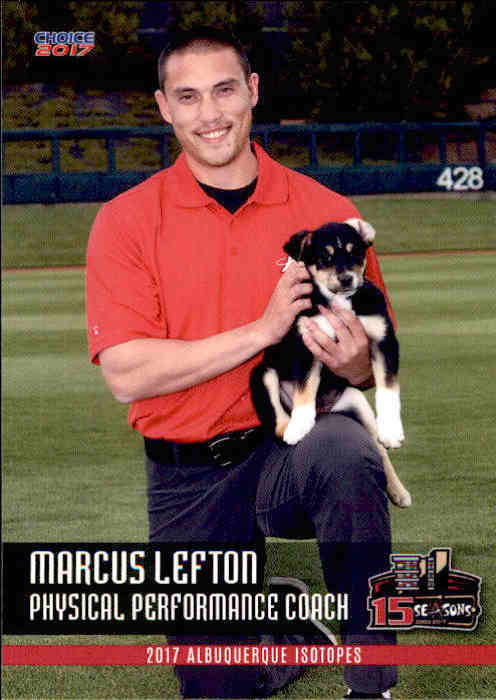
I'm 34. At 22, I quit professional baseball at the peak of my career. 10+ years later: - Co-led the flagship program at the Flow Research Collective - One of the youngest performance coaches in big league dugout for the Colorado Rockies (2 seasons) - Helped 2000+ high stakes operators hit personal records in every domain. Here’s the full story… 🧵
Marcus Lefton tweet media
English
1
15
24
3.2K
Marcus Lefton
Marcus Lefton@marcuswlefton·
@ErwanLeCorre And in all fairness I think Brian McKenzies version is more useful. (Feel free to call it something than co2 tolerance test 😁)
English
0
0
1
9
Erwan Le Corre
Erwan Le Corre@ErwanLeCorre·
We have a different interpretation of the meaning of mastery and that is fine. Different perspectives for that reason. On the BOLT score: that’s not whatsoever a CO2 tolerance test even though it is presented as such. Apnea on low intrapulmonary pressure disrupts respiratory rhythm and triggers the urge to breathe long before CO2 buildups. Anecdotal evidence you can experiment yourself: -hold your breath at the end of a regular inhale. Time when a substantial urge to breathe occurs. -take a break. Do the same after a regular exhale (“passive exhale”). Discomfort rises quicker. If CO2 was the only or even the main player, there would be no time difference regardless of intrapulmonary pressure. The absence of ventilation while on low intrapulmonary pressure tells the ANS you’re in serious O2 reserve problem if you don’t resume ventilation quickly. Hence the early alarm and agitation compared to apnea after an inhale. Contrary to what you read everywhere, the ANS does compute O2 reserves in relation to multiple variables such as: -presence or absence of ventilation -minute volume (if ventilation) -intrapulmonary pressure (if no ventilation) -oxygen stores (including partial pressure of oxygen and spleen reserve) -metabolic rate Believing that the BOLT score is determined by and “measures” CO2 tolerance implies being oblivious to the whole picture. Plus the assessment of the urge to breathe based on when the urge to breathe occurs is completely subjective, not a measurement, and therefore whatever “score” is established from it is basically made up. An actual measurement of CO2 would at least require a capnometer. But most importantly, even a subjective assessment cannot dismiss the reality of all the physiological variables that participate to the “urge to breathe.”
English
2
0
0
70
Marcus Lefton
Marcus Lefton@marcuswlefton·
You've been lied to. Peak human performance is not built on motivation and discipline. It’s built by learning to control your nervous system on command. Here are 7 exercises to master autonomic control under 5 minutes (backed by science): 1. Physiological Sigh
Marcus Lefton tweet media
English
15
276
1.4K
146.3K
Marcus Lefton
Marcus Lefton@marcuswlefton·
Ok fair enough. I didn’t realize we were getting this technical… I agree with your core point. The urge to breathe is clearly influenced by more than just CO₂ alone. Lung volume, mechanics, O₂ reserve, autonomic state, threat perception, metabolic demand, and respiratory rhythm all play a role. So no, it is not a direct CO₂ measurement and probably gets over-marketed that way at times. But I still think it is a useful proxy. Not perfect. Not capnography. Not isolated physiology. But still actionable when tracked against real-world outcomes like: calmer baseline breathing. lower respiratory rate. improved recovery. reduced reactivity. improved state regulation So I think both things can be true: Technically imperfect. Practically useful.
English
0
0
0
19
Marcus Lefton
Marcus Lefton@marcuswlefton·
ANS mastery is not a destination. It’s the ongoing skill of sensing your state, interpreting the signal, and using integrated tools to move your system toward the state the moment demands. 1. Most of society is overly sympathetic (in nervous system terms). More intentional oscillation allows for a better "balance" for lack of a better term or more engagement of the parasympathetic state. Exhale emphasized breathing is a free and readily available tool to do this. Meaning the physiological sigh is a fantastic down regulation tool and C02 tolerance is a great metric to track overtime similar to HRV. 2. Wrong. C02 tolerance is a trainable skill that is rooted in biology. Are you not familiar with the BOLT test? 3. Controlling default behaviors and constant stimulation as well as intentionally investing dopamine > spending is a great way to not over activate ones nervous system. (I think you may need to zoom out a bit and see how things other than biology affect the nervous system... we are quite complex organisms.) 4&5. If you have trouble nasal breathing, I can almost guarantee fixing that will result in advantageous nervous system outcomes. And using water in the mouth is a great feedback loop to see if you are actually training appropriately. 6. People with higher aerobic fitness and VO₂ max tend to have greater autonomic flexibility. meaning they can mobilize energy, recover faster, and return to baseline more efficiently. 7. Look at rumination. Open loops keep the body on alert. Closing them tells the nervous system it can stop scanning, downshift, and recover.
English
2
0
7
1.2K
Erwan Le Corre
Erwan Le Corre@ErwanLeCorre·
Your promise: mastering autonomic regulation. 1. “psychological sigh”: temporary downregulation, not "mastering autonomic regulation." Stressed out people would need to do this all day while the autonomic baseline remains unchanged. 2. CO2 tolerance test: this is not a CO2 tolerance test. The response after an exhale involves other triggers than a CO2 buildup. It's also just a test = zero impact on  mastering autonomic regulation  unless you turn it into an exercise. 3. that's not "mastering autonomic regulation" that's a routine that may prevent a premature agitation of the nervous system in the morning. 4 and 5: basically the same. Only valuable in individual who have trouble breathing continuously through the nose, which is a normal function. At best a temporary regulation of something that shouldn't need regulation. But it is not "mastering autonomic regulation." 6. Low intensity physical activity does support the regulation of the nervous system but that is not "mastering autonomic regulation." 7. This targets high level cognition not the autonomic nervous system itself.
English
2
1
6
2.7K
Marcus Lefton
Marcus Lefton@marcuswlefton·
I've helped 2000+ MLB athletes, Fortune 500 executives, and high stakes operators reach peak performance without burning out. Every Sunday, I send a breakdown of the exact frameworks my clients pay me 5-figures to learn. Subscribe here: marcuslefton.com
English
0
0
16
6.4K
Marcus Lefton
Marcus Lefton@marcuswlefton·
TLDR: 1. Physiological Sigh 2. CO2 Tolerance Test 3. No Phone for the First 30 Minutes 4. Nasal Breathing (5 mins) 5. Walk With Water in Your Mouth or Mouth Taped Shut 6. Zone 2 Cardio 7. Close Open Loops
English
1
7
64
7K
Marcus Lefton
Marcus Lefton@marcuswlefton·
@BrandonLuuMD That’s why one of the first things we cleaned up with athletes and founders was light exposure. Morning sunlight, dimmer lights at night, and better sleep timing. The effects on mood, recovery, and energy usually showed up pretty quickly.
English
0
0
1
95
Brandon Luu, MD
Brandon Luu, MD@BrandonLuuMD·
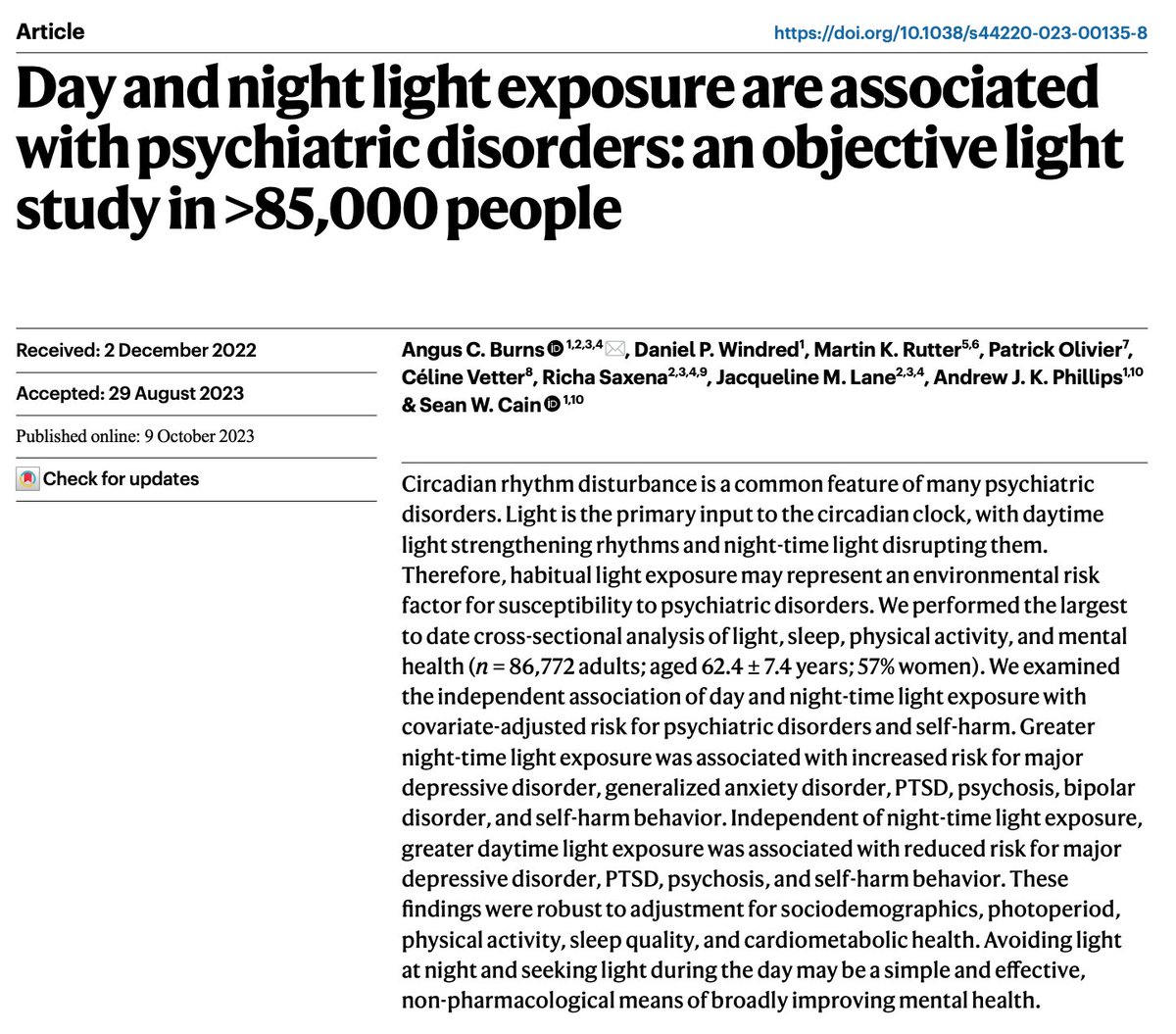
We were built for bright days and dark nights. Among 86,772 adults, more light at night was linked to higher odds of depression, anxiety, PTSD, psychosis, bipolar disorder, and self-harm. Respecting our natural rhythms is one of the lowest hanging fruits for mental health.
Brandon Luu, MD tweet media
English
12
91
391
22.7K
Marcus Lefton
Marcus Lefton@marcuswlefton·
@imDhananjay Had conversations with founders who said their clearest thinking happened when resources were limited because a lot of the unnecessary distractions disappeared quickly.
English
1
0
1
47
Dhananjay Yadav
Dhananjay Yadav@imDhananjay·
At least in my limited experience, financial stability almost always gets impacted while building a startup. I genuinely admire founders who manage to build successful companies without going through that phase. But sometimes, when your back is against the wall and there’s no option left except making it work. That pressure, uncertainty, and necessity often push you to operate at a completely different level.
English
3
1
16
810
Marcus Lefton
Marcus Lefton@marcuswlefton·
@RitchieNkana In performance work, we cared a lot about behavioral transfer. If someone leaves inspired but behavior never changes afterward, the communication failed somewhere.
English
1
0
1
6
Realcoachritchie
Realcoachritchie@RitchieNkana·
What does your signature talk actually end with? Not the slides. Not the "thank you." What's the last thing you want the audience to think, feel, or do next? Most speakers end on a story. Some end on a summary. Very few end on a clear invitation. The ones who consistently sign clients from stages always end on an invitation. What does yours end with? Reply below.
English
3
0
4
28
Marcus Lefton
Marcus Lefton@marcuswlefton·
@FredC919 One thing performance environments taught me: People are often far less limited by capability than by the stories they unconsciously repeat about themselves.
English
0
0
0
12
Fred Christensen
Fred Christensen@FredC919·
Seeing the world for what it is means becoming who we truly are. As long as we’re not authentic, every delusion inside us will create a delusion in the external world. What is your biggest delusion?
English
38
1
49
602
Marcus Lefton
Marcus Lefton@marcuswlefton·
@itsbriankelly True. Had people say they trusted certain advisors more because They openly talked about mistakes, burnout, pressure, and uncertainty instead of pretending everything was perfect all the time.
English
1
0
1
21
Brian Kelly
Brian Kelly@itsbriankelly·
Stop trying to be likeable. Likeable people make you comfortable. Relatable people make you feel understood. There's a difference. Likeability is pleasant, but it stays on the surface. Relatability creates connection, trust, and emotional investment. You see yourself in relatable people. That's why you listen to them, learn from them, and remember them.
English
24
1
30
415
Marcus Lefton
Marcus Lefton@marcuswlefton·
@billwolfe Had athletes with less raw talent outperform more gifted players because their routines and behaviors stayed stable during stress.
English
1
0
1
14