
Martin Hinterndorfer
18K posts


Peanuts! ⬇️ Das AKW Brokdorf benötigt eine Fläche von 57 Hektar. Das heißt mit 1 ha Kernkraftwerk kann ein E-Auto 1.330.000.000 km weit fahren (1,33 Mrd. Kilometer). Nochmal Faktor 235 besser. Wenn schon Schwanzvergleich, dann richtig, Dieter! 😉


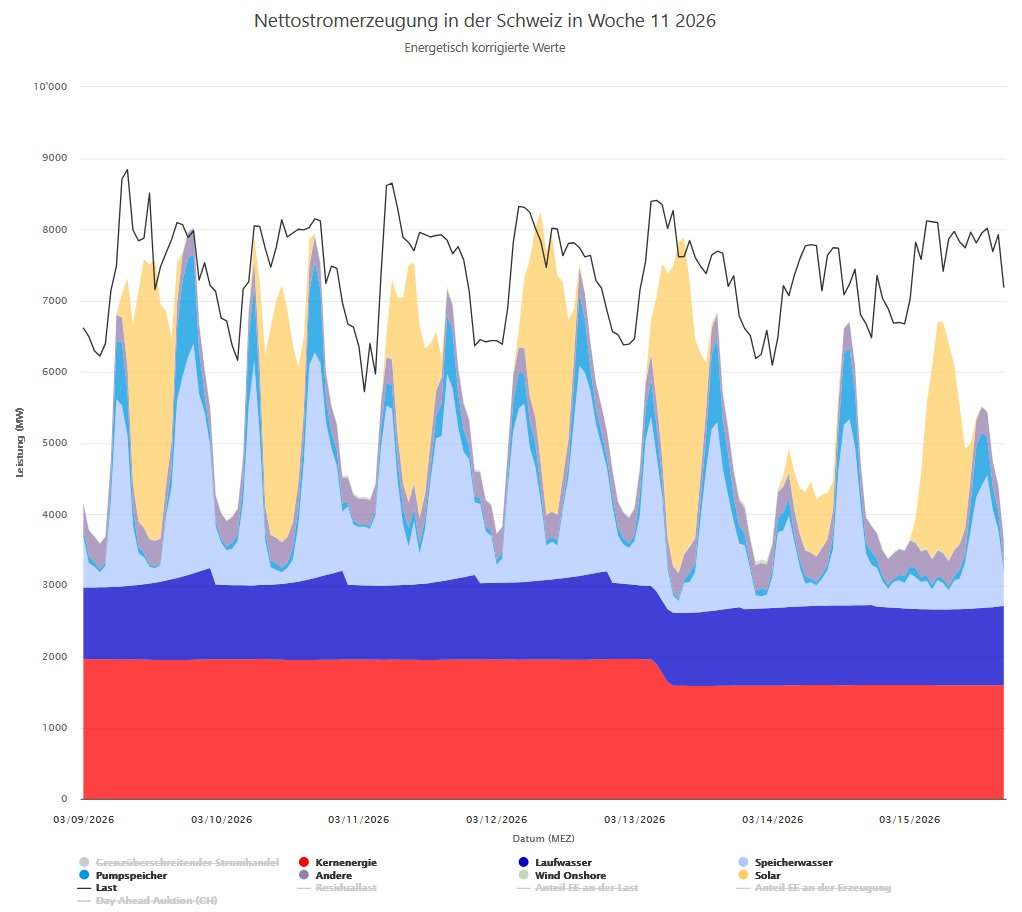
Das ist der Strom, über den immer alle schimpfen, weil er mittags zuviel da ist und "abgeregelt oder verklappt" werden muss. Das muss er dann nicht mehr. Der Speicherbetreiber kauft ihn (häufig für 0 €) speichert ihn einige Stunden und verkauft ihn ab 19:00 für 12-15 ct/kWh.

QatarEnergy CEO says the Iranian attack overnight damaged ~17% of its LNG production capacity, and it would take 3-5 years to repair the damage. reuters.com/business/energ…


Sprit wird wegen des Irankriegs drastisch teurer, damit der Transport und alles andere: Lebensmittel, Maschinen, Haushaltsprodukte. Was auf die Menschen in Deutschland zukommt. #ref=rss" target="_blank" rel="nofollow noopener">spiegel.de/wirtschaft/ira…

Iran’s attack on Qatar has damaged facilities that produce about 17% of its liquefied natural gas export capacity and repairs will take three to five years, QatarEnergy CEO said according to a Reuters report bloomberg.com/news/articles/…


Nein. Elektrifizierung gesamter Verkehr: +20 TWh in den nächsten 20 Jahren (Pkw + Lkw + ÖV). Raumwärme mit Wärmepumpe: +5 TWh in 20 Jahren. Und das sind beides relativ flexible Verbraucher. Größere Herausforderung ist die Elektrifizierung von Industrie (und evtl. neue Stromverbraucher wie Rechenzentren, Elektrolyseure und CCS).


Helium is the only element that escapes Earth’s atmosphere permanently. Once released, it rises through the troposphere, passes the stratosphere, and leaves the planet. It cannot be manufactured. It cannot be synthesised at industrial scale. It accumulates over billions of years in the same geological reservoirs as natural gas. And one third of the world’s supply just went offline because Iran hit the facility that extracts it. Qatar produced roughly 63 million cubic metres of helium in 2025, accounting for 30 to 36 percent of global supply from a total of approximately 190 million cubic metres. QatarEnergy’s three large helium purification plants at Ras Laffan form the world’s biggest helium production base. When LNG production stopped after Iranian drone strikes on March 2 and the subsequent missile damage on March 19, helium extraction stopped automatically because helium is recovered during natural gas liquefaction. You cannot produce helium without producing LNG. The byproduct dies with the primary product. Spot helium prices have roughly doubled since the crisis began. Industry consultants warn that prolonged disruption could push contract prices toward $2,000 per thousand cubic feet. A major industrial gas supplier has already begun assessing customers a helium surcharge. Phil Kornbluth, the most cited helium market consultant, stated the assessment directly: the world cannot compensate for the loss of a third of its helium supply. South Korea imports 64.7 percent of its helium from Qatar. SK Hynix and Samsung operate high-volume fabs producing the DRAM and high-bandwidth memory that power every AI accelerator, every data centre GPU, and every cloud computing cluster on Earth. Helium cools silicon wafers during fabrication. It serves as a carrier gas in deposition and etching tools. It enables leak detection in vacuum systems. Modern extreme ultraviolet lithography requires helium-cooled environments for precise temperature control. Without helium, the fabrication process degrades or stops. SK Hynix and Samsung hold two to three months of helium inventory. Two to three months is not a buffer. It is a countdown. If Ras Laffan remains offline beyond that window, South Korean memory production faces rationing. TSMC in Taiwan is somewhat more diversified but still uses Qatar-linked supply chains. The entire AI hardware supply chain, from HBM3E memory stacks to advanced logic chips, sits inside helium-dependent ecosystems. Beyond semiconductors, helium cools the superconducting magnets in more than 14,000 MRI machines operating worldwide. It pressurises rocket fuel tanks and purges propulsion systems in aerospace. CERN’s Large Hadron Collider depends on helium cryogenic systems. There is no substitute for helium in any of these applications at industrial scale. The United States and Qatar together account for more than 70 percent of global production. The US federal helium reserve and private suppliers offer partial relief, but global prices and spot availability are still governed by Qatar’s market share. Japan’s Iwatani has drawn on US reserves. Canada and the Rockies are seeing renewed investor interest. None of this replaces 63 million cubic metres in weeks. The war hit uranium first. Then oil. Then nitrogen. Then water. Then plastic. Then medicine. Then sulfur. Now helium. Eight layers. Each one deeper. Each one closer to the infrastructure that sustains modern civilisation. The chip that processes your data, the magnet that scans your body, and the rocket that launches your satellite all depend on an atom that leaves the planet when you lose it. open.substack.com/pub/shanakaans…


I believe we are standing on the precipice of the most profound, intentional collapse of human civilization in recorded history. The trigger isn’t a meteor, a supervolcano, or even a world war in the traditional sense. It’s the potential destruction of a single industrial facility: the Ras Laffan liquefied natural gas (LNG) complex in Qatar. Modern civilization doesn’t just run on energy; it is fundamentally architected on a steady, massive flow of natural gas, supercooled and shipped as LNG. This isn’t an abstraction. Our global food supply, our industrial chemical production, and the very stability of nations are tethered to this flow. That tether is frighteningly thin. Qatar's Ras Laffan is the heart of this system, a nexus of technology and geography that is effectively irreplaceable. Its 14 processing 'trains' and the critical Main Cryogenic Heat Exchangers (MCHEs) that chill gas to -260°F are marvels of engineering, but they represent a catastrophic single point of failure. As noted in energy literature, the specialized machinery for this process is made by only one or a handful of companies globally. This infrastructure isn't just important; it is singular. Its loss would not be a temporary market disruption. It would be a decade-long severing of the global energy artery. The recent, deliberate sabotage of critical infrastructure like the Nord Stream pipelines has shown us that such attacks are not theoretical. They are tools of geopolitical warfare. When you understand that over half the world's food depends on fertilizer made from natural gas, the picture becomes horrifyingly clear. We have built a world of astonishing abundance on a foundation of shocking fragility. One facility, in one volatile region, now holds the key to whether billions eat or starve. Two of QatarEnergy's 14 LNG trains have now been destroyed. The rebuild time is 3-5 years. If all 14 trains are destroyed, 25% - 50% of the world's current population will starve. Trump did this.


The world is changing right in front of us and no one knows it. Texas is running its world-class economy on 70% renewables, right now. Gas is there if we need it, but for today, we can save the fuel for another day.


Jahrelang haben sich Ökonomen den Mund fusselig geredet, dass wir Budgetspielräume brauchen. Wofür diese Spielräume notwendig gewesen wären, sehen wir jetzt.