

mark bivens
3K posts

mark bivens
@markbivens
Recovering entrepreneur turned VC. Silicon Valley ➪ France ➪ Japan. Got my 4-year degree in 5. Happiest at the edges, in my Zoot, or on my Calfee.
Paris ⇄ Tokyo Katılım Eylül 2009
448 Takip Edilen1.4K Takipçiler
Whether PNP or if a Labourite
Come get together let us all unite
English
Well it's politics time again, are you gonna vote now (vote now, vote now)...
English
@michelawrong …sans parler de la ville de lira qui m'a rappelé de mes tasses de macchiato sur nakfa ave
Français
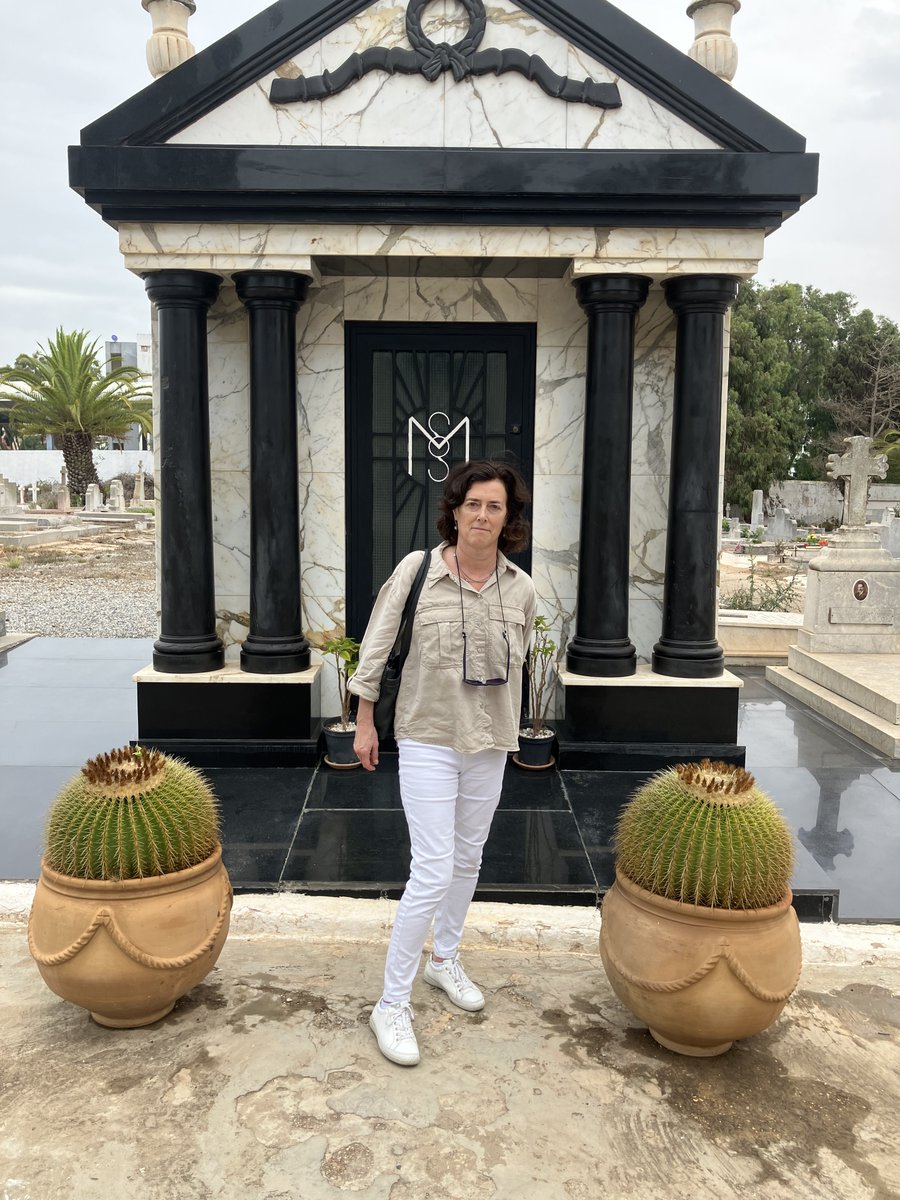
Lors d'un récent voyage à Rabat, j'ai eu l'occasion de visiter le tombeau du président Mobutu Sese Seko. Mort en exil, il a été enterré dans le cimetière chrétien en 1997. Une discussion est en cours sur son rapatriement éventuel....
Français
@michelawrong hâte ! je lis tout ce que vous publiez voracement. difficile de trouver un livre qui m'a marqué plus que i didn't do it for you, de tout genre. chapeau
Français
Je suis surpris par le nombre de personnes qui ne savaient pas que Mobutu est mort en exil, après avoir fui Kinshasa alors qu'un groupe de rebelles entrait. Je raconte l'histoire dans mon livre, sorti en français en juin...amazon.fr/chute-l%C3%A9o…
Français


@austincampbell well articulated ser. 🤙 appreciate your insight of global jurisidictional experience as a vector for worldview too.
btw nice diplomatic qualifier on "best risk management of any firm I have ever worked for"
English

Over the holidays, I was asked a few times about why I was "still in crypto" or what the driving force was behind my work, despite the incredible market puke of 2022 and the number of scammers, grifters, and just plain fools in the space.
It's a good exercise to figure out what you truly believe when you have to explain your actions to other people (or, at a bare minimum, the lies we tell ourselves to rationalize things, though I don't believe that to be the case here).
I've decided to share those thoughts here, but to explain, I have to talk a bit about my worldview.
First, or those who have not read @PeterZeihan's excellent "The End of the World is Just Beginning", you should. I am not quite as dire on many of these points as Mr. Zeihan, but I think his core insight of a unique moment of security + demographic bubble in working age population leading to much of the growth of the past few decades is correct. This also means that the next few decades will, if nothing changes, be significantly worse.
There is definitely some truth to that. We aren't going to make more humans (absent cloning, and even then, I doubt we can make adults of working age), and the declines in demographics are going to spark a lot of geopolitical instability, especially as I do agree the United States seems tired of footing the security bill for the entire world and has been experiencing some negative outcomes based on the current situation.
"What does this have to do with you being in crypto," you cry, "and why do you have to explain everything like such a college professor?"
I feel personally attacked, rhetorical device I created for the purpose of representing my audience. But second of all, the answer is that when things start to break down or slow down due to the forces of demographics, you fight that by having linkages that improve things.
Second, 2008 was bad. I don't know if you remember it, but I do, acutely. I was literally in the last recruiting event ever held by Lehman Brothers (right before they went bankrupt) in the ultimate left hand vs. right hand not knowing what the other was doing moment while I was at @NYUStern. A lot of things broke; a lot of the issues with our financial system were laid bare, and continue to be problems even until today.
We don't have great visibility into assets moving through the system. We are still taking a huge amount of centralized risk to things like clearing. We still have issues with measuring leverage, counterparty credit risk, and overall exposure in the system. The banks have gone from Too Big to Fail (TBTF) to Too Bigger to Fail!
Third, both of these problems can be addressed with crypto, and these are two of the key reasons why I am in the space.
On the first problem: a globally available, open source, open access system that is credibly neutral (listen, we can argue about centralized vs. decentralized, but to me the most important property is credible neutrality so you aren't getting expropriated by govt's) is a way to preserve links of trade, of common interest, and of asset exchange in a world that is otherwise de-globalizing. Here is probably one of my biggest disagreements with Zeihan's book (where he waves his hand at BTC and moves on), as understanding what an open access system does to potential global capital flows (and, subsequently, financial inclusion and development) is critical to understanding why blockchain matters. For most people who don't "get it", I find it's usually because they grew up in and live in the US or Europe and have never had to try to do something like buy a house in Latin America with money in France. Much less run an international business outside of first world type jurisdictions. I think one of the keys to avoiding a combined security / economic breakdown of the scale we face is having shared economic interests, where the act of war, attacking global shipping, or just behaving like a previous-age warlord state guarantees, first and foremost, that you experience the pain of your actions directly because bringing down a system you are plugged into and is keeping you alive is far more painful than blowing up someone else's system. If the US-led security order is receding, a global-collective economic platform would be a helpful tool to have to replace it.
On the second: you cannot break up the big banks by centralizing the system more and more. The great lie of 2008 was that Dodd-Frank was going to shrink the big banks (it did the opposite), that any investor protections or systemic improvements would happen that benefit the small guy (they did not), and that the compliance and risk changes would improve the playing field for all (they built a bigger moat for the huge players). You get out of this with transparency, to solve many of the structural problems rather than centralizing, and with decentralization, forcing the destruction of monopolies/oligopolies and the erosion of the market forces that created behemoths like JPM (my former employer).
Note that this is not a statement about the quality of these institutions: JPM had the best risk management of any firm I have ever worked for. It is rather a statement about systemic design, and how catastrophes are inevitable and we need to build a system that can survive them.
We also need a system where giant incumbents are not titans that cannot be assailed thanks to giant regulatory, technological, and structural barriers erected by a combination of government efforts and market restrictions, but rather, one where we have an open-access platform that lets new ideas in as opposed to forcing them out.
And we're not going to get there by doing what we are already doing in tradfi, but more and harder. Instead, we need to re-architect the system (to steal a phrase from my friend @malekanoms) in order to design something with a different trust model, different transaction flows, and different distribution of economics.
That's why I am in this space. And it's also why I regard people who oppose crypto and blockchain in general as usually either uninformed, or pro-incumbent monopolists who are fighting to preserve their privileged positions.
Do you know what you didn't see in here? An anarcho-libertarian screed against having a system, or a need for fraud and scams to be part of an ecosystem. I do think both sides have allowed the extremes to co-opt the discourse and scream batshit insane nonsense through a megaphone, so one of my hopes for 2024 is we can get back to meat and potatoes and talk about why this stuff matters in terms of long-term structure (and also, you know, build it and be allowed to build it in the United States).
English
We’re thrilled to announce the Shizen Capital "Sprout" initiative, a full-time opportunity in our fund for ambitious women in Japan who aspire to manage their own VC fund. rude.vc/48EX
English
mark bivens retweetledi

The relative lack of Web3 people using nostr shows that more of them are interested in the "idea" of decentralized media, or the "investment in the idea" of decentralized media, rather than the actual usage of decentralized media if such a thing is better off not being monetized.
English
mark bivens retweetledi



Kindred. Based on the work of Octavia Butler. Yes. Yes. Yes.
Kindred@KindredFX
Whatever this is, it’s real. Watch the OFFICIAL TEASER for FX’s Kindred, a new series based on Octavia E. Butler’s critically acclaimed novel. All Episodes Streaming December 13th. Only on Hulu.
English
upon answering the front door to Japan Post my son called out to me for a signature. i yelled back, "wait a minute," so my son broke into a rendition of "Oh yes wait a minute Mr. Postman…" and the mailman's weekend took a most unexpected turn. #Marvelettes
English
reading about these young luminaries brightened my day
nytimes.com/2022/10/13/wor…
English