Mark Cheng

4.4K posts

Mark Cheng banner
Mark Cheng

Mark Cheng

@markch3ng

Adjunct Professor, School of Business & Finance, Hong Kong University | Partner Social Innovation Circle | Founder LC Capital | Thinking in public

Hong Kong Katılım Şubat 2010
2K Takip Edilen2.2K Takipçiler
Mark Cheng
Mark Cheng@markch3ng·
The recent US actions against Venezuela and Iran are clearly indirectly aimed at kneecapping China, since China is a major client of both for petroleum imports. 1/3 of China’s oil imports come through the Straits of Hormuz , which have been closed ever since the war started. It’s not just Iranian oil, which accounts for less than 2% of world production. It’s also LNG from Qatar, and petroleum products from the other Gulf states. Despite this, I’m impressed how calm and measured the Chinese response has been. The much anticipated meeting in April between Trump and Xi is apparently still on. And Chinese foreign minister Wang Yi has just said that 2026 could be a watershed year for improving US-China relations if both sides proceed with good faith and sincerity. My read from this is that the Chinese aren’t panicking. They’ve been preparing for this scenario for a long time, stock piling reserves to last several months. The calculation is probably that if the war continues to disrupt oil supplies for months, it will hit Trump hard in ways that he’s shown little appetite to sustain. Rising pump prices won’t impress the voters before the midterms, especially for a foreign war that MAGA didn’t vote for and never wanted. An inflation spike will mean that further interest rate cuts are off the table. That’s not going to please business or investors. And the US Gulf allies, esp. UAE and Saudi, will be screaming if this continues for longer. I’m sure they already are behind the scenes. Given that they are the biggest investors in the AI boom right now, let’s hope that Gulf allies clout to contain this proves significant. Otherwise the whole world will be the loser.
English
0
0
1
118
Kevin → Plant Daddy
Kevin → Plant Daddy@KevinEspiritu·
I've completely abandoned the self-improvement worldview and my life is way better for it First, when I looked carefully for the "self" that needed improving, I couldn't find one. Not as a concept, but as direct experience...it's not there. Thus, there is no fixed, continuous "me" that is broken and needs to be repaired over time. What we call "the self" is more like weather than a building. You can't fix weather, it unfolds from causes and conditions that preceded it Second, the self-improvement drive ITSELF is the actual wound. Very similar to, "When I get rich, THEN..." type thinking Self-improvement then becomes a vehicle to chase the feeling of finally being worthy. But it never lands, because the premise is faulty You're not earning your way toward enoughness, instead you're reinforcing the belief that you are not enough (yet, but will be "If I just...") Ironically, when you stop operating from "I am broken and need fixing," you often end up doing things that look EXACTLY like self-improvement from the outside You take care of your body, new hobbies emerge, you grow as a person...but the internal experience is completely different
English
56
47
732
40.5K
Mark Cheng
Mark Cheng@markch3ng·
Steve Jobs famously said that a computer is like a bicycle for the mind. And @Naval extends that metaphor by saying that AI is giving your mind a motorcycle. But the point he makes is, even though you can go faster, it still needs a human to ride the motorcycle and direct it. And that’s always going to be the case. The motorcycle can get you to where you want to go much faster, but it can never tell you where to go. It’s always going to need a human directing it. Someone who has values and wants the world to go in a particular direction. Machines don’t care. They blindly follow rules (at least for now). Machines can tell you how to build, and even build it for you, but they can’t tell you what to build.
English
0
0
0
67
Mark Cheng
Mark Cheng@markch3ng·
@bensmithlive Amazing the lengths people will go to rather than just get a good night’s sleep
English
1
0
1
255
Ben Smith
Ben Smith@bensmithlive·
Sam Altman once said that taking Armodafinil gives you 20 productive hours in a day. It's becoming a staple for founders to stay sharp without the side effects often associated with Adderall. But what exactly is Armodafinil? It contains only the R-enantiomer of Modafinil. An enantiomer is essentially a mirror-image version of the same molecule, like your left and right hands. Both forms of Modafinil are active, but the R-form is broken down more slowly by the body, which allows it to stay in the bloodstream longer and produce a more sustained effect. Standard Modafinil typically wears off after about four hours, but Armodafinil remains stable in the bloodstream for up to 15 hours. A single dose in the morning can keep a person alert until late at night. It works differently from typical stimulants. It isn't an amphetamine and doesn't cause a large dopamine dump. Instead, it's classified as a eugeroic, or a wakefulness-promoting agent. Rather than overstimulating the brain, Armodafinil shifts activity toward the circuits that maintain focus and wakefulness, helping the brain resist sleep pressure and sustain attention for longer periods. This masks the need to sleep without actually paying off your sleep debt. Blunting the feeling of exhaustion, with "Process S" (homeostatic sleep pressure) continuing to rise. When you override these signals, you're just a sleep-deprived person who can't feel how impaired they actually are. This leads to a massive divergence between your perceived capacity and your actual performance. In fact, use of Armodafinil carries significant risks: It can push the nervous system into "sympathetic dominance", raising your heart rate and blood pressure while lowering heart rate variability (HRV). Eventually, this dysregulation can cause safety signals (like alarms going off) doing previously basic or mundane tasks as a means to slow down. Less vital systems in the body like digestion, immunity, hormonal regulation, are only truly regulated in a parasympathetic state, making them excessively suppressed. These systems can begin to fail as you hold your breath or skip over every exhale in search of the next kick of oxygen during everyday life. Stopping abruptly after long-term use can trigger burnout, intense fatigue, or insomnia. So, how can one safely use cognitive enhancers if they're looking for an edge? In the article below, I analyse the most popular nootropics and stimulants to determine whether or not you should use them, and if so, how. Give it a read.
Ben Smith@bensmithlive

x.com/i/article/2021…

English
49
109
1.4K
526.6K
Mark Cheng
Mark Cheng@markch3ng·
One of those things you never think about until you see the reason why, and then 🤯
Anish Moonka@AnishA_Moonka

Went down the rabbit hole on this one. The answer is actually wild. 5,000 years ago, Sumerian merchants in modern-day Iraq needed a number that's easy to divide. They picked 60. It has 12 divisors (1, 2, 3, 4, 5, 6, 10, 12, 15, 20, 30, 60). Base-10 only has four. That's 3x as many ways to split something evenly, which matters when you're dividing grain and wages and can't handle repeating decimals. The counting method is the best part. They used their thumb as a pointer on the three bone segments of each finger. Four fingers, three segments, that's 12 per hand. Track multiples of 12, on the other hand, and you hit 60. No pen needed. Merchants in parts of Asia still count this way today. The system spread from Sumer to the Babylonians, then eastward to Persia, India, and China, and westward to Egypt and Rome. By 1800 BC, Babylonian students were using base-60 to calculate the square root of 2 to six decimal places on clay tablets. One student's homework from 4,000 years ago, now at Yale, holds the most accurate computation found anywhere in the ancient world. The Greeks adopted it for astronomy, which locked it into navigation, cartography, and eventually clocks in the 14th century. People have tried to kill it. During the French Revolution in 1793, France mandated decimal time: 10 hours per day, 100 minutes per hour, 100 seconds per minute. New clocks, new laws, the whole thing. Lasted 17 months. Workers hated getting one day off every ten days instead of one every seven. They tried again in 1897. Scrapped by 1900. The metric system replaced feet and pounds across most of the world. But 60 minutes in an hour? Untouchable. 60 is just too good at being divided. You can split an hour into halves, thirds, quarters, fifths, sixths, tenths, twelfths, or twentieths and land on a whole number every time. Try that with 100, and you get ugly decimals for thirds, sixths, and most common splits. 5,000 years of civilizations looked at that math and came to the same conclusion: 60 wins.

English
0
0
1
115
Mark Cheng
Mark Cheng@markch3ng·
I remember during the early dot com era, when Facebook was the hot new app , there were thousands of startups that were all claiming to be niche versions of Facebook - the ‘Facebook for entrepreneurs’, the ‘Facebook for coders’, the ‘Facebook for Moms’ etc. Every pitch book literally started with that tagline. Turned out that the next Facebook for all of these niches was just… Facebook. (at least until WhatsApp & Instagram turned up). I think the same thing will happen with AI. Right now we’re seeing every start-up trying to build itself as an AI wrapper around a classic market role: the AI lawyer, the AI doctor and so on. And I think the general LLM‘s are going to eat them all. You don’t need a specialist AI lawyer. Gemini or Claude will do a great job for you. Same for medicine. And for pretty much any area of niche knowledge. And the generalists like McKinsey? They’re all toast. That’s why my team hasn’t made any investments in pure AI software plays up to now. Not because we’re not seeing amazing applications but simply because it’s hard to see how any of these survive the increasing abilities of the general LLMs. I think to be a successful AI start up today you have to have some real world moat. Either access to proprietary data that no one else can read or being the interface to something physical or real that can’t be duplicated digitally. Pure software is too easily eaten by general AI.
English
0
0
1
106
Mark Cheng
Mark Cheng@markch3ng·
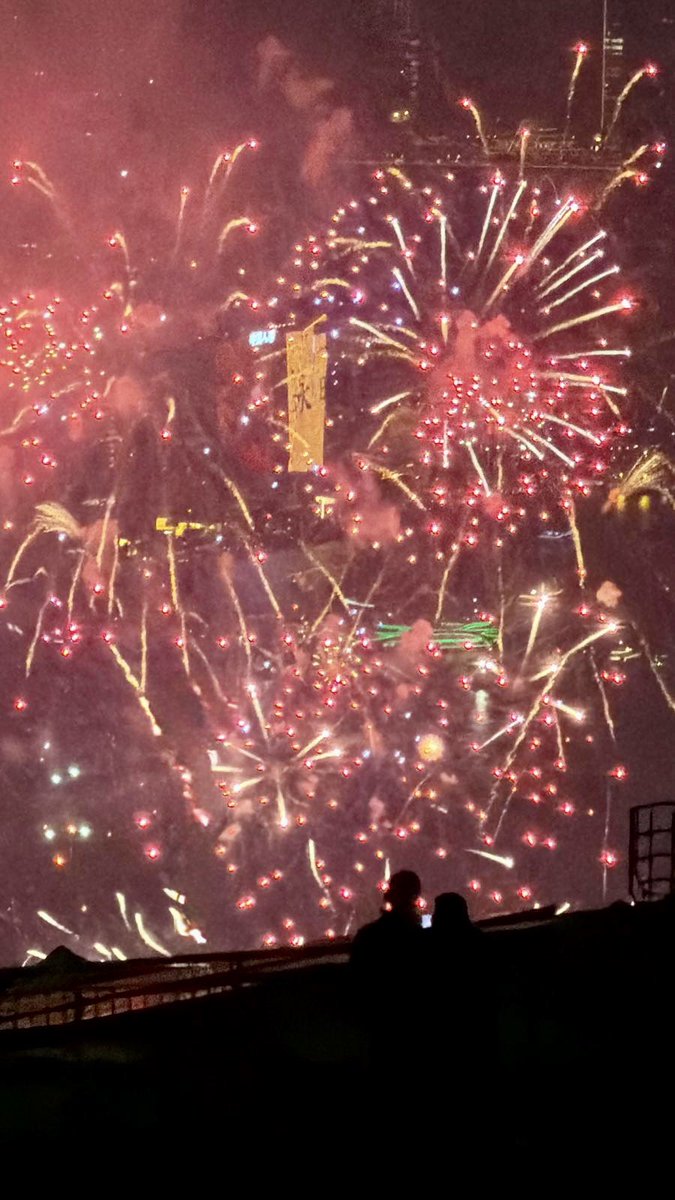
Happy Chinese New Year! We watched the fireworks from the top of Victoria Peak in Hong Kong. This is the year of the fire horse, which signifies disruption, transformative energy and generational change. May it bring joy, peace and prosperity to you and your loved ones.
Mark Cheng tweet mediaMark Cheng tweet media
English
0
0
1
208
Mark Cheng
Mark Cheng@markch3ng·
I’m thrilled to announce that I’ve been appointed Adjunct Professor in the School of Business and Finance at Hong Kong University. This year I’ll be teaching a course with my esteemed colleague Professor Eric Poon for MSc students on wealth management, covering topics such as portfolio management for family offices, social entrepreneurship and philanthropy, and impact investing. I’m hugely grateful to Hong Kong University for this opportunity & can’t wait to get started!
English
1
0
2
139
Mark Cheng
Mark Cheng@markch3ng·
@raizamrtn Yes! No point competing with the robots. The value of AI is to free us up to be more fully human
English
0
0
0
19
Raiza Martin
Raiza Martin@raizamrtn·
Over Christmas, friends and family asked what they should do to "prepare for AI." My honest answer: do things that remind you what it feels like to think slowly. It's kind of the most un-AI thing to do, and very human in how leisurely it feels. Read a book. Watch a full movie. Cook a recipe start to finish. Go on a long walk with someone you like. Start and finish a craft project. Most people are living with short-format brain from endless scrolling. It kills original thinking, and worse - it makes you reach for AI at exactly the moments where being human is the whole point. Long-format activities reset that. They rebuild your tolerance for the slow, unassisted thinking that produces your most original work. As AI gets better at tasks that used to take years to learn, the most valuable thing you can do is practice being deeply, irreducibly human.
English
48
47
370
40.5K
Mark Cheng
Mark Cheng@markch3ng·
If you’re not reinventing yourself every 5 years or so, you’re stagnating
English
0
0
1
69
Mark Cheng
Mark Cheng@markch3ng·
I’ve heard the National Security Strategy described by @RnaudBertrand as the US ‘resignation letter’ from global leadership, and I think that’s the best description I’ve yet seen for this extraordinary upending of US policy for the past 80 years
English
0
0
0
68
Mark Cheng
Mark Cheng@markch3ng·
With its new National Security Strategy, the US is effectively saying that international law is dead. Only sovereign strength matters now. Going forward, it will use its financial, technological and military strength to impose its will on everyone, friend and foe alike. We are back in the world of Thuycydides: ‘the strong do what they can, and the weak suffer what they must’
English
1
0
0
101
Mark Cheng
Mark Cheng@markch3ng·
That annoying thing every time X opens when you see an interesting post, only for it to vanish forever as the new posts upload
English
0
0
0
51
Mark Cheng
Mark Cheng@markch3ng·
Is this the world’s greatest love poem? The story of the Xuanji Tu (the ‘Star Guage’), by 4th century Chinese poet Su Hui, is too incredible not to be shared @RnaudBertrand 🙏
Arnaud Bertrand@RnaudBertrand

This strange square 👇 is undoubtedly the most extraordinary work of literature in human history. Yet, unfortunately, barely anyone in the West has ever heard of it. There was this woman poet in 4th century China called Su Hui (蘇蕙), a child genius who had reportedly mastered Chinese characters by age 3. At 21 years old, heartbroken by her husband who left her for another woman, she decided to encode her feelings in a structure so intricate, so beautiful, so intellectually staggering that it still baffles scholars to this day. Came to be known as the Xuanji Tu (璇璣圖) - the "Star Gauge" or "Map of the Armillary Sphere" - it's a 29 by 29 grid of 841 characters that can produce over 4,000 different poems. Read it forward. Read it backward. Read it horizontally, vertically, diagonally. Read it spiraling outward from the center. Read it in circles around the outer edge. Each path through the grid produces a different poem - all of them coherent, all of them beautiful, all of them rhyming, all of them expressing variations on the same themes of longing, betrayal, regret, and undying love. The outer ring of 112 characters forms a single circular poem - believed to be both the first and longest of its kind ever written. The interior grid produces 2,848 different four-line poems of seven characters each. In addition, there are hundreds of other smaller and longer poems, depending on the reading method. At the center a single character she left implied but unwritten: 心 (xin) - "heart." Later copyists would add it explicitly, but in Su Hui's original the meaning was even more beautiful: 4,000 poems, all orbiting the space where her heart used to be. Take for instance the outer red grid of the Star Gauge. Starting from the top right corner and reading down, you get this seven-character quatrain: 仁智懷德聖虞唐, 貞志篤終誓穹蒼, 欽所感想妄淫荒, 心憂增慕懷慘傷。 In pinyin, it is: Rén zhì huái dé shèng yú táng, zhēnzhì dǔ zhōng shì qióng cāng, qīn suǒ gǎnxiǎng wàng yín huāng, xīn yōu zēng mù huái cǎn shāng. Notice how it rhymes? táng / cāng / huāng / shāng The rough translation in English is: "The benevolent and wise cherish virtue, like the sage-kings Yao and Shun, With steadfast will I swear to the heavens above, What I revere and feel - how could it be wanton or dissolute? My heart's sorrow grows, longing brings only grief." Now read it from the bottom to the top and you get this entirely different seven-character quatrain: 傷慘懷慕增憂心, 荒淫妄想感所欽, 蒼穹誓終篤志貞, 唐虞聖德懷智仁。 The pinyin: Shāng cǎn huái mù zēng yōu xīn, huāngyín wàngxiǎng gǎn suǒ qīn, cāngqióng shì zhōng dǔzhì zhēn, táng yúshèngdé huái zhì rén. It rhymes too: xīn and qīn, zhēn and rén And the meaning is just as beautiful and coherent: "Grief and sorrow, longing fills my worried heart, Wanton and dissolute fantasies - is that what you revere? I swear to the heavens my constancy is true, May we embody the sage-kings' virtue, wisdom, and benevolence." That's just 2 poems out of the over 4,000 you can construct from the Xuanji Tu! At the very center of the grid, the 8 red characters wrapped around the central heart, she "signed" her poem with a hidden message: 詩圖璇玑,始平蘇氏。 "The poem-picture of the Armillary Sphere, by Su of Shiping." Or reversed: 蘇氏詩圖,璇玑始平。 "Su's poem-picture - the Armillary Sphere begins in peace." Many scholars, and even emperors, throughout Chinese history have been completely obsessed by Su Hui's puzzle. For instance, in the Ming dynasty, a scholar named Kang Wanmin (康萬民) devoted his entire life to the poems (kangshiw.com/contents/461/2…), ending up documenting twelve different reading methods - forward, backward, diagonal, radiating, corner-to-corner, spiraling - and extracting 4,206 poems. His book on the subject ("Reading Methods for the Xuanji Tu Poems", 璇璣圖詩讀法) runs to hundreds of pages. Empress Wu Zetian herself, the legendary woman emperor of the Tang dynasty, wrote a preface to the Xuanji Tu around 692 CE (baike.baidu.com/item/%E7%BB%87…). Incredibly, there's even far more complexity to the Xuanji Tu than just the poems: - The name 璇玑 (Xuanji) - Armillary Sphere - is astronomical in meaning and the way the poems can be read mirrors the way celestial bodies orbit around a fixed center. It's a model of the heavens. - Her original work, with the characters woven on silk brocade, was in five colors (red, black, blue/green, purple, and yellow) which correspond to the Five Elements (五行) - the foundational Chinese philosophical system that explains how the universe operates. So it's also a model of the entire cosmic order according to ancient Chinese philosophy. - It's also of course deeply mathematical with this 29 x 29 perfect square grid, with sub-squares, lines and rectangles, and a structure which allows for symmetrical reading patterns in all directions - Last but not least, the content of the poems themselves contain multiple registers. On top of expressing her personal grief and longing for her husband, it's also filled with accusations against the concubine (Zhao Yangtai) he left her for, reflections on politics (with many references to sage-kings) and philosophical reflections. So the Star Gauge is simultaneously: - A love letter (expressing personal longing) - A legal brief (arguing her case against her rival) - A cosmological model (structured like the heavens) - A Five Element diagram (encoding the fundamental structure of the world according to ancient Chinese philosophy) - A mathematical construction with perfect symmetry and precision And yet, for all this complexity, we should not forget this was all ultimately in service of the simplest human message imaginable: a 21-year-old woman asking the love of her life "come back to me". Her husband did, eventually. According to what empress Wu Zetian herself wrote in her preface to the Xuanji Tu, when he received Su's brocade he was so "moved by its supreme beauty" that he sent away his concubine and returned to his wife. As the story goes, they lived together until old age. The heart at the center was filled after all.

English
1
0
9
2K
Mark Cheng
Mark Cheng@markch3ng·
Everyone who cares about kids mental health should be rooting for Australia’s social media ban for under-16s to succeed.
English
0
0
0
78
Mark Cheng
Mark Cheng@markch3ng·
@shaunrein Congratulations Shaun! You must be a very proud dad. No personal achievement beats seeng your kids flourish
English
0
0
0
65