mark henick ✍🏻

31K posts

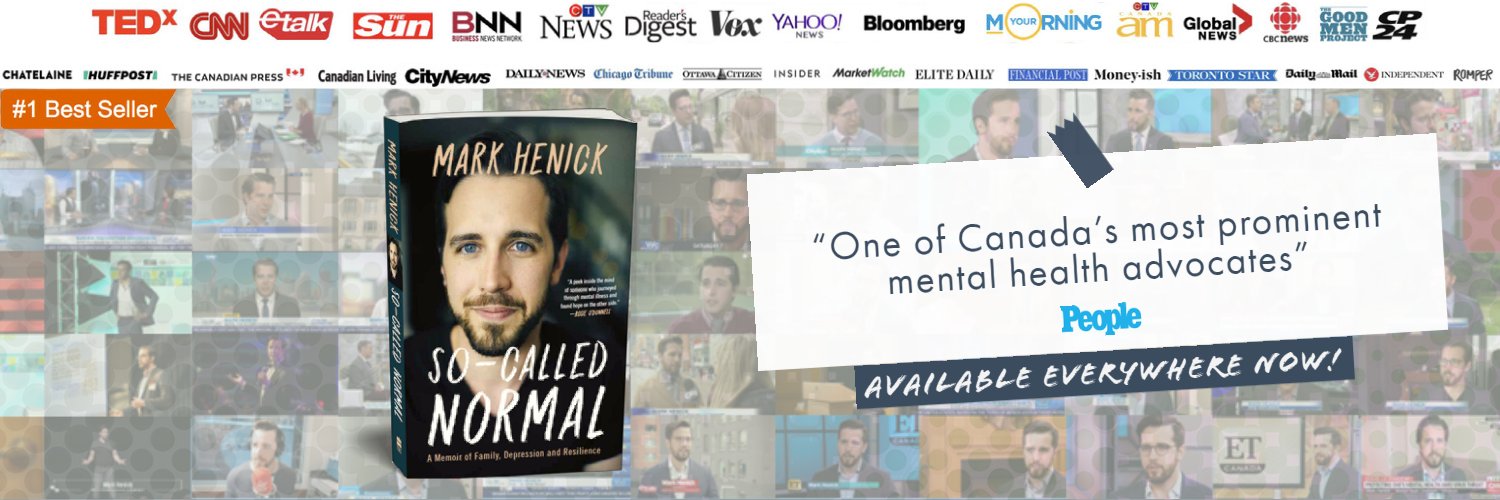
mark henick ✍🏻 banner
mark henick ✍🏻

mark henick ✍🏻

@markhenick

🗣 storyteller 📻 journalist 📖 bestselling author @HarperCollinsCa | 👨🏻‍🎓nerd @JournalismTMU @Cambridge_Uni @KingsIoPPN @EriksonInst @StThomasU

Toronto, ON Katılım Haziran 2009
447 Takip Edilen16.9K Takipçiler
Sabitlenmiş Tweet
mark henick ✍🏻 retweetledi
mark henick ✍🏻
mark henick ✍🏻@markhenick·
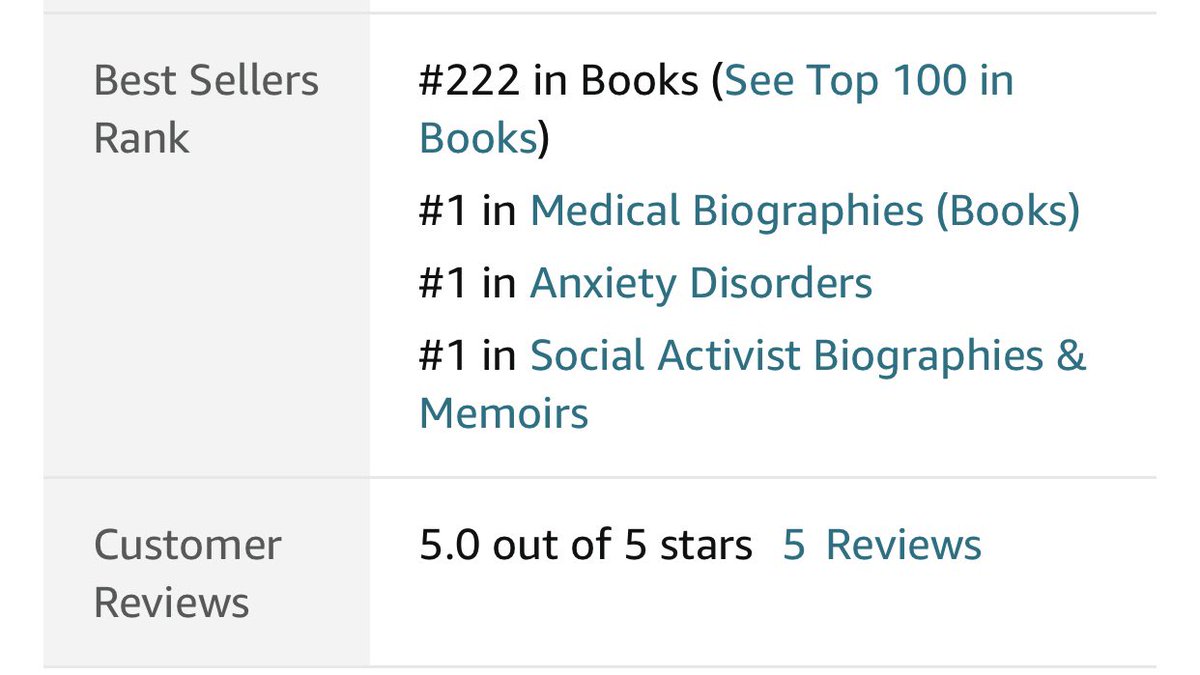
Bam! Bam! BAM! 💥 My book is way beyond all the modest stretch goals I set for it already. Everything else is just overflow gratitude now. Think we can get it into the Top 100? amzn.to/39INbEe #books #amwriting #mentalhealth
mark henick ✍🏻 tweet media
English
9
8
59
0
mark henick ✍🏻 retweetledi
Trudo Lemmens
Trudo Lemmens@TrudoLemmens·
ON doc uses incomplete #euthanasia #maid meds to kill patient & leaves. Is called back by family, enters laughing "this is a first: is he still breathing?", taps patient on the head "this is on us: me for my misstep, you for being so strong" & finishes job theglobeandmail.com/canada/article…
English
7
24
35
2.8K
mark henick ✍🏻 retweetledi
MLB
MLB@MLB·
CN stars in Toronto 🤩
MLB tweet media
English
45
861
9.3K
192.8K
mark henick ✍🏻 retweetledi
Ramona Coelho
Ramona Coelho@rljcoelho·
Some parliamentarians claim the lack of police or disciplinary action proves Canada’s MAID system is safe. Investigations/official reports point to something else: serious accountability gaps that should concern everyone. My comments in @nationalpost. nationalpost.com/news/ontario-m…
English
0
24
37
1.3K
mark henick ✍🏻 retweetledi
Inclusion Canada
Inclusion Canada@InclusionCA·
More than 90 disability and mental health organizations from across the country are registering their concerns about the further expansion of Canada’s Medical Assistance in Dying (MAiD) law. The groups are opposed to MAiD access being widened to people whose sole underlying medical condition is a mental illness. They have shared this position in an open letter to Prime Minister Mark Carney, Justice Minister and Attorney General Sean Fraser, and Health Minister Marjorie Michel. The letter was copied to the Special Joint Committee on Medical Assistance in Dying (AMAD) comprised of MPs and Senators. Inclusion Canada is one of the signatories to the letter. People with disabilities and mental illness who face poverty, housing insecurity, social isolation, and barriers to timely health care need help and hope — not MAiD. Please share this letter with your local Member of Parliament and Senator and urge them not to expand assisted suicide and also repeal the discriminatory Track 2 pathway to MAiD that is only for people with disabilities. Letter: EN --> bit.ly/4uvCFbv FR --> bit.ly/4nLEhLE Full press release: inclusioncanada.ca/post/canada-s-…
Inclusion Canada tweet media
English
4
39
46
2.7K
mark henick ✍🏻 retweetledi
nature
nature@Nature·
Digital distractions are vying for people’s focus, but our underlying capacity to pay attention seems to be undiminished go.nature.com/4v2a1i7
English
3
22
70
11.9K
mark henick ✍🏻 retweetledi
CP24
CP24@CP24·
Stark increase in children, young people diagnosed with anxiety: experts cp24.com/news/canada/20…
English
36
7
22
15K
mark henick ✍🏻 retweetledi
Ramona Coelho
Ramona Coelho@rljcoelho·
If a surgeon faced repeated complaints tied to concerning circumstances surrounding patient deaths, the public would demand accountability. But in MAiD? An Ontario doctor facing multiple MAiD complaints is still allowed to practise under supervision. Canada’s euthanasia regime lacks meaningful oversight and accountability. theglobeandmail.com/canada/article…
English
0
32
51
4.4K
mark henick ✍🏻 retweetledi
The Washington Post
The Washington Post@washingtonpost·
If you get panic attacks, it’s important to have tools that help you feel better quickly. A new study suggests that brief bursts of intense exercise — specifically, sprinting — may be a management strategy worth adding to your list. wapo.st/49dlWBn
The Washington Post tweet media
English
16
23
94
38K
mark henick ✍🏻 retweetledi
PsyPost.org
PsyPost.org@PsyPost·
Far from a blank slate, the infant brain begins with an overabundance of random neural connections. Neuroscientists discovered how trimming this excess wiring transforms the hippocampus into a powerful, structured memory machine. dlvr.it/TSgZ1n
English
1
9
24
1.9K
mark henick ✍🏻 retweetledi
nature
nature@Nature·
Acute stress makes it difficult to link memories of past events with fresh information, a study1 suggests. The results help to explain why people struggle to show insight under pressure. go.nature.com/4umkMMc
English
6
78
249
25.8K
mark henick ✍🏻 retweetledi
Akiyoshi Kitaoka
Akiyoshi Kitaoka@AkiyoshiKitaoka·
"Red peppers and green peas" The red circles appear to move. This anomalous motion illusion depends largely on the floating-motion illusion proposed by Pinna and Spillmann (2002). Copyright Akiyoshi Kitaoka 2006 (September 19) Pinna B, Spillmann L, 2002 “A new illusion of floating motion in depth” Perception 31 1501-1502
Akiyoshi Kitaoka tweet media
English
2
13
48
3.1K
mark henick ✍🏻 retweetledi
Louisa Nicola
Louisa Nicola@louisanicola_·
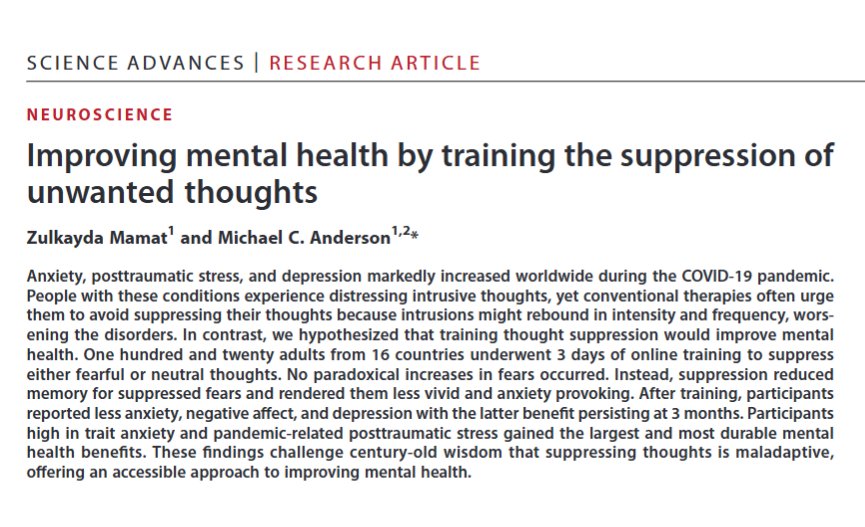
Not every thought deserves your attention. A randomized study found that people trained to suppress distressing thoughts reduced worry scores by 44% and improved multiple mental health measures over time, especially participants with high anxiety. The important distinction is this: suppression was not avoidance. It was the brain learning to interrupt repetitive negative thinking before it turned into rumination.
Louisa Nicola tweet media
English
4
39
219
6.3K
mark henick ✍🏻 retweetledi
CNN
CNN@CNN·
A new study has found that nearly 1.2 billion people worldwide had mental disorders in 2023, reflecting a 95.5% increase since 1990, with the largest increases in anxiety and depression. cnn.it/4a5hKDV
CNN tweet media
English
404
960
2K
373.6K
mark henick ✍🏻 retweetledi
Kevin Pho, M.D.
Kevin Pho, M.D.@kevinmd·
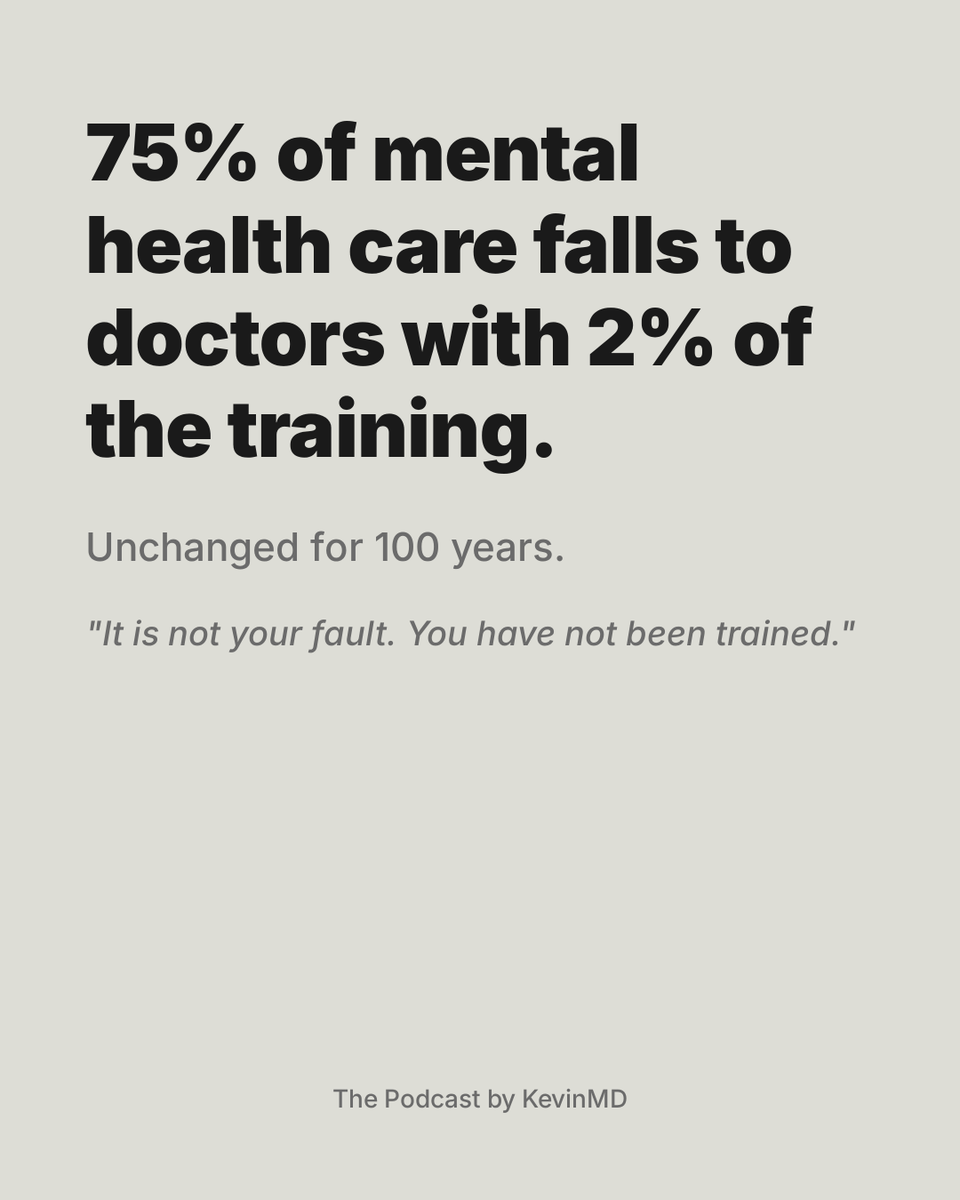
Primary care doctors handle 75 percent of all mental health care in this country. They receive 2 percent of their total training in it. That is not a resource gap. It is a curriculum failure that has not changed in over a hundred years, and it is killing people. Robert C. Smith, MD, has spent decades in academic medicine trying to fix this. He conducted the randomized controlled trials that identified the first evidence-based patient-centered interviewing method and the first primary care mental health model. He knows what works. The problem is that the system does not want it. The downstream numbers are staggering. There are 48,000 suicides a year in the United States. Half of those people saw their primary care doctor in the two to four weeks before they died. The doctors were not trained to screen for it. There are 15,000 opioid overdose deaths a year from prescriptions written by physicians who were never taught how to manage chronic pain or recognize addiction risk. Nearly 100 million Americans have a major mental health condition and are not receiving adequate care from anyone. It gets worse when you look at chronic disease. Seventeen percent of patients with conditions like diabetes, heart failure, and hypertension carry an untreated major mental disorder. When it goes unrecognized, the physical disease does not improve. That is part of why hospitals see the same patients cycling through readmissions. The structural explanation is the mind-body split that has governed medical training since the scientific revolution. Four years of medical school and three to five years of residency: nothing but physical disease medicine. The only mental health exposure most physicians get is a five-week inpatient psychiatry rotation in their third year, watching patients with schizophrenia and severe personality disorders who look nothing like the patients they will actually see in practice. Smith says the AAMC, ACGME, and AMA have known about this since Engel proposed the bio-psychosocial model in the 1970s. Fifty years of lip service. No change in curriculum. No change in clinical outcomes. Thomas Insel, a former director of NIMH, called it a human rights crisis. The comparison Smith draws is to Ralph Nader and Rachel Carson. The auto industry had seat belts and refused to install them. The chemical industry knew DDT was poisoning the water and refused to stop. Both industries changed only when the public got informed, got angry, and got Congress involved. Smith argues medicine is the same kind of recalcitrant industry, and the same kind of public pressure is the only path to reform. Eighty percent of heart attacks, strokes, and diabetes, and 40 percent of cancers, come from lifestyle factors that doctors are not trained to address through motivational interviewing. Obesity went from 15 percent of the population in 1990 to 50 percent today. The preventive failure alone represents trillions in health care spending that could have been avoided. Smith's message to clinicians is direct: this is not your failure. You were put in an untenable position by a training system that never equipped you for the work you were asked to do. Listen to the full conversation on The Podcast by KevinMD. Link in the replies. What is the single change to medical training that would most reduce the gap between the mental health care doctors provide and the training they actually receive? #ThePodcastbyKevinMD #MentalHealthTraining
Kevin Pho, M.D. tweet media
English
20
40
111
10.7K
mark henick ✍🏻 retweetledi
CNN
CNN@CNN·
Too much screen use among kids and teens can be harmful and should be limited for children under 18, new surgeon general's advisory says. cnn.it/4uoXoxy
CNN tweet media
English
80
104
262
126.1K
mark henick ✍🏻 retweetledi
Brandon Luu, MD
Brandon Luu, MD@BrandonLuuMD·
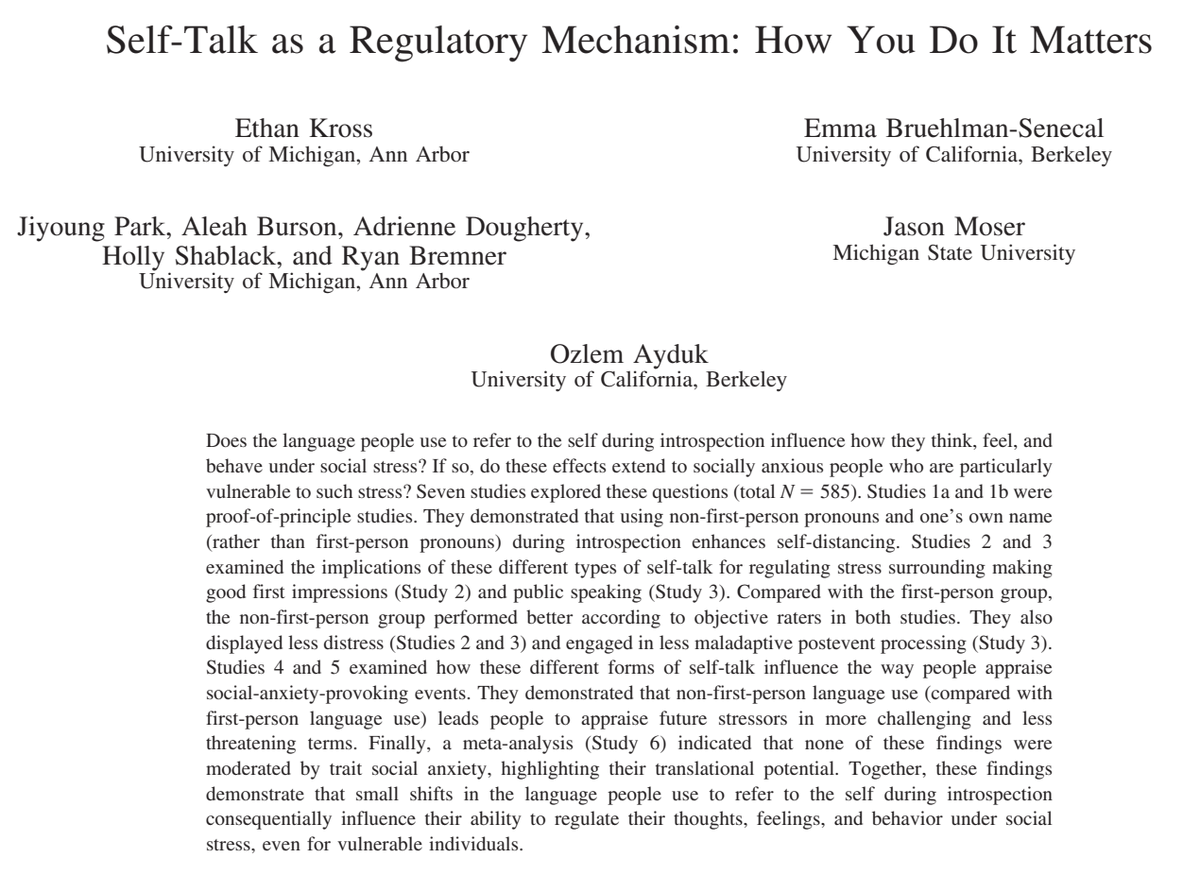
Speaking to yourself in third-person is a performance enhancer. Across 7 studies, people who used “you” or their own name instead of “I” under social stress had: ↑ objective-rated performance ↓ distress ↓ post-event rumination
Brandon Luu, MD tweet media
English
23
163
1.2K
51.5K
mark henick ✍🏻 retweetledi
Javeed Sukhera MD PhD
Javeed Sukhera MD PhD@javeedsukhera·
Speaking about patients with contempt and condescension does little to help to fight misinformation. Dismissing lived experience erodes trust. People stop feeling heard long before they stop suffering.
English
2
9
46
889