Martinho Lab

1.1K posts

Martinho Lab banner
Martinho Lab

Martinho Lab

@martinho_lab

Our AIM is to understand the way germ cells segregate from the soma and differentiate into functional gametes.

Lisbon, Portugal Katılım Ocak 2018
302 Takip Edilen478 Takipçiler
Sabitlenmiş Tweet
Martinho Lab
Martinho Lab@martinho_lab·
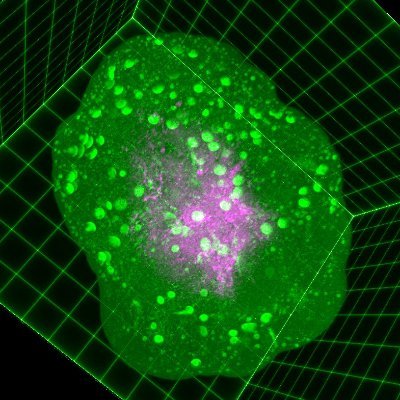
The remarkable dance of abnormal SC structures (polycomplexes) within a Prophase I-arrested Drosophila oocyte (stage 7). Lots of nuclear action in this meiotic arrested cell... (1/2)
English
2
3
11
0
Martinho Lab retweetledi
S
S@SsJankauskas·
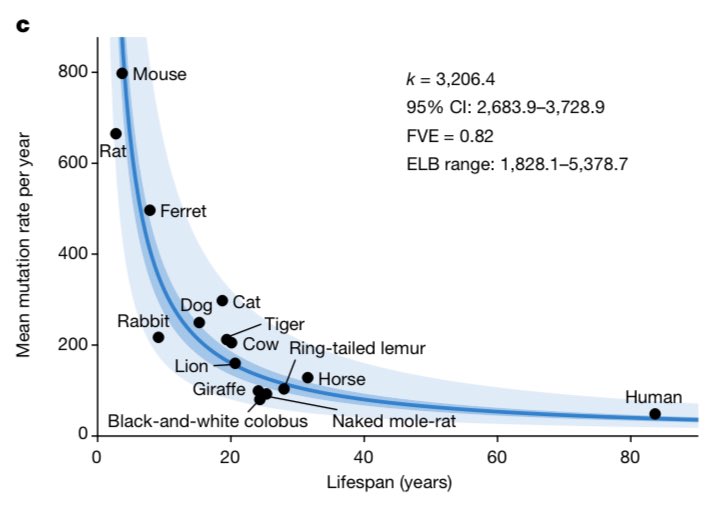
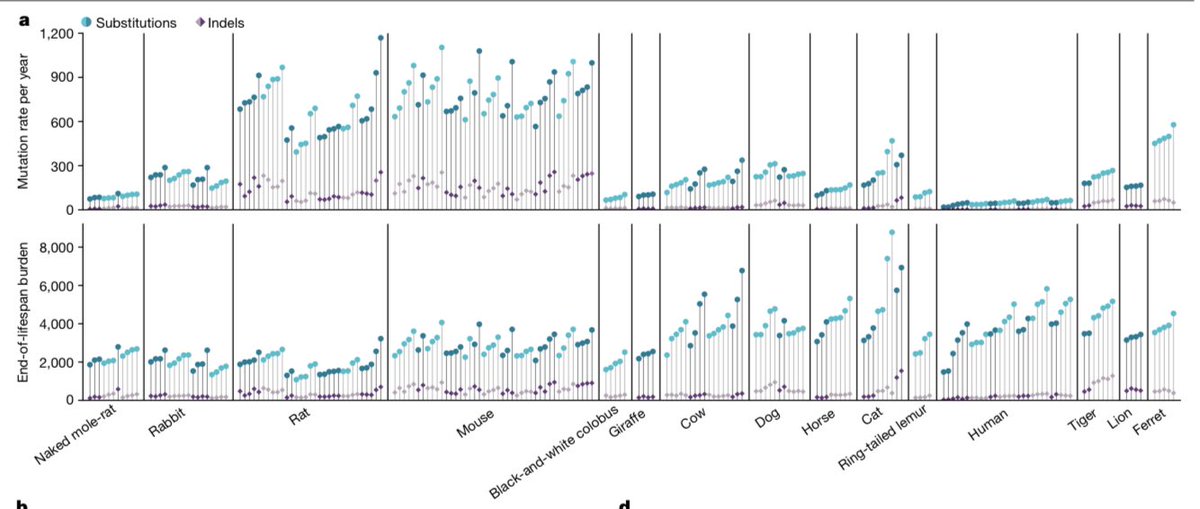
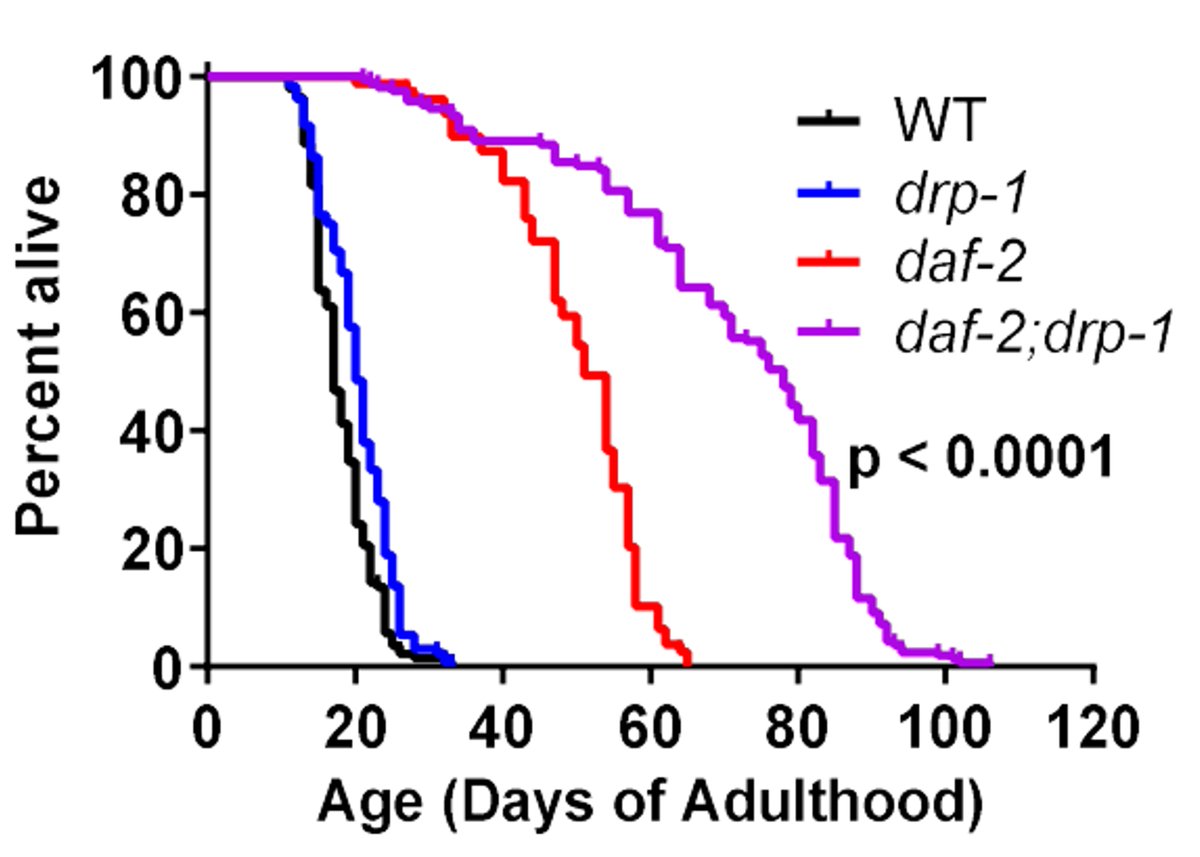
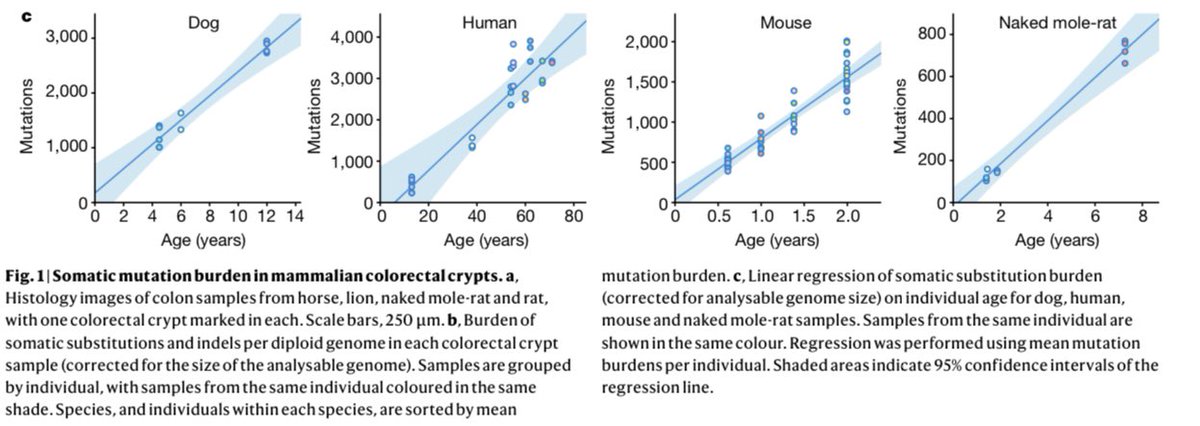
Have you seen this paper in @Nature ? doi.org/10.1038/s41586… I’m very skeptical about the idea that accumulation of somatic mutations could be the cause of aging. However, in this study authors demonstrated how strikingly accurate rate of mutations accumulation between species correlate (inversely) with species lifespan. Also note, that absolute number of mutations per genome is extremely low in naked-mole rats compared to mice. (Does it mean that NMRs have more faithful DNA polymerase?) But my skepticism still holds. Without mechanistical evidence I would say that accumulation of somatic mutations is rather consequence of aging, than its driver. Again, look at the data. Animals ultimately accumulate around 4,000 mutations per genome. But more than 90% of our genome does not code proteins. Hence we might say that only 400 of these mutations target genes. But out of 20,000 genes in our genome one type of cell uses less than half of them. Thus, we have now only 200 plausibly detrimental mutations. However, not all mutations are missense: decrease the number again. Next, our genome is diploid and for vast majority of genes one functional copy is more than enough. What’s the probability that among these 150 mutations you will hit one of those rare genes, for which the loss of a single copy results in a strong phenotype? Or what’s the probability that among these 150 mutations you hit both copies of one gene? Finally, many proteins have isoforms with partially or even fully overlapping functions. Moreover, in this study authors used intestinal cells, a tissue known for one of the highest rate of mutations in the organism. However, I’m not the specialist in genomics and maybe I’m totally wrong. If the answers to my doubts are already given I would be happy to hear them! For example, I know that @VijgJan lab have data on a strong correlation between increased number of mutations in the cell and augmentation of transcriptional noise. Another argument coming to my mind is that untranslated regions of genome are less susceptible to DNA damage just because of passive protection with histones and thus mutations might target the actively translated (and hence pivotal for a cell function) regions of genome with higher probability.
S tweet mediaS tweet mediaS tweet media
English
28
57
331
103.1K
Martinho Lab retweetledi
Ricardo Henriques
Ricardo Henriques@HenriquesLab·
PhD programme @IGCiencia is now open for applications =)
English
0
11
29
10.6K
Martinho Lab retweetledi
Denis Duboule
Denis Duboule@Duboule·
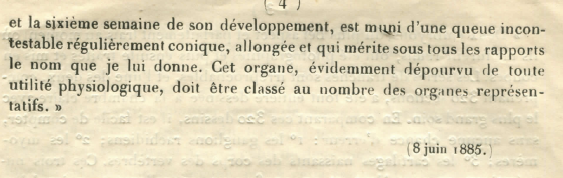
Yes 'From these facts, it results that the human embryo....has an 'incontestable' tail' Hermann Fol, 1885. (Former private collection of Friedrich Miescher)
Denis Duboule tweet mediaDenis Duboule tweet media
Alfonso Martinez Arias@AMartinezArias

@lpachter Yeah, like many other mutations in TbxT and important to understand the hype, breaking news, fact: human embryos have tails which then dissappear.

English
2
4
25
8.3K
Martinho Lab
Martinho Lab@martinho_lab·
@RibeiroCarlitos Sounds like a fascinating meeting :) why, why… did i say no to neuro when i started my phd? :)
English
1
0
1
89
Martinho Lab retweetledi
Maria João Amorim
Maria João Amorim@mjamorim1·
A position is open in my laboratory @IGCiencia for a lab technician to start in April 2024 to work in influenza antivirals. The position will initially last 5 months and is renewable. Please see the details at gulbenkian.pt/ciencia/homepa…: Under: Cell Biology of Viral Infection Lab
Maria João Amorim tweet media
English
0
25
25
3.5K
Martinho Lab retweetledi
Timothy Saunders
Timothy Saunders@TimESaunders·
Really happy to see this out: journals.biologists.com/dev/article/15… We use FCS to reveal that Bicoid dynamics vary spatially across the Drosophila embryo. We demonstrate this can explain previous observations about gradient extent and time scale of formation.
English
3
13
43
4.7K
Martinho Lab retweetledi
Stirling Churchman
Stirling Churchman@fiddle·
🎉 🎉Our paper, "Single-nucleoid architecture reveals heterogeneous packaging of mitochondrial DNA," is now published! rdcu.be/dyqzP @NatureSMB See the tweets below ⬇️ for a summary. Congratulations to the whole team! @rsisaac @mtcicero26 @stergachislab 🎉🎉
Stirling Churchman@fiddle

How are the hundreds of copies of mitochondrial DNA packaged in our cells? It’s a mystery because histones and chromatin factors are not in mitochondria and the high copy number presents challenges! Read what Stefan @rsisaac found in our preprint. (1/7) biorxiv.org/content/10.110…


English
1
29
136
30.2K
Martinho Lab retweetledi
Kip Lacy
Kip Lacy@MendelsLOLs·
Preprint alert! 🐜 🧬 The first from my PhD with @DanielKronauer, with an assist from @teraxurato. We discovered an unusual case of “unselfish” meiotic drive while studying asexual reproduction and its genomic consequences in the clonal raider ant. biorxiv.org/content/10.110…
English
12
48
174
56.9K
Martinho Lab retweetledi
Christoforos Nikolaou
Christoforos Nikolaou@guilderstern·
Left: Two leading labs show, with an impressive set of experiments, that nucleosome positioning patterns drive chromatin compartmentalization in yeast. (Nature Genetics, 2024) Right: A peniless nobody describes the same concept by analyzing public data. (Current Genetics, 2018)
Christoforos Nikolaou tweet mediaChristoforos Nikolaou tweet media
English
10
81
663
129.3K
Martinho Lab retweetledi
epithelial mechanics fan club
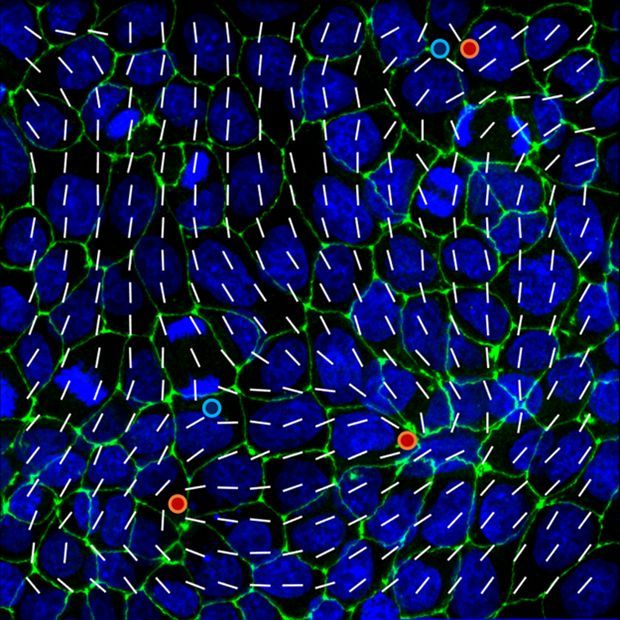
What do star fish, snowflakes, and even cells have in common? I am @JuliaEckert10 and I would like to take you on a journey into the field of soft matter and give you a brief overview of experimental observations on symmetries in biological systems. #EpithelialMechanics
epithelial mechanics fan club tweet media
English
5
39
192
66.6K