Ben Hardisty, PhD

24.3K posts

Ben Hardisty, PhD banner
Ben Hardisty, PhD

Ben Hardisty, PhD

@mathvsoldage

Data mining & text mining on a scale you can't begin to fathom at Unknown. Lover of ☕️ 🥐🥓🐶 My normal is your never. #useR #Rstats #maths #T1D

Unknown Katılım Temmuz 2015
4.2K Takip Edilen1K Takipçiler
Ben Hardisty, PhD retweetledi
Dr. James Beattie
Dr. James Beattie@astro_magnetism·
Quite excited about our latest work. We show formerly one can write the compressible (magnetized or not) fluid equations in the form of imaginary time Schrodinger equations, where all the nonlinearities are shoved into the potentials: arxiv.org/abs/2604.27088
English
4
15
63
3.2K
Ben Hardisty, PhD retweetledi
Nature Physics
Nature Physics@NaturePhysics·
During development, cells acquire their identity—a process that depends on epigenetic modifications such as methylation. Now, a statistical physics analysis of methylation helps explain embryonic symmetry breaking. nature.com/articles/s4156…
English
0
12
50
3.4K
Ben Hardisty, PhD retweetledi
Quanta Magazine
Quanta Magazine@QuantaMagazine·
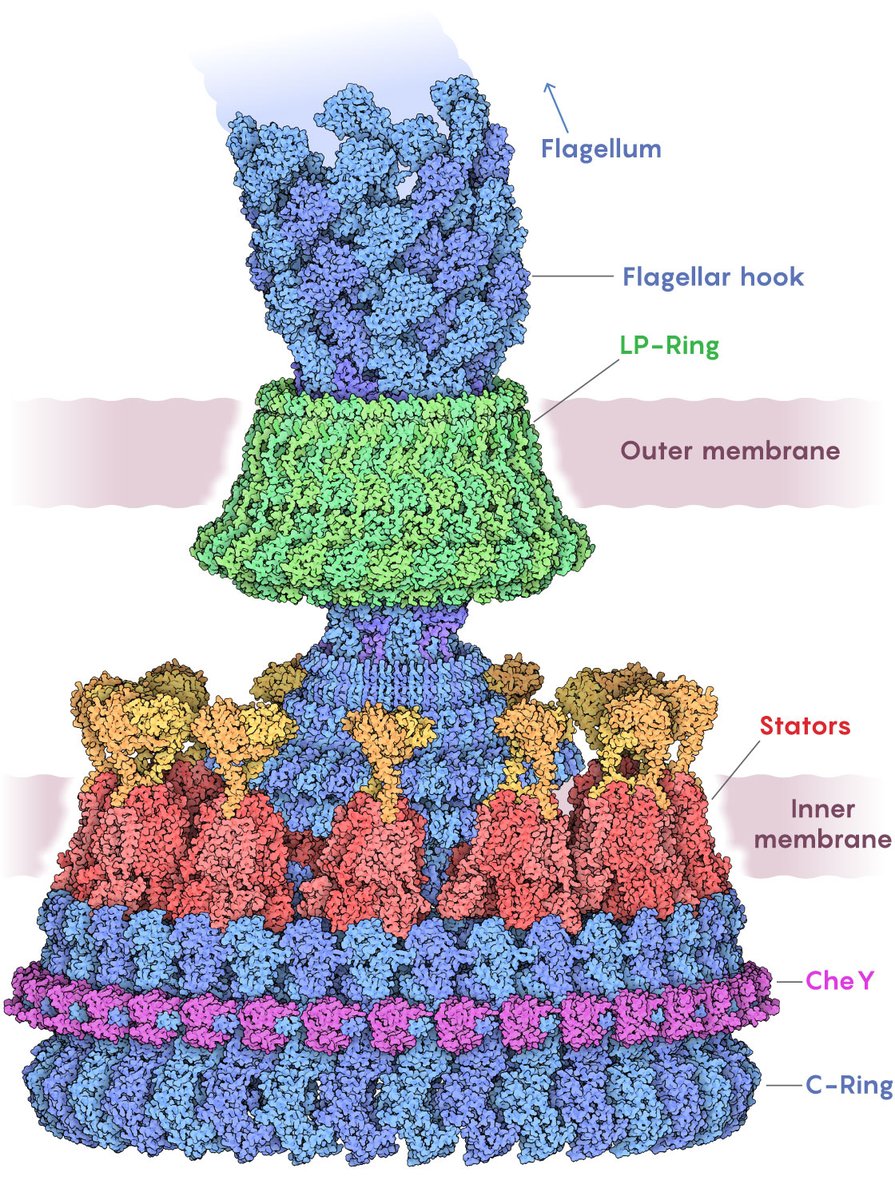
Biologists have been unpacking the mystery of the flagellar motor for decades. It wasn’t until this year that the final pieces of its dynamic puzzle finally fell into place. “My lifelong quest is now fulfilled,” said Mike Manson, a professor emeritus of biophysics at Texas A&M University who started studying the flagellar motor in the 1970s. “I finally understand how this thing I’ve been studying for 50 years actually works. That’s about as satisfying as can be.” quantamagazine.org/what-physical-…
Quanta Magazine tweet media
English
16
216
941
41.6K
Ben Hardisty, PhD retweetledi
Sebastien Bubeck
Sebastien Bubeck@SebastienBubeck·
Ramsey numbers are one the most basic objects in combinatorics, a beautiful illustration of structure within chaos. They have been heavily studied for almost a century now, so it came as a real surprise to us when an internal version of GPT-5.5 proved a new elementary result about them: \lim_{n\to \infty} R(k,n+1)/R(k,n) = 1 for all k This was also known as Erdos problem #1014, although I personally think the more relevant bit is that it's a basic result about off-diagonal Ramsey numbers. As it often happens (for now), the proof is reasonably simple in hindsight, although it is quite a wire act and it relies on some unexpected numerics (the "unexpected" part here is probably why this wasn't discovered before). Despite being simple, it's certainly the type of result that could now be taught in a combinatorics class. Pdf of the proof (produced by @mehtaab_sawhney): cdn.openai.com/pdf/6dc7175d-d… Lean verification of the proof (produced by Boris Alexeev): github.com/plby/lean-proo…
Sebastien Bubeck tweet media
English
9
81
502
67.1K
Ben Hardisty, PhD retweetledi
Mathematica
Mathematica@mathemetica·
The wave equation in spherical coords: ∇²Φ = (1/c²)∂²Φ/∂t² drives these levitated droplets into pure l=3 & l=4 modes. Watching a water drop morph into perfect triangular stars & quadrupolar symmetry at ultrasonic resonance is pure fluid poetry.
English
41
400
2.1K
99.3K
Ben Hardisty, PhD retweetledi
Ruth Mace
Ruth Mace@tavitonst·
Exploring matrilocality in history: insights from ancient DNA | Evolutionary Human Sciences | Cambridge Core - cup.org/3QKr2yi
English
0
9
18
3K
Ben Hardisty, PhD retweetledi
Mathelirium
Mathelirium@mathelirium·
Quantum Mechanics Series Lecture 4 Lecture 1 established that ρ(x,t) = |ψ(x,t)|² behaves like a conserved probability density. Lecture 2 showed what drives that flow. We also saw that writing ψ = r exp(iθ) makes the probability current proportional to the phase gradient, making it clear that phase geometry literally steers the motion. Lecture 3 then showed that the centroid of that flow can move almost classically when the packet is tight and the external potential is smooth. However, that raises yet another question. If the centroid can look classical, why does the full wave still spread, bend, split, and interfere in ways no classical particle cloud would? This is because the wave is not driven only by the external potential. It is also driven by its own curvature. Write ψ(x,t) = r(x,t) exp(iθ(x,t)) with ρ = r². Then Schrödinger’s equation gives two coupled real equations. One is the continuity equation you already know. The other looks like a Hamilton-Jacobi equation, but with one extra term: Q = −(1/2m) ∇²r / r This is the so-called Quantum Potential. It depends entirely on how the amplitude bends across space. So, the wave is being shaped not only by V(x,t), but also by the geometry of its own envelope. In the animation, the upper surface is still |ψ| and its skin is still colored by arg(ψ). The glowing threads still trace the probability current. But now a second membrane hangs underneath. That lower membrane encodes the quantum potential Q itself. The porcelain bead marks the quantum centroid. The amber bead follows a classical centroid under the same external V. When those paths separate, the lower membrane tells you why. The difference is not magic but the extra term classical mechanics does not have. The math breakdown: Start from Schrödinger evolution in units with ħ = 1: i ∂ψ/∂t = [ −(1/2m) ∇² + V(x,t) ] ψ Write the state in polar form: ψ = r exp(iθ) Then ρ = |ψ|² = r² From the imaginary part, you recover probability conservation: ∂ρ/∂t + ∇·j = 0 with j = (1/m) Im(ψ* ∇ψ) = (ρ/m) ∇θ So the local velocity field is v = j / ρ = ∇θ / m Now take the real part of Schrödinger’s equation. That gives ∂θ/∂t + |∇θ|² / (2m) + V + Q = 0 where Q = −(1/2m) ∇²r / r This is the classical Hamilton-Jacobi equation with one extra term. That extra term is what makes quantum motion locally different from classical motion. Take a gradient of that phase equation and use v = ∇θ / m. Then the flow obeys an Euler-like equation: ∂v/∂t + (v·∇)v = −(1/m) ∇(V + Q) In other words, there are really two forces in the problem. One comes from the external potential V. The other comes from the wave’s own curvature through Q. That is why Ehrenfest is only approximate. The centroid can still satisfy d⟨x⟩/dt = ⟨p⟩/m d⟨p⟩/dt = −⟨∇V⟩ but the internal shape of the packet evolves under the combined influence of V and Q. When the packet stays broad and smooth, Q is gentle and the motion looks more classical. When the packet develops sharp curvature or interference structure, Q becomes strong and the classical picture breaks down. That is what this scene is designed to show live. #QuantumMechanics #Wavefunction #SchrodingerEquation #BornRule #ProbabilityCurrent #ContinuityEquation #Phase #EhrenfestTheorem #QuantumPotential #Madelung #HamiltonJacobi #MathematicalPhysics #Mathematics #Physics
English
12
88
522
20.2K
Ben Hardisty, PhD retweetledi
Sasha Gusev
Sasha Gusev@SashaGusevPosts·
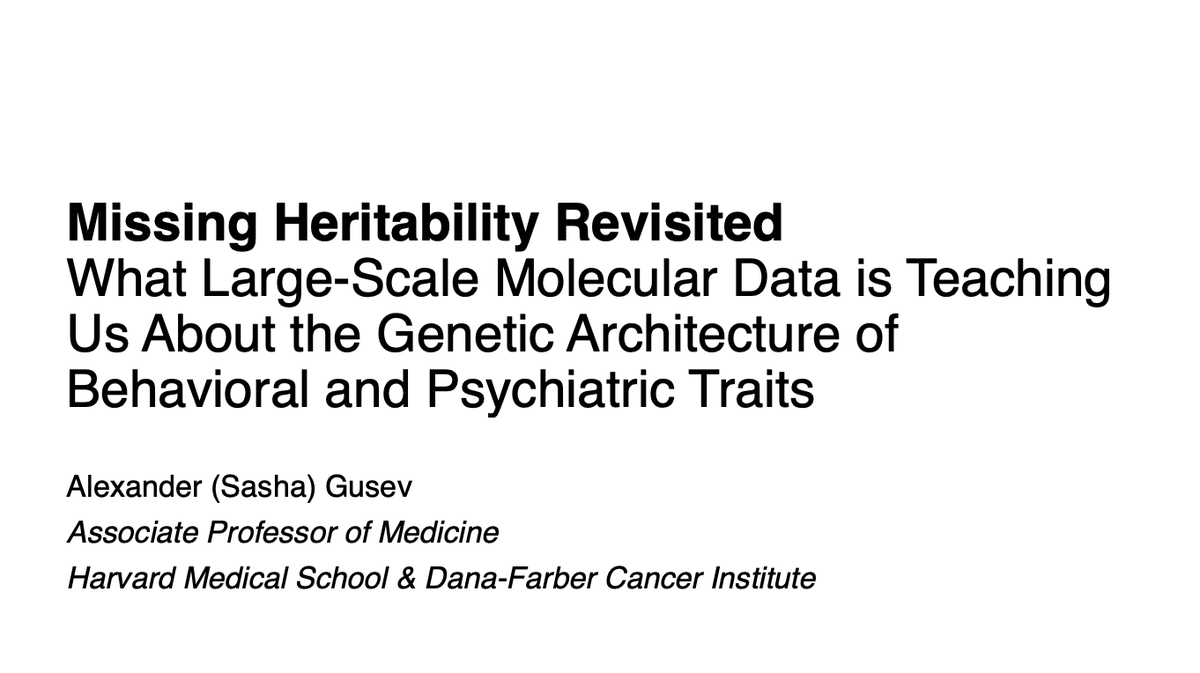
Some slides from a recent talk on missing heritability
Sasha Gusev tweet media
English
4
22
120
11.8K
Ben Hardisty, PhD retweetledi
Stat.ML Papers
Stat.ML Papers@StatMLPapers·
Are Statistical Methods Obsolete in the Era of Deep Learning? A Study of ODE Inverse Problems ift.tt/ViBgeJ7
English
3
65
401
32.9K
Ben Hardisty, PhD retweetledi
SIAM Activity Group on Dynamical Systems
"This is a Seminaire Bourbaki survey of the proof of the Kakeya conjecture in three dimensions. The survey is written for a broad mathematical audience. We sketch all the ideas in the proof, with many pictures."
English
1
3
4
360