
Sabitlenmiş Tweet
MatZERØ
1.4K posts

MatZERØ
@matzero6
I can stay irrational longer than markets can stay solvent
San Escobar Katılım Haziran 2020
1.5K Takip Edilen178 Takipçiler
MatZERØ retweetledi

It feels like a contradiction you can’t quite reconcile.
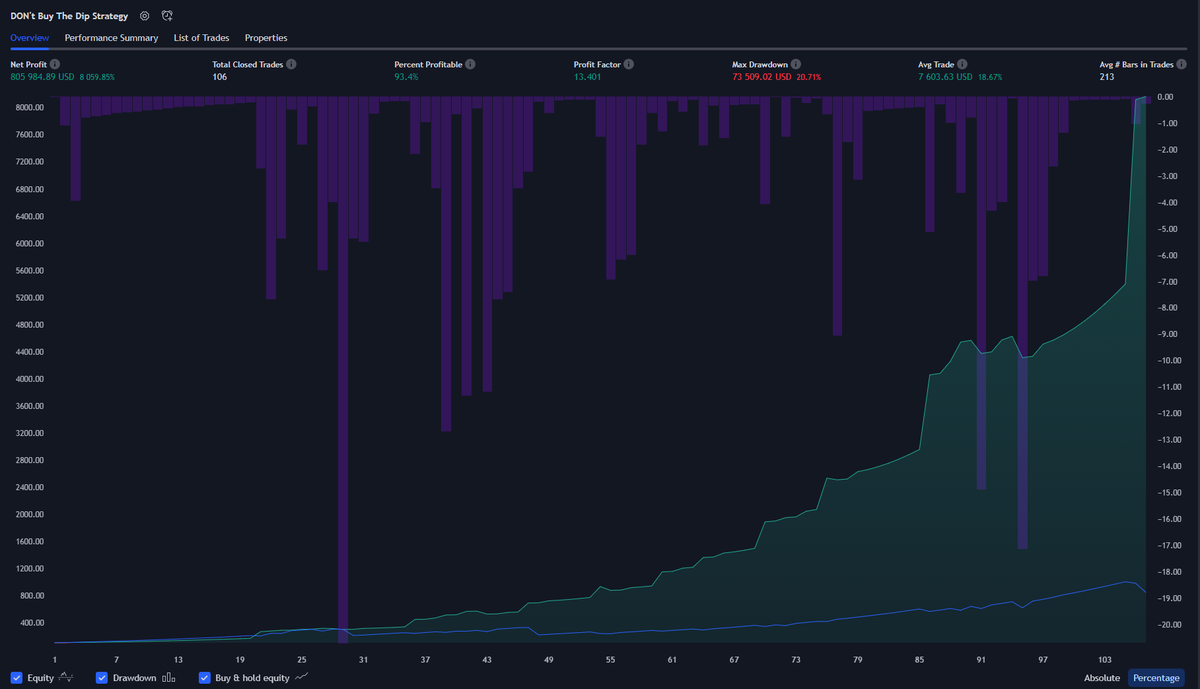
On one hand, you know—intellectually—that you’re doing exactly what you’re supposed to do. The system is profitable. The backtest is robust. The rules are being followed perfectly. There’s no mistake to fix, no tweak to make. This is the process.
But emotionally, it feels like something is very wrong. There’s a steady, low-grade discomfort that sits with you all day. Not panic, not chaos—just a grinding unease. The equity curve is doing something it has always done in the past, but when it’s happening to you, in real time, it feels different. It feels personal. It feels like failure. Every loss reinforces a quiet doubt: What if this time is different?
What if the backtest was an illusion?
What if I’m just sitting here watching capital bleed for no reason?
And the hardest part is the helplessness. You’re not allowed to act.
You chose not to act. Discretion would actually feel better—at least you could do something. Cut risk. Override a trade. Reduce exposure. But the system says stay. The system says this is normal. The system says this pain is part of the edge. So you sit there, following rules that are currently producing losses, while knowing those same rules are the only reason the long-term returns exist at all. It creates a very specific kind of tension: Short-term emotional truth: This feels terrible and wrong.
Long-term statistical truth: This is exactly what must happen.
And those two truths don’t align in the moment. In fact, the better the system—the more it relies on capturing rare, outsized winners—the more uncomfortable this period tends to be. Because the edge is paid for upfront in drawdowns, whipsaws, and frustration. So the feeling is something like: quiet conviction under pressure.
You’re holding onto belief without reinforcement.
You’re executing without validation.
You’re enduring losses not because you’re wrong—but because this is the cost of being right over time. And that’s what makes it so psychologically difficult. If it felt good, it probably wouldn’t work.
English
@s_streichsbier Nothing new. Gemini 3.1 often believes it is Sonnet 3.7. They all train on one another's outputs, and this is not limited to Chinese labs.
English

Wait, what?
Has anyone else tried using deepseek within pi?
I followed this link api-docs.deepseek.com/quick_start/ag…

English
@scaling01 Except it is most likely just a marketing gimmick, and nobody saw it in real life. Also post-trainig for security tasks does not mean general intelligence
English


MatZERØ retweetledi

Nobody's talking about AI psychosis anymore and I'm pretty sure it's because everyone has it now.
English
@luckythehusky The last time I tried after I installed OMO it took something like 12 GB of memory to handle sub 200K token session. Is it any better now?
English

我用 AI 编程工具和网上很多人的体验并不一致. 目前感受 OpenCode 配合 OMO 这个笨重的框架, 接入 GPT-5.5 在比较成熟的仓库里面开发, 体验比 Codex 还好.
中文

@RhysSullivan Not in Codex. You can change reasoning effort multiple times per session and it does not affect the cache as long as it is the same model. So, no mixing of 5.4 (mini) with 5.5
English

@Amank1412 You are not alone. While I'm not sure about Opus, there's definitely something going on with GPT-5.5 this week. It still sounds reasonable, but the depth of thought has significantly worsened.
English

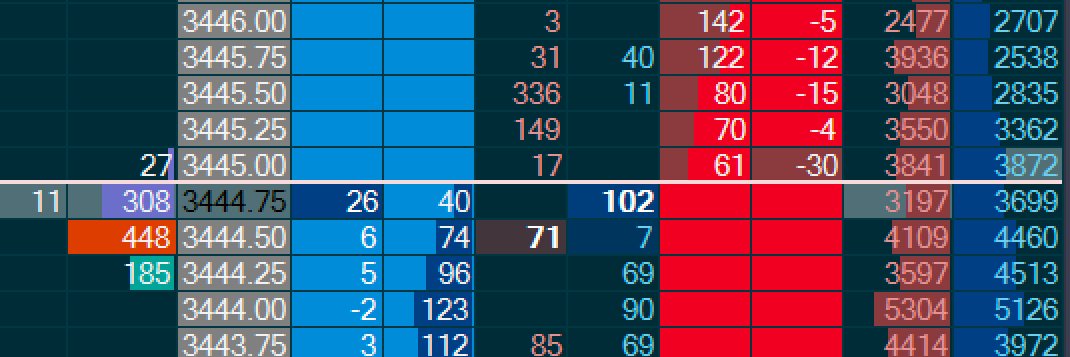
@Penny_Lane_BBM Earlier this year, NQ had multiple 100-handle, 5-minute bars per session, mostly random oscillations during periods of poor liquidity. Did you trade during that period? How did you control your risk? 200-handle-wide stops? More?
English

Why would someone trade ES when they could trade NQ?
English
@variance_lover Settlement at 30s VWAP could easily solve this problem and make it harder for the manipulators
English

Polymarket fixed ghost fills which is good.
But the market is still getting farmed in one of the most obvious ways possible.
Settlement manipulation on short-term markets (especially BTC 5min) is still wide open.
If you’re actually trading these markets, you’ve seen it:
- Traders build large positions
- Then move BTC (usually via Binance) in the final seconds
- Settlement follows that move
- They cash out, liquidity providers get run over
This isn’t edge-case behavior, it’s consistent and repeatable.
And at this point, more money has been made by manipulators running this play than by actual traders providing real liquidity. They are extracting well above 50k a day in btc 5min alone.
The result:
- Liquidity disappears near settlement
- Serious market makers turn off during these windows
- Retail sees random last-second flips and loses trust
- Market quality degrades
Weekends and low-liquidity periods are especially bad, sometimes borderline untradeable.
One important point here:
Polymarket already uses Chainlink for settlement, which aggregates multiple price feeds.
But in practice, that aggregation is still heavily dominated by Binance, and Binance leads most venues. If you can move Binance a few bips at the right moment, the rest follows. That’s exactly what’s being exploited.
So while the oracle design sounds robust in theory, in reality it’s still very gameable in short time windows.
To be clear: this is a hard problem.
But it’s also a very visible one, and there’s been little real acknowledgment or discussion around it.
There are ways to mitigate it:
- Investigate and ban clearly linked manipulation clusters (many are trackable on-chain)
- Work with active traders already monitoring this behavior
- Adjust settlement (e.g. short time-weighted averages instead of single-tick pricing)
- Reduce reliance on any single venue dominating price feeds
On time-weighted averages specifically:
Retail often pushes back on this, but I haven’t heard a strong argument for why a short averaging window (e.g. last 30–60s) would be worse than a system that can be flipped in the final seconds.
Right now, the current design is clearly exploitable.
None of these fixes are perfect, but doing nothing isn’t neutral, it actively pushes liquidity out.
And that’s the real issue:
You can’t build durable markets if the participants providing liquidity are structurally at a disadvantage.
I’ve personally tracked multiple large clusters of accounts running this strategy, including linked funding, coordinated behavior, and PnL data.
Happy to share data, examples, and work through potential solutions if the team is open to engaging on this.
@devjoshstevens @mustafap0ly @kakujain @PolymarketDevs @Polymarket
English
@DominikTornow Looking at OCaml, I have zero doubts about why most people hate it.
English

Looking at OCaml, I’m always surprised the language isn’t insanely popular
English
@rafal_zaorski @bigshortbets Zgłaszamy. Im więcej, tym szybciej się nim zajmą, bo tradycyjnie @uknf ma wszystko w dupie

Polski

May 6 - 04:31:23 - $BIGSB - $0,57 - @bigshortbets
The endgame has just begun.
There’s no going back now. XD
English
@rafal_zaorski @bigshortbets Endgame dla twoich followersów? Ilu jescze planujesz wydymać?
Polski
MatZERØ retweetledi

Nobody wants to admit it but "vibecoding" works until your app has actual users. Then you discover what senior engineers have been getting paid for.
English
@TheAhmadOsman Gemini 2.5 Pro 03-25 was peak Google. Since then they are in continous decline
English


MatZERØ retweetledi

Amazing, but really not surprising
Michael R. Strain@MichaelRStrain
Amazing: Income in Poland is on track to overtake income in the U.K.
English
MatZERØ retweetledi


@robinebers I moved my simpler workflows from GLM 5.1 to the new Kimi K2.6. It is much faster and much more pleasant to work with, even if it scores a few percent lower on benchmarks. Maybe give it a try.
English

GLM 5-1 is not Opus 4.7
it's not even Opus 4.6
I see a lot of people claim that it's "just as good"
that's cope
but it's a solid model on a budget
might even be the best budget model right now
I've tried the model plenty and can confidently tell you that it's alright - but alright doesn't earn you a spot in the SOTA stack
English
MatZERØ retweetledi

Japanese engineers developed a “Sword Tip Visualization System” for the Fencing World Championships, and it makes fencing look absolutely incredible to watch.
English