Sabitlenmiş Tweet
Mayah
8K posts

Mayah
@Mayah
Hold the Line. Marine veteran. Mother. Homesteader. Just trying to leave the world better for my children.
Katılım Nisan 2008
397 Takip Edilen791 Takipçiler
Mayah retweetledi

A Small Stop, A Big Surprise ❤️
In March, while traveling overseas, we stopped at a quiet gas station just to refuel. It seemed like an ordinary pause in a long journey… until something unexpected caught our attention.
Near the corner of the station, a tiny, helpless little soul was waiting—fragile, scared, and alone. As if it had been hoping someone would finally notice.
We couldn’t just drive away.
What started as a simple fuel stop turned into a moment of kindness. With gentle hands and warm hearts, we gave that little life a second chance—some food, some care, and most importantly, love.
Sometimes, the smallest stops in life lead to the biggest memories.
📹pawssaviors
English
Mayah retweetledi

Mayah retweetledi

Een 18-jarig Iraans meisje, Melika Azizi, wordt binnenkort in Iran opgehangen.
Maar eerst gaat het regime haar verkrachten.
Omdat ze nog maagd is. Want volgens hun zieke logica komt een maagd rechtstreeks in de hemel. Dus verkrachten ze haar eerst, zodat ze niet in het paradijs kan komen. Daarna pas de strop.
En hier in Nederland lopen mensen rond die dit regime verdedigen en met de vlaggen van dit doodzieke regime zwaaien
Dat zijn geen 'mensen met een andere mening'. Dat zijn beesten. Net zo schuldig als de beulen zelf.
Mensen die dit regime steunen verdienen geen plek in onze samenleving. Het wordt tijd dat dit tuig opgepakt wordt en over de grens gedonderd wordt. Of denkt het kabinet nog serieus dat er met deze schijtzooi nog samen te leven valt?

Nederlands

@XtexasgirlX How many victims were misdiagnosed during COVID just to have organs harvested.
Hospitals made millions off of ventilated patients who had the simple flu.
English

Husband Declared Brain Dead by Doctors Fought for Life Until the Very End
♥️💔♥️💔♥️💔♥️💔♥️
In Kingwood Texas a young married couple made a solemn promise. They vowed never to withdraw life support if one of them was ever called brain dead. They wanted every possible chance for recovery. Both immediately took their names off the organ donor registry. Just two months later tragedy struck without warning.
Francisco Javier Villa Rocha known to family and friends as Jay was only thirty years old. After drinking an energy drink he suffered a sudden brain aneurysm. Doctors performed coil surgery but soon pronounced him brain dead. His wife Dianne Nguyen refused to accept the diagnosis. She stayed by his side through the weekend and saw unmistakable signs of life including tears streaming down his face.
The organ procurement organization LifeGift contacted her repeatedly and pushed hard for consent to donate his organs. She turned them down every single time. Hospital staff insisted Jay had massive bleeding and a nonfunctioning brain stem. Yet Dianne kept fighting. When she brought in a lawyer and demanded that her husband receive basic nutrition the hospital had been withholding from potential organ donors something remarkable happened. Jay found the strength to squeeze her hand and would not let go.
Tragically Jay passed away that same night. The cause was not the original aneurysm. He developed severe infections in the intensive care unit that led to blood clots in his lungs sepsis and pneumonia. A private medical examiner later reviewed the case and reached a very different conclusion. There had been only minimal bleeding nowhere near enough to destroy brain function. The brain stem showed no signs of death or serious damage.
Medical records revealed Jay had been given heavy doses of powerful drugs every day. Fentanyl suppressed brain activity and kept him dependent on the ventilator. Propofol held him in an induced coma. Nimbex a paralytic prevented any movement or reflexes and even altered his pupils so he failed the apnea test used to confirm brain death.
Dianne gathered the autopsy report toxicology results full hospital records and statements from the independent examiner. She also lined up medical experts and testimonies from other people who had survived brain death declarations. No attorney would take the case. Under Texas law brain death equals legal death and the organ transplant system carries strong legal protections. The industry is worth billions of dollars and critics say the definition itself was created to make organ recovery possible without being labeled homicide.
Today Dianne runs a Facebook group called The Right to Fight. She posts daily stories from brain death survivors families and medical whistleblowers. Together with others she is pushing for real reform in Congress so families can protect their loved ones and demand genuine second chances.
What would you do if doctors told you to give up on someone you love?⬇️
change.org/TheRightToFight

English
Mayah retweetledi

Mayah retweetledi

Africans stuff the little slave children in bags.
Notice the corrupt UN says nothing, they're too busy accusing Britain of "crimes against humanity" for the 17th century slave trade.
Visegrád 24@visegrad24
Congolese children stuffed in bags are up for sale as “child labour” to the highest bidder. An estimated 40,000 children work in the cobalt mines of the DRC. Where is the outrage from Black Lives Matter and other organisations?
English
Mayah retweetledi

Bill Maher: "NEW RULE: Germans have to figure out a new way to say ‘We’re hiring.’ Yeah, I don’t exactly speak German, but sorry, but ‘Wir Suchen Dich’ doesn’t sound like you’re ready to hire anyone."
English
Mayah retweetledi

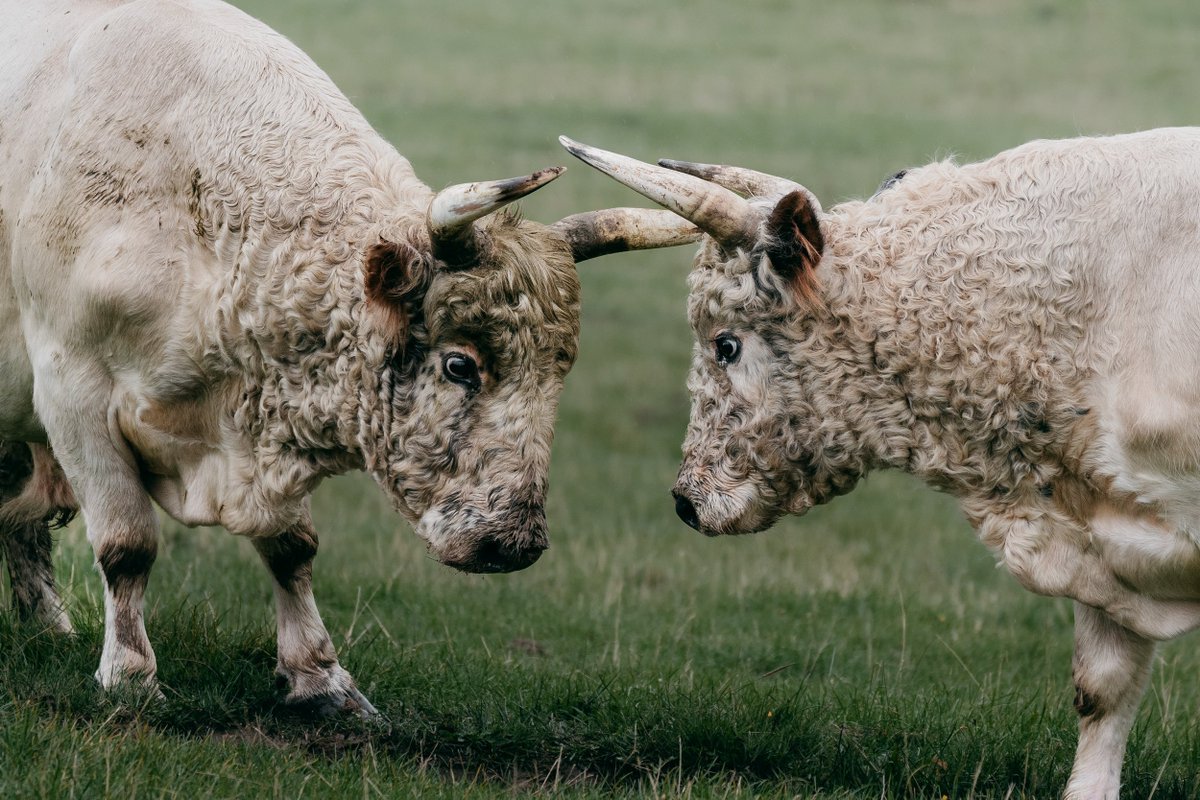
The Chillingham wild cattle of Northumberland have been enclosed in a single park since the 13th century.
They have never been fed by humans.
They have never been handled.
They have never been treated by a vet.
In 1947, a severe winter reduced the entire herd to five animals.
They recovered.
They are white with red ears. The exact colouring described in Celtic mythology for magical, otherworldly cattle: the ones that come from the sea, the ones that bring abundance.
The Celts were describing real animals. Or the ancestors of these animals.
The mythology predates the enclosure by a thousand years.
The herd is still there.
English
Mayah retweetledi


Mayah retweetledi
The Midwestern United States was, until relatively recently, sitting on top of some of the deepest topsoil on earth.
Ten thousand years of prairie. Bison, fire, deep-rooted grasses, the slow accumulation of organic matter into a layer of black soil sometimes two feet thick. Soil that farmers in other parts of the world would have wept at the sight of.
Then the plough arrived.
In 2021, a team from the University of Massachusetts used satellite imagery and LiDAR to measure what was left. Their finding: roughly a third of the Corn Belt, around 30 million acres, has completely lost its A-horizon. The carbon-rich topsoil is simply gone. Scraped off the hilltops by a hundred and fifty years of tilling and rain, washed downslope, into rivers, into the Gulf.
The USDA had previously estimated that none of those same fields had lost their topsoil.
None.
The satellites disagreed.
Every year, the United States loses around five tons of soil per acre. Ten times the rate at which it forms. A layer as thick as a dime, peeled off every twelve months, across tens of millions of acres, and sent downhill.
The crops being grown on this land, the corn and soy that replaced the prairie, are in large part used for ethanol, high fructose corn syrup, and livestock feed. The livestock feed portion is the only one that gets criticised in polite company.
The prairie took ten thousand years to build.
We scraped a third of it off in under two hundred.
The people currently telling us to grow more crops instead of raising cattle are, presumably, unaware that the crops are already eating the ground they stand on.

English
Mayah retweetledi

this is possibly THE MOST Australian interview ever
English
Mayah retweetledi

Tonight, people around Dehdasht provided an important help to the American pilot. By showing up in large numbers on the roads, they effectively blocked the ONLY POSSIBLE ground route for the Islamic regime’s forces to reach to the area the pilot had ejected on.
I am so proud of these noble people❤️. With empty hands and their lives in their hands isolated with NO INTERNET FOR 36 days now, they are doing everything they can to support this military strike as it is the ONLY opening they can have to GET RID of this terrorist regime, which they can never get rid of unarmed AS THEY ARE.
#FreeIran
#IranRevolution2026
#LongLiveIran_JavidShah
English
Mayah retweetledi
Common rights in medieval England were not vague and customary feelings of entitlement to shared space.
They were legal rights. Specific, named, enforceable in court, and recorded in documents that have survived in county archives for six hundred years. They had Latin names because the law that recognised them spoke Latin, and the Latin names were used by lawyers in cases that went all the way to the King's Bench, because when someone tried to take your common rights from you, the matter was serious enough to fight.
Pannage: the right to graze pigs in the common woodland, typically in autumn when the acorns fell. A peasant family with pannage rights could run a pig through the forest from Michaelmas to Martinmas, the six-week window when the acorns were on the ground and the pig would do on its own what no other feeding regime could match in efficiency. At the end of it, the pig was slaughtered. The family had meat and fat for the winter.
Estovers: the right to take wood from common land for fuel and building. Connected to the pig in ways that become apparent when you understand that pigs need shelter, that shelter needs timber, and that a peasant without access to common woodland could build neither.
Turbary: the right to cut peat for fuel. Without it, you couldn't render the fat. Without rendered fat, the meat storage problem became acute.
Agistment: the right to graze livestock on common pasture. The cow. The sheep. The geese. The animals that provided the milk, the wool, the eggs: the daily protein that made the feast-day meat an addition rather than the only protein the family would see.
These rights were not given to the peasant by a generous lord. They were ancient, established by use and custom extending back beyond written record, recognised by common law as property rights that could not simply be removed.
They were removed anyway.
The Enclosure Acts between 1750 and 1850 converted six million acres of common land to private ownership through a mechanism so elegant in its institutional violence that you can only admire it: Acts of Parliament, proposed by the landlords who would benefit, approved by the Parliament the same landlords largely controlled, with compensation procedures so inadequate and so expensive to access that the people losing their rights rarely managed to use them.
The pannage rights went with the woodland. The agistment rights went with the common pasture.
The pig went with the pannage.
The cow went with the agistment.
What replaced them, for the people who lost everything, was wages. Wages paid by the landlords who had just enclosed their common land. Wages that were not enough to buy the meat that the common rights had previously provided for free.
They called it agricultural improvement.
They meant it made them richer.
The peasant called it something else, in words that didn't survive in the legal record because the people who wrote the legal record were not taking notes on what the peasant called it.

English
Mayah retweetledi
Let's check in on Freya, who is ruining Denbighshire.
Freya is a four-year-old European bison at Rhug Estate in north Wales. She weighs approximately 450 kilograms. Her ancestors grazed Britain until six thousand years ago. The fossil record is clear, the bones are in the cave deposits, the bison were here: then they retreated eastward as the forest shrank and the hunting intensified, and by 1927 they were gone from the wild entirely. Twelve individuals in captivity. One century of careful breeding.
Freya is the result.
6:45am - Freya is at the woodland boundary. She stands with her head up and her nose working. The estate manager times this every morning. Four minutes and twelve seconds. Then she moves.
The estate manager follows her route two hours later.
This morning: elder scrub cleared from fifteen metres of the south margin. Two ash saplings browsed back. A section of bracken disturbed at the root: nothing else on this estate is heavy enough to push bracken rhizomes out of the ground with its face. Freya does it by walking through.
8:30am - The wallow. The wet depression at the base of the east slope has been deepening for eight months. It holds water after rain now. Marsh marigold in April. Water mint in June. Eleven dragonfly species in August, none in the survey from six years ago, before the bison, before the wallow, before the pool.
Freya made the dragonflies. Freya was having a roll.
10:00am - Bark work on the ash section. Bison strip bark with their lower incisors: one side of the bole, the cambium heals over. What remains is rough exposed wood: habitat for bark beetles, mosses, lichens. The woodpecker has been using this section since October. Three consecutive surveys now.
The woodpecker doesn't know about Freya. The woodpecker knows there is good bark.
12:00pm - Freya grazed the grassland section. She pushes through rather than crops, disturbing the surface, opening the sward. The seed bank under British permanent grassland contains species that haven't germinated in decades, waiting for exactly the kind of disturbance a 450-kilogram animal at pace provides. Wild garlic this month on the disturbed sections. Wood anemone at the margin. Neither recorded on this estate before.
They were in the soil. They needed Freya to let them out.
4:30pm - Boundary assessment. North field. Four minutes, unhurried. The estate manager is on the track with binoculars. He can see dense hawthorn encroaching on the north ride. A rank area of coarse grass untouched for two seasons.
He writes: "Tomorrow."
Freya walks into the trees.
The Wisent is back in Wales. She has been waiting six thousand years to get back to work. She is not in a hurry. She has the whole field.

English
Mayah retweetledi
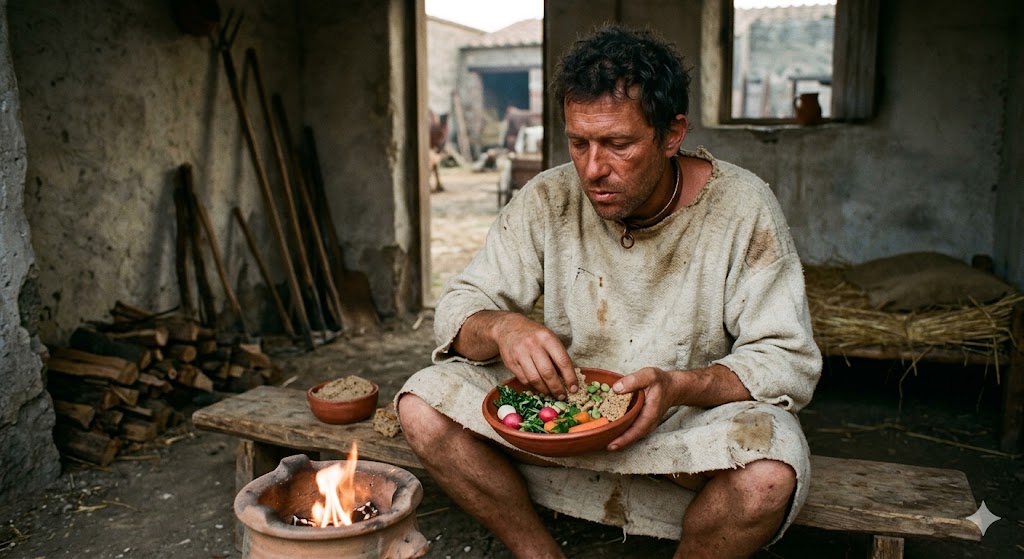
There is a moment in the history of food that nobody marks with a plaque, but should.
The moment when vegetables shifted from being the food of people who couldn't afford anything else, to being the food of people who had decided they were morally superior to everyone who could.
For most of recorded human history, this shift had not happened. The direction of status was clear, consistent, and pointing firmly at animal foods. Every culture that left a record of what it valued eating valued meat, fat, dairy, and fish, in that broad order, over grain, and grain over vegetables, and vegetables over nothing, because vegetables were what you ate when the other options had run out.
The Roman poor ate grain and vegetables. The Roman rich ate garum-sauced pork and roasted game and oysters carried live from the coast in seawater tanks.
The medieval peasant ate pottage. The medieval lord ate roast.
The Victorian factory worker ate bread and dripping. The Victorian mill owner ate joints.
Bread, pottage, pulse, root vegetable: the common thread across two thousand years of European poverty is not the specific food, but the category. Low in fat. Low in bioavailable protein. High in bulk. Filling in the way that only genuine hunger makes something filling. The food of people with no other option.
Now consult a modern menu in any city with a functioning middle class and find the restaurants charging £18 for a bowl of grains and roasted vegetables, surrounded by people eating it deliberately, by choice, in the expressed belief that the restraint is virtuous.
The restraint is real. The choice is real.
The food is, nutritionally and historically, a poverty diet.
Which is not a moral failing. But it is worth being honest about.
The lentil has not changed since the medieval peasant boiled it.
The story around the lentil has changed completely.
The lentil is doing its best to keep up.
English
Mayah retweetledi
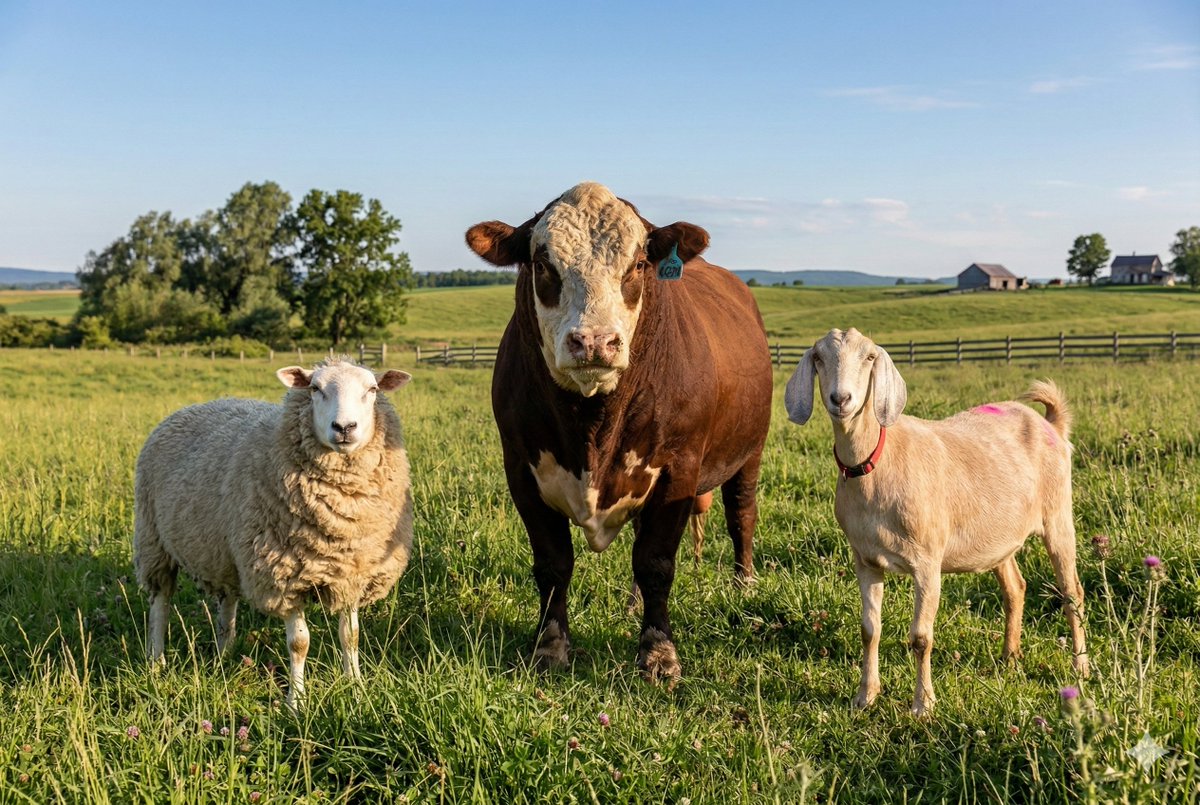
Let's be clear about what the Ruminati are, because the name was chosen for us by a newsletter that meant it as a criticism and we kept it.
Gerald is a bull. He eats grass on land that has been permanent pasture since 1763. The grass converts sunlight and rain into protein. Gerald converts the grass into beef, manure, and seven wildflower species in a south corner that had none of them before he arrived. His methane is the carbon that was in the grass two weeks ago and will be back in the grass in twelve years. This has been the arrangement for the entirety of cattle domestication and the net carbon position of British permanent pasture over that period is: improving.
Doris is a ewe. She eats fell grass that grows on land too steep, too thin, too wet, and too acidic for any crop ever suggested by anyone who has actually looked at it. She maintains the open sward structure that forty-seven plant communities and three red-listed bird species depend on. Without her, the fell becomes purple moor grass. It has been tested. There is a control fell. The control fell has been ungrazed since 2004. The control fell has purple moor grass and no skylarks.
Keith is a goat. He eats the things Gerald and Doris won't touch: bramble, knotweed, dock, thistle, rush, ivy stems, and whatever is happening in Steve's garden. His rumen handles tannins and oxalates that would damage a dog's liver. He converts material that would otherwise advance unchecked across the British countryside into cheese, manure, and a net outcome column that has been positive on every row since entry seventeen.
They are not destroying the planet.
They are the planet.
This distinction has been available in every field in Britain since before the policy documents existed.
Nobody thought to look in the fields.
The fields are still there.
English
Mayah retweetledi
The Forest Laws of Norman England were simple and absolute.
The forests, approximately a third of England's land, were the king's hunting ground. You could live adjacent to them. You could walk near them. You could watch the deer move through the trees fifty metres from your field.
You could not touch them.
Killing a deer: death penalty.
Maiming a deer: blinding and castration.
Killing a hare in a royal forest: imprisonment.
Possessing snares: imprisonment.
Having a dog large enough to potentially chase deer: you had to have three toes removed from its front foot. This was called "lawing." It was mandatory.
This was the law, applied across the country, administered by royal foresters who were paid to catch you.
The peasant in the field was not forgoing meat for ethical reasons. He was forgoing it because the nearest magistrate had a financial incentive to prosecute him.
Seven hundred years later, we have Eat Well guides suggesting the same dietary outcome and framing it as evidence-based science.
The outcome is the same. The justification has been updated.
The deer is still not yours.

Sama Hoole@SamaHoole
Robert is thirty-six years old. In 1247, this is not young. Robert knows this. His knees know this. His back has known this since approximately 1239. Robert lives in a village in Worcestershire with his wife Agnes, three surviving children, and two chickens he is not allowed to eat because the chickens produce eggs and the eggs matter more than the chickens. Today is a Tuesday in March. Robert will describe it as a Tuesday in March. The concept of a 'week' as a unit of leisure is not yet something Robert has access to. 5:00am - Up. Pottage on the fire. The pottage is oats, leeks, and some dried parsnip from the autumn store. There is a small piece of salted pork in it, approximately the size of Robert's thumb. It is mostly flavouring. Robert eats around it for as long as possible, then eats it, then thinks about it for the rest of the morning. 6:00am - Field. Robert works the lord's strip first, then his own. The ground is still cold. His boots have a hole. He has had the hole since October. He has packed it with rags. The rags are wet. They will remain wet until June. Robert is technically eating a plant-based diet. He is not doing this by choice. He is doing this because meat belongs to the lord, the deer belong to the king's forest, and the last man in this village who was caught with an unlicensed rabbit spent a period in the stocks that his family still doesn't fully discuss. 10:00am - Brief rest. Rye bread, hard. A small onion. Robert thinks about the pig that was slaughtered in November. He thinks about this often. The memory of fat is a specific and enduring thing when you don't have much of it. 1:00pm - Back to the field. Robert's average daily calorie intake is somewhere between 1,500 and 2,000 calories, the majority from grain. He is doing agricultural labour that modern exercise scientists would classify as extremely high intensity. He is, measurably, running on insufficient fuel. He is aware of this in the way that you are aware of things that cannot be changed: completely, and without drama. 4:00pm - Home. Agnes has made more pottage. It is similar to this morning's pottage. Robert eats it. Robert's teeth hurt. They have hurt for two years. There is no dentist. There is a barber-surgeon in the market town seven miles away. Robert cannot afford the barber-surgeon and cannot take the day from the fields. His teeth continue to hurt. 7:00pm - Sleep. Robert will be awake again at five. He is thirty-six. He will probably not see forty. The leading cause of death for men in his position is a combination of infection, injury, and the slow arithmetic of malnutrition across a lifetime. Somewhere, eight hundred years from now, someone will describe Robert's diet as "ancestral," "plant-forward," and "aligned with the earth." Robert would have a great deal to say about this. Robert does not have the energy.
English
Mayah retweetledi
Robert is thirty-six years old. In 1247, this is not young. Robert knows this. His knees know this. His back has known this since approximately 1239.
Robert lives in a village in Worcestershire with his wife Agnes, three surviving children, and two chickens he is not allowed to eat because the chickens produce eggs and the eggs matter more than the chickens.
Today is a Tuesday in March. Robert will describe it as a Tuesday in March. The concept of a 'week' as a unit of leisure is not yet something Robert has access to.
5:00am - Up. Pottage on the fire. The pottage is oats, leeks, and some dried parsnip from the autumn store. There is a small piece of salted pork in it, approximately the size of Robert's thumb. It is mostly flavouring. Robert eats around it for as long as possible, then eats it, then thinks about it for the rest of the morning.
6:00am - Field. Robert works the lord's strip first, then his own. The ground is still cold. His boots have a hole. He has had the hole since October. He has packed it with rags. The rags are wet. They will remain wet until June.
Robert is technically eating a plant-based diet. He is not doing this by choice. He is doing this because meat belongs to the lord, the deer belong to the king's forest, and the last man in this village who was caught with an unlicensed rabbit spent a period in the stocks that his family still doesn't fully discuss.
10:00am - Brief rest. Rye bread, hard. A small onion. Robert thinks about the pig that was slaughtered in November. He thinks about this often. The memory of fat is a specific and enduring thing when you don't have much of it.
1:00pm - Back to the field. Robert's average daily calorie intake is somewhere between 1,500 and 2,000 calories, the majority from grain. He is doing agricultural labour that modern exercise scientists would classify as extremely high intensity. He is, measurably, running on insufficient fuel. He is aware of this in the way that you are aware of things that cannot be changed: completely, and without drama.
4:00pm - Home. Agnes has made more pottage. It is similar to this morning's pottage. Robert eats it. Robert's teeth hurt. They have hurt for two years. There is no dentist. There is a barber-surgeon in the market town seven miles away. Robert cannot afford the barber-surgeon and cannot take the day from the fields. His teeth continue to hurt.
7:00pm - Sleep. Robert will be awake again at five. He is thirty-six. He will probably not see forty. The leading cause of death for men in his position is a combination of infection, injury, and the slow arithmetic of malnutrition across a lifetime.
Somewhere, eight hundred years from now, someone will describe Robert's diet as "ancestral," "plant-forward," and "aligned with the earth."
Robert would have a great deal to say about this.
Robert does not have the energy.

English
@Eng_china5 Then explain why Swedes are just as tall? No dissipation of heat.
English

The reason the Dinka people are tall:
- A slender, elongated body was naturally selected to allow for heat dissipation and survival in the savanna (Allen's rule).
- Endogamy within the group solidified their body type, and long-distance travel during their nomadic lifestyle strengthened their skeletons.
- A diet of cow's milk, blood, and meat, along with a culture that valued "tall men," shaped their bodies over thousands of years.
English
Mayah retweetledi