Mberdejo

2.9K posts

Mberdejo banner
Mberdejo

Mberdejo

@mberdejo

Perú Katılım Mart 2012
289 Takip Edilen80 Takipçiler
Mberdejo retweetledi
Pablo Moreyra A.
Pablo Moreyra A.@PabloMoreyraAlm·
Anahí Durand defiende a candidatos de Movadef (brazo político de Sendero Luminoso, responsable de más de 31.000 muertes según la CVR) como simples “profesores sindicales”. Minimizar el terrorismo y blanquear a sus herederos es indigno. Las víctimas del terrorismo merecen memoria, no apología. Perú no olvida. #NoALaApologiaDelTerrorismo
Español
1
8
28
220
Mberdejo retweetledi
Julia Elena 🇵🇪
Julia Elena 🇵🇪@juliaelena23·
¡VECINOS DE JESUS MARÍA Y CERCANOS UNIDOS POR EL CAMPO DE MARTE! El alcalde del grupo de Renovación Medieval ha llevado al desastre un distrito de antaño como Jesus María. Han ASESINADO 20 ÁRBOLES del Campo de Marte. SIN IRRIGARLOS, SIN CUIDADOS y con obras DUDOSAS. ¡MISERABLE!
Julia Elena 🇵🇪 tweet media
Español
27
483
989
21.1K
Mberdejo retweetledi
Gerardo Caballero
Gerardo Caballero@gcaballeror·
La Municipalidad de Lima y la Municipalidad de Jesús María están arruinando el Campo Marte. No solo con una obra innecesaria que ha dejado decenas de árboles muertos, sino también autorizando conciertos en la avenida de La Peruanidad, que no es un recinto para este tipo de show.
Español
15
314
733
52.8K
Mberdejo retweetledi
Mr PitBull Stories
Mr PitBull Stories@MrPitbull07·
In 1981, at the age of forty-eight, Julie Newmar finally held her son in her arms. It was not just a long-awaited birth. It came after three failed pregnancies and years of silent grief. The boy’s name was John. Shortly after his birth, doctors discovered that he had Down syndrome. Later, he developed meningitis, which left him deaf. Over time, he also lost his voice. John grew up in a world without sound or words. And yet, he never stopped communicating. Julie Newmar, who had become famous in the 1960s for playing Catwoman in the Batman television series, suddenly found herself far from the spotlight. Her marriage ended, and her life changed completely. From that moment on, she became a full-time, present mother. She learned sign language, because it was the only way to truly enter her son’s world. She helped him eat, move, and communicate. Every day revolved around him. She rarely spoke publicly about the difficulties. She simply remained there. As the years went by, they began traveling together. Bali, Thailand, quiet places where John seemed to feel free, even without being able to hear the sea or people’s voices. He watched colors, movement, light. And it was there that something unexpected began to emerge. Painting. John began to paint, and that silent language became his way of expressing himself. His works were shown in galleries and exhibitions, not as a curiosity linked to his condition, but for their artistic value. The child many would have defined as limited instead found his own way of telling the world. Then Julie’s body also began to change. With age came a degenerative illness that gradually reduced her mobility. John, too, faced increasingly complex physical challenges. Their days became slower, more contained within the home. But not empty. Julie began tending a large rose garden. Every morning, she and John spent time there together, sitting in silence. For them, that silence was never absence. It was simply the way they had learned to be together. Even today, in her nineties, Julie Newmar continues to live alongside her son. With more effort, with help from others, with a more fragile body than in the past. But she continues to stay by his side. Hollywood remembers her as one of television’s most iconic Catwomen. But the most important part of her life has remained far from the cameras. It is in that garden. In a mother who, day after day, chose to remain with her son without turning her pain into spectacle.
Mr PitBull Stories tweet media
English
29
258
1.8K
38.1K
Mberdejo retweetledi
Diana Alastair💚🤍💜 ⚢ ❌❌✡️
The person who made this would be happy to see it shared as widely as possible. The world can now see the truth of “trans inclusion.”
English
182
6.6K
25.2K
701.5K
Mberdejo retweetledi
Luis Alberto Arias Minaya
Luis Alberto Arias Minaya@LAlbertoArias·
Perú tiene uno de los ratios más bajos de presión tributaria en América Latina y el Caribe (Año 2024). Ocupa el puesto 23 de 28 países en la región.
Luis Alberto Arias Minaya tweet media
Español
14
42
83
8.8K
Mberdejo retweetledi
Pablo Moreyra A.
Pablo Moreyra A.@PabloMoreyraAlm·
Keiko tenía 19 años cuando fue Primera Dama (1994-2000). No decidía nada de política, es decir ella no gobernaba. El gobierno de su padre derrotó a Sendero Luminoso, controló la hiperinflación y estabilizó el Perú. Llamar al gobierno de su padre (no de ella) "el más nefasto" es propaganda: salvó al país del terrorismo y el colapso.
Español
13
100
343
2.5K
Mberdejo retweetledi
Clarín
Clarín@clarincom·
LEÓN XIV PUBLICA SU PRIMERA ENCÍCLICA, MAGNIFICA HUMANITAS, DEDICADA A LA IA El papa León XIV, laureado en matemáticas y atento desde el inicio de su pontificado a los riesgos y beneficios de la IA, publicará el lunes 25 de mayo su primera encíclica, Magnifica Humanitas. El texto estará dedicado a la “custodia de la persona humana en el tiempo de la Inteligencia Artificial” y será presentado a las 11.30 de ese día en el Aula del Sínodo del Palacio Vaticano. El lanzamiento coincidirá con el 135° aniversario de Rerum Novarum, de León XIII. Participarán, entre otros, el cardenal argentino Víctor Manuel Fernández, Michael Czerny, la teóloga Anna Rowlands y Christopher Olah, cofundador de Anthropic e investigador sobre interpretabilidad de la IA. León XIV viene advirtiendo sobre los riesgos de deshumanización, desigualdad, concentración de poder y usos militares de la IA. También fijó normas internas para su uso y sostuvo que debe estar al servicio de la persona, sin sustituir el discernimiento moral ni devaluar el trabajo humano. (+) en Clarín: clar.in/4duCIgj
Clarín tweet media
Español
16
232
984
101.4K
Mberdejo retweetledi
EFE Noticias
EFE Noticias@EFEnoticias·
El papa León XIV publicará el próximo 25 de mayo su primera encíclica, 'Magnifica Humanitas', que trata sobre "la protección de la persona humana en la era de la inteligencia artificial". efe.com/mundo/2026-05-…
Español
0
12
14
3.2K
Mberdejo retweetledi
Ihtesham Ali
Ihtesham Ali@ihtesham2005·
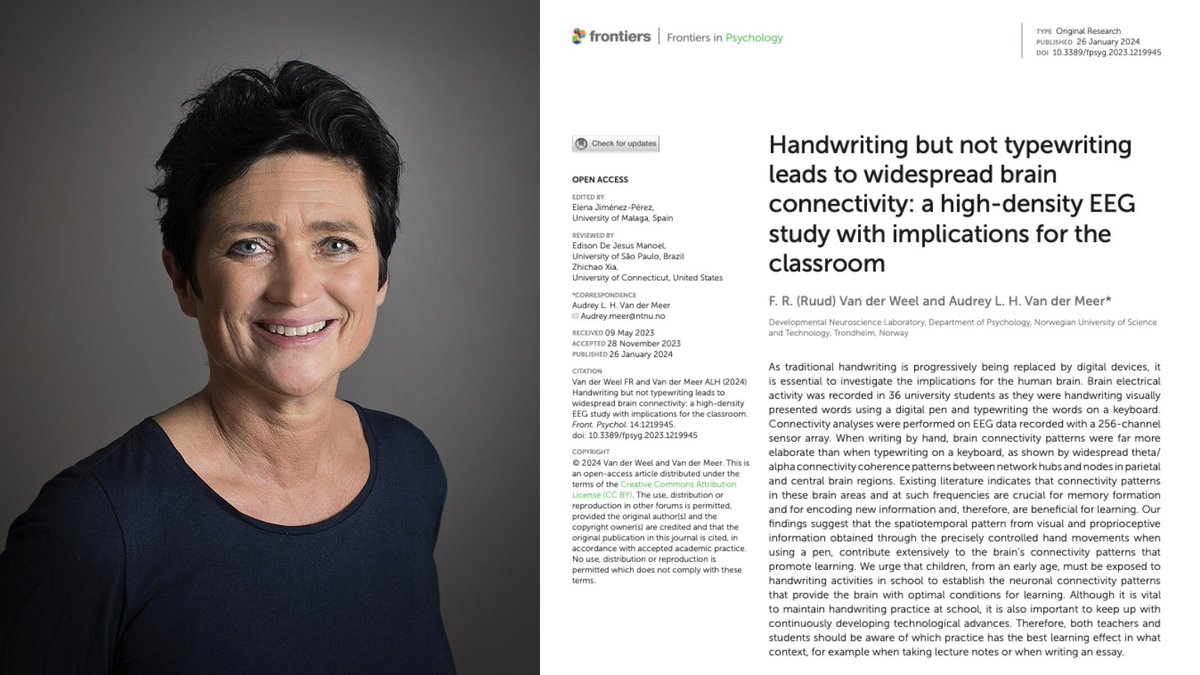
A Norwegian neuroscientist spent 20 years proving that the act of writing by hand changes the human brain in ways typing physically cannot, and almost nobody outside her field has read the paper. Her name is Audrey van der Meer. She runs a brain research lab in Trondheim, and the paper that closed the argument was published in 2024 in a journal called Frontiers in Psychology. The finding is brutal enough that it should have changed every classroom on Earth. The experiment was simple. She recruited 36 university students and put each one in a cap with 256 sensors pressed against their scalp to record brain activity. Words flashed on a screen one at a time. Sometimes the students wrote the word by hand on a touchscreen using a digital pen, and sometimes they typed the same word on a keyboard. Every neural response was recorded for the full five seconds the word stayed on screen. Then her team looked at the part of the data most researchers had ignored for years, which is how different parts of the brain were communicating with each other during the task. When the students wrote by hand, the brain lit up everywhere at once. The regions responsible for memory, sensory integration, and the encoding of new information were all firing together in a coordinated pattern that spread across the entire cortex. The whole network was awake and connected. When the same students typed the same word, that pattern collapsed almost completely. Most of the brain went quiet, and the connections between regions that had been alive seconds earlier were nowhere to be found on the EEG. Same word, same brain, same person, and two completely different neurological events. The reason turned out to be something nobody had really paid attention to before her work. Writing by hand is not one motion but a sequence of thousands of tiny micro-movements coordinated with your eyes in real time, where each letter is a different shape that requires the brain to solve a slightly different spatial problem. Your fingers, wrist, vision, and the parts of your brain that track position in space are all working together to produce one letter, then the next, then the next. Typing throws all of that away. Every key on a keyboard requires the exact same finger motion regardless of which letter you are pressing, which means the brain has almost nothing to integrate and almost no problem to solve. Van der Meer said it plainly in her interviews. Pressing the same key with the same finger over and over does not stimulate the brain in any meaningful way, and she pointed out something that should scare every parent who handed their kid an iPad. Children who learn to read and write on tablets often cannot tell letters like b and d apart, because they have never physically felt with their bodies what it takes to actually produce those letters on a page. A decade before her, two researchers at Princeton ran the same fight using a completely different method and ended up at the same answer. Pam Mueller and Daniel Oppenheimer tested 327 students across three experiments, where half took notes on laptops with the internet disabled and half took notes by hand, before testing everyone on what they actually understood from the lectures they had watched. The handwriting group won by a wide margin on every question that required real understanding rather than surface recall. The reason was hiding in the transcripts of what the two groups had actually written down. The laptop students typed almost word for word, capturing more total content but processing almost none of it as they went, while the handwriting students physically could not write fast enough to transcribe a lecture in real time, which forced them to listen carefully, decide what actually mattered, and put it in their own words on the page. That single act of choosing what to keep was the learning itself, and the keyboard had quietly skipped the choosing and skipped the learning along with it. Two studies. Two countries. Same answer. Handwriting makes the brain work. Typing lets it coast. Every note you have ever typed instead of written went into your brain through a thinner pipe. Every meeting, every book highlight, every idea you captured on your phone instead of on paper was processed at half depth. You did not forget those things because your memory is bad. You forgot them because typing never woke the part of the brain that would have made them stick. The fix is the thing your grandmother already knew. Pick up a pen. Write the thing down. The slower road is the faster one.
Ihtesham Ali tweet media
English
2.4K
43.4K
116.9K
8.9M
Mberdejo retweetledi
Ihtesham Ali
Ihtesham Ali@ihtesham2005·
A Stanford neuroscientist published a paper a few years ago that quietly answered one of the oldest questions in human history, and almost nobody outside his field has heard of it. The question is why we dream. Not what dreams mean. Why they exist at all. Why your brain spends a third of its sleep hallucinating images instead of just resting like every other organ in your body. His name is David Eagleman. He runs a lab at Stanford. The paper is called "The Defensive Activation Theory", and the moment you read it the explanation collapses every other theory you have ever been taught about dreams. Freud said dreams were repressed desires. He was guessing. He had no brain scans. He had no electrodes. He had a couch and a notebook and a century of credibility that nobody has been able to fully scrub off the subject since. Modern neuroscience replaced him with the memory "consolidation theory". The idea that dreams are your brain sorting through the day, filing things away, deciding what to keep. That story is partially true. Sleep does consolidate memory. But it does not explain the single strangest thing about dreams, which is that they are almost entirely visual. You do not dream in pure sound. You do not dream in taste. You do not dream in smell. You dream in pictures. Vivid, detailed, often impossible pictures that activate the back of your brain so hard a scientist scanning you would think your eyes were wide open. Eagleman started from one fact almost nobody outside neuroscience knows. The brain is territorial. Every region holds its turf through constant electrical activity. The moment a region goes quiet, its neighbors start invading. They take the silent territory and reassign it to themselves. This is called "cortical takeover", and it is not slow. It is not a long process measured in years. In experiments where adults are blindfolded, the visual cortex starts processing touch and sound within an hour. One hour of darkness, and the territory is already being annexed. In congenitally blind people, the visual cortex is fully repurposed. It runs language. It runs hearing. It runs touch. The hardware never went unused. It was just reassigned to whoever showed up first. Now sit with the implication of that for a second. Every night, when you close your eyes and fall asleep, the sun has set. The planet has rotated. The visual cortex, which takes up roughly a third of your entire cortex, is suddenly receiving zero input. For eight hours. Every single night. For your entire life. And evolution has shaped your brain inside a planet that has been spinning into darkness for billions of years. If cortical takeover happens in an hour, the visual cortex should have been lost a long time ago. Stolen by hearing. Stolen by touch. Reassigned by morning. Humans should have evolved into a species whose vision works fine during the day and then degrades every time the sun goes down because the territory keeps getting renegotiated overnight. But that did not happen. Vision works the moment you open your eyes. Which means something is defending the territory while you sleep. Eagleman's claim is that dreams are that defense. Every 90 minutes through the night, a precise burst of activity fires from the brainstem into the visual cortex. Pontine-geniculate-occipital waves. PGO for short. They are anatomically aimed. They are not general arousal. They are a targeted volley of signal launched directly at the back of the brain where vision lives. The cortex lights up as if it is receiving real images, and you experience that artificial activation as a dream. The bizarre narrative your conscious mind invents around it later is just your brain trying to make sense of the noise. The dream is not the point. The dream is the side effect. The point is keeping the territory occupied. The evidence for this is the part that should haunt you. Newborns spend roughly 50% of their sleep in REM. Adults spend twenty. Old adults spend fifteen. The amount of dreaming you do tracks almost perfectly with how plastic your brain is. Newborns have the most plastic brains on earth. Their visual cortex is in the highest danger of being overrun by neighboring senses while it develops. So evolution gave them an enormous defense budget. As you age, your brain becomes less plastic, the takeover risk drops, and the defense system scales down accordingly. Eagleman and his co-author ran the same correlation across twenty-five primate species. The more plastic a species' brain, the higher the proportion of REM sleep. The relationship held across the entire primate family tree. Plasticity and dreaming move together. They are two halves of the same evolutionary equation. A species that ranks higher on flexibility and learning also dreams more. A species that is born ready to walk and survive dreams less. Plasticity is the asset. Dreaming is the insurance premium. And the prediction the theory makes is the one that quietly closes the case. Of all your senses, only one is disadvantaged by darkness. You can still hear in the dark. You can still feel in the dark. You can still smelll and taste in the dark. The only sense that depends on light is vision. Which is exactly the sense your dreams are made of. The defense system is targeted at the only territory that is actually vulnerable while you sleep. Memory consolidation is real. Emotional processing is real. Your brain does do those things at night. But Eagleman's argument is that those functions piggyback on a much older system whose original job was simpler and more brutal. Keep the lights on inside the visual cortex while the planet is dark, or lose it. For thousands of years, people have asked what dreams mean. Prophets wrote about them. Poets wrote about them. Freud built a discipline on them. None of them had access to the actual answer, which is that dreams may not mean anything in the symbolic sense at all. They may be the visible flicker of a defense system running in the background, the way a screen saver protects a monitor by keeping the pixels moving even when nobody is looking. The strangest thing about the theory is how cleanly it explains why dreams feel so real. Your visual cortex cannot tell the difference between a PGO wave and an actual photon. It is the same hardware lighting up the same way. The cortex does its job. It builds an image. Your conscious mind, half-awake, wraps a story around it and calls it a dream. You are not seeing your subconscious tonight. You are watching your brain defend a piece of itself from being stolen. Every animal that has ever closed its eyes on this planet has done the same thing.
Ihtesham Ali tweet media
English
267
1.3K
4.7K
681.7K
Mberdejo retweetledi
Waldo Mendoza Bellido
Waldo Mendoza Bellido@WaldoMendozaB·
El nuevo sistema, que regirá para los ingresantes a partir del 2027-I, permite ser más transparente y rendir cuentas sobre cómo y cuánto asigna de sus recursos económicos a los mejores estudiantes y a quiénes más lo necesitan. Ese es su propósito.
Español
22
26
161
40.6K
Mberdejo retweetledi
Waldo Mendoza Bellido
Waldo Mendoza Bellido@WaldoMendozaB·
La educación cambió mi vida. Yo soy producto de las becas PUCP. Jamás avalaria un sistema de pensiones que no promueva más oportunidades y más equidad. El nuevo sistema de pensiones PUCP permite beneficiar a más estudiantes, con más becas, tanto académicas como socioeconomicas.
Español
105
193
1.1K
162.9K
Mberdejo retweetledi
Crazy Vibes
Crazy Vibes@CrazyVibes_1·
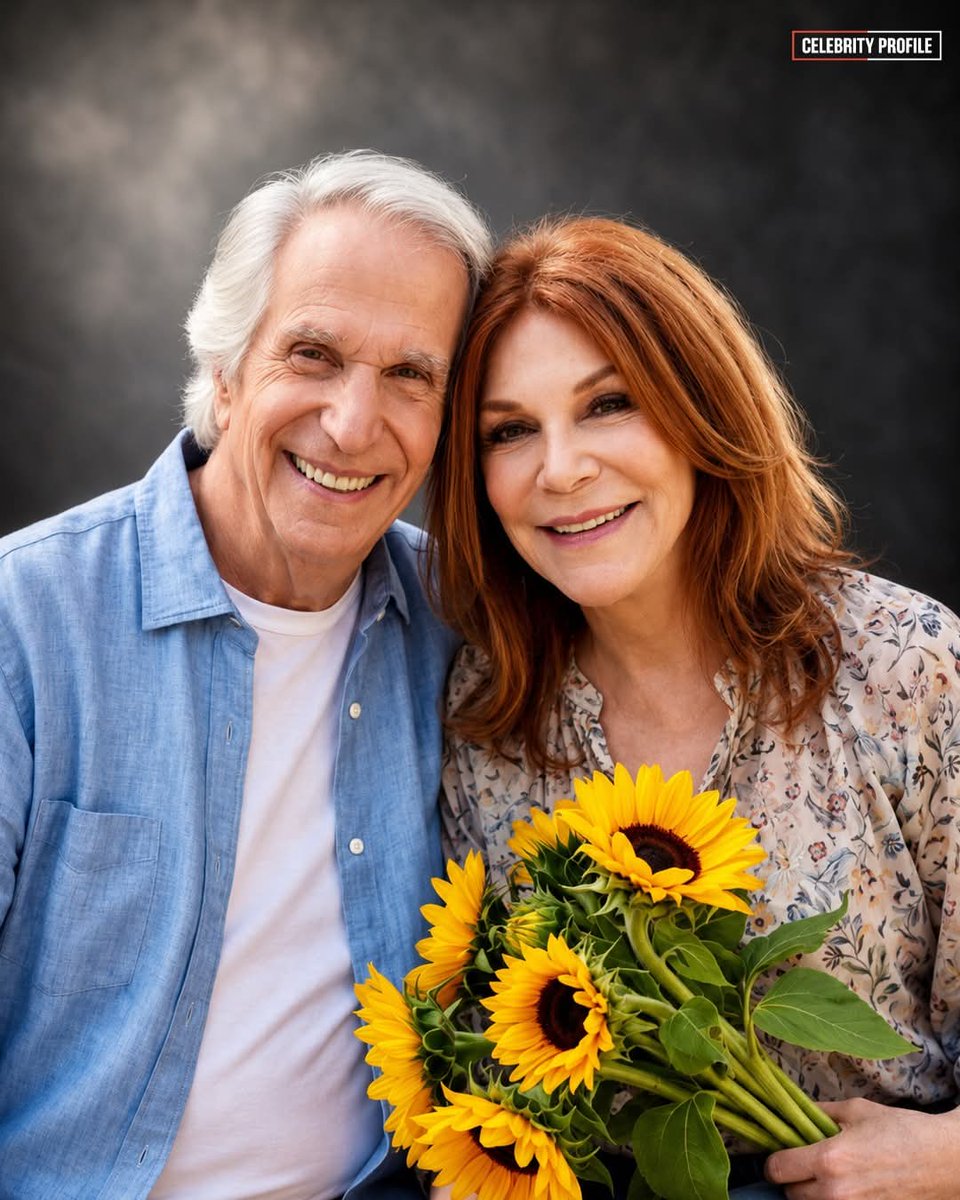
Beverly Hills, 1976. Henry Winkler walks into a clothing store. Needs a coat. Leaves with a life. Stacey Weitzman is behind the counter that day — divorced, raising her young son Jed, simply doing her job. She smiles and asks if he needs help. “You just did,” he thinks immediately. They start talking. Ten minutes passes like ten seconds. Later, Henry would admit he didn’t want the conversation to end. So he stayed. The next day, he returned pretending he’d forgotten something. He pointed at jackets he clearly didn’t need while searching for another excuse to see her. Stacey understood exactly what was happening. At the time, Henry Winkler was already becoming one of the most recognizable faces in America. Happy Days had turned him into Fonzie, the leather-jacketed icon everyone adored. But Henry wasn’t chasing attention. He was chasing her. And Stacey came with a little boy. Some people might have called that baggage. Henry never did. From the beginning, he embraced both of them completely. Years later, Stacey reflected on it simply: “He chose all of us on day one.” In 1978, they married quietly in a small Manhattan ceremony without Hollywood spectacle or media attention. No grand performance. Just vows. Then came daughter Zoe. Then son Max. Their house filled with noise, children, laundry, routines, and ordinary life. That was exactly what Henry wanted. “Fame is loud,” he later said. “Dinner with my kids is quiet. I picked quiet.” Their marriage wasn’t built on dramatic gestures. It was built on repetition. Henry hid handwritten notes everywhere — inside books, purses, beside coffee cups. One note read: “You’re still the girl in the store. Now I just have 45 years of reasons why.” Stacey saved every one in a shoebox. At their thirtieth anniversary dinner, she read one aloud: “When I look at you, I see every day we’ve survived. And I’d survive them all again to get here.” Nobody at the table could hold back tears. Over the decades, they faced everything real families do — dyslexia struggles, illness, career highs and disappointments, children growing older, grandchildren arriving. “We didn’t do perfect,” their daughter Zoe once said. “We did team.” And every morning at 7 a.m., Henry still brings Stacey coffee. Not out of routine. Out of intention. “It’s a proposal,” he says. “I’m asking her to marry me again today.” No yachts. No staged romance. No Hollywood illusion. Just two people continuing to choose each other long after the spotlight faded. “People say we fell in love,” Henry once said. “No. We keep falling. On purpose. Every damn day.” He walked into a store looking for a coat. And nearly fifty years later, he still acts like he just found home.
Crazy Vibes tweet media
English
169
971
11.8K
434K
Mberdejo
Mberdejo@mberdejo·
@paolobenza Lo que no entiendo es porqué el Pronabec está en crisis, no hay Plata para beca18….pero para Petroperu sigue habiendo plata. Y nadie se queja.
Español
0
0
0
53
Paolo Benza
Paolo Benza@paolobenza·
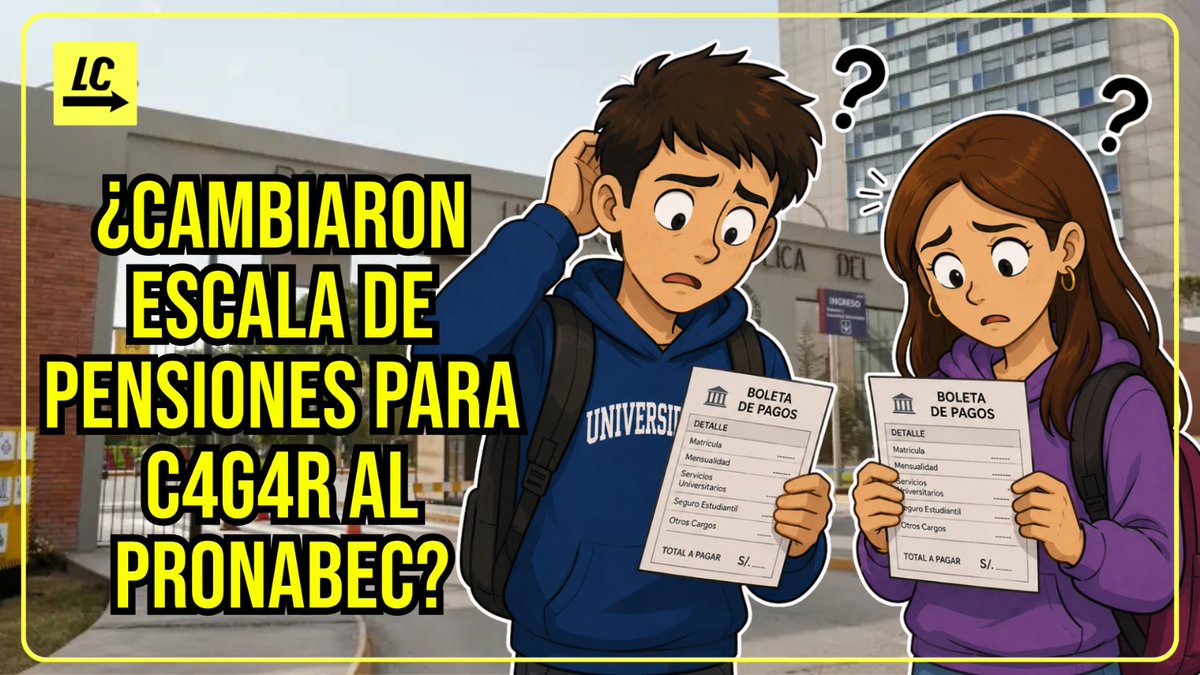
Y pues las autoridades de la PUCP habrían tenido miedo de que, con la crisis actual del Pronabec, les digan de pronto que las becas se las iban a pagar en las escalas más bajas. Por eso las han desaparecido y las han convertido en becas, pero de las que da la propia universidad.
Español
2
9
72
9.9K
Paolo Benza
Paolo Benza@paolobenza·
Ya deben haber escuchado que se ha armado un chongo en la PUCP, porque sus autoridades decidieron cambiar las escalas de pensiones. Pero la pregunta es: ¿por qué? Y es para no perder el flujo de dinero $$ del Pronabec. Detalles en #LaContra 👉🏻youtu.be/79CRnAnni7k?si… Resumo🧵
YouTube video
YouTube
Paolo Benza tweet media
Paolo Benza@paolobenza

¡Hoy en #LaContra! -¿Quién será el traductor de las barrabasadas económicas de JPP? -¿Se puede indultar a Castillo? -Las cochinadas del fujimorismo con el financiamiento público -Se filtraron sueldos de grandes empresas -La jugada de la PUCP al Pronabec youtu.be/79CRnAnni7k?si…

Español
15
82
237
44.2K
Mberdejo retweetledi
🍉Marian🍉
🍉Marian🍉@marianmgmusic·
@Maathu justo ayer posteé esto
Español
5
13
76
1.6K
Mberdejo retweetledi
Pablo Moreyra A.
Pablo Moreyra A.@PabloMoreyraAlm·
Puno elige mayoritariamente a Sánchez y opciones similares desde hace años, pero sigue siendo uno de los departamentos más pobres. Para salir de la pobreza no basta con identidad y más redistribución: se necesita educación de calidad, formalización, resolución real de conflictos mineros, seguridad jurídica y conexión con mercados. El resentimiento anti-Lima perpetúa el ciclo. Ojalá prioricen resultados sobre símbolos.
Español
12
29
127
1.7K
Mberdejo retweetledi
MiguelGutiérrezR.
MiguelGutiérrezR.@M_GutierrezR·
Ojo! Los mineros ilegales ya están dentro de la reserva nacional Tambopata con sus dragas y tracas. 500 hectáreas de bosque devastada en los últimos meses, comparable al distrito limeño de Pueblo Libre. Y nadie los detiene. Mi informe vía @elcomercio_peru elcomercio.pe/peru/madre-de-…
Español
86
1.3K
1.5K
31.8K