

MECPATHS

4.2K posts

MECPATHS banner
MECPATHS

MECPATHS

@MECPATHS

Work to Counter #ChildTrafficking in #Ireland through Education, Collaboration and Action #ChildCriminalExploitation #ChildSexualExploitation #HumanTrafficking

Ireland Katılım Eylül 2015
4.2K Takip Edilen2.2K Takipçiler
MECPATHS retweetledi
M Compass Media
M Compass Media@MCompassMedia·
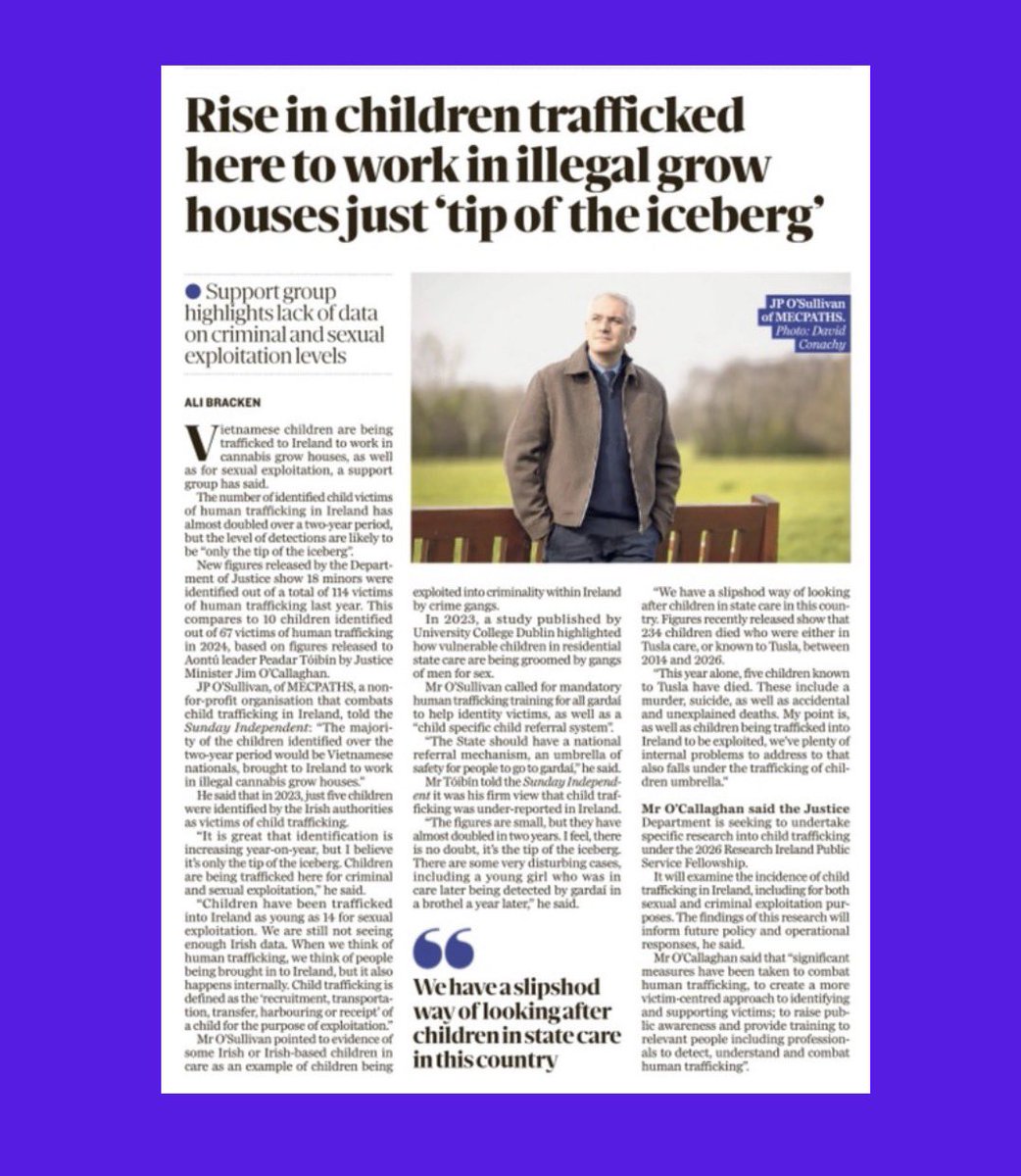
𝐓𝐮𝐬𝐥𝐚 𝐔𝐧𝐝𝐞𝐫 𝐅𝐢𝐫𝐞 𝐀𝐬 𝐂𝐡𝐢𝐥𝐝𝐫𝐞𝐧 𝐈𝐧 𝐒𝐭𝐚𝐭𝐞 𝐂𝐚𝐫𝐞 𝐓𝐚𝐫𝐠𝐞𝐭𝐞𝐝 𝐅𝐨𝐫 𝐂𝐫𝐢𝐦𝐢𝐧𝐚𝐥 𝐀𝐧𝐝 𝐒𝐞𝐱𝐮𝐚𝐥 𝐄𝐱𝐩𝐥𝐨𝐢𝐭𝐚𝐭𝐢𝐨𝐧 A report by Ali Bracken in today’s Sunday Independent highlights growing concern that the number of children being trafficked into Ireland for criminal and sexual exploitation is far higher than official figures suggest, with experts warning that current detections represent only “the tip of the iceberg”. Recent figures from the Department of Justice show a sharp rise in identified victims. In the most recent year, 18 minors were identified among 114 trafficking victims, compared to 10 children out of 67 victims the previous year. While this increase suggests improved detection, campaigners believe it reflects only a fraction of the true scale of the problem. According to JP O’Sullivan of MECPATHS, the majority of children identified over the past two years have been Vietnamese nationals trafficked into Ireland to work in illegal cannabis grow houses. He also warned that children are being trafficked for sexual exploitation, in some cases as young as 14. While public perception often focuses on children being brought into Ireland, the report emphasises that trafficking also occurs internally. Children already living in Ireland, particularly those in vulnerable situations, are being groomed and exploited by criminal networks. O’Sullivan pointed to evidence of children in Tusla care being targeted by gangs and drawn into criminal activity. Research from University College Dublin has previously highlighted how vulnerable children in residential care are groomed by groups of men for sexual exploitation. This underscores the heightened risks faced by children in Tusla care, where instability and vulnerability can make them prime targets for exploitation. Concerns have also been raised about the lack of comprehensive Irish data on the scale of trafficking and exploitation. O’Sullivan called for mandatory human trafficking training for all Gardaí and the establishment of a national child specific referral system, which would act as a coordinated safety mechanism for identifying and supporting victims. Aontú leader Peadar Tóibín echoed concerns that child trafficking is significantly under reported. He pointed to cases where children in Tusla care later reappeared in exploitative situations, including one instance where a girl was found in a brothel a year after being in care. Tóibín also highlighted broader systemic failures, noting that 234 children who were either in Tusla care or known to Tusla died between 2014 and 2026. He argued that alongside trafficking from abroad, Ireland must confront serious internal failings, where vulnerable children are not adequately protected and are instead exposed to exploitation. The report suggests that both external trafficking and internal exploitation are part of the same wider problem, where children at risk are being drawn into criminal and sexual exploitation networks. In response, Justice Minister Jim O’Callaghan said the Department of Justice is seeking to undertake dedicated research into child trafficking through the 2026 Research Ireland Public Service Fellowship. This research aims to better understand the extent of trafficking in Ireland and to inform future policy and operational responses. He added that significant measures have already been taken to combat human trafficking, including efforts to improve victim identification, raise awareness, and provide training for professionals. However, the overall picture presented in Bracken’s report is one of a growing and largely hidden crisis, where increasing detections may reflect only a small portion of a much wider and deeply concerning reality.
ABC for Justice@AllianceBirth

𝐓𝐮𝐬𝐥𝐚 𝐔𝐧𝐝𝐞𝐫 𝐅𝐢𝐫𝐞 𝐀𝐬 𝐂𝐡𝐢𝐥𝐝𝐫𝐞𝐧 𝐈𝐧 𝐒𝐭𝐚𝐭𝐞 𝐂𝐚𝐫𝐞 𝐓𝐚𝐫𝐠𝐞𝐭𝐞𝐝 𝐅𝐨𝐫 𝐂𝐫𝐢𝐦𝐢𝐧𝐚𝐥 𝐀𝐧𝐝 𝐒𝐞𝐱𝐮𝐚𝐥 𝐄𝐱𝐩𝐥𝐨𝐢𝐭𝐚𝐭𝐢𝐨𝐧 A report by Ali Bracken in today’s Sunday Independent highlights growing concern that the number of children being trafficked into Ireland for criminal and sexual exploitation is far higher than official figures suggest, with experts warning that current detections represent only “the tip of the iceberg”. Recent figures from the Department of Justice show a sharp rise in identified victims. In the most recent year, 18 minors were identified among 114 trafficking victims, compared to 10 children out of 67 victims the previous year. While this increase suggests improved detection, campaigners believe it reflects only a fraction of the true scale of the problem. According to JP O’Sullivan of @MECPATHS, the majority of children identified over the past two years have been Vietnamese nationals trafficked into Ireland to work in illegal cannabis grow houses. He also warned that children are being trafficked for sexual exploitation, in some cases as young as 14. While public perception often focuses on children being brought into Ireland, the report emphasises that trafficking also occurs internally. Children already living in Ireland, particularly those in vulnerable situations, are being groomed and exploited by criminal networks. O’Sullivan pointed to evidence of children in Tusla care being targeted by gangs and drawn into criminal activity. Research from University College Dublin has previously highlighted how vulnerable children in residential care are groomed by groups of men for sexual exploitation. This underscores the heightened risks faced by children in Tusla care, where instability and vulnerability can make them prime targets for exploitation. Concerns have also been raised about the lack of comprehensive Irish data on the scale of trafficking and exploitation. O’Sullivan called for mandatory human trafficking training for all Gardaí and the establishment of a national child specific referral system, which would act as a coordinated safety mechanism for identifying and supporting victims. @AontuIE leader @Toibin1 echoed concerns that child trafficking is significantly under reported. He pointed to cases where children in Tusla care later reappeared in exploitative situations, including one instance where a girl was found in a brothel a year after being in care. Tóibín also highlighted broader systemic failures, noting that 234 children who were either in Tusla care or known to Tusla died between 2014 and 2026. He argued that alongside trafficking from abroad, Ireland must confront serious internal failings, where vulnerable children are not adequately protected and are instead exposed to exploitation. The report suggests that both external trafficking and internal exploitation are part of the same wider problem, where children at risk are being drawn into criminal and sexual exploitation networks. In response, Justice Minister Jim O’Callaghan said the Department of Justice is seeking to undertake dedicated research into child trafficking through the 2026 Research Ireland Public Service Fellowship. This research aims to better understand the extent of trafficking in Ireland and to inform future policy and operational responses. He added that significant measures have already been taken to combat human trafficking, including efforts to improve victim identification, raise awareness, and provide training for professionals. However, the overall picture presented in Bracken’s report is one of a growing and largely hidden crisis, where increasing detections may reflect only a small portion of a much wider and deeply concerning reality.

English
0
3
7
206
MECPATHS retweetledi
ABC for Justice
ABC for Justice@AllianceBirth·
𝐓𝐮𝐬𝐥𝐚 𝐔𝐧𝐝𝐞𝐫 𝐅𝐢𝐫𝐞 𝐀𝐬 𝐂𝐡𝐢𝐥𝐝𝐫𝐞𝐧 𝐈𝐧 𝐒𝐭𝐚𝐭𝐞 𝐂𝐚𝐫𝐞 𝐓𝐚𝐫𝐠𝐞𝐭𝐞𝐝 𝐅𝐨𝐫 𝐂𝐫𝐢𝐦𝐢𝐧𝐚𝐥 𝐀𝐧𝐝 𝐒𝐞𝐱𝐮𝐚𝐥 𝐄𝐱𝐩𝐥𝐨𝐢𝐭𝐚𝐭𝐢𝐨𝐧 A report by Ali Bracken in today’s Sunday Independent highlights growing concern that the number of children being trafficked into Ireland for criminal and sexual exploitation is far higher than official figures suggest, with experts warning that current detections represent only “the tip of the iceberg”. Recent figures from the Department of Justice show a sharp rise in identified victims. In the most recent year, 18 minors were identified among 114 trafficking victims, compared to 10 children out of 67 victims the previous year. While this increase suggests improved detection, campaigners believe it reflects only a fraction of the true scale of the problem. According to JP O’Sullivan of @MECPATHS, the majority of children identified over the past two years have been Vietnamese nationals trafficked into Ireland to work in illegal cannabis grow houses. He also warned that children are being trafficked for sexual exploitation, in some cases as young as 14. While public perception often focuses on children being brought into Ireland, the report emphasises that trafficking also occurs internally. Children already living in Ireland, particularly those in vulnerable situations, are being groomed and exploited by criminal networks. O’Sullivan pointed to evidence of children in Tusla care being targeted by gangs and drawn into criminal activity. Research from University College Dublin has previously highlighted how vulnerable children in residential care are groomed by groups of men for sexual exploitation. This underscores the heightened risks faced by children in Tusla care, where instability and vulnerability can make them prime targets for exploitation. Concerns have also been raised about the lack of comprehensive Irish data on the scale of trafficking and exploitation. O’Sullivan called for mandatory human trafficking training for all Gardaí and the establishment of a national child specific referral system, which would act as a coordinated safety mechanism for identifying and supporting victims. @AontuIE leader @Toibin1 echoed concerns that child trafficking is significantly under reported. He pointed to cases where children in Tusla care later reappeared in exploitative situations, including one instance where a girl was found in a brothel a year after being in care. Tóibín also highlighted broader systemic failures, noting that 234 children who were either in Tusla care or known to Tusla died between 2014 and 2026. He argued that alongside trafficking from abroad, Ireland must confront serious internal failings, where vulnerable children are not adequately protected and are instead exposed to exploitation. The report suggests that both external trafficking and internal exploitation are part of the same wider problem, where children at risk are being drawn into criminal and sexual exploitation networks. In response, Justice Minister Jim O’Callaghan said the Department of Justice is seeking to undertake dedicated research into child trafficking through the 2026 Research Ireland Public Service Fellowship. This research aims to better understand the extent of trafficking in Ireland and to inform future policy and operational responses. He added that significant measures have already been taken to combat human trafficking, including efforts to improve victim identification, raise awareness, and provide training for professionals. However, the overall picture presented in Bracken’s report is one of a growing and largely hidden crisis, where increasing detections may reflect only a small portion of a much wider and deeply concerning reality.
ABC for Justice tweet media
English
0
6
13
466
MECPATHS
MECPATHS@MECPATHS·
@JusticeGap We have significant similar concerns here in Ireland!!
English
0
0
0
15
The Justice Gap @justicegap.bsky.social
Campaigners, including Children’s Society, have raised concerns about the criminalisation of trafficked children groomed by criminal groups and caught up in ‘county lines’.
English
1
0
5
181
MECPATHS retweetledi
ABC for Justice
ABC for Justice@AllianceBirth·
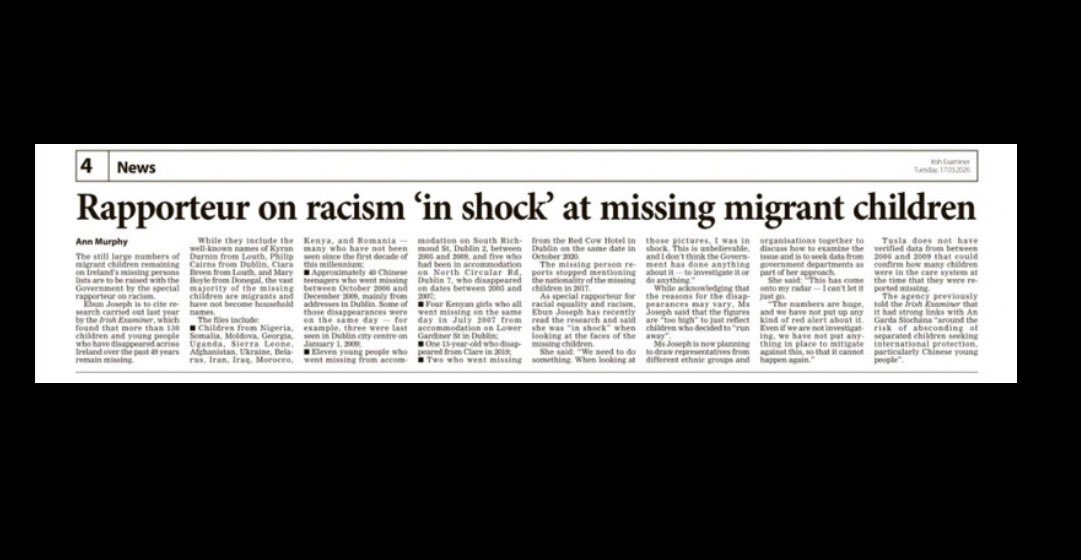
𝐒𝐡𝐨𝐜𝐤𝐢𝐧𝐠 𝐍𝐮𝐦𝐛𝐞𝐫𝐬: 𝐌𝐢𝐠𝐫𝐚𝐧𝐭 𝐂𝐡𝐢𝐥𝐝𝐫𝐞𝐧 𝐕𝐚𝐧𝐢𝐬𝐡𝐢𝐧𝐠 𝐟𝐫𝐨𝐦 𝐓𝐮𝐬𝐥𝐚 𝐂𝐚𝐫𝐞 𝐒𝐲𝐬𝐭𝐞𝐦 𝐖𝐢𝐭𝐡𝐨𝐮𝐭 𝐚 𝐓𝐫𝐚𝐜𝐞 A report in the Irish Examiner by Ann Murphy highlights deeply troubling concerns regarding the large number of migrant children who remain missing in Ireland, with renewed scrutiny now focusing on the role of State agencies, including Tusla, in safeguarding these vulnerable young people. The issue has been brought sharply into focus by the Special Rapporteur on Racial Equality and Racism, Ebun Joseph, who described herself as “in shock” after reviewing findings that more than 130 children and young people who disappeared over the past five decades remain missing. While some high profile Irish cases are included, the overwhelming majority of those unaccounted for are migrant children, many of whom have never received sustained public attention. The report details patterns of disappearances that raise serious systemic concerns. These include clusters of children going missing from specific accommodation centres, often within short timeframes, and in some cases on the same day. Particularly striking are cases involving groups of Chinese teenagers who disappeared between 2006 and 2009, alongside multiple incidents involving children from a wide range of countries including Nigeria, Somalia, Afghanistan and Romania. Central to these concerns is the role of Tusla, the State body charged with the care and protection of separated children seeking international protection. The report highlights a significant gap in Tusla’s records, with the agency unable to provide verified data for key years between 2006 and 2009, when many of these disappearances occurred. This absence of reliable data raises serious questions about oversight, monitoring and accountability during a critical period. Tusla has acknowledged that there were risks associated with children absconding from care, particularly among certain groups, and pointed to links with An Garda Síochána in managing these risks. However, the scale and pattern of the disappearances outlined in the report suggest systemic failures that go beyond individual cases, pointing instead to weaknesses in how vulnerable migrant children were protected within the State’s care system. Ebun Joseph has indicated that she will now raise the matter directly with Government and is seeking to bring together stakeholders across ethnic communities and public bodies to examine the issue further. She warned that the numbers involved are far too high to be explained simply by children choosing to leave care, and criticised the absence of any sustained national response, stating that no “red alert” was ever triggered. The findings raise profound questions about how children in State care, particularly those already vulnerable due to displacement and migration, could disappear in such numbers without a coordinated or transparent response. In this context, Tusla’s role, record keeping, and duty of care are likely to come under increasing scrutiny as calls grow for accountability and systemic reform.
ABC for Justice tweet media
English
2
11
19
452
MECPATHS
MECPATHS@MECPATHS·
16-year-old boy was a human trafficking victim when convicted – defence under the Modern Slavery Act 2015 was never raised – CCRC has referred his appeal to the Crown Court #CCE ccrc.gov.uk/news/16-year-o…
English
0
1
1
53
MECPATHS retweetledi
M Compass Media
M Compass Media@MCompassMedia·
𝐖𝐡𝐲 𝐢𝐬𝐧’𝐭 𝐚 𝐜𝐡𝐢𝐥𝐝 𝐦𝐢𝐬𝐬𝐢𝐧𝐠 𝐟𝐫𝐨𝐦 𝐓𝐮𝐬𝐥𝐚 𝐜𝐚𝐫𝐞 𝐟𝐨𝐫 𝐚 𝐦𝐨𝐧𝐭𝐡 𝐟𝐫𝐨𝐧𝐭 𝐩𝐚𝐠𝐞 𝐧𝐞𝐰𝐬?
ABC for Justice@AllianceBirth

𝐖𝐡𝐲 𝐢𝐬𝐧’𝐭 𝐚 𝐜𝐡𝐢𝐥𝐝 𝐦𝐢𝐬𝐬𝐢𝐧𝐠 𝐟𝐫𝐨𝐦 𝐓𝐮𝐬𝐥𝐚 𝐜𝐚𝐫𝐞 𝐟𝐨𝐫 𝐚 𝐦𝐨𝐧𝐭𝐡 𝐟𝐫𝐨𝐧𝐭 𝐩𝐚𝐠𝐞 𝐧𝐞𝐰𝐬?

English
1
4
5
205
MECPATHS retweetledi
ABC for Justice
ABC for Justice@AllianceBirth·
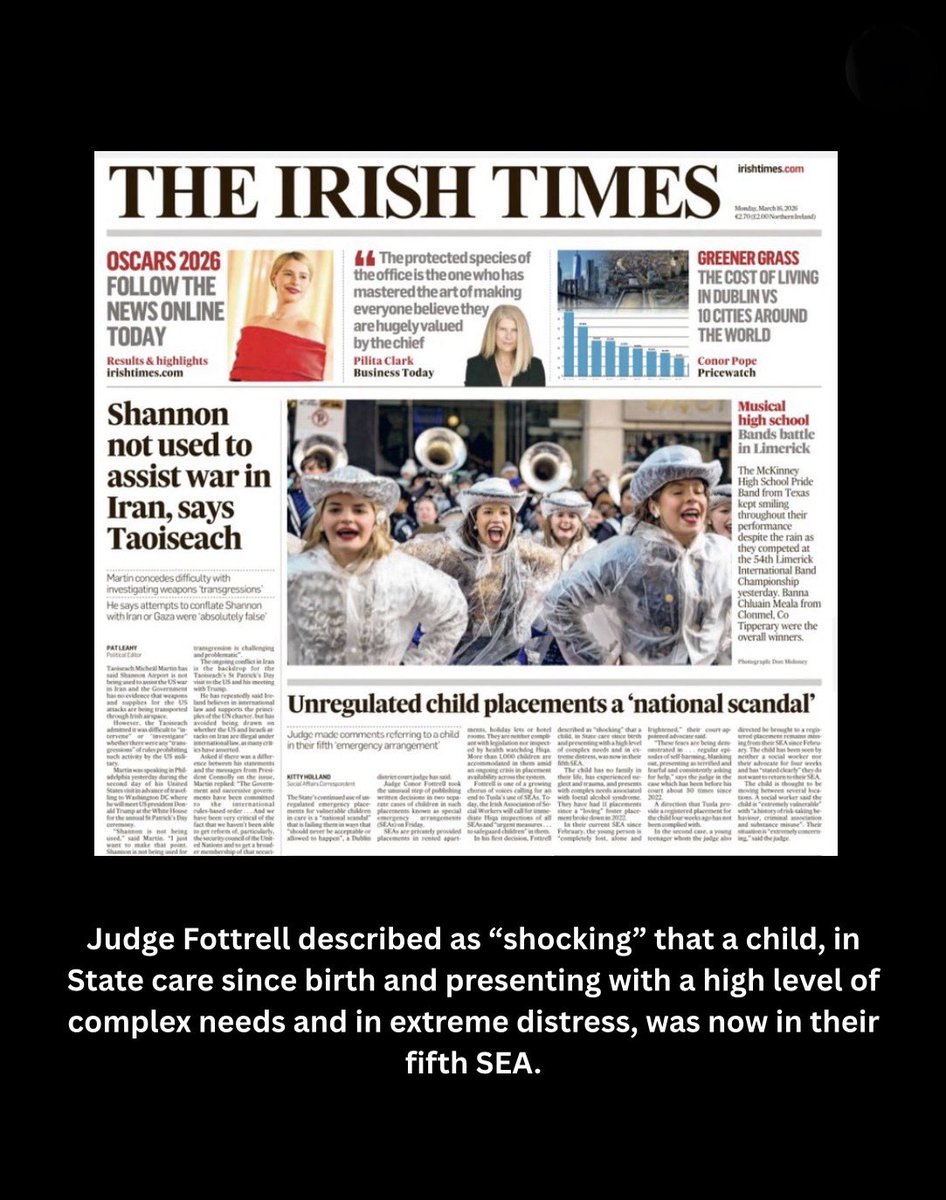
𝐖𝐡𝐲 𝐢𝐬 𝐓𝐮𝐬𝐥𝐚 𝐧𝐨𝐭 𝐛𝐞𝐢𝐧𝐠 𝐬𝐚𝐧𝐜𝐭𝐢𝐨𝐧𝐞𝐝 𝐟𝐨𝐫 𝐫𝐞𝐩𝐞𝐚𝐭𝐞𝐝𝐥𝐲 𝐢𝐠𝐧𝐨𝐫𝐢𝐧𝐠 𝐜𝐨𝐮𝐫𝐭 𝐨𝐫𝐝𝐞𝐫𝐬 𝐭𝐨 𝐩𝐫𝐨𝐯𝐢𝐝𝐞 𝐫𝐞𝐠𝐮𝐥𝐚𝐭𝐞𝐝 𝐚𝐜𝐜𝐨𝐦𝐦𝐨𝐝𝐚𝐭𝐢𝐨𝐧 𝐟𝐨𝐫 𝐯𝐮𝐥𝐧𝐞𝐫𝐚𝐛𝐥𝐞 𝐜𝐡𝐢𝐥𝐝𝐫𝐞𝐧? A front page report in today’s Irish Times by Kitty Holland highlights a warning from Judge Conor Fottrell that the State’s continued reliance on unregulated emergency accommodation for children in care has become a “national scandal”. The judge made the remarks in two unusually detailed written rulings concerning children placed in so called Special Emergency Arrangements, or SEAs. These placements are privately provided settings such as rented apartments, hotel rooms, or holiday lets that are not regulated under existing legislation and are not inspected by the State watchdog Health Information and Quality Authority. Judge Fottrell said the use of these arrangements represents a serious systemic failure that leaves vulnerable children exposed to unacceptable conditions. More than 1000 children are currently accommodated in SEAs as a result of an ongoing shortage of suitable foster, residential, and therapeutic placements run by Tusla. Because SEAs fall outside the normal regulatory framework, they operate without the oversight and inspection that applies to registered residential care settings. In the first case examined by the court, the judge described the circumstances of a child in State care since birth as “shocking”. The child, who has complex needs linked to foetal alcohol syndrome and a history of trauma and neglect, had already experienced eleven different placements after the breakdown of what had previously been described as a loving foster placement in 2022. The young person is now in their fifth SEA. According to the child’s court appointed advocate, they are currently “completely lost, alone and frightened”. Evidence before the court showed that the child is suffering severe emotional distress, with repeated episodes of self harm, dissociation, and intense fear. The judge noted that the child frequently asks for help and is clearly struggling psychologically. Despite a court order issued four weeks earlier directing Tusla to secure a registered and regulated placement for the child, the order had not been complied with. The case has come before the judge approximately fifty times since 2022, reflecting the prolonged failure to secure a stable placement. The second case described by Judge Fottrell involved a young teenager who had been living in an SEA but has been missing since February. The court heard that the child has not been seen by a social worker or their advocate for four weeks. The teenager has reportedly made it clear they do not wish to return to the emergency placement and is believed to be moving between different locations. According to a social worker involved in the case, the child is extremely vulnerable and has a background involving risk taking behaviour, associations with criminal activity, and substance misuse. The judge said the situation is deeply alarming and emphasised the level of risk facing the young person while missing. The judge’s comments come amid growing concern about the widespread use of SEAs. Advocacy groups and professional bodies are increasingly warning that these placements fail to provide proper protection, stability, or therapeutic support for children with complex needs. The Irish Association of Social Workers is now calling for immediate inspections of all SEAs by HIQA and urgent measures to protect the children currently living in them. Judge Fottrell’s rulings add to criticism of the State’s child protection system and highlight the scale of the crisis. By describing the situation as a national scandal, the court has underscored that the continued reliance on unregulated accommodation is not simply a logistical problem but a systemic failure that is placing highly vulnerable children at serious risk.
ABC for Justice tweet media
English
1
8
13
356
MECPATHS retweetledi
ABC for Justice
ABC for Justice@AllianceBirth·
𝐖𝐡𝐲 𝐢𝐬𝐧’𝐭 𝐚 𝐜𝐡𝐢𝐥𝐝 𝐦𝐢𝐬𝐬𝐢𝐧𝐠 𝐟𝐫𝐨𝐦 𝐓𝐮𝐬𝐥𝐚 𝐜𝐚𝐫𝐞 𝐟𝐨𝐫 𝐚 𝐦𝐨𝐧𝐭𝐡 𝐟𝐫𝐨𝐧𝐭 𝐩𝐚𝐠𝐞 𝐧𝐞𝐰𝐬?
ABC for Justice tweet media
English
0
10
16
711
MECPATHS
MECPATHS@MECPATHS·
This is not one agencies responsibility but requires a whole of government response.
ABC for Justice@AllianceBirth

𝐌𝐢𝐧𝐢𝐬𝐭𝐞𝐫 𝐅𝐨𝐥𝐞𝐲 𝐀𝐝𝐦𝐢𝐭𝐬 𝐓𝐡𝐞𝐫𝐞’𝐬 𝐍𝐨 𝐍𝐚𝐭𝐢𝐨𝐧𝐚𝐥 𝐌𝐞𝐭𝐫𝐢𝐜 𝐭𝐨 𝐓𝐫𝐚𝐜𝐤 𝐒𝐞𝐱𝐮𝐚𝐥 𝐄𝐱𝐩𝐥𝐨𝐢𝐭𝐚𝐭𝐢𝐨𝐧 𝐑𝐢𝐬𝐤 𝐖𝐡𝐞𝐧 𝐂𝐡𝐢𝐥𝐝𝐫𝐞𝐧 𝐀𝐛𝐬𝐜𝐨𝐧𝐝 𝐅𝐫𝐨𝐦 𝐓𝐮𝐬𝐥𝐚 𝐂𝐚𝐫𝐞 Independent TD Ken O’Flynn submitted a series of Parliamentary Questions to Norma Foley, Minister for Children, Disability and Equality, focusing on child safety, absconding from care, sexual exploitation risk, and the handling of unallocated high priority child protection cases within Tusla. Absconding from care and sexual exploitation risk The Minister confirmed that child safety planning is led operationally by Tusla and involves Gardaí, professionals, families, and children where safety concerns exist. She stated that residential care placements do not restrict a child’s liberty, except in special care placements which require High Court approval and are intended as short term therapeutic interventions. She emphasised that decisions on individual placements and safety planning are not reviewed by the Department due to Tusla’s statutory operational independence. Tusla’s Child Sexual Exploitation Procedure, developed in 2021, was cited as the primary framework for identifying and responding to risks of sexual exploitation. This includes mandatory reporting pathways to An Garda Síochána under Operation Cosnaím for children in Tusla care. The Minister acknowledged that her Department does not receive specific briefings or reports analysing the link between absconding from care and sexual exploitation risk, although officials meet regularly with Tusla to discuss risks at a senior level. Funding and policy position It was confirmed that Tusla will receive an additional €165 million in Budget 2026, bringing total funding to over €1.3 billion, with investment directed toward foster care and residential care services. The Minister reiterated the Government’s position that children in State care are among the most vulnerable in society and stated a continued commitment to protecting them from sexual exploitation. Unallocated high priority child protection cases In response to further questions on oversight, transparency, and accountability for unallocated child protection cases, the Minister stated that Tusla and the Department take the issue seriously and that Tusla aims to ensure all children assessed as needing protection have an allocated social worker. She attributed ongoing challenges to staff retention, recruitment difficulties, and rising referral rates. Tusla has introduced a National Policy and Guidance on Unallocated Children and Young People in 2024, alongside case prioritisation guidance, intended to standardise governance, risk management, and escalation procedures across the organisation. Oversight and reporting arrangements The Department receives quarterly Service Performance and Activity Reports from Tusla, which include area level data on unallocated cases and their priority levels. These reports are used to monitor trends and compare regional performance against national figures. Issues relating to unallocated cases and social work staffing are discussed at senior management meetings between the Department and Tusla, with escalation where necessary. The Minister highlighted Tusla’s ongoing Integrated Reform Programme, which includes restructuring into 30 Area Networks, multidisciplinary working, a single front door referral model, and improvements to case management and data systems. Overall position While the Minister emphasised policy development, reform initiatives, and increased funding, the answers confirm that there is no national metric or routine reporting specifically linking absconding from care with sexual exploitation risk, and that departmental oversight of individual high risk unallocated cases remains indirect, relying on aggregate reports and senior level engagement with Tusla.

English
0
1
2
78