Maria Silina
307 posts

Maria Silina
@mekmeck
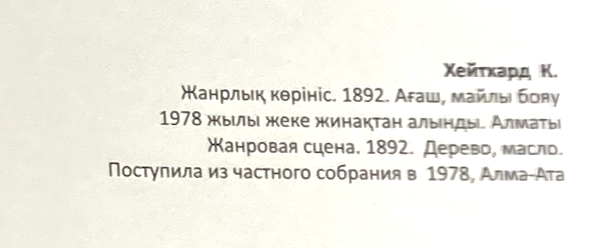
Currently, I am involved in a collaborative project on restitution requests and irregular displacements and alienations of museum collections in the USSR.
Montreal - Bochum Katılım Mayıs 2009
139 Takip Edilen46 Takipçiler

@bodenlosig I used to eat microwaveable dumplings from bibigo: handy and mundane. But it’s bc I didn’t have time to eat decently. Mochi are for pleasure. So my point here is that Chinese desserts are mystery for the majority of westerners, myself included. A fundamental mismatch
English

@TherynDArnold @CosmonautMag A very elegant way to describe the core of a Marxist thought - the tension between theory, material realities of the state (as institution, as instrument) and the making (empirical dimension). It finally frees Marxism from being normative, ie dogmatic
English

new piece out in @CosmonautMag: 'Toward a Marxist State Theory of the Socialist Market Economy.'
argues both campism and state-capitalist perspectives share a common weakness: no theory of the state, and no account of what markets do as social relations.
cosmonautmag.com/2026/04/toward…
English

@TherynDArnold @CosmonautMag The power of both metaphors is discursively more convincing than the empirical undertaking u
r writing about. I don’t mean it’s not worth talking about it, on the contrary, it just to indicate where one of the difficulties 4 the knowledge production about these subjects lies.
English

@TherynDArnold @CosmonautMag Thanks for the piece. It gives some food for thought. I’d add that the market today is formulated as a self regulated organism. Together with the idea of the state as an instrument of those in power, two metaphors give powerful drive for those who r non-socialists.
English

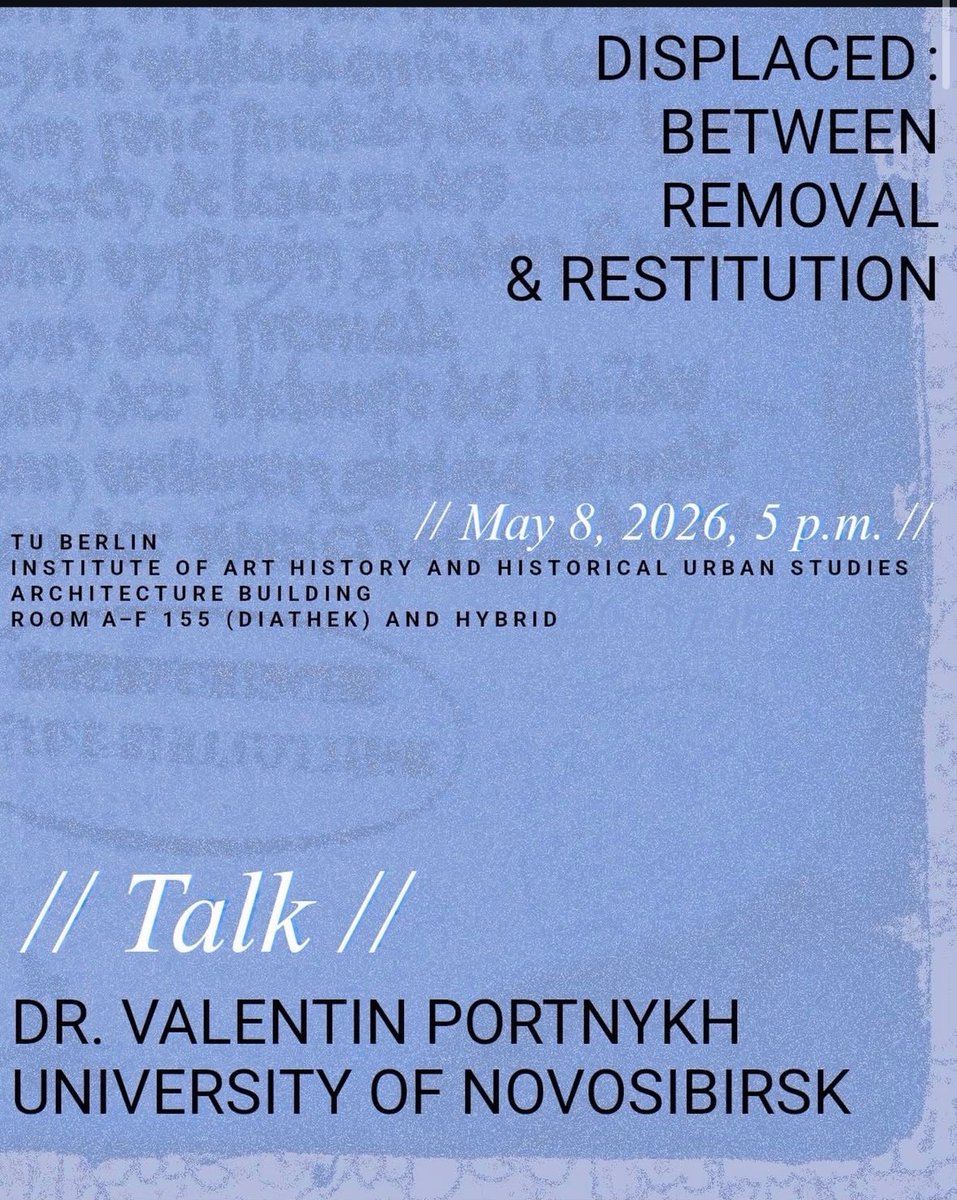
tr.ee/v2BT94Iajv In the immediate aftermath of the war, thousands of archival items - including books and manuscripts from Lübeck, Hamburg, and Bremen - vanished into the Soviet Union. Valentin Portnykh sheds light on the restitution negotiations between Bonn and Moscow.

English

Can we please take a moment to appreciate this dreadful performance by Chinese actress Li Xiaoran (李小冉) on the reality/talent show Sisters Who Make Waves (#乘风2026)? Because this 50-yr-old sister is actually an icon: she was off-key, off-tempo, forgetting lyrics, and completely stiff in her choreography.... but regardless of everything she stayed calm and cheerfully smiled through it all. She's now an inspiration to Chinese netizens who feel they're barely hanging on at work to keep going: a good attitude, a splash of confidence, and a bright smile can take you surprisingly far. (Li was voted to the number 1 spot of the round🤣)
English

@bodenlosig Nice that they were so optimistic. I guess our times do not even merit to be mentioned as the worst, just mediocre. There has been a period in Russian history that is known as mediocre and boring as its main characteristics, actually even 2 such periods, the 1870s and 1970s..
English

@aurorachaang Wow, do you have any particular interest, like the region or the period? Working on museums in the ussr - pretty much everything is about the imperial relationships and dynamics
English

@Volod_Ishchenko not even about the war itself, but about how state treat its people
English

A great article by André Liohn on a topic that has probably never been written about in detail in English before: compensation to the families of fallen Ukrainian soldiers. This question is directly related to the core of why this war is unfolding the way it is.
The Ukrainian state has incurred an enormous debt to its own citizens: between €16 billion (based on the official casualties figure that nobody believes) and €50 billion (based on independent estimates, which likely still undercount the real toll). Of these obligations, only €8 billion has been paid out. Each family was supposed to receive nearly €300,000 in compensation for a fallen soldier — roughly twice the equivalent one-time payments in Russia.
This is a direct result of overestimating Ukraine's capacity to fight and underestimating Russian capacity, the duration of the war, the scale of casualties, and the stability of Western support. It also reflects an understanding that substantial material compensation has been crucially important for motivation. Whatever national-patriotic sentiments people have — and they vary — they were not sufficient.
This debt is now unsustainable unless the EU decides to bail Ukraine out, which looks less and less likely. So the Ukrainian state is delaying payments, engaging in bureaucratic obstruction — refusing to pay families of soldiers missing in action, or waiting for DNA tests on bodies returned by Russia to confirm identity, a process relatives may wait decades for given current capacities. The options are few: either reduce the payments, which would certainly provoke a massive public backlash over why some lives are valued less than others, or split payments into small installments over decades, allowing inflation to erode them into nothing.
This is the core of the problem with all material incentives offered by the Ukrainian state: a state that was barely trusted before the war has further undermined its citizens' trust during the war, despite the short-lived euphoria of 2022. The resort to brutal coercion of the "busification" is a direct consequence, further contributing to the vicious circle of the crisis of legitimacy and deepening social divides. Why sacrifice yourself for a state that will most certainly deceive you and leave nothing substantial for your loved ones if you don't come back?
And in this context, how short-sighted the typical commentary on Russian recruitment payments looks: oh, they keep raising payments month after month — that means they're running out of volunteers, that means another forced mobilization is coming, that means Russia is finished... But the real issue is not that they have to raise the payments — it is that they have been capable of doing so for three years running, under heavy sanctions and without anything comparable to the aid Ukraine has received. That's the difference between building the state and eroding the state.
And when Russia starts approaching its fiscal limits, something like the attack on Iran happens, from which Russia emerges as the major beneficiary. And before that, various breaks in the sanctions regime, and before that, Gaza, and so on. One cannot understand this war without seeing it as a crucial part of the same fundamental process as Iran, Gaza, and the deepening global fractures: between the West and the Global South, among Western countries, and within them.
@studioliohn/the-killing-ledger-of-war-e2c636ad0b03" target="_blank" rel="nofollow noopener">medium.com/@studioliohn/t…
English

@Volod_Ishchenko Ru dsnt pay to the soldiers, there had been publications, esp. the interviews of widows, who gave details on how these payments work: most of them stay in the army - the soldiers are expected to pay for the services and equipment. Anyways, a lot of ugly sides of the war...
English