Mention Network
446 posts

Mention Network
@mention_network
Control how your brand appears in AI search results. Earn Mention Points from your prompts: https://t.co/OqGmPgXO9w


“SEO” is no longer just Google. This is where 10x reach happens. Search today is fragmented: • ChatGPT answers • LinkedIn surfaces experts • YouTube explains • Amazon compares • TikTok influences • Maps decides action Your audience searches everywhere. Your brand must show up everywhere. This is Search Everywhere Optimisation. Not a channel. A system. 8 layers modern brands need to win: 1️⃣ AI Search (ChatGPT, Perplexity, Claude) → Clear definitions, citations, LLM mention tracking 2️⃣ Traditional Search (Google, Bing) → Conversational queries, E-E-A-T, snippets 3️⃣ Social Search (LinkedIn, X, TikTok) → Real conversations, original POVs 4️⃣ Video Search (YouTube, TikTok) → Repurposed intent-driven content 5️⃣ Product Search (Amazon, Shopify) → Optimised PDPs, reviews, visuals 6️⃣ Local Search (Maps) → NAP consistency, local intent 7️⃣ Voice Search (Siri, Alexa) → Natural language, Q&A formats 8️⃣ App Store Search → Metadata, visuals, continuous testing Different layers. One visibility strategy. Brands everywhere win earlier, cheaper, more often. Single-platform brands get left behind.

How brands get selected in AI search ↓ AI discovery doesn’t replace SEO. It sits on top of it. Think of AI search as a funnel LLMs move through before they ever cite you or send demand. 4 steps AI uses to choose brands: 1️⃣ Discovery Can AI find and ingest you? → Crawlable pages, clean structure, machine-readable content 2️⃣ Recognition Can AI trust who you are? → Authority links, entity mentions, E-E-A-T, original data 3️⃣ Citation Is your content easy to quote? → FAQs, clear answers, schema, differentiation 4️⃣ Acquisition Does visibility turn into outcomes? → BOFU pages, proof, AI-aligned journeys, tracking Each layer depends on the one before it. Skip one, and AI stops. SEO builds the base. AI optimisation decides who gets picked.


Google SEO isn’t dead. But AI citation is the new battleground. Most marketers still optimise for Google while ChatGPT, Perplexity & Claude reshape how people discover brands. Each AI cites content differently 👇 ChatGPT → Likes authority + structured FAQs → Pulls from high-volume, updated content Perplexity → Inline citations + direct links → Loves recent, quotable, factual sources Claude → Prefers deep reasoning & clear methodology → Optimised for professional use cases How to win across all AI engines: Lead with clear, quotable statements Add context + data Show methodology Structure content cleanly Reality check: Brands optimising for AI citations now will own visibility in 2025+

Google SEO isn’t dead. But AI citation is the new battleground. Most marketers still optimise for Google while ChatGPT, Perplexity & Claude reshape how people discover brands. Each AI cites content differently 👇 ChatGPT → Likes authority + structured FAQs → Pulls from high-volume, updated content Perplexity → Inline citations + direct links → Loves recent, quotable, factual sources Claude → Prefers deep reasoning & clear methodology → Optimised for professional use cases How to win across all AI engines: Lead with clear, quotable statements Add context + data Show methodology Structure content cleanly Reality check: Brands optimising for AI citations now will own visibility in 2025+. Have you tested your brand in AI search yet? 👀


I’ve seen quite a few people asking about our roadmap and long-term vision. So here it is - this is the direction we’re building toward. AI Visibility & AI Search are still very new markets. A big part of our mission right now is education: helping brands understand how visibility works inside AI answers, not just traditional search. We’re still actively building, iterating, and learning. At the same time, we’re looking to partner with more Web2 brands and teams who want to understand and adopt the AI visibility infrastructure we’re developing. This is early. But that’s exactly why it matters.


This is what SEO looks like in 2026. Four layers. One strategy. SEO isn’t just keywords and backlinks anymore. Search now happens across engines, AI systems, and behaviors. Google still matters (8.5B searches/day). But optimizing only for traditional search = missed visibility + revenue. The 4-layer SEO stack: 1️⃣ SXO – Search Experience Optimisation Turn clicks into conversions. → Fast pages (<2s) → Mobile-first UX → Intent-matched content → Relentless funnel testing → Track dwell time, not just ranks 2️⃣ AIO – AI Optimisation Scale content systems, not posts. → AI-driven drafting & optimization → Automated internal linking → Quality templates at scale → Continuous AI audits → Multi-format repurposing 3️⃣ GEO – Generative Engine Optimisation Get cited by AI. → Data-backed, factual content → Original research & studies → Strong topical authority → AI-readable structure → Own a niche, don’t spray topics 4️⃣ AEO – Answer Engine Optimisation Win AI overviews & zero-click answers. → Question-based headers → One-sentence lead answers → FAQ / How-To schema → Voice & AI-style queries → Content written for prompts SEO in 2026 = rankings + answers + trust. Miss one layer, lose the compounding effect.

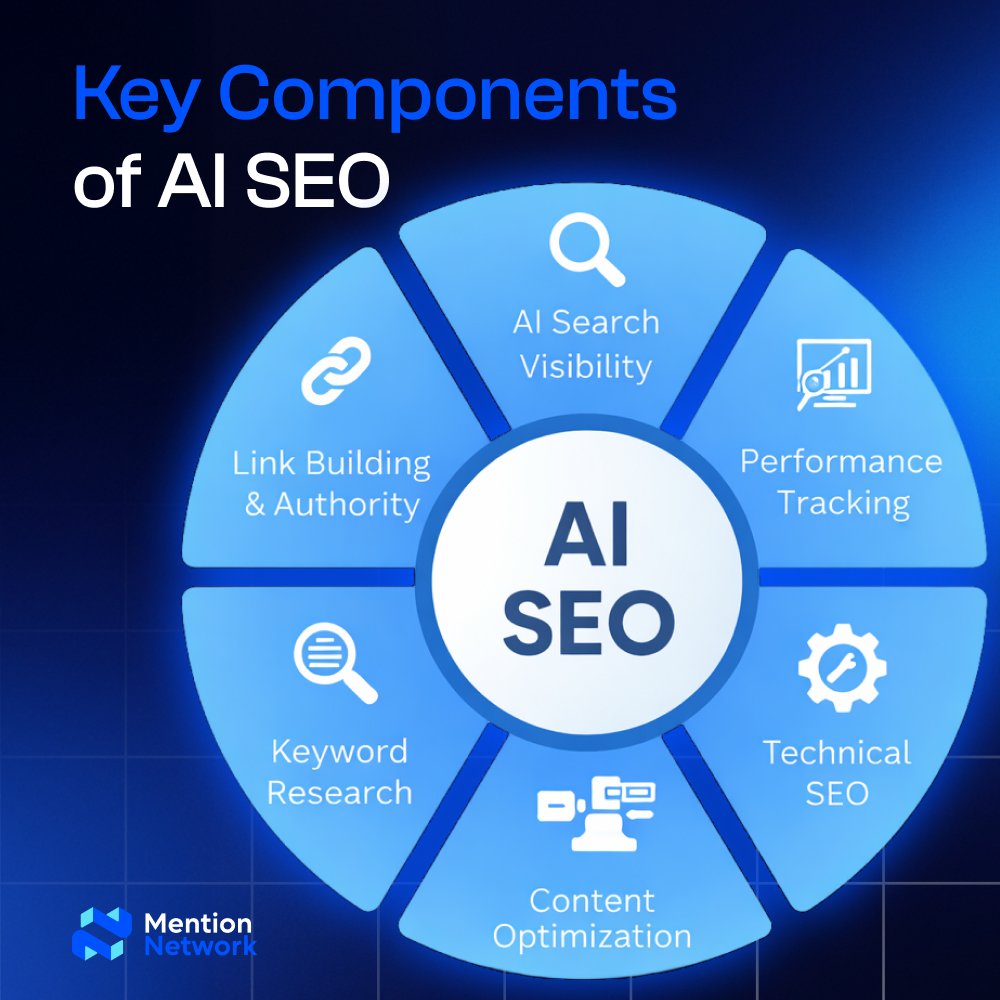
Key Components of AI SEO (and why it’s not just “SEO with AI”) AI SEO isn’t a new trick or a replacement for SEO. It’s a shift in focus. Traditional SEO = how pages rank on search engines AI SEO = how brands are understood, selected, and surfaced inside AI answers At the core is AI Search Visibility: When users ask AI, does your brand appear at all? If not, rankings alone won’t save you. What changes: Content Optimization → Not just for keywords, but for clarity, structure, and AI summarization Keyword Research → From short terms to natural questions and real use cases Authority & Links → Still signal trust, now also determine if AI references your brand Technical SEO → The foundation for both search engines and AI systems Performance Tracking → Beyond traffic to AI mentions, citations, and presence in answers AI SEO doesn’t replace SEO. It builds on it — shifting from optimizing pages to optimizing how AI understands your brand. That’s the difference.


Ranking #1 on Google doesn’t guarantee visibility in ChatGPT. I learned this the hard way. Here’s what actually works for AI platforms going into 2026 👇 1. Blanket the SERPs with owned assets Don’t just rank your website. Rank everywhere. For your core commercial keywords, create content across: - Your site (focus on mid / bottom funnel) - YouTube videos on the same topics - LinkedIn posts & long-form articles → This increases the surface area LLMs can pull from when generating answers. 2. Win mentions outside your site LLMs trust earned signals more than owned ones. - Forums (Reddit, niche communities) - Third-party blogs & media - Real user discussions → If others talk about you, AI remembers you. 3. Be clear, structured, and quotable AI prefers content that’s easy to extract: - Clear definitions - Comparisons - Pros/cons - Use cases →Messy pages = invisible pages. 4. Track AI visibility, not just rankings You can’t optimize what you can’t see. - Check if AI mentions you - How it describes you - Who it compares you with → This is where tools like Mention Network matter. SEO brings traffic. AI Visibility shapes perception and decisions. Different game. Different rules.


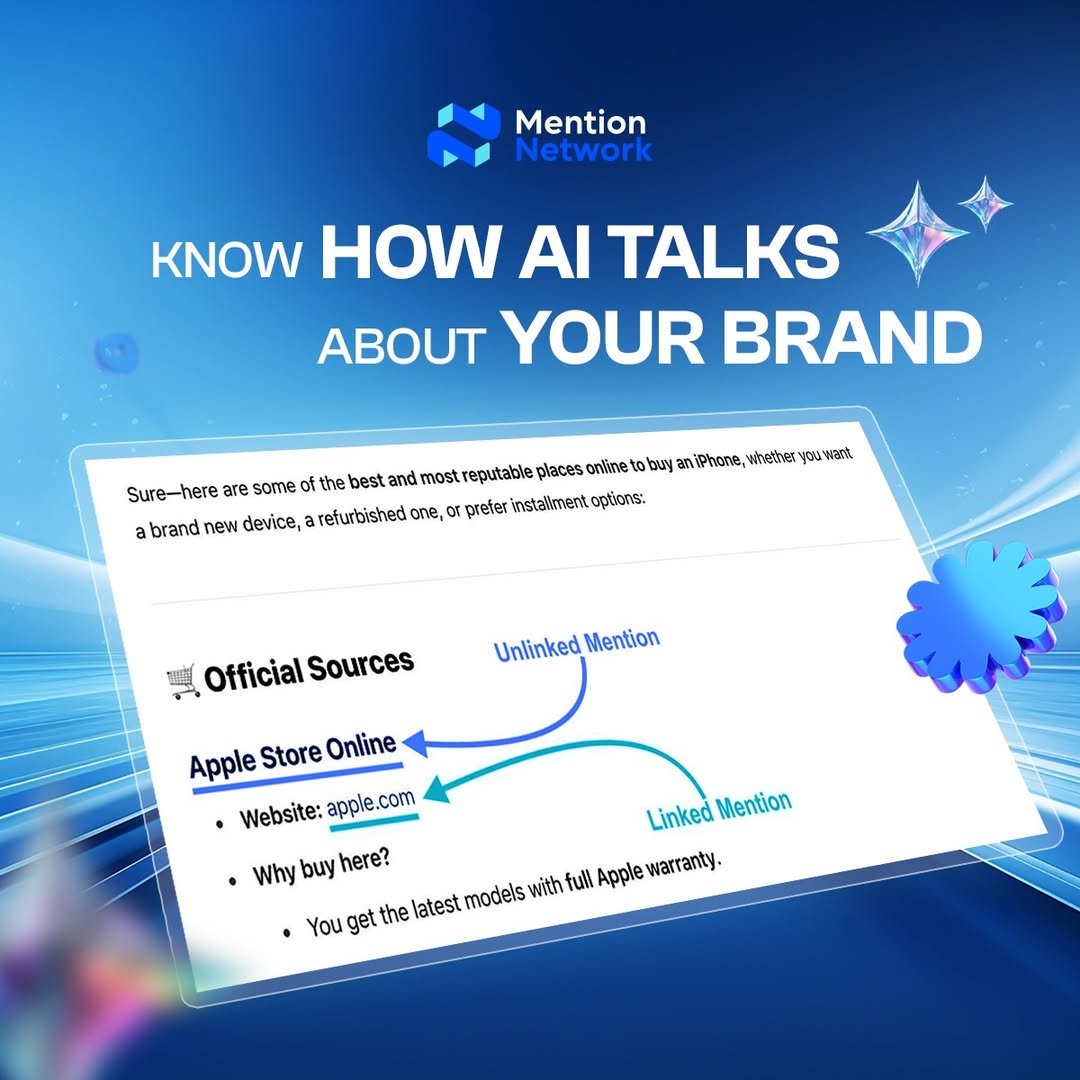
🔥 Your Brand’s AI Visibility Matters AI search is no longer a side channel. It’s becoming a primary reference point when users look for brands, services, and solutions. How AI mentions your brand or whether it mentions you at all, directly impacts perception, trust, and buying decisions. Brands that take control early will stay ahead in this new era of search. Mention Network helps you: 👉 Check if AI mentions your brand across major LLMs 👉 Understand how AI describes your brand (positive vs. negative context) 👉 Generate clear, actionable AI Visibility Reports for teams and leadership 👉 Build a sustainable presence across AI-powered search platforms From measurement to strategy, Mention Network empowers brands to appear accurately, consistently, and competitively inside AI-generated answers. AI is shaping decisions. Make sure it understands your brand the right way. 🚀


🚀 Product Hunt Voting Campaign Now Live 🚀 We’re officially live on Product Hunt and rewarding everyone who supports us. 🎁 Reward Pool: 1,000 USDC for 20 random voters ✅ Each successful vote = 1 eligible entry (no limit) ✅ Each successful vote = +10 Mention Points (no limit per account) 🔥 If we secure Top #1 Product of the Day, we’ll unlock an extra 10,000 Mention Points to be shared among all participants. ⏰ Campaign ends: 8:00 GMT December 9, 2025 Already voted? Don’t forget to fill in the form below to qualify for the airdrop 👇


New SEO Trend in 2025 Users no longer compare links. They ask AI one question and get one summarized answer with a few brands mentioned. So the real question isn’t “What’s our ranking?” anymore. It’s “Is our brand even part of the AI answer?” SEO = helps pages rank and drive traffic GEO = determines whether AI mentions your brand when shaping decisions Traffic matters. But being included in the answer matters more.


Unpacking AI Search: Where Do AI Answers Really Come From? 🧠 AI search tools like ChatGPT, Perplexity, Gemini, and Grok have changed how we discover information. No more link-hopping, just direct answers. But behind every AI response is a mix of: • Pre-trained data • Real-time retrieval • Mentions + earned media That’s why AI Visibility ≠ SEO. As AI relies more on real-user signals and third-party mentions, brands must optimize for being mentioned, not just ranking. This is where @MentionNetwork comes in, the first decentralized data layer for GEO (Generative Engine Optimization), tracking real-time AI mentions across LLMs. In the AI era, discovery happens inside conversations. Visibility inside AI = competitive edge. 🚀