Miguel González H.

577 posts

Miguel González H. banner
Miguel González H.

Miguel González H.

@migohe14

Law and coding. https://t.co/EXJZcqUwlN Frontend developer @sngular

Malaga, Spain Katılım Ekim 2015
510 Takip Edilen313 Takipçiler
Miguel González H. retweetledi
clem 🤗
clem 🤗@ClementDelangue·
As President Trump meets President Xi this week, a call to the American AI community: If your startup, lab, non-profit or company benefits from open international AI - especially Chinese (Deepseek, Qwen, Kimi, GLM,…), please share! Open source is the most important driver of competition, jobs and wealth creation in AI today. Let’s support and promote it at critical times like this week!
English
32
73
546
76.4K
Miguel González H. retweetledi
Mark Cuban
Mark Cuban@mcuban·
I’m coming to the conclusion that the biggest challenge for Enterprise AI, and AI in general , as of now, is that it’s still impossible to make sure that everyone gets the same answer to the same question, every time. Which is a great response to the doomers. AI doesn’t know the consequences of its output. Judgement and the ability to challenge AI output is becoming increasingly necessary, and valuable. Which makes domain knowledge more valuable by the second. Am I wrong ?
English
1.9K
447
6.2K
1.5M
Miguel González H. retweetledi
Jaime Gómez-Obregón
Jaime Gómez-Obregón@JaimeObregon·
👋 Hola, Ministerio de Transformación Digital, @mintradigital: 👋 Hola, Secretaría de Estado, @SEtelecoGob: Autofirma es un componente esencial de la Administración Electrónica española. Millones lo utilizamos para relacionarnos con la Administración. No por placer, sino porque es ✨requisito✨. ----8<----8<----8<----8<----8<----8<---- El paquete de Autofirma que distribuís para Mac no cumple las garantías de seguridad modernas (notarización), así que el sistema dice que es malware que puede dañar el sistema y rechaza instalarla. 😃🔫 ----8<----8<----8<----8<----8<----8<---- 🤦 Para instalarla hay que —ojo al dato— desactivar las políticas de ciberseguridad del sistema operativo. 🤦 ¡Hola, @INCIBE! Hacéis campañas fabulosas para concienciar a la ciudadanía de los riesgos de ciberseguridad, pero luego nos enjaretáis —el Estado— marrones como este. ¿Podéis hacer algo, por favor? Respetado ministro @oscarlopeztwit: Respetada secretaria de Estado @mariagv: — Si hacéis software, cumplid los estándares modernos de empaquetado y distribución de software. — Si no podéis notarizar Autofirma, modernizad la arquitectura del programa para que se pueda. — Si no podéis modernizar Autofirma, necesitamos un Ministerio para la Transformación del Ministerio de la Transformación Digital. Esto es lo que ve un usuario al intentar instalar Autofirma en un Mac:
Jaime Gómez-Obregón tweet media
Español
138
1.6K
3.2K
345.3K
Miguel González H. retweetledi
Míriam González
Míriam González@miriamgonp·
Tengo 35 años y cancer de mama metastásico, un caso raro, menos del 1% de tumores de mama son como el mío y hay poca documentación sobre ello. Por eso me gustaría encontrar personas que se dediquen a esto y que quieran investigar con mi caso. Twitter haz tu magia
Español
735
16.3K
21.7K
1.4M
Miguel González H. retweetledi
Bernardo Quintero
Bernardo Quintero@bquintero·
Cloud Space | Málaga nuevo espacio en la segunda planta del edificio de Google, punto de encuentro para hablar de ciberseguridad, IA y lo que viene... Málaga sigue sumando
Español
12
36
247
16.3K
Miguel González H. retweetledi
Andrej Karpathy
Andrej Karpathy@karpathy·
Wow, this tweet went very viral! I wanted share a possibly slightly improved version of the tweet in an "idea file". The idea of the idea file is that in this era of LLM agents, there is less of a point/need of sharing the specific code/app, you just share the idea, then the other person's agent customizes & builds it for your specific needs. So here's the idea in a gist format: gist.github.com/karpathy/442a6… You can give this to your agent and it can build you your own LLM wiki and guide you on how to use it etc. It's intentionally kept a little bit abstract/vague because there are so many directions to take this in. And ofc, people can adjust the idea or contribute their own in the Discussion which is cool.
Andrej Karpathy@karpathy

LLM Knowledge Bases Something I'm finding very useful recently: using LLMs to build personal knowledge bases for various topics of research interest. In this way, a large fraction of my recent token throughput is going less into manipulating code, and more into manipulating knowledge (stored as markdown and images). The latest LLMs are quite good at it. So: Data ingest: I index source documents (articles, papers, repos, datasets, images, etc.) into a raw/ directory, then I use an LLM to incrementally "compile" a wiki, which is just a collection of .md files in a directory structure. The wiki includes summaries of all the data in raw/, backlinks, and then it categorizes data into concepts, writes articles for them, and links them all. To convert web articles into .md files I like to use the Obsidian Web Clipper extension, and then I also use a hotkey to download all the related images to local so that my LLM can easily reference them. IDE: I use Obsidian as the IDE "frontend" where I can view the raw data, the the compiled wiki, and the derived visualizations. Important to note that the LLM writes and maintains all of the data of the wiki, I rarely touch it directly. I've played with a few Obsidian plugins to render and view data in other ways (e.g. Marp for slides). Q&A: Where things get interesting is that once your wiki is big enough (e.g. mine on some recent research is ~100 articles and ~400K words), you can ask your LLM agent all kinds of complex questions against the wiki, and it will go off, research the answers, etc. I thought I had to reach for fancy RAG, but the LLM has been pretty good about auto-maintaining index files and brief summaries of all the documents and it reads all the important related data fairly easily at this ~small scale. Output: Instead of getting answers in text/terminal, I like to have it render markdown files for me, or slide shows (Marp format), or matplotlib images, all of which I then view again in Obsidian. You can imagine many other visual output formats depending on the query. Often, I end up "filing" the outputs back into the wiki to enhance it for further queries. So my own explorations and queries always "add up" in the knowledge base. Linting: I've run some LLM "health checks" over the wiki to e.g. find inconsistent data, impute missing data (with web searchers), find interesting connections for new article candidates, etc., to incrementally clean up the wiki and enhance its overall data integrity. The LLMs are quite good at suggesting further questions to ask and look into. Extra tools: I find myself developing additional tools to process the data, e.g. I vibe coded a small and naive search engine over the wiki, which I both use directly (in a web ui), but more often I want to hand it off to an LLM via CLI as a tool for larger queries. Further explorations: As the repo grows, the natural desire is to also think about synthetic data generation + finetuning to have your LLM "know" the data in its weights instead of just context windows. TLDR: raw data from a given number of sources is collected, then compiled by an LLM into a .md wiki, then operated on by various CLIs by the LLM to do Q&A and to incrementally enhance the wiki, and all of it viewable in Obsidian. You rarely ever write or edit the wiki manually, it's the domain of the LLM. I think there is room here for an incredible new product instead of a hacky collection of scripts.


English
1.1K
2.8K
26.7K
7M
Miguel González H. retweetledi
Cheng Lou
Cheng Lou@_chenglou·
My dear front-end developers (and anyone who’s interested in the future of interfaces): I have crawled through depths of hell to bring you, for the foreseeable years, one of the more important foundational pieces of UI engineering (if not in implementation then certainly at least in concept): Fast, accurate and comprehensive userland text measurement algorithm in pure TypeScript, usable for laying out entire web pages without CSS, bypassing DOM measurements and reflow
English
1.3K
8.3K
65.4K
23.9M
Miguel González H. retweetledi
Bernardo Quintero
Bernardo Quintero@bquintero·
if anyone using OpenClaw wants to help test the VirusTotal plugin: openclaw plugins install openclaw-plugin-vt-sentinel && openclaw gateway restart would really appreciate any feedback
English
4
13
27
3.6K
Miguel González H. retweetledi
Bernardo Quintero
Bernardo Quintero@bquintero·
"Ya no programamos como antes" Bueno, en realidad ya veníamos programando sobre muchas capas de abstracción Aquí Grace Hopper introduciendo instrucciones usando un teclado numérico que perforaba cinta de papel Ella era el compilador :')
Bernardo Quintero tweet media
Español
5
17
80
3.5K
Miguel González H. retweetledi
François Chollet
François Chollet@fchollet·
AI agents will soon graduate to fully-fledged economic actors that buy services, compute, and even data in the course of accomplishing high-level goals. 1-2 years before we start seeing this at scale.
English
195
184
1.7K
263.1K
Miguel González H. retweetledi
Christian Catalini
Christian Catalini@ccatalini·
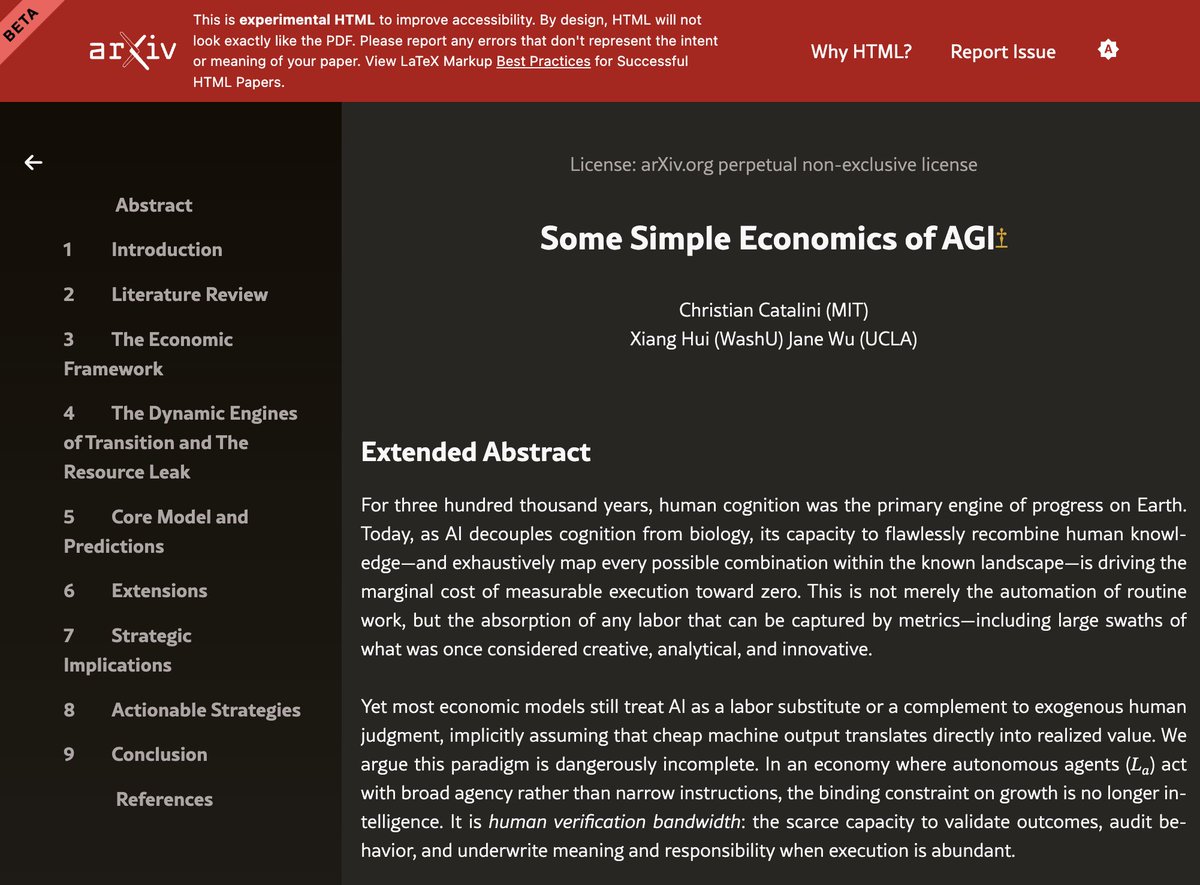
1/ Some Simple Economics of AGI—🔥🧵 Right now, there is a low-grade panic running through the economy. Everyone is asking the same anxious question: what exactly is AI going to automate, and what will be left for us?
Christian Catalini tweet media
English
148
384
2K
618.6K
Miguel González H. retweetledi
Bernardo Quintero
Bernardo Quintero@bquintero·
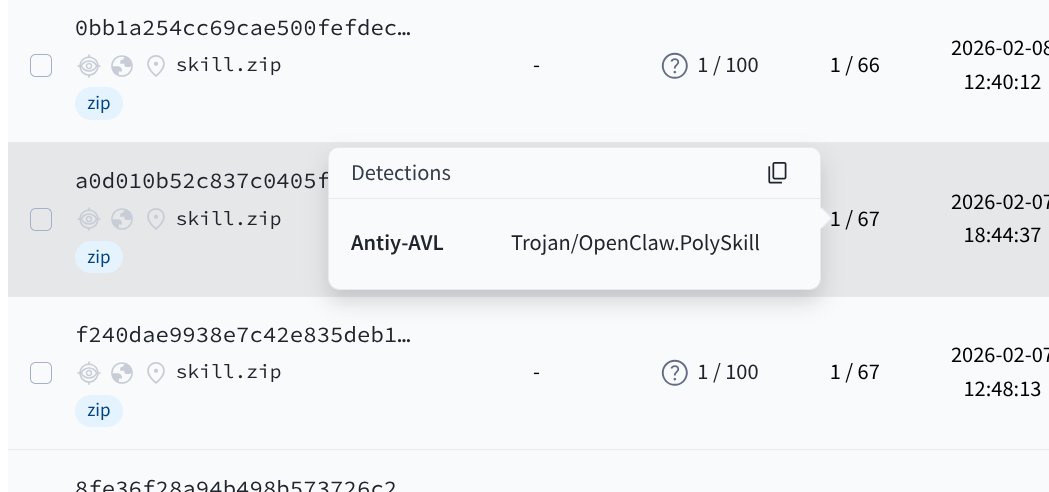
1.7k+ Skills detected as malicious great to see AV vendors already rolling out specific detections for these threats this is the power of the community, what matters is starting, building and evolving together
Bernardo Quintero tweet mediaBernardo Quintero tweet media
English
7
27
113
11.9K
Miguel González H. retweetledi