Mincer M

4.7K posts

Mincer M banner
Mincer M

Mincer M

@mincer_m

Follow me for takes 🙃 Building software engineering teams for a living, shitposting for fun. 👋 DMs are open

Warsaw, Poland Katılım Ağustos 2009
2.5K Takip Edilen451 Takipçiler
Mincer M retweetledi
Jukan
Jukan@jukan05·
I read Goldman Sachs’ AI report, and I was genuinely impressed. The core insight is as follows: Agentic AI could turn AI from a capex-heavy cost burden into a business where usage growth drives margin expansion. As token costs fall, more complex agents become economically viable. These agents then consume far more tokens through longer context windows, repeated reasoning loops, validation, tool use, and always-on background monitoring. This increase in token usage improves infrastructure utilization, strengthens unit economics, and gives hyperscalers and model providers more room to reinvest in model quality, distribution, and capacity. In other words, the bull case for AI capex is not simply that usage will grow. It is that this usage growth can increasingly flow through at attractive incremental margins. Goldman Sachs argues that this margin inflection is beginning to appear from 2026 onward.
Jukan tweet media
Jukan@jukan05

We have only just entered the early innings.

English
76
295
1.8K
241.1K
Mincer M retweetledi
rekdt
rekdt@rekdt·
“Non-technical teams are now shipping production code” Yeah, I’m closing my account today
Brian Armstrong@brian_armstrong

This is an email I sent earlier today to all employees at Coinbase: Team, Today I’ve made the difficult decision to reduce the size of Coinbase by ~14%. I want to walk you through why we're doing this now, what it means for those affected, and how this positions us for the future. Why now Two forces are converging at the same time. We need to be front footed to respond to both. First, the market. Coinbase is well-capitalized, has diversified revenue streams, and is well-positioned to weather any storm. Crypto is also on the verge of the next wave of adoption, with stablecoins, prediction markets, tokenization, and more taking off. However, our business is still volatile from quarter to quarter. While we've managed through that cyclicality many times before and come out stronger on the other side, we’re currently in a down market and need to adjust our cost structure now so that we emerge from this period leaner, faster, and more efficient for our next phase of growth. Second, AI is changing how we work. Over the past year, I’ve watched engineers use AI to ship in days what used to take a team weeks. Non-technical teams are now shipping production code and many of our workflows are being automated. The pace of what's possible with a small, focused team has changed dramatically, and it's accelerating every day. All of this has led us to an inflection point, not just for Coinbase, but for every company. The biggest risk now is not taking action. We are adjusting early and deliberately to rebuild Coinbase to be lean, fast, and AI-native. We need to return to the speed and focus of our startup founding, with AI at our core. What this means To get there, we are not just reducing headcount and cutting costs, we’re fundamentally changing how we operate: rebuilding Coinbase as an intelligence, with humans around the edge aligning it. What does this mean in practice? - Fewer layers, faster decisions: We are flattening our org structure to 5 layers max below CEO/COO. Layers slow things down and create coordination tax. The future is small, high context teams that can move quickly. Leaders will own much more, with as many as 15+ direct reports. Fewer layers also means a leaner cost structure that is built to perform through all market cycles. - No pure managers: Every leader at Coinbase must also be a strong and active individual contributor. Managers should be like player-coaches, getting their hands dirty alongside their teams. - AI-native pods: We’ll be concentrating around AI-native talent who can manage fleets of agents to drive outsized impact. We’ll also be experimenting with reduced pod sizes, including “one person teams” with engineers, designers, and product managers all in one role. In short: AI is bringing a profound shift in how companies operate, and we’re reshaping Coinbase to lead in this new era. This is a new way of working, and we need to leverage AI across every facet of our jobs. To those who are affected I know there are real people behind these decisions — talented colleagues who have poured themselves into this company and our mission. To those of you who will be leaving: thank you. You’ve helped build Coinbase into what it is today, and I am sincerely grateful for everything you've done. All impacted team members will receive an email to their personal account in the next hour with more information, and an invitation to meet with an HRBP and a senior leader in your organization. Coinbase system access has been removed today. I know this feels sudden and harsh, but it is the only responsible choice given our duty to protect customer information. To those affected, we will be providing a comprehensive package to support you through this transition. US employees will receive a minimum of 16 weeks base pay (plus 2 weeks per year worked), their next equity vest, and 6 months of COBRA. Employees on a work visa will get extra transition support. Those outside of the US will receive similar support, based on local factors and subject to any consultation requirements. Coinbase prides itself on talent density. Our employees are among the most talented people in the world, and I have no doubt that your skills and experience will be highly sought after as you pursue your next chapters. How we move forward To the team that is staying, I know this is a difficult day. We’re saying goodbye to colleagues and friends you've been in the trenches with. But here’s what I want you to know as we move forward together: Over the past 13 years, we have weathered four crypto winters, gone public, and built the most trusted platform in our industry. We’ve made it this far by making hard decisions and by always staying focused on our mission. This time will be no different – nothing has changed about the long term outlook of our company or industry. And most importantly, our mission has never been more important for the world. Increasing economic freedom requires a new financial system, and we’re building it. The Coinbase that emerges from this will be more capable than ever to achieve our mission. Brian

English
169
559
13.4K
550.5K
Mincer M retweetledi
Nic Barker
Nic Barker@nicbarkeragain·
To be a little less vague, I suspect that we're likely (not certain, but likely) to be entering into a period of unprecedented software degradation, and we're going to be seeing an increasing frequency of outages like this across many high profile products. But IMO the cause is actually not just the-one-thing-that-everyone-is-always-talking-about, it's a number of things that have all been bubbling away at just below critical levels for a long time. Some of the things off the top of my head: - Poorly designed / optimised software has been getting a free ride on hardware improvements pretty much since the invention of the computer. That chapter is now coming to an end, and will only be worsened by the enormous industry-wide pivot to producing & innovating on AI specific hardware, rather than general purpose CPUs etc. - The ZIRP era created a temporary suspension of reality in our industry, and now that it's ended we need to deal with the hangover. Companies that spent years making no profit, paying extravagant compensation to employees / shareholders and giving away server time for free are now pivoting into extraction mode, which is putting further pressure on their low quality software. QA is being laid off, hardware budgets are being reduced, timelines for shipping features are becoming more aggressive, etc. - The enormous amount of free money incentivised too many new people to join the industry too quickly. This has led to an abundance of poor quality education programs (bootcamps, uncertified colleges etc) and an influx of people into the industry who frankly aren't interested in programming. If you compared the average person in the industry now to 20 years ago, I suspect the difference in motivations would be stark. I'm not saying it's these people's fault necessarily, it's simply an inevitable result of the absurd compensation / performance expectations ratio that our industry has enjoyed for the last 15+ years. Working for a tech company has also become socially prestigious, which further adds to the problem. - Because computer programming was once an incredibly niche area of interest, many of our fundamental systems are built on trust. We're now starting to see that if systems like open source, public supply chain, discussion spaces, education etc become flooded with bad actors, we have no real mechanisms to deal with them. - Our hiring / recruitment pipeline has totally misaligned incentives. Even before the AI resume / AI HR-filtering arms race disaster that we're experiencing now, the widespread adoption of the leetcode style interviews IMO selected for a very narrow personality type, and filtered candidates that would have made great contributions to the industry long term. - The pivot from purchasing long term stable releases of software, to paying a subscription for constantly updating software has done huge damage to software quality as a whole. Companies have lost their incentive to get their software "right" because they can just "fix it later", and for the consumer - you can't just go back to the version of github that still works because the new one has problems. This was all happening well before AI entered the picture. I won't belabor the point because there has been endless discussion about it. But to me personally, there are two additional and deeply worrying problems with AI code generation. - It's undeniable at this point that it negatively affects the people who use it. It stops juniors from getting better, and it burns seniors out and makes them hate their jobs. Like it or not, humans are still the core of this industry, and I don't see this ending well. - It's completely unfit for purpose in the most important, high-stakes situations. One of the reasons that we excuse all the small errors it makes, is because it's low effort to type "do it again and fix this bug". That kind of thing doesn't fly when you only get one attempt because a mistake results in data loss or an outage. The damage is done. All the above has led to a silent exodus of many of our most experienced and impactful people. There are so many amazing programmers who made enough through stock options / compensation that they didn't need to work anymore, and were only doing it because they enjoyed it. Many of these people have just quit the industry and switched to doing hobby projects in the last 5 years. These are the types of people who have the experience and foresight to prevent the types of outages that we're seeing at github today. It's very easy to assume that the proverbial straw that broke the camel's back is entirely to blame here. But I think it's a reckoning that has been on the horizon for a very long time.
English
37
216
1.4K
44.7K
Mincer M retweetledi
Kyle McDonald
Kyle McDonald@kcimc·
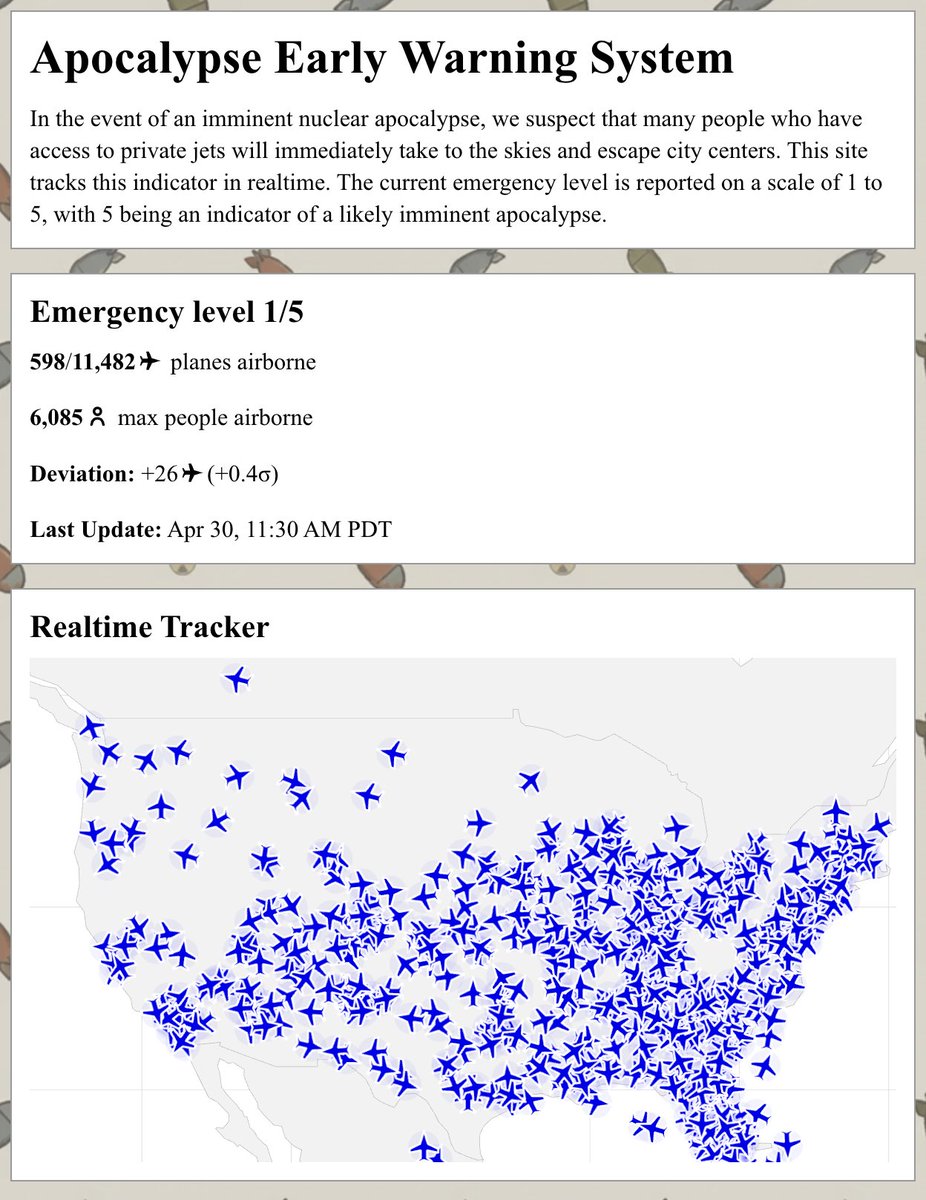
i made an app for tracking whether the oligarchs are actually fleeing city centers ews.kylemcdonald.net
Kyle McDonald tweet media
English
516
5.6K
44.2K
1.3M
Mincer M
Mincer M@mincer_m·
@celestialbe1ng Warsaw is now huge on health / longevity / biohacking, "sovereign health" will be the next big wave
English
0
0
1
19
Veronica, Collagen Scientist
Veronica, Collagen Scientist@celestialbe1ng·
this might be a first world problem but I’m genuinely losing my mind over not being able to find a fitness studio I like in Warsaw. I’m looking for a Barry’s / SoulCycle / Psycle–style boutique, class-based studio—dark room, music pumping, edgy instructor, Ibiza 4am nightclub energy. this was so easy to find in London, New York, Florida—even Stockholm and Zurich—but apparently nonexistent here. am I missing something or does this just not exist? please help 😭
Veronica, Collagen Scientist tweet media
English
42
1
137
46.5K
Mincer M
Mincer M@mincer_m·
@AmmousMD So everyone should take pregabalin / gabapentin? :)
English
0
0
0
217
Dr. Ammous
Dr. Ammous@AmmousMD·
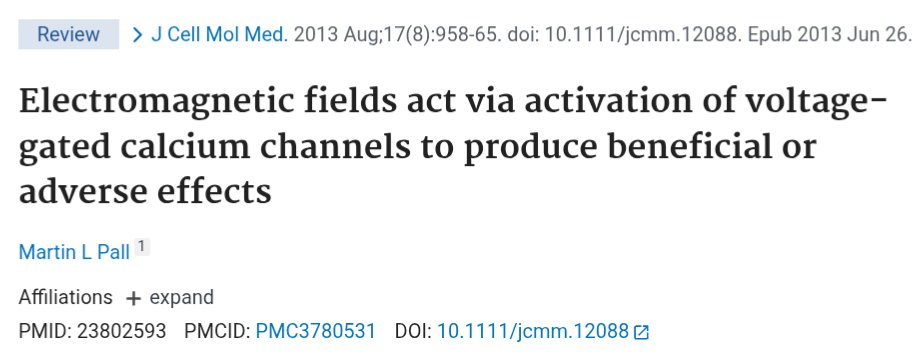
Ionizing radiation (e.g., X-rays) knocks electrons off atoms, damaging DNA directly. It was long assumed that weak non-ionizing fields (ELF from power lines, Wi-Fi) have no biological effects because they can't ionize. We now know they harm cells differently: by activating voltage-gated calcium channels, causing excess Ca²⁺ influx that triggers free radical production.
Dr. Ammous tweet mediaDr. Ammous tweet media
English
17
124
421
16.2K
Mincer M retweetledi
Karri Saarinen
Karri Saarinen@karrisaarinen·
A common dynamic I observe with AI: it feels most impressive when you don’t know much about the subject, don’t care or don’t have a clear idea of what the you want. This applies across design, code, legal, and more. If I don’t know code very well, every piece of code it writes feels very impressive. Once you know what something should feel or look like, it becomes almost impossible to guide AI there. And you definitely can’t one-shot it.
English
254
395
3.5K
562.7K
Mincer M retweetledi
Haseeb >|<
Haseeb >|<@hosseeb·
The highest-value human work in the AI era will be in domains with sparse reward signals. Internalize this, or watch your value erode over the next decade. Math, programming, rote memorization, data science, all fucked. The classic “smart nerd” jobs are exactly where AI is strongest, because the feedback loops are dense. You can check the answer. You can run the test. That means AI can improve quickly, and humans will rapidly fall behind. Your advantage as a human is in messy domains. Taste. Judgment. Negotiation. Risk-taking. Politics. Sales. Science at the frontier. Anything you can only really learn by doing. Cross-disciplinary stuff. The valuable domains will be the ones guarded by secrets, tacit knowledge, weak labels, long feedback cycles, and ambiguous outcomes. Places where the training data is scarce, the ground truth is disputed, and it's impossible to explain why something is good. AI will still enter these domains. But we will be slower to trust it unsupervised there, because it will be harder to tell when it is right, harder to prove when it is wrong, and difficult to construct secure sandboxes. The stakes will be too high to YOLO it. I find myself saying this over and over again to young people today: the future does not belong to people who are able to get good grades on tests. It belongs to people who can operate under uncertainty, in domains where correctness is hard to define. Those domains will become the thin waist of the economy: as productivity everywhere else accelerates, the humans who excel there will become our economic Strait of Hormuz. The best humans in these domains will demand an enormous cut of the growing economic pie. Your imperative going forward is to make sure you're one of these people. (Or become an electrician. That probably works too.)
English
81
120
992
110.8K
Mincer M retweetledi
Massimo
Massimo@Rainmaker1973·
Recent studies in neuroscience and psychology are reframing ADHD not merely as a set of cognitive hurdles but as a powerful driver of breakthrough creativity and innovation. Long stereotyped for difficulties with focus, attention, and impulse control, individuals with ADHD traits often exhibit superior divergent thinking—the capacity to generate a wide array of novel ideas by connecting distant or unrelated concepts. This stems from reduced adherence to rigid mental frameworks, enabling freer conceptual expansion and the production of more original, unconventional solutions than neurotypical counterparts. Heightened mind-wandering, especially when deliberate (purposefully allowing thoughts to drift), acts as a fertile source for this creativity, bypassing conventional boundaries to yield abundant "outside-the-box" insights. Complementing this cognitive flexibility is a neurological drive for novelty rooted in lower baseline dopamine signaling. This creates a chronic need for stimulation, translating into exploratory, risk-tolerant behavior and a propensity for adventure—qualities that can disrupt routine settings but prove invaluable in dynamic fields. Impulsivity, often reframed as rapid action initiation, becomes a catalyst for pursuing bold ideas and seizing opportunities in high-stakes environments. These traits align closely with the profiles of many successful entrepreneurs, inventors, and pioneers. In fast-evolving creative and innovative economies, the ADHD brain's wiring for quick associative leaps, tolerance of uncertainty, and motivation through novelty-seeking provides a distinct edge, turning potential challenges into engines of originality and progress. Emerging evidence from 2025–2026 research reinforces this view: studies link stronger ADHD traits to elevated creative achievements via mediated mind-wandering, intuitive insight-driven problem-solving, and higher real-world inventive output, highlighting neurodiversity's role in fueling societal advancement. [Maisano, H., et al. (2026). ADHD Symptoms Predict Distinct Creative Problem-Solving Styles and Superior Solving Ability. Personality and Individual Differences (February 2026)]
Massimo tweet media
English
241
1.1K
5.8K
398.2K
Mincer M retweetledi
John Loeber 🎢
John Loeber 🎢@johnloeber·
2027 will be the year of the data breach
John Loeber 🎢 tweet media
English
1
11
60
11.7K
Aaron Rupar
Aaron Rupar@atrupar·
RFK Jr: "President Trump has a different way of calculating percentages. If you have a $600 drug and you reduce it to $10, that's a 600% reduction."
English
1.5K
1.9K
15.6K
9M
Mincer M retweetledi
Senior PowerPoint Engineer
Senior PowerPoint Engineer@ryxcommar·
At work I'm on my typical bull shit saying things like "this needs to be fixed," but now I'm adding "for AI enablement" at the end of the sentence and it makes people take fixing it a little more seriously. In that sense AI really is making us more productive.
English
6
15
456
14.8K
Mincer M retweetledi
Paweł Huryn
Paweł Huryn@PawelHuryn·
Two reads on Cowork live artifacts. Both miss what BI actually sells. "Kills Tableau." Nope. Tableau's moat was never the chart. It was 10,000 employees agreeing on the number. Governance, lineage, certified metrics. Cowork doesn't touch that layer. "Cooks analysts." Nope. An analyst's moat was never drawing charts either. It's picking the right question from messy data. Cowork doesn't do that part. What Cowork actually compresses: → the monthly revenue dashboard you rebuild by hand → the ops tracker stuck in a shared spreadsheet → the one-off internal tool no one owns Dashboards were never the bottleneck. $30K/year for Looker was paying everyone to agree on the number. Not to draw the chart.
Claude@claudeai

In Cowork, Claude can now build live artifacts: dashboards and trackers connected to your apps and files. Open one any time and it refreshes with current data.

English
45
25
314
110.5K
Mincer M retweetledi
The Culturist
The Culturist@the_culturist_·
If you're living through a great decline, how should you personally live and act in the midst of it? This is the question at the heart of "The Lord of the Rings," and it's best answered by the scene following the death of Boromir. After Boromir gives his life to save the Hobbits from Saruman's Orcs, the Fellowship is in tatters. With time against them, Merry and Pippin swept away by the enemy, and Frodo passing out of their control, Aragorn and company make a decision that seems strange. They pause to mourn Boromir's passing with a proper ritual. To many readers, this feels entirely reckless. Their "best" course of action is surely to prioritize what is most urgent: that the fate of their quest hangs in the balance. We recognize that, in any "normal" context, it would be wrong to let Boromir's body lie out in the open, but the nature of their mission surely doesn’t allow for the luxury of a funeral — right? But the fact that abandoning Boromir's body is wrong in normal times is precisely why it is wrong even now. At the heart of LOTR is the idea that moral decisions lie beyond their immediate context: some things just are wrong and others right, and once context becomes an arbiter of that distinction, you've lost your grip on what it means to be good. Aragorn's next statement helps us understand this further: "I would have guided Frodo to Mordor and gone with him to the end; but if I seek him now in the wilderness, I must abandon the captives to torment and death. My heart speaks clearly at last: the fate of the Bearer is in my hands no longer." Aragorn makes yet another decision to halt progress on the greater mission in favor of that which speaks directly to his heart: he will pursue Merry and Pippin, rather than sacrifice them for the "more important" quest. Tolkien's heroes recognize that they are not in control of everything. They cannot force the Ring to be unmade through their own will to power, and they're aware that their universe is guided by forces beyond their own and of their enemies. All they do is done in that humility, and they are bound by moral laws beyond themselves. Indeed, Middle-earth is guided not just by the opposing wills of Good and Evil but by another, providential force beyond the material. It is precisely because Tolkien's heroes believe in objective good that they can trust that a great, providential turn in fortune — a "eucatastrophe" — is around the corner. To believe in the objective good is to live in accordance with destiny, and to act on what is inherently good at all times, and to die for it if necessary. To live in submission to divine providence is to recognize that the right actions also lie in the little things, and that you yourself play only a small part in the grand story. A good world is brought into being by small acts of courage and kindness, even when they seem superfluous in the wider context of your quest... theculturist.io/subscribe
The Culturist tweet media
English
57
520
2.7K
121.1K
Mincer M retweetledi
conduct|r
conduct|r@conductr_·
no matter what you’re going through, please remember: no amount of guilt can change the past, and no amount of anxiety can change the future
conduct|r tweet media
English
30
342
2.2K
32.6K
Mincer M retweetledi
scientism
scientism@mr_scientism·
We’re in WW3 but it‘s just very slow because everyone deindustrialized.
English
95
1.7K
23.8K
1.8M