Sabitlenmiş Tweet
MinChi
2.7K posts

MinChi
@minchi
Building @CoinFello AI agent for onchain finance • prev @500globalVC • fellow @salzburgglobal @kernel0x
Katılım Ekim 2019
832 Takip Edilen1.4K Takipçiler

@aaronabentheuer would there be a feature to save online video recipes as well?
English
MinChi retweetledi

@andrewchen But doesn't it take EQ skills to communicate with the agent
English

@TheStalwart Don't forget the "this is just the beginning" at the end
English
MinChi retweetledi
MinChi retweetledi

@TheDeFinvestor @Adam_Tehc I don't know if I would consider a success $905M of memecoins volumes. fyi ETH/USDG is high because memecoins only trade vs ETH and the router does the swap on the back end.
English

after years of painfully seeing the crypto market using the Korean retail market as the exit liquidity with kimchi premiums.. the arbitrage moment for Korean retail investors have come with SK Hynix’s ADR moment 👀
Martin Shkreli@MartinShkreli
all you can eat arb on hynix 😂
English

Before you ape into tokenized SK Hynix ADRs onchain, take into consideration that each provider is different and you should do your research on how exactly these platforms are structuring the tokenized stock:
1) $SKHYon by @OndoFinance
The tokens represent beneficial owenership of the actual ADRs held in control at DTC, which are issued through Ondo's SEC-registered transfer agent with licensed custodians holding the shares 1:1. Importantly, holders get full economics exposure with dividends auto-reinvested. This is available on Ethereum, Solana, BNB Chain, bigeable to HyperEVM. However, this is NOT for US users. You can perp trade this on @OndoPerps
2. $SKHYx by @xStocksFi
An SPL token on Solana giving 1:1 economic exposure. Each token is collateralized by the ADRs custodied at a Swiss prime borker under a Swiss/EU structure. When you buy a token you hold a tracker certificate NOT the equity itself and the ADR is only redeemable only by qualified investors. You can trade this via Kraken, Bybit, and 1inch, and use it on Solana DeFi as collateral.
3. $SKHY by @Backpack
Backpack's US broker-dealer buys and custodies the ADRs, then issues a redeemable Solana SPL token via @sunrise (Wormhole Labs' asset gateway). The bridge works both ways, with support for dividends and corporate actions, and tokens can be redeemed back into brokerage held shares.
P.s.: proud Korean moment that this is the largest ADR IPO in US history!! $26.5B raise 🔥🇰🇷 and very cool that tokenized stocks went live on the same day as the IPO
SK hynix@SKhynix
🔔 Today marks a new milestone for @SKhynix. @SKhynix celebrated the listing of its ADRs on #NASDAQ with an Opening Bell ceremony. This milestone reinforces our commitment to driving the future of AI memory as a Core AI Partner. 🔗 news.skhynix.com/skhynix-lists-… #SKhynix #OpeningBell

English

Have you already pivoted to AI? Apart from 5 mega funds, the Web3 VC space is dead: all the money has already been made, and there is no more upside.
This is the logic I hear weekly in my conversations with other VCs, LPs, and founders.
At first glance, it looks like a paradox. Investor attention to the space is at the bottom, while fundamentals are at the top — and moving higher every month. Stablecoin payments are scaling, assets are being tokenized, and agentic economy infrastructure is emerging.
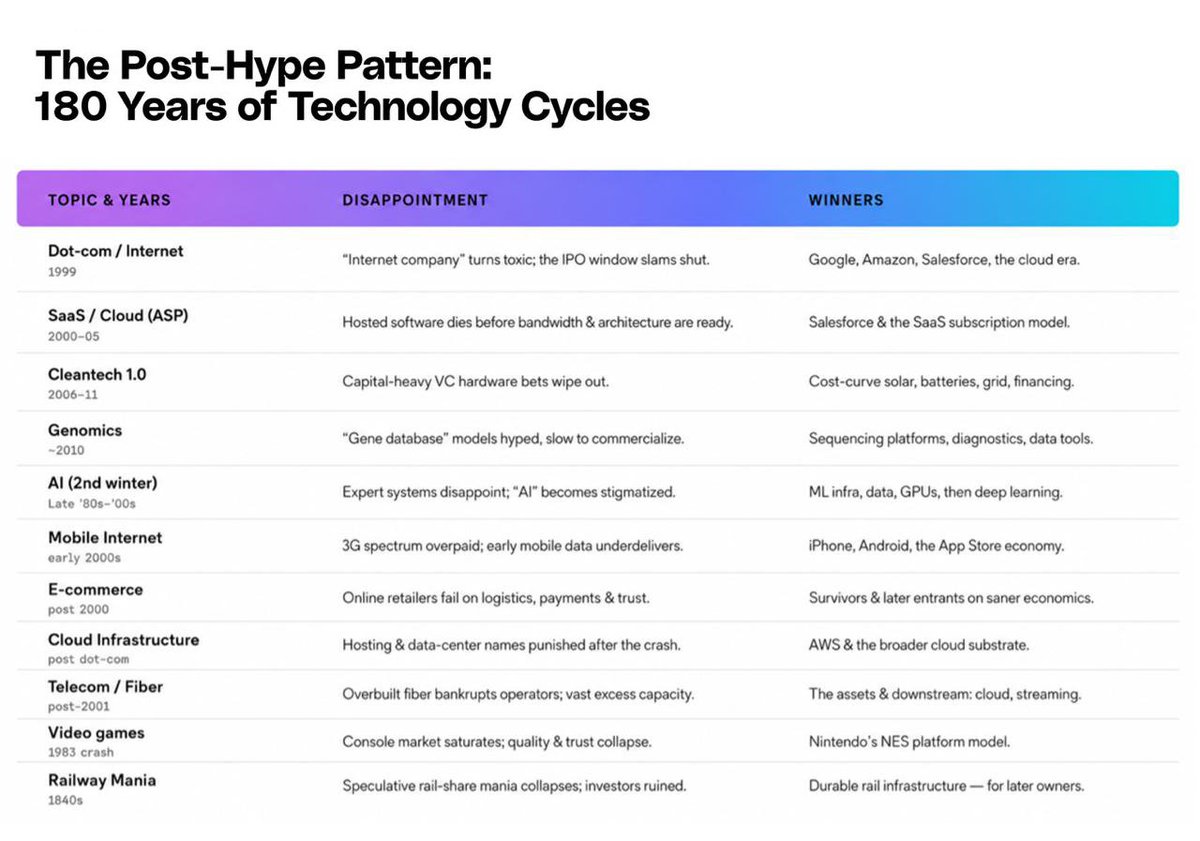
But that is not a contradiction. It is a very common pattern. Every technology cycle follows a similar arc.
At the peak, capital chases the label: “dot-com,” “AI,” “crypto,” “cleantech,” “metaverse,” “quantum.” Marginal companies get funded on narrative alone. Valuations detach from fundamentals. The category becomes more important than the product.
Then the correction comes. Generalist capital leaves. Media attention declines. Public-market proxies de-rate. Founders who entered for momentum disappear.
But in durable sectors, the fundamentals keep improving after attention moves elsewhere:
- Infrastructure becomes cheaper and more reliable.
- Developer tools mature.
- Regulation becomes clearer.
- Business models become more disciplined.
- Real users adopt the technology for practical reasons rather than speculative excitement.
This creates a post-hype productivity window:
The market continues to discount the category because the previous narrative failed, while the investable opportunity has already shifted from storytelling to measurable productivity.
Historically, this is where some of the strongest companies — and some of the strongest entry points — are created.
- After the dot-com crash: Google, Amazon’s recovery, and Salesforce.
- After the ASP cycle: SaaS, rebuilt on better architecture and subscription economics.
- After the telecom crash: overbuilt fiber became the substrate for cloud, streaming, and enterprise connectivity.
- After the ICO winter: stablecoins, custody, wallets, analytics, and DeFi infrastructure became the foundation of the next cycle.
The failure of the first narrative does not imply the failure of the underlying technology.
Often, it creates the conditions for that technology to become useful.
At @Polymorphiccap, we do not ask whether a sector is fashionable. We ask whether the fundamentals kept improving after everyone stopped watching:
- Usage growth.
- Falling infrastructure costs.
- Regulatory clarity.
- Incumbent adoption.
- Founder quality.
- Real use cases.
- Reset valuations.
Our thesis has always focused on practical, application-centric Web3 businesses: payments, settlement, stablecoin infrastructure, tokenized assets, compliant financial rails, liquidity networks, and machine-native commerce.
We believe the practical Web3 applications now show all the key signals of a post-hype productivity window.

English

@aixarizzo just a bit of patience needed to deal with bureaucracy but besides that recommended!
English

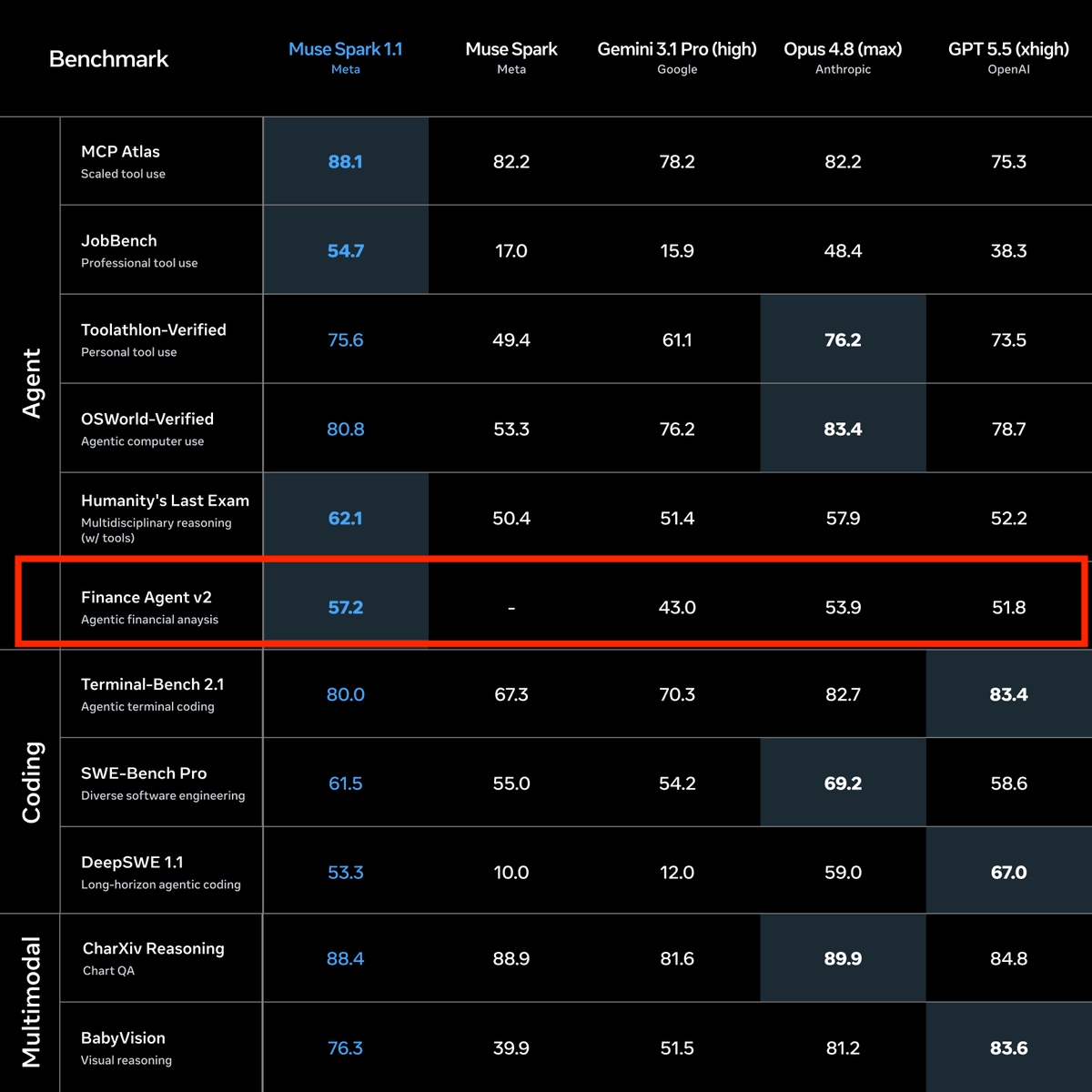
Meta launched it's newest AI model called Spark 1.1 and in their benchmark table, interestingly, it tops the finance agent category
To understand what that really entails, I dug into how this sub-agent is design. And two things stood out:
- Human‑in‑the‑loop checkpoints for journal postings or cash movements
- Policy prompts that strictly limit what actions the agent can autonomously take
This is pretty much how we designed the delegation and permission framework of our agent Fello @CoinFello. When it comes to financial transactions and moving money, humans must stay in the loop and there must be clear boundaries on what the agent is allowed to do on its own.

English

Confession: I made a tutorial on concentrated LP… but I still kinda suck at it 😅
picking ranges, worrying about going out of range, trying to calculate optimal bands etc
but the good news is our agent Fello can:
-tell me if a @Uniswap pool is CLP or normal LP
-shows me chances of going out of range for a given token (VVV/USDC in this case )
-lets you choose my risk profile (I went with a 50% “moderate risk” range)
so instead of pretending I’m a CLP wizard I just ask our @CoinFello agent and LP directly from our chat UI
English