

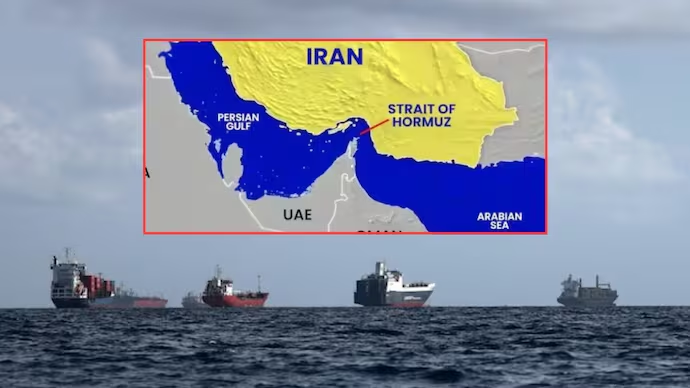
"IRAN HAS JUST ANNOUNCED THAT THE STRAIT OF IRAN IS FULLY OPEN AND READY FOR FULL PASSAGE. THANK YOU!" - President Donald J. Trump 🇺🇸
Falguni Sharma
249 posts

@mindmusclelab
I create AI short movies, long form explainer posts and articles.


"IRAN HAS JUST ANNOUNCED THAT THE STRAIT OF IRAN IS FULLY OPEN AND READY FOR FULL PASSAGE. THANK YOU!" - President Donald J. Trump 🇺🇸


They should change the name to "Strait of Schrödinger". It's both open and closed at the same time.

When Popes publicly fought emperors & kings who weaponized Religion for Power, War & Wealth. In light of Pope Leo XIV’s recent bold post calling out those who “manipulate religion and the very name of God for their own military, economic, and political gain,” it’s worth remembering that this isn’t new. For centuries, Popes have stepped into the arena, using excommunications, public bulls, and direct appeals to the faithful to push back against rulers who treated the Church as just another tool for conquest, cash, and control. Here’s a deep-dive into the top 3 most impactful historical clashes - the ones that literally reshaped Europe, fractured empires, and redrew the map of Church-state relations. For each, I’ll break down why it happened, the Pope’s public fight, and the massive aftermath. 1. The Investiture Controversy (1070s–1122): Pope Gregory VII vs. Holy Roman Emperor Henry IV Why it happened Holy Roman Emperors had long treated bishop appointments like royal patronage. They handed out the ring and staff (symbols of spiritual office) to loyal nobles who then controlled huge Church lands, taxes, and armies. This wasn’t just admin - it was a direct pipeline for military manpower and revenue. Henry IV saw the Church as an extension of his imperial power. Gregory VII, a reformer, said enough: secular rulers were dragging the sacred into “filth” for political gain, corrupting the very soul of the Church. The Pope’s public fight In 1075 Gregory issued the Dictatus Papae - a fiery declaration of papal supremacy - and banned “lay investiture.” When Henry kept appointing bishops, Gregory excommunicated him in 1076, deposed him as king, and released all his subjects from their oaths of loyalty. The sentence was read aloud in churches across Europe. Henry’s nobles rebelled. The emperor famously trekked barefoot through the snow to Canossa Castle in 1077 begging forgiveness (the original “walk of shame”), but the war continued with more excommunications and civil strife. The aftermath This wasn’t just drama - it shattered imperial authority in Germany for centuries. The empire fragmented into feuding principalities (a division that lasted until the 1800s). The 1122 Concordat of Worms forced a compromise, but the real winner was the papacy: it proved the Church could stand independent of kings. It planted seeds for later ideas of limited government and even influenced documents like Magna Carta. Most importantly, it established that spiritual authority could publicly check raw political power. 2. The Clash of Unam Sanctam (1296–1303): Pope Boniface VIII vs. King Philip IV of France Why it happened King Philip IV (“the Fair”) was bankrupting France with endless wars against England and Flanders. His solution? Heavy taxes on the clergy and outright seizure of Church treasures and lands. He treated the French Church like a state piggy bank for military funding and royal centralization - classic exploitation of sacred wealth for economic and martial gain. Boniface saw this as a direct assault on the independence of the Church. The Pope’s public fight Boniface fired back with two explosive papal bulls read publicly in churches across Europe: Clericis Laicos (1296) banned kings from taxing clergy without papal approval (under pain of excommunication). Unam Sanctam (1302) went nuclear, declaring that “it is absolutely necessary for salvation that every human creature be subject to the Roman Pontiff.” It was a thunderous assertion that spiritual power trumps temporal kings. Philip responded with propaganda, a French national assembly, and finally sent thugs to Anagni in 1303 to physically assault and humiliate Boniface (the infamous “Slap of Anagni”). The aftermath Boniface died soon after, broken and humiliated. The papacy never fully recovered its medieval prestige. The episode triggered the “Babylonian Captivity” - 70 years of French-controlled Popes in Avignon - and accelerated the rise of powerful nation-states over universal papal authority. Philip’s victory helped birth modern France as a centralized monarchy, but it also weakened the idea of a single Christian commonwealth ruled by the Pope. Historians call this the beginning of the end of medieval papal supremacy. 3. The English Reformation Break (1530s–1538): Popes Clement VII & Paul III vs. King Henry VIII Why it happened Henry VIII wanted a male heir and a divorce from Catherine of Aragon. When Pope Clement VII refused the annulment (partly due to pressure from Catherine’s nephew, Emperor Charles V), Henry took matters into his own hands. He declared himself Supreme Head of the Church of England, dissolved over 800 monasteries, and seized their enormous wealth - gold, silver, lands - to fund wars, reward nobles, and fill the royal treasury. It was the ultimate power grab: turning sacred institutions and doctrine into tools for political succession, economic plunder, and royal control. The Pope’s public fight Clement warned Henry publicly in 1531. When Henry doubled down and married Anne Boleyn, Pope Paul III issued a formal bull of excommunication and deposition in 1538. The document was printed and circulated across Europe; it stripped Henry of his title, absolved English subjects from allegiance, and accused him of sacrilege (including the destruction of shrines). It was a direct appeal to Catholics everywhere to resist. The aftermath The bulls came too late - Parliament had already passed the laws. England broke with Rome permanently. The Church of England was born, Protestantism exploded, and Henry’s plunder funded the Tudor state and future British Empire. The schism reshaped global Christianity, triggered centuries of religious wars in Europe, and created the Anglican tradition that still influences billions today. It proved that even the strongest papal spiritual weapons could fail against a determined monarch backed by national institutions. The ripples are still felt in British politics, law, and culture. These three moments weren’t quiet diplomatic notes - they were public, high-stakes fights where Popes spoke directly to the masses to defend the sacred from being twisted for war, money, and politics. Each time the outcome was seismic: empires weakened, nations rose, and the balance between Church and state was redrawn forever. Pope Leo XIV’s recent words echo this ancient tradition. History shows that when rulers cross that line, the Church has never stayed silent. #ChurchHistory #PapalPower #MedievalPolitics #Reformation #Pope #ApostolicJourney

NEW: Pope Leo downplays tensions with President Trump, addressing a "narrative that has not been accurate in all of its aspects." He says it is “not in my interest at all” to debate the president and will keep preaching a message of peace.


Renewables just hit 49.4% of global electricity capacity. 5.15 terawatts. Solar drove 75% of the new additions. Some people thought it was impossible.


With Iran announcing today that the Strait of Hormuz is fully open again for commercial shipping during this Lebanon ceasefire, it’s worth remembering why this 21-mile-wide sliver of water has been fought over for literally thousands of years. It’s not just another patch of ocean. It’s the narrowest choke point on the planet for energy. About 21 million barrels of oil - roughly one-fifth of the world’s daily supply - slide through here every single day, plus a big chunk of liquefied natural gas. Shut it down, even for a week, and global prices go haywire. We saw the proof in the last month of tensions. But the story didn’t start with oil tankers or modern geopolitics. It goes way back. Think Bronze Age, around 3000 BCE. Sumerian merchants from Mesopotamia (modern Iraq) were already loading ships with grain, wool, and dates, sailing down what they called the “Lower Sea” to trade with the Indus Valley civilization in today’s Pakistan. The strait was the gateway. No empires yet - just practical sailors using the current and the wind. Fast-forward to the Achaemenid Persian Empire. Cyrus the Great and Darius I (around 550–330 BCE) didn’t just use the strait - they owned the northern shore and treated the Persian Gulf as their imperial highway. They built ports, dug canals linking the Gulf to the interior, and made sure trade flowed: spices, silk, pearls, incense. Alexander the Great sent his admiral Nearchus through it in 325 BCE just to prove it connected India to his empire. The Sasanians (third to seventh century CE) kept the tradition alive, turning the Gulf into a Persian lake that fed their rivalry with Rome. Then came the Islamic golden age. The Kingdom of Hormuz (or Ormus) rose on a tiny island in the strait around the 10th century. It became ridiculously wealthy - pearls, spices, textiles, indigo, dates. Medieval travelers called it the “Key to India.” For centuries it acted as a semi-independent trading republic, paying nominal tribute to whoever held the Persian mainland while taxing ships and caravans. It was the medieval Dubai, except with actual strategic teeth. Enter the Europeans, hungry for direct access to Asian spices without the Ottoman middlemen. In 1507, Portuguese explorer Afonso de Albuquerque showed up with cannons. By 1515 they’d seized Hormuz Island, built a fortress, and turned the strait into their personal toll booth. They ran what historians politely call a “protection racket” for 115 years - tax ships, escort (or attack) rivals, monopolize the India-Europe spice route. The Ottomans tried three times to kick them out and failed. Portugal basically said: pay up or get sunk. Classic 16th-century colonialism. The Persians weren’t done, though. In 1622, Shah Abbas the Great of the Safavid Empire struck a deal with the English East India Company. The English wanted silk and a foothold; the Persians wanted their strait back. Together they besieged and expelled the Portuguese. Hormuz Island was retaken. Persian control returned to the northern coast - the same coast Iran still holds today. From there it’s a slow handoff. The Safavids, then the Qajars, kept nominal sovereignty while the British gradually became the Gulf’s policeman in the 19th century. They signed treaties with the “Trucial States” (today’s UAE) to suppress piracy and protect their India route. European maps started calling the southern shore the “Pirate Coast.” Oil changed everything. Black gold was discovered in Iran in 1908. The British poured in, built the Anglo-Persian Oil Company (later BP), and basically ran the show until Iran nationalized its oil in 1951. Britain responded with a blockade of the strait to squeeze Tehran - classic gunboat diplomacy. Fast-forward to 1979: the Islamic Revolution. The Shah is gone, the Islamic Republic is born, and Iran suddenly sees the strait as both a birthright and a defensive moat. The 1980s Iran-Iraq War turned it into the “Tanker War” - both sides mined the waters and attacked neutral ships. The U.S. got pulled in to protect tankers. History repeating, just with missiles instead of cannonballs. Geographically, nothing’s changed: Iran owns the entire northern coast and several strategic islands (some disputed with the UAE). Oman holds the southern tip (Musandam peninsula). By international law the narrow shipping lanes are supposed to be open to “transit passage” for all peaceful ships. But geography gives Iran the upper hand - coastline, missiles, speedboats, drones, mines. Whoever controls the north can make life very expensive for everyone else. Here’s the part that’s been quietly bugging people lately: tolls. Look at other major sea routes. The Suez Canal? Egypt charges ships hundreds of thousands of dollars per transit because they dug and maintain the damn thing. Panama Canal? Same story - tolls based on tonnage and cargo. Strait of Malacca, Gibraltar - everyone who invests in security or infrastructure takes a cut. It’s normal. The Strait of Hormuz is different. It’s a natural waterway, not a man-made canal. For centuries Iran never charged a formal toll. They policed it, they threatened it when sanctioned or attacked, but they didn’t set up a ticket booth. That changed in the recent flare-up. Amid the U.S.-Israeli strikes, Iran floated “safe passage” fees - reports of up to $2 million per supertanker or roughly a dollar per barrel - partly as leverage, partly as revenue after years of sanctions. International maritime law says no, natural straits should stay free. Iran says geography is destiny and they’ve paid the price in blood and sanctions to keep the lane open. So why does Iran fight so hard for it? Simple. It’s leverage. Control the strait and you control 20-25% of global oil flow, including your own exports. In a world of sanctions, drones, and proxy wars, that narrow channel is Iran’s ultimate insurance policy. It’s also sovereignty: this has been Persian/Iranian coastline for 2,500 years. They see foreign navies patrolling it the way Americans would feel about someone blockading the Florida Straits. Why do Israel and the U.S. lose sleep over it? Energy security, plain and simple. Gulf oil keeps the global economy humming. A serious disruption spikes prices everywhere - gas at the pump, inflation, stock markets. Saudi Arabia, UAE, Iraq - all U.S. partners - rely on it. Israel gets hit indirectly through higher costs and regional chaos. Plus, both countries view Iran’s missile-and-proxy strategy as an existential threat. Free navigation in international waters is a core U.S. doctrine (they’ve gone to war over less). Nobody wants one country able to flip the global energy switch on a whim. Today, with the strait open again, tankers will start moving and prices should ease. It’s a reminder that this place has survived empires, cannon fire, tanker wars, revolutions, and now whatever the 2020s throw at it. The water is the same. The stakes are higher. History doesn’t repeat, but it sure rhymes. The next time you fill your tank or check the news, remember: a lot of the world’s economic heartbeat still passes through one of the oldest, most contested pieces of ocean on Earth. #StraitofHormuz #StraitofIran #Iran #America #Trump #oil #UAE #Lebanon #Israel #Saudi #Ceasefire
If Saturn were as close to Earth as the Moon, this is what it would look like:

Introducing Claude Design by Anthropic Labs: make prototypes, slides, and one-pagers by talking to Claude. Powered by Claude Opus 4.7, our most capable vision model. Available in research preview on the Pro, Max, Team, and Enterprise plans, rolling out throughout the day.

With Iran announcing today that the Strait of Hormuz is fully open again for commercial shipping during this Lebanon ceasefire, it’s worth remembering why this 21-mile-wide sliver of water has been fought over for literally thousands of years. It’s not just another patch of ocean. It’s the narrowest choke point on the planet for energy. About 21 million barrels of oil - roughly one-fifth of the world’s daily supply - slide through here every single day, plus a big chunk of liquefied natural gas. Shut it down, even for a week, and global prices go haywire. We saw the proof in the last month of tensions. But the story didn’t start with oil tankers or modern geopolitics. It goes way back. Think Bronze Age, around 3000 BCE. Sumerian merchants from Mesopotamia (modern Iraq) were already loading ships with grain, wool, and dates, sailing down what they called the “Lower Sea” to trade with the Indus Valley civilization in today’s Pakistan. The strait was the gateway. No empires yet - just practical sailors using the current and the wind. Fast-forward to the Achaemenid Persian Empire. Cyrus the Great and Darius I (around 550–330 BCE) didn’t just use the strait - they owned the northern shore and treated the Persian Gulf as their imperial highway. They built ports, dug canals linking the Gulf to the interior, and made sure trade flowed: spices, silk, pearls, incense. Alexander the Great sent his admiral Nearchus through it in 325 BCE just to prove it connected India to his empire. The Sasanians (third to seventh century CE) kept the tradition alive, turning the Gulf into a Persian lake that fed their rivalry with Rome. Then came the Islamic golden age. The Kingdom of Hormuz (or Ormus) rose on a tiny island in the strait around the 10th century. It became ridiculously wealthy - pearls, spices, textiles, indigo, dates. Medieval travelers called it the “Key to India.” For centuries it acted as a semi-independent trading republic, paying nominal tribute to whoever held the Persian mainland while taxing ships and caravans. It was the medieval Dubai, except with actual strategic teeth. Enter the Europeans, hungry for direct access to Asian spices without the Ottoman middlemen. In 1507, Portuguese explorer Afonso de Albuquerque showed up with cannons. By 1515 they’d seized Hormuz Island, built a fortress, and turned the strait into their personal toll booth. They ran what historians politely call a “protection racket” for 115 years - tax ships, escort (or attack) rivals, monopolize the India-Europe spice route. The Ottomans tried three times to kick them out and failed. Portugal basically said: pay up or get sunk. Classic 16th-century colonialism. The Persians weren’t done, though. In 1622, Shah Abbas the Great of the Safavid Empire struck a deal with the English East India Company. The English wanted silk and a foothold; the Persians wanted their strait back. Together they besieged and expelled the Portuguese. Hormuz Island was retaken. Persian control returned to the northern coast - the same coast Iran still holds today. From there it’s a slow handoff. The Safavids, then the Qajars, kept nominal sovereignty while the British gradually became the Gulf’s policeman in the 19th century. They signed treaties with the “Trucial States” (today’s UAE) to suppress piracy and protect their India route. European maps started calling the southern shore the “Pirate Coast.” Oil changed everything. Black gold was discovered in Iran in 1908. The British poured in, built the Anglo-Persian Oil Company (later BP), and basically ran the show until Iran nationalized its oil in 1951. Britain responded with a blockade of the strait to squeeze Tehran - classic gunboat diplomacy. Fast-forward to 1979: the Islamic Revolution. The Shah is gone, the Islamic Republic is born, and Iran suddenly sees the strait as both a birthright and a defensive moat. The 1980s Iran-Iraq War turned it into the “Tanker War” - both sides mined the waters and attacked neutral ships. The U.S. got pulled in to protect tankers. History repeating, just with missiles instead of cannonballs. Geographically, nothing’s changed: Iran owns the entire northern coast and several strategic islands (some disputed with the UAE). Oman holds the southern tip (Musandam peninsula). By international law the narrow shipping lanes are supposed to be open to “transit passage” for all peaceful ships. But geography gives Iran the upper hand - coastline, missiles, speedboats, drones, mines. Whoever controls the north can make life very expensive for everyone else. Here’s the part that’s been quietly bugging people lately: tolls. Look at other major sea routes. The Suez Canal? Egypt charges ships hundreds of thousands of dollars per transit because they dug and maintain the damn thing. Panama Canal? Same story - tolls based on tonnage and cargo. Strait of Malacca, Gibraltar - everyone who invests in security or infrastructure takes a cut. It’s normal. The Strait of Hormuz is different. It’s a natural waterway, not a man-made canal. For centuries Iran never charged a formal toll. They policed it, they threatened it when sanctioned or attacked, but they didn’t set up a ticket booth. That changed in the recent flare-up. Amid the U.S.-Israeli strikes, Iran floated “safe passage” fees - reports of up to $2 million per supertanker or roughly a dollar per barrel - partly as leverage, partly as revenue after years of sanctions. International maritime law says no, natural straits should stay free. Iran says geography is destiny and they’ve paid the price in blood and sanctions to keep the lane open. So why does Iran fight so hard for it? Simple. It’s leverage. Control the strait and you control 20-25% of global oil flow, including your own exports. In a world of sanctions, drones, and proxy wars, that narrow channel is Iran’s ultimate insurance policy. It’s also sovereignty: this has been Persian/Iranian coastline for 2,500 years. They see foreign navies patrolling it the way Americans would feel about someone blockading the Florida Straits. Why do Israel and the U.S. lose sleep over it? Energy security, plain and simple. Gulf oil keeps the global economy humming. A serious disruption spikes prices everywhere - gas at the pump, inflation, stock markets. Saudi Arabia, UAE, Iraq - all U.S. partners - rely on it. Israel gets hit indirectly through higher costs and regional chaos. Plus, both countries view Iran’s missile-and-proxy strategy as an existential threat. Free navigation in international waters is a core U.S. doctrine (they’ve gone to war over less). Nobody wants one country able to flip the global energy switch on a whim. Today, with the strait open again, tankers will start moving and prices should ease. It’s a reminder that this place has survived empires, cannon fire, tanker wars, revolutions, and now whatever the 2020s throw at it. The water is the same. The stakes are higher. History doesn’t repeat, but it sure rhymes. The next time you fill your tank or check the news, remember: a lot of the world’s economic heartbeat still passes through one of the oldest, most contested pieces of ocean on Earth. #StraitofHormuz #StraitofIran #Iran #America #Trump #oil #UAE #Lebanon #Israel #Saudi #Ceasefire