明润
298 posts





Update for Satoshi App users who participated on Coretardio $CTO Airdrop that ended today. You can proceed to Link (Submit) Your Withdrawal Address. You can copy from your Mețămąșk or OEX App. They're all EVM-compatible addresses 👍

Introducing panels & speakers for #BitcoinFusion2024 - a #Token2049 event by Core, @HTX_Global, @0xmetaschool in collaboration with @COREx_Official, @colend_xyz, @ALEXLabBTC, @glyph_exchange, @BitGo, @BITMAINtech, @xverse, @UTXOmgmt, @Pell_Network, @SolvProtocol, @nlx_trade, @HalbornSecurity, @elementwallet, @SatoshiAppXYZ, @therollupco, @CoinDesk & @blocmates🔥 🔗lu.ma/m3gbatiq 🧵👇

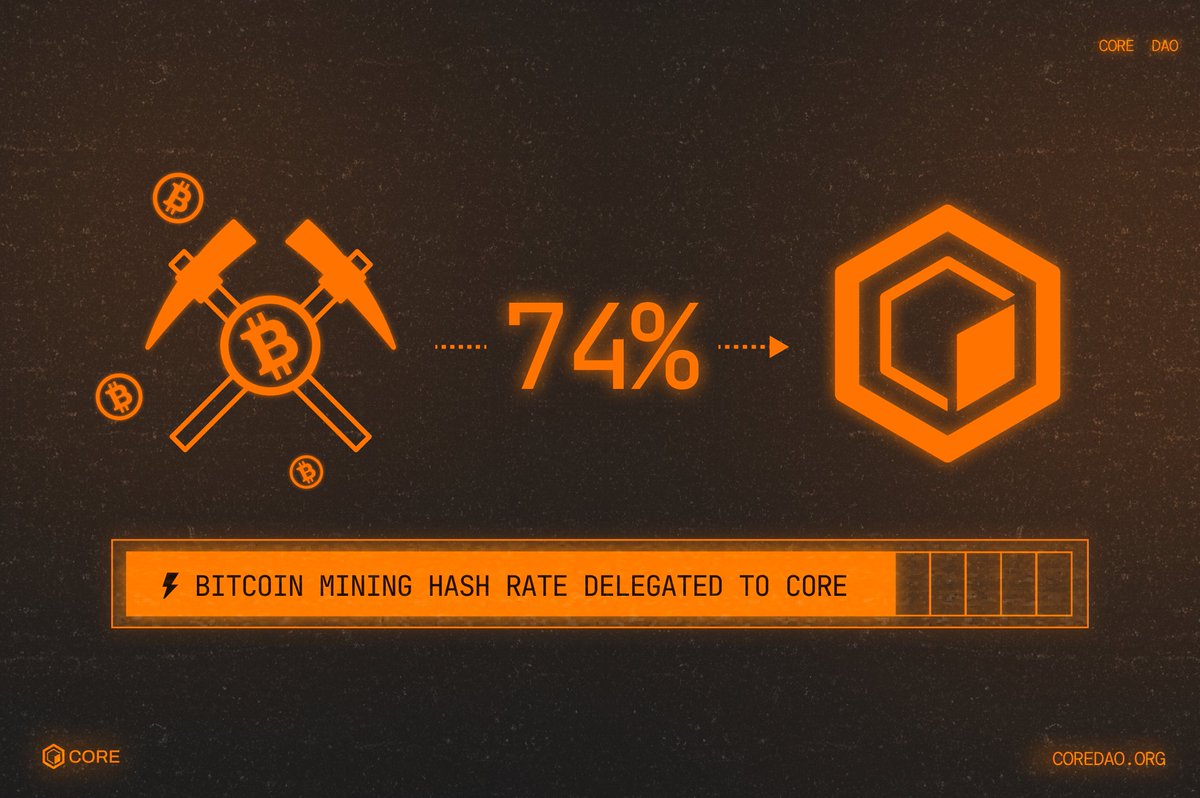
Overview of @Coredao_Org: Core DAO is a blockchain initiative designed to enhance Bitcoin's utility in the decentralized finance space by integrating it with smart contract capabilities and additional blockchain features. It operates on the Core Chain, the first Bitcoin-aligned Ethereum Virtual Machine (EVM) blockchain, utilising a distinctive consensus mechanism known as Satoshi Plus. This mechanism merges Delegated Proof of Work (DPoW), Delegated Proof of Stake (DPoS), and Non-Custodial Bitcoin Staking, effectively leveraging Bitcoin's robust security and decentralisation. The native token of the Core network, CORE, is central to its ecosystem, supporting decentralized governance, facilitating utility functions, and enabling peer-to-peer transactions. CORE can be stored in wallets, used in transactions, and traded on digital asset exchanges. Core DAO supports smart contracts and decentralized applications and is fully compatible with the Ethereum Virtual Machine. This allows developers to easily migrate Ethereum-based dApps to Core Chain. Additionally, Core DAO has introduced coreBTC, a wrapped version of Bitcoin, which boosts Bitcoin's liquidity and functionality within financial applications. Ultimately, Core DAO seeks to unlock Bitcoin's potential within DeFi while preserving its foundational principles of security and decentralization. Overview of CORE’s Architecture: Core Chain is a new Layer 1 blockchain that integrates features from various other Layer 1 networks. Major Components, Roles, and Workflows in the Core Network - Validators: Validators are responsible for producing blocks and validating transactions. Anyone can become a validator by registering and locking up a refundable deposit of CORE tokens. - Validator Election: Validators are elected based on their hybrid scores for each round. Validators that haven’t been jailed or penalized are considered "live." - - The live validator set is updated every 200 blocks to maintain stable TPS. If a validator is jailed or slashed, others continue producing blocks. - Hybrid Score: A validator's hybrid score is calculated based on contributions from Bitcoin miners (DPoW), CORE holders (DPoS), and Bitcoin holders who delegate their BTC. The top 21 validators with the highest hybrid scores from the validator set. - Bitcoin Miners: Bitcoin miners secure the Bitcoin network using Proof of Work (PoW) and can delegate their PoW to Core validators by embedding certain data in their block's coinbase transaction. This is non-destructive, meaning miners can support both Bitcoin and Core simultaneously. - Bitcoin Stakers: Bitcoin holders can stake their BTC without losing custody, earning yields while helping secure the Core network. This is the third key aspect of Satoshi Plus consensus. - CORE Stakers: CORE token holders can delegate their tokens to validators, thereby contributing to the security of the network. - Relayers: Relayers transmit Bitcoin block headers to Core. To become a relayer, individuals must register and lock up a refundable CORE deposit. - Verifiers: Verifiers monitor the network for malicious activity. They can report dishonest validators, potentially leading to slashed rewards or jailing. Verifiers are compensated for their role when block rewards are distributed. - Round: A round lasts for one day, during which the validator set is updated and rewards are distributed. The top 21 validators, based on their hybrid scores, produce blocks for that day, with rewards calculated and distributed at the end of each round. - Slot: Each day (round) is divided into slots where each validator takes turns producing blocks. The slot duration is currently set at three seconds, and validators follow a round-robin schedule to take turns. - Epoch: An epoch is a period of 200 slots (10 minutes). Validator status, such as whether they have been jailed, is checked at the end of each epoch to keep TPS stable throughout the round. Validators are only reassessed once per epoch. CORE Staking and Governance Overview Staking Overview - Total CORE Delegate: 161,345,491 CORE, representing the total amount of CORE tokens delegated to validators. This figure is recalculated at the start of each new round. - Total BTC Delegate: 5,572.375 BTC, showing the total amount of Bitcoin delegated to Core validators from the Bitcoin network. - Total Hash Delegate: 64 Bitcoin blocks were mined by Bitcoin network miners who delegated their hash power to Core, reflecting their contribution during the same day of the prior week. This value is recalculated at the beginning of each round. - Delegated Hash Rate / Bitcoin Total Hash Rate: 285 EH/s of hash power delegated to Core, compared to Bitcoin’s total of 667 EH/s, demonstrating Core’s substantial portion of Bitcoin’s overall security and computational capacity. - Liquid Staking stCORE Reward Rate: 8.59%, which reflects the projected annualised return for holders of stCORE tokens. These tokens allow CORE holders to earn staking rewards without locking their assets, participating in Core’s delegated proof of stake consensus. Delegated Proof of Work (DPoW) Validators in the Core network are selected based on a hybrid score, which combines Delegated Proof of Work (DPoW) and Delegated Proof of Stake (DPoS). This section focuses on the DPoW aspect. Bitcoin miners generate hash power to secure the Bitcoin network, validate transactions, and earn BTC rewards. To stabilise their earnings over time, miners often join mining pools, which combine their hash power to improve the chances of successfully mining a Bitcoin block and receiving BTC rewards. When a Bitcoin miner decides to delegate their PoW to the Core network, they add specific data to the "op return" field in the coinbase transaction of a Bitcoin block. This data specifies the Core validator they wish to support and the destination for their CORE rewards. Since this delegation happens during the mining process, miners do not need to choose between securing the Bitcoin network or the Core network—they can do both simultaneously. Bitcoin block headers are transferred to Core Chain via relayers. Each relayer runs an on-chain light client (or uses a similar service) that syncs the blocks mined by Bitcoin pools with the Core network. During a 1-day round, the Core network calculates each validator's DPoW by counting the number of blocks miners delegated to that validator a week earlier. For instance, if the round takes place on a Thursday, Core will tally the hash power delegated to each validator based on the blocks mined the previous Thursday. The cross-chain communication architecture that enables this process is illustrated in the diagram below: Delegated Proof of Stake (DPoS) Having discussed DPoW, let’s explore the other component of Satoshi Plus consensus: Delegated Proof of Stake (DPoS). DPoS enables holders of both CORE tokens and Bitcoin to participate in the election of the validator set by delegating their assets to their chosen validators. With a minimal staking requirement of just one CORE token, virtually all CORE holders can take part in the governance of the Core network. On the Bitcoin side, the current staking minimum is set at 0.01 BTC, though this can be adjusted in the future through a governance vote. This system ensures wide participation, allowing both CORE and Bitcoin holders to contribute to network security and validator selection. CORE Network Overview Ecosystem - Colend Protocol leads the ecosystem in terms of TVL, with $158.86 million locked in lending, making up approximately 45% of Core DAO's total TVL. This shows strong demand for lending services on the platform. - Pell Network, focused on restaking, is the second largest with $146.04 million, accounting for about 41% of the total TVL. The high proportion of funds locked here suggests that restaking is a critical service in the Core DAO ecosystem. - The remaining protocols, including COREX Network, Core Earn, and Glyph Exchange, contribute significantly less TVL in comparison. For instance, COREX Network, with $34.54 million (around 10% of the total), is the largest decentralized exchange, indicating moderate interest in Dexes compared to lending and restaking. - Core Earn’s $10.1 million in liquid staking highlights the nascent but growing demand for staking-related services, contributing around 3% to the overall TVL. - Other protocols like Glyph Exchange and Avalon Finance contribute smaller amounts, while Sushi, a well-known Dex, only manages $1.09 million, suggesting competition with other platforms or lower activity in this category. -The protocols in the bottom half of the list, including ArcherSwap, iZiSwap, and NLX Protocol, collectively contribute less than 1% each, indicating their relatively minor role in Core DAO's ecosystem at present. In conclusion, the Core DAO ecosystem is primarily driven by lending and restaking, which account for over 86% of the total TVL. Decentralized exchanges and liquid staking, while present, have a smaller market share, indicating growth potential in these areas. Overall, the ecosystem shows a concentration of value in just a few key protocols.





3 DAYS UNTIL @token2049 in Singapore 🇸🇬 Remember to catch @richrines on 19th September for his keynote speech 📅Date: 19th September 2024 ⏲️Time: 12:30pm (SGT) 📍Venue: DWF Labs Stage See you all there!