
Duncan Money

14.1K posts

Duncan Money banner
Duncan Money

Duncan Money

@mininghistory

Consulting historian and researcher. I write about mining, migration and Southern Africa. More info here: https://t.co/q4vQqMh8RR Email: [email protected]

Kampala, Uganda Katılım Şubat 2015
784 Takip Edilen8.4K Takipçiler
Sabitlenmiş Tweet
Duncan Money
Duncan Money@mininghistory·
Today is publication day! My book 'White Mineworkers on Zambia's Copperbelt: In a Class of Their Own' is now available @BrillPublishing! It's a history about labour, race and migration on Zambia's copper mines. brill.com/view/title/569…
English
49
57
338
0
James Chikonamombe
James Chikonamombe@Zichivhu·
@mininghistory I can see this being a full-time venture: running workshops, throughout the world, for historians, on getting work outside academia 😎
English
1
0
1
37
Duncan Money
Duncan Money@mininghistory·
Next month I'll be running a workshop at the University of Vienna on jobs for historians outside universities, drawing on my own experiences. The course is almost fully booked but I would be happy to run this same workshop at other universities.
Duncan Money tweet mediaDuncan Money tweet media
English
3
8
30
2K
Duncan Money
Duncan Money@mininghistory·
With the caveat that I would be happy to do this workshop a couple more times but I don't want one of the jobs for historians outside universities to be "get paid to run workshops explaining all the career options for history PhDs outside universities"
English
0
0
1
137
Duncan Money retweetledi
Southern African Historical Society
Lesotho at 60: A Historical Retrospective On 4 October 2026 Lesotho will celebrate its 60th anniversary of independence. As an enclave country many of the problems of post-independence Africa are magnified in Lesotho, as the country has long struggled to assert its sovereignty and support its own citizens, both at home and abroad for migrant labour. Still, the significant changes in the country since the return of democracy in 1993 and the end of apartheid in surrounding South Africa in 1994 deserve examination. The post-apartheid period has seen, paradoxically, both better access to historical sources in Lesotho and fewer historical publications. Greater access to historical sources has been – in part – due to a revitalised National Archives in Maseru, the opening of new archives such as the Royal Archives in Matsieng, and a renewed focus on history in the country due to the political salience of issues like the border with South Africa. However, South African history has long dominated Southern African history and historiography. With the coming of democracy to South Africa in 1994, this historiographical dominance has been heightened as scholars rushed to document and re-interpret the years when scholarly work on the country was difficult due to apartheid restrictions. Changes in peripheral states like Lesotho, a place many scholars gravitated to in their work when they were denied access to apartheid South Africa, were often left unnoticed except by those still working in country. This historical and historiographical erasure has meant that scholarship on Southern Africa often implicitly takes South Africa as the norm in the region. This special issue, therefore, calls for a dramatic re-centering of regional scholarship on Southern Africa. Even continuing to call Lesotho (and other countries) ‘peripheral’ to region implies that South Africa is the centre around which everything else revolves. This is not the case. While the Republic of South Africa plays particular regional roles, this issue will serve as a corrective, using the lens of sixty years of independence for Lesotho to explore and shift toward more regional perspectives on political, economic, and social histories to better reflect the lived realities for many—where border crossing is the norm and national citizenship reflects the passport people hold, but not necessarily the allegiances they feel. Much of the best scholarship on Lesotho—scholarship that has complicated and reframed Southern African historiography—has only been published locally, which has contributed to the lacuna in the regional historiography around such ‘peripheral’ states. Individual authors have broken through to write important works, but this special issue of the South African Historical Journal will foreground voices and authors who will bring work on Lesotho and its situated contexts to a wider audience. The existing historiography on Lesotho is strong in migration and migrant labour, the history of development, and nineteenth century chieftaincy/land disputes. These all remain important themes, but with the ending of apartheid the migrant labour system has been radically reshaped, and the development industry has gone through multiple iterations in response to both regional changes and global upheavals in the aid/development regime. More historical scholarship is needed, both on the changes in these processes in the years since 1993/1994, but also in the apartheid era, given the new access to archival sources in Lesotho. Further, by virtue of being an enclave country, the role of Lesotho citizens in increasingly vitriolic regional debates around borders, citizenship, belonging, and the role of passports/identity documents in the post-apartheid period deserve a more fulsome examination. The special issue will ask authors to engage with prior literatures, but also to tell new stories, including new stories about old phenomena. The shift from Lesotho being primarily an exporter of migrant labourers to being an exporter of water is one that may foreshadow future regional changes, as low-skill manufacturing and mining jobs continue to disappear in many Southern African countries. Further the rise and decline of Lesotho’s textile industry in the 21st century may be a cautionary tale about how embracing globalisation may bring some short-term wins, but at great cost to the workers, the environment, and the political system. Some of the themes authors may explore in this special issue include: · What new histories of Basotho and Lesotho need to be written? · What new insights into older Basotho history have been discovered with the new wealth of documents available from the Royal Archives in Matsieng and/or new collections of documents from the 19th and early 20th century? · How has literature produced in Lesotho engaged with historical storytelling, oral traditions, and the reinterpretation of Lesotho’s past? · What regional lessons are there to learn about political changes that have taken Lesotho from democracy through one-party dictatorship, military rule, back to democratic rule and then to some of the first coalition governments in Southern Africa? · How have struggles over constitutional reform evolved over time? Especially regarding relations between the monarchy and government. · How have Basotho responded to changing economic developments in South Africa that have altered labour migration routes, so prevalent in the 20th century? · How have patterns of labor migrations between Lesotho and South Africa shaped musical traditions, performance practices, and the development of shared artistic expressions as tools for contesting power during the 20th and 21st centuries? · How does the textile industry in Lesotho illuminate globalisation and its discontents in the late 20th and early 21st centuries? · What re-examinations of older histories and historiographies will alter the ways we understand Basotho society and the role that Lesotho plays in Southern Africa and the wider world? · How have smaller states in southern Africa managed to push forward their own diplomatic agendas and/or the concerns of their citizens in the region and internationally? · What has been the relationship between NGOs, Basotho citizens, and the Lesotho government? · How have large development projects like the Lesotho Highlands Water Project influenced the ways that Basotho see the world and their own government? · How have environmental histories of Lesotho reshaped how we understand processes of social and economic change? · How do borderland communities between Lesotho and South Africa navigate identity, belonging, and adapt in response to labour systems and state policies? · How have artists in Lesotho engaged with questions of memory, heritage and historical narrative in their creative work since the 19th century? · How have historical narratives and oral traditions documented migrations, the founding of settlements and the formation of communities in Lesotho since the 19th century. · Other topics of interest to scholars and the public. Tentative Timeline: 30 June 2026: Abstracts due to the editors (contact information below) August/September 2026: Authors informed of acceptance 30 November 2026: Full paper submissions due for peer review For submissions, more information, or questions, please reach out to Dr. John Aerni-Flessner, AerniFL1@msu.edu, Dr. Nthabiseng Mokoena-Mokhali, nthabisengmokoena082@gmail.com, or Kevin Qhubu, 28799747@sun.ac.za.
English
0
8
9
584
Duncan Money
Duncan Money@mininghistory·
Gabriele has researched the long-distance recruitment of German-speaking miners in the early modern period while I've researched mining and migration in the 19th and 20th centuries, and it was great to put our expertise together for this article.
English
0
0
2
103
Duncan Money
Duncan Money@mininghistory·
Me and Gabriele Marcon have written an article for Mining Journal about the very long-term reliance of the mining industry on 'expat' workers, going back at least five centuries: mining-journal.com/esg/news-analy…
English
1
15
25
1.4K
Duncan Money retweetledi
Bloomberg
Bloomberg@business·
Air pollution by the world’s biggest cobalt producer appears to have damaged the health of local communities in the Democratic Republic of Congo, according to an investigation by environmental groups bloomberg.com/news/articles/…
English
4
13
21
12.8K
Duncan Money
Duncan Money@mininghistory·
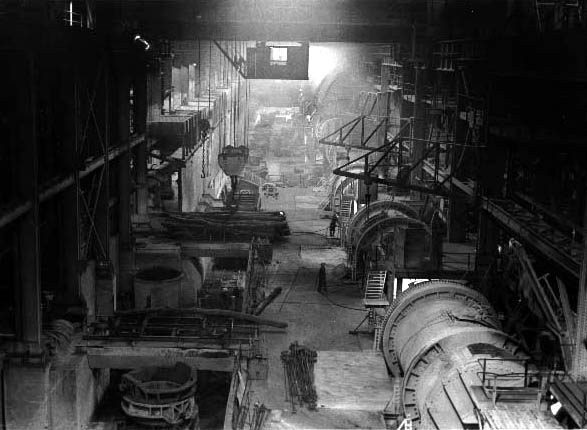
Haunting photo of the massive central aisle in the smelter at Rhokana Mine, Zambia in the late 1960s.
Duncan Money tweet media
English
1
2
10
1.3K
Duncan Money retweetledi
Geoffrey York
Geoffrey York@geoffreyyork·
This is the 3rd deadly landslide to be reported at the Rubaya mining site in eastern DRC since late January. The unregulated dangerous site produces 15% to 30% of the world's coltan, but it is controlled by the Rwanda-backed M23 militia. DRC has offered it to US investors.
Radio Okapi@radiookapi

🚨Un nouvel éboulement s’est produit tôt ce samedi matin 7 mars à Rubaya, dans le territoire de Masisi, au Nord‑Kivu. Selon plusieurs témoins, le glissement de terrain est parti d’un point situé à proximité des puits du site minier de Gakombe, avant d’emporter les zones en contrebas où travaillent de nombreux creuseurs artisanaux. Un village est aussi touché. radiookapi.net/2026/03/07/act…

English
2
44
67
7.2K
Duncan Money retweetledi
Sam Wetherell
Sam Wetherell@samwetherell·
Not to mention the silver in early modern Spanish American mines was tempered with vast amounts of mercury, usually mined in Slovenia and transported in leather sacks via convoys of horses across Europe. An entire global supply chain that would been insane from mercury poisoning.
Duncan Money@mininghistory

How's this for early modern global history? Spanish coins minted with Bolivian silver recovered from a British ship bound for India that was wrecked off the coast of Cape Verde.

English
0
4
7
360
Duncan Money retweetledi
Peer Schouten
Peer Schouten@peer_schouten·
During visits, I found the AfricaMuseum's geology section secretive about its historical DRC maps, which have frequently been consulted by intl mining firms to base their acquisitions in Congo on. Smells like Belgium not willing to share what should be Congolese intel property
Reuters@Reuters

A US mining company backed by billionaires Jeff Bezos and Bill Gates is in a tangle with Belgium's AfricaMuseum over who should digitize antique maps of what is now the Democratic Republic of Congo in the museum's archive reut.rs/4rZ2KyC

English
1
18
43
3.4K
Duncan Money
Duncan Money@mininghistory·
The ship in question (the Hartwell) was carrying 6.5 tonnes of silver when it sank!
English
0
0
0
57
Duncan Money
Duncan Money@mininghistory·
On display in the Museu do Mar in Mindelo, Cape Verde.
English
1
0
0
88
Duncan Money
Duncan Money@mininghistory·
How's this for early modern global history? Spanish coins minted with Bolivian silver recovered from a British ship bound for India that was wrecked off the coast of Cape Verde.
Duncan Money tweet media
English
1
2
14
779
Duncan Money retweetledi
Oliver ೫
Oliver ೫@Prof_Kalkyl·
Just learned about the beautiful personal library of a German mining engineer called Bruno Schröder. His entire house was covered in custom shelves he built himself, housing his life’s work – a 70,000 book collection. Bruno died in 2022 at 88, while in the midst of digitally cataloguing his massive collection. Sadly, he had no relatives and the house, including the books, was handed to an estate manager and put up for sale. That’s when his story and these photos surfaced.
Oliver ೫ tweet mediaOliver ೫ tweet mediaOliver ೫ tweet mediaOliver ೫ tweet media
English
284
2K
15.1K
685.5K