Moral Intuitions Lab

227 posts

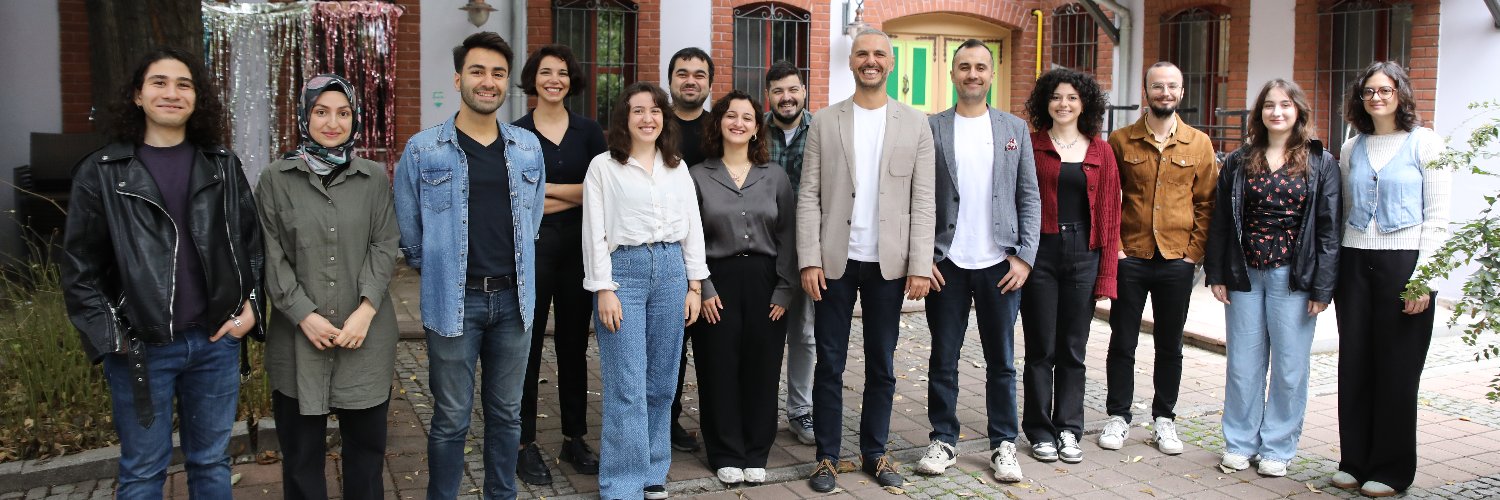
Moral Intuitions Lab banner
Moral Intuitions Lab

Moral Intuitions Lab

@mint_lab

The Moral Intuitions (MINT) Lab is a psychology research lab led by @_onurcanyilmaz at @khasedutr (Istanbul). The causes and consequences of human morality.

Istanbul, Turkey Katılım Ağustos 2019
203 Takip Edilen1.4K Takipçiler
Sabitlenmiş Tweet
Moral Intuitions Lab
Moral Intuitions Lab@mint_lab·
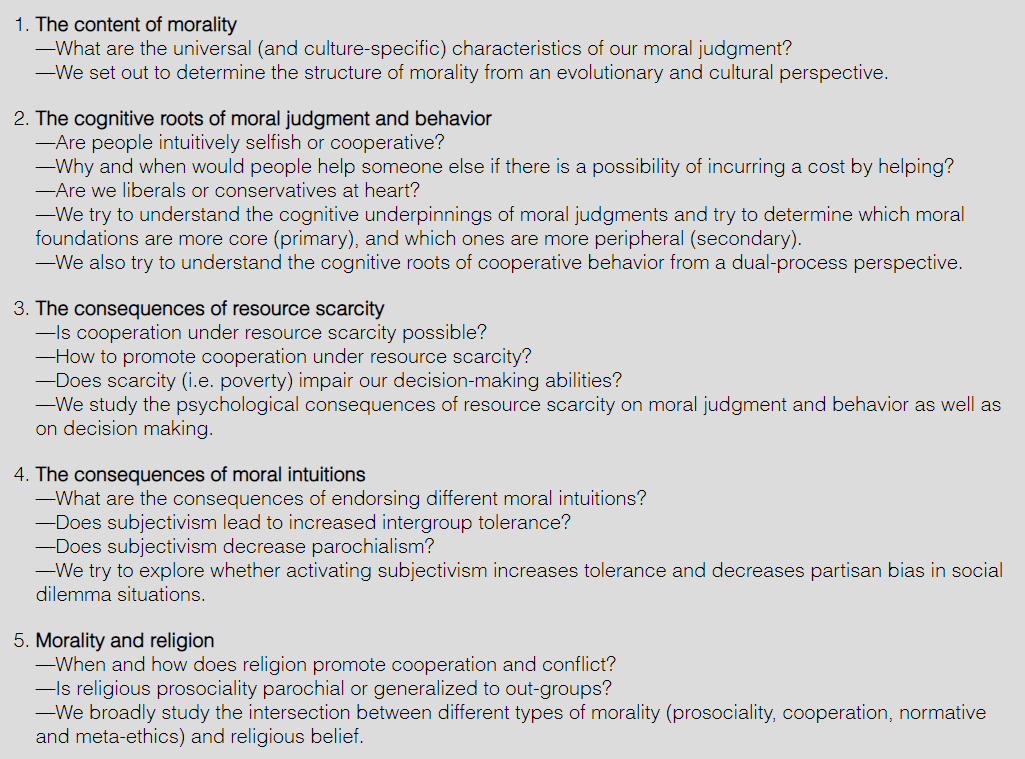
In our lab, we try to understand (1) the content and (2) the cognitive roots of moral judgment and behavior, (3) psychological consequences of resource scarcity, (4) the consequences of endorsing different meta-ethical beliefs, and (5) the link between morality and religion.
Moral Intuitions Lab tweet media
English
2
11
44
0
Moral Intuitions Lab retweetledi
Onurcan Yılmaz
Onurcan Yılmaz@_onurcanyilmaz·
After a long break, I'm returning to my @PsychToday blog. My first piece back is about the central argument of my new book with @AdilSaribay, Reflection and Intuition in a Crisis-Ridden World: Thinking Hard or Hardly Thinking? (Routledge, 2025). The claim is uncomfortable. Slow, careful reasoning is not the cognitive virtue we've been sold. For decades, dual-process research promised that thinking harder would rescue us from bad judgment. I no longer believe that promise holds up. The trouble isn't that people refuse to think. They think constantly. Much of that reasoning is simply in service of conclusions already chosen. Psychologists call this motivated reasoning: assembling arguments for what we already want to believe, like a lawyer building a case. A generation of research shows that analytically skilled people are often better at rationalizing their existing beliefs, not freer from them. More cognitive horsepower mostly produces more elegant rationalization. What actually produces sound judgment? We propose three orientations that reflection alone cannot provide: (1) Intellectual humility: treating your current view as a hypothesis that must keep earning its place. (2) Active open-mindedness: seeking evidence against your position as hard as you'd defend it. (3) Holistic thinking: holding multiple causal pathways in mind, especially when problems cross domains. These are not a checklist but one capacity working from different angles. Finding the most plausible account that ties the evidence together, and revising it when new evidence fails to fit. Humility makes revision possible. Open-mindedness drives the search for disconfirming evidence. Holistic thinking helps you see when new information belongs to a different system than you first assumed. This is what distinguishes strong diagnosticians: their core skill is not knowledge but the ability to update quickly when the leading hypothesis fails. Why this matters across sectors: (1) Education: curricula still assume that stacking isolated competencies eventually produces judgment. It rarely does. (2) Policy and public health: climate, polarization, and pandemics reward integrative thinkers. (3) AI: LLMs produce competent answers cheaply. The scarce human skill is defensible synthesis across domains. (4) Leadership: Executives who make the worst calls under uncertainty are rarely the least intelligent. They're the most committed to being right. (5) Medicine and finance: where the cost of elegantly defending the wrong hypothesis is measured in lives or billions. Reflection becomes useful only when a person seriously entertains the possibility of being wrong. Until then, it mostly helps us be wrong more effectively. Full piece: psychologytoday.com/us/blog/moral-… Subscribe to the Moral Intuitions blog: psychologytoday.com/us/contributor…
English
0
5
12
4K
Moral Intuitions Lab retweetledi
Onurcan Yılmaz
Onurcan Yılmaz@_onurcanyilmaz·
Dünyada otoriter dalga gerçekten kırılıyor mu? Türkiye'de bu dalgayı kıracak yapısal bir hamle mümkün mü? Bu iki soruya kültürel evrim kuramı, oyun kuramı ve kliodinamik (tarihin hesaplamalı bilimi) çerçevelerini birlikte kullanarak cevap aramaya çalıştım. Macaristan, ABD, Hindistan ve İtalya'daki son siyasi tablonun ne anlama geldiğini; otoriter koalisyonların neden bu denli dirençli, demokratik koalisyonların neden bu denli kırılgan olduğunu politik psikoloji literatürünün bulgularıyla birlikte tartıştım. Bu asimetrinin yapısal kaynaklarını ve hangi koşullarda tersine çevrilebileceğini ele aldım. Türkiye özelinde ise somut bir öneri sundum: partiler tarafından başlatılmış, ancak partilerüstü bir "Demokrasi Platformu". Klasik bir seçim ittifakının koordinasyon problemini neden çözemediğini; böyle bir platformun ittifaktan teşvik mimarisi, sinyal işlevi ve ortak bilgi üretimi bakımından yapısal olarak nasıl ayrıştığını inceledim. Son olarak, Oyun Kuramı'ndaki "odak nokta" (focal point) işlevini üstlenebilecek nitelikte bir kamusal figürün böyle bir yapı için neden kritik olduğunu, kutuplaşmayı düşüren ve geniş tabanlı meşruiyet üreten aktör profilinin hangi psikolojik ve sosyolojik özellikleri taşıması gerektiği üzerinden tartıştım. Yazının tamamı Medyascope'ta (@medyascope)👇 medyascope.tv/2026/05/01/oto…
Türkçe
0
4
11
2.3K
Moral Intuitions Lab retweetledi
Onurcan Yılmaz
Onurcan Yılmaz@_onurcanyilmaz·
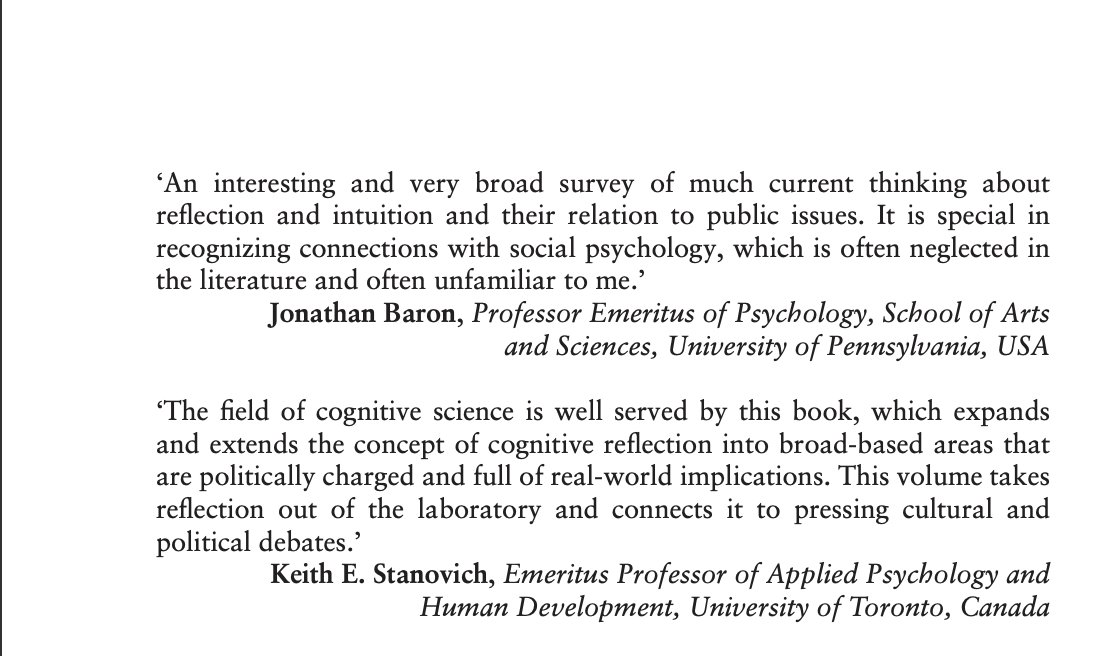
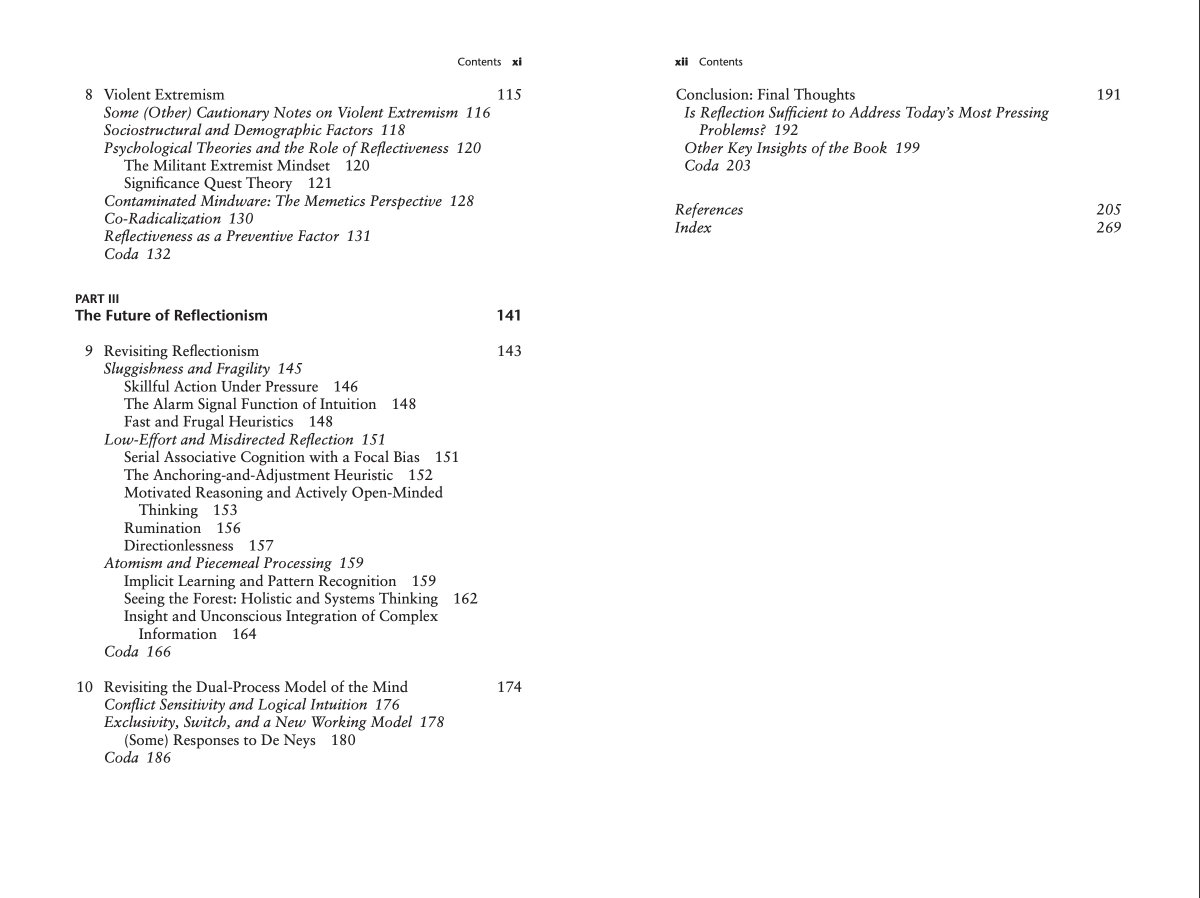
We tend to assume that better thinking comes down to more reflection. But what if that's no longer enough? In our recent book, "Reflection and Intuition in a Crisis-Ridden World: Thinking Hard or Hardly Thinking?", which I co-authored with @AdilSaribay, we argue something a bit uncomfortable: people aren't failing to think their way through polarization, misinformation, or climate inertia. They're constantly thinking, and much of that thinking quietly works against them, reinforcing the views they already hold and finding reasons to delay the rest. Left on its own, reflection can turn narrow, fragmented, even quietly biased. It tends to reinforce what we already believe rather than challenge it. What's actually missing is something far more demanding. The ability to think across systems, weave perspectives together, and arrive at the best explanation from messy, often contradictory information. In a world where AI keeps getting better at producing technical answers, the real bottleneck isn't access to knowledge anymore but the capacity to synthesize it. That's why we keep coming back to three things in the book: (1) Holistic and systems thinking (2) Intellectual humility and open-mindedness (3) Inference to the best explanation across domains If education keeps drilling isolated skills rather than fostering integrative thinking, we'll end up training minds that are reflective but never wise. Knowing more isn't the edge anymore. The people who'll do well are the ones who can connect things, tie them together, and explain it all so it actually makes sense to someone else. For a preview of the book: routledge.com/Reflection-and…
Onurcan Yılmaz tweet mediaOnurcan Yılmaz tweet mediaOnurcan Yılmaz tweet mediaOnurcan Yılmaz tweet media
English
0
2
10
487
Moral Intuitions Lab retweetledi
Onurcan Yılmaz
Onurcan Yılmaz@_onurcanyilmaz·
Last week, I published an opinion piece on what I've been calling the "equation of history." The English version is now out at Medyascope (@medyascope): medyascope.tv/2026/04/20/the… Most social scientists still treat history as a sequence of contingent events, shaped by culture, leaders, and accidents. Cliodynamics, the field pioneered by Peter Turchin, takes a different view. It argues that human societies follow recognizable patterns, and that those patterns can be modeled, measured, and, to a meaningful degree, predicted. Human nature is not infinitely variable. Power, scarcity, status, and cooperation produce structures that repeat across centuries and continents, and once you learn to see them, much of what looks chaotic becomes legible. This matters because we are living through one of those repetitions right now. The US-China rivalry is not simply a foreign policy story or a trade dispute. It is the textbook moment when a hegemon under internal strain meets a rising challenger carrying its own contradictions. Both sides are dealing with the same classical pressures at once: -Economic strain on the public -Intensifying competition among elites -A gradual erosion of state capacity Read through this lens, the noise of daily headlines starts to organize itself. Tariffs, chip controls, Taiwan, BRICS expansion, industrial policy, migration politics, the renewed pressure on Panama, the standoff with Iran, the squeeze on Venezuela, the long shadow of Cuba: none of these are disconnected events. In fact, they are surface expressions of a deeper structural cycle that cliodynamics has been describing for years. This is why a holistic view matters. Analysts who look at one variable, one country, or one quarter will keep being surprised by what comes next. Those who see the system as a "system" will not. And for middle powers like Turkey, the practical question becomes how to position within this cycle. Global capital is increasingly drawn to predictability, so states that can credibly signal institutional reliability may find real openings precisely when the great powers are absorbed by their own internal pressures. Structural pressure narrows the field of options, but it does not pick the result. That part is still a matter of choice, and choice gets sharper when you can actually see the structure you are operating inside. History does not have to repeat itself. But in societies that spend this opportunity only on daily skirmishes, it usually does. The window of opportunity has not yet closed. Whether it stays open, however, depends on whether the actors can read it correctly.
English
0
2
5
389
Moral Intuitions Lab retweetledi
Onurcan Yılmaz
Onurcan Yılmaz@_onurcanyilmaz·
Last week, I had the privilege of presenting our work at the Social Consequences of Religion (SCORE) group at the University of Oxford. Many thanks to Prof. Dominic Johnson and the SCORE team for the invitation and the sharp discussion that followed. The talk, "A Moral Compass? Behavioral Consistency in Religious and Secular Belief Systems," made a case that the field has been circling for some time. For decades, the central question has been whether religion makes people more prosocial. The accumulated evidence is genuinely mixed. Meta-analyses and high-powered experiments keep returning weak, context-dependent, often parochial effects. Our argument is that prosociality may simply be the wrong target. When you take an inference-to-the-best-explanation approach to the available evidence— supernatural monitoring, ritual synchrony, conformity and prestige bias, meta-ethical objectivism—these mechanisms converge on something different from generosity. They converge on variance reduction. They make moral behavior more predictable, more aligned with shared norms, more stable under situational pressure. Scaling cooperation has less to do with generosity than with predictability; knowing roughly what your neighbor will do is what makes large groups workable. The theoretical case for this reframing will appear as an invited paper in the 2027 special issue of Religion, Brain & Behavior on Hilbert problems in the scientific study of religion. We also have longitudinal and experimental work, developed with @_ozanisler from the University of Queensland and our team at @mint_lab (Moral Intuitions Lab), that speaks directly to the consistency hypothesis and to the mediating role of peer conformity. What I tried to convey at SCORE is that this is a shift in target, not a refinement of the existing program. It changes which variables matter, which statistical tools fit, and which mechanisms deserve sustained attention. Once you make that shift, much of the apparent inconsistency in the religious prosociality literature starts to look like signal misread as noise. Grateful to SCORE and @TempletonRelig for the platform.
Onurcan Yılmaz tweet mediaOnurcan Yılmaz tweet mediaOnurcan Yılmaz tweet media
English
1
4
17
1.1K
Moral Intuitions Lab retweetledi
Onurcan Yılmaz
Onurcan Yılmaz@_onurcanyilmaz·
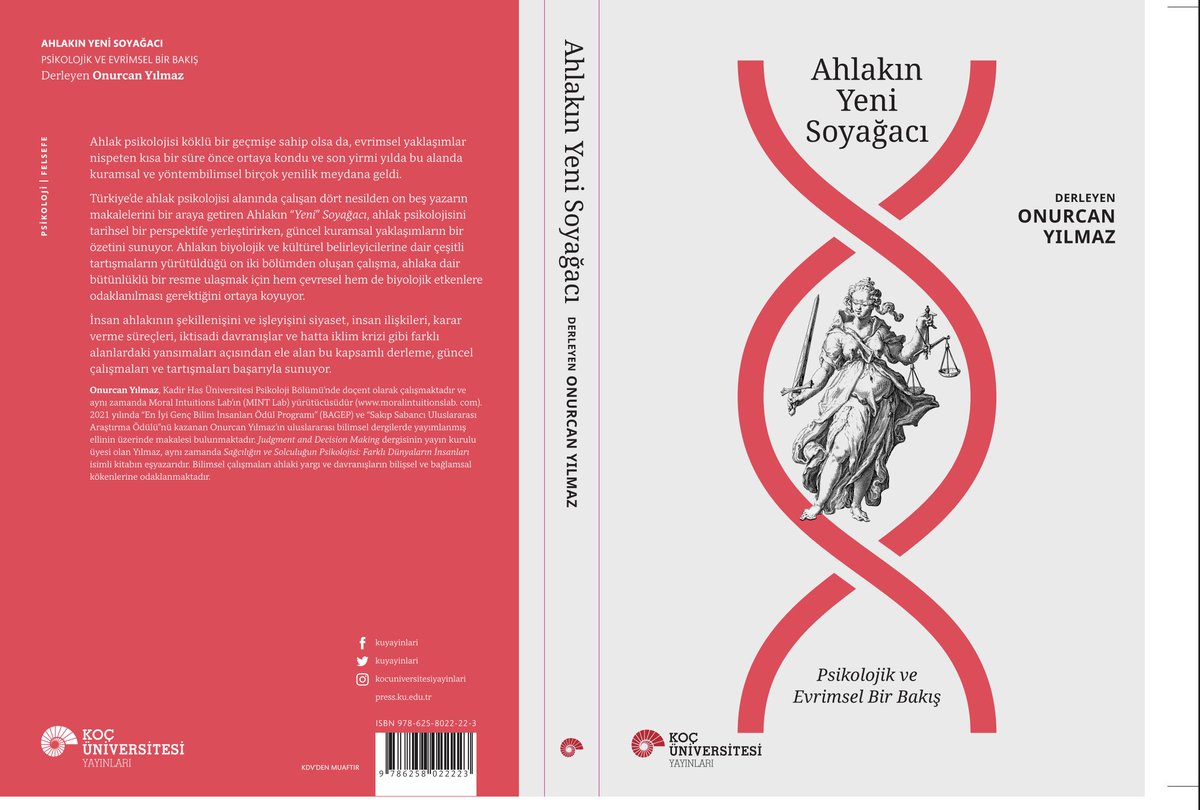
“Ahlakın Yeni Soyağacı: Psikolojik ve Evrimsel Bir Bakış” tükendi. Yeni baskı yapılmayacağı netleşince, kitabın haklarını devralıp PDF’ini herkes için erişime açmaya karar verdik. Bu konuda yapıcı yaklaşımları için yayınevine teşekkür ederiz. İyi okumalar. moralintuitionslab.com/_files/ugd/132…
Onurcan Yılmaz tweet media
Türkçe
15
65
329
24.6K
Moral Intuitions Lab
Moral Intuitions Lab@mint_lab·
Our Lab Director, Prof. Onurcan Yılmaz (@_onurcanyilmaz), will present “Is Cooperation Intuitive? A Systematic Preregistered Test of the Social Heuristics Hypothesis” at the University of Nottingham (CeDEx) on March 4, 13:00-14:00. All are welcome.
Moral Intuitions Lab tweet media
English
0
1
7
566
Moral Intuitions Lab
Moral Intuitions Lab@mint_lab·
We’re pleased to share that our lab director, Onurcan Yilmaz (@_onurcanyilmaz), has been promoted to full professorship. We sincerely congratulate him and wish him continued success.
English
0
2
26
8K
Moral Intuitions Lab retweetledi
Sinan Alper
Sinan Alper@SinanAlper_·
New paper alert! After the 2023 Kahramanmaraş earthquakes in Turkey, multiple conspiracy theories about the cause of the disaster emerged. In our study with @onurvarol and @_onurcanyilmaz, we found that: ♦️ Erdoğan supporters were more likely to spread earthquake-related conspiracy claims on Twitter. ♦️ Those who believed the earthquakes were triggered by foreign powers using technological weapons showed higher voting intention for Erdoğan and his alliance in the 2023 elections.
Sinan Alper tweet media
English
1
8
27
3.4K
Moral Intuitions Lab
Moral Intuitions Lab@mint_lab·
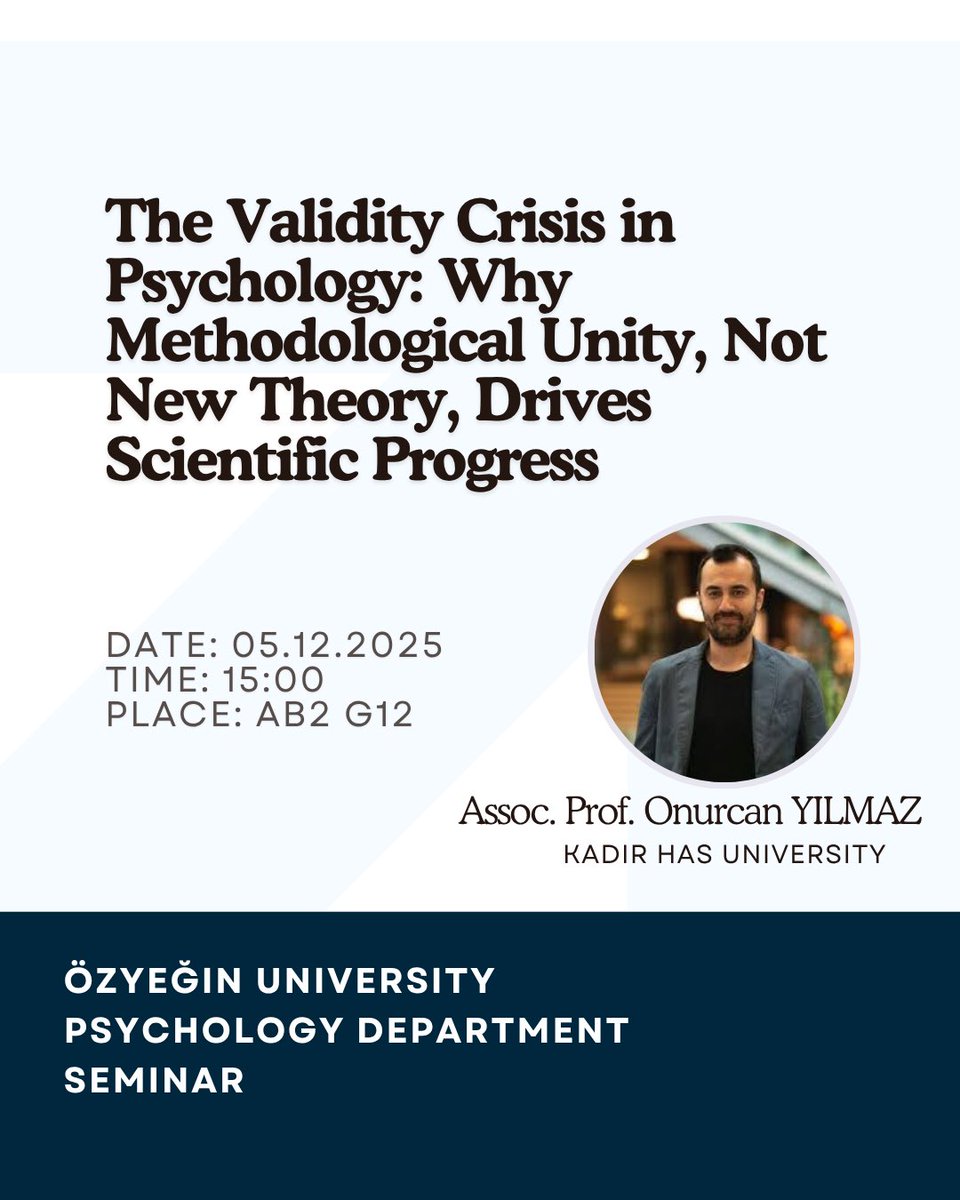
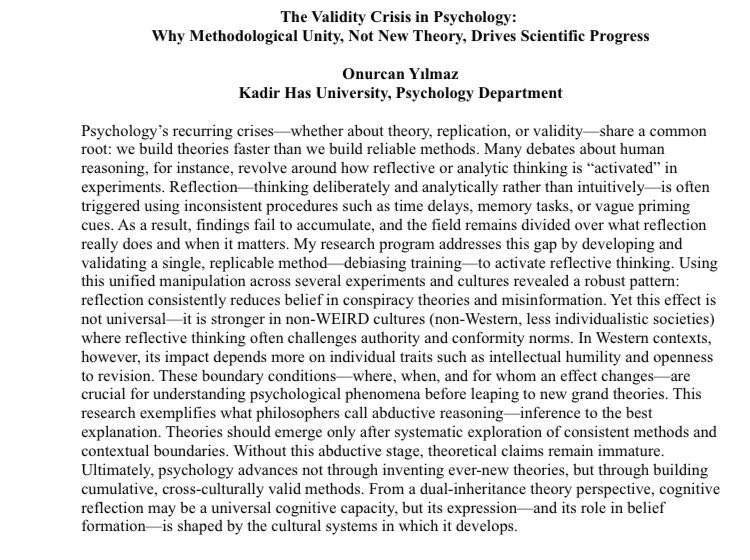
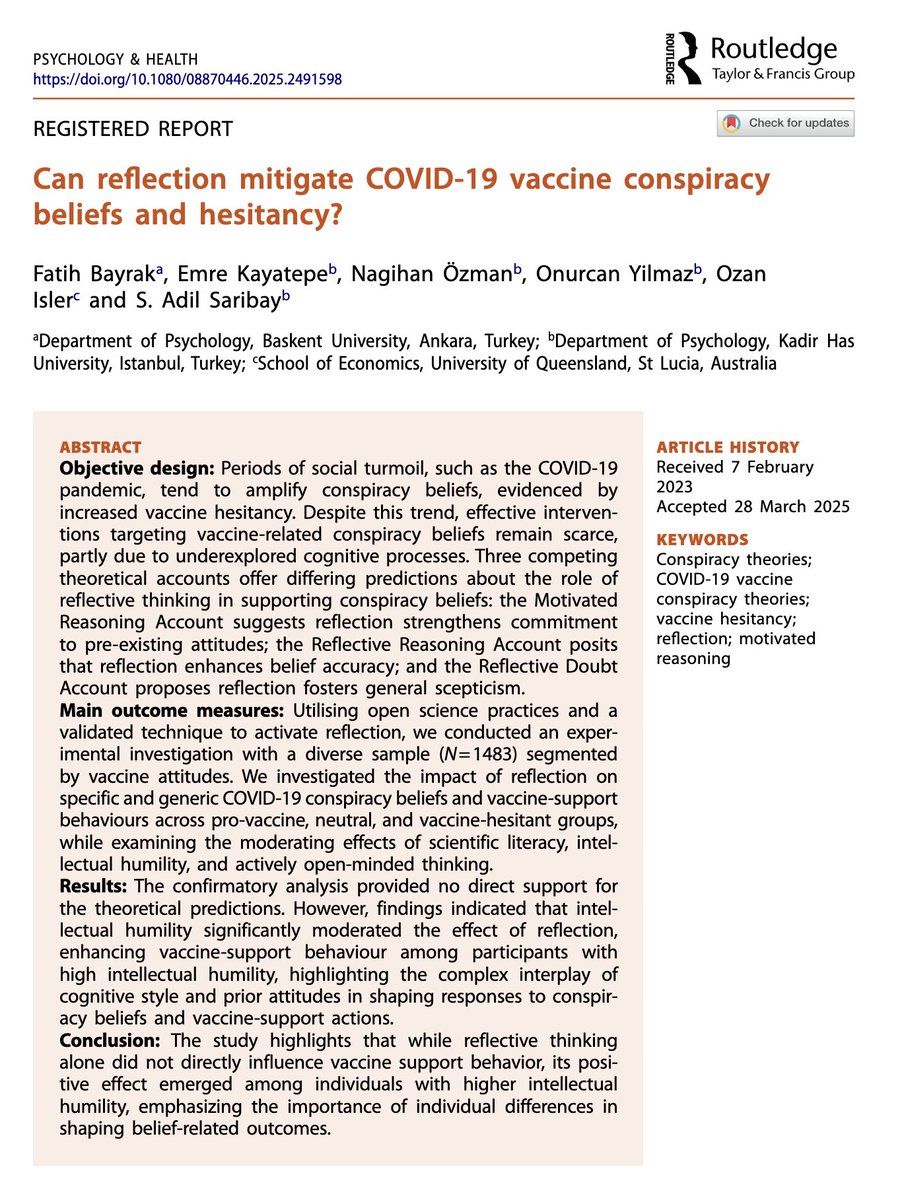
Our PI, Assoc. Prof. Onurcan Yılmaz (@_onurcanyilmaz @khasedutr) will give a seminar titled: “The Validity Crisis in Psychology: Why Methodological Unity, Not New Theory, Drives Scientific Progress.” 📅 05.12.2025 ⏰ 15:00 📍 AB2 G12 – Özyeğin University Abstract attached.
Moral Intuitions Lab tweet mediaMoral Intuitions Lab tweet media
Română
0
3
5
2.5K
Moral Intuitions Lab
Moral Intuitions Lab@mint_lab·
Today, Dr. Fatih Bayrak (@fatihbayrak_) defended his PhD on the cognitive, identity-based & cultural roots of fake news belief, co-supervised by @_onurcanyilmaz & @InciBoyacioglu. A rising star & MINT Lab external member, he’s already publishing on reflection & misinformation.
Moral Intuitions Lab tweet mediaMoral Intuitions Lab tweet mediaMoral Intuitions Lab tweet media
English
1
4
26
4.5K
Moral Intuitions Lab retweetledi
Sinan Alper
Sinan Alper@SinanAlper_·
Our new article: People who believe in conspiracy, paranormal, and pseudoscience ideas were also more likely to endorse our made-up versions. Both real and fictitious beliefs showed similar links to worldview and cognition.
Sinan Alper tweet mediaSinan Alper tweet media
English
2
8
26
3.2K
Moral Intuitions Lab
Moral Intuitions Lab@mint_lab·
These findings underscore the critical role of identity and epistemic norms in the assessment of fake news and reveal that the potential mitigating effect of reflection might be contingent upon characteristics of social identity.
English
1
0
1
184
Moral Intuitions Lab
Moral Intuitions Lab@mint_lab·
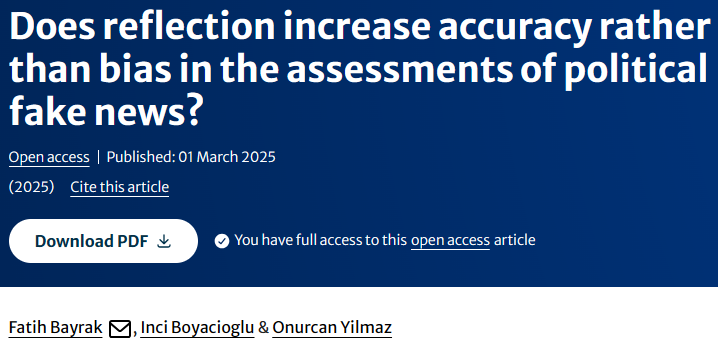
"Does reflection increase accuracy rather than bias in the assessments of political fake news?" is now published in Current Psychology.
Moral Intuitions Lab tweet media
English
1
6
20
3.2K