Martin Picard

8.2K posts

Martin Picard banner
Martin Picard

Martin Picard

@MitoPsychoBio

Mitochondrial Psychobiology. Bridging the science of energy and the human experience. Upcoming book: ENERGY (2027).

Manhattan, NY Katılım Şubat 2018
947 Takip Edilen27.3K Takipçiler
Martin Picard
Martin Picard@MitoPsychoBio·
Best guess is that the series of proteins (enzymes, transporters, etc) act as the "wire." Great question about the correspondences. There likely isn't a direct correspondence for each component. It's a useful heuristic, but living systems are pretty different. Can you think of the parallels?
English
0
0
0
37
Baek, Jihun
Baek, Jihun@baegjihun174838·
@MitoPsychoBio 전기 회로에서 에너지가 전자 이동이 아니라 전선 주변 전자기장(포인팅 벡터)으로 빛의 속도로 전달된다는데, 생물 회로에서 산소는 양극, 음식물은 음극일 때, 전선, 전하, 전기장, 포인팅 벡터, 장 기반 에너지 전달은 각각 어디에 대응하나요? 생물에선 단백질이 전선인가요?
한국어
1
0
0
50
Roger Seheult, MD
Roger Seheult, MD@RogerSeheult·
🚨🚨A recent thesis about to be published by Ifigeneia Kalampouka, PhD @mitogenia - (worth following BTW) on biophotons and cellular senescence found that isolated senescent mitochondria did two very interesting things: 1) They directly emitted measurable ultraweak photons, and 2) Mitochondria in a separate, chemically isolated chamber showed different oxygen-consumption behavior when unshielded vs shielded. i.e. mitochondria talked to each other in different test tubes! That does NOT prove, in a final sense, that mitochondria are “communicating with light.” - yet. But it does show something real and intriguing: Stressed/senescent mitochondria appear to emit ultraweak light, and other physically isolated mitochondria behave differently when exposed to a non-chemical signal that is consistent with a light-based mechanism. This is early bench science, not bedside medicine. Still, if this holds up, it could open an entirely new way of thinking about mitochondrial signaling, oxidative stress, aging, and maybe even photobiomodulation. Really fascinating work. There's also a whole other section where NIR is used doi.org/10.34737/wy80y
English
7
19
105
5.9K
Martin Picard
Martin Picard@MitoPsychoBio·
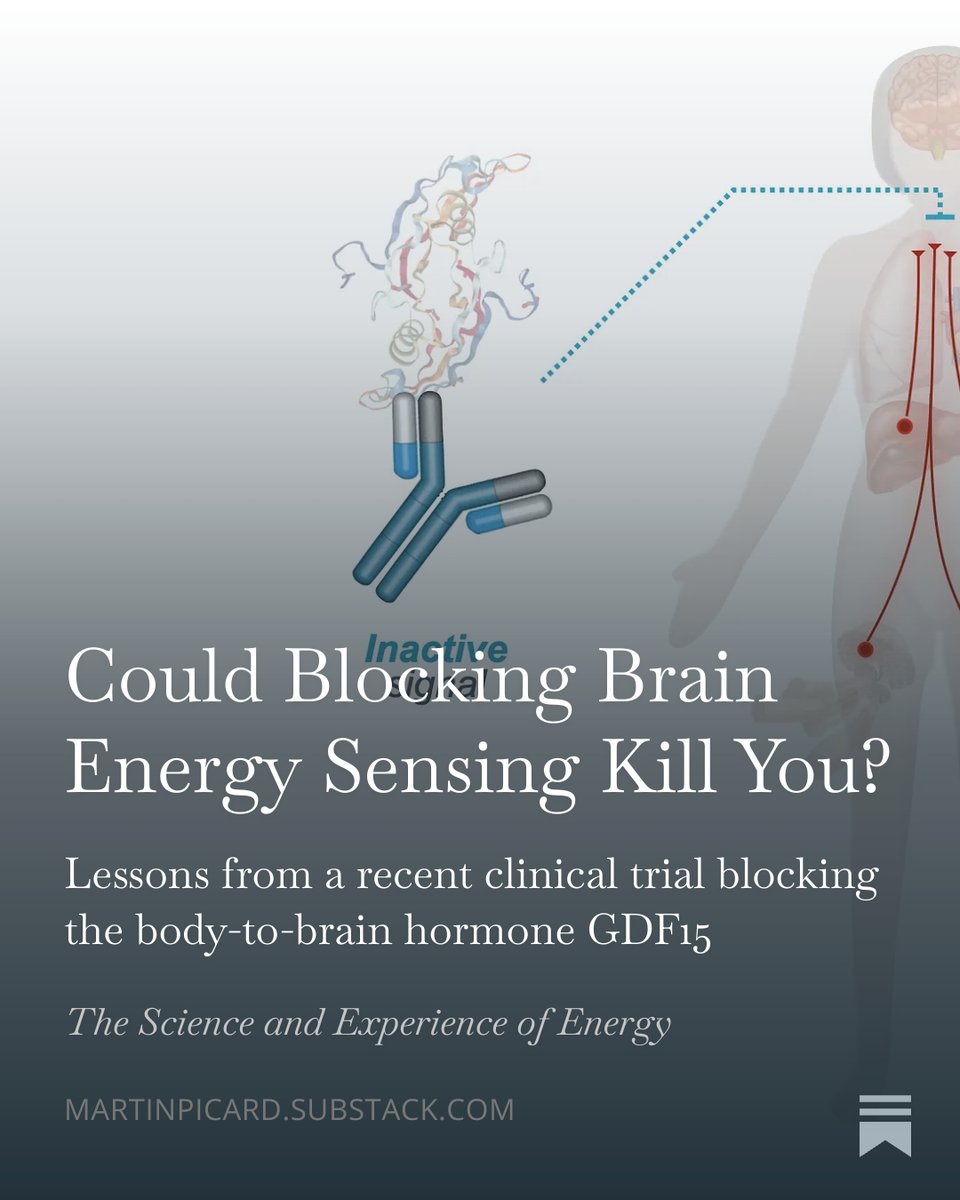
Today in The Science and Experience of Energy, we discuss the best biomarker of aging, diseases, and mortality: the blood cytokine GDF15. GDF15 is a metabolically-regulated cytokine—known as a metabokine. Because it's elevated in numerous diseases and predicts poor health outcomes, the idea became that blocking it might be useful. For example, in cancer cachexia, GDF15 is associated with loss of appetite, weight loss, and mortality. So blocking it might make people eat more, lose less weight, and survive. The first clinical trial showed promising results around the appetite and weight loss, but worrying results around mortality. In this morning's post, Alan Cohen @cusciofhealth and I unpack this result and some of the psychobiology of GDF15. martinpicard.substack.com/p/could-blocki…
Martin Picard tweet media
English
2
8
50
2.8K
CogniSphere
CogniSphere@jorgensenmc1·
This maps onto Martin Picards energy resistance principle. Also to the new papers showing depressed patients actually have high ATP but cant use it for higher order thinking , motivation etc. it just builds up causing damage and break down product adenosine causing sleep pressure perhaps. Doesnt ATP turn into a danger signal when leaking out into extracellular space triggering inflammation also ?
English
3
0
6
1.1K
🕸️Dr.T, PhD
🕸️Dr.T, PhD@chydorina·
First mechanism behind the 'no choice naps' that I have been talking about for years that finally makes sense to me. The "no-choice" naps really are no choice - they are sudden completely unstoppable urges to sleep. For me they last 1-2 hours and I wake up feel horrible. I have tried to not fall asleep when this comes on but it is not possible - it really is like something is forcing an emergency shutdown.
William A. Wallace, Ph.D.@drwilliamwallac

Your urge to sleep may not start with neurotransmitters. A study published in Nature found that sleep pressure builds from mitochondrial electron leak in specific brain cells, and when the leak crosses a threshold, sleep fires.

English
16
21
277
21.8K
arijo
arijo@arijo·
@MitoPsychoBio @matiask_1988 I’ve tried running and weights many times but it seems to hurt more than it helps with my schizoaffective disorder. Keep researching Dr. Martin Picard - you’re on the right path to end a lot of suffering in this world.
English
2
0
2
38
Martin Picard
Martin Picard@MitoPsychoBio·
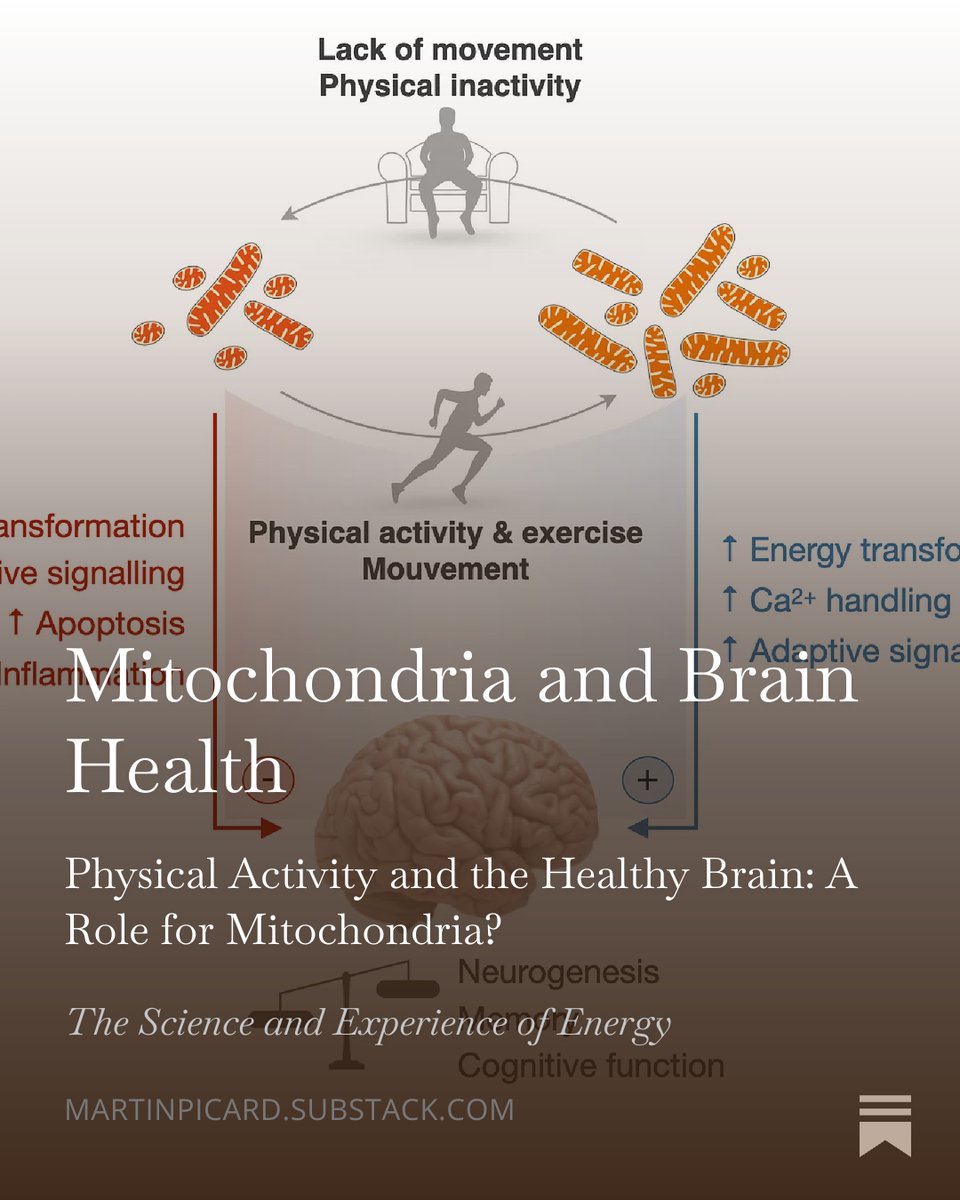
Exercise is good for the brain. But why? This morning in The Science and Experience of Energy we explore the effects of exercise on brain mitochondrial. And why making more mitochondria might in part be why moving keeps our brain healthy. martinpicard.substack.com/p/mitochondria…
Martin Picard tweet media
English
13
110
476
14.4K
Martin Picard
Martin Picard@MitoPsychoBio·
Beautiful mitochondria in your muscles 💪🏼
Nirosha J. Murugan@niroshajmurugan

Yesterday was leg day. I was working toward a new PR on Bulgarian split squats (they suck, but feel so good when you hit it). Right at that point where your legs are shaking and your mind is ready to tap out, I felt that oh-so-familiar high-resistance pull to stop. And then these (see below) came to mind. @MitoPsychoBio once showed me these beautiful EM images of mitochondria (left: skeletal muscle; right: heart muscle). Such beautiful folds. He pointed and said, "This is where the electrons flow.” So in that moment, legs shaking, palms sweaty, knees weak, arms were heavy (IFYKYK). I pictured them. Millions of these tiny structures inside my muscles, transforming energy into electrochemical gradients, heat, biophotons….doing their work so I could do mine. If that isn’t mind-mitochondria connection, I don’t know what is. (And yes, I hit my PR.)

English
0
4
51
5.3K
William Furness | Metabolic Mental Health
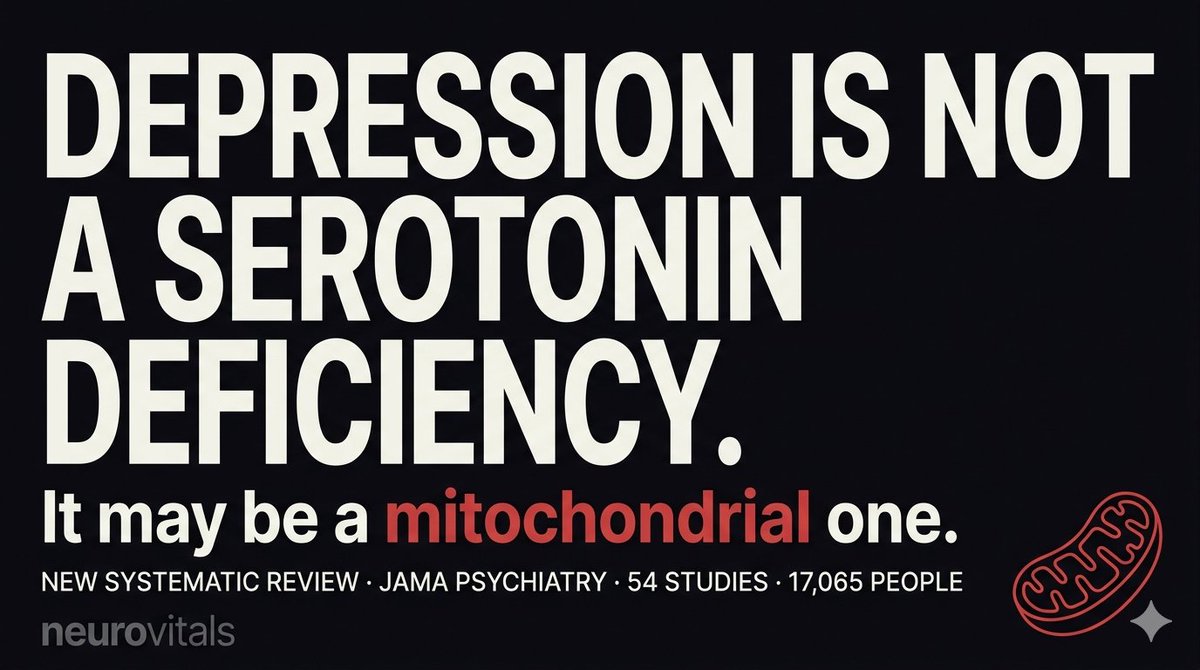
I've been saying this for a while. Now JAMA Psychiatry said it louder. 54 studies. 17,065 people. The real story of depression isn't in the monoamines... It's in the mitochondria. 🧵
William Furness | Metabolic Mental Health tweet media
English
16
51
216
61.7K
Jason Locasale
Jason Locasale@LocasaleLab·
This is an example of the rot inside Nature. This will be hyped and canonized as truth. Influencers will take over, and critical scientists will stay quiet or be left out of the conversation. The topic is trendy, so it gets published, and the tacit conclusions are far more grand than what the data support. They are essentially claiming to have found a genetic basis of GLP-1 response. In reality, this is a GWAS study. These studies rarely identify genes of real interest and have largely proven ineffectual in complex diseases, in part because these traits are multigenic and heavily influenced by environment. GWAS looks at single associations and says nothing about causality. At first glance, the effect size is not even reported in the abstract. And the p-value of the lead hit—near the GLP-1 locus—given a cohort of nearly 30,000, strongly suggests the effect is very small and not much overall came from this study just like most of the GWAS studies conducted over the past 15-20 years.
Michael Morelli@morellifit

A massive Nature study of 27,885 GLP-1 users just dropped some major news about Ozempic and tirzepatide. Your DNA determines how much weight you lose and how bad the side effects hit. 1 in 3 people see minimal results, and now we know why: (1/9)

English
12
32
235
60.2K
Grace Price
Grace Price@travelingenes·
I made my first documentary at 17. I'm 20 now. I still fight imposter syndrome every single day, still wonder if i'm the right person to tell these stories. Yet I keep coming back to it. And I feel so grateful I even get to try. God has placed the most incredible people in my path. each of them has taught me something I didn't know I needed. My second film drops next week on youtube :)
Grace Price@travelingenes

This is a huge day for @X. My documentary, Cancer: A Food-Borne Illness, is finally here. It is only on this platform that I am able to release a film that challenges big food conglomerates and mainstream health claims without fear of censorship. Here is the story of how I, an 18 year old girl, spent 2 years relentlessly searching for the for the true cause of cancer. Here's what I found:

English
13
17
156
7K
Nirosha J. Murugan
Nirosha J. Murugan@niroshajmurugan·
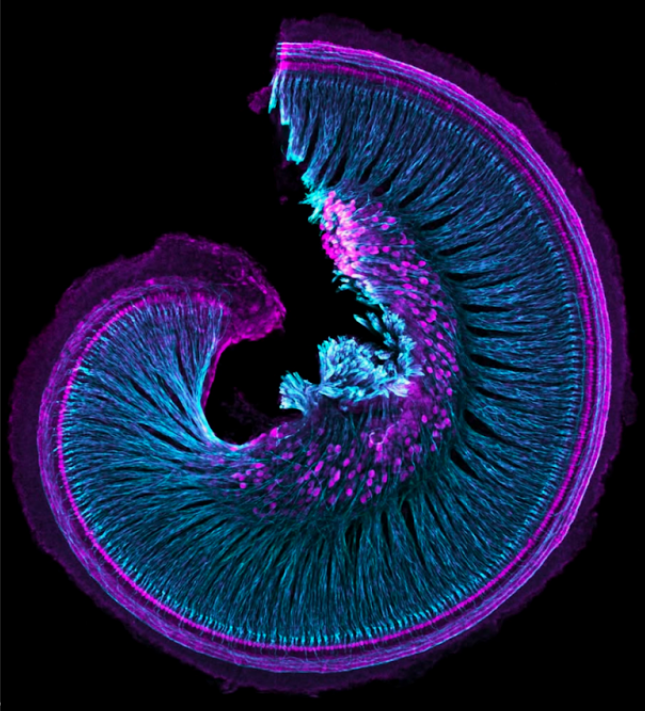
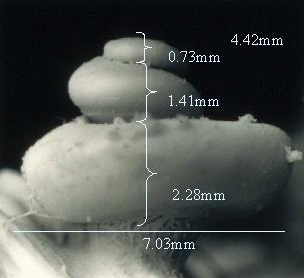
Behold, the cochlea. A spiral of cells, tonotopically organized to represent frequency in space - tiny patches of tissue coding for temporal oscillations of energy that we eventually experience as tones, music & voices. And all of this happens in a space of about 30 millimeters. Fluorescent imaging credit: @Katelyn_Comeau
Nirosha J. Murugan tweet mediaNirosha J. Murugan tweet media
English
10
51
293
12.3K