Michael Hanophy

593 posts

Michael Hanophy banner
Michael Hanophy

Michael Hanophy

@mjhanophy

Microbiologist, St. Joseph's University, Brooklyn

Katılım Kasım 2012
115 Takip Edilen111 Takipçiler
Michael Hanophy retweetledi

The Lincoln Project
The Lincoln Project@ProjectLincoln·
WATCH: The White House took down this video, but we still have it. Trump: We can't take care of daycare. We're a big country. We're fighting wars. It's not possible for us to take care of daycare, Medicaid, Medicare, all these things.
English
1.9K
28.6K
60.8K
1.5M
Michael Hanophy retweetledi
Niko McCarty.
Niko McCarty.@NikoMcCarty·
The Petri dish is widely credited to a single person — Richard Julius Petri — but was actually invented by many people, independently, around the same time. In 1881 (years before Petri’s creation), Robert Koch made a “moist chamber” that looks a lot like the modern Petri dish. The chamber was a circular dish, about 20cm across and 5 cm tall. Koch took a piece of glass, poured gelatine onto it, and then put it into this dish, with a lid, to dry out and harden. Koch then plated bacteria onto that gelatine and looked at them under his microscope. The main difference between Koch’s “moist chamber” and Petri’s later invention was, simply, that Petri got rid of the glass piece and poured gelatine directly into the dish, and then plated his microbes on top of that. (Petri also worked with Koch for several years before he made the “Petri” dish.) Petri published an entire article about his little dish, and how to make it, in 1887. As it caught on and spread through microbiology laboratories, however, many other microbiologists claimed that they had actually invented the dish *before* Petri! Emmanuel Klein, an Austro-Hungarian, claimed that he had described a culture dish before Petri, way back in 1884, but never provided proof for his claims. It seems he got the chronology wrong. Two French scientists, William Nicati & Maximilien Rietsch, also claimed the invention. Nicati and Rietsch poured gelatine into little square jars, akin to pill boxes, and grew cholera microbes on them. And they did so in 1885, at least two years before Petri published his own circular designs. Percy Frankland, in London, also used circular glass plates filled with gelatine to “capture” and study airborne microbes as early as 1886. It seems that Petri’s name stuck to the plates, then, for two simple reasons: He wrote up and published an article entirely devoted to the designs (which nobody else did), and he was associated with a famous laboratory; Robert Koch's. And this is why, nearly 150 years later, we still call them Petri dishes. Much more on this will be in the forthcoming @AsimovPress book, “Making the Modern Laboratory."
Niko McCarty. tweet mediaNiko McCarty. tweet media
English
4
29
149
10.2K
A Miller
A Miller@amilleraz0·
Simple poll. Please be honest! As of today, how much do you still trust this team? Α. 100% Β. 75% C. 50% D. 25% E. 0%
A Miller tweet media
English
2.9K
175
1K
123K
Michael Hanophy retweetledi
St. Joseph's University New York
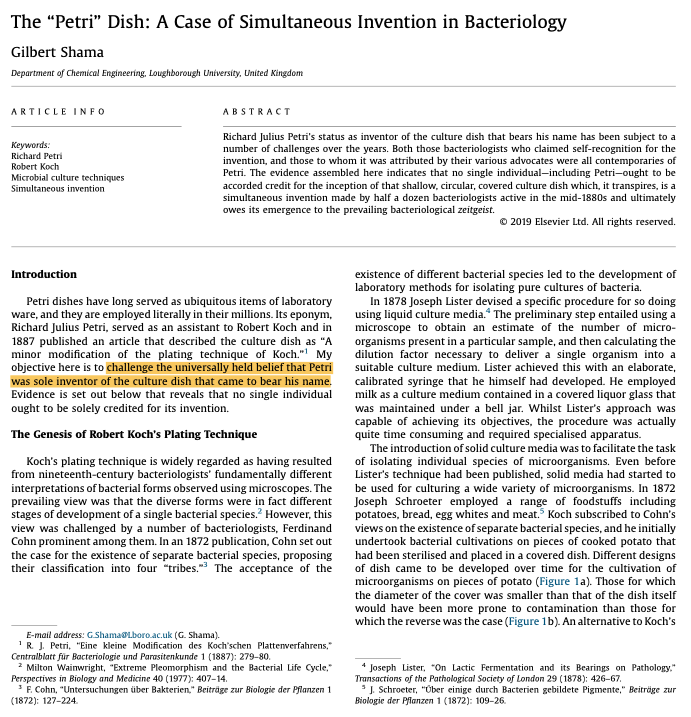
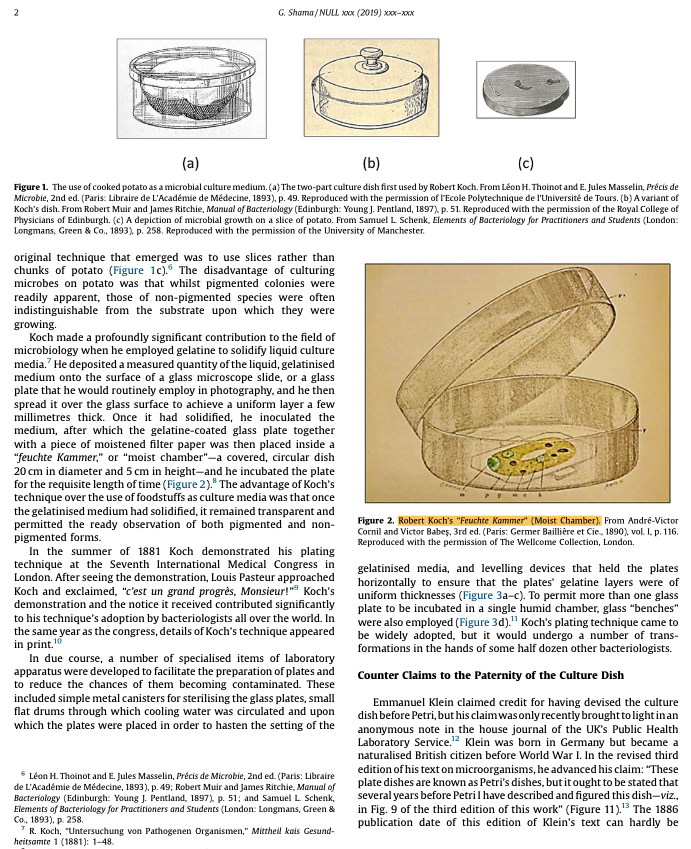
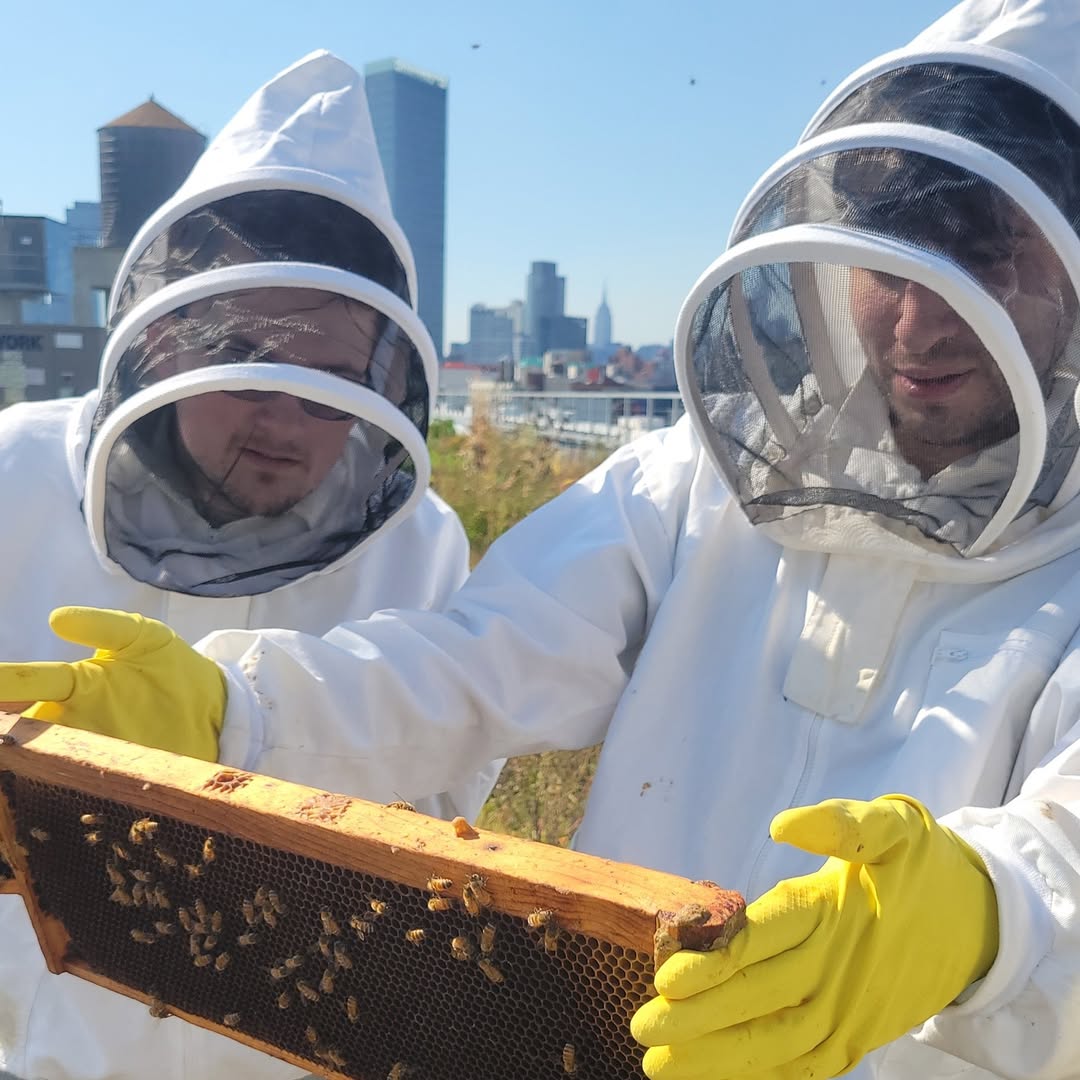
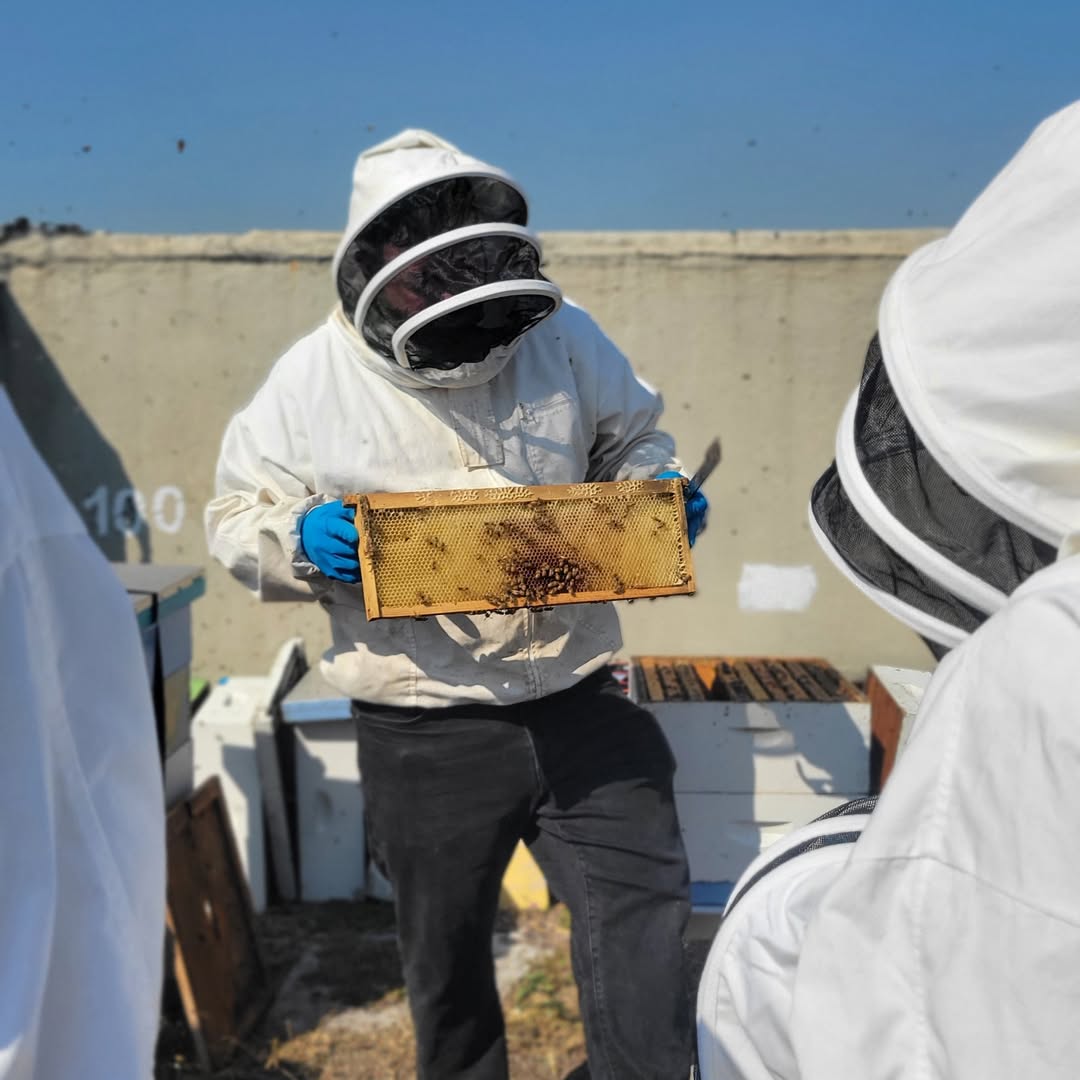
This will help us start thinking about spring! 🌼🐝 Last fall, Dr. Pamela Lovejoy’s BIO 435 Ethology students ventured outside their classroom to learn about honey bee behavior, examine a colony and handle frames filled w/honey at Sky Farm by Variety Boys & Girls Club of Queens.
St. Joseph's University New York tweet mediaSt. Joseph's University New York tweet mediaSt. Joseph's University New York tweet mediaSt. Joseph's University New York tweet media
English
0
1
2
66
Michael Hanophy retweetledi
Niko McCarty.
Niko McCarty.@NikoMcCarty·
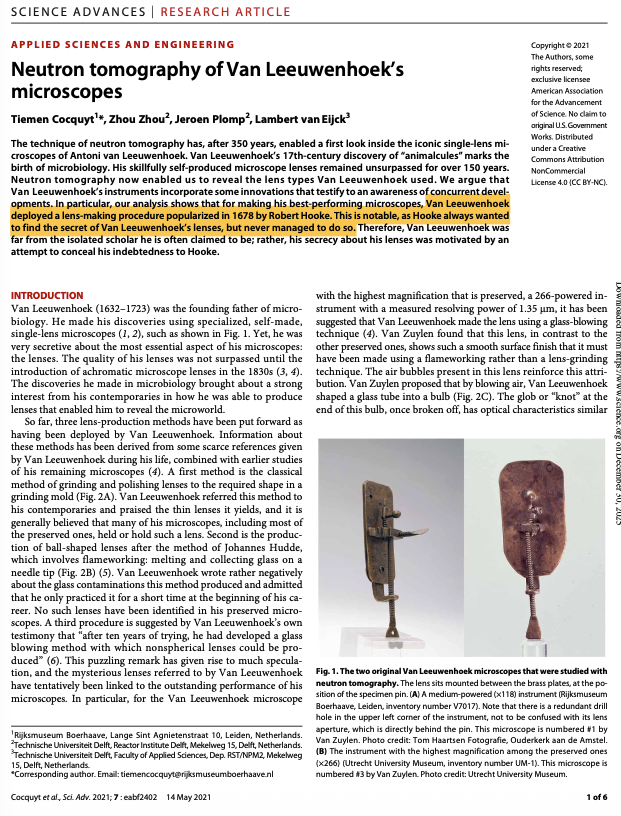
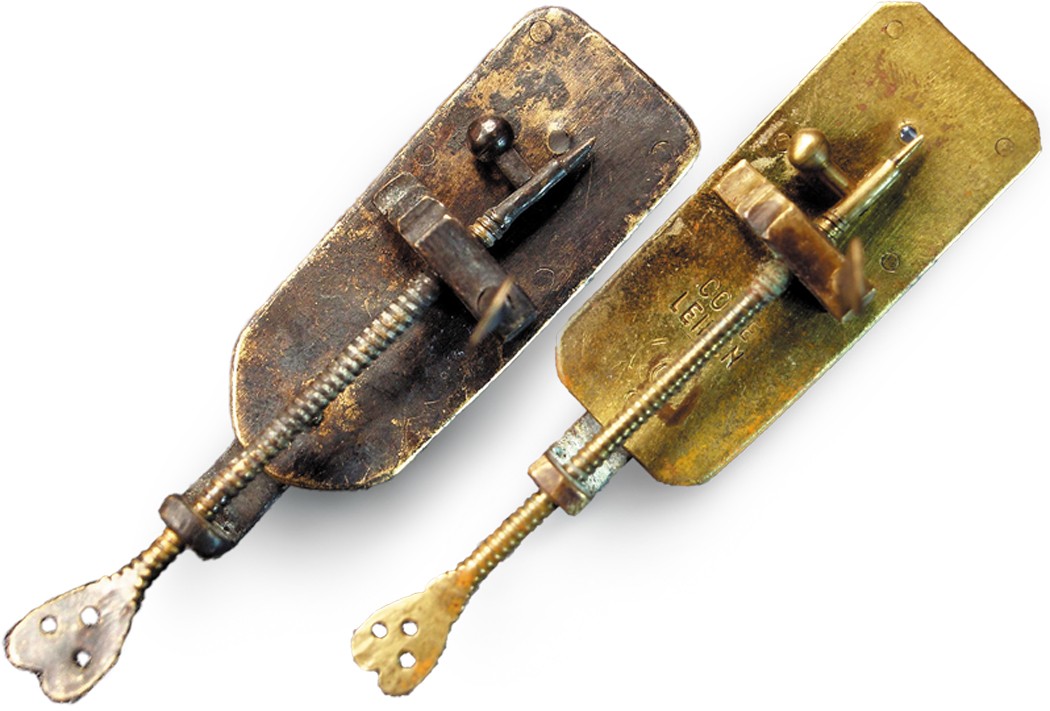
Antoni van Leeuwenhoek, a Dutch cloth merchant, pressed a drop of rainwater beneath his homemade microscope in 1674 and observed "animalcules" darting about in them. Leeuwenhoek sent his descriptions of these 'invisible' animals in a letter to Henry Oldenburg, secretary of the Royal Society. But Oldenburg was highly skeptical, so he asked Leeuwenhoek to describe his method of obtaining these observations and, failing that, to find others to attest to his claims. But Leeuwenhoek refused to reveal his secrets. Instead, he invited prominent people from around Delft to peer into his homemade microscopes and see the animalcules for themselves. In May 1677, two Lutheran pastors wrote to the Royal Society, attesting to the veracity of Leeuwenhoek's claims. In June and August, medical students, doctors and lawyers in Delft did the same. Oldenburg, relenting, finally published Leeuwenhoek's letter. But here is where the story gets interesting: Another man who visited Leeuwenhoek, intent on fact-checking his claims, was Robert Hooke. Hooke was already spectacularly famous in 1677 as, more than a decade prior, he had published Micrographia, an illustrated book that coined the term "cell" for the first time. Hooke looked through Leeuwenhoek's lenses, and saw the animalcules that others had described, but did not quite grasp how this Dutchman was making his microscopes. What was the secret? When Leeuwenhoek finally died in 1723 (at the then-extreme age of 90), he left behind more than 100 handcrafted microscopes, but no blueprints or methods. It seemed the Dutchman's secrets would be forever lost to time. But no! In 2021, researchers used neutron tomography to carefully study two of Leeuwenhoek's handmade microscopes. Each of these microscopes was made from two flat, metal plates with a tiny glass bead mounted between them. A small, metal pin was used to hold specimens in place. Lacking a light source, Leeuwenhoek would simply hold these microscopes (each the size of a stamp) up to the sun to look at his samples. The glass beads, it turns out, were made using a method called "flameworking." (The scientists figured this out because each glass bead had a tiny glass thread still attached.) Leeuwenhoek would take a filament of glass and melt its tip over a flame, thus coaxing a small sphere to form at its end. He'd then clip off this sphere, hold it by the remaining stem, and delicately wedge it between the metal plates. But this same "flameworking" method was actually invented by Hooke, who said it was "exceedingly easy" to do. Leeuwenhoek just copied Hooke and then never told anybody about it, leaving Hooke to spend years wondering how he had been upended by a cloth merchant. Such is science.
Niko McCarty. tweet mediaNiko McCarty. tweet media
English
6
93
740
50.1K
Michael Hanophy retweetledi
Niko McCarty.
Niko McCarty.@NikoMcCarty·
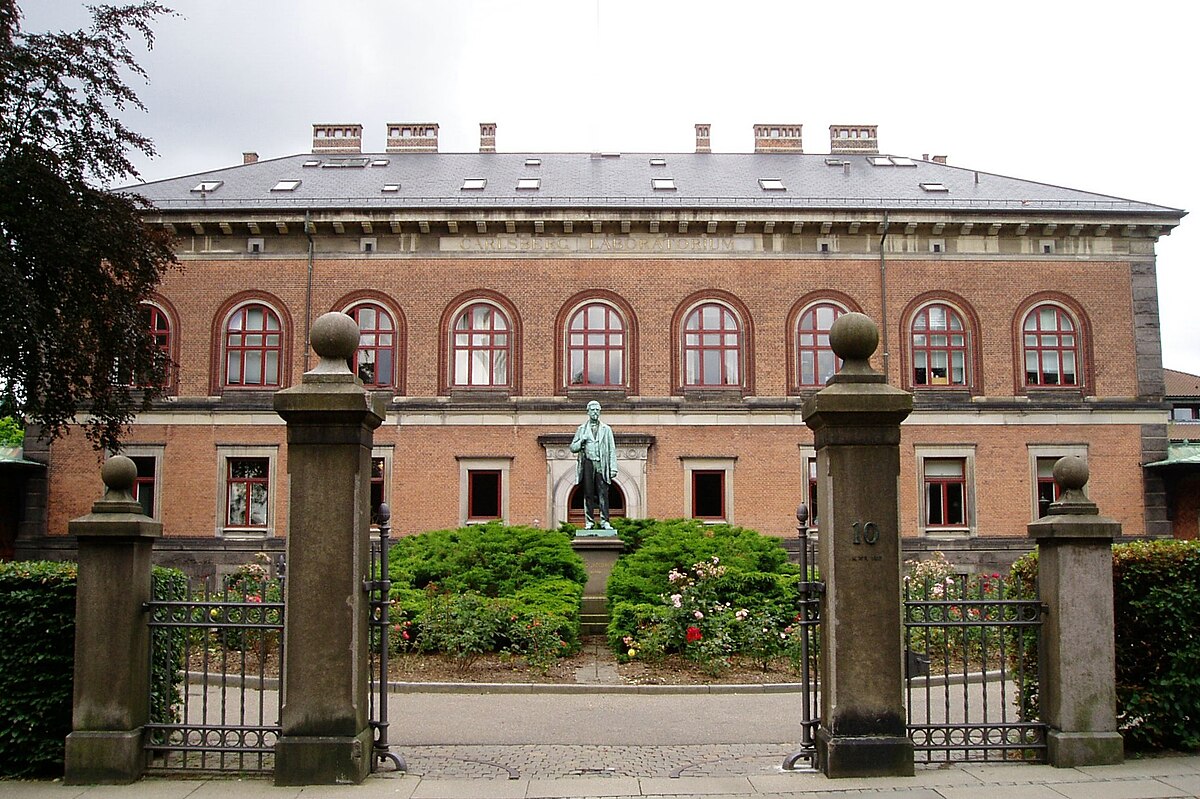
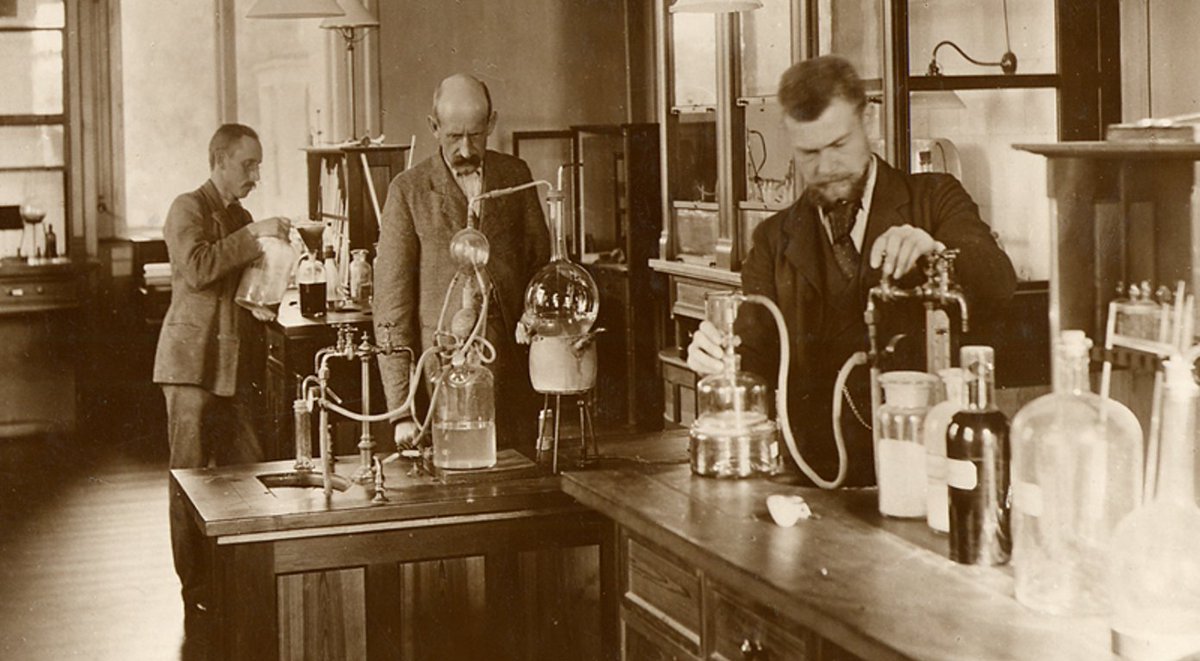
Carlsberg, the beer company, was founded in 1847. In 1875, they founded one of the first industrial research labs. Even today, the impact of this laboratory is highly underrated. Some quick notes on discoveries made by Carlsberg: 1. For most of the 19th century, beer often made people sick because it contained a mixture of yeasts (and, often, bacteria). In 1883, Emil Chr. Hansen (at Carlsberg) isolated “a single cell of good yeast,” according to the Carlsberg website, which he then grew up as a pure culture. This strain of yeast, named Saccharomyces Carlsbergensis, was given away for free to other brewers, who used it to brew much purer beers that didn't make people sick. This yeast is the ancestor to many modern Lager yeasts. 2. In 1909, S.P.L. Sørensen invented the pH scale at the Carlsberg laboratory. 3. Christian Anfinsen, who kickstarted the protein-folding problem (I wrote about him a few days ago), spent a year or two at the Carlsberg Laboratory developing “new methods for analyzing the chemical structure of complex proteins,” according to his Wikipedia page. He went on to win a Nobel Prize in Chemistry in 1972. 4. In 1935, Øjvind Winge discovered that microorganisms — including yeast — can reproduce sexually. This was a big deal for developing genetic engineering tools, and it happened at Carlsberg. 5. Subtilisin, the same enzyme used in many detergents to wash clothes, was discovered at Carlsberg. 6. Morten Meldal invented Click Chemistry (for which he shared the 2022 Nobel Prize in Chemistry) while leading the Chemistry group at Carlsberg. 7. More recently, Carlsberg has been doing a lot of research into accelerating crop breeding to develop better barley and hops. I'd be down to sponsor a long-form article about Carlsberg's research division, provided it includes in-person reporting (and, one imagines, beer tastings.) Please get in touch if you have reporting experience, live in Europe (ideally) and would be interested in doing this.
Niko McCarty. tweet mediaNiko McCarty. tweet media
English
31
293
1.5K
86.9K
Michael Hanophy retweetledi
Bill Madden
Bill Madden@maddenifico·
This Irish woman is not wrong. 😳👇
English
1K
8K
41.3K
396.7K
Michael Hanophy retweetledi
Andrea C. Love, PhD
Andrea C. Love, PhD@dr_andrealove·
Any Senators here? I’m a biomedical scientist with immunology, cancer, infectious disease expertise. RFK Jr lied to you in his confirmation hearings. Repeatedly. Provably. He’s lied to EVERYONE for 30+ years. Repeatedly. Provably. He WILL lie today. Repeatedly. Provably. 1/
English
673
3.8K
18.4K
513.2K
Michael Hanophy retweetledi
St. Joseph's University New York
DYK: Our Summer Undergraduate Research Fellowship (SURF) program is 100% donor funded from #SJNYAlumni contributions! Olivia Lieto ’27 knows and she's been studying biofilms this summer thanks to generous donors. Learn more at the link. ow.ly/gtV450WggA2
St. Joseph's University New York tweet media
English
0
1
1
105
Michael Hanophy retweetledi
Chris D. Jackson
Chris D. Jackson@ChrisDJackson·
📺 Watching the decency of @JoeBiden in this video just reminds me how deeply the nation screwed up. We had a good man. And we traded him for chaos.
English
4.2K
3.5K
18.2K
618.1K
Michael Hanophy retweetledi
Greg Lukianoff
Greg Lukianoff@glukianoff·
Dear Harvard, your $53 billion endowment is equivalent to the GDP of the entire nation of Uganda, and way bigger than Latvia and Estonia. Maybe it's time to break open your rainy day fund and defend yourself.
English
20
146
942
58.5K
Aaron Rupar
Aaron Rupar@atrupar·
Trump: "We have now hired a couple of the best agencies and we're gonna spend about $150m, maybe $200m, on advertising saying that when you take certain drugs -- the drug fentanyl, etc -- it destroys your skin, it destroys your teeth, it destroys your brain ... I think we can drop it 50% by doing this."
English
1.8K
283
1.5K
412.3K
A
A@bluhue123·
Anthony Fauci has saved countless lives Dr. Fauci is a national treasure Yes 👍 No 👎
A tweet media
English
4.4K
1.3K
14.7K
261.2K
Michael Hanophy retweetledi
St. Joseph's University New York
Over the summer, #SJNY Anastajia Melika ’26 and Summer Undergraduate Research Fellowship (SURF) recipient Kaela Collazo ’25 partnered with Dr. Bor-Shuen Wang, examining how prenatal stress impacts behavior. ow.ly/lCZ350TmVv2
English
0
1
2
114