before I'm dead, I must be the Superior in Dev retweetledi
before I'm dead, I must be the Superior in Dev
2K posts

before I'm dead, I must be the Superior in Dev
@mk167854
ถ้าถามว่าอิหยังเดซึกะ ให้ตอบอะไร รับไม่ออกสาว โสด ไม่ชอบสร้าง คสพ. แต่ชอบ FWB ซิงไหมไม่รู้ เจอแต่พวกอ่อนๆ ไม่ได้เรื่อง ทำงานแล้ว มีเงินซื้อ ไม่ชอบแมนขี้ตอแxล
Bang Khen, Bangkok Katılım Mart 2019
2.3K Takip Edilen52 Takipçiler

@Bossanova2545 สยอง แค่ตัวเดียวก็กริ๊ดแตก นี่มาทั้งครอก คนช็อกตายก่อน
ไทย
before I'm dead, I must be the Superior in Dev retweetledi

@belza_09 ต้องมี skill อะไรบ้างหรอครับ ถึงสามารถทำงานในระดับนั้นได้
ไทย
before I'm dead, I must be the Superior in Dev retweetledi

@pd_091 ที่ช้าเพราะเค้ารวบหมดแล้ว ไม่ต้องพยายามรีบสร้างผลงานสมัยหน้าก็นอนมาค่ะ ต่อให้ชาวบ้านไม่เลือกแต่กรรมการอยู่ข้างเราจะกลัวทำไม 🙂↕️
ไทย
before I'm dead, I must be the Superior in Dev retweetledi

@porporlees มีโอกาสที่จะได้รธน ฉบับใหม่ (ที่เลวร้ายกว่าเดิม)
ไทย
before I'm dead, I must be the Superior in Dev retweetledi

What I see in most Java resumes:
- Java
- Spring
- Microservices
Great, I see you know Java. But as a senior, can you build, run, scale, observe, and secure Java systems in production?
A few tips and topics with accurate subskills that you need to mention if you need your resume to stand out:
1. Distributed Caching – mention Redis/Memcached
2. Monitoring & Observability – most popular ones are Splunk, Dynatrace, Grafana, ELK
3. Messaging – list one among Kafka, JMS or RabbitMQ
4. Testing – most popular frameworks/methods are TDD, Mockito, JUnit
5. CI/CD & Containers – devops skills like Jenkins, GitHub Actions, Docker, Kubernetes make your profile distinct
6. Frameworks – no prize for guessing: Spring Boot, Spring MVC, Apache Camel
7. Microservices Internals – try to mention one or two at least from Config Server, API Gateway, Service Discovery, Resilience4j
8. Multithreading & Concurrency – do not skip, mention a few of Executors, ForkJoin, CompletableFuture
9. Security – most used and popular ones are Spring Security, OAuth2, JWT
10. Persistence – you should have been using Hibernate, JPA or MyBatis so put one
11. API Development – basics of APIs: REST, Swagger, OpenAPI
12. Reactive Programming – your resume shines with words like WebFlux, Reactor or RxJava
13. Build Tools – mention Maven/Gradle
14. Code Quality – mentioning SonarQube, PMD, Checkstyle shows you care about quality
15. Cloud – shouldn't miss one from AWS, GCP, Azure
16. Java Versions – list a few Java 8 to 21 features you used
17. Design Principles – foundations of large codebase: SOLID, Design Patterns, Clean Architecture
If you are targeting Senior, Staff, or Lead roles:
- Focus on impact, not buzzwords
- Show production ownership
- Highlight architecture and reliability thinking
Good luck
English

@Wirezd57 @BoardOfPeace Pol Pot already did his aim.
English
before I'm dead, I must be the Superior in Dev retweetledi

If you want to level up as a backend engineer in 2026, consider reading these 7 books:
1) Clean Code
2) Head First Design Patterns
3) Designing Data-Intensive Applications
4) Fundamentals of Data Engineering
5) Database Internals
6) Building Microservices
7) Head First Software Architecture
Which other book would you add to this list?
♻️ Repost to help others in your network

English
before I'm dead, I must be the Superior in Dev retweetledi

@nicoarson_ Nice armpits and sweet.
English
before I'm dead, I must be the Superior in Dev retweetledi

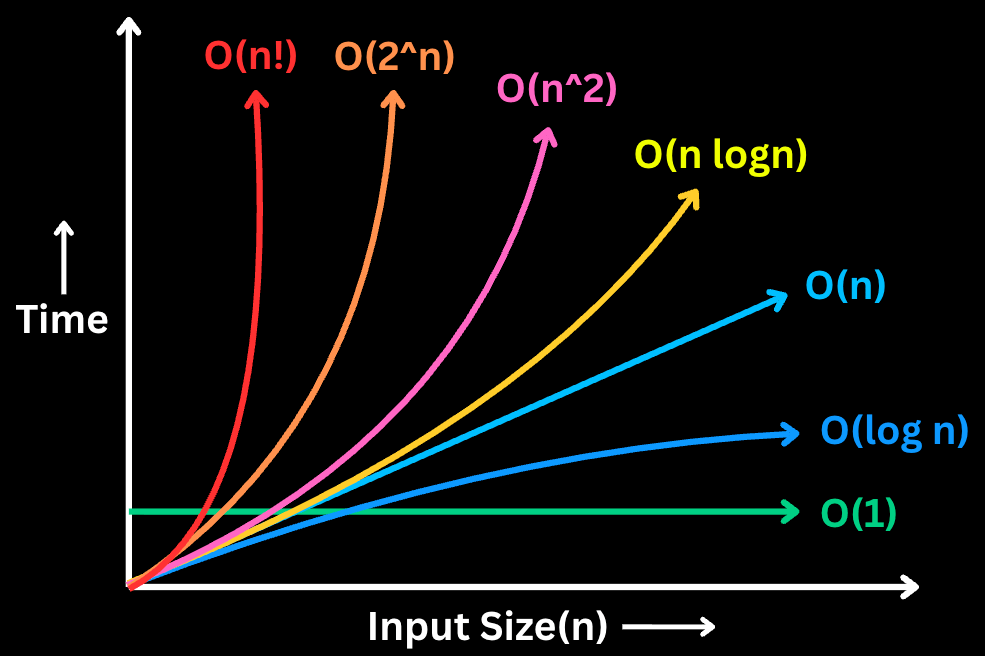
7 must-know runtime complexities for coding interviews:
1. 𝐎(1) - 𝐂𝐨𝐧𝐬𝐭𝐚𝐧𝐭 𝐭𝐢𝐦𝐞
- The runtime doesn't change regardless of the input size.
- Example: Accessing an element in an array by its index.
2. 𝐎(𝐥𝐨𝐠 𝐧) - 𝐋𝐨𝐠𝐚𝐫𝐢𝐭𝐡𝐦𝐢𝐜 𝐭𝐢𝐦𝐞
- The runtime grows slowly as the input size increases. Typically seen in algorithms that divide the problem in half with each step.
- Example: Binary search in a sorted array.
3. 𝐎(𝐧) - 𝐋𝐢𝐧𝐞𝐚𝐫 𝐭𝐢𝐦𝐞
- The runtime grows linearly with the input size.
- Example: Finding an element in an array by iterating through each element.
4. 𝐎(𝐧 𝐥𝐨𝐠 𝐧) - 𝐋𝐢𝐧𝐞𝐚𝐫𝐢𝐭𝐡𝐦𝐢𝐜 𝐭𝐢𝐦𝐞
- The runtime grows slightly faster than linear time. It involves a logarithmic number of operations for each element in the input.
- Example: Sorting an array using quick sort or merge sort.
5. 𝐎(𝐧^2) - 𝐐𝐮𝐚𝐝𝐫𝐚𝐭𝐢𝐜 𝐭𝐢𝐦𝐞
- The runtime grows proportionally to the square of the input size.
- Example: Bubble sort algorithm which compares and potentially swaps every pair of elements.
6. 𝐎(2^𝐧) - 𝐄𝐱𝐩𝐨𝐧𝐞𝐧𝐭𝐢𝐚𝐥 𝐭𝐢𝐦𝐞
- The runtime doubles with each addition to the input. These algorithms become impractical for larger input sizes.
- Example: Generating all subsets of a set.
7. 𝐎(𝐧!) - 𝐅𝐚𝐜𝐭𝐨𝐫𝐢𝐚𝐥 𝐭𝐢𝐦𝐞
- Runtime is proportional to the factorial of the input size.
- Example: Generating all permutations of a set.
♻️ Repost to help others in your network.

English