mkyadava

3.1K posts

mkyadava banner
mkyadava

mkyadava

@mkyadava

Belonging to 1989 Batch of Indian Forest Service (IFS) of Assam Meghalaya Cadre, https://t.co/nMIDTkriX5 (Hons) https://t.co/9RyNcuAPcA. (Chem) Delhi University, https://t.co/JTTHLSzHjl (IIT Bombay)

Guwahati, Assam (INDIA) Katılım Ağustos 2011
120 Takip Edilen960 Takipçiler
mkyadava retweetledi
Math Files
Math Files@Math_files·
In January of 1913, Hardy received an unsolicited letter from Madras. What was written is of such great historical import that we record it here: I beg to introduce myself to you as a clerk in the Accounts Department of the Port Trust Office at Madras on a salary of only [20 pounds] per annum. I am now about 23 years of age. I have had no university education, but I have undergone the ordinary school course. After leaving school I have been employing the spare time at my disposal to work at Mathematics. I have not trodden through the conventional regular course which is followed in a university course, but I am striking out a new path for myself. I have made a special investigation of divergent series in general and the results I get are termed by the local mathematicians as ‘startling’… Very recently I came across a tract published by you styled Orders of Infinity in page 36 of which I find a statement that no definite expression has been as yet found for the no of prime nos [sic] less than any given number. I have found an expression which very nearly approximates to the real result, the error being negligible. I would request you to go through the enclosed papers. Being poor, if you are convinced that there is anything of value I would like to have my theorems published. I have not given the actual investigations nor the expressions that I get but I have indicated to the lines on which I proceed. Being inexperienced I would very highly value any advice you give me. Requesting to be excused for the trouble I give you. —Srinivasa Ramanujan
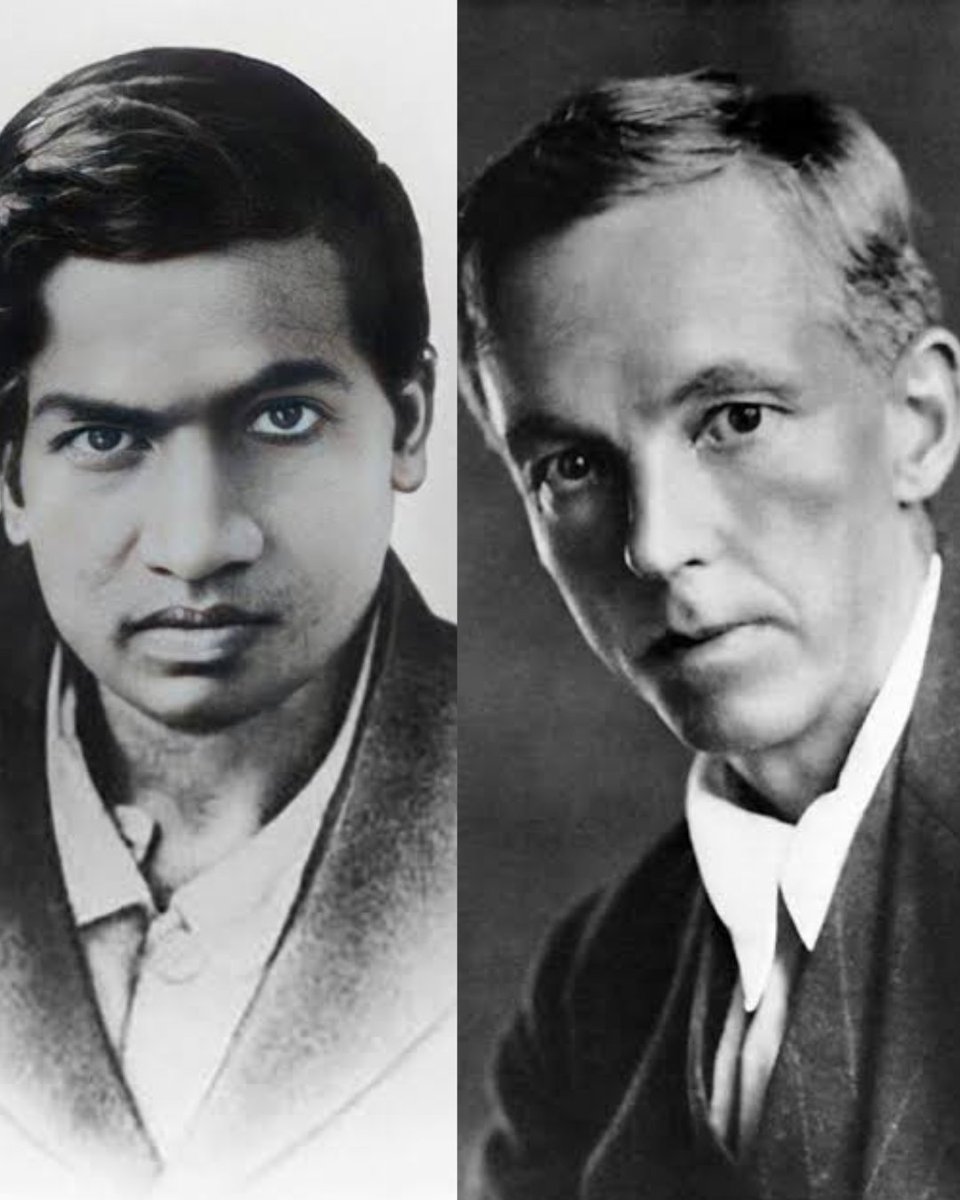
Math Files tweet media
English
4
36
222
13.2K
mkyadava retweetledi
Joy Bhattacharjya
Joy Bhattacharjya@joybhattacharj·
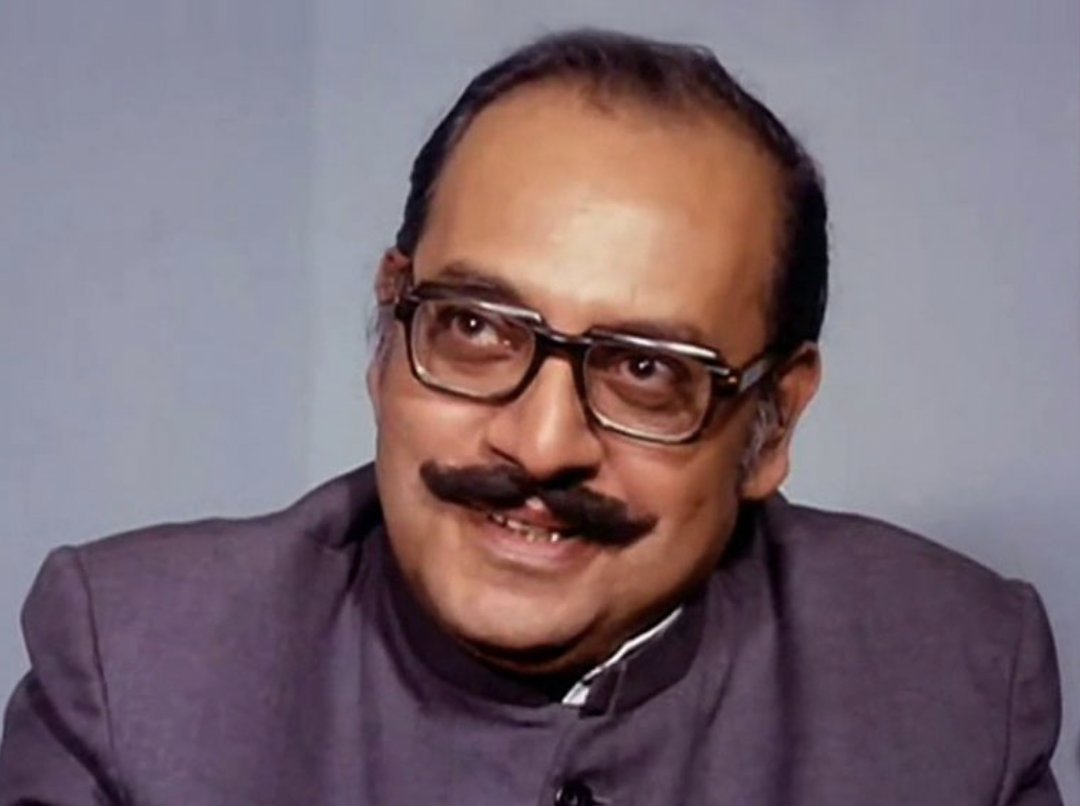
He could speak 8 languages and they said he could recite all 37 of Shakespeare's plays from memory. An award winning playwright & stage artist and one of Satyajit Ray's favourite actors. Also one of India's finest comic actors in films like Golmaal, and Hirak Rajar Deshe. The irony is that the marvellous comic roles in Golmaal and other films, what most people outside remember him for, is what he regarded as the least important "I have developed a technique of shutting my mind off, switching it off, rather. I will not be able to tell you even the names of the films I have acted in or even the name of the character I have just finished shooting.” He was also a brilliant writer & regular theatre reviewer. “Mr.Dutt as Othello was rather a pitiable sight, with his voice gone, his breathing laboured and his bulk enormous.” This was Utpal Dutt reviewing his own stage performance using the pseudonym Iago. He also loved classical art and there is this wonderful story told by his daughter. "When we went to Italy, it meant we would have to spend at least one day on viewing each sculpture. We had hired the services of a guide. But, we found that Baba knew more about the place than the guide. The next day, the guide asked us if we would be ready to go on our own." A true renaissance man and a principled one, not scared to go to prison for his views. Utpal Dutt was truly one of our greats. 97th birth anniversary today.
Joy Bhattacharjya tweet media
English
283
1.4K
7.7K
265.1K
Chris Tilley
Chris Tilley@ctilley79·
@livingdevops Unix or linux is technically far superior to anything else created. It’s a shame that Microsoft got all the investment early on.
English
4
1
8
1.7K
mkyadava retweetledi
Akhilesh Mishra
Akhilesh Mishra@livingdevops·
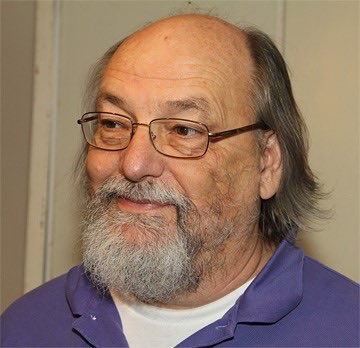
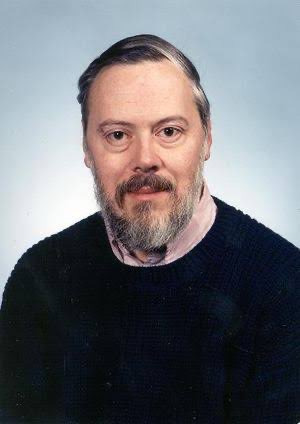
No disrespect to Linus Torvalds, But Ken Thompson might be the biggest geek who ever lived. 🫡 And almost nobody knows his name. At 28, he created Unix. > The OS that inspired every modern operating system on the planet. At 66, the age when most engineers retire, he co-created Go. > A language millions of developers love, and used to build most of modern Devops tools like Kubernetes, Terraform, Prometheus, Grafana, etc. But that is still not the full story. - Dennis Ritchie built on Thompson’s B to create C. - Linus built Linux inspired by Thompson’s Unix. - He co-invented UTF-8, the encoding behind every website you visit. - He built grep, a tool developers still use daily in 2024. The internet you are scrolling right now exists because of him. And he did everything without Claude, cursor, ChatGPT. Ken Thompson. Remember the name.
Akhilesh Mishra tweet media
English
66
254
1.7K
50.6K
mkyadava retweetledi
Math Files
Math Files@Math_files·
Math Files tweet media
ZXX
55
68
1.1K
113.1K
mkyadava retweetledi
Lloyd Strickland
Lloyd Strickland@Dr_L_Strickland·
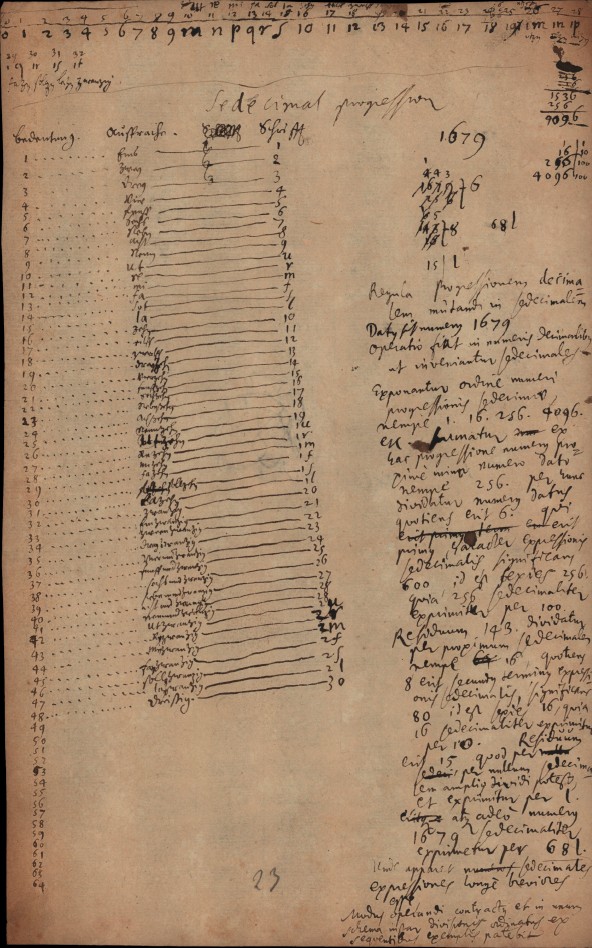
Hexadecimal wasn’t born in Silicon Valley. It was born on scraps of paper in 1679. Leibniz invented base 16 — and never published it.
Lloyd Strickland tweet media
English
36
163
937
53.5K
mkyadava retweetledi
Math Files
Math Files@Math_files·
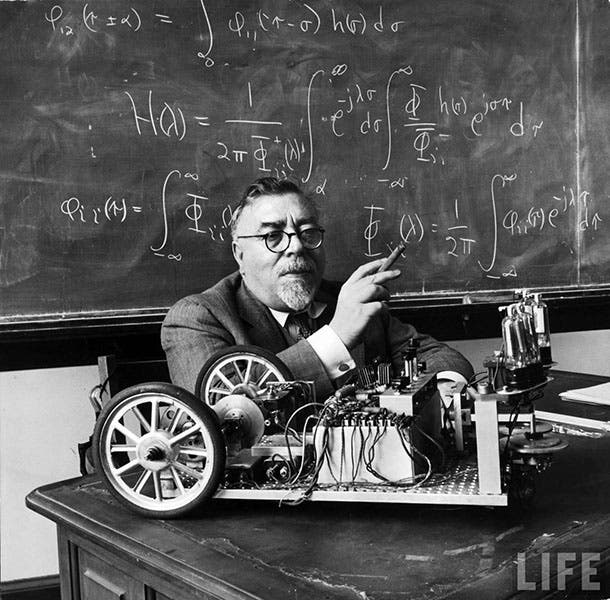
One day, mathematician Norbert Wiener was walking across the campus of Massachusetts Institute of Technology. While he was walking, someone stopped him and asked a question about Fourier analysis. Wiener didn’t hesitate. He took out a small piece of paper and carefully wrote down the answer, explaining it step by step. The person was very thankful, said thanks, and started to leave. But Wiener stopped him and asked, “Just one moment—which direction was I walking when you met me?” The man pointed in the direction Wiener had been heading. Wiener smiled and said, “Good. That means I’ve already had my lunch.” Source: Mathematical Apocrypha by Steven Krantz
Math Files tweet media
English
29
249
2.4K
144.5K
mkyadava retweetledi
Math Files
Math Files@Math_files·
41 is prime 41+2 is prime 41+2+4 is prime 41+2+4+6 is prime 41+2+4+6+8 is prime 41+2+4+6+8+10 is prime 41+2+4+6+8+10+12 is prime 41+2+4+6+8+10+12+14 is prime 41+2+4+6+8+10+12+14+16 is prime 41+2+4+6+8+10+12+14+16+18 is prime 41+2+4+6+8+10+12+14+16+18+20 is prime
English
14
36
480
39.9K
mkyadava retweetledi
IIT Bombay
IIT Bombay@iitbombay·
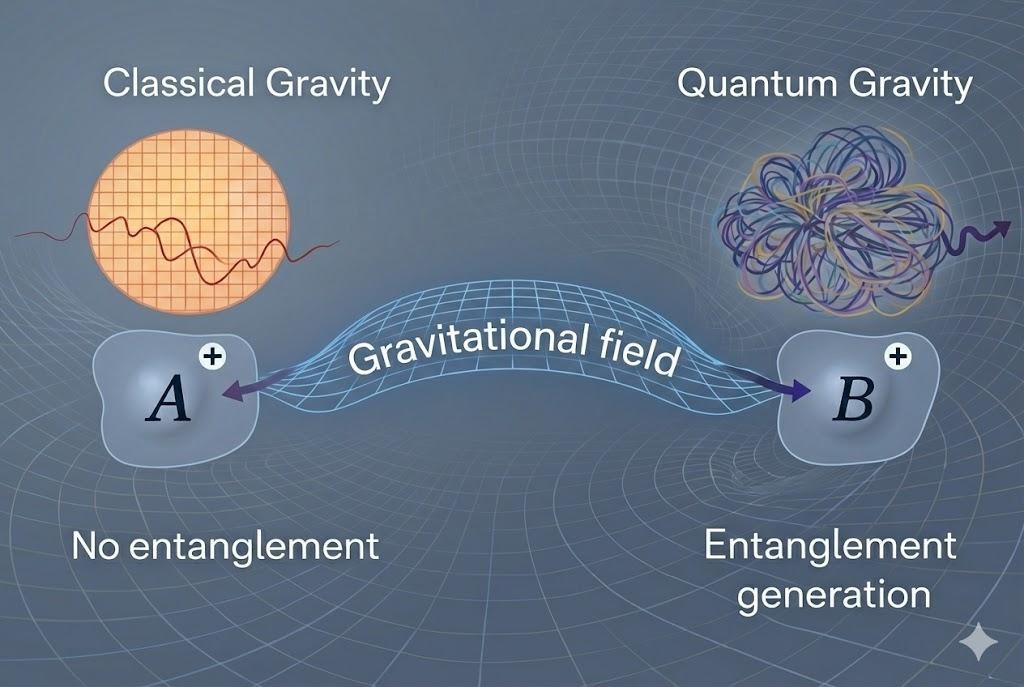
IITB researchers develop novel method to test the ‘quantumness’ of gravity Researchers at the Indian Institute of Technology (IIT Bombay) have found a potential blind spot in our quest to prove that gravity follows the laws of quantum mechanics. In a new study, researchers P. George Christopher and Prof. S. Shankaranarayanan demonstrate that gravity could be fundamentally quantum even if it fails a long-standing test known as the entanglement test. The team has also proposed a new diagnostic tool called dynamical fidelity susceptibility (DFS), which serves as a more sensitive probe of the true nature of the universe's most mysterious force. iitb.ac.in/research-highl…
IIT Bombay tweet media
English
19
97
591
20.5K
mkyadava retweetledi
Math Files
Math Files@Math_files·
British mathematician G. H. Hardy once visited Srinivasa Ramanujan in the hospital. Trying to make small talk, Hardy mentioned that the taxi he had taken bore the rather dull number 1729. Ramanujan’s response instantly transformed this ordinary number into something extraordinary. He replied, “No, it is a very interesting number. It is the smallest number expressible as the sum of two cubes in two different ways.” Indeed, 1729 = 1³ + 12³ = 9³ + 10³ What seemed trivial to Hardy revealed Ramanujan’s remarkable insight—his ability to see deep mathematical structure where others saw none. This number, 1729, is now famously known as the Hardy–Ramanujan number. It also gives rise to a broader concept called Taxicab numbers. A Taxicab number is the smallest number that can be expressed as the sum of two cubes in n distinct ways. Ramanujan’s legacy continues to fascinate and inspire mathematicians, reminding us that even the most ordinary numbers can hide extraordinary beauty.
English
11
113
647
55.2K
mkyadava retweetledi
𝓼𝓪𝓷𝓴𝓪𝓻
It was the afternoon of November 10, 1926. A house servant was slowly descending the stairs, tea kettle in hand, when a Hindustani sepoy barked a sharp command at him: "Kidhar jayega? Andar jao!" ​The tension broke a moment later. With a respectful salute to the Inspector and two more to the constable guarding the gate, the servant quietly slipped away on the pretext of fetching tea. The police had no inkling that, right under their noses, the undisputed leader of India’s armed revolution, Masterda Surya Sen, had just vanished into thin air. ​Whenever his comrades joked about his escape tactics, Masterda would smile and say, "We'll see. Those with physical strength and speed are often caught first. I’ll manage to slip away when the time is right." It was a profound truth. On more than one occasion, he evaded the police with such sharp wit, presence of mind, and raw courage that they were left looking foolish long after he was gone. ​That November day seemed ordinary, but Surya Sen sensed a shift in the air. He realized British forces had completely cordoned off the house. This wasn't his first close call. Back on October 25, 1924, police had surrounded his residence in Chittagong. That time, he had escaped through the gap of a latrine, disappearing into the dense, dark forest behind the house before they could lay a finger on him. ​This time, however, the stakes were higher. The house was swarming with a massive police contingent, and escape seemed impossible. Yet, he kept his cool. He stripped off his shirt and vest, cast aside his shoes, and grabbed a filthy, oil-stained towel hanging nearby to drape over his shoulder. He ruffled his hair, transforming himself into a lowly domestic worker. ​As he walked down the stairs with the kettle, a Hindustani constable blocked his path, shouting for him to go back inside. Masterda didn't panic. He took two steps back, offered a humble salute, and stammered, "The gentlemen upstairs want tea; they gave me money to fetch three cups." He even opened his palm to show the coins. ​The constable remained firm: "No need. Go back inside." Masterda hesitated just long enough to look convincing. A Bengali Inspector standing nearby glanced at the "servant" and told the soldier, "Let him go, Sepoy. He’s just the house help." Masterda offered a final salute to the officer and two more to the constable. He walked out of that gate to "fetch tea" and never looked back. ​This was the man who would eventually lead the legendary Chittagong Armoury Raid against British imperialism. His philosophy of armed resistance and his unwavering grit ignited a new fire in the hearts of India’s youth. Masterda Surya Sen finally walked to the gallows with a smile, sacrificing his life for the dream of a free nation. Today, on the birth anniversary of this great revolutionary leader, we honor his legacy.
𝓼𝓪𝓷𝓴𝓪𝓻 tweet media
English
32
259
863
24.8K
mkyadava retweetledi
indianhistorypics
indianhistorypics@IndiaHistorypic·
Rameshwar Nath Kao , Spymaster and The Man Who Founded Research & Analysis Wing (R&AW) He Never Got Bharat Ratna Award But He Is Bharat Ratna In True Sense
indianhistorypics tweet media
English
107
2.2K
11.3K
226.9K
mkyadava retweetledi
Math Files
Math Files@Math_files·
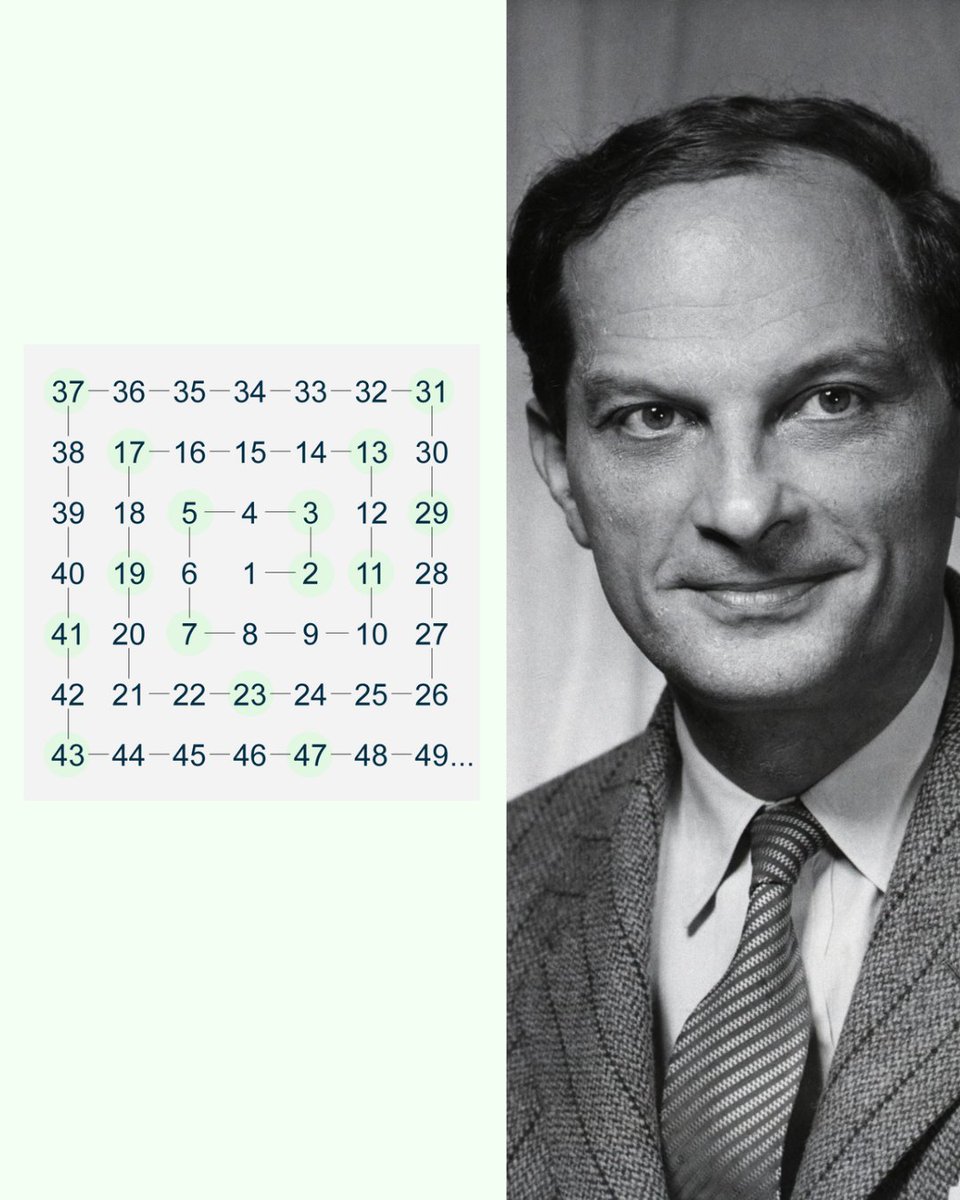
Did you know that one of the most important discoveries in mathematical history happened because a scientist was bored during a meeting in 1963? Stanisław Ulam was sitting through a dull lecture when he began doodling on graph paper. He wrote the number 1 in the center, then spiraled outward—2, 3, 4, 5, and so on—simply to pass the time. But then he did something remarkable: he circled all the prime numbers—2, 3, 5, 7, 11, 13... What he saw next was astonishing. The primes were not scattered randomly as everyone had assumed. Instead, they formed striking diagonal lines across the spiral—like hidden highways running through the numbers. This seemed impossible. Prime numbers are supposed to be irregular and unpredictable, yet here they were, aligning in beautiful patterns no one had noticed before. When Ulam showed his discovery to other mathematicians, they were amazed. What began as a simple doodle revealed deep and mysterious structures within numbers—patterns that, even today, we do not fully understand.
Math Files tweet media
English
50
235
2K
381.5K
mkyadava retweetledi
Dustin
Dustin@r0ck3t23·
Terence Tao has won every award mathematics can give a human being. Fields Medal. Breakthrough Prize. MacArthur Genius Grant. He is widely regarded as the greatest living mathematician. Not one of. The greatest. He just said something that should terrify every university on Earth. Tao: “We live in a particularly unpredictable era. I think things that we’ve taken for granted for centuries may not hold anymore.” Not years. Not decades. Centuries. The assumptions governing who gets to contribute to knowledge have been in place longer than most nations have existed. Tao just told you those assumptions are dissolving. Tao: “The way we do everything, not just mathematics, will change.” This is not a man who deals in hyperbole. He builds arguments the way he builds proofs. Piece by piece. Nothing unverified. When he says everything, he means everything. Tao: “In math, you previously had to basically go through years and years of education, be a math PhD before you could contribute to the frontier of math research.” That was the contract. You give a decade of your life to an institution. You grind through coursework, committees, dissertation reviews, postdoc rotations. Then maybe you get to touch the boundary of what’s known. The entire system was built on that bottleneck. Time was the gate. Credentials were the key. Tao: “Now it’s quite possible at the high school level that you could get involved in a math project and actually make a real contribution because of all these AI tools.” A high schooler. Contributing to frontier mathematics. The same frontier that used to require a decade of institutional obedience to even approach. He said this about math. He already told you this applies to everything. AI didn’t just speed up the path. It removed the path entirely. The university sold you a ten-year toll road. AI just paved around it overnight. The toll booth operators haven’t realized yet that no one’s coming. Tao: “In many ways, I would prefer the much more boring, quiet era where things are much the same as they were ten years ago, 20 years ago.” This is the line that should haunt you. The smartest mathematician on the planet would rather this wasn’t happening. He is not selling this. He is not positioning himself for a funding round. The acceleration is so violent that even the mind best equipped to process it would prefer it stopped. If Tao is uncomfortable, you should be paying very close attention to your own assumptions about what’s coming. Tao: “The things that you study, some of them may become obsolete or revolutionized, but some things will be retained.” That word “some” is doing enormous work in that sentence. It means the rest won’t be. Entire fields that people spent their careers building will collapse. Not slowly. Not politely. And Tao is telling you he can’t predict which ones survive. Tao: “You should be open to very, very different ways of doing science, some of which don’t exist yet.” Most people will scroll past this. It’s the most important line in the entire clip. He’s not saying learn new tools. He’s not saying adapt your workflow. He’s saying the methods themselves haven’t been invented yet. The frameworks don’t exist. You cannot prepare for what hasn’t been created. You can only build the kind of mind that doesn’t break when the ground shifts beneath it. Tao: “It’s a scary time, but also very exciting.” He said scary first. Every tech founder says exciting first and mentions risk as a footnote. Tao reversed it. When the most brilliant mind of a generation leads with fear and follows with possibility, that is not optimism. That is a man telling you the truth about what’s coming while still choosing to walk toward it. The people who survive the next decade won’t be the ones with the best credentials. They’ll be the ones who stopped mourning the world that was and started building for the one that doesn’t exist yet.
English
105
364
1.1K
223.9K
mkyadava retweetledi
Shikhar
Shikhar@shekhu04·
Meet Rajeev Motwani (Every time you Google something, a boy from Jammu made that possible) > An Indian computer scientist born in Jammu, 1962 > Grew up in a military family that moved city to city, never settled anywhere > As a child he wanted to become a mathematician > His parents pushed him towards computers instead > Best decision they ever made > B.Tech in Computer Science from IIT Kanpur, 1983 > PhD from UC Berkeley under Richard Karp, a Turing Award winner > Joined Stanford as a professor straight after > Founded MIDAS, one of the most influential research groups in Silicon Valley history > In 1998 two PhD students named Larry Page and Sergey Brin walked into his office > He saw potential in their idea when nobody else did > Co-authored the original PageRank paper with them > Helped them build what became Google > Also mentored the early team at PayPal > Won the Gödel Prize in 2001, the highest honour in theoretical computer science > Passed away on June 5, 2009 at just 47 years old IIT Kanpur named an entire building after him Sergey Brin said "Whenever you use a piece of technology, there is a good chance a little bit of Rajeev Motwani is behind it." A boy who just wanted to study mathematics ended up building the foundation Google stands on. He never chased credit. He just kept opening doors for other people And the whole world walked through them without ever knowing his name
Shikhar tweet mediaShikhar tweet media
English
66
510
2.6K
115.8K
mkyadava retweetledi
Akhilesh Mishra
Akhilesh Mishra@livingdevops·
Dennis Ritchie created C in the early 1970s without Google, Stack Overflow, GitHub, or any AI ( Claude, Cursor, Codex) assistant. - No VC funding. - No viral launch. - No TED talk. - Just two engineers at Bell Labs. A terminal. And a problem to solve. He built a language that fit in kilobytes. 50 years later, it runs everything. Linux kernel. Windows. macOS. Every iPhone. Every Android. NASA’s deep space probes. The International Space Station. > Python borrowed from it. > Java borrowed from it. > JavaScript borrowed from it. If you have ever written a single line of code in any language, you did it in Dennis Ritchie’s shadow. He died in 2011. The same week as Steve Jobs. Jobs got the front pages. Ritchie got silence. This Legend deserves to be celebrated.
Akhilesh Mishra tweet media
English
644
5.3K
26.7K
924K
mkyadava retweetledi
Shikhar
Shikhar@shekhu04·
Meet Neeraj Kayal (Every time a computer checks if a number is prime he helped crack that) > An Indian mathematician and computer scientist born in Guwahati, Assam > B.Tech in Computer Science from IIT Kanpur batch of 2002 > As an UNDERGRADUATE student ,not a PhD scholar, not a professor an undergrad > He co-wrote a paper with his advisor Manindra Agrawal and fellow student Nitin Saxena > The paper was called "PRIMES is in P" > It solved a problem mathematicians had been chasing since the 1970s > How to check if any number is prime ,deterministically, efficiently, guaranteed > The New York Times covered it > The entire mathematics world stopped > He was 21 years old > Scientists called it the most elegant algorithm they had ever seen > Won the Gödel Prize in 2006, the highest honour in theoretical computer science > Won the Fulkerson Prize in 2006 same year, same paper > Two of the biggest prizes in mathematics. In the same year. For work done as a student > PhD from IIT Kanpur. Post-doctoral research at the Institute for Advanced Study, Princeton > The same institution where Einstein spent his final years > Joined Microsoft Research Bangalore in 2008 and never left India > Young Scientist Award from Indian National Science Academy in 2012 > Infosys Prize in Mathematical Sciences in 2021 > Shanti Swarup Bhatnagar Prize in 2022 which is India's highest science award A boy from Guwahati solved a 30 year old mathematical mystery as a college student. Then came back home. Chose Bangalore over Princeton. Kept solving problems nobody else could. Quietly. Consistently. Brilliantly "The hardest problems are the most beautiful ones." Some people chase fame. He just chased the problem
Shikhar tweet mediaShikhar tweet media
English
18
148
931
67.4K
mkyadava retweetledi
Bishop Robert Barron
Bishop Robert Barron@BishopBarron·
Join Bishop Barron For Brief And Insightful Commentaries On Faith And Culture
English
91
891
6.6K
3.7M